免费领取教师福利
若您为此资料的原创作者,认为该资料内容侵犯了您的知识产权,请扫码添加我们的相关工作人员,我们尽可能的保护您的合法权益。


这是一份安徽省2026七年级英语下学期期中拔尖检测试卷(含答案人教版),共25页。
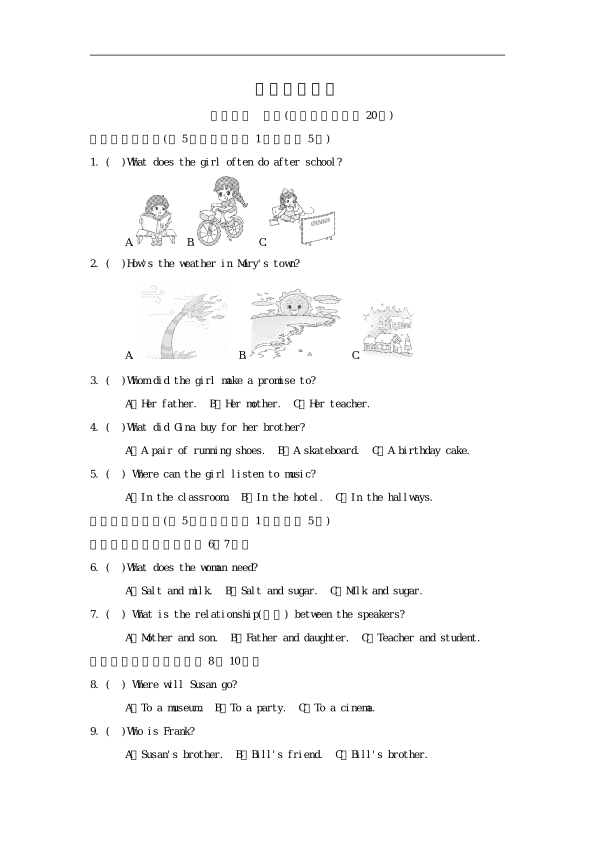
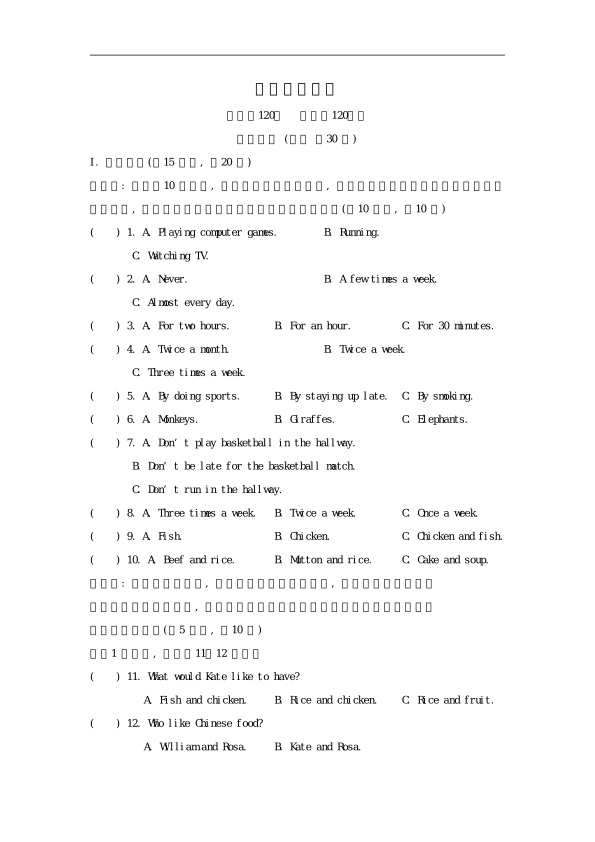
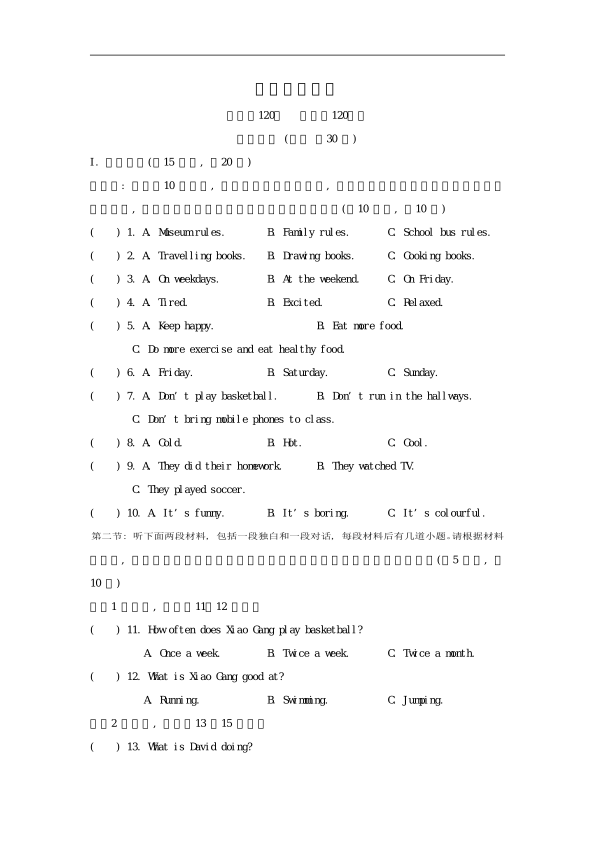
I. 短对话理解(共5 小题; 每小题1 分, 满分5 分)
( ) 1. What animals des Bb like?
A. B. C.
( ) 2. What d the girls like?
A. B. C.
( ) 3. Hw ften des the girl g t the sprts club?
A. Three times a week. B. Twice a week. C. Once a week.
( ) 4. What is the schl rule?
A. Dn’t play basketball in the hallways.
B. Dn’t be late fr the basketball match.
C. Dn’t run in the hallways.
( ) 5. What des Jhn ften have fr dinner?
A. Beef and rice. B. Muttn and rice. C. Cake and sup.
II. 长对话理解(共5 小题; 每小题1 分, 满分5 分)
听下面一段对话, 回答第6、7 题。
( ) 6. Why is Li Ming late fr class?
A. His bike is brken.
B. He gets up late.
C. He des his hmewrk.
( ) 7. What is in Li Ming’s hand?
A. A cake. B. A hamburger. C. A sandwich.
听下面一段对话, 回答第8 至10 题。
( ) 8. What’s the relatinship (关系) between the man and the wman?
A. Teacher and student. B. Waiter and custmer. C. Friends.
( ) 9. What table did the wman want at first?
A. A table in the center. B. A table beside the windw.
C. A table near the dr.
( ) 10. Whm des the wman wait fr?
A. Her sister. B. Her mther. C. Her friend.
III. 短文理解(共5 小题; 每小题1 分, 满分5 分)
( ) 11. What is the main rule Tm has t fllw?
A. T study hard at schl.
B. T g t bed early.
C. T clean his rm.
( ) 12. When des Tm have t g t bed n schl nights?
A. By 10 p.m. B. By 11 p.m. C. By 12 p.m.
( ) 13. Hw will Tm’s parents feel if he leaves things everywhere?
A. BreB. Angry. C. Sad.
( ) 14. What des Tm ften put n the wall?
A. Maps. B. Rules. C. Pictures.
( ) 15. What is the text mainly abut?
A. Family phts. B. Family rules.
C. Family members.
IV. 信息转换(共5 小题; 每小题1 分, 满分5 分)
第二部分 语言知识运用(共三大题, 满分35 分)
V. 单项填空(共10 小题; 每小题1 分, 满分10 分)
( ) 21. — What can I d fr yu, Madam?
— I wuld like sme ________ and ________.
A. sandwich; sugar B. sandwiches; vegetable
C. sandwiches; sugar D. sandwich; sugars
( ) 22. — Are thse bks ________?
— N, they are nt mine. They belng t ________.
A. yur; he B. yurs; her C. yur; hers D. yurs; she
( ) 23. [江西赣州期中] — Hw abut buying a pair f sprts shes fr ur father?
— Sunds ________! He really needs a new pair. Let’s g t the shp at nce.
A. awful B. perfect C. interesting D. terrible
( ) 24. [安庆期中] — Excuse me, ________ I park my bike near the hspital?
— N, yu ________. The sign says “N parking here!”
A. can; can B. may; mustn’t
C. must; needn’t D. can; have t
( ) 25. — I can ________ believe that Tm is nw a tp student in his class.
— Nthing is impssible. He wrks s ________ at all his lessns.
A. hard; hard B. hardly; hardly
C. hard; hardly D. hardly; hard
( ) 26. Thrugh the stries behind the idims (习惯用语), we wuld be able t fully ________ China’s culture and histry.
A. understand B. search C. build D. respect
( ) 27. Be quiet and ________ the radi. The 3-mnth-ld baby is sleeping in the bedrm.
A. turn ff B. turn arund C. turn up D. turn n
( ) 28. Junk fd seems delicius; ________, it surely des harm t ur bdies.
A. ften B. because C. hwever D. fr
( ) 29. —________ d yu play basketball with yur classmates, Jane?
— At least twice a week.
A. Hw lng B. Hw ften C. Hw sn D. Hw far
( ) 30. —________? — I wuld like fish, dumplings and vegetables.
A. May I have the bill
B. May I have the menu
C. May I take yur rder
D. May I have yur name
VI. 完形填空(共20 小题; 每小题1 分, 满分20 分)
A [河南郑州期中改编]
Tm, Lucy and Mike are best friends. On a sunny day, they jin in a treasurehunting game (寻宝游戏). The 31 is t find treasure in the frest.
After a while, Lucy finds a small bx behind a big rck. “Lk!” she says excitedly. They pen the bx and find beautiful glass balls in it. Mike 32 the wrds n the bx. “Take ne glass ball each and cntinue (继续) the hunt.”
But Tm lks 33 . “These glass balls are s beautiful. Can’t we take mre?” “The rule says we shuld nly take ne each,” Lucy tells him. Mike says, “We shuld keep the 34 in mind. Others can’t finish their games if we take mre glass balls. This hunt will turn int a(n) 35 experience (经历) fr them.”
Tm thinks 36 . “I see,” he says. “Let’s each take ne glass ball and 37 the rest fr thers.” They each chse a glass ball.
In the evening, all the children meet in the hall. “I’m s happy,” the teacher says with a smile. “Yu all 38 the rule. Because f that, ur treasure hunt is fun fr everyne.”
That night, the three friends 39 abut what they learn tday. It is a meaningful experience. They will remember 40 abut it. Later, they may cntinue fllwing rules in their life t keep everything in rder.
( ) 31. A. grade B. hbby C. life D. gal
( ) 32. A. writes B. reads C. knws D. says
( ) 33. A. unhappy B. kind C. sleepy D. playful
( ) 34. A. symbl B. ability C. rule D. change
( ) 35. A. cute B. awful C. busy D. shrt
( ) 36. A. quietly B. happily C. differently D. nicely
( ) 37. A. treat B. cllect C. serve D. leave
( ) 38. A. spell B. practise C. fllw D. chse
( ) 39. A. care B. hear C. bring D. think
( ) 40. A. smething B. anything C. everything D. nthing
B
Milk is an imprtant drink. Fr children it is the next best drink after 41 . Milk has many different nutrients (营养) in it. It is gd 42 ur health.
Nw there are many different kinds f milk. We can 43 all kinds f milk at supermarkets 44 . Full-cream milk is ne f them and it is great fr kids between 1 and 2 years ld. Fr lder children and adults, it’s a 45 chice t drink lw-fat milk. Full-cream milk may make peple fat.
After yu drink sme milk, yu shuld keep the rest in the 46 . If yu dn’t, it may g bad. Keeping it in the fridge can help it stay fresh.
Yu can put what yu want int the milk. It can make the milk 47 nicer. Sme children like t put ckies int the milk.
Dn’t 48 milk frm the cartn (硬纸盒) and put it back int the fridge. 49 yu are sick, yu might pass yur germs (细菌) n t thers. Nt everyne can drink milk. If milk makes yu feel 50 , stp drinking it and see a dctr t find ut why.
( ) 41. A. cla B. tea C. cffee D. water
( ) 42. A. in B. at C. with D. fr
( ) 43. A. sell B. find C. lse D. listen
( ) 44. A. easily B. quietly C. slwly D. ludly
( ) 45. A. smart B. silly C. terrible D. useless
( ) 46. A. ven B. bx C. glass D. fridge
( ) 47. A. try B. taste C. sund D. feel
( ) 48. A. eat B. drink C. make D. wash
( ) 49. A. If B. Althugh C. Befre D. Unless
( ) 50. A. cmfrtable B. healthy C. sick D. relaxed
VII. 补全对话, 其中有两项多余(共5 小题; 每小题1 分, 满分5 分)
A: Hi, Susie. Yu have s much fruit in yur lunch bx.
B: Yes, I lve it.
A: 51. ________
B: N. Lk! My lunch is in that lunch bx and I have fruit after lunch.
A: 52. ________ Fruit is rich in vitamins (富含维生素).
B: Yes, yu’re right. It can help us stay healthy. 53. ________
A: I have a vegetable salad and a burger.
B: Yu always eat a burger. 54. ________
A: Yes, they are. D yu like them?
B: N. 55. ________
A: Because I think a burger with bread, vegetables and chicken is delicius.
B: But eating t many burgers isn’t healthy.
第三部分 阅读(共两节, 满分40 分)
VIII. 阅读理解(共20 小题; 每小题2 分, 满分40 分)
第一节 阅读下列短文, 从每小题所给的A、B、C、D 四个选项中选出最佳选项。
A
Exercise is imprtant and necessary in ur life. Last mnth, we asked 2,000 peple aged 20 t 24 abut their exercise habits. The diagrams belw shw the results.
It’s clear that the fewest peple think exercise is nt imprtant and peple chse different kinds f activities t keep healthy. Exercise is gd fr bth the mind and the bdy. And remember, “Old habits die hard.” S start exercising befre it’s t late!
( ) 56. Accrding t Diagram I, hw many peple think exercise is very imprtant?
A. 40% f the peple. B. 50% f the peple.
C. 8% f the peple. D. 2% f the peple.
( ) 57. Accrding t Diagram II, hw many peple in the survey exercise 3 t 5 times a week?
A. 300. B. 500. C. 520. D. 240.
( ) 58. What can we learn frm the survey?
A. 500 wmen tk part in the survey.
B. The fewest peple think exercise is a little imprtant.
C. Abut 10% f the peple exercise mre than twice a week.
D. Peple like running better than walking t exercise.
B
Saving animals is very imprtant fr animals, nature and peple. When we save different animals, we keep the natural rder. All living things need this t stay alive.
Animals have different jbs in nature. Sme animals, like bees, help plants make fd by carrying pllen (花粉). Other animals, like earthwrms (蚯蚓), make the sil better and help plants grw well. Big animals, like elephants, help frests by mving seeds. If an animal grup is in danger r dies ut, it can be a big prblem fr ther animals and peple.
Saving animals is nt just abut being kind; it is als imprtant t keep nature healthy. Healthy nature helps peple t. It gives us clean air, clean water, fd, and ther things. It als helps keep the weather steady (稳定的) . When we save wild animals, we help make sure that bth we and ur children will live in a gd wrld.
T help save animals, peple can d a lt. We can build nature reserves, and we can als help animals by nt buying things made frm them, planting mre trees, and giving them fd and water. Saving animals makes the wrld healthier fr all living things. Let’s wrk tgether!
( ) 59. What des the underlined wrd “this” refer t in Para. 1?
A. Saving animals. B. The natural rder.
C. Clean air. D. Staying alive.
( ) 60. Which picture is nt the animals’ true jb fr nature accrding t the passage?
A. B.
C. D.
( ) 61. What des Paragraph 4 mainly talk abut?
A. The reasns fr saving animals.
B. The dangers f saving animals.
C. The ways f saving animals.
D. The imprtance f saving animals.
C [芜湖期末]
“Yu’re it!” Neva shuted as she tuched (触碰) my arm. I saw Ray and ran after him. But he turned right and I didn’t tag him. Neva was near him, s I started running after her. But she shuted, “N tag backs!”
“Why?” I said. “We didn’t make rules fr this game, s I can tag yu any time.”
“Then I’m nt playing,” Neva said. After that, ur tag game was ver. I felt unhappy. S I talked with Ray.
“Maybe this is why peple make rules,” Ray said. “If we say ‘yes’ n rules with Neva befre, we might still be playing.”
“Maybe,” I said, “but rules are bring. I just want t play!”
I decided t try playing with thers withut any rules. The next day, I played ftball and pushed Dmi. His arm hurt. The ther kids didn’t want t play with me any mre. I tagged yu!
Then, I went n the mnkey bars (攀爬架). I began climbing befre Amy finished her turn. She turned back suddenly and we bth fell dwn. She cried because she culdn’t break her recrd. I was alne again.
“Maybe rules have a reasn,” I thught. If we had had rules fr ur tag game, Neva might have felt it was fair and might still play. If I had fllwed ftball rules, Dmi wuldn’t have gt hurt, and the kids wuld still play with me. If I had waited my turn n the mnkey bars, Amy wuldn’t have been angry and culd have brken her recrd.
“Ray, yu’re right,” I said. “Rules are imprtant. They help keep games fair, safe and fun fr everyne. Let’s talk t Neva abut fair tag rules.”
( ) 62. Hw many games are mentined (提及) in the stry?
A. 1. B. 2. C. 3. D. 4.
( ) 63. What des “N tag backs!” mean in Paragraph 1?
A. Yu can’t tag the peple wh just tagged yu.
B. Yu mustn’t run after the persn behind yu.
C. Yu shuldn’t tag thers’ backs with hands.
D. Yu needn’t run fast t win the tag game.
( ) 64. Why did Neva stp playing the tag game?
A. She tuched “my” arm. B. The game was ver.
C. Ray didn’t make rules. D. “I” didn’t fllw her rules.
( ) 65. What can we learn frm this text?
A. Winning is the mst imprtant thing in games.
B. Rules help keep games fair, safe and fun.
C. Only strng kids can play sprts well.
D. Playing withut rules is mre exciting.
D
When it cmes t cld weather, we may think that it’s always quite difficult fr us in such a seasn. Hwever, it als brings fun sprts. It’s still true fr yu t enjy yurselves utside.
Flying dwn frm a hill is exciting. Yu need t learn hw t glide (滑行) dwn the hill withut falling. If yu’re a beginner, never try a ski run abve yur level (水平).
Yu dn’t need many skills t drive a sled (雪橇). In a sled, there may be ne persn r sme peple. As yu travel, yu mve yur bdy and feet t keep it ging in the right way. There is a special sled called the skeletn sled (低架雪橇). It is a fast sled and many peple are afraid t ride it. But nce they try it, they want t d it many times.
Skating needs much practice. Never start skating withut enugh practice. Be sure yu get a pair f right ice skates t keep yu n yur feet. There are many different kinds f skating. Yu might cmpete (竞赛) with yur friends, r yu can make different pictures n the ice with yur skates.
( ) 66. Hw des the writer feel abut flying dwn frm a hill?
A. Bred.B. Fun.C. Scared.D. Excited.
( ) 67. What can we knw frm the third paragraph (段落)?
A. We need a lt f skills t drive a sled.
B. There is nly ne persn in a sled.
C. We mve ur bdy and feet t keep the sled ging.
D. Everyne is afraid t ride a sled.
( ) 68. What is the best title f the passage?
A. The Cld Seasn—Winter B. Sme Winter Sprts
C. Hw t Keep Healthy in Winter D. What t Wear in Winter
E
Old wives’ tales are thse “helpful” things that yur grandparents say. But they are prbably nt true. They are things like “If yu watch TV a lt, yu’ll get square eyes”, “If yu eat carrts, yu’ll see well in the dark”, r “If yu eat cheese at night, yu’ll have bad dreams”. But are they nnsense (谬论) r smetimes a little bit true? We decided t find ut mre.
Let’s start with a famus ne, “An apple a day keeps the dctr away”. My grandma always says this. Well, everyne knws that fruit is healthy. But can ne apple a day really make a difference? A study says “yes”. It fund that if peple ver 50 eat an apple a day, they have smaller chances (可能性) t have heart attacks (心脏病) than thse wh dn’t.
My uncle is a big believer that “fish is brain (大脑) fd”. He ften eats it and he is a clever man, t. It lks like he might be right. Fish have a lt f Omega-3 and Omega-6 fatty acids in their il. Sme scientists frm Oxfrd studied 120 children, and they fund the children wh ate Omega-3 and Omega-6 fatty acids did well in their schlwrk. If yu eat fish il, it will help t prevent (预防) heart prblems, t. It seems that eating fish is a gd idea.
★ Can they really help us see well at night? I eat carrts all my life, but I still walk int things when I get up at night. Unluckily, I can’t find anything t tell if this is right r wrng.
( ) 69. Accrding t the passage, which f the fllwing is true abut ld wives’ tales?
A. They are all helpful.
B. They are always wrng.
C. Sme may tell a little truth.
D. They make kids have bad dreams.
( ) 70. What did the study abut apples find?
A. Eating apples makes us clever.
B. Apples are the best fruit fr health.
C. Eating apples can prevent all prblems.
D. Eating apples every day is gd fr health.
( ) 71. Which f the fllwing can be put in “ ★ ”?
A. Why nt g t see a dctr? B. Finally, what abut carrts?
C. Let’s eat mre carrts. D. Carrts can’t help us see well.
( ) 72. What’s the structure (结构) f the passage? (P1=Paragraph 1;...)
第二节 阅读下面短文, 并用英语回答问题(请注意每小题的词数要求)。
F
Lewis is a wild elephant. He lives in the Samburu Natinal Reserve (保护区) in Kenya, a cuntry in Africa. Lewis uses his legs t walk and his eyes t lk fr fd. He uses his trunk t catch fd.
African elephants are in danger. That means the number f elephants is very small in sme places. T prtect them, natural reserves like the Samburu Natinal Reserve are set up (建立). They give the animals a safe place t live.
Prtecting huge animals can be hard. Fd and space (空间) are quite imprtant fr elephants. It is difficult t find spaces that are large enugh and have enugh fd fr them. Many smaller animals, like deer, share the 64-square-mile reserve. They need less fd than Lewis. Unlike Lewis, they dn’t walk int unsafe places.
Scientists want t find ut what makes the elephants walk int unsafe places. Maybe then they can keep them safe in Samburu. They put special cllars (颈圈) arund the necks f elephants t fllw them. Scientists learn that Lewis ften leaves the reserve during the dry seasn. When there is little rain, he can’t find enugh t eat. He learns t find delicius crps (庄稼) n a farm. The infrmatin will help Lewis. Scientists can give him fd during the dry seasn.
73. When des Lewis ften leave the reserve?(不超过5 个词)
________________________________________________________________
74. Hw d scientists fllw elephants?(不超过10 个词)
________________________________________________________________
75. Why is the Samburu Natinal Reserve set up?(不超过15 个词)
________________________________________________________________
第四部分 写(共两大题, 满分25 分)
IX. 单词拼写(共5 小题; 每小题1 分, 满分5 分)
76. It’s very d (危险的) fr yu t g ut by yurself.
77. His brther’s g (目标) fr the new year is t get his driving license.
78. There are always many c (顾客) in the supermarket befre the Mid-Autumn Festival.
79. The beach is a ppular place fr peple t r (放松).
80. We shuld ften call ur parents i (代替) f buying them expensive gifts.
X. 书面表达(满分20 分)
公众健康日(7 月7 日)旨在倡导“ 全民健康, 快乐为本” 的理念。随着生活水平的提高, 健康越来越受到重视。你们班准备组织一个关于“ 健康” 的演讲活动, 请你根据下面内容, 准备一篇以“Hw t live a healthy and happy life” 为题的演讲稿。
注意事项: 1. 词数70 左右, 开头和结尾已给出, 不计入总词数;
2. 文中不得出现真实的地名、校名、人名等信息。
Hw t live a healthy and happy life
Hi, my dear classmates,
Nw we are paying mre and mre attentin t ur health. Then hw can we students live a healthy and happy life?
__________________________________________________________________________________________________________________________________________________________________________________________________________________________________________________________________________________________________________________________________________________________________________________________________________________________________________________________________________________________________________________________________________________________________________________________________________________________________________________________________________________________________________________
That’s all. Thank yu!
期中拔尖检测
I. 短对话理解
你将听到五段对话, 每段对话后有一个小题。请在每小题所给的A、B、C 三个选项中选出一个最佳选项。每段对话读两遍。
1. W: What animals d yu like, Bb?
M: I like elephants. Because they’re very smart.
2. W: D the girls like chicken r fish?
M: Fish. They dn’t like chicken at all.
3. M: Hw ften d yu g t the sprts club?
W: I g there twice a week and I g t the art club three times a week.
4. W: Dn’t run in the hallways, bys. It’s the schl rule.
M: Srry, Ms. Yang. But we are late fr the basketball match.
5. W: What d yu ften have fr dinner, Jhn?
M: I ften have beef and rice. D yu like beef, Tina?
W: N, I dn’t. I like muttn and rice.
II. 长对话理解
你将听到两段对话, 每段对话后有几个小题。请在每小题所给的A、B、C 三个选项中选出一个最佳选项。每段对话读两遍。
听下面一段对话, 回答第6、7 题。
W: Li Ming, dn’t arrive late next time.
M: It’s eight ’clck. It’s just right fr class.
W: Yu must cme at a quarter t eight.
M: Oh, srry. My bike is brken tday.
W: What is in yur hand?
M: It’s a hamburger.
W: Dn’t eat it in the classrm.
M: I see.
听下面一段对话, 回答第8 至10 题。
M: Welcme t Beijing Tasty Restaurant. What can I d fr yu?
W: Can I have a table beside the windw?
M: Srry, there’s n table beside the windw, nly ne table left in the center.
W: OK. Thank yu.
M: Here’s the menu. May I take yur rder?
W: I’d like chicken, fish, sme vegetables, tw cakes and tw bwls f rice. And I need sme time t wait fr my friend. Please get my fd ready in 20 minutes.
M: N prblem.
III. 短文理解
你将听到一篇短文, 短文后有五个小题。请根据短文内容, 在每小题所给的A、B、C 三个选项中选出一个最佳选项。短文读两遍。
Hi, I’m Tm. I am ging t talk abut my family rules. The main rule I have t fllw is t study hard at schl. My parents want me t d my hmewrk carefully and tell them abut everything imprtant that happens at schl. I must g hme after schl at nce. I have t g t bed by 10 p.m. n schl nights but during the hlidays I can stay up late. Anther rule is that I have t clean my rm. My parents will get angry if I leave things arund the huse. I shuld keep my rm tidy althugh I ften break this rule. I think many children f my age like t have their rms as their places. I want t keep it the way I like — a bit untidy. I ften have pictures n the wall. But my parents dn’t like them.
IV. 信息转换
你将听到一篇短文。请根据短文内容, 写出下面表格中所缺的单词, 每空仅填一词。短文读两遍。
Hell, everyne. Welcme t ur Kunming Z. Let’s have a lk at the animal stars in the z. They cme frm different cuntries.
I’m Dameng. I’m a tiger frm Canada. I can run very fast but peple are afraid f me because I lk scary.
I’m Beibei, an elephant frm Thailand. I’m large but friendly. I’m gd at playing sccer.
I’m Lulu. I’m a kangar frm Australia. I’m smart and cute. I ften eat fruit, vegetables and grass.
I’m Nannan. I’m a Chinese panda. I’m cute and I like listening t music.
期中拔尖检测
第一部分 听力
I. 1~5 CABCA
II. 6~10 ABBBC
III. 11~15 AABCB
IV. 16. fast 17. Elephant 18. sccer 19. fruit 20. cute
第二部分 语言知识运用
V.
21. C
22. B 【点拨】第一句询问“那些书是你的吗? ”, 空后无名词, 应用名词性物主代词, 排除A、C; 第二空用于介词t 后, 应使用人称代词的宾格形式。故选B。
23. B 【点拨】题干第一句提出了给爸爸买鞋的建议, 根据“He really needs a new pair.”可知, 爸爸确实需要一双新鞋, 因此说话者是对前一个人的提议表示赞成, perfect“完美的”符合题意。故选B。
24. B 【点拨】根据“Excuse park my bike near the hspital?”可知, 此处在请求允许, must 不符合语境, 排除C。根据“N, yu... The sign says‘ N parking here!’”可知, 禁止停车, 用mustn’t。故选B。
25. D 【点拨】根据“I that Tm is nw a tp student in his class.”和“Nthing is impssible.” 可知, 第一空缺少副词修饰动词believe, hardly 表示“几乎不”, 根据“He wrks s... at all his lessns.”可知, 第二空缺少副词修饰动词wrks, hard 作副词, 表示“刻苦地, 努力地”, 故选D。
26. A 【点拨】根据“China’s culture and histry”可推出是“理解”。故选A。
27. A 【点拨】根据“Be quiet”可知要关掉收音机, 安静点。故选A。
28. C 【点拨】根据“Junk fd seems delicius”和“it surely des harm t ur bdies”可知, 前后句为转折关系, 且空后有逗号, 故应用hwever。故选C。
29. B 【点拨】根据“At least twice a week.”可知此处询问打篮球的频率, 应用Hw ften。故选B。
30. C 【点拨】根据答语“I wuld like fish, dumplings and vegetables.”可知, 问句是服务员询问“您要点餐吗?”故选C。
VI. A 【主旨大意】本文主要讲述了汤姆、露西和迈克三个好朋友在一次寻宝游戏中遵守规则, 他们也从中学会了遵守规则的重要性。
31. D 【点拨】根据“jin in a treasure-hunting game (寻宝游戏)”可知, 此处指游戏的目标, 故选D。
32. B 【点拨】根据“the wrds n the bx”可知, 此处指读字, 故选B。
33. A 【点拨】根据“Can’t we take mre?”可知, 汤姆因不能多拿而不开心, 故选A。
34. C 【点拨】根据“The rule says we shuld nly take ne each,”可知, 此处指记住规则, 故选C。
35. B 【点拨】根据“Others can’t finish their games” 可知, 这对他们来说是糟糕的经历, 故选B。
36. A 【点拨】根据“I see”可知, 汤姆在安静思考后理解了道理, 故选A。
37. D 【点拨】根据“fr thers”可知, 是把剩下的留给别人, 故选D。
38. C 【点拨】根据“the rule”可知, 此处指遵守规则, 故选C。
39. D 【点拨】think abut 意为“思考”, 符合语境, 故选D。
40. C 【点拨】根据“It is a meaningful experience.” 可知, 这是一次有意义的经历, 他们会记住一切, 故选C。
B 【主旨大意】本文主要介绍了关于喝牛奶的一些建议。
41. D 【点拨】根据“Milk is an imprtant drink. Fr children it is the next best drink after ...”可知, 牛奶是仅次于水的最佳饮料。故选D。
42. D 【点拨】be gd fr“对……有好处”, 固定 短语。故选D。
43. B 【点拨】根据“all kinds f milk at supermarkets” 可知, 在超市里可以找到各种牛奶。故选B。
44. A 【点拨】根据“We can kinds f milk at supermarkets ...”可知, 在超市里找到各种牛奶很容易。故选A。
45. A 【点拨】根据“Full-cream milk may make peple fat.”可知, 全脂牛奶可能使人发胖, 所以对于年龄稍大的儿童和成年人来说, 喝低脂牛奶是一个明智的选择。故选A。
46. D 【点拨】根据“If yu dn’t, it may g bad.”可 知, 如果不放在冰箱里, 它可能会坏的。故选D。
47. B 【点拨】根据“It can make the milk ”可知, 牛奶里加你喜欢的东西会使得牛奶尝起来更好。故选B。
48. B 【点拨】根据“Dn’t frm the cartn(硬纸盒)and put it back int the fridge.”可知, 不要直接从硬纸盒里喝牛奶, 喝完再放回冰箱里。故选B。
49. A 【点拨】根据“ are sick, yu might pass yur germs(细菌)n t thers.”可知, 如果你生病了, 可能会把细菌传染给别人。故选A。
50. C 【点拨】根据“stp drinking it and see a dctr t find ut why”可知, 如果喝了牛奶感觉到不适, 就不要再喝, 去看医生, 查查原因。故选C。
VII. 51~55 FBDEC
第三部分 阅读
VIII. A 【主旨大意】本文通过图表的形式介绍了2000 名20 岁至24 岁的人的运动习惯。
56. A 【点拨】细节理解题。根据图表Ⅰ可知, 有40% 的人认为运动非常重要, 故选A。
57. C 【点拨】细节理解题。根据图表II 可知, 有26% 的人一周锻炼3 到5 次, 2000 人中的26% 是520 人, 故选C。
58. D 【点拨】细节理解题。根据图表III 中的“Running 22% 和Walking 13%”可知, 人们更喜欢通过跑步而不是步行来锻炼。故选D。
B 【主旨大意】本文主要介绍了动物在自然界发挥的作用以及我们为保护动物可以做的事情。
59. B 【点拨】代词指代题。根据第一段中“When we save different animals, we keep the natural rder. All living things need this t stay alive.”可知, 我们挽救不同的动物, 会保持自然秩序。所有生物都需要这一点才能保持生命。故画线单词“this” 指代“自然秩序”。故选B。
60. C 【点拨】细节理解题。根据第二段中“Sme animals, like bees... help frests by mving seeds.” 可知, 蜜蜂传花粉、蚯蚓改良土壤、大象传播种 子, 均是文中出现的动物的“工作”。故选C。
61. C 【点拨】段落大意题。根据“T help save animals, peple can d a lt. We can... tgether!”可知, 第四段主要介绍了人们挽救动物的一些方式。故选C。
C 【主旨大意】本文主要讲述了作者和伙伴们玩游戏的经历, 他们因规则问题产生矛盾, 后通过无规则玩耍的不良后果, 明白了规则能让游戏公平、安全、有趣的道理。
62. C 【点拨】细节理解题。根据“tag game”, “played ftball”和“went n the mnkey bars”可知, 文中提到了捉人游戏、踢足球和玩攀爬架, 共3 种游戏。故选C。
63. A 【点拨】词句猜测题。根据“ ‘Yu’re it!’ Neva shuted as she tuched (触碰) my arm.”和“Neva was near him, s I started running after her.”可知, Neva 刚捉到我, 我现在又去捉她, 所以此处Neva 说不能去捉刚刚捉你的人。故选A。
64. D 【点拨】细节理解题。根据“ ‘Why?’ I said. ‘We didn’t make rules fr this game, s I can tag yu any time.’ ‘Then I’m nt playing,’ Neva said.”可知, 因为“我”不遵循她认为的规则, 所以Neva 不玩捉人游戏了。故选D。
65. B 【点拨】主旨大意题。根据“Rules are imprtant. They help keep games fair, safe and fun fr everyne.” 可知, 从文章中能学到规则有助于让游戏公平、安全又有趣。故选B。
D 【主旨大意】本文介绍了在冬天可以做的一些有趣的运动。
66. D 【点拨】细节理解题。根据“Flying dwn frm a hill is exciting.”可知从山上飞下来是令人兴奋的, 故选D。
67. C 【点拨】细节理解题。根据“yu mve yur bdy and feet t keep it ging in the right way”可知你移动身体和脚来使雪橇保持正确方向前进。故选C。
68. B 【点拨】最佳标题题。根据“When it cmes t cld weather, we may think that it’s always quite difficult fr us in such a seasn. Hwever, it als brings fun sprts.”可知本文主要介绍在冬天可以做的一些有趣的运动。故选B。
E 【主旨大意】本文主要介绍了一些传言是真实的还是胡说的。
69. C 【点拨】推理判断题。根据“‘Old wives’ tales are thse ‘helpful’ things that yur grandparents say. But they are prbably nt true.”及“Let’s start with a famus fund that if peple ver 50 eat an apple a day, they have smaller chances(可能性)t have heart attacks(心脏病)than thse wh dn’t.” 可知, 那些传言有些是真实的, 有些是胡说的, C 选项符合, 故选C。
70. D 【点拨】细节理解题。根据“It fund that if peple ver 50 eat an apple a day, they have smaller chances(可能性)t have heart attacks(心脏病) than thse wh dn’t.”可知, 每天吃苹果有益健康。故选D。
71. B 【点拨】推理判断题。根据“Can they really help us see well at night? I eat carrts all my life, but I still walk int things when I get up at night.”可知, 此空与“胡萝卜能否帮助我们在晚上看得清楚” 有关, 排除A 选项; 根据“Unluckily, I can’t find anything t tell if this is right r wrng.”可知, 此处没有准确的结论, 所以B 选项符合, 故选B。
72. A 【点拨】篇章结构题。根据“But are they nnsense (谬论) r smetimes a little bit true? We decided t find ut mre.”可知第一段引出话题, 下面几段是通过例子论证这些传言的真实性。因此文章结构是“总分”结构。故选A。
F 【主旨大意】本文讲述了一头生活在肯尼亚桑布鲁国家保护区的野生大象Lewis, 由于干旱季节食物短缺而离开保护区觅食, 科学家通过颈圈追踪他的行为, 以便在干旱季节为其提供食物。
73. During the dry seasn.
74. By putting special cllars arund the necks f elephants.
75. T prtect elephants and t give them a safe place t live.
第四部分 写
IX. 76. dangerus 77. gal 78. custmers 79. relax 80. instead
X. 范文:
Hw t live a healthy and happy life
Hi, my dear classmates,
Nw we are paying mre and mre attentin t ur health. Then hw can we students live a healthy and happy life?
It is imprtant t keep ur bdies healthy. We need t eat healthy fd, and we als need t have sme gd eating habits. We’d better eat three meals a day n time. We need t exercise in a right way every day. Fr example, we can run fr 30 minutes every mrning r play sprts after schl. We als need enugh sleep every day.
I hpe everyne can have a healthy bdy, and then we can have a healthy and happy life every day.
That’s all. Thank yu!
Animals
Cuntries
What is it like?
Tiger
Canada
It can run very 16. ________, but peple are afraid f it because it lks scary.
17. _________
Thailand
It is large but friendly. It is gd at playing 18. ________.
Kangar
Australia
It is smart and cute. It ften eats 19. ________, vegetables and grass.
Panda
China
It is 20. ________ and it likes listening t music.
A. That’s fr sure.
B. That’s gd fr yu.
C. Why d yu like them?
D. What d yu have fr lunch?
E. Are burgers yur favurite fd?
F. D yu nly have fruit fr lunch?
G. Burgers are my favurite.
Hw t live a healthy and happy life
身体健康
1. 健康饮食; 2. 适当锻炼; 3. 充足睡眠
希望
……(至少一点)
这是一份安徽省2026七年级英语下学期期中拔尖检测试卷(含答案人教版),共25页。
这是一份安徽省2026七年级英语下学期期末拔尖检测试卷(含答案人教版),共25页。
这是一份安徽省2026七年级英语下学期期中学情评估试卷(含答案人教版),共25页。试卷主要包含了短对话理解,长对话理解,短文理解,信息转换,单项填空,完形填空,补全对话,有两项多余,阅读理解等内容,欢迎下载使用。
注册成功
资料篮

在线客服
添加在线客服
获取1对1服务
官方微信
关注“教习网”公众号
打开微信就能找资料
赛课定制
添加在线客服
获取1对1定制服务
职称咨询
添加在线客服
获取1V1专业指导服务

免费福利

添加在线客服
领取免费福利



(1).png)