免费领取教师福利


若您为此资料的原创作者,认为该资料内容侵犯了您的知识产权,请扫码添加我们的相关工作人员,我们尽可能的保护您的合法权益。


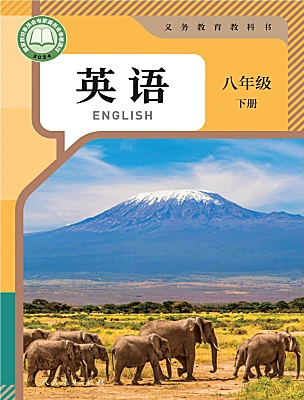
这是一份初中英语人教版(2024)八年级下册(2024)Section A授课ppt课件,共36页。PPT课件主要包含了新课引入,新课讲解,greeting,bow,right,knife,a lot of,cows,walk,归纳小结等内容,欢迎下载使用。
What are they ding?
They are shaking hands and greeting each ther.
What ther ways f greeting d yu knw?
Match the greetings with the pictures.
_____ shake hands _____ bw _____ bump fists_____ rub nses _____ kiss n the cheek _____ hug
Language pints
1. shake hands 握手(1) shake 作动词,意为“与(某人)握手;摇动”。They shk hands after the game. 比赛后他们握了手。She shk her head t say “n”. 她摇头表示“不”。Shake the bttle befre drinking. 喝之前摇一摇瓶子。(2) shake ff甩掉;摆脱The dg shk ff the water. 狗甩掉了身上的水。
【拓展】shake 作名词的用法:①milk shake 奶昔I like the chclate milk shake. 我喜欢巧克力奶昔。②give sb a shake 摇醒某人Mm gave me a shake t wake me up. 妈妈摇醒了我。
2. bw 鞠躬bw 的 用 法 :(1) 作名词,意为“弓;蝴蝶结;鞠躬”。The hunter used a bw and arrw t hunt. 猎人用弓箭打猎。She tied her hair with a pink bw. 她用粉色蝴蝶结扎头发。The actr tk a bw after the play. 演员在演出结束后鞠躬致谢。
(2) 作动词,意为“鞠躬;弯曲”。In Japan, peple bw t each ther as a greeting. 在日本,人们互相鞠躬问候。He bwed his head in prayer. 他低头祈祷。The tree bwed in the wind. 树被风吹弯了。
3. hug 拥抱hug 作动词,意为“拥抱”。She hugged her friend tightly. 她紧紧拥抱了她的朋友。The muntains hug the lake. 群山环抱着这个湖泊。
【拓展】hug 作名词,意为“拥抱”。Can I give yu a hug? 我能给你一个拥抱吗?She received a warm hug frm her teacher. 她得到了老师温暖的拥抱。
1. AnnaA. embarrassed2. Li TngB. surprised3. Ji-HnC. cnfused
Listen t three cnversatins at a party. Match the guests with their feelings. Share yur ideas n why they have these feelings.
4. embarrassed 尴尬的cnfused 困惑的embarrassed 和 cnfused 用来修饰人,而 embarrassing 和 cnfusing 用来修饰物,分别意为“令人尴尬的”和“令人困惑的”。I was embarrassed when I frgt my lines in the schl play. 我在校园剧里忘词时感到尴尬。It was s embarrassing t fall dwn in frnt f the whle class. 在全班面前摔倒真是太尴尬了。We were cnfused by the strange instructins. 我们被奇怪的说明搞糊涂了。The map was cnfusing because sme streets were missing. 这张地图让人困惑,因为有些街道缺失了。
【拓展】此类用法的词还有:bred 感到无聊的 → bring 无聊的excited 兴奋的 → exciting 令人兴奋的surprised 惊讶的 → surprising 令人惊讶的 frightened 害怕的 → frightening 可怕的mved 感动的 → mving 感人的
Listen t the script and check yur answers.
Cnversatin 1Anna: Hi Kait! Yu’re new here, right? I’m Anna Brwn, ne f yur teachers. Pleased t meet yu ... Oh!Kait: What’s wrng, Ms Brwn?Anna: Srry, yur bw surprised me. We usually just say “hell” r shake hands in the US!Kait: That’s surprising! In Japan, we bw as sn as we meet a teacher.
be pleased t d sth 高兴做某事
一……就……,引导时间状语从句
Cnversatin 2Harry: Hell! Yu’re Li Tng, right? I’m Harry. We’re in the same science class.Li Tng: Oh, hi, Harry! ... Srry, shuld we shake hands? Hw d yu greet thers in the UK?Harry: We culd, but it’s a little frmal. Usually we just say “hell”.Li Tng: D yu kiss thers n the cheek?Harry: We hug smetimes, but we dn’t usually kiss t say hell. We dn’t bw either. That’s s frmal that we nly d it at special times.Li Tng: Ww! I thught peple in the UK were very frmal.
adv. 用于否定句,表示“也不”
kiss sb n the cheek 亲吻某人的脸颊
Cnversatin 3Bb: Hey Ji-Hn, meet Marie. She’s frm France.Marie: Hi Ji-Hn, nice t meet yu ... Oh, dn’t lk s embarrassed!Ji-Hn: It’s embarrassing! In Krean culture, we dn’t usually kiss peple unless we lve them.Marie: In France we kiss friends n the cheek t say hell!
除非,引导条件状语从句
Listen again. Cmplete the table with the cmmn greetings in each cuntry.
Just say “hell” r shake hands
Bw as sn as meeting a teacher
Just say “hell”; smetimes hug; bw nly at special times
Kiss friends n the cheek t say hell
Chse tw characters frm 1b and 1c. Rle-play meeting each ther.
● Hw d yu greet peple in ● Is it cmmn t greet thers by ● We usually ... t say hell.● We dn’t/never ... because it’s t frmal/nt frmal enugh.
Cmplete the sentences abut Indian culture.
1. Many peple like / d nt like curry.2. It is usually OK t be late / early when visiting friends.3. Peple will usually ffer yu sme tea / fruit when yu visit them.4. Peple usually wear clthes which cver their arms / legs.5. It is rude / plite t give r take things with yur left hand.6. Dishes with beef are cmmn / uncmmn.
5. It is rude t give r take things with yur left hand. 用左手递东西或接东西是不礼貌的。本句是“It’s+adj.+t d sth.”的句型。句子中 it作为形式主语,真正的主语是动词不定式短语t d sth。It’s dangerus t play near the river. 在河边玩很危险。
【辨析】“It’s+adj.+fr sb+t d sth.” 与 “It’s+adj.+f sb+t d sth.”(1) It’s+adj.+fr sb+t d sth.形容词描述的是“做某事的难易或重要性等”,如 easy, hard, imprtant, necessary, dangerus 等。“fr sb”表示“对某人来说”,强调行为本身的特性。It’s easy fr me t slve this math prblem. 对我来说解这道数学题很容易。It’s imprtant fr students t study hard. 对学生来说努力学习很重要。
(2) It’s+adj.+f sb+t d sth形容词描述的是“人的性格或品德”,如kind nice, clever, flish, brave, plite 等。“f sb”表示 “某人的行为体现了某种品质”,强调人的特质。It’s kind f yu t help me with my hmewrk. 你帮助我写作业真是太好了。It’s clever f her t find the answer s quickly. 她这么快找到答案真是太聪明了。
What else d yu knw abut India?
India has many festivals, like Diwali (the Festival f Lights) and Hli (the Festival f Clrs).The natinal animal is the tiger, and the natinal bird is the peacck.Many peple speak Hindi, but there are ver 20 fficial languages in India.Yga started in ancient India and is still very ppular there.
Listen t the cnversatin and number the pictures in the rder f the tpics mentined.
Ella: We heard yu’re ging t India, Peter! Hw exciting!Peter: Yes, I’m really excited! Yu went there last year, right? Can yu tell me abut their custms?Ella: Sure! First, they have a special greeting. They press their palms tgether, bw, and say, “Namaste.”Peter: Ww! I’ll remember that.Ella: Secnd, yu shuld nly use yur right hand t eat.Peter: With my knife and frk?
Ella: Well, peple may nt use a knife and frk at all. Very ften they eat with their hands instead.Peter: OK! Anything else?Emma: Yes! Peple in India ften eat a lt f curry. I ate chicken curry there, and it was delicius! But dn’t expect t eat any beef. Cws are prtected in India. They are special t many peple.Ella: And they even walk anywhere they like! While we were there, ne walked right in frnt f ur car! It walked s slwly that we had t slw dwn and fllw it!
press ne’s palms tgether 双手合十
eat with hands 用手吃饭
Listen again and cmplete the sentences.
1. In India, peple have a special _____________. They press their palms tgether, _____________, and say, “Namaste.”2. Peple in India use their _____________ hand t eat. They may nt always eat with a _____________ and frk.3. Peple ften eat _____________ curry. It’s ppular in India.4. In India, _____________ are very special t many peple. They can _____________ anywhere they like.
A: Hw d peple in India greet thers? B: : What special fds d Indian peple ften eat? B: ...
Imagine a friend is ging t visit India. Tell him r her abut Indian custms.
A: Hw d peple in India greet thers?B: They press their palms tgether, bw, and say “Namaste”. It’s their special way t say hell.A: What special fds d Indian peple ften eat?B: They ften eat curry—like chicken curry. But yu wn’t find much beef there, because cws are special t them.A: Any ther things I need t knw?B: Yes, use yur right hand t eat. Using the left hand is nt plite.
1. New wrds and phrases:shake, bw, bump, fist, rub, kiss, cheek, hug, embarrassed, cnfused, frmal, curry, rude, uncmmn, palm, namaste, frk, Indian
2. Target language:—Hw d yu greet thers in —We ...
一、单项填空( ) 1. — _______ d friends greet each ther in yur cuntry, Andy?— They usually shake hands.A. WhatB. HwC. WhenD. Where( ) 2. It is _______ f the yung man t dnate his pcket mney t Prject Hpe.A. rudeB. kindC. frmalD. cmmn
( ) 3. D they greet each ther _______ a kiss?A. byB. atC. withD. use( ) 4. The ld man was _______ at the _______ rules.A. cnfused; cnfusingB. cnfusing; cnfusedC. cnfused; cnfusedD. cnfusing; cnfusing
1. They usually __________ (握) hands when they meet.2. She is my best friend. She ften __________ (拥抱) me when she meets me.3. In Japan, peple __________ (鞠躬) t say “thank yu”.4. My mst ____________ (尴尬的) mment was trying t intrduce a persn whse name I culdn’t remember.
embarrassing
Every culture has set rules abut hw peple shuld act, like hw t greet peple and hw t have dinner. Hwever, the rules in different cultures are nt ften the same.Greeting peple is always plite. But it’s mre imprtant in sme cultures than in thers. In France, when yu cme int a stre, yu shuld always greet the peple wrking there. 1. _________ The same ges fr cffee shps and restaurants. If yu dn’t d that, peple will think yu are nt plite at all.
A. And yu shuld always say “gdbye” t them when yu leave.B. In Nrth America, it’s plite t eat as quietly as pssible.C. In Japan, hw t say “gd mrning” just depends n peple’s relatinships.D. If yu are kind t thers, peple will always be kind t yu.E. There are als differences in hw peple eat acrss cultures.
Other cultures als pay attentin t greetings. But they may be mre careful with the wrds they say. 2. _________ If yu’re speaking t a friend, yu can use the wrd hayu t say “gd mrning”. Hwever, if yu are n yur way t the ffice and run int yur bss, yu shuld use hayu gzaimasu. Sme f the biggest cultural differences have t d with table manners. 3. _________ That means eating withut making any nise. But in parts f Asia, making a sund while eating shws that yu are enjying yur meal.
4. _________ Fr example, in Nrth America and Eurpe, peple use frks t bring fd t their muths. But in Thailand, peple nly use a frk t push fd nt a spn.Yet there are als similar pints acrss cultures, Saying “please” and “thank yu”, fr example, is always plite. 5. _________ Shwing kindness can bring peple tgether, n matter what culture they cme frm.
这是一份初中英语人教版(2024)八年级下册(2024)Section A授课ppt课件,共36页。PPT课件主要包含了新课引入,新课讲解,greeting,bow,right,knife,a lot of,cows,walk,归纳小结等内容,欢迎下载使用。
这是一份初中英语人教版(2024)八年级下册(2024)Unit 6 Crossing CulturesSection A课文内容ppt课件,共30页。PPT课件主要包含了新课引入,新课讲解,that,surprised,as soon as,surprising,unless,interested,Germany,归纳小结等内容,欢迎下载使用。
这是一份初中英语Unit 6 Crossing CulturesSection B课堂教学课件ppt,共33页。PPT课件主要包含了新课引入,新课讲解,unsafe,informal,impolite,improper,happy,patient,normal,properly等内容,欢迎下载使用。
 新教材
新教材注册成功
资料篮

在线客服
添加在线客服
获取1对1服务
官方微信
关注“教习网”公众号
打开微信就能找资料
赛课定制
添加在线客服
获取1对1定制服务
职称咨询
添加在线客服
获取1V1专业指导服务

免费福利

.png)