免费领取教师福利

若您为此资料的原创作者,认为该资料内容侵犯了您的知识产权,请扫码添加我们的相关工作人员,我们尽可能的保护您的合法权益。


这是一份人教版英语八年级下册期末知识点及练习,共37页。
Unit1重点句型
1. What’ s the matter? 怎么了?
What’ s the matter with yu?
= What’s the truble with yu?
= What’ s wrng with yu? 你怎么了?
2. What shuld she d? 她该怎么办呢?
Shuld I take my temperature? 我该量一下体温吗?
主语+ shuld/shuldn’t + 动词原形
① Yu shuld lie dwn and rest. 你应该躺下休息一会儿。
② Yu shuldn’t g ut at night. 你晚上不应该出去。
3. D yu think it cmes frm a newspaper r a bk? 你认为它是来自报纸还是书呢?
4. I think I sat in the same way fr t lng withut mving. 我想我以同样的姿势一动不动地坐太久了。
5. She said that the man had a heart prblem and shuld g t the hspital. 她说男人有心脏病,应该去医院。
Unit2重点句型
1. The by culd give ut fd at the fd bank. 这个男孩可以在食品救济站分发食物。
2. Clean-Up Day is nly tw weeks frm nw. 清洁日离现在仅仅两周的时间。
3. He vlunteers at an animal hspital every Saturday mrning. 每星期六上午,他都在一'家动物医院当志愿者。
4. Last year, she decided t try ut fr a vlunteer after- schl reading prgram. 去年,她决定去参加一个课外阅读项目的志愿者的选拔。
5. … yu can see in their eyes that they’re ging n a different jurney with each new bk. ……从他们的眼睛里,你可以看到他们正在进行每本不同的新书之旅。
6. I want t put ff my plan t wrk in an animal hspital until next summer. 我想把我在动物医院工作的计划推迟到明年夏天。
7. Mst peple tday are nly wrried abut getting gd jbs t make lts f mney. 现在的大部分人只是为找一份能挣
许多钱的好工作而着急。
8. Yu helped t make it pssible fr me t have Lucky.
在你的帮助下,我才有可能拥有“幸运儿”。
Unit3重点句型
1. Culd yu please d sth. ? 你能做某事吗?
Culd yu please clean yur rm? 你能清理一下你的房间吗?
2. I have t d sme wrk. 我必须干些活。
3. Culd I+ d sth. ? 我能做某事吗?
Culd I use yur cmputer?我能用一下你的电脑吗?
4. She wn’t be happy if she sees this mess. 如果她看到这样乱七八糟的话,她会不高兴的。
5. Fr ne week, she did nt d any husewrk and neither did I. 整整一周,她什么家务活都不干了,我也一样。
6. My mm came ver as sn as I sat dwn in frnt f the TV. 我一在电视机前坐下,我妈妈就过来了。
7. hate + (t d/ ding) sth. 讨厌做某事
I hate t d chres. 我讨厌做家务。
Unit4重点句型
1. I studied until mid night last night s I didn’t get enugh sleep. 我昨晚学习到半夜所以睡眠不足。
2. Why dn’t yu frge t abut it? 你为何不忘掉它呢?
3. Althugh she’s wrng , it’s nt a big deal. 虽然她错了,但这并不是什么大事儿。
4. He shuld talk t his friend s that he can say he’s srry. 他应该跟朋友谈谈以便能说声对不起。
5. May be yu culd g t his huse. 也许你可以去他家。
6. I guess I culd, but I dn’t want t surprise him. 我想我可以,但我不想让他感到惊讶。
Unit5重点句型
1. — What were yu ding at eight last night? 昨晚8 点你在干什么?
— I was taking a shwer. 我在洗淋浴。
2. When it began t rain, Ben was helping his mm make dinner. 当开始下雨的时候,本正在帮他妈妈做晚饭。
3. — What was Jenny ding while Linda was sleeping? 琳达在睡觉的时候,珍妮正在干什么?
— While Linda was sleeping, Jenny was helping Mary with her hmewrk. 琳达在睡觉的时候,珍妮正在帮玛丽做作业。
Unit6重点句型
1. What d yu think abut/f…? 你觉得……怎么样?
S what d yu think abut the stry f Yu Gng? 你觉得愚公的故事怎么样?
2. It desn’t seem + adj. t d sth. 做某事似乎……
It desn’t seem very pssible t mve -a muntain. 把一座山给移掉好像不太可能。
3. This is because… 这时因为……
This is because he can make 72 changes t his shape and size, turning himself int different animals and bjects. 这是因为他会根据他的形状和大小,做出72种变化,可以将自己变成不同的动物或东西。
4. …s … that +从句 如此……以致于……
Smetimes he can make the stick s small that he can keep it in his ear. 有时候,他能够让他的金箍棒变得很小,以至于可以放在耳朵里。
5. It take sb. sme time t d sth.做某事花某人多久时间
Because they were s big that it tk a lng time t walk t the ther side. 这些(山)太高了,他们要花好长时间才能翻越过去。
6. … nt … util十从句 直到……才
Dn’ t eat it until yu get t the frest. 你们到达森林之后才能吃。
Unit7重点句型
1. It is n.\adj. + (fr sb. ) t d sth. 做某事……
It is als very hard t take in air as yu get near the tp. 当你接近山顶时,连呼吸都会困难。
2. … is because … ……是因为……
One f the main reasns is because peple want t challenge themselves in the face f difficulties. 其中的一个主要的原因是人们想在面临困难时挑战自己。
3. … shw(s) that… ……显示出
The spirit f these climbers shws us that we shuld never give up trying t achieve ur dreams. 这些登山者的精神向我们证明:我们永远都不应该放弃实现自己的梦想。
4. Hw high/ deep/… is ... ? ……多高/ 深?
Hw high is Qmlangma? 珠穆朗玛峰有多高?
5. Althugh. …, … 虽然……,但是……
Althugh Japan is lder than Canada, it is much smaller. 虽然日本比加拿大历史更悠久,但它比加拿大小多了。
6. sb. spend time/mney ding sth.某人花时间/钱做…
Adult pandas spend mre than 12 hurs a day eating abut 10 kils f bamb. 成年大熊猫一天要花12 个多小时的时间
吃大约10公斤竹子。
Unit8重点句型
1. Have yu dne sth. yet? 你做过某事吗?
—Have yu read Little Wmen yet?你读过《小妇人》吗?
—Yes, I have. /N, I haven’t. 是的,我读过。/不,没有。
2. Has … yet?
— Has T in a read Treasure Island yet? 蒂娜读过《金银岛》这本书吗?
— Yes, she has. She thinks it’s fantastic. 是的,她读过。她觉得它很棒。
3. Wuld yu like…? 你要点……吗?
Wuld yu like smething t drink?你要来点喝的吗?
4. I heard … 我听说……
I heard yu lst yur key. 我听说你丢钥匙了。
5. … came t realize hw much…开始意识到多么……
She came t realize hw much she actually missed all f them. 她开始意识到,事实上她是多么想念他们所有人。
Unit9重点句型
1. Have yu ever been t…? 你曾经去过……吗?
Have yu ever been t a science museum? 你曾经去过科学博物馆吗?
2. Let’s … 我们……
Let’s g smewhere different tday. 我们今天去个不同的地方吧。
3. It’s~\~adj. +that…
It’s unbelievable that technlgy has prgressed in such a rapid way! 科技以如此迅猛的方式发展真是令人难以置信啊!
4. Whether…, yu’ll… 不管……,你都能……
Whether yu like Indian fd, Western fd r Japanese fd, yu’ll find it in Singapre! 不管你喜欢印度食品、西方食品还是日本食品,在新加坡你都能找到!
5. One great thing … is that … 一个重大特征是……
One great thing abut Singapre is that the temperature is almst the same all year rund. 新加坡一个很大的特征是它的气温几乎一年到头都是一样的。
6. It is best t d sth. 最好做某事
It is best t visit Singapre. 最好是去游览新加坡。
7. Me neither. 我也没(去过)。
8. Hw abut yu? 你呢?
9. Oh, it’s fantastic. Let’s g tmrrw. 噢,太棒了。我们明天去吧。
10. It’s really interesting, isn’t it? 这真有趣,不是吗?
11. S, what did yu d n the weekend? 那么,你周末干了什么?
12. That sunds fun. 那听起来很有趣。
13. Yu shuld try it! 你应该去试试!
14. What des Ken say abut the American Cmputer Museum? 关于美国计算机博物馆,肯说了什么?
15. Why is the Hangzhu Natinal Tea Museum a place t enjy tea? 为什么说杭州国家茶博物馆是一个品茶的地方?
16. —What are yu ding this weekend? 你这周打算干什么?
—Nt much, Mark. I dn’t really have any yet. 没什么事儿,马克。我确实还没有任何计划
17. —Oh, hw abut it? 哦,它怎么样?
—It was great. 很不错。
18. I see. I have never been there. 我明白了。我从没去过那里。
19. Perfect! 太棒了!
Unit10重点句型
1. Hw lng have yu…? 你……多久了?
Hw lng have yu had that bike ver there? 那边的那辆自行车你买了多久了?
2. sb. has/have dne sth. fr… 某人拥有某物……
Amy has had her favrite bk fr three years. 艾米拥有她最喜欢的书3 年了。
3. sb. has/have dne sth. since…自…起,某人有某物
He’s wned it since his furth birthday. 自他4 岁生日起,他就拥有这个东西了。
4. Sme… Others… 一些……另外一些……
Sme peple still live in their hmetwn. Hwever, thers may nly see it nce r twice a year. 有些人仍住在家乡。然而,另一些人可能一年只能回家乡一两次。
5. Welcme t Sunshine Hme fr Children. 欢迎来到儿童阳光之家。
6. Great! Many children here lve reading. 太棒了 !这里的很多孩子喜欢看书。
7. Perfect! We always need tys and clthes. 太好了!我们一直需要玩具和服装。
8. Thanks s much! 非常感谢!
9. As fr me, I did nt want t give up my ftball shirts, but, t be hnest, I have nt played fr a while nw. 至于我,我
不想放弃我的足球衣。但是,说实在的,我现在巳经有一段时间没踢(足球)了。
10. Have yu ever thught abut having a yard sale t sell yur things? 你是否曾经想过要举办一个庭院拍卖会来出售东西?
11. What wuld yu d with the mney yu raise? 你会怎么处理你所筹集到的钱?
基础巩固专项练习
一、根据划线部分写问句
1.He had a fever last night.
with him last night?
2.Sam shuld meet his friend at the train statin.
Sam his friend?
3.Yu shuld see a dentist.
I ?
4.I have a stmachache.
the matter yu?
5.I am feeling better nw.
are yu nw?
6.I like cleaning the bike because I can be utside.
yu cleaning the bike?
7.Jack needs 50 yuan t buy a new bag.
Jack t buy a new bag?
8.Yu shuld eat an apple every day.
yu d every day?
9.Je gt the bike n his sixth birthday.
Je get the bike?
10.I argued with Tina because I didn’t want her t cpy my hmewrk.
yu with Tina?
11.Parents like t cmpare their children with thers.
d parents like t cmpare their children ?
12.I was intrducing my hmetwn when yu called me up.What yu when I called yu up?
13.When it began t rain, Jim was helping his father wash the car.
was Jim when it began t rain?
14.That ld stry is abut an emperr with a special hbby.
that ld stry abut?
15.My weekend was very interesting.
yur weekend?
16.We g t see the children in the muntains every tw weeks.
d yu g t see the children in the muntains?
17.The Amazn River is abut 6,440 kilmeters lng.
is the Amazn River?
18.The Pacific Ocean is the biggest cean in the wrld.
the biggest cean in the wrld?
19.The new huse fr his puppy is half a meter wide.
is the new huse fr his puppy?
20.The ppulatin f China is mre than 1.3 billin.
f China?
21.Munt Huang is very interesting.
is Munt Huang ?
22.They have made sme delicius fd fr Tny.
they fr Tny?
23.Mr. Brwn has wrked here fr 5 years.
Mr. Brwn wrked here?
24.Tim has decided t play the pian in the art shw.
Tim t d in the art shw?
25.I have seen abut 20 freign films.
freign films have yu seen?
26.Mary has been in Beijing fr three years.
has Mary been in Beijing?
27.His uncle has taught us math since he started t wrk.
his uncle taught yu math?
28.He hasn’t cme t schl because he’s ill.
he t schl?
29.The meeting has been put ff because f the bad weather.
Why the meeting ?
30.Winnie has just visited Garden city z.
Winnie just visited?
翻译句子
1.作为一名登山者,Arn习惯于冒险。
2.我起得很早,以便能赶上早班车。
3.让我感到惊讶的是,他能独自穿越这片森林。
4.他摔倒时伤了右腿。(hurt)
5.正如我们所知道的,健康对我们所有人都很重要。
6.我们过去常常在一起下象棋和看动画片。
7.我得到了一种很强的满足感。(一般现在时态)
8.因为糟糕的天气,我们不得不推迟运动会的召开。
9.你能把垃圾倒了吗?
?
10.不要太依赖你的父母,你应该学会照顾自己。
11.尽管今天有太阳,但并不暖和。
12.我父母总是拿我和他们朋友家的孩子作比较。
13.你必须按时归还。
14.我认为是起床的时候了。
15.开始下雨的时候,Ben正在帮他妈妈做晚餐。
.
16.昨晚他直到熄灯了才睡。
17.当暴风雨来临时他在做什么?
18.孩子们不应该太依赖父母。
19.当Jenny 正在睡觉的时候,Ben正在弹钢琴。
20.在古代中国,故宫曾是一些皇帝的宫殿。
21.你体重多少?
22.企鹅现在处于极大危险中。
23.这座山比其他任何一座山都要高。
24.大熊猫主要以食用一种特别的竹子为生。
25.这墙有多长?
?
26.世界上最危险的运动之一是爬山。
27.Linda比她班上其他任何一个女孩都高。
28.巴黎是世界上最美的城市之一。
.
29.你越细心,你犯的错误就会越少。
30.到目前为止,我写了五个故事。
31.大自然是我们最大的财富并且我们依靠其丰富的资源。
32.露西去过长城两次。
33.他们来上海多久了?
34.——你曾经去过香港吗?
——是的,去过两次。
35.自1994年以来,我们一直住在这里。
36.我们已经学习英语6年了。
37.这本杂志我已经买了几个月了。
38.说实话,你的英语写作越来越好了。
39.我们是否按时举行会议取决于天气。
你曾经去过科学博物馆吗?
2025春人教版英语八年级下册期末复习学案
知识过关第3讲 句型
知识梳理
Unit1重点句型
1. What’ s the matter? 怎么了?
What’ s the matter with yu?
= What’s the truble with yu?
= What’ s wrng with yu? 你怎么了?
2. What shuld she d? 她该怎么办呢?
Shuld I take my temperature? 我该量一下体温吗?
主语+ shuld/shuldn’t + 动词原形
① Yu shuld lie dwn and rest. 你应该躺下休息一会儿。
② Yu shuldn’t g ut at night. 你晚上不应该出去。
3. D yu think it cmes frm a newspaper r a bk? 你认为它是来自报纸还是书呢?
4. I think I sat in the same way fr t lng withut mving. 我想我以同样的姿势一动不动地坐太久了。
5. She said that the man had a heart prblem and shuld g t the hspital. 她说男人有心脏病,应该去医院。
Unit2重点句型
1. The by culd give ut fd at the fd bank. 这个男孩可以在食品救济站分发食物。
2. Clean-Up Day is nly tw weeks frm nw. 清洁日离现在仅仅两周的时间。
3. He vlunteers at an animal hspital every Saturday mrning. 每星期六上午,他都在一'家动物医院当志愿者。
4. Last year, she decided t try ut fr a vlunteer after- schl reading prgram. 去年,她决定去参加一个课外阅读项目的志愿者的选拔。
5. … yu can see in their eyes that they’re ging n a different jurney with each new bk. ……从他们的眼睛里,你可以看到他们正在进行每本不同的新书之旅。
6. I want t put ff my plan t wrk in an animal hspital until next summer. 我想把我在动物医院工作的计划推迟到明年夏天。
7. Mst peple tday are nly wrried abut getting gd jbs t make lts f mney. 现在的大部分人只是为找一份能挣
许多钱的好工作而着急。
8. Yu helped t make it pssible fr me t have Lucky.
在你的帮助下,我才有可能拥有“幸运儿”。
Unit3重点句型
1. Culd yu please d sth. ? 你能做某事吗?
Culd yu please clean yur rm? 你能清理一下你的房间吗?
2. I have t d sme wrk. 我必须干些活。
3. Culd I+ d sth. ? 我能做某事吗?
Culd I use yur cmputer?我能用一下你的电脑吗?
4. She wn’t be happy if she sees this mess. 如果她看到这样乱七八糟的话,她会不高兴的。
5. Fr ne week, she did nt d any husewrk and neither did I. 整整一周,她什么家务活都不干了,我也一样。
6. My mm came ver as sn as I sat dwn in frnt f the TV. 我一在电视机前坐下,我妈妈就过来了。
7. hate + (t d/ ding) sth. 讨厌做某事
I hate t d chres. 我讨厌做家务。
Unit4重点句型
1. I studied until mid night last night s I didn’t get enugh sleep. 我昨晚学习到半夜所以睡眠不足。
2. Why dn’t yu frge t abut it? 你为何不忘掉它呢?
3. Althugh she’s wrng , it’s nt a big deal. 虽然她错了,但这并不是什么大事儿。
4. He shuld talk t his friend s that he can say he’s srry. 他应该跟朋友谈谈以便能说声对不起。
5. May be yu culd g t his huse. 也许你可以去他家。
6. I guess I culd, but I dn’t want t surprise him. 我想我可以,但我不想让他感到惊讶。
Unit5重点句型
1. — What were yu ding at eight last night? 昨晚8 点你在干什么?
— I was taking a shwer. 我在洗淋浴。
2. When it began t rain, Ben was helping his mm make dinner. 当开始下雨的时候,本正在帮他妈妈做晚饭。
3. — What was Jenny ding while Linda was sleeping? 琳达在睡觉的时候,珍妮正在干什么?
— While Linda was sleeping, Jenny was helping Mary with her hmewrk. 琳达在睡觉的时候,珍妮正在帮玛丽做作业。
Unit6重点句型
1. What d yu think abut/f…? 你觉得……怎么样?
S what d yu think abut the stry f Yu Gng? 你觉得愚公的故事怎么样?
2. It desn’t seem + adj. t d sth. 做某事似乎……
It desn’t seem very pssible t mve -a muntain. 把一座山给移掉好像不太可能。
3. This is because… 这时因为……
This is because he can make 72 changes t his shape and size, turning himself int different animals and bjects. 这是因为他会根据他的形状和大小,做出72种变化,可以将自己变成不同的动物或东西。
4. …s … that +从句 如此……以致于……
Smetimes he can make the stick s small that he can keep it in his ear. 有时候,他能够让他的金箍棒变得很小,以至于可以放在耳朵里。
5. It take sb. sme time t d sth.做某事花某人多久时间
Because they were s big that it tk a lng time t walk t the ther side. 这些(山)太高了,他们要花好长时间才能翻越过去。
6. … nt … util十从句 直到……才
Dn’ t eat it until yu get t the frest. 你们到达森林之后才能吃。
Unit7重点句型
1. It is n.\adj. + (fr sb. ) t d sth. 做某事……
It is als very hard t take in air as yu get near the tp. 当你接近山顶时,连呼吸都会困难。
2. … is because … ……是因为……
One f the main reasns is because peple want t challenge themselves in the face f difficulties. 其中的一个主要的原因是人们想在面临困难时挑战自己。
3. … shw(s) that… ……显示出
The spirit f these climbers shws us that we shuld never give up trying t achieve ur dreams. 这些登山者的精神向我们证明:我们永远都不应该放弃实现自己的梦想。
4. Hw high/ deep/… is ... ? ……多高/ 深?
Hw high is Qmlangma? 珠穆朗玛峰有多高?
5. Althugh. …, … 虽然……,但是……
Althugh Japan is lder than Canada, it is much smaller. 虽然日本比加拿大历史更悠久,但它比加拿大小多了。
6. sb. spend time/mney ding sth.某人花时间/钱做…
Adult pandas spend mre than 12 hurs a day eating abut 10 kils f bamb. 成年大熊猫一天要花12 个多小时的时间
吃大约10公斤竹子。
Unit8重点句型
1. Have yu dne sth. yet? 你做过某事吗?
—Have yu read Little Wmen yet?你读过《小妇人》吗?
—Yes, I have. /N, I haven’t. 是的,我读过。/不,没有。
2. Has … yet?
— Has T in a read Treasure Island yet? 蒂娜读过《金银岛》这本书吗?
— Yes, she has. She thinks it’s fantastic. 是的,她读过。她觉得它很棒。
3. Wuld yu like…? 你要点……吗?
Wuld yu like smething t drink?你要来点喝的吗?
4. I heard … 我听说……
I heard yu lst yur key. 我听说你丢钥匙了。
5. … came t realize hw much…开始意识到多么……
She came t realize hw much she actually missed all f them. 她开始意识到,事实上她是多么想念他们所有人。
Unit9重点句型
1. Have yu ever been t…? 你曾经去过……吗?
Have yu ever been t a science museum? 你曾经去过科学博物馆吗?
2. Let’s … 我们……
Let’s g smewhere different tday. 我们今天去个不同的地方吧。
3. It’s~\~adj. +that…
It’s unbelievable that technlgy has prgressed in such a rapid way! 科技以如此迅猛的方式发展真是令人难以置信啊!
4. Whether…, yu’ll… 不管……,你都能……
Whether yu like Indian fd, Western fd r Japanese fd, yu’ll find it in Singapre! 不管你喜欢印度食品、西方食品还是日本食品,在新加坡你都能找到!
5. One great thing … is that … 一个重大特征是……
One great thing abut Singapre is that the temperature is almst the same all year rund. 新加坡一个很大的特征是它的气温几乎一年到头都是一样的。
6. It is best t d sth. 最好做某事
It is best t visit Singapre. 最好是去游览新加坡。
7. Me neither. 我也没(去过)。
8. Hw abut yu? 你呢?
9. Oh, it’s fantastic. Let’s g tmrrw. 噢,太棒了。我们明天去吧。
10. It’s really interesting, isn’t it? 这真有趣,不是吗?
11. S, what did yu d n the weekend? 那么,你周末干了什么?
12. That sunds fun. 那听起来很有趣。
13. Yu shuld try it! 你应该去试试!
14. What des Ken say abut the American Cmputer Museum? 关于美国计算机博物馆,肯说了什么?
15. Why is the Hangzhu Natinal Tea Museum a place t enjy tea? 为什么说杭州国家茶博物馆是一个品茶的地方?
16. —What are yu ding this weekend? 你这周打算干什么?
—Nt much, Mark. I dn’t really have any yet. 没什么事儿,马克。我确实还没有任何计划
17. —Oh, hw abut it? 哦,它怎么样?
—It was great. 很不错。
18. I see. I have never been there. 我明白了。我从没去过那里。
19. Perfect! 太棒了!
Unit10重点句型
1. Hw lng have yu…? 你……多久了?
Hw lng have yu had that bike ver there? 那边的那辆自行车你买了多久了?
2. sb. has/have dne sth. fr… 某人拥有某物……
Amy has had her favrite bk fr three years. 艾米拥有她最喜欢的书3 年了。
3. sb. has/have dne sth. since…自…起,某人有某物
He’s wned it since his furth birthday. 自他4 岁生日起,他就拥有这个东西了。
4. Sme… Others… 一些……另外一些……
Sme peple still live in their hmetwn. Hwever, thers may nly see it nce r twice a year. 有些人仍住在家乡。然而,另一些人可能一年只能回家乡一两次。
5. Welcme t Sunshine Hme fr Children. 欢迎来到儿童阳光之家。
6. Great! Many children here lve reading. 太棒了 !这里的很多孩子喜欢看书。
7. Perfect! We always need tys and clthes. 太好了!我们一直需要玩具和服装。
8. Thanks s much! 非常感谢!
9. As fr me, I did nt want t give up my ftball shirts, but, t be hnest, I have nt played fr a while nw. 至于我,我
不想放弃我的足球衣。但是,说实在的,我现在巳经有一段时间没踢(足球)了。
10. Have yu ever thught abut having a yard sale t sell yur things? 你是否曾经想过要举办一个庭院拍卖会来出售东西?
11. What wuld yu d with the mney yu raise? 你会怎么处理你所筹集到的钱?
基础巩固专项练习
一、根据划线部分写问句
1.He had a fever last night.
with him last night?
2.Sam shuld meet his friend at the train statin.
Sam his friend?
3.Yu shuld see a dentist.
I ?
4.I have a stmachache.
the matter yu?
5.I am feeling better nw.
are yu nw?
6.I like cleaning the bike because I can be utside.
yu cleaning the bike?
7.Jack needs 50 yuan t buy a new bag.
Jack t buy a new bag?
8.Yu shuld eat an apple every day.
yu d every day?
9.Je gt the bike n his sixth birthday.
Je get the bike?
10.I argued with Tina because I didn’t want her t cpy my hmewrk.
yu with Tina?
11.Parents like t cmpare their children with thers.
d parents like t cmpare their children ?
12.I was intrducing my hmetwn when yu called me up.What yu when I called yu up?
13.When it began t rain, Jim was helping his father wash the car.
was Jim when it began t rain?
14.That ld stry is abut an emperr with a special hbby.
that ld stry abut?
15.My weekend was very interesting.
yur weekend?
16.We g t see the children in the muntains every tw weeks.
d yu g t see the children in the muntains?
17.The Amazn River is abut 6,440 kilmeters lng.
is the Amazn River?
18.The Pacific Ocean is the biggest cean in the wrld.
the biggest cean in the wrld?
19.The new huse fr his puppy is half a meter wide.
is the new huse fr his puppy?
20.The ppulatin f China is mre than 1.3 billin.
f China?
21.Munt Huang is very interesting.
is Munt Huang ?
22.They have made sme delicius fd fr Tny.
they fr Tny?
23.Mr. Brwn has wrked here fr 5 years.
Mr. Brwn wrked here?
24.Tim has decided t play the pian in the art shw.
Tim t d in the art shw?
25.I have seen abut 20 freign films.
freign films have yu seen?
26.Mary has been in Beijing fr three years.
has Mary been in Beijing?
27.His uncle has taught us math since he started t wrk.
his uncle taught yu math?
28.He hasn’t cme t schl because he’s ill.
he t schl?
29.The meeting has been put ff because f the bad weather.
Why the meeting ?
30.Winnie has just visited Garden city z.
Winnie just visited?
翻译句子
1.作为一名登山者,Arn习惯于冒险。
2.我起得很早,以便能赶上早班车。
3.让我感到惊讶的是,他能独自穿越这片森林。
4.他摔倒时伤了右腿。(hurt)
5.正如我们所知道的,健康对我们所有人都很重要。
6.我们过去常常在一起下象棋和看动画片。
7.我得到了一种很强的满足感。(一般现在时态)
8.因为糟糕的天气,我们不得不推迟运动会的召开。
9.你能把垃圾倒了吗?
?
10.不要太依赖你的父母,你应该学会照顾自己。
11.尽管今天有太阳,但并不暖和。
12.我父母总是拿我和他们朋友家的孩子作比较。
13.你必须按时归还。
14.我认为是起床的时候了。
15.开始下雨的时候,Ben正在帮他妈妈做晚餐。
.
16.昨晚他直到熄灯了才睡。
17.当暴风雨来临时他在做什么?
18.孩子们不应该太依赖父母。
19.当Jenny 正在睡觉的时候,Ben正在弹钢琴。
20.在古代中国,故宫曾是一些皇帝的宫殿。
21.你体重多少?
22.企鹅现在处于极大危险中。
23.这座山比其他任何一座山都要高。
24.大熊猫主要以食用一种特别的竹子为生。
25.这墙有多长?
?
26.世界上最危险的运动之一是爬山。
27.Linda比她班上其他任何一个女孩都高。
28.巴黎是世界上最美的城市之一。
.
29.你越细心,你犯的错误就会越少。
30.到目前为止,我写了五个故事。
31.大自然是我们最大的财富并且我们依靠其丰富的资源。
32.露西去过长城两次。
33.他们来上海多久了?
34.——你曾经去过香港吗?
——是的,去过两次。
35.自1994年以来,我们一直住在这里。
36.我们已经学习英语6年了。
37.这本杂志我已经买了几个月了。
38.说实话,你的英语写作越来越好了。
39.我们是否按时举行会议取决于天气。
你曾经去过科学博物馆吗?
参考答案
一、
1. What was the matter
【详解】句意:他昨晚发烧了。原句划线部分是病症描述,提问时需用固定句型What’s the matter,因为时态是一般过去时,所以be动词用was。故填What;was;the;matter。
2. Where shuld meet
【详解】句意:山姆应该在火车站见他的朋友。划线部分是地点状语,应该用where提问,原句使用shuld,改为疑问句时将shuld置于where之后,shuld后接动词原形meet。故填Where;shuld;meet。
3. What shuld d
【详解】句意:你应该去看牙医。划线部分“see a dentist”,是问做什么事情,需用what提问,原句使用shuld,问句也需要用shuld,在情态动词后的“d”用原形。故填What;shuld;d。
4. What’s with
【详解】句意:我胃痛。划线部分“have a stmachache”表述的是身体不舒服,对身体不舒服提问应用疑问句“What’s the matter with…/What’s wrng with…”;根据题干可知,此处应用What’s the matter with…;what位于句首,首字母要大写,且与is缩写为What’s。故填What’s;with。
5. Hw feeling
【详解】句意:我现在感觉好多了。根据题干可知,此处对人的感受进行提问,应用hw引导特殊疑问句;原句中的feeling应放置在主语后。故填Hw;feeling。
6. Why d like
【详解】句意:我喜欢洗自行车,因为我可以待在户外。分析“I like cleaning the bike because I can be utside.”可知划线部分是原因状语从句,对原因状语从句提问用疑问词Why“为什么”,放在句首,首字母大写;原句是一般现在时态,所以对此提问的疑问句也应该是一般现在时,因为句中的动词“like”为实义动词,因此疑问句需要借助助动词,
主语是yu,因而用助动词d构成疑问句,放在主语之前,构成疑问语序;助动词后的动词用原形,因此后接动词原形like,故填Why;d;like。
7. Hw much des need
【详解】句意:杰克需要五十块钱来买一个新书包。句中划线部分表示新书包的价钱,提问价钱应该用“hw much”,放句首首字母大写;原句中谓语动词为needs,为一般现在时,疑问句借助于助动词des,后面的动词用原形。故填Hw;much;des;need。
8. What shuld
【详解】句意:你应该每天吃一个苹果。根据划线部分“eat an apple”可知,此处应该是问“应该做什么”,疑问词用what,shuld是情态动词,变一般疑问句时,直接把shuld提到主语前面,疑问词位于句首首字母要大写,故填What shuld。
9. When did
【详解】句意:乔在六岁生日时得到了那辆自行车。划线部分是乔得到自行车的时间,用when提问,原句是一般过去时态,故填When;did。
10. Why did argue
【详解】句意:我和蒂娜吵架了,因为我不想让她抄我的作业。划线部分是because引导的原因状语从句,询问原因应使用why引导特殊疑问句,特殊疑问句的构成为:疑问词+一般疑问句;由原句中的“argued”可知,一般疑问句使用的助动词是did,助动词之后用动词原形,argued是argue的过去式;句首首字母大写;故填Why;did;argue。
11. Wh/ Whm with
【详解】句意:父母喜欢拿自己的孩子和别人比较。划线部分“thers”表示“其他的孩子们”,指人,介词with后接代词宾格,所以用疑问词wh或whm,疑问词后接一般疑问句,cmpare ... with ...“与……比较”,故填Wh/Whm;with。
12. were ding
【详解】句意:你打电话给我时,我正在介绍我的家乡。原句时态为过去进行时,对动作进行提问,应用what引导特殊疑问句,主语为“yu”,所以be动词应用were,位于疑问词后,主语后应用现在分词ding。故填 were;ding。
13. What ding
【详解】句意:天开始下雨时,吉姆正在帮他父亲洗车。划线部分是正在做的事情,故此处询问“正在做什么”,疑问词用what,动词用现在分词ding。故填What;ding。
14. What is
【详解】句意:那个古老的故事讲的是一位有特殊爱好的皇帝。此处对“an emperr with a special hbby”提问,是对
故事内容的提问,用疑问词what,后跟be动词is,故填What;is。
15. Hw was
【详解】句意:我的周末是非常有趣的。此处对“very interesting”提问,用疑问词hw,后跟系动词was,故填Hw;was。
16. Hw ften
【详解】句意:我们每两周去看一次山里的孩子们。根据“We g t see the children in the muntains every tw weeks.”及汉语提示可知,此句对“every tw weeks”进行提问,可知问的是频度,hw ften“多长时间一次”符合语境,位于句首首字母应大写。故填Hw;ften。
17. Hw lng
【详解】句意:亚马逊河长约6440公里。根据“The Amazn River is abut 6,440 kilmeters lng .”及题目要求可知,对“abut 6,440 kilmeters lng”进行提问,可知问的是亚马逊河的长度,应用hw lng“多长”进行提问,位于句首首字母应大写。故填Hw;lng。
18. What is
【详解】句意:太平洋是世界上最大的海洋。划线部分是“太平洋”,对物提问,用what引导的特殊疑问句,be动词is放what之后。故填What;is。
19. Hw wide
【详解】句意:他的小狗的新房子有半米宽。划线部分表示宽度,疑问句用hw来提问,用于句首,首字母要大写,表示宽度用wide。故填Hw;wide。
20. What’s the ppulatin
【详解】句意:中国的人口超过13亿。划线部分为人口数量,疑问句应用what来提问,句首首字母需要大写,原句的be动词is放在特殊疑问词后面,然后加主语the ppulatin,故填What’s;the;ppulatin。
21. What like
【详解】句意:黄山非常有趣。划线部分“very interesting”是形容词,作表语,此处应该问“怎么样”,用What…like进行提问,位于句首要首字母大写。故填What;like。
22. What have made
【详解】句意:他们为托尼做了一些美味的食物。划线部分指物,提问应用what,句首首字母大写;时态为现在完成时,变特殊疑问句,助动词have放在主语they前,后接过去分词made。故填What;have;made。
23. Hw lng has
【详解】句意:布朗先生在这里工作了5年。划线部分是时间段,疑问词用hw lng;根据“has wrked”可知变疑问
句时把助动词has放主语之前。故填Hw;lng;has。
24. What has decided
【详解】句意:蒂姆决定在艺术展上弹钢琴。划线部分表示Tim决定做的事情,对此提问用疑问词what,has是助动词,要放在疑问词后,has与过去分词decided构成现在完成时结构,故填What;has;decided。
25.Hw many
【详解】根据“abut 20”可知对数量提问,且修饰名词复数films,用疑问词组Hw many“多少”。故填Hw many。
26.Hw lng
【详解】根据划线部分“fr three years ”可知对时间段提问,用hw lng“多久”。句子开头首字母大写。故填Hw lng。
27. Hw lng has
【详解】句意:自从他开始工作以来,他的叔叔一直教我们数学。划线部分是表示一段时间,对其提问应用特殊疑问词Hw lng。疑问句中需要把助动词has提到主语前。故填Hw;lng;has。
28. Why hasn’t cme
【详解】句意:他没有来上学因为他生病了。句中划线部分解释了他没有来上学的原因,疑问词应用Why“为什么”;原句使用的是现在完成时态,在疑问句中,将hasn’t提到主语前面;第三个空仍用过去分词,cme的过去分词还是cme。故填Why;hasn’t;cme。
29. has been put ff
【详解】根据“特殊疑问句=特殊疑问词+一般疑问句”和“The meeting has been put ff”可知,此句是现在完成时,改为一般疑问句,has提到主语前面,其余照抄,故填has;been;put;ff。
30. What has
【详解】句意:温妮刚刚参观了花园城动物园。根据划线部分“Garden city z”可知,此处是对宾语的提问,问的是参观了什么,应用what提问,原句是现在完成时,变成疑问句把助动词has提到主语前,故填What has。
二、
1.As a muntain climber, Arn is used t taking risks.
【详解】作为:as;一名登山者:a muntain climber;习惯于:be used t ding sth;冒险:take risks。根据句意可知,时态是一般现在时,主语是Arn,be动词用is。故填As a muntain climber, Arn is used t taking risks.
2.I get up early s that I can catch the early bus.
【详解】分析句子可知,句子是陈述句,时态是一般现在时,I“我”,作主语;get up“起床”,动词短语,作谓语动词;early“早地”,副词修饰动词;s that“为了”,引导目的状语从句;I“我”,作主语;can“可以”,情态动词,其后跟动词原形;catch“赶上”,作谓语动词;the early bus“早班车”,作宾语。故填I get up early s that I can catch the early
bus.
3.T my surprise, he culd g thrugh the frest by himself.
【详解】分析句子可知,让我感到惊讶的是:T my surprise,介词短语,作状语;he“他”,作主语;culd“可以”,情态动词,其后跟动词原形;g thrugh“穿越”,作谓语动词;the frest“这片森林”,作宾语;by himself“靠他自己,独自”。故填T my surprise, he culd g thrugh the frest by himself.
4.He hurt his right leg when he fell dwn.
【详解】根据汉语提示可知,此句为主从复合句,用when引导时间状语从句,时态为一般过去时。he“他”,作主语;hurt“伤害”,动词,其过去式为hurt;his right leg“他的右腿”;when“当……时”,连词;fall dwn“摔倒”,动词短语。主句中,he作主语,谓语动词为hurt;从句中,he作主语,谓语动词应用fall的过去式;且句首首字母要大写。故填He hurt his right leg when he fell dwn.
5.As we knw, health is very imprtant t all f us.
【详解】正如我们所知道的:as we knw;健康对我们所有人都很重要:health is very imprtant t all f us。health名词作主语,谓语动词用单数is。故填As we knw, health is very imprtant t all f us.
6.We used t play chess and watch cartns tgether.
【详解】We“我们”,主语;used t“过去常常”,谓语;play chess“下象棋”;watch cartns“看动画片”;动词短语中间用and连接;tgether“一起”。故填We used t play chess and watch cartns tgether.
7.I get a strng feeling f satisfactin.
【详解】我:I;得到:get;一种很强的满足感:a strng feeling f satisfactin,故填I get a strng feeling f satisfactin.
8.We have t put ff the sprts meeting because f the bad weather.
【详解】因为:because f;糟糕的天气:the bad weather;我们:we;不得不:have t;推迟:put ff;运动会的召开:the sprts meeting。句子应用一般现在时,主语为we,谓语动词用原形,情态动词have t后加动词原形。故填We have t put ff the sprts weather because f the bad weather.
9.Culd yu please take ut the rubbish/garbage/litter/trash
【详解】根据汉语意思可知,此句应为一般疑问句。Culd yu please d sth.“你能做某事吗”,表示委婉的询问;take ut“倒”;the rubbish/garbage/litter/trash “垃圾”。故填Culd yu please take ut the rubbish garbage/litter/trash。
10.Dn’t depend n yur parents t much. Yu shuld learn t lk after yurself.
【详解】题干是两个简单句。首句是祈使句的否定形式。不要:dn’t;太依赖某人:depend n sb t much;你的父母:yur parents;你:yu;应该:shuld;学会:learn t;照顾你自己:lk after yurself。故答案为:Dn’t depend n yur parents t much. Yu shuld learn t lk after yurself.
11.Althugh it’s sunny tday, it is nt warm.
【详解】今天“tday”;有太阳的“ sunny”,表达天气主语用it;尽管“althugh”,连词;不“nt”;暖和的“warm”。句子用一般现在时陈述客观的事实。故填Althugh it’s sunny tday, it is nt warm.
12.My parents always cmpare me with the children f their friends.
【详解】my parents我父母,作主语,首字母大写;always总是;把……和……比较;children孩子;friends朋友。根据“always”可知,本句应使用一般现在时,主语是my parents,谓语动词用原形。故填My parents always
cmpare me with the children f their friends.
13.Yu must return it n time.
【详解】“你”yu;“必须”must;“归还”return;“按时”n time。本句结合语境,用“Yu must+动词原形”表示“你必须……”,归还的对象用“it”来指代,故填Yu must return it n time 。
14.I think it’s time t get up.
【详解】结合中文,时态为一般现在时。I“我”第一人称作主语,后接动词原形;think“认为”,后接宾语从句;it’s time t d sth.“是时候做某事”;get up“起床”。故填I think it’s time t get up.
15.When it began t rain, Ben was helping his mm make dinner.
【详解】根据汉语题干可知,句子为含when引导的时间状语从句的主从复合句;when“当……时候”,引导时间状语从句,位于句首,首字母要大写;it began t rain“开始下雨”,为从句;Ben作主句的主语;help sb. d sth.“帮助某人做某事”,此处是指开始下雨的时候,“帮助”正在进行,应用过去进行时,其结构为was/were ding;主语为“Ben”,be动词应用was,动词help的现在分词为helping;make dinner“做晚餐”,动词短语。故填When it began t rain, Ben was helping his mm make dinner.
16.He didn’t g t bed until the light was turned ff.
【详解】根据中文“昨晚”可知此句是一般过去时,“直到……才”是nt…until…,“熄灯”是turn ff the light,此处应用其被动结构,则是the light was turned ff。故填He didn’t g t bed until the light was turned ff.
17.What was he ding when the rainstrm came/at the time f the rainstrm?
【详解】根据中文句意可知,“什么”是疑问词What,用于引导特殊疑问句;“他”是主语he;“在做”指的是当暴风雨来临时在做的事情,为过去进行时,结构为was/were ding,这里主语he是第三人称单数,所以用was;“当暴风雨来临时”可以用when引导时间状语从句“when the rainstrm came”,也可以用短语“at the time f the rainstrm”。故填What was he ding when the rainstrm came/at the time f the rainstrm?
18.Kids shuldn’t depend n their parents t much.
【详解】分析题干可知,句子为陈述句;kids“孩子们”,作主语,位于句首,首字母要大写;shuldn’t“不应该”,后
接动词原形;depend n“依赖”,动词短语;their parents“他们的父母”,作宾语;t much“太多”,表示程度,作状语。故填Kids shuldn’t depend n their parents t much.
19.While Jenny was sleeping, Ben was playing the pian.
【详解】根据题干,可知while“当……时”,引导时间状语从句;sleep“睡觉”,play the pian“弹钢琴”,本句的从句和主句都应该用过去进行时,表示主句和从句的动作同时发生。故填While Jenny was sleeping, Ben was playing the pian.
20.In ancient China, the Frbidden City was the palace f sme emperrs.
【详解】China中国,专有名词,ancient古代的,形容词作定语,the Frbidden City故宫;palace宫殿;sme emperrs一些皇帝。描述过去的事,用一般过去时。故填In ancient China, the Frbidden City was the palace f sme emperrs.
21.Hw much d yu weigh?
【详解】“你”yu;“体重多少”即询问重量是多少,在英语中询问不可数名词(如重量、金钱等)的数量用“hw much”来提问;“称重,重量为……”用动词“weigh” 。此句是一个询问体重的特殊疑问句,结构为“特殊疑问词 + 一般疑问句语序”,一般现在时中,主语“yu”是第二人称,借助助动词“d”构成一般疑问句语序。故填Hw much d yu weigh?
22.Penguins are nw in great danger.
【详解】分析题干可知,句子为陈述句,且时态为一般现在时;penguins“企鹅”,名词复数形式表泛指,作主语,位于句首,首字母要大写;主语为复数,be动词应用are;in great danger“处于极大危险中”,介词短语;nw“现在”,时间副词。故填Penguins are nw in great danger.
23.This muntain is higher than any ther muntain.
【详解】分析题干可知,句子为含比较级的陈述句;this muntain“这座山”,作句子的主语,位于句首,首字母要大写;句子陈述事实,且主语为单数,be动词应用is;high“高的”,形容词,其比较级为higher;than“比”,引出比较的对象;any ther muntain“其他任何一座山”。故填This muntain is higher than any ther muntain.
24.Giant pandas live mainly n a special kind f bamb.
【详解】Giant pandas大熊猫,这里表示泛指一类动物,用复数形式,首字母大写;mainly主要,副词修饰动词,可以放在动词之前,也可以放在动词之后;以……为食:live n,固定短语;一种特殊的竹子:a special kind f bamb。此句描述客观事实,用一般现在时,主语Giant pandas是复数,谓语动词用原形live。故填Giant pandas live mainly n a special kind f bamb.
25.Hw lng is this wall
【详解】分析句子可知,句子是特殊疑问句,Hw lng“多长”,引导特殊疑问句;this wall“这个墙”,作主语,be
动词用is。故填Hw lng is this wall。
26.One f the mst dangerus sprts is muntain climbing.
【详解】分析句子可知,本句为主系表结构。最……的之一:ne f+形容词的最高级+可数名词的复数形式,为固定搭配。最危险的:the mst dangerus;运动:sprt;爬山:muntain climbing,动名词短语作表语;根据句意可知,该句为一般现在时态。故答案为One f the mst dangerus sprts is muntain climbing.
27.Linda is taller than any ther girl in her class.
【详解】分析句子可知,此句为含比较级的句子。tall“高”;than“比”;any ther“其他任何”;girl“女孩”;in ur class“在我们班”。句子为一般现在时,主语为第三人称单数,因此谓语动词用单数is;由than可知,形容词tall要用比较级taller;any ther后跟名词单数。故填Linda is taller than any ther girl in her class.
28.Paris is ne f the mst beautiful cities arund the wrld
【详解】Paris“巴黎”;is“是”;“ne f the+形容词最高级+名词复数”表示“最……的……之一”;the mst beautiful“最美的”;cities“城市”;arund the wrld“世界上”。故填Paris is ne f the mst beautiful cities arund the wrld。
29.The mre careful yu are, the fewer mistakes yu’ll make.
【详解】根据中文可知表示“越……越……”应该使用句型“the+比较级,the+比较级”。你:yu;动词用are;细心,仔细的:careful,它的比较级为mre careful。犯错误:make mistakes;因为mistake为可数名词,因此更少的是fewer,句子应用一般将来时的结构。故填The mre careful yu are, the fewer mistakes yu’ll make。
30.I have written five stries s far.
【详解】 我:I;写:write;五个故事:five stries;到目前为止:s far。s far是现在完成时的标志词,结构为“have/has + 过去分词”。主语I是第一人称,因此用have,write的过去分词为written。 故填 I have written five stries s far.
31.Nature is ur greatest treasure and we depend n its rich resurces.
【详解】根据中文可知句子为一般现在时,nature“大自然”,作主语;is“是”;ur greatest treasure“我们最大的财富”,作表语;and“和”,前后表示并列关系;we“我们”,作主语;depend n“依靠”,作谓语;its rich resurces“其丰富的资源”作宾语。故填Nature is ur greatest treasure and we depend n its rich resurces.
32.Lucy has been t the Great Wall twice.
【详解】根据句意可知,本句时态为现在完成时,其结构为have/has+dne。“露西”Lucy;“去过”has been t;“长城”the Great Wall;“两次”twice。故填Lucy has been t the Great Wall twice.
33.Hw lng have they been in Shanghai?
【详解】分析题干是特殊疑问句,使用现在完成时,谓语由have/has+过去分词构成。多久:hw lng;be in Shanghai来上海。故填Hw lng have they been in Shanghai?
34.—Have yu ever been t Hng Kng? —Yes, I have been there twice.
【详解】分析句子可知,句子为现在完成时的一般疑问句且作肯定回答。你:yu;曾经:ever;去过:have been t;香港:Hng Kng;是的:yes;两次:twice。回答时第二人称需换成第一人称I,用there代替前文的香港,there为地点副词,t省略。故填—Have yu ever been t Hng Kng? —Yes, I have been there twice.
35.We have lived here since 1994.
【详解】自从1994年以来:since 1994;我们:we;居住:live;这里:here。since是现在完成时态的标志词,所以谓语动词用现在完成时态。现在完成时态的结构是“have/has + 过去分词”,主语we是第一人称复数,故用have,live的过去分词是lived。故填We have lived here since 1994.
36.We have studied/learned English fr six years.
【详解】we“我们”,study=learn“学习”,English“英语”,fr six years“长达6年”,与时间段连用,谓语用现在完成时have dne,主语we是复数形式,谓语用复数形式,故填We have studied/learned English fr six years.
37.I have had this magazine fr sme mnths.
【详解】分析句子可知,时态应为现在完成时,结构为have/has+dne,I“我”作主语,助动词用have;buy“买”,短暂性动词,应用其对应的延续性动词have,过去分词为had;this magazine“这本杂志”;fr sme mnths“几个月”,fr后面加时间段,表示动作持续了一段时间。故填I have had this magazine fr sme mnths.
38.T be hnest, yur English writing is getting better and better.
【详解】说实话t be hnest;你的yur;英语写作English writing;变得get;越来越好better and better。 分析题干可知,该句用现在进行时表示,所以谓语动词用is getting。故填T be hnest, yur English writing is getting better and better.
39.Whether we will hld the meeting n time depends n the weather.
【详解】我们:we;是否:whether;按时:n time;举行会议:hld the meeting;取决于:depend n;天气:the weather(特指当天的天气)。分析题干,此句可用whether引导的主语从句来表达;whether需置于句首,且首字母大写;根据中文句意,可知“会议还未举行”,故从句时态用一般将来时;当主语从句作句子的主语时,谓语动词用单数形式,即“depends n”,故填Whether we will hld the meeting n time depends n the weather.
40.Have yu ever been t a science museum?
【详解】根据标点“?”可知,句子为疑问句。yu你,have ever been t曾经去过,a science museum科学博物馆。句子为现在完成时,改为疑问句将have提至句首且大写首字母,主语yu位于其后,故填Have yu ever been t a science museum?
这是一份人教版英语八年级下册期末知识点及练习,共37页。
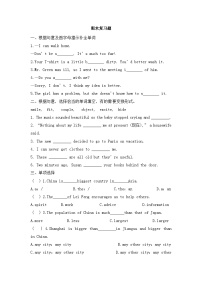
这是一份人教版英语八年级下册 期末练习,共7页。试卷主要包含了根据提示补全单词,完成句子,用方框中所给词组的适当形式填空,单项选择,完成句子,句型转换,短文填空,阅读理解等内容,欢迎下载使用。
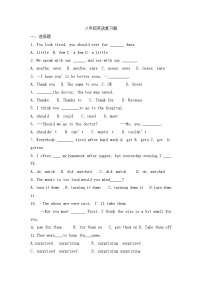
这是一份人教版英语八年级下册 期末练习,共9页。试卷主要包含了单项选择,用所给词的适当形式填空,同义句转换,短文填空,翻译句子,完形填空,阅读理解等内容,欢迎下载使用。
注册成功
资料篮

在线客服
添加在线客服
获取1对1服务
官方微信
关注“教习网”公众号
打开微信就能找资料
赛课定制
添加在线客服
获取1对1定制服务
职称咨询
添加在线客服
获取1V1专业指导服务

免费福利


.png)