 免费领取教师福利


若您为此资料的原创作者,认为该资料内容侵犯了您的知识产权,请扫码添加我们的相关工作人员,我们尽可能的保护您的合法权益。

这是一份2026年北京市中考英语试题(附答案解析),共11页。试卷主要包含了单项选择,完形填空,阅读理解,任务型阅读,书面表达等内容,欢迎下载使用。
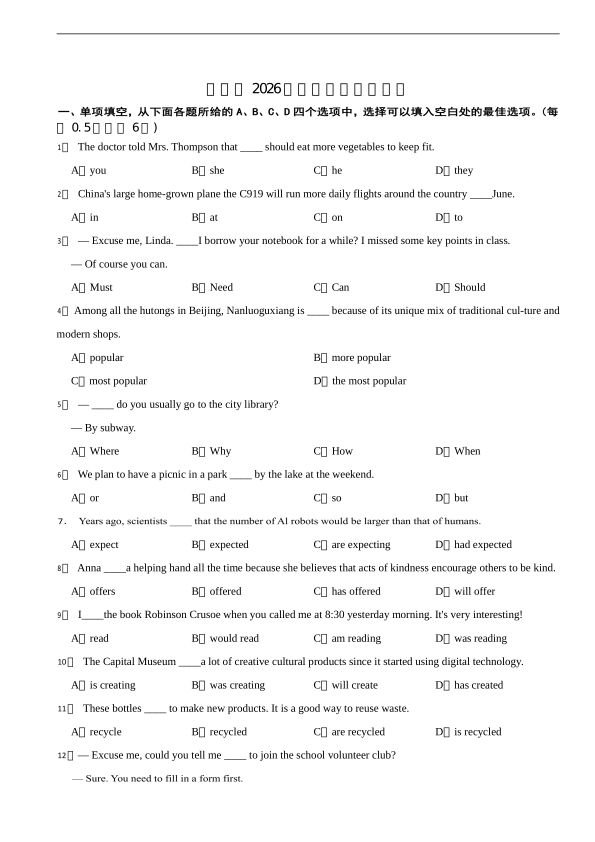
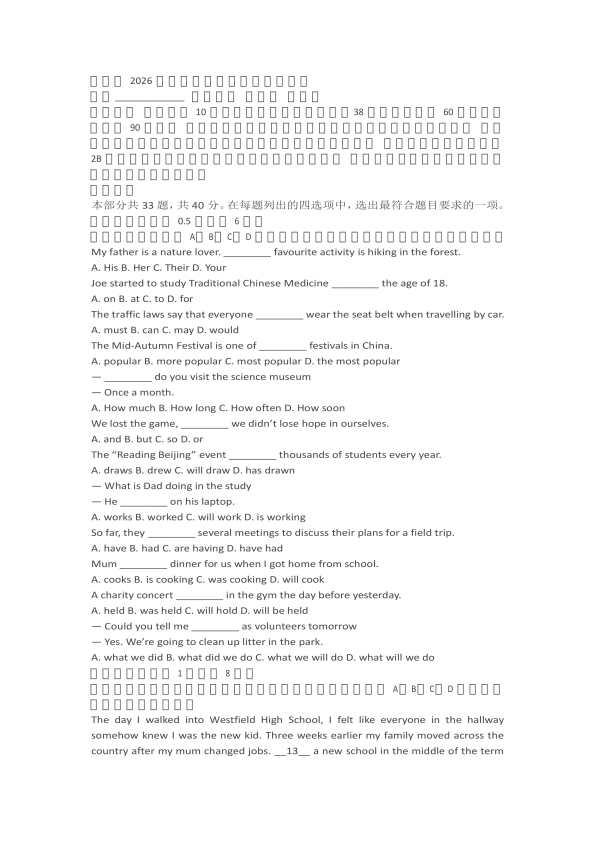
一、单项选择
1.My father is a nature lver. ________ favurite activity is hiking in the frest.
A.HisB.HerC.TheirD.Yur
2.Je started t study Traditinal Chinese Medicine ________ the age f 18.
A.nB.atC.tD.fr
3.The traffic laws say that everyne ________ wear the seat belt when travelling by car.
A.mustB.canC.mayD.wuld
4.The Mid-Autumn Festival is ne f ________ festivals in China.
A.ppularB.mre ppularC.mst ppularD.the mst ppular
5.— ________ d yu visit the science museum?
— Once a mnth.
A.Hw muchB.Hw lngC.Hw ftenD.Hw sn
6.We lst the game, ________ we didn’t lse hpe in urselves.
A.andB.butC.sD.r
7.The “Reading Beijing” event ________ thusands f students every year.
A.drawsB.drewC.will drawD.has drawn
8.—What is Dad ding in the study?
—He ________ n his laptp.
A.wrksB.wrkedC.will wrkD.is wrking
9.S far, they ________ several meetings t discuss their plans fr a field trip.
A.haveB.hadC.are havingD.have had
10.Mum ________ dinner fr us when I gt hme frm schl.
A.cksB.is ckingC.was ckingD.will ck
11.A charity cncert ________ in the gym the day befre yesterday.
A.heldB.was heldC.will hldD.will be held
12.—Culd yu tell me ________ as vlunteers tmrrw?
—Yes. We’re ging t clean up litter in the park.
A.what we didB.what did we dC.what we will dD.what will we d
二、完形填空
阅读下面的短文,掌握其大意,然后从短文后各题所给的A、B、C、D四个选项中,选择最佳选项。
The day I walked int Westfield High Schl, I felt like everyne in the hallway smehw knew I was the new kid. Three weeks earlier, my family mved acrss the cuntry after my mum changed jbs. 13 a new schl in the middle f the term felt like hitting reset n my whle life.
At lunch that first day, I sat at a crner table pretending (假装) t be very interested in my phne while 14 searching fr “hw t survive being the new kid”. Teen articles kept saying the same thing—feeling wrried during a schl transitin (过渡期) is nrmal. That helped a little, but it still felt 15 .
The first week was awful. I gt lst lking fr the chemistry class, misprnunced a teacher’s name, and accidentally walked int the wrng classrm twice. But smething small started t 16 when a by asked if I wanted t jin his grup in the science lab. That made the whle day easier. One thing I learned quickly is that mst students dn’t 17 yu as much as yu think. Everyne is busy wrrying abut their wn things.
Slwly, I fund a way t 18 . Instead f trying t d many big things right away, I fcused n simple things, like learning tw classmates’ names a week and asking ne questin in a class. Thse small wins slwly built up my cnfidence.
By the end f the term, things lked very 19 . I jined the phtgraphy club and started hanging ut with my classmates after schl. Changing schls in the middle f the term was nt easy, but it taught me smething imprtant abut resilience (适应力) and 20 . Feeling uneasy des nt last frever. If yu are the new kid right nw, hang in there. The hallway that feels strange tday may becme the place where yu begin yur new stage f life.
13.A.StartingB.VisitingC.SupprtingD.Enjying
14.A.suddenlyB.excitedlyC.angrilyD.secretly
15.A.unwiseB.unreasnableC.uncmfrtableD.unimprtant
16.A.returnB.changeC.increaseD.mve
17.A.pushB.judgeC.prtectD.respect
18.A.shw upB.stand utC.cme backD.fit in
19.A.differentB.strangeC.cmmnD.serius
20.A.hnestyB.freedmC.cnfidenceD.cperatin
三、阅读理解
阅读下列周末休闲活动介绍,请根据人物意愿和需求匹配最适合的活动,并将活动所对应的选项(A、B、C、D)填在相应位置上。其中一个选项为多余选项。
Fun Activities n Weekends
Linda always dreamed f having many great tys, but buying them all was almst impssible.
One afternn, explring behind her apartment building, Linda discvered smething wnderful. An elderly wman was creating beautiful playthings using thrwn-away materials and natural bjects. She built a twer frm parts f cardbard bxes, and a tiny huse with sticks, leaves, and stnes.
“Hw d yu make such wnderful tys withut buying anything?” Linda asked, amazed.
“The best tys aren’t bught in stres,” the wman smiled warmly. “They’re created with yur wn hands and imaginatin. Everything, even the things peple thrw away, can becme smething magical. Yu just need a little creativity.”
Inspired (受到启发), Linda began trying ut sme ideas at hme. She fund treasures everywhere. A she bx became a ty theatre. Old scks turned int materials fr fashin dlls and ld magazines became their clthes. Plastic bttles were used t build rcket ships. Sn, Linda’s bedrm became a wrld f wnder. Each creatin taught her smething abut design, engineering, and strytelling.
One day, Linda went t see her teacher, Mr. Thmpsn, with an idea. “What if we have a ty-making wrkshp where students can make their wn tys fr shw-and-tell?” Mr. Thmpsn was uncertain. Linda then presented the tys she had made, shwing him hw well-designed and interesting they were.
Surprised by her creativity, Mr. Thmpsn decided t have an activity named “Inventin and Innvatin (创新) Week” t encurage students t make and shw their creative wrks. Linda was excited and began t teach ther students her ty-making skills.
During the week, smething magical happened. The handmade tys fired everyne’s imaginatin in ways stre tys never culd, inspiring stries, games and plays. Sme teachers even started t include creative ty-making in their lessns. A lcal newspaper reprted n these yung inventrs. Other schls wanted t fllw their creative practice.
The big success f the activity filled Linda with pride. She realised creativity can als be abut finding pssibilities in seemingly useless materials.
24.Hw did Linda feel when she saw the elderly wman making playthings?
A.Prud.B.Satisfied.C.Warm.D.Amazed.
25.What activity did Linda suggest t Mr. Thmpsn?
A.A fashin design shw.B.A ty-making wrkshp.
C.A strytelling cmpetitinD.A secnd-hand magazine fair
26.What did Linda learn frm her experience?
A.Teaching thers helps us learn mre quickly.
B.Friendship may develp frm sharing stries.
C.Creativity can mean finding hidden pssibilities.
D.Explring nature leads t the discvery f beauty.
While the size f Arctic sea ice has drpped by abut 40 percent ver 40 years, until recently, the size f the sea ice arund Antarctica was slwly increasing. Then, after 2015, Antarctic ice extent (范围) fell frm a recrd high t several recrd lws, lsing an area as large as Greenland.
Sme research has suggested that higher air temperatures may be the cause. Hwever, tw new studies shw that cean warming played a bigger rle in this dramatic change. As part f glbal cean circulatin (全球海洋环流), warm saltwater mves suthward frm the trpics and circles Antarctica 200 metres belw the surface. But temperature and saltiness recrds f the past 20 years suggest that this warm deep saltwater has been rising twards the surface, where it can melt (融化) sea ice.
Antarctica is encircled by a belt f strng winds and strms. Climate change has pushed this strm belt suthward, bringing mre rain and snw int the sea ice area, accrding t a study by Earle Wilsn and ther researchers at Stanfrd University. The rain and snw create a layer (层) f fresh surface water that better prtects the bttm f the sea ice frm warm deep saltwater, allwing it t grw t its 2014 recrd high. But the same suthward-mving strm belt als brings strnger winds. These winds blw surface water and ice frward. As this happens, warm deep saltwater rises up t fill the empty space.
Between 2014 and 2016, this wind-driven rising began t get the upper hand against the prtective layer f increased rain and snw, and sea ice began t melt away. When the researchers input the recrded cean data (数据) int a cmputer mdel, it prjected that sea ice wuld grw and then becme smaller, as it did in the real wrld.
The researchers plan t study and mdel ther things, which als likely play rles thrughut Antarctica. Examples include changes in sea ice mvement and increases in cean mixing resulting frm mre strms. By studying the cean data, they hpe t build a mdel t prject changes in Antarctic sea ice in the years t cme.
27.Which f the fllwing best shws the Antarctic sea ice changes arund 2015?
A.B.
C.D.
28.In which rder are the fllwing events discussed in Paragraph 3?
①Warm deep saltwater rises t the surface.
②A layer f fresh surface water is created.
③Surface water and ice are blwn frward.
④Mre rain and snw are brught int the sea ice area.
A.②④①③B.②④③①C.④②①③D.④②③①
29.Which f the fllwing is the best title fr this passage?
A.Where is Antarctic sea ice lss taking us?
B.Is this the cause f Antarctic sea ice lss?
C.Will a new mdel explain Antarctic sea ice melting?
D.Hw des fresh surface water prtect Antarctic sea ice?
The internet has prvided us with unmatched ways t get infrmatin but it is als sunding alarms. Sme experts argue that the internet will prduce frgetfulness in the minds f thse learning t use it, because they wn’t practise their memry.
Is the internet really ding harm t ur memries—r will ur dubtful experts be prven wrng? After all, the brain’s attentin system (系统) and preferences fr nvel experiences were already there lng befre the digital age, and ur ability t remember is nearly inexhaustible (无穷尽的). Accrding t Michael Merzenich, a brain researcher, every brain is a wrk in prgress; it keeps changing thrughut ur lives, depending n hw we use it.
But ur brains dn’t wrk well when we’re nt fcused. When we repeatedly check text messages and scial media during wrk, we are weakening ur ability t frm bth shrt-and lng-term memries, experts say. The flding f infrmatin influences ur ability t remember, t. Thugh ur brains are designed t lk fr new data, t much f it may be causing this natural drive t g wild. The cmpulsin t cntinuusly take in infrmatin means we ften check scial media when we shuld be ding “memry husekeeping” by giving ur brains sme rest. Anther prblem: the effrtless way f receiving infrmatin nline. Trying t actively recall (回忆) data is a gd wrkut fr the brain, but tday we are using nline search tls instead.
Hwever, the internet may be changing nly what we remember, nt ur ability t d s, suggests Clumbia University psychlgist (心理学家) Betsy Sparrw. In fact, the internet is becming an utside hard drive fr ur memries. Sme wrry that this is having a negative effect n sciety, but Sparrw suggests this will change ur way f learning frm a fcus n remembering facts t ne n understanding ideas.
As is shwn in a 2008 study, using the internet exercised the brain mre than reading amng lder adults with strng cmputer skills. And tw Harvard psychlgists argue that nt needing t remember facts might free ur minds t fcus n mre meaningful tasks.
“There may be csts caused by ur increased dependence n the internet, but generally the benefits are ging t utweigh thse csts,” says Benjamin Strm, a psychlgist. “It seems pretty clear that memry is changing, but is it changing fr the better? At this pint, we dn’t knw.”
30.What des the wrd “cmpulsin” in Paragraph 3 mst prbably mean?
A.Lnging.B.Ability.C.Chance.D.Prmise.
31.What can we learn frm the passage?
A.Internet users remember facts better than nn-users.
B.Nvel experiences imprve the brain’s attentin system.
C.Checking scial media can give the brain prper breaks.
D.The internet may prduce a change f fcus in learning.
32.Hw des Benjamin Strm feel abut the effects f the internet n memry?
A.Uneasy and dubtful.B.Psitive but still uncertain.
C.Negative but still hpeful.D.Encuraged and cnfident.
33.What is the writer’s main purpse in writing this passage?
A.T argue fr a belief.B.T challenge a slutin.
C.T present different views.D.T examine causes and effects.
四、任务型阅读
阅读短文,根据短文内容回答问题。
Being busy ften seems imprtant in tday’s wrld. Full calendars, nnstp ntificatins (消息提醒), and lng t-d lists make it feel like prgress is always happening. Hwever, many peple end their days very tired and wnder why their big gals are still far away. The truth is that being busy is different frm being effective: One fills time and the ther creates results. Understanding the difference is imprtant because it helps yu cntrl yur attentin, make smarter chices, and fcus n what truly matters.
Busyness gives a false sense f achievement because it fills time with activity. Answering emails, attending meetings, and checking ff small tasks create the illusin (幻觉) f prgress. Hwever, activities f this kind ften have n real purpse and fail t mve imprtant gals frward. What’s mre, busy peple ften let utside tasks take ver their time. As a result, they have little cntrl ver time, which leads t stress and little prgress.
Effectiveness, hwever, is measured (衡量) by results, nt activity. Rather than ask hw much was dne, effective peple ask what was achieved. They priritise (优先考虑) tasks that create meaningful change, even if thse tasks require mre fcus and mre effrt. Fr example, they decide ahead f time what is wrth their energy and then priritise their time fr imprtant wrk. This planned methd reduces unnecessary tasks and creates space fr deep, fcused effrt.
The real cst f busyness lies nt in time spent, but in prgress lst. Being busy ften hides the fact that little f real value is being achieved. Effective peple, n the ther hand, ften take a break frm their wrk t check if they are keeping t their gals. When yu stp measuring yur days by hw full they are and start measuring them by what truly mves yu frward, wrk becmes mre purpseful and life feels mre satisfying.
34.Why is it imprtant t understand the difference between being busy and being effective?
35.What is the result when busy peple let utside tasks take ver their time?
36.Hw des the planned methd f effective peple wrk?
37.What d yu plan t d t be an effective student? Why? (Please give tw reasns.)
五、书面表达
38.假设你是李华,你们学校正在开展“Green Graduatin”主题活动。为此,英语社团公众号进行了关于毕业生处理学习资料方式的问卷调查。下表展示了部分调查结果。请结合表格内容,用英语给公众号留言,谈谈你毕业后处理学习资料的打算和理由。
What students will d with used learning materials
提示词语:envirnment, save, reduce, useful
内容提示:
• What can yu learn frm the results?
• What will yu d with yur used learning materials?
Why?
This table shws what students will d with their used learning materials after graduatin.
______________________________________________________________________________________________________________________________________________________________________________________________________________________________________________________________________________________________________________________________________________________________________________________________________________________________________________________________________________________________________________________________________________________________________________________________________________________________________________________________
39.假设你是李华,你们学校正在开展“科学护眼,光明未来”主题活动。为此,英语社团公众号计划推出“我的护眼好习惯”专栏,现面向全体师生征稿。请用英语给公众号投稿,分享你的护眼习惯及其带来的益处。
提示词语:eye exercises, take a break, utdrs, relax, avid
内容提示:
• What d yu ften d t prtect yur eyes?
• What benefits have yu gt?
Eye health matters t everyne.
________________________________________________________________________________________________________________________________________________________________________________________________________________________________________________________________________________________________________________________________________________________________________________________________________________________________________________________________________________________________________________________________________________________________________________________________________________________________
A
D yu want t ride a hrse? Welcme t try it in ur park. All ur hrses are carefully chsen and well-trained. They are safe t ride, even fr beginners. S, dn’t wait! Cme and enjy this exciting sprt.
B
Are yu a fan f biking? Jin us and bike arund the lake. Just fllw the flat paths (小路), and yu will be greeted by beautiful flwers and trees. Best f all: Yu can have a happy time utdrs and make new friends!
C
Welcme t ur family-friendly garden in the city centre. We have many kinds f flwers. Yu can learn abut their names and the places they cme frm. By the way, yu will find many snack shps at the suth gate.
D
Hpe t ride a 50-year-ld train? If s, ur activity is yur right chice. Get n the train fr a relaxing tw-hur trip arund the city. Yu can have a great time while enjying the beautiful view alng the way.
21
Amy
I plan t g t the city centre, learn mre abut flwers, and try sme tasty snacks.
22
Mike
I’d lve t try hrse riding. It sunds perfect fr me because I really like exciting activities.
23
Hazel
I really want t have a bicycle ride alng the water while enjying the beautiful view.
What students will d
Percentage f students
Take them t a recycling centre
62%
Give them away fr reuse
35%
Thrw them away
3%
《2026年北京市中考英语试题》参考答案
1.A
【详解】句意:我的父亲是一位自然爱好者。他最喜欢的活动是在森林里远足。
His他的;Her她的;Their他们的;Yur你的。根据“My father”可知是男性,修饰名词activity应用形容词性物主代词His。应填His。
2.B
【详解】句意:乔在 18 岁时开始学习中医。
n在……上面;at在……时刻;t到;fr为了。根据“________ the age f 18”可知,此处考查固定搭配“at the age f...”,意为“在……岁时”。故选B。
3.A
【详解】句意:交通法规规定每个人乘车时必须系安全带。
must必须;can能;may可能;wuld将会。根据“The traffic laws say”可知,法律规定的行为是强制性的义务,表示“必须”,填must。
4.D
【详解】句意:中秋节是中国最受欢迎的节日之一。
ppular受欢迎的,原级;mre ppular更受欢迎的,比较级;mst ppular形式错误;the mst ppular最受欢迎的。此处符合“ne f+the+形容词最高级+复数名词”固定句型,应填the mst ppular。
5.C
【详解】句意:——你多久参观一次科学博物馆?——一个月一次。
Hw much多少,提问数量或价格;Hw lng多长时间,提问时间段;Hw ften多久一次,提问频率;Hw sn多久,提问将来时间。根据答语“Once a mnth.”可知是对频率提问,因此填Hw ften。
6.B
【详解】句意:我们输了比赛,但是我们没有对自己失去希望。
and和,并且;but但是;s所以;r或者,否则。根据“We lst the game”与“we didn’t lse hpe in urselves”可知,前后句意存在转折关系,输比赛通常令人沮丧,但没有失去希望,表示转折用but。
7.A
【详解】句意:“阅读北京”活动每年吸引成千上万的学生。
根据时间状语every year表示经常性动作,应用一般现在时;主语event是第三人称单数,谓语用draws,应填draws。
8.D
【详解】句意:——爸爸在书房里做什么?——他正在笔记本电脑上工作。
根据问句“What is Dad ding in the study?”可知,时态为现在进行时,表示动作正在进行,答语应用现在进行时,因此填is wrking。
9.D
【详解】句意:到目前为止,他们已经召开了几次会议来讨论他们的实地考察计划。
根据时间状语“S far”可知,句子应用现在完成时,结构为have/has+过去分词。主语“they”是复数,助动词用have;实义动词have的过去分词是had,因此填have had。
10.C
【详解】句意:当我放学到家的时候,妈妈正在为我们做晚饭。
根据“when I gt hme frm schl”可知从句是一般过去时,表示过去某个时刻正在进行的动作,主句应用过去进行时,was cking符合题意。
11.B
【详解】句意:前天体育馆里举行了一场慈善音乐会。
根据时间状语“the day befre yesterday”可知,句子时态为一般过去时;主语“A charity cncert”与动词“hld”之间是被动关系,因此使用一般过去时的被动语态(was/were+dne)。
12.C
【详解】句意:——你能告诉我明天我们作为志愿者将要做什么吗?——是的。我们要去公园清理垃圾。
宾语从句需用陈述语序,即“引导词+主语+谓语”,排除B和D两项疑问语序;主句“Culd yu tell me”中Culd只是委婉礼貌的提问语气,并非一般过去时,主句整体属于一般现在时,遵循“主现从不限”的规则;根据时间状语“tmrrw”及答语可知动作发生在将来,应用一般将来时,排除A项。
13.A 14.D 15.C 16.B 17.B 18.D 19.A 20.C
【导语】本文主要讲述了作者作为转校生,在学期中途来到新学校的经历。起初感到不安,但通过从小事做起,逐渐融入了新环境,建立了自信,并明白了适应力的重要性。
【详解】13.句意:在学期中途开始一所新学校感觉就像是我整个人生按下了重启键。
根据前文“my family mved acrss the cuntry”和“I was the new kid”可知,作者是转学,所以是“开始”(Starting)一所新学校。 Visiting“参观”:只是短暂参观,不是长期上学;Supprting“支持”,语义完全无关;Enjying“享受”:“享受新学校”和后文“人生按下重启、内心忐忑”消极情绪矛盾。
14.句意:第一天吃午饭时,我坐在角落的桌子旁,假装对手机很感兴趣,同时偷偷地搜索“如何作为新来的孩子生存下来”。
根据“pretending t be very interested in my phne”(假装对手机很感兴趣)可知,作者不想让别人知道他在搜什么,所以是“偷偷地、秘密地”(secretly)搜索。suddenly“突然”语境不符;excitedly“兴奋地”:兴奋和自卑不安心境相反;angrily“生气地”:愤怒情绪原文没有。
15.句意:那有一点帮助,但仍然感觉很不舒服。
根据前文“feeling wrried during a schl transitin is nrmal”以及转折连词“but”可知,虽然文章说正常,但作者自己心里还是觉得“不舒服/不安”(uncmfrtable)。unwise“不明智的”、unreasnable“不合理的”、unimprtant“不重要的”均贴合不了转学新生孤单别扭的心情。
16.句意:但是当一个男孩问我是否想加入他在科学实验室的小组时,一些小事开始发生改变。
根据前文“The first week was awful.”(第一周很糟糕)和后文“That made the whle day easier.”可知,情况开始发生“改变”(change)。return“返回”:没有回去的对象;increase“增加”:不能用来形容处境;mve“移动”:侧重物理位移,不能形容境遇。
17.句意:我很快学到的一件事是,大多数学生并不像你想象的那样评判你。
根据后文“Everyne is busy wrrying abut their wn things.”可知,每个人都忙于自己的事情,没空去“评判”(judge)你。push“推”、prtect“保护”、respect“尊重”代入句意逻辑不通。
18.句意:慢慢地,我找到了融入的方法。
根据后文“I fcused n simple things, like learning tw classmates’ names a week...”可知,作者在努力“融入”(fit in)新环境。shw up“出现”:语义完全不匹配;stand ut“突出,显眼”:“出风头” 和作者小心翼翼从小事做起的做法相反;cme back“回来”:语义完全不匹配。
19.句意:到学期末,情况看起来大不相同了。
根据后文“I jined the phtgraphy club and started hanging ut with my classmates after schl.”可知,与刚开始的糟糕情况相比,现在情况变得“不同”(different)了。strange“陌生的”:陌生是刚来时的状态;cmmn“常见的”和serius“严肃的,严重的”均不符合前后对比的文意。
20.句意:在学期中途转学并不容易,但它教会了我关于适应力和自信的重要一课。
根据前文“Thse small wins slwly built up my cnfidence.”可知,这段经历教会了作者适应力和“自信”(cnfidence)。hnesty“诚实”和freedm“自由”原文无对应线索;cperatin“合作”不是文章核心主旨感悟。
21.C 22.A 23.B
【导语】本文主要介绍了四项周末休闲活动,根据三位人物各自的出行需求、爱好,匹配对应的合适活动。
【详解】21.根据“I plan t g t the city centre, learn mre abut flwers, and try sme tasty snacks.”可知,Amy计划去市中心、了解花卉、品尝小吃。选项C“欢迎来到我们位于市中心的家庭友好型花园。这里有多种花卉,您可以了解它们的名称和产地。顺便一提,南门附近有许多小吃店。”与之匹配。
22.根据“I’d lve t try hrse riding. It sunds perfect fr me because I really like exciting activities.”可知,Mike想要骑马,喜欢刺激的活动。选项A“欢迎来我们的公园尝试。我们所有的马都是经过精心挑选和训练的。它们骑起来很安全,即使是初学者也能驾驭。所以,别再犹豫了!快来享受这项刺激的运动吧。”符合Mike的需求。
23.根据“I really want t have a bicycle ride alng the water while enjying the beautiful view.”可知,Hazel想沿水边骑行、欣赏美景。选项B“加入我们,一起环湖骑行吧。只需沿着平坦的小路前行,沿途就能欣赏到美丽的花草树木。”,匹配Hazel的需求。
24.D 25.B 26.C
【导语】本文是一篇记叙文,讲述琳达受老人启发,利用废旧材料手工制作玩具,并在校内发起创意手工活动的故事。
【详解】24.第三段末尾“Linda asked, amazed.”表明琳达看到老妇人制作玩具时的感受是惊讶的。
25.第六段“What if we have a ty-making wrkshp where students can make their wn tys fr shw-and-tell?”表明她建议的活动是玩具制作工作坊。
26.最后一段“She realised creativity can als be abut finding pssibilities in seemingly useless materials.”表明琳达学到的核心经验是关于创造力的本质。选项C“Creativity can mean finding hidden pssibilities”符合对原文的同义转述。
27.A 28.D 29.B
【导语】本文主要讲述了南极海冰在2015年前后从增加转为急剧减少的现象,并探讨了其可能的原因,包括海洋变暖和风暴带南移的影响。
【详解】27.根据第一段“until recently, the size f sea ice arund Antarctica was slwly increasing. Then, after 2015, Antarctic ice extent fell frm a recrd high t several recrd lws”可知,南极海冰在2015年前缓慢增加,之后急剧下降,因此图表应呈现先升后降的趋势,对应A选项。
28.根据第三段“bringing mre rain and snw int the sea ice area... The rain and snw create a layer (层) f fresh surface water... These winds blw surface water and ice frward... warm deep saltwater rises up t fill the empty space”可知,首先风暴带南移带来更多雨雪(④),雨雪形成淡水层(②),随后更强风吹走表面水和冰(③),最后暖咸水上升填补空间(①),故顺序为④②③①,对应D选项。
29.全文围绕南极海冰损失的原因展开,从空气温度到海洋变暖,再到风暴带作用,最后提到建模研究,均是在探究原因,因此B选项“这是南极海冰损失的原因吗?”最符合文章主旨,适合作为本文标题。
30.A 31.D 32.B 33.C
【导语】本文是一篇议论文,围绕互联网对人类记忆力的影响展开多方观点讨论,一方面指出分心刷屏、被动检索信息会削弱记忆形成能力,另一方面多位研究者认为互联网只是改变记忆存储内容与学习模式,整体利大于弊,但记忆最终向好还是向坏尚无定论。
【详解】30. 根据第三段上下文“The cmpulsin t cntinuusly take in infrmatin means we ften check scial media...”可知,这种“cmpulsin”驱使人们不断查看社交媒体,甚至影响了大脑休息。结合选项,A项Lnging(渴望、强烈愿望)最符合这种难以控制的冲动之意。
31. 根据第四段中Betsy Sparrw的观点“ will change ur way f learning frm a fcus n remembering facts t ne n understanding ideas.”可知,互联网可能会改变我们的学习方式,从关注记忆事实转变为关注理解理念。
32. 根据最后一段Benjamin Strm的话“generally the benefits are ging t utweigh thse csts”(总体上利大于弊,态度积极)以及“At this pint, we dn't knw.”(目前我们还不知道,表示不确定),可以看出他的态度是积极但仍存不确定性的。
33.通读全文可知,文章第一段提出专家担心互联网导致健忘,随后几段分别引用了Michael Merzenich、Betsy Sparrw、Harvard psychlgists以及Benjamin Strm等不同专家的观点,讨论了互联网对记忆力的负面影响和正面改变。作者并未单方面论证某一种信念,而是客观呈现了关于该话题的不同观点。
34.Because it helps yu cntrl yur attentin, make smarter chices, and fcus n what truly matters. 35.They have little cntrl ver time, which leads t stress and little prgress. 36.It reduces unnecessary tasks and creates space fr deep, fcused effrt. 37.I plan t make a daily t-d list and rank tasks by imprtance. First, it helps me fcus n key tasks instead f wasting time n easy but unimprtant tasks. Secnd, it allws me t set aside quiet time fr deep-learning, which imprves my understanding and reduces last-minute stress.
【导语】本文主要讲述了忙碌与高效的区别,分析了忙碌带来的虚假成就感及负面影响,阐述了高效的特点及计划方法的好处,倡导人们追求高效而非忙碌,以实现更有目标的工作和更满意的生活。
【详解】34.根据文章第1段“Understanding the difference is imprtant because it helps yu cntrl yur attentin, make smarter chices, and fcus n what truly matters.”可知理解忙碌与高效区别的重要性在于它能帮助控制注意力、做出明智选择并聚焦重点。
35.根据文章第2段“As a result, they have little cntrl ver time, which leads t stress and little prgress.”可知忙碌的人让外部任务占据时间会导致压力和缺乏进展。
36.根据文章第3段“This planned methd reduces unnecessary tasks and creates space fr deep, fcused effrt.”可知高效人士的计划方法通过减少不必要任务并为专注努力创造空间来起作用。
37.本题为开放性试题,需结合文章关于“高效”的主题作答。答案不唯一,合理作答即可。
38.One pssible versin
This table shws what students will d with their used learning materials after graduatin.
62% f the students chse t take the materials t a recycling centre, while 35% give them away fr reuse and 3% thrw them away. It shws mst students care abut the envirnment, but still sme dn’t treat their used learning materials prperly.
As fr me, I plan t give away my textbks and ntes t yunger students. The reuse f textbks saves mney and reduces paper use. And my ntes can serve as a useful aid, helping thers understand difficult pints mre easily.
【详解】写作步骤
[第一步:审题立意]
确定文体:应用文,以一般现在时、一般将来时为主
明确要点:调查结果描述与结论、个人处理学习资料的打算、做法对应的理由
确定人称:第一人称(I/my)
注意事项:必须用到题目提示词语envirnment、save、reduce、useful;准确覆盖表格中三项比例数据;紧扣“Green Graduatin”绿色环保主题
[第二步:构思布局]
三段式结构:
开头段:点题总起句,开门见山引出本次调查的核心主题
主体段:逐一描述三类旧资料处理方式的学生占比,总结数据反映的学生环保意识现状
结尾段:自然过渡到个人毕业安排,分层阐述选择的理由,呼应绿色毕业的活动主题
[第三步:要点展开]
要点一:调查结果解读
数据描述:62% f the students chse t take the materials t a recycling centre/35% give them away fr reuse/3% thrw them away/62% f the students prefer t recycle the materials/35% f the students decide t give the materials away等
结论总结:mst students care abut the envirnment/sme dn’t treat their used learning materials prperly/mst students shw envirnmental awareness/a small number f students dn’t treat used materials prperly等
要点二:个人处理计划
方案选择:give away my textbks and ntes t yunger students/take used paper t a recycling centre/hand dwn t underclassmen/send them t a recycling statin等
要点三:做法理由
环保维度:reduces paper use/save natural resurces/prtect the envirnment等
实用维度:saves mney/my ntes can serve as a useful aid/ helping thers understand difficult pints mre easily/make learning easier fr yunger students等
39.One pssible versin
Eye health matters t everyne.
I have three habits t keep my eyes healthy. At schl, I d eye exercises twice a day. When I study at hme, I make sure I take a 5-minute break every 30 minutes t give my eyes a rest. And I spend at least an hur utdrs every day fr sme natural light.
These habits have benefitd me a lt. They help me relax my eyes and avid eye prblems, s I feel mre cmfrtable every day. Always remember: Better habits tday mean healthier eyes tmrrw!
【详解】写作步骤
[第一步:审题立意]
1. 确定文体:议论文,以介绍个人习惯为主,全文以一般现在时为核心时态,描述习惯;结尾感悟可用现在完成时。
2. 明确要点: ① 个人护眼具体做法 ② 护眼习惯带来的益处
3. 确定人称:第一人称 I(李华视角)
4. 注意事项:全文不得出现真实姓名和学校名称。
[第二步:构思布局]
三段式结构:
开头段:已有给定首句,引出总观点。
主体段:分点罗列护眼行为。
结尾段:总述习惯带来的好处并升华主题。
[第三步:要点展开]
要点一:护眼具体做法
校园场景:d eye exercises/after classes/rest my eyes in class breaks/lk at green plants arund ur schl
居家学习场景:take a 5-minute break/give my eyes a rest/avid reading n the bed
日常户外活动场景:spend at least ne hur utdrs/get natural light/take utdr activities
要点二:护眼带来的益处
放松眼部:relax my eyes/reduce eye tiredness/relax eye muscles
规避眼部问题:avid eye prblems/avid shrt-sightedness
要点三:升华主题
倡导保护眼睛:Better habits tday mean healthier eyes tmrrw!/Let’s take actin t prtect ur eyes fr a prmising future.
题号
1
2
3
4
5
6
7
8
9
10
答案
A
B
A
D
C
B
A
D
D
C
题号
11
12
13
14
15
16
17
18
19
20
答案
B
C
A
D
C
B
B
D
A
C
题号
21
22
23
24
25
26
27
28
29
30
答案
C
A
B
D
B
C
A
D
B
A
题号
31
32
33
答案
D
B
C
这是一份2026年北京市中考英语试题(附答案解析),共21页。试卷主要包含了单项选择,完形填空,阅读理解,任务型阅读,书面表达等内容,欢迎下载使用。
这是一份2026年北京市中考英语试卷附答案,共12页。试卷主要包含了单项填空,完形填空,阅读理解,阅读表达,文段表达等内容,欢迎下载使用。
这是一份2026年北京市中考真题英语试题含答案,共46页。
注册成功
资料篮

在线客服
添加在线客服
获取1对1服务
官方微信
关注“教习网”公众号
打开微信就能找资料
赛课定制
添加在线客服
获取1对1定制服务
职称咨询
添加在线客服
获取1V1专业指导服务

免费福利

.png)
.png)
