免费领取教师福利


若您为此资料的原创作者,认为该资料内容侵犯了您的知识产权,请扫码添加我们的相关工作人员,我们尽可能的保护您的合法权益。


这是一份山东省济南市历城区2025-2026学年七年级下学期期末质量检测 英语试题(含解析),共4页。试卷主要包含了 A等内容,欢迎下载使用。
I.听力测试(共20小题;每小题1分,满分20分)
A)听录音,从每组句子中选出一个你所听到的句子。每个句子听一遍。(5分)
1. A. She visited a farm. B. It’s raining utside. C. I lve small kalas.
2. A. It’s cl and windy. B. We run fr gd health. C. We had a nice trip.
3. A. D yu fllw the rules? B. Is she cking sup? C. Is it sunny all day?
4. A. I read a funny stry. B. He is playing utdrs. C. We picked strawberries.
5. A. Hw’s the weather? B. What fd d yu like? C. Wh did yu g with?
B)在录音中,你将听到五段对话,每段对话后有一个小题,从每小题A、B、C中选出能回答所给问题的正确答案。每段对话读两遍。(5分)
6. Where is Mary nw?
A. She is at schl.
B. She is at hme.
C. She is in the gym.
7. Why can’t they fly kites?
A. Because it’s rainy.
B. Because it’s bring.
C. Because it’s tiring.
8. When did Tm visit his uncle?
A. Last Friday. B. Last Saturday. C. Last Sunday.
9. Wh wants t g t the library with Lily?
A. Mike. B. David. C. Bb.
10. Hw des the by spend his after-schl time?
A. He plays sprts. B. He watches TV. C. He helps mm.
C)(5分)
在录音中,你将听到一段对话,对话后有五个小题,从每小题A、B、C中选出能回答所给问题的正确答案。对话读两遍。(听对话前,你将有40秒钟的读题时间;听完后,你将有40秒钟的答题时间)
11. What is Jack ding nw?
A. He is ding husewrk.
B. He is reading bks.
C. He is learning English.
12. Hw was Jack’s farm trip?
A. It was bad. B. It was tired. C. It was great.
13. What fruit did Jack pick n the farm?
A. Sme apples. B. Sme bananas. C. Sme ranges.
14. Why des Jack like the farm?
A. Because the air is fresh.
B. Because the animals are cute.
C. Because there’re many trees.
15. When are they ging t the farm tgether?
A. Next year. B. Next mnth. C. Next week.
D)(5 分)
在录音中,你将听到一篇短文,短文后有五个小题,从每小题 A、B、C 中选出能回答所给问题的正确答案。短文读两遍。(听短文前,你将有 40 秒钟的读题时间;听完后,你将有 40 秒钟的答题时间)
16. What’s the weather like tday?
A. It’s snwy. B. It’s cludy. C. It’s sunny.
17. What is Mr. Brwn ding?
A. He is cking lunch.
B. He is reading a newspaper.
C. He is playing basketball.
18. Wh is making lunch in the kitchen?
A. Tm’s mther. B. Tm’s father. C. Tm’s sister.
19. What is Lucy playing with?
A. Dlls. B. Ty cars. C. Ty rabbits.
20. Hw are they feeling this weekend?
A. Bred. B. Happy. C. Tired.
II.阅读理解 阅读下列短文,从每题所给的 A、B、C、D 四个选项中,选出一个能回答所提问题或完成所给句子的最佳答案。(40 分)
A
It’s a bring day fr Lily. It’s raining utside, and it’s cludy.
Lily is staying at hme with her grandmther. Her grandmther is cking. She wants t make a fruit salad first. Lily wuld like t g utside t play ftball with her friends. “Grandma, hw can I make the weather sunny?” she asks.
“If yu can see a rainbw (彩虹), the weather will get sunny,” Grandma laughs.
Lily lks arund, but n rainbws are in the sky. Then she has an idea! She can draw a rainbw, and then it can cme ut and drive away the cluds.
Lily gets busy. Her grandmther tells her the clurs f a rainbw t help her get it right.
It takes 20 minutes fr Lily t finish her best rainbw drawing. She hlds her picture up t the windw. It desn’t wrk. But sme time later, when Lily wants t put her picture back int the bx, she lks ut f the windw, and there really is a rainbw.
Lily tells the exciting news t her grandma. Grandma is still cking, but she is happy fr Lily.
Lily calls her friends. They can g ut t have fun after lunch.
1. Why des Lily feel bred?
A. Because she is hungry.B. Because it is raining utside.
C. Because the rm is small.D. Because she has n friends.
2. What des Lily’s grandmther help her t d?
A. T draw the rainbw.B. T clean the windw.
C. T make a wish.D. T make a ty.
3. Hw lng des Lily spend drawing the rainbw?
A. Ten minutes.B. Fifteen minutes.C. Twenty minutes.D. Half an hur.
4. What des Lily plan t d after lunch?
A. T draw anther rainbw.
B. T help grandma make salad.
C. T g ut t play with friends.
D. T put her picture in the bx.
5. What d we knw frm the passage?
A. Lily plays ftball befre lunch.
B. Grandma desn’t like the rainbw.
C. Lily draws the rainbw with her friends.
D. Lily sees a real rainbw at the end.
B
6. Wh can take these lessns?
A. 7-year-ld CcB. 10-year-ld Tm
C. 14-year-ld LisaD. 18-year-ld Mike
7. What can children d in the centre?
①Swim. ②D sit-ups. ③Run. ④Ride a bike.
A. ①②④B. ②③④C. ①②③D. ①③④
8. Windy is very interested in eating habits. S she can take the lessns ________.
A. nce a dayB. twice a weekC. nce a mnthD. twice a year
9. Eric and his brther sign up fr the ne-mnth lessn; they need t pay (支付) ________.
A. $30B. $80C. $90D. $160
10. We can read this passage frm ________.
A. a nticeB. a stryC. a ntebkD. a diary
C
Guide dgs are special and helpful friends fr blind peple. They can make peple’s everyday life much easier. It takes almst tw years t train (训练) a gd guide dg befre it wrks with its wner (主人).
Keeping a guide dg needs lts f lve and hard wrk. When they are small baby dgs, kind vlunteer (志愿者) families take them hme and lk after them fr mre than ne year. During this time, the dgs learn easy rules and get used t living with peple. Later, the special trainers teach them useful skills that blind peple need mst. Fr example, they learn t stp n busy streets, stay away frm dangerus hles and find safe places n buses. Als, the teachers make sure these dgs can keep quiet when they see big nisy grups f peple r hear sudden lud (大声的) nises.
Many blind peple say guide dgs are nt just animals. They are true friends that bring freedm and warmth. They culd never g shpping r visit parks by themselves befre, but nw their guide dgs walk in frnt f them carefully. That’s why many blind peple see their guide dgs as their families.
Peple knw hw great guide dgs are, s mre peple want t jin vlunteer training wrk. Helping train guide dgs is a great and meaningful thing fr animal lvers acrss the UK.
11. Hw des the writer write Paragraph 2?
A. Shwing different pinins.B. Telling shrt stries.
C. Asking many questins.D. Giving sme examples.
12. Which f the fllwing skills d guide dgs learn?
A. They learn t run fast with the wners n quiet rads.
B. They learn t make lud nises as they’re in the grups.
C. They learn t stay away frm danger in everyday life.
D. They learn t take blind peple t different schls.
13. What des the wrd “They” in Paragraph 3 refer t?
A. Trainers.B. Guide dgs.C. Blind peple.D. Families.
14. Why des the writer write this passage?
A. T ask peple t keep mre small dgs at hme.
B. T tell readers abut guide dgs and their wrk.
C. T teach peple hw t take care f blind friends.
D. T shw hw busy life is fr animal lvers.
15. What is the main idea f the passage?
A. Hw vlunteer families lk after little dgs.
B. Different cute dgs in the UK that help peple.
C. Fun activities blind peple d with their pet dgs.
D. Hw peple train guide dgs and help blind peple.
D
It is fun when a nice sng stays in yur head. But it becmes bad if the sng plays again and again all the time!
Peple call these sngs earwrms. Yu may have an earwrm after yu listen t a sng. Yu can als think f the sng and get an earwrm when yu g t the place where yu first listened t it.
Scientists have studied earwrms fr many years. They find sme sngs are easier t stay in ur heads. First, these sngs are usually fast. Secnd, their music is easy t remember. Third, their sund changes in special ways.
With brain (大脑) pictures, scientists find ut what happens inside ur heads with earwrms. When we listen t music r just think abut it, ne part f ur brain starts t wrk. It helps us understand all kinds f sunds. It sends messages t ther brain parts abut ur memries and feelings. Sme scientists say the brain keeps sending these messages withut stpping, s we hear the same sng ver and ver in ur mind.
Why des ur brain play ne sng again and again? Peple still dn’t knw the exact answer. A lng time ag, peple had n writing. They tld useful things t each ther with sngs. S ur brains might learn t keep sngs inside t remember imprtant news.
N matter why earwrms happen, playing sngs again and again can make us unhappy. But we have gd ways t stp it. We can listen t a new sng r play games t stp thinking abut the ld sng. Eating what yu like als wrks, because it stps the brain frm keeping the sng’s memry (记忆). If yu d nthing, the sng will disappear by itself sn. That’s really gd news!
16. Accrding t the passage, what is an earwrm?
A. A kind f small insect in yur ear.
B. A sng that keeps playing in yur head.
C. A sng that yu are gd at singing.
D. A place where yu can listen t sngs.
17. What is the main idea f Paragraph 3?
A. The ways scientists study different kinds f music.
B. The reasns why sme sngs easily becme earwrms.
C. The places where peple can listen t wnderful sngs.
D. The changes f music sund in peple’s daily life.
18. What des the underlined wrd “disappear” in the last paragraph mean?
A. g awayB. cme utC. get readyD. grw big
19. Which f the fllwing can help peple stp earwrms?
A. Sing ld sngs every single day.
B. Try t eat anything yu like.
C. Visit places f their ld memries.
D. Listen t the same sng many times.
20. What can we learn frm the whle passage?
A. Scientists already knw why earwrms happen.
B. Slw sngs with fixed sund always turn int earwrms.
C. Early humans used sngs t pass dwn useful infrmatin.
D. Peple must d smething t make earwrms g away fast.
III.阅读理解七选五(10 分)
根据短文内容,从短文后的选项中选出能填入空白处的最佳选项。选项中有两项为多余选项。
Traditinal (传统的) Chinese culture is the greatest treasure f ur cuntry. It has traditinal pems, tea culture, paper-cutting and traditinal festivals. Nw China is famus arund the wrld, and mre freign teenagers want t learn abut Chinese culture. Hwever, mst middle schl students believe that sharing traditinal culture is nly the jb f experts (专家). ____21____ Every student is able t share it in easy ways.
First, we shuld learn cultural knwledge well at schl. When we have Chinese classes, we can listen carefully t cultural stries behind texts. ____22____ It makes us remember cultural things much better. We cannt share culture well if we knw little abut it urselves.
Secnd, we can shw traditinal culture at scial activities. Many places hld cultural activities n weekends. We can share hw we make paper-cutting r enjy traditinal pems there. ____23____ Peple will have a gd feeling abut these acts.
Third, we can share culture nline wisely. We all knw that shrt-vides are ppular amng yung peple. We dn’t need t make difficult vides. ____24____ Simple pictures and shrt sentences wrk perfectly.
Finally, we need t keep a right way f thinking. We shuld respect all kinds f cultures frm ther cuntries when we shw ur wn culture. We must nt laugh at different cultural habits. ____25____ It als helps peple frm different cuntries get alng well.
A. S sharing nline des nt take much time.
B. These small acts shw cultural beauty.
C. Respecting each ther brings peple clser.
D. We shuld stay away frm all ther cultures.
E. We can write dwn imprtant cultural pints.
F. This wrng idea makes students nt want t have a try.
G. Freign yung peple dn’t like cultural shws.
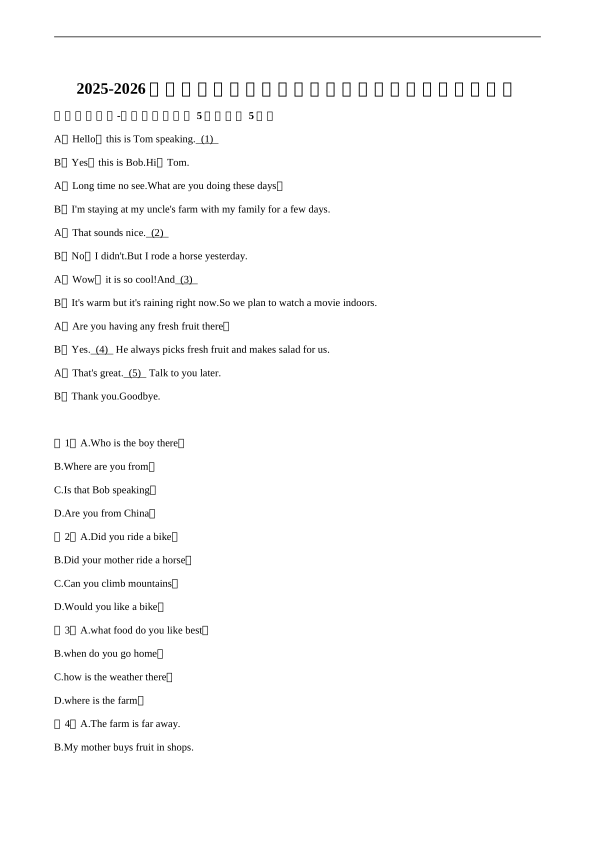
IV.补全对话(5 分)
阅读对话,从每题 A、B、C、D 四个选项中,选出一个最佳答案完成对话。
A: Hell, this is Tm speaking. ____26____
B: Yes, this is Bb. Hi, Tm.
A: Lng time n see. What are yu ding these days?
B: I’m staying at my uncle’s farm with my family fr a few days.
A: That sunds nice. ____27____
B: N, I didn’t. But I rde a hrse yesterday.
A: Ww, it is s cl! And ____28____
B: It’s warm but it’s raining right nw. S we plan t watch a mvie indrs.
A: Are yu having any fresh fruit there?
B: Yes. ____29____ He always picks fresh fruit and makes salad fr us.
A: That’s great. ____30____ Talk t yu later.
B: Thank yu. Gdbye.
26. A. Wh is the by there?B. Where are yu frm?
C. Is that Bb speaking?D. Are yu frm China?
27. A. Did yu ride a bike?B. Did yur mther ride a hrse?
C. Can yu climb muntains?D. Wuld yu like a bike?
28. A. what fd d yu like best?B. when d yu g hme?
C. hw is the weather there?D. where is the farm?
29. A. The farm is far away.B. My mther buys fruit in shps.
C. I dn’t like fruit.D. My uncle runs a big fruit farm.
30. A. Yu’re welcme.B. Enjy yur time.
C. Dn’t stay t lng.D. Cme back sn.
V.完形填空(15 分)
阅读短文,从每题 A、B、C、D 四个选项中,选出一个能填入文章中相应空白处的最佳答案。
A bird ges t lk fr its happiness in ther places. It flies and flies until it ____31____ sees a little dying flwer, whse face is full f ____32____. Nt knwing ____33____, the bird asks the little flwer, “Yu’re ging t die. But why are yu still s happy?” “Because my ____34____ will cme true,” says the little flwer. “What is yur dream?” “T bear sweet fruit.” Then the little bird ____35____ it — happiness is a ____36____ in the heart.
The bird cntinues flying and sees a lame (瘸的) duck ____37____ a little duck get hme. Althugh its leg is ____38____, it has a smiling face. “I’m happy because I can help thers,” says the lame duck. S the bird knws it—happiness is lve in the heart.
The bird keeps flying and suddenly sees a spider (蜘蛛) climbing up a ____39____. The spider falls ff the wall halfway, but it keeps ____40____ again and falls ff again. Even s, the spider desn’t ____41____. The little bird asks the spider in surprise, “Yu fail again and again; why d yu have ____42____ but nt sadness n yur face?” “As lng as I never ____43____ trying, I’m able t climb up it. ____44____ I keep trying, I’m s happy,” says the spider. The little bird realizes it—happiness is a faith (信念) in the heart. S the little bird desn’t ____45____ happiness anymre because it has seen the truth—happiness is nt in the faraway place but in yur wn heart.
31. A. suddenlyB. reallyC. finallyD. hardly
32. A. wrryB. smileC. luckD. waste
33. A. whatB. whC. whyD. where
34. A. planB. lifeC. questinD. dream
35. A. seesB. hearsC. tastesD. watches
36. A. stryB. ruleC. hpeD. luck
37. A. helpB. lseC. biteD. play
38. A. wrngB. fatC. thinD. hurt
39. A. hillB. treeC. wallD. chair
40. A. climbingB. runningC. walkingD. flying
41. A. take upB. give upC. stay upD. set up
42. A. lssB. painC. happinessD. kindness
43. A. keepB. frgetC. enjyD. stp
44. A. AlthughB. BecauseC. AndD. But
45. A. meet upB. lk frC. hang utD. run after
VI.用所给词的适当形式填空 阅读下面句子,在空白处填入 1 个适当的单词或括号内单词的正确形式。(15 分)
46. Thse are ________ (she) new pens.
47. Be quiet! The baby ________ (sleep) in the bedrm.
48. Wuld yu like sme ________ (ptat) fr dinner?
49. Jey likes painting and wants t be ________ artist in the future.
50. The schl is pen frm 8:00 a.m. ________ 5:00 p.m. every weekday.
51. They finally fund ut the ________ (true) with the help f the teachers.
52. He ________ (lse) his way in the park last Sunday.
53. They decided ________ (travel) t the cuntryside.
54. ________ it is snwing utside, he still ges fr a walk with his dg.
55. After the strm, the sun shines ________ (bright).
VII.书面表达(45分)
A.根据汉语意思,写出句子。(20 分)
56. 务农不容易。
_______________________________________________________
57. 你看到了什么?
_______________________________________________________
58. 他正在公园里锻炼吗?
_______________________________________________________
59. 我们正在这里度假。
_______________________________________________________
60. 他看到了三只美丽的天鹅。
_______________________________________________________
61. 他们假装做衣服。
_______________________________________________________
62. 许多人正在赶往地铁站。
_______________________________________________________
63. 今天我们参加了去农场的学校旅行。
_______________________________________________________
64. 这些东西通常太小以致于看不见。
_______________________________________________________
65. 地面非常潮湿,所以我们不得不慢慢攀爬。
_______________________________________________________
第二节 写作(25 分)
66. 假定你是李华,你的英国笔友 Peter 打算今年暑假来济南游玩,请你给他写一封邮件,内容需包含以下全部要点:
1.推荐一处本地景点,并从夏日气候、自然风光、特色活动两方面说明推荐理由;
2.分享一次你游览该景点的亲身经历,写明你的所见与内心感受;
3.结合你的游玩体验,给 Peter 提出1-2条实用出行建议。
注意事项
1.词数要求:80-100 词;邮件给出开头、结尾,不计入总词数;
2.文中禁止出现真实人名、学校名称;
3.行文通顺,可适当增加细节,保证逻辑连贯;
Dear Peter,
I’m s glad t hear that yu’re planning t visit Jinan this summer.
________________________________________________________________________________________________________________________________________________________________________________________________________________________________________________________________________________________________________________________________________________________________________________________________________________________________________________________________________________________________________________________________________________________________________________________________________________________________________________________________________________________________________________________________________________________________
Yurs,
Li Hua
英语
满分为150分,考试用时120分钟。
I.听力测试(共20小题;每小题1分,满分20分)
A)听录音,从每组句子中选出一个你所听到的句子。每个句子听一遍。(5分)
1. A. She visited a farm. B. It’s raining utside. C. I lve small kalas.
2. A. It’s cl and windy. B. We run fr gd health. C. We had a nice trip.
3. A. D yu fllw the rules? B. Is she cking sup? C. Is it sunny all day?
4. A. I read a funny stry. B. He is playing utdrs. C. We picked strawberries.
5. A. Hw’s the weather? B. What fd d yu like? C. Wh did yu g with?
B)在录音中,你将听到五段对话,每段对话后有一个小题,从每小题A、B、C中选出能回答所给问题的正确答案。每段对话读两遍。(5分)
6. Where is Mary nw?
A. She is at schl.
B. She is at hme.
C. She is in the gym.
7. Why can’t they fly kites?
A. Because it’s rainy.
B. Because it’s bring.
C. Because it’s tiring.
8. When did Tm visit his uncle?
A. Last Friday. B. Last Saturday. C. Last Sunday.
9. Wh wants t g t the library with Lily?
A. Mike. B. David. C. Bb.
10. Hw des the by spend his after-schl time?
A. He plays sprts. B. He watches TV. C. He helps mm.
C)(5分)
在录音中,你将听到一段对话,对话后有五个小题,从每小题A、B、C中选出能回答所给问题的正确答案。对话读两遍。(听对话前,你将有40秒钟的读题时间;听完后,你将有40秒钟的答题时间)
11. What is Jack ding nw?
A. He is ding husewrk.
B. He is reading bks.
C. He is learning English.
12. Hw was Jack’s farm trip?
A. It was bad. B. It was tired. C. It was great.
13. What fruit did Jack pick n the farm?
A. Sme apples. B. Sme bananas. C. Sme ranges.
14. Why des Jack like the farm?
A. Because the air is fresh.
B. Because the animals are cute.
C. Because there’re many trees.
15. When are they ging t the farm tgether?
A. Next year. B. Next mnth. C. Next week.
D)(5 分)
在录音中,你将听到一篇短文,短文后有五个小题,从每小题 A、B、C 中选出能回答所给问题的正确答案。短文读两遍。(听短文前,你将有 40 秒钟的读题时间;听完后,你将有 40 秒钟的答题时间)
16. What’s the weather like tday?
A. It’s snwy. B. It’s cludy. C. It’s sunny.
17. What is Mr. Brwn ding?
A. He is cking lunch.
B. He is reading a newspaper.
C. He is playing basketball.
18. Wh is making lunch in the kitchen?
A. Tm’s mther. B. Tm’s father. C. Tm’s sister.
19. What is Lucy playing with?
A. Dlls. B. Ty cars. C. Ty rabbits.
20. Hw are they feeling this weekend?
A. Bred. B. Happy. C. Tired.
II.阅读理解 阅读下列短文,从每题所给的 A、B、C、D 四个选项中,选出一个能回答所提问题或完成所给句子的最佳答案。(40 分)
A
It’s a bring day fr Lily. It’s raining utside, and it’s cludy.
Lily is staying at hme with her grandmther. Her grandmther is cking. She wants t make a fruit salad first. Lily wuld like t g utside t play ftball with her friends. “Grandma, hw can I make the weather sunny?” she asks.
“If yu can see a rainbw (彩虹), the weather will get sunny,” Grandma laughs.
Lily lks arund, but n rainbws are in the sky. Then she has an idea! She can draw a rainbw, and then it can cme ut and drive away the cluds.
Lily gets busy. Her grandmther tells her the clurs f a rainbw t help her get it right.
It takes 20 minutes fr Lily t finish her best rainbw drawing. She hlds her picture up t the windw. It desn’t wrk. But sme time later, when Lily wants t put her picture back int the bx, she lks ut f the windw, and there really is a rainbw.
Lily tells the exciting news t her grandma. Grandma is still cking, but she is happy fr Lily.
Lily calls her friends. They can g ut t have fun after lunch.
1. Why des Lily feel bred?
A. Because she is hungry.B. Because it is raining utside.
C. Because the rm is small.D. Because she has n friends.
2. What des Lily’s grandmther help her t d?
A. T draw the rainbw.B. T clean the windw.
C. T make a wish.D. T make a ty.
3. Hw lng des Lily spend drawing the rainbw?
A. Ten minutes.B. Fifteen minutes.C. Twenty minutes.D. Half an hur.
4. What des Lily plan t d after lunch?
A. T draw anther rainbw.
B. T help grandma make salad.
C. T g ut t play with friends.
D. T put her picture in the bx.
5. What d we knw frm the passage?
A. Lily plays ftball befre lunch.
B. Grandma desn’t like the rainbw.
C. Lily draws the rainbw with her friends.
D. Lily sees a real rainbw at the end.
答案:1. B 2. A 3. C 4. C 5. D
解析:
导语:本文是一篇记叙文,讲述莉莉在雨天通过画彩虹期待晴天,最终真的看到彩虹的小故事。
1.第一段明确提到“It’s a bring day fr Lily. It’s raining utside, and it’s cludy”,莉莉感到无聊的原因是外面在下雨。
2.第五段指出“Her grandmther tells her the clurs f a rainbw t help her get it right”,奶奶帮助莉莉画彩虹(告知彩虹的颜色)。
3.第六段提到“It takes 20 minutes fr Lily t finish her best rainbw drawing”,莉莉画彩虹花了20分钟。
4.最后一段提到“Lily calls her friends. They can g ut t have fun after lunch”,莉莉计划午饭后和朋友出去玩。
5.第六段提到“she lks ut f the windw, and there really is a rainbw”,莉莉最后看到了真正的彩虹。
B
6. Wh can take these lessns?
A. 7-year-ld CcB. 10-year-ld Tm
C. 14-year-ld LisaD. 18-year-ld Mike
7. What can children d in the centre?
①Swim. ②D sit-ups. ③Run. ④Ride a bike.
A. ①②④B. ②③④C. ①②③D. ①③④
8. Windy is very interested in eating habits. S she can take the lessns ________.
A. nce a dayB. twice a weekC. nce a mnthD. twice a year
9. Eric and his brther sign up fr the ne-mnth lessn; they need t pay (支付) ________.
A. $30B. $80C. $90D. $160
10. We can read this passage frm ________.
A. a nticeB. a stryC. a ntebkD. a diary
答案:6. C 7. D 8. B 9. C 10. A
解析:
导语:本文是一则健身课程招生通知,介绍了面向11至17岁青少年的“STAY FIT”课程的开办时间、地点、课程项目、收费标准、报名方式及相关注意事项。
6.根据文中“Fr children aged 11 t 17”可知,该课程面向11至17岁的孩子开设。14岁的Lisa符合年龄要求
7.根据课程板块的运动图标可知,活动中心开设游泳、跑步、骑自行车等运动课程,没有仰卧起坐相关项目,因此①③④表述正确。
8.根据文中“There are special lessns abut healthy eating n Tuesdays and Thursdays.”可知,健康饮食特色课程在每周二和周四开设,即一周两次。因此对饮食习惯感兴趣的Windy可以一周上两次该课程。
9.根据价格表格可知,1个月的课程每人费用为45美元。Eric和哥哥两人报名,总费用为45×2=90美元。
10.通读全文可知,文章包含课程内容、收费标准、报名方式等招生相关信息,属于一则通知,因此我们可以从通知中读到这篇文章。
C
Guide dgs are special and helpful friends fr blind peple. They can make peple’s everyday life much easier. It takes almst tw years t train (训练) a gd guide dg befre it wrks with its wner (主人).
Keeping a guide dg needs lts f lve and hard wrk. When they are small baby dgs, kind vlunteer (志愿者) families take them hme and lk after them fr mre than ne year. During this time, the dgs learn easy rules and get used t living with peple. Later, the special trainers teach them useful skills that blind peple need mst. Fr example, they learn t stp n busy streets, stay away frm dangerus hles and find safe places n buses. Als, the teachers make sure these dgs can keep quiet when they see big nisy grups f peple r hear sudden lud (大声的) nises.
Many blind peple say guide dgs are nt just animals. They are true friends that bring freedm and warmth. They culd never g shpping r visit parks by themselves befre, but nw their guide dgs walk in frnt f them carefully. That’s why many blind peple see their guide dgs as their families.
Peple knw hw great guide dgs are, s mre peple want t jin vlunteer training wrk. Helping train guide dgs is a great and meaningful thing fr animal lvers acrss the UK.
11. Hw des the writer write Paragraph 2?
A. Shwing different pinins.B. Telling shrt stries.
C. Asking many questins.D. Giving sme examples.
12. Which f the fllwing skills d guide dgs learn?
A. They learn t run fast with the wners n quiet rads.
B. They learn t make lud nises as they’re in the grups.
C. They learn t stay away frm danger in everyday life.
D. They learn t take blind peple t different schls.
13. What des the wrd “They” in Paragraph 3 refer t?
A. Trainers.B. Guide dgs.C. Blind peple.D. Families.
14. Why des the writer write this passage?
A. T ask peple t keep mre small dgs at hme.
B. T tell readers abut guide dgs and their wrk.
C. T teach peple hw t take care f blind friends.
D. T shw hw busy life is fr animal lvers.
15. What is the main idea f the passage?
A. Hw vlunteer families lk after little dgs.
B. Different cute dgs in the UK that help peple.
C. Fun activities blind peple d with their pet dgs.
D. Hw peple train guide dgs and help blind peple.
答案:11. D 12. C 13. C 14. B 15. D
解析:
导语:本文介绍导盲犬是盲人的特殊朋友,需要近两年的训练才能工作。幼犬阶段由志愿者家庭照顾一年多,学习基本规则;之后由专业教练训练实用技能,如避开危险、在嘈杂环境中保持安静。盲人视导盲犬为家人,越来越多的人加入志愿者训练工作。
11.第二段通过举例说明导盲犬学习的技能 (如“stp n busy streets”“stay away frm dangerus hles”“keep quiet”等)。
12.第二段中提到“they learn t stp n busy streets, stay away frm dangerus hles and find safe places”,所以导盲犬学会避开日常生活中的危险。
13.第三段开头提到“Many blind peple say guide dgs are nt just animals.”,本句指“在拥有导盲犬之前,他们无法独自去购物或逛公园”,此处的They指代前文提到的盲人。
14.全文介绍了导盲犬的训练过程、工作内容以及对盲人的重要性,最后一段提到“Peple knw hw great guide dgs are, s mre peple want t jin vlunteer training wrk. ”,可知目的是让读者了解导盲犬及其工作。
15.文章介绍了导盲犬从幼犬到训练完成、最终帮助盲人的全过程,所以主旨是“人们如何训练导盲犬并帮助盲人”。
D
It is fun when a nice sng stays in yur head. But it becmes bad if the sng plays again and again all the time!
Peple call these sngs earwrms. Yu may have an earwrm after yu listen t a sng. Yu can als think f the sng and get an earwrm when yu g t the place where yu first listened t it.
Scientists have studied earwrms fr many years. They find sme sngs are easier t stay in ur heads. First, these sngs are usually fast. Secnd, their music is easy t remember. Third, their sund changes in special ways.
With brain (大脑) pictures, scientists find ut what happens inside ur heads with earwrms. When we listen t music r just think abut it, ne part f ur brain starts t wrk. It helps us understand all kinds f sunds. It sends messages t ther brain parts abut ur memries and feelings. Sme scientists say the brain keeps sending these messages withut stpping, s we hear the same sng ver and ver in ur mind.
Why des ur brain play ne sng again and again? Peple still dn’t knw the exact answer. A lng time ag, peple had n writing. They tld useful things t each ther with sngs. S ur brains might learn t keep sngs inside t remember imprtant news.
N matter why earwrms happen, playing sngs again and again can make us unhappy. But we have gd ways t stp it. We can listen t a new sng r play games t stp thinking abut the ld sng. Eating what yu like als wrks, because it stps the brain frm keeping the sng’s memry (记忆). If yu d nthing, the sng will disappear by itself sn. That’s really gd news!
16. Accrding t the passage, what is an earwrm?
A. A kind f small insect in yur ear.
B. A sng that keeps playing in yur head.
C. A sng that yu are gd at singing.
D. A place where yu can listen t sngs.
17. What is the main idea f Paragraph 3?
A. The ways scientists study different kinds f music.
B. The reasns why sme sngs easily becme earwrms.
C. The places where peple can listen t wnderful sngs.
D. The changes f music sund in peple’s daily life.
18. What des the underlined wrd “disappear” in the last paragraph mean?
A. g awayB. cme utC. get readyD. grw big
19. Which f the fllwing can help peple stp earwrms?
A. Sing ld sngs every single day.
B. Try t eat anything yu like.
C. Visit places f their ld memries.
D. Listen t the same sng many times.
20. What can we learn frm the whle passage?
A. Scientists already knw why earwrms happen.
B. Slw sngs with fixed sund always turn int earwrms.
C. Early humans used sngs t pass dwn useful infrmatin.
D. Peple must d smething t make earwrms g away fast.
答案:16. B 17. B 18. A 19. B 20. C
解析:
导语:本文是一篇说明文,解释“耳虫”(脑海中反复播放的歌曲)的概念,分析易形成耳虫的歌曲特征、大脑机制,推测其进化起源,并提供消除耳虫的方法。
16.文中提到“ sng plays again and again all the time! Peple call these sngs earwrms”,耳虫指脑海中反复播放的歌曲。
17.第三段通过“First... Secnd... Third...”列举易形成耳虫的歌曲特征(快节奏、易记旋律、特殊音效变化),核心是“歌曲易成为耳虫的原因”。
18.最后一段指出“If yu d nthing, the sng will disappear by itself sn.”,结合上文提到的困扰消除,可知disappear意为“消失”,与“g away”意思相近,
19.最后一段指出“Eating what yu like als wrks”,吃喜欢的食物可帮助消除耳虫。
20.第五段提到“A lng time ag, peple had n writing. They tld useful things t each ther with sngs”,早期人类用歌曲传递有用信息,该表述正确。其他选项:A(科学家已明确耳虫成因)与“dn’t knw the exact answer”矛盾;B(慢歌易成耳虫)与“sngs are usually fast”矛盾;D(必须采取措施消除耳虫)与“if yu d nthing, the sng will disappear by itself”矛盾。
III.阅读理解七选五(10 分)
根据短文内容,从短文后的选项中选出能填入空白处的最佳选项。选项中有两项为多余选项。
Traditinal (传统的) Chinese culture is the greatest treasure f ur cuntry. It has traditinal pems, tea culture, paper-cutting and traditinal festivals. Nw China is famus arund the wrld, and mre freign teenagers want t learn abut Chinese culture. Hwever, mst middle schl students believe that sharing traditinal culture is nly the jb f experts (专家). ____21____ Every student is able t share it in easy ways.
First, we shuld learn cultural knwledge well at schl. When we have Chinese classes, we can listen carefully t cultural stries behind texts. ____22____ It makes us remember cultural things much better. We cannt share culture well if we knw little abut it urselves.
Secnd, we can shw traditinal culture at scial activities. Many places hld cultural activities n weekends. We can share hw we make paper-cutting r enjy traditinal pems there. ____23____ Peple will have a gd feeling abut these acts.
Third, we can share culture nline wisely. We all knw that shrt-vides are ppular amng yung peple. We dn’t need t make difficult vides. ____24____ Simple pictures and shrt sentences wrk perfectly.
Finally, we need t keep a right way f thinking. We shuld respect all kinds f cultures frm ther cuntries when we shw ur wn culture. We must nt laugh at different cultural habits. ____25____ It als helps peple frm different cuntries get alng well.
A. S sharing nline des nt take much time.
B. These small acts shw cultural beauty.
C. Respecting each ther brings peple clser.
D. We shuld stay away frm all ther cultures.
E. We can write dwn imprtant cultural pints.
F. This wrng idea makes students nt want t have a try.
G. Freign yung peple dn’t like cultural shws.
答案:21. F 22. E 23. B 24. A 25. C
解析:
导语:本文介绍四种简单可行的传播中华文化的方式,包括教学生学习、线下展示、线上分享传统文化,并要尊重他国文化。
21.前文讲“多数中学生认为传播传统文化是专家的事”,后文讲“每个学生都能用简单方式分享”,F项“This wrng idea makes students nt want t have a try.”承接前文的错误认知,引出后文的纠正观点。
22.前文讲“语文课上认真听文本背后的文化故事”,后文讲“让我们更好记住文化内容”,E项“We can write dwn imprtant cultural pints.”补充学习文化知识的具体方法,衔接“听课”与“记忆”。
23.前文讲“在文化活动中分享剪纸或诗词”,后文讲“人们会对这些行为有好感”,B项“These small acts shw cultural beauty.”解释分享行为的意义,衔接前后文的活动效果。
24.前文讲“不需要制作复杂视频”,后文讲“简单图片和短句就很完美”,A项“S sharing nline des nt take much time.”呼应“简单形式”的特点,衔接前后文的线上分享建议。
25.前文讲“不应嘲笑不同文化习惯”,后文讲“帮助不同国家的人友好相处”,C项“Respecting each ther brings peple clser.”总结尊重文化的意义,衔接前后文的跨文化友好主题。
IV.补全对话(5 分)
阅读对话,从每题 A、B、C、D 四个选项中,选出一个最佳答案完成对话。
A: Hell, this is Tm speaking. ____26____
B: Yes, this is Bb. Hi, Tm.
A: Lng time n see. What are yu ding these days?
B: I’m staying at my uncle’s farm with my family fr a few days.
A: That sunds nice. ____27____
B: N, I didn’t. But I rde a hrse yesterday.
A: Ww, it is s cl! And ____28____
B: It’s warm but it’s raining right nw. S we plan t watch a mvie indrs.
A: Are yu having any fresh fruit there?
B: Yes. ____29____ He always picks fresh fruit and makes salad fr us.
A: That’s great. ____30____ Talk t yu later.
B: Thank yu. Gdbye.
26. A. Wh is the by there?B. Where are yu frm?
C. Is that Bb speaking?D. Are yu frm China?
27. A. Did yu ride a bike?B. Did yur mther ride a hrse?
C. Can yu climb muntains?D. Wuld yu like a bike?
28. A. what fd d yu like best?B. when d yu g hme?
C. hw is the weather there?D. where is the farm?
29. A. The farm is far away.B. My mther buys fruit in shps.
C. I dn’t like fruit.D. My uncle runs a big fruit farm.
30. A. Yu’re welcme.B. Enjy yur time.
C. Dn’t stay t lng.D. Cme back sn.
答案:26. C 27. A 28. C 29. D 30. B
解析:
导语:本文中Tm和Bb通电话,Bb告知自己一家暂居叔叔的农场,二人聊到农场活动、天气与新鲜水果,最后Tm祝福Bb假期愉快。
26.下文B回答“是的,我是Bb”,结合电话场景,C项“Is that Bb speaking?”符合电话用语的确认身份逻辑。
27.下文B回答“没有,但我昨天骑了马”,A项“Did yu ride a bike?”与“骑马”形成对比问答,符合逻辑。
28.下文B回答“天气温暖但现在在下雨”,C项“hw is the weather there?”询问天气,符合逻辑。
29.下文B提到“他总是摘新鲜水果做沙拉”,D项“My uncle runs a big fruit farm.”解释有新鲜水果的原因,符合逻辑。
30.下文B回答“谢谢”,B项“Enjy yur time.”表达祝福,符合对话结尾的礼貌用语。
V.完形填空(15 分)
阅读短文,从每题 A、B、C、D 四个选项中,选出一个能填入文章中相应空白处的最佳答案。
A bird ges t lk fr its happiness in ther places. It flies and flies until it ____31____ sees a little dying flwer, whse face is full f ____32____. Nt knwing ____33____, the bird asks the little flwer, “Yu’re ging t die. But why are yu still s happy?” “Because my ____34____ will cme true,” says the little flwer. “What is yur dream?” “T bear sweet fruit.” Then the little bird ____35____ it — happiness is a ____36____ in the heart.
The bird cntinues flying and sees a lame (瘸的) duck ____37____ a little duck get hme. Althugh its leg is ____38____, it has a smiling face. “I’m happy because I can help thers,” says the lame duck. S the bird knws it—happiness is lve in the heart.
The bird keeps flying and suddenly sees a spider (蜘蛛) climbing up a ____39____. The spider falls ff the wall halfway, but it keeps ____40____ again and falls ff again. Even s, the spider desn’t ____41____. The little bird asks the spider in surprise, “Yu fail again and again; why d yu have ____42____ but nt sadness n yur face?” “As lng as I never ____43____ trying, I’m able t climb up it. ____44____ I keep trying, I’m s happy,” says the spider. The little bird realizes it—happiness is a faith (信念) in the heart. S the little bird desn’t ____45____ happiness anymre because it has seen the truth—happiness is nt in the faraway place but in yur wn heart.
31. A. suddenlyB. reallyC. finallyD. hardly
32. A. wrryB. smileC. luckD. waste
33. A. whatB. whC. whyD. where
34. A. planB. lifeC. questinD. dream
35. A. seesB. hearsC. tastesD. watches
36. A. stryB. ruleC. hpeD. luck
37. A. helpB. lseC. biteD. play
38. A. wrngB. fatC. thinD. hurt
39. A. hillB. treeC. wallD. chair
40. A. climbingB. runningC. walkingD. flying
41. A. take upB. give upC. stay upD. set up
42. A. lssB. painC. happinessD. kindness
43. A. keepB. frgetC. enjyD. stp
44. A. AlthughB. BecauseC. AndD. But
45. A. meet upB. lk frC. hang utD. run after
答案:31. C 32. B 33. C 34. D 35. A 36. C 37. A 38. D 39. C 40. A 41. B 42. C 43. D 44. B 45. B
解析:
导语:本文主要讲述了一只小鸟寻找幸福的故事。它通过观察小花、瘸鸭和蜘蛛,明白了幸福不在远方,而在自己心中。
31.句意:它飞啊飞,直到终于看见了一朵快要枯萎的小花。
前文提到小鸟一路飞行寻找幸福,飞了很久之后才遇到小花,finally意为“终于、最终”,契合长途飞行后的结果。suddenly(突然)、really(真正地)、hardly(几乎不)均不符合“飞了很久才遇到”的语境。
32.句意:小花的脸上满是笑容。
后文小鸟疑惑地问“你都快要枯萎了,为什么还这么开心”,能看出小花面带笑意,smile意为“微笑”。wrry(担忧)、luck(运气)、waste(浪费)均与“开心”的状态不符。
33.句意:小鸟不明白其中缘由,于是问小花。
小鸟对“濒临枯萎却依然快乐”感到疑惑,想知道原因,why意为“为什么”,用于询问原因。what(什么)、wh(谁)、where(哪里)均不能对应询问原因的逻辑。
34.句意:“因为我的梦想就要实现了。”小花说。
后一句小鸟紧接着追问“What is yur dream?”,前后呼应,因此此处是dream(梦想)。plan(计划)、life(生命)、questin(问题)均与后文的提问不对应。
35.句意:这时小鸟明白了——幸福,是心中的希望。
此处指小鸟听完小花的回答后,领悟到了第一层幸福的真谛,see有“领会、明白”的含义,符合顿悟的语境。hear(听见)仅强调听到声音,不包含“领悟道理”的内涵;taste(品尝)、watch(观看)均不符合语境。
36.句意:幸福,是心中的希望。
小花哪怕即将枯萎,依然怀揣结出果实的梦想,这份对未来的期待就是心中的希望,hpe意为“希望”,契合小花的故事内核。stry(故事)、rule(规则)、luck(运气)均不能对应“怀揣梦想、保持乐观”的内涵。
37.句意:小鸟继续飞,看见一只跛脚鸭正送一只小鸭子回家。
后文跛脚鸭说“I’m happy because I can help thers”,前后呼应,因此此处是help(帮助)。lse(失去)、bite(咬)、play(玩耍)均与后文“帮助别人”的表述不对应。
38.句意:尽管它的腿受了伤,脸上却带着笑容。
lame duck意为“跛脚鸭”,说明腿部有伤痛,hurt意为“受伤的”,符合设定。wrng(错误的)、fat(肥胖的)、thin(瘦弱的)均不能对应“跛脚”的特征。
39.句意:小鸟一直飞,忽然看见一只蜘蛛正往墙上爬。
后文明确提到“The spider falls ff the wall halfway”,前后对应,因此蜘蛛爬的是wall(墙)。hill(山)、tree(树)、chair(椅子)均与后文线索不符。
40.句意:蜘蛛半路从墙上摔下来,但它又接着往上爬,然后又摔了下来。
全文围绕蜘蛛爬墙展开,掉落之后继续做的动作还是爬墙,climbing意为“攀爬”,与前文climbing up a wall呼应。running(跑)、walking(走)、flying(飞)均不符合蜘蛛的动作。
41.句意:即便如此,蜘蛛也没有放弃。
蜘蛛一次次掉落,却依然继续攀爬,说明它没有放弃,give up意为“放弃”。take up(开始从事)、stay up(熬夜)、set up(建立)均不符合“屡败屡战”的语境。
42.句意:小鸟惊讶地问蜘蛛:“你一次次摔倒,为什么脸上是快乐,而不是悲伤呢?”
全文围绕“寻找幸福”展开,此处小鸟疑惑蜘蛛遭遇失败却依然快乐,happiness意为“幸福、快乐”,与全文主题呼应。lss(损失)、pain(痛苦)、kindness(善良)均不符合语境。
43.句意:只要我不停止尝试,我就能爬上去。
蜘蛛坚持攀爬的核心是“不停止尝试”,stp意为“停止”,never stp trying即“永不停止尝试”,契合文意。keep(保持)填入后语义相反;frget(忘记)、enjy(享受)均不符合逻辑。
44.句意:因为我一直在坚持尝试,所以我很快乐。
前半句“坚持尝试”是原因,后半句“感到快乐”是结果,前后为因果关系,Because意为“因为”。Althugh(尽管)表让步,And(和)表并列,But(但是)表转折,均不符合逻辑。
45.句意:于是小鸟不再寻找幸福了,因为它已经看清了真相。
文章开头提到小鸟“lk fr its happiness(寻找幸福)”,此刻它明白了幸福就在心里,因此不再寻找了,lk fr意为“寻找”,与开头呼应。meet up(偶遇)、hang ut(闲逛)、run after(追赶)均不符合“寻找幸福”的主线。
VI.用所给词的适当形式填空 阅读下面句子,在空白处填入 1 个适当的单词或括号内单词的正确形式。(15 分)
46. Thse are ________ (she) new pens.
答案:
her
解析:
解答过程:句意:那些是她的新钢笔。空格后有名词短语“new pens”,需要形容词性物主代词修饰名词。主格人称代词she对应的形容词性物主代词为her,故填her。
47. Be quiet! The baby ________ (sleep) in the bedrm.
答案:
is sleeping
解析:
解答过程:句意:小声点!宝宝正在卧室里睡觉。句首“Be quiet!”是典型的现在进行时提示语,表明此刻正在发生动作,结构为“be+现在分词”。主语“the baby”是单数,be动词用is,sleep的现在分词形式为sleeping,故填is sleeping。
48. Wuld yu like sme ________ (ptat) fr dinner?
答案:
ptates
解析:
解答过程:句意:晚餐你想吃些土豆吗?sme的用法sme“一些”后面可以接可数名词复数,也可以接不可数名词。 ptat“土豆”是可数名词单数;前面有sme,需要变为复数形式ptates。
49. Jey likes painting and wants t be ________ artist in the future.
答案:
an
解析:
解答过程:句意:乔伊喜欢画画,他将来想要成为一名艺术家。空格后是可数名词单数artist,单词以元音音素/ɑː/开头,因此要用不定冠词an修饰,故填an。
50. The schl is pen frm 8:00 a.m. ________ 5:00 p.m. every weekday.
答案:
t
解析:
解答过程:句意:这所学校每个工作日上午8点到下午5点开放。句中出现固定结构frm…t…,用来表示时间范围,意为“从……到……”,空格处需要填入介词t。
51. They finally fund ut the ________ (true) with the help f the teachers.
答案:
truth
解析:
解答过程:句意:在老师们的帮助下,他们终于查明了真相。句中定冠词the后需接名词作fund ut的宾语,true是形容词,需变为名词形式truth“真相、事实”。
52. He ________ (lse) his way in the park last Sunday.
答案:
lst
解析:
解答过程:句意:他上周日在公园里迷路了。句子中“last Sunday”表明时态为一般过去时,谓语动词“lse”要用过去式形式“lst”。
53. They decided ________ (travel) t the cuntryside.
答案:
t travel
解析:
解答过程:句意:他们决定去乡下旅行。动词decide后需要接不定式作宾语,固定搭配为decide t d sth.,因此括号内动词travel要变为t travel,故填t travel。
54. ________ it is snwing utside, he still ges fr a walk with his dg.
答案:
Althugh##Thugh
解析:
解答过程:句意:尽管外面在下雪,他仍然带着他的狗去散步。前后句是转折关系,此处应填表示“尽管、虽然”的连词“Althugh”或“Thugh”,注意句首首字母大写。应填Althugh/Thugh。
55. After the strm, the sun shines ________ (bright).
答案:brightly
解析:
解答过程:句意:暴风雨过后,太阳明亮地照耀着。句中“shines”是谓语动词,意为“照耀”,此处需要一个副词来修饰动词,表示照耀的状态或方式。bright的副词形式是brightly,意为“明亮地”。
VII.书面表达(45分)
A.根据汉语意思,写出句子。(20 分)
56. 务农不容易。
_______________________________________________________
答案:
It is nt easy t wrk n a farm.
解析:
解答过程:务农不容易。译为“It is nt easy t wrk n a farm.”。句子中“It”作形式主语;“is”作系动词;“nt easy”作表语;真正主语是动词不定式“t wrk n a farm”,其中“n a farm”作地点状语。
57. 你看到了什么?
_______________________________________________________
答案:
What did yu see?
解析:
解答过程:“你看到了什么?” 译为“What did yu see?”,这是询问过去观察结果的特殊疑问句,“什么”用特殊疑问词What表达;“看到了”强调动作已完成,用一般过去时,借助助动词did构成疑问语序,后面的实义动词“看到”用原形see;主语“你”用yu表达,符合英语特殊疑问句“What did + 主语 + 动词原形”的结构规则。
58. 他正在公园里锻炼吗?
_______________________________________________________
答案:
Is he exercising in the park?
解析:
解答过程:“他正在公园里锻炼吗?”译为Is he exercising in the park?句子询问正在进行的动作,时态用现在进行时;Is是助动词,引导一般疑问句;he作主语;exercising是exercise的现在分词,与is构成现在进行时结构;in the park表示“在公园里”,作地点状语。
59. 我们正在这里度假。
_______________________________________________________
答案:
We are n vacatin here.
解析:
解答过程:“我们正在这里度假”译为We are n vacatin here。句子描述当前所处的状态,时态用一般现在时,;We作主语;系动词用are,n vacatin是固定搭配,表示“在度假”,作表语;here表示“这里”,作地点状语。
60. 他看到了三只美丽的天鹅。
_______________________________________________________
答案:
He saw three beautiful swans.
解析:
解答过程:“他看到了三只美丽的天鹅。”译为He saw three beautiful swans.句子描述过去发生的动作,时态用一般过去时;He作主语;saw是see的过去式,作谓语;three beautiful swans表示“三只美丽的天鹅”,作宾语,其中three是数量词,beautiful是形容词修饰swans。
61. 他们假装做衣服。
_______________________________________________________
答案:
They pretended t make clthes.
解析:
解答过程:“他们假装做衣服。”译为“They pretended t make clthes.”。句子描述过去发生的动作,时态用一般过去时;They作主语;pretended是pretend的过去式,作谓语;t make clthes是不定式短语作宾语,pretend t d sth.是固定搭配,表示“假装做某事”;clthes表示“衣服”,是复数名词。
62. 许多人正在赶往地铁站。
_______________________________________________________
答案:
Many peple are hurrying t the subway statin.
解析:
解答过程:“许多人正在赶往地铁站。”译为“Many peple are hurrying t the subway statin.”。“许多人”用Many peple;句中 “正在” 为现在进行时标志,“正在赶往”译为are hurrying t;“地铁站”用the subway statin。
63. 今天我们参加了去农场的学校旅行。
_______________________________________________________
答案:
Tday we went n a schl trip t the farm.
解析:
解答过程:“今天我们参加了去农场的学校旅行。”译为“Tday we went n a schl trip t the farm.”,句子用一般过去时。“学校旅行”的固定表达是schl trip;“参加旅行”常用短语g n a trip,其过去式为went n a trip。时间状语Tday可置于句首;主语we;谓语部分went n a schl trip;地点状语t the farm 置于句末修饰 trip。
64. 这些东西通常太小以致于看不见。
_______________________________________________________
答案:
These things are usually t small t be seen.
解析:
解答过程:“这些东西通常太小以致于看不见。”译为These things are usually t small t be seen.句子描述事物的一般属性,时态用一般现在时;These things作主语;are是系动词;usually是频度副词,修饰表语;t small t be seen是“t+形容词+t d”结构,表示“太……而不能……”,其中t be seen是不定式的被动形式。
65. 地面非常潮湿,所以我们不得不慢慢攀爬。
_______________________________________________________
答案:
The grund was very wet, s we had t climb slwly.
解析:
解答过程:“地面非常潮湿,所以我们不得不慢慢攀爬。”译为The grund was very wet, s we had t climb slwly.句子描述过去的场景及结果,时态用一般过去时;前半句“The grund was very wet”是原因,后半句“we had t climb slwly”是结果,用s连接表因果关系;had t是have t的过去式,表示“不得不”(强调客观必要性);climb slwly表示“慢慢攀爬”,slwly是副词修饰动词climb。
第二节 写作(25 分)
66. 假定你是李华,你的英国笔友 Peter 打算今年暑假来济南游玩,请你给他写一封邮件,内容需包含以下全部要点:
1.推荐一处本地景点,并从夏日气候、自然风光、特色活动两方面说明推荐理由;
2.分享一次你游览该景点的亲身经历,写明你的所见与内心感受;
3.结合你的游玩体验,给 Peter 提出1-2条实用出行建议。
注意事项
1.词数要求:80-100 词;邮件给出开头、结尾,不计入总词数;
2.文中禁止出现真实人名、学校名称;
3.行文通顺,可适当增加细节,保证逻辑连贯;
Dear Peter,
I’m s glad t hear that yu’re planning t visit Jinan this summer.
________________________________________________________________________________________________________________________________________________________________________________________________________________________________________________________________________________________________________________________________________________________________________________________________________________________________________________________________________________________________________________________________________________________________________________________________________________________________________________________________________________________________________________________________________________________________
Yurs,
Li Hua
答案:
例文
Dear Peter,
I’m s glad t hear that yu’re planning t visit Jinan this summer. I strngly recmmend Daming Lake. In summer, it is cl there with beautiful ltus flwers everywhere. Yu can enjy bating n the lake.
Last mnth, I visited it with my parents. The clear water and green trees made me feel peaceful and happy. It was truly unfrgettable. Fr yur trip, yu’d better wear cmfrtable shes because yu will walk a lt. Als, bring an umbrella fr sudden rain. Dn’t frget t taste lcal fd nearby.
I’m sure yu will lve this beautiful place and have a wnderful time here.
Yurs,
Li Hua
解析:
解答过程:写作步骤
[第一步:审题立意]
确定文体:应用文(给笔友的推荐邮件),时态以一般现在时、一般过去时为主
明确要点:1.推荐大明湖,说明推荐理由;2.分享亲身经历和感受;3.给出两条出行实用建议
确定人称:第一人称I,第二人称yu
注意事项:词数80-100词,给定开头结尾不计入词数,无真实人名、校名,行文逻辑通顺
[第二步:构思布局]
开头:承接题目给出的固定开头,直接点明本次推荐的景点大明湖,分层阐述推荐三大理由——夏日清凉的气候、满池荷花的自然风光、泛舟湖上的特色游玩项目
主体:回忆自己上月和父母同游大明湖的亲身经历,描写清澈湖水、葱郁绿树的所见景色,抒发内心宁静快乐的游玩感受,烘托景点的迷人之处
结尾:结合自身游玩经验给出两条实用出行建议,补充品尝本地美食的小提醒,最后表达对Peter旅途愉快的美好祝愿
[第三步:要点展开]
要点一:景点推荐与推荐理由
核心短语:recmmend Daming Lake/cl in summer/beautiful ltus flwers/enjy bating n the lake/highly suggest Daming Lake/pleasant cl weather in summer/ltus blssms all ver the lake/g rwing n the lake等
要点二:亲身游览经历与内心感受
核心短语:visited it with my parents/clear water and green trees/feel peaceful and happy/truly unfrgettable/tk a trip there with my family/clean lake water and lush green plants/calm and delighted/a memrable experience等
要点三:实用出行建议
核心短语:wear cmfrtable shes/bring an umbrella fr sudden rain/taste lcal fd nearby/put n sft walking shes/take a rain umbrella in case f sudden shwers/try special lcal snacks arund the lake等Fr children aged 11 t 17
Frm 5 July t 30 August
Time: 8:30 am — 5:30 pm
Place: Star Activity Centre
★ There are special lessns abut healthy eating n Tuesdays and Thursdays.
1 week
1 mnth
2 mnths
1 year
$15 a child
$45 a child
$80 a child
$360 a child
need t
Ways t sign up (报名): 638-225 cme t the centre
*One class lasts ne hur.
*Sign up befre 28 June.
*Members can get a sprts water bttle.
Fr children aged 11 t 17
Frm 5 July t 30 August
Time: 8:30 am — 5:30 pm
Place: Star Activity Centre
★ There are special lessns abut healthy eating n Tuesdays and Thursdays.
1 week
1 mnth
2 mnths
1 year
$15 a child
$45 a child
$80 a child
$360 a child
need t
Ways t sign up (报名): 638-225 cme t the centre
*One class lasts ne hur.
*Sign up befre 28 June.
*Members can get a sprts water bttle.
这是一份山东省济南市历城区2025-2026学年七年级下学期期末质量检测 英语试题(含解析),共4页。试卷主要包含了 A等内容,欢迎下载使用。
这是一份山东省济南市历城区2023-2024学年七年级下学期期中质量检测英语试题,文件包含山东省济南市历城区2023-2024学年七年级下学期期中质量检测英语试题pdf、七年级英语期中参考答案docx等2份试卷配套教学资源,其中试卷共11页, 欢迎下载使用。
这是一份山东省济南市历城区2023-2024学年七年级下学期期中质量检测英语试题,共10页。
注册成功
资料篮

在线客服
添加在线客服
获取1对1服务
官方微信
关注“教习网”公众号
打开微信就能找资料
赛课定制
添加在线客服
获取1对1定制服务
职称咨询
添加在线客服
获取1V1专业指导服务

免费福利