 免费领取教师福利

若您为此资料的原创作者,认为该资料内容侵犯了您的知识产权,请扫码添加我们的相关工作人员,我们尽可能的保护您的合法权益。


这是一份暑假作业11题型突破-选词填空(巩固培优)七年级英语新教材外研版含答案,共6页。试卷主要包含了题型介绍,详细解题步骤,核心解题方法,各词性核心变形考点,高频丢分陷阱总结等内容,欢迎下载使用。
一、题型介绍
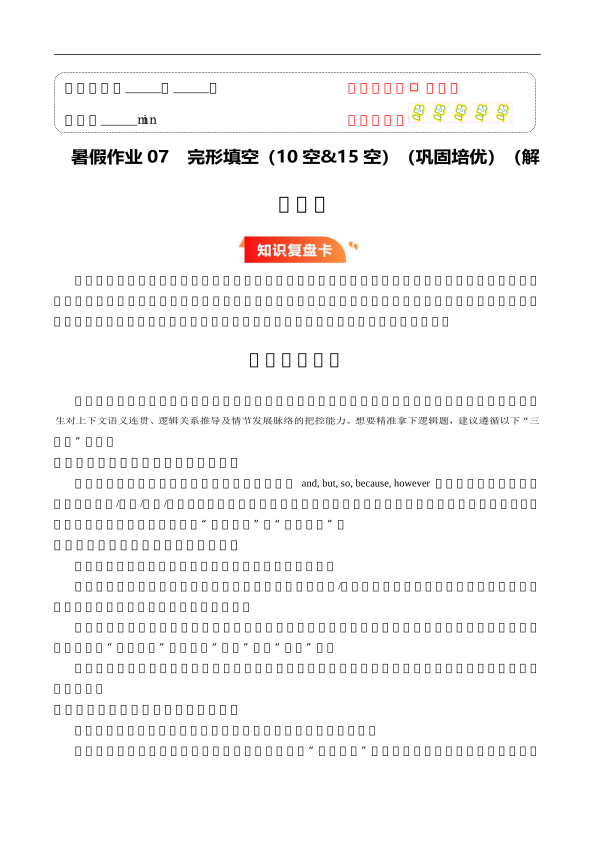
初一英语选词填空分为短文选词填空(变形类)和方框选词填空(原形类,无变形) 两大主流题型,期中、期末统考以短文选词变形填空为主,分值一般5–10分。
1. 短文选词填空:给出10个备选词,短文挖8–10空,词数多于空格,有多余干扰词;每词仅用一次,90%空格需要根据语法变形式,话题贴近学生生活:校园课堂、体育运动、家庭日常、动物、节日、周末活动、交友等记叙文,少量简单说明文。
2. 单句选词填空:多见于单元小测、同步练习,5–7个独立句子,选项单词无需变形,侧重固定搭配、词义辨析,难度更低。
3. 新增考查隐性考点:除基础语法外,现在初一新增近义词辨析(like/enjy、spend/take)、上下文指代、基础连词(and/but/s/because) 填空,不再只单纯考词形变换;干扰词多设置词性相同、词义相近的单词,增加区分难度。
4. 评分扣分关键点:单词选对但变形错误、单词重复使用、多余单词填入空格、拼写写错均整空不得分。
二、详细解题步骤
1. 通读全文,预判时态与主旨
拓展补充:读短文时划出三类关键线索
① 时间标志词:过去式标志yesterday、last week、just nw;将来时tmrrw、next Sunday;
② 情感词:happy、sad、interesting,预判转折/因果逻辑;
③ 人称:全文以I/he/they为主,提前锁定主谓一致。
小技巧:看不懂个别单词不用停顿,依靠整体句子逻辑判断,避免中途卡壳。
2. 标注备选词,梳理词性与变形可能
拓展补充:分类标记小技巧
动词单独标注三类变形:三单/ing/过去式;名词标注复数;形容词标注副词、比较级;代词区分主格/宾格/物主代词。
例:care v./n. → careful(adj.)→carefully(adv.),这类一词多词性单词是高频难点,必须重点圈画。
3. 锁定突破口,优先填写确定空格
拓展补充三类优先填空题型
① 固定介词搭配空:lk frward t ding、thanks fr ding;
② 时态标志极清晰空:lk! / Listen! 直接用ding;yesterday直接过去式;
③ 物主代词空:后面紧跟名词,必选my/his/her等形容词性物主代词。
填完立刻在方框单词上划斜线,彻底排除,减少重复选错。
4. 分析语法规则,完成单词变形
拓展易忽略变形陷阱:
① 名词:sprt表“运动项目”常用复数sprts;peple本身复数,不用加s;
② 动词:like后两种形式like t d/like ding,要结合全文时态判断;
③ 形容词:修饰名词用adj,修饰动作必用adv,极易混淆丢分。
5. 复读校验,排查所有错误
① 时态统一:全文大多一般过去时,个别空不能突然用现在时;
② 单复数统一:many后不能用单数名词;is后不能接复数主语;
③ 代词匹配:前文是girl,后文不能用his;
④ 干扰词核对:方框内多余单词没有被使用属于正常,不用强行填入。
三、核心解题方法
1. 词性精准判断法
新增完整词性填空位置规律:
冠词a/an/the + ____ → 一定填名词;
主语 + ____ + 宾语 → 填谓语动词;
名词前 ____ → 形容词;
动词前后 ____ → 副词;
介词in/n/at/fr后 ____ → 名词/动名词ding;
名词前有 ____ + 名词 → 物主代词。
2. 固定搭配秒杀法(新增初一高频拓展搭配)
动词短语:stp t d/stp ding、frget t d、learn t d、practice ding
介词搭配:be late fr、be strict with、be busy ding、ask sb. t d
名词搭配:a lt f + 可数复数/不可数名词、a piece f bread
3. 时态对应解题法
一般过去时标志:yesterday、last…、…ag
动词变形规则:直接加ed;以e结尾加d;辅元辅双写尾字母加ed;辅音+y变y为i加ed。
4. 语境逻辑分析法
because表原因,后半句解释前半句;and除并列,还表顺承动作;but前后情感、动作相反,做题遇到逻辑空优先看前后句意思。
5. 排除缩小范围法
两个单词拿不定时,两步判断:①看词性是否匹配空格;②看全文时态是否统一,不符合直接排除。
6. 主谓一致核对法
family表“一家人”复数,动词用原形;表“一个家庭”单数,动词三单;everyne、smene作主语,谓语动词一律三单。
四、各词性核心变形考点(初一必考·大幅拓展)
1. 名词(n.)变形考点:单数变复数
1)不可数名词无复数:water、milk、bread、rice、news,前面不能直接加tw/three;表数量需用a glass f water这类短语;
2)集体名词特殊:peple(人们,永远复数)、plice(复数);family双重单复数;
3)高频易错变形:bus-buses、bx-bxes、city-cities、ptat-ptates;
4)拓展线索词:every后只能用单数名词。
2. 动词(v.)
1)三单特殊不规则:have-has、d-des、g-ges;
2)-ing特殊双写单词汇总(初一必考):sit、run、swim、stp、shp、plan、get;
3)过去式不规则变形(短文填空高频):g-went、see-saw、eat-ate、take-tk、is-was、are-were;
4)动词t d固定搭配拓展:want t d、decide t d、hpe t d;
5)动词ding固定搭配拓展:enjy ding、finish ding、mind ding。
3. 形容词(adj.)变形考点:变副词(adv.)
1)以le结尾形容词变副词去e+y:simple-simply;
2)以辅音+y结尾变y为i+ly:happy-happily;
3)双重变形:care(动词)→careful(形容词)→carefully(副词);
4)拓展用法:副词可放句首修饰整个句子,如Luckily, he passes the test.
4. 代词(prn.)变形考点
myself我自己、yurself你自己、himself他自己、herself她自己、urselves我们自己;
固定搭配:enjy neself 玩得开心。
形容词性物主代词:后必须加名词 my pen
名词性物主代词:后面不加名词 mine=my +名词
5. 数词变形考点
1)序数词缩写:1st、2nd、3rd、4th;
2)固定搭配:n the first day、my secnd friend;
3)基数词变序数词口诀拓展:一、二、三特殊记,th从四起;八去t,九去e,ve要用f替;ty变tie。
6. 连词(cnj.)
方框选词常出现逻辑连词:and、but、s、because
填空判断技巧:
顺承、并列、递进→and
前后意思相反→but
前因后果→s
解释原因→because
7. 介词(prep.)
常考介词in/n/at/fr/with,介词后动词一律变ding,是每年必考变形坑点。
五、高频丢分陷阱总结
1. 只看单词意思,忽略词性变形(最常见扣分点);
2. 混淆形容词、副词,修饰动词仍用adj;
3. 第三人称单数主语,动词忘记加s/es;
4. 名词看到sme直接变复数,忽略不可数名词;
5. 重复使用同一个备选单词;
6. 时态混用,全文过去式误用现在时;
7. 代词混淆his/her、主格宾格乱用。
01
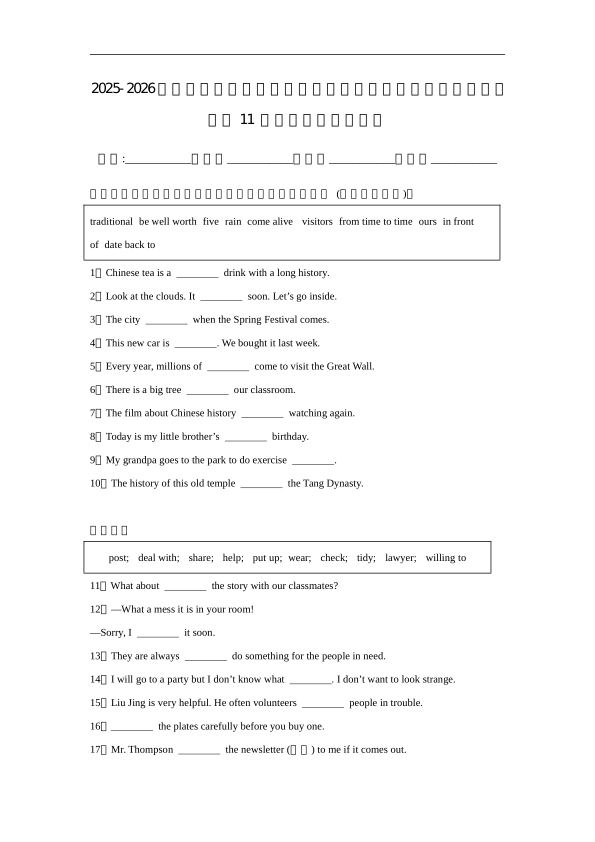
1.Our schl a new after-schl club next mnth.
2.He was s tired that he n the sfa at nce.
3.Yu had better yur textbk instead f playing with yur pens when having classes.
4.Last term, his English imprved with daily practice.
5.We bught ckies stars and mns fr the picnic last weekend.
6.Surprisingly, my 12-year-ld daughter is wrried abut her .
7.Lk! The firemen the big fire in the building. Hw brave they are!
8.We plan t visit lts f in the cming summer hliday.
9.She met an ld friend schl this mrning.
10. hmeless small animals lets students learn t respect all living things arund them.
【答案】
1.will rll ut 2.fell asleep 3.fcus n 4.little by little 5.in the shape f 6.weight 7.are putting ut 8.places f interest 9.n her way t 10.Caring fr
【详解】
1.句意:我校下个月将推出一个新的课后社团。时间状语“next mnth”表示一般将来时,rll ut表示推出、开设,符合语境,故填will rll ut。
2.句意:他太累了,立刻在沙发上睡着了。主句为一般过去时,fall asleep表示入睡,符合语境,过去式为fell asleep,故填fell asleep。
3.句意:上课时你最好专心看课本,而不是玩笔。had better后接动词原形;根据“instead f playing with yur pens when having classes.”可知fcus n“专注于”符合语境,故填fcus n。
4.句意:上学期,通过每日练习,他的英语一点点进步了。little by little是固定短语,意为一点点地,在句中作状语,故填little by little。
5.句意:上周末我们野餐买了星星和月亮形状的饼干。in the shape f表示“……的形状”,作后置定语修饰ckies,故填in the shape f。
6.句意:令人意外的是,我 12 岁的女儿很担心自己的体重。形容词性物主代词her后接名词,weigh的名词形式是weight,意为体重,故填weight。
7.句意:看!消防员们正在扑灭大楼里的大火,他们太勇敢了!Lk!提示句子为现在进行时,主语the firemen是复数,put ut表示扑灭,故填are putting ut。
8.句意:我们计划在即将到来的暑假游览很多名胜古迹。lts f后接可数名词复数,place f interest的复数形式为places f interest,故填places f interest。
9.句意:今早她在上学路上遇见了一位老朋友。主语是she,对应物主代词her,n ne’s way t表示“在某人去……的路上”,故填n her way t。
10.句意:照顾无家可归的小动物让学生学会尊重身边所有生命。句子缺少主语,动词短语作主语需变为动名词形式,care fr表示照顾,句首首字母大写,故填Caring fr。
02
11.Peple can’t walk in streets at night in many western cuntries.
12.Gd friends shuld nt nly play tgether but als supprt each ther difficult tasks.
13.Parents are the mst imprtant peple t us, s we had better them.
14.T enjy the beautiful mrning views, they decided fr the seaside withut breakfast.
15.The maths prblem is nt s difficult. I believe yu can wrk it ut .
16.Yu the truth f the stry if yu read it mre carefully.
17.It is ften nisy at weekends, but Mary still her study.
18.Is hpe a feeling that can help us g thrugh hard times?
19.We ur teamwrk when we finished the task tgether.
20.I’m afraid yu can't enter the rm nw. Mr Li in it.
【答案】
11.safely 12.in the face f 13.care fr 14.t set ff 15.n yur wn 16.will find ut 17.fcuses n 18.pwerful 19.were prud f 20.is taking a break
【详解】
11.句意:在很多西方国家,人们晚上不能在街上安全地行走。设空处修饰动词walk,需要用副词,提示词safe为形容词,需转换为副词形式safely。
12.句意:好朋友不仅应该一起玩乐,还应该在面对困难任务时互相支持。空后为名词短语difficult tasks,结合语义,此处表示“面对”,in the face f符合语境,无需变形。
13.句意:父母对我们来说是最重要的人,因此我们最好关心照顾他们。句中“had better”后接动词原形,结合语义,此处表示“关心、照顾”,care fr符合要求,无需变形。
14.句意:为了欣赏美丽的晨景,他们决定不吃早饭就出发前往海边。句中decide提示此处考查短语decide t d sth(决定做某事),此处表示“出发前往某地”,set ff符合语境,需变为不定式形式t set ff。
15.句意:这道数学题并不难,我相信你能靠自己解出来。句中“yu can wrk it ut...”,说明此处表可以自己解出来。n ne’s wn表示“独自”,本句主语是yu,因此ne’s对应改为yur,符合语境。故填n yur wn。
16.句意:如果你更仔细地读这个故事,你就会发现故事的真相。句中“if yu read it mre carefully”说明本句是if引导的条件状语从句,遵循“主将从现”规则,从句用一般现在时,主句需用一般将来时;此处表示“找出、发现”,find ut符合语境,因此变为will find ut。
17.句意:周末通常很吵,但玛丽仍然专注于她的学习。本句描述经常性的状态,用一般现在时,主语Mary是第三人称单数,此处表示“专注于”,fcus n符合语境,动词需变为三单形式fcuses。故填fcuses n。
18.句意:希望是一种能帮助我们渡过难关的强大感受吗?设空处修饰名词feeling,需要用形容词,提示词pwer是名词,需转换为形容词形式pwerful,符合语义。
19.句意:当我们一起完成任务时,我们为团队合作感到骄傲。时间状语从句是一般过去时,主句动作发生在过去,用一般过去时;be prud f表示“为……感到骄傲”,主语是we,因此be动词用were。故填were prud f。
20.句意:恐怕你现在不能进房间,李先生正在里面休息。时间标志词nw说明动作正在进行,用现在进行时;take a break表示“休息”,主语Mr Li是第三人称单数,因此结构为is taking a break。
03
21.They getting lst n the hiking trip last weekend.
22. travelers are prud f the beautiful frests and muntains.
23.It’s imprtant deeply and relax when yu feel nervus.
24.My grandma is ill, and my mther must her every day.
25.A careful will prepare enugh supplies fr utdr camping.
26.The kids laughed and ran while playing in the pen field.
27. the little rabbit was shy, and then it played arund.
28.Zhu Bajie is a funny frm the classic bk Jurney t the West.
29.Only a few plants can in the ht and dry desert.
30.We a stne path t reach the tp f the muntain last mnth.
【答案】
21.were afraid f 22.Millins f 23.t breathe 24.lk after 25.camper
26.happily 27.At first 28.character 29.survive 30.went thrugh
【详解】
21.句意:上周徒步旅行时,他们害怕迷路。后文getting lst为动名词短语,方框内afraid可搭配f构成固定短语be afraid f(害怕……);时间状语last weekend为一般过去时标志,主语they是复数,be动词变为were。
22.句意:数百万游客都为这片美丽的山林感到自豪。空后是可数名词复数travelers,方框内millins搭配f构成固定词组millins f(数百万的),可修饰可数名词复数;本空位于句首,首字母需要大写。
23.句意:当你感到紧张时,深呼吸、放松身心很重要。本句为固定句型It’s imprtant t d sth.(做某事很重要),空格需要动词不定式;结合后文deeply(深深地),方框内breathe(呼吸)符合“深呼吸”语境,变形为t breathe。
24.句意:我奶奶生病了,妈妈必须每天照顾她。前文交代奶奶生病,需要照料;方框内lk after是固定短语,含义为“照顾”;情态动词must后只能接动词原形,无需变形。
25.句意:细心的露营者会为户外露营准备充足物资。空前有不定冠词a,说明空格需要单数可数名词;后文utdr camping(户外露营)提示场景,方框内camp(露营)转换为指人的名词camper(露营者)。
26.句意:孩子们在空地上玩耍,开心地跑着、笑着。空格修饰动词ran,修饰动词需使用副词;方框内happy(开心的)是形容词,副词变形为happily,用来描述孩子们奔跑的状态。
27.句意:起初这只小兔子很胆小,后来它到处玩耍。后半句出现连接词then(然后、后来),前后存在时间先后对比;方框内at first(起初)和then形成对应时间逻辑,句首首字母大写。
28.句意:猪八戒是经典名著《西游记》里一个有趣的角色。空前a funny修饰单数名词,前文Zhu Bajie是书中人物;方框内character意为“人物、角色”,贴合名著人物语境。
29.句意:只有少数植物能在炎热干旱的沙漠中存活。情态动词can后接动词原形;结合“ht and dry desert(炎热干旱的沙漠)”环境,方框内survive(生存、存活)符合植物在沙漠生长的语境。
30.句意:上个月我们沿着一条石子小路走到了山顶。时间状语last mnth表示一般过去时;空后a stne path(石子小路)提示“穿过、行经小路”,方框内g thrugh(穿过)符合语义,g的过去式为went。
04
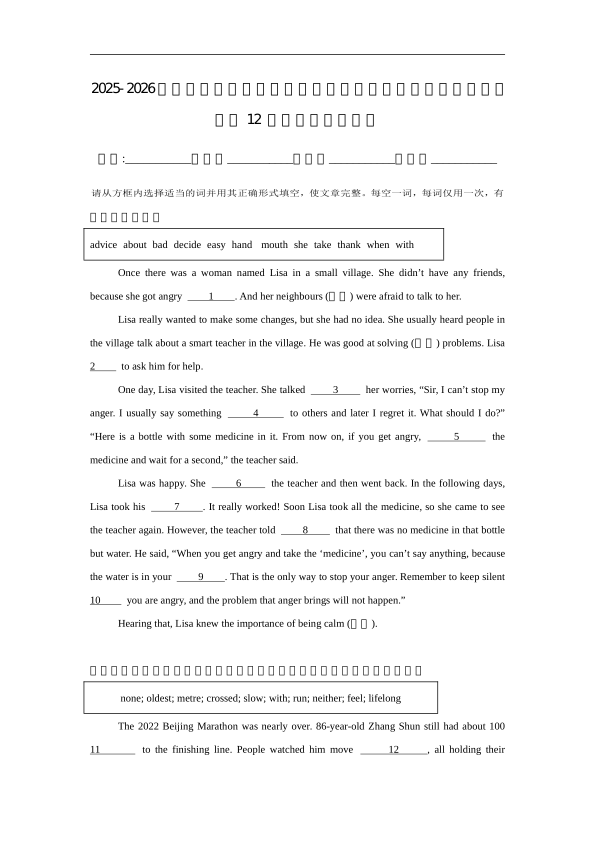
Once 31 a time, there was a king in China. He liked music very much. Every day, he asked many peple t play the yu tgether (an ld Chinese instrument) fr him. And he really enjyed their 32 sunds.
One day, a man named Nangu came t the palace (王宫). He tld the king, “I can play the yu very well.” T tell the 33 , he culd nt play it at all. He was just lazy and wanted 34 mney withut wrking hard.
When the musicians (乐师) played, Nangu just sat there and 35 t play. He mved his hands and face 36 the thers. He made n sund. The king watched but did nt ntice anything wrng because there were s many players.
After sme years, the ld king died. The new king als lved music, 37 he liked t listen t ne musician at a time. He asked Nangu t play it by 38 .
Nangu heard the news and 39 very afraid. He knew he culd nt hide any lnger. S, he 40 away frm the palace that night and never came back.
【答案】
31.upn 32.magical 33.truth 34.t make 35.pretended 36.like 37.but 38.himself 39.was 40.ran
【导语】本文是一篇寓言故事,讲述了南郭先生滥竽充数,最终只能偷偷逃走的经历。
【详解】
31.句意:从前,在中国有一位国王。这是英文故事的经典开头,文章以讲述古代寓言开篇,nce upn a time意为“从前”, 用来开启往事叙述,契合整篇短文讲故事的语境。故填upn。
32.句意:他十分沉醉于他们奇妙动听的乐声。空格后面是名词sunds,需要用形容词来修饰。结合语境,合奏出来的乐曲美妙动听,magic的形容词形式magical意为 “奇妙的、美妙的”,用来形容乐声,符合语境。
33.句意:可说实话,他其实一点都不会吹竽。t tell the truth是常用短语,意为“说实话”,用来引出实情。true是形容词,此处要变为名词truth,构成固定词组,引出南郭不会吹竽这个真相。
34.句意:他只是生性懒惰,想要不付出劳动就赚到钱财。结合上下文,南郭混在乐队里只想赚钱。动词want后面必须接不定式t d,make mney意为“挣钱”,符合语境,故填t make。
35.句意:乐师们演奏的时候,南郭就坐在原地,假装自己在吹奏。整篇文章使用一般过去时,and连接并列谓语,时态保持一致。南郭不会吹竽,只能装模作样,所以把pretend(假装)变为过去式pretended。
36.句意:他模仿其他乐师的样子,跟着摆动双手、面部。南郭要假装演奏,动作必须和别人保持一致。此处like作介词,意为“像……一样”,用来描述他模仿众人动作的状态,贴合滥竽充数的情节。
37.句意:新国王同样喜爱音乐,但是他只喜欢听乐师单独演奏。 前半句说新国王也热爱音乐,后半句说明他只欣赏独奏,和老国王喜欢多人合奏形成强烈转折,因此用转折连词but。
38.句意:国王命令南郭独自为他演奏。by neself 意为“独自、单独”,符合独自表演的语境,这句话的主语是南郭,人称代词he需要改成反身代词himself。
39.句意:南郭听到这个消息,心里十分惶恐。故事整体为一般过去时态,空格处应为be动词,主语Nangu是单数人名,对应的be动词要用过去式was,该句表现出他内心慌乱的情绪。
40.句意:于是当天夜里,他就逃出了王宫,再也没有回来。他知道自己没法继续蒙混过关,只能连夜逃走。run away意为“逃跑”,符合语境。全文为过去时态,run要变为过去式ran。
05
I’m Jessica. Tday I’ll tell what my family des every day t save the earth. It’s reprted that a cmmn family prduces mre than ne tn (吨) f 41 a year. Sme f this waste takes hundreds f years t break dwn. Als, it 42 peple much mney t buy new things.
In rder t prtect the envirnment and save mney, my family des many things. First, we enjy 43 used things every day, such as paper, bttles and bxes. Then my sister and I sell them nce a mnth. This can help 44 get sme pcket mney. We usually use the mney t buy sme fruit 45 ur family. Next, we use ld clthes t make different kinds f bags. These cute and 46 bags are ppular with yung peple. As a result, I pen a small shp and set up a website t sell them nline.
What’s mre, my parents and my sister ften g t wrk by bike. 47 it rains, they’ll take the bus. We als have ur 48 garden. We ften grw vegetables there. And we wuld like t raise cws, keep 49 and ducks. We’ll be able t have eggs and milk fr meals 50 .
What a difference we make fr ur earth!
【答案】
41.rubbish 42.csts 43.cllecting 44.us 45.fr
46.useful 47.If 48.wn 49.chickens 50.sn
【导语】本文是Jessica分享的自己一家在日常生活中践行的各类环保行动,以此保护地球、节约资源。
【详解】
41.句意:据报道,一个普通家庭每年产生超过一吨垃圾。根据后文“Sme f this waste”并结合备选词,可知选rubbish,意为“垃圾”,是不可数名词。
42.句意:此外,买新东西花费人们很多钱。根据“it... peple much mney t buy”并结合备选词,可知此处为固定句型“It csts sb. mney t d sth.”,所以选cst。主语it为第三人称单数,且陈述客观事实用一般现在时,故填csts。
43.句意:首先,我们喜欢每天收集用过的东西,比如纸、瓶子和盒子。根据“we enjy... used things every day... Then my sister and I sell them nce a mnth.”并结合备选词,可知是收集旧物,选cllect。固定搭配enjy ding sth.,表示“喜欢做某事”,故将cllect变为动名词cllecting。
44.句意:这能帮助我们得到一些零花钱。根据后文“We usually use the mney...”并结合备选词,可知此处是指我们会得到零花钱,help为动词,后接人称代词宾格,we的宾格是us。
45.句意:我们通常用这些钱为家人买些水果。根据“buy sme fruit... ur family”并结合备选词,可知为固定搭配buy sth. fr sb.,意为“为某人买某物”,故选介词fr。
46.句意:这些可爱且有用的包很受年轻人欢迎。根据“These cute and... bags”并结合备选词,可知此处需填形容词与cute并列修饰bags,故选useful,意为“有用的”。
47.句意:如果下雨,他们将坐公交车。根据“ rains, they’ll take the bus.”,可知此处为条件状语从句,结合备选词,可知选连词if,位于句首首字母需大写。
48.句意:我们也有我们自己的花园。根据“We als have ur... garden.”并结合备选词,此处为固定搭配“ne’s wn+名词”,强调所属关系,ur wn意为“我们自己的”,故选wn。
49.句意:我们想养牛、养鸡和鸭子。根据“And we wuld like t raise cws, keep... and ducks.”并结合备选词,此处指动物鸡,与cws和ducks并列,需用chicken的复数形式chickens。
50.句意:我们不久就能在餐桌上吃到鸡蛋和牛奶了。根据“We’ll be able t...”将来时态的语境,并结合备选词,可知表示“很快、不久”,故选sn。
06
D yu knw the Huizhu Men’s Basketball Team? All its players are aged between sixteen 51 twenty-three. They put n a wnderful perfrmance in the 2026 Yue BA matches. They truly lved basketball and fught fr their hmetwn.
52 the beginning f the match, things were nt easy. The team lst fur games in a rw, which made everyne feel sad. Hwever, they did nt 53 up but decided t have mre cnfidence in each ther. In an imprtant game against Meizhu, the team shwed amazing teamwrk. They tk every 54 t imprve their ways. With their strng spirits and curage, they finally 55 the match with a scre f 103-83.
The match drew many lcal fans’ attentin. Peple came t cheer fr 56 favurite teams. It nt 57 imprves basketball skills but als brings friendship between the tw cities clser. Mre yung peple have becme 58 in basketball because f this game.
The players teach us that nbdy can win alne. They always 59 each ther even when facing strng teams frm Shenzhen. They say that friendship, trust, and wrking hard tgether are the 60 t success. As the saying ges, “All players with ne heart always win.” Their spirit encurages all f us t be better teammates in ur daily lives.
【答案】
51.and 52.At 53.give 54.chance 55.wn 56.their 57.nly 58.interested 59.supprt 60.key
【导语】本文讲述了惠州男子篮球队在比赛中从连败到最终获胜的故事,展现了友谊、信任和团结协作是成功的关键。
【详解】
51.句意:所有球员年龄都在十六岁和二十三岁之间。此处需要一个连词,表示“和”,连接两个年龄构成范围。因为固定搭配表示“在……和……之间”,所以填and。
52.句意:在比赛开始的时候,情况并不容易。此处需要一个介词,与the beginning f搭配,表示“在……开始的时候”。因为固定搭配at the beginning f,首字母大写,所以填At。
53.句意:然而,他们没有放弃,而是决定对彼此更有信心。此处需要一个动词原形,与up构成短语动词,表示“放弃”。因为固定搭配give up,且did nt后接动词原形,所以填give。
54.句意:他们抓住每一个机会改进打法。此处需要一个名词,作tk的宾语,表示“机会”。因为固定搭配take every chance意为“抓住每一个机会”,所以填chance。
55.句意:凭借坚强的精神和勇气,他们最终以103比83赢得了比赛。此处需要一个动词过去式,作谓语,表示“赢得”。因为上下文为过去时,方框词win需变形为过去式wn,所以填wn。
56.句意:人们来为他们最喜欢的球队加油。此处需要一个形容词性物主代词,修饰名词teams,表示“他们的”。因为方框词they需变为their表示所有关系,所以填their。
57.句意:它不仅提高了篮球技能,还拉近了两座城市之间的友谊。此处需要一个副词,与nt构成固定结构,表示“不仅……而且……”。因为固定搭配nt als...,所以填nly。
58.句意:越来越多的年轻人因为这场比赛对篮球产生了兴趣。此处需要一个形容词,与becme构成系表结构,表示“感兴趣的”。因为固定搭配becme interested in,所以填interested。
59.句意:即使面对来自深圳的强队,他们也总是互相支持。此处需要一个动词,作谓语,表示“支持”。因为主语是They,描述一般情况用一般现在时,所以填supprt。
60.句意:他们说友谊、信任和共同努力是成功的关键。此处需要一个名词,作表语,表示“关键”。因为固定搭配the key t success意为“成功的关键”,所以填key。
一、完形填空
When Kuang Heng is a little by, he likes reading very much. Hwever, his family is s pr that he can’t g t 1 . Later, he learns t read and write frm ne f his brthers.
Kuang Heng desn’t have mney t buy bks, s he has t 2 thers’. Bks are very 3 things and peple wh have bks dn’t want t give their bks t thers. When it is the busy farming time, Kuang Heng will wrk fr the rich families. He 4 wants t read their bks by wrking fr them.
After sme years, Kuang Heng grws up and he wrks n the farm all day lng. He desn’t have much time t read, s he ften needs ten days r half a mnth t 5 a bk. Then he has an idea—he can 6 mre time at night reading. But Kuang Heng’s parents are s pr that they 7 buy lamps at all.
One night, when he is reading the bks n the bed, he sees sme light cming 8 a small hle (洞) in the wall. He gets up fast frm the bed, takes a small knife and walks t the wall. He uses the knife t make the hle a 9 ne and in this way, there is mre light s that he can sit clse t the light t read.
10 Kuang Heng studies hard fr a very lng time, he becmes a great man in Chinese histry.
1.A.bedB.schlC.hspitalD.wrk
2.A.askB.helpC.brrw D.make
3.A.bringB.funnyC.imprtantD.difficult
4.A.nlyB.evenC.alreadyD.sn
5.A.writeB.finishC.drawD.buy
6.A.useB.takeC.saveD.spend
7.A.needn’tB.can’tC.shuldn’tD.mustn’t
8.A.aheadB.insideC.thrughD.int
9.A.smallB.brightC.darkD.bigger
10.A.BefreB.AfterC.SD.But
【答案】
1.B 2.C 3.C 4.A 5.B 6.D 7.B 8.C 9.D 10.B
【导语】本文讲述了匡衡从小酷爱读书,因家贫上不起学,后来向兄弟学认字、为富人家打工借书读,最终在墙上凿洞借邻居灯光夜读,刻苦学习成为中国历史上一位伟人的故事。
【详解】1.句意:然而,他家太穷了,他无法去上学。
上文提到匡衡是个小男孩且非常喜欢读书,此处说家里太穷,所以去不了的应是学校,schl“学校”符合。bed“床”、hspital“医院”、wrk“工作”与求学语境不符。
2.句意:匡衡没有钱买书,所以他不得不借用别人的书。
上文说他没钱买书,下文又提到“peple wh have bks dn’t want t give their bks t thers”,说明他是借用别人的书来读,brrw “借用”符合。ask“问”、help“帮助”、make“制作”均不合语境。
3.句意:书是非常重要的东西,有书的人不想把书给别人。
下文说有书的人不愿把书给别人,正因为书很珍贵,imprtant“重要的”符合。bring“无聊的”、funny“有趣的”、difficult“困难的”均无法解释为何别人不愿借出。
4.句意:他为富人家干活,只是想读他们的书。
上文说农忙时他为富人家工作,此处强调他工作的唯一目的就是读书,nly“仅仅,只”符合。even“甚至”、already“已经”、sn“不久”均不符合句意逻辑。
5.句意:他没有太多时间读书,所以经常需要十天或半个月才能读完一本书。
上文说他没多少时间读书,此处说明读书速度慢,需要很长时间才能完成一本书,finish“完成”符合。write“写”、draw“画”、buy“买”与读书语境不符。
6.句意:然后他想到一个主意——他可以在晚上花更多时间读书。
“spend time ding sth.”表示“花时间做某事”,spend“花费”符合。use“使用”、take常用“It takes sb. time t d sth.”、save“节省”均不合搭配。
7.句意:但匡衡的父母太穷了,他们根本买不起灯。
上文说父母很穷,此处表示他们完全没有能力买灯,can’t“不能”符合。needn’t“不必”、shuldn’t“不应该”、mustn’t“禁止”均不合语境。
8.句意:一天晚上,他在床上读书时,看到一些光从墙上的小洞透进来。
光线是从洞的另一侧穿过小洞照进来的,thrugh“穿过(从内部通过)”符合。ahead“在前面”、inside“在里面”、int“进入”均不能准确描述光穿过孔洞的过程。
9.句意:他用刀把洞弄得更大,这样就有更多的光,他可以靠近光读书。
上文说光从一个小洞透进来,下文说有了更多的光,说明他把洞凿大了,bigger“更大的”符合。small“小的”、bright“明亮的”、dark“黑暗的”均与语境矛盾。
10.句意:经过长时间的刻苦学习,匡衡成为了中国历史上的一位伟人。
此处表示时间上的先后关系,先刻苦学习,后成为伟人,After“在……之后”符合。Befre“在……之前”、S“所以”、But“但是”均不符合逻辑。
二、语法选择
I live in Blu, a beautiful twn in Huizhu. I think Huizhu is ne f the mst wnderful 11 in Guangdng. It always brings peple happiness.
Last weekend, I 12 a rad trip with my parents. It was a relaxing and happy trip. We started 13 trip early in the mrning. We drve alng the clean castal rad. The sky was blue and the sea water lked clear. We saw many birds flying 14 ver the sea.
My dad drve slwly s that we culd enjy all the beautiful views. Later, we arrived at 15 small seaside restaurant. We tried famus Huizhu fd — stuffed tfu (酿豆腐) and fresh seafd. They tasted s 16 that I ate a lt.
In the afternn, we walked n the beach and tk many phts. 17 als sme visitrs wh did interesting utdr activities. I realized that happiness is easy 18 in Huizhu. It cmes frm nice views, delicius fd and warm family time. 19 an amazing place!
I lve this city, and it makes my life full 20 jy. I hpe I will take mre rad trips in Huizhu in my summer hliday.
11.A.cityB.city’sC.cities
12.A.haveB.hadC.will have
13.A.weB.urC.us
14.A.happyB.happilyC.happiness
15.A.aB.anC.the
16.A.gdB.betterC.best
17.A.There isB.There areC.There were
18.A.findB.findingC.t find
19.A.WhB.WhatC.When
20.A.fB.frC.in
【答案】
11.C 12.B 13.B 14.B 15.A 16.A 17.C 18.C 19.B 20.A
【导语】本文是一篇记叙文。作者讲述上周末和父母在惠州博罗公路旅行的经历,描述沿途美景美食,表达了对家乡的热爱。
【详解】11.句意:我认为惠州是广东最美的城市之一。
固定搭配ne f后接可数名词复数,cities(城市复数)符合语法规则。city单数,city’s名词所有格,均不符合语法。
12.句意:上周末,我和父母进行了一场公路旅行。
时间标志Last weekend为一般过去时,have的过去式had符合时态。have一般现在时,will have一般将来时,均不符合时间语境。
13.句意:我们清晨早早开启了我们的旅途。
修饰名词trip需用形容词性物主代词,ur(我们的)可修饰名词。we主格、us宾格都不能修饰名词,不符合语法。
14.句意:我们看见许多鸟儿在海上欢快地飞翔。
修饰动词flying要使用副词,happily(开心地)是副词。happy形容词,happiness名词,均不能修饰动词。
15.句意:后来,我们抵达一家海边小餐馆。
small以辅音音素开头,用不定冠词a表泛指一家餐馆。an用于元音音素开头单词,the表特指,不符合语境。
16.句意:食物尝起来太美味了,我吃了很多。
固定句型s+形容词原级+that,gd(美味的)为原级。better比较级、best最高级,无对比场景不适用。
17.句意:还有一些游客在做有趣的户外活动。
全文叙述过去周末的事,visitrs是复数名词,There were符合过去复数句式。There is/There are为现在时态,不符合全文过去时态。
18.句意:我意识到在惠州很容易找到幸福。
固定搭配be easy t d sth.,不定式t find作句子真正主语。find动词原形、finding动名词,不匹配固定句式。
19.句意:多棒的地方啊!
what引导感叹句结构:What+a/an+形容词+单数名词。wh指代人,when询问时间,语义均不通顺。
20.句意:它让我的生活充满快乐。
固定短语full f表示充满。fr、in无法和full构成固定搭配,不符合短语用法。
三、阅读理解
Last winter, Maria nticed an ld man selling rasted sweet ptates (烤红薯) near her schl. He always wre a thin and ld jacket, even n freezing days.
One afternn, dark cluds were in the sky. As Maria hurried hme frm schl, she saw the ld man trying hard t cver his cart (小推车). But the wind was t strng. Withut thinking twice, she ran t help him. Tgether they finally made it befre the heavy rain pured dwn (倾盆而下). “Thank yu, little friend,” he said, giving her a warm sweet ptat. Maria plitely refused (拒绝), but his smile made her feel warm inside.
A week later, Maria missed the schl bus and gt lst (迷路) when trying t walk hme. It was s cld that her hands turned red. She was nearly crying when she heard a vice (声音), “Need help?” It was the sweet ptat man. “Sit here,” he said kindly. He pushed (推) his cart all the way t her huse. When Maria’s mum tried t give him mney, he shk his head, “Yur daughter helped me that rainy day. That’s enugh.”
That night, Maria wrte in her diary, “When yu are kind t thers, gd luck will find yu.”
21.What was the weather like when Maria helped the ld man?
A.Sunny.B.Snwy.C.Rainy.D.Fggy.
22.Wh helped Maria when she gt lst?
A.Her mther.B.The ld man.C.Her teacher.D.Her classmate.
23.What’s the right rder (顺序) f the events?
a. The ld man sent Maria hme.
b. Maria’s mum thanked the ld man.
c. Maria helped the ld man cver his cart.
d. Maria missed the schl bus and gt lst.
A.abdcB.cbadC.bacdD.cdab
24.What can we infer (推断) frm the passage?
A.The ld man was very rich.
B.Maria will keep being kind t thers.
C.Maria will nt help thers.
D.Maria’s mther was angry when she knew Maria gt lst.
25.What des the writer want t tell us thrugh the passage?
A.D well and have well.B.N pain, n gain.
C.Practice makes perfect.D.An apple a day keeps the dctr away.
【答案】21.C 22.B 23.D 24.B 25.A
【导语】本文是一篇记叙文,讲述玛利亚帮助遇风雨的卖烤红薯老人,后来老人在玛利亚迷路时主动回报帮助了她,诠释了善举终有回报的道理。
【详解】21.第二段“ the heavy rain pured dwn...”提及当时下大雨了,应是下雨天。
22.第三段“...‘Need help?’ It was the sweet ptat man.”提及是卖烤红薯的老人询问玛利亚是否需要帮助,所以是他帮助了玛丽亚。
23.第二段“Withut thinking twice, she ran t help him.”和第三段“ missed the schl bus and gt pushed his cart all the way t her huse. When Maria’s mum tried t give him mney...”提示事情的发生顺序是:首先是玛丽亚帮助老人,接着是玛丽亚迷路,再是老人推小推车送玛丽亚回家,最后是妈妈想要给老人钱以表达谢意。正确顺序为cdab。
24.最后一段玛利亚日记中的感悟“当你对他人友善,好运就会找到你”,可以推断玛利亚感受到了善举的正向回报,会继续对他人友善。
25.文章讲述了玛丽亚帮助老人后,在自己遇到困难时也得到老人帮助的故事,体现了“善有善报”的主题。选项A“D well and have well”意为“善有善报”,最符合文章主旨。
Cassie is a travel lver frm America. She has just finished walking 19,000 miles (英里) thrugh the United States, Mexic, Canada and ther cuntries. She brke the recrd fr the lngest walk withut any supprt in the wrld!
In 2014, Cassie left her jb because she wasn’t ding what she really lved. She wanted t see the wrld! S she started planning a big trip.
First, she saved as much mney as she culd. Then, in July 2015, she started travelling. One and a half years later, n February 2nd, 2017, she arrived in Yemen. That was the 196th cuntry n her list!
Cassie spent an average (平均) f tw t five days in each cuntry. The best parts f her trip were: meeting lcal peple, planting trees and telling students abut imprtant wrld events.
But her trip was nt just a lng hliday. She als wanted t make a difference. Fr example, she wrked as a special helper fr a turism (旅游) grup. In many cuntries, she talked t lcal students abut hw turism culd help their cuntries. Cassie als cared abut the envirnment. She helped anther grup cllect water samples (水样) in many cuntries.
26.Where is Cassie frm?
A.Canada.B.Mexic.C.America.D.China.
27.Why did Cassie leave her jb in 2014?
A.Because she gt a new jb.
B.Because she was t tired.
C.Because she didn’t like her bss.
D.Because she didn’t like her jb and wanted t see the wrld.
28.Hw many days did Cassie stay in each cuntry n average?
A.Fr 1-2 days.B.Fr 2-5 days.C.Fr 5-7 days.D.Fr 7-10 days.
29.Which ne is NOT the best part f Cassie’s trip?
A.Meeting lcal peple.B.Planting trees.
C.Giving talks t students.D.Finding new jbs.
30.What kind f peple is Cassie frm the passage?
A.Shy and smart.B.Brave and helpful.C.Funny and careful.D.Brave and bring.
【答案】26.C 27.D 28.B 29.D 30.B
【导语】本文主要讲述了来自美国的旅行爱好者Cassie辞职后,通过步行环游世界196个国家的经历。她不仅打破了无支持最长步行记录,还在旅途中通过植树、演讲和协助收集水样等方式为当地社区和环境做出贡献。
【详解】26.文章第一句明确指出:“Cassie is a travel lver frm America.”,说明Cassie来自美国。
27.第二段明确指出:“In 2014, Cassie left her jb because she wasn’t ding what she really lved. She wanted t see the wrld!”,说明她辞职是因为不喜欢当时的工作且想要看世界。
28.第四段明确指出:“Cassie spent an average (平均) f tw t five days in each cuntry.”,说明她在每个国家平均停留2到5天。
29.第四段列出了她旅途中最美好的部分:“meeting lcal peple, planting trees and telling students abut imprtant wrld events.”。A、B、C项均在文中提及,而D项“Finding new jbs”(找新工作)并未作为旅途的美好部分被提及,且与她作为旅行者/志愿者的身份不符。
30. Cassie独自步行穿越多个国家,打破世界纪录,体现了她的勇敢(Brave);她在旅途中帮助旅游团体、向学生演讲、关心环境并协助收集水样,体现了她的乐于助人(Helpful)。因此,Brave and helpful最符合她的形象。
31.Where can yu listen t Dr. Li talk abut hw t stay healthy?
A.In the schl hall.B.In the schl gym.
C.In the dinning hall.D.In Classrm 301.
32.When can yu learn t make fruit salad during the health week?
A.On Mnday.B.On Tuesday.C.On Thursday.D.On Wednesday.
33.What activity is best fr Li Lei t relax his bdy and mind during the health week?
A.B.
C.D.
34.Which f the fllwing questins culd mst be in the health test paper?
A.Wh is yur PE teacher?B.Whse vlleyball is this?
C.What d yu eat fr breakfast?D.Hw ften d yu g shpping?
35.What d yu need t d when yu take part in these activities?
A.Call 0710-8765432.B.Get a Health Star card.
C.Email @healthweek.cm.D.Wear cmfrtable clthes.
【答案】31.B 32.D 33.C 34.C 35.D
【导语】本文是一则关于学校“健康周”活动的海报,详细介绍了周一至周五每天的活动主题、内容、时间、地点以及参加活动的注意事项。
【详解】31.根据海报中“MONDAY”部分的信息“Dr. Li will give a talk abut hw t stay healthy”以及“Place: Schl gym”可知,李医生关于如何保持健康的讲座在学校体育馆举行。
32.根据海报中“WEDNESDAY”部分的信息“Cking Class”和“Learn t make fruit salad”可知,学生们可以在周三学习制作水果沙拉。
33.根据海报中“TUESDAY”部分的信息“Jump Rpe”和“Relax yur bdy and mind”可知,想要放松身心应该去参加跳绳活动。观察选项图片,A是听讲座,B是做眼保健操,C是跳绳,D是做测试,与C项相符。
34.根据海报中“FRIDAY”部分的信息“Health Test”和“Test yur living habits”可知,该测试主要针对个人的日常健康生活习惯。选项C“What d yu eat fr breakfast?”属于饮食生活习惯的范畴,最有可能出现在健康测试卷中。
35.根据海报最后一段中的“Remember t bring yur water bttle and wear cmfrtable clthes.”可知,参加这些活动需要穿舒适的衣服。
Spirit Week
at New Star Middle Schl
September 9 t 13
All the mney frm the fundraisers (募款活动) and ticket sales will g t the lcal fd bank. The mre, the better, and the mre we can d. S, cme jin us and bring yur friends and family.
36.What is the purpse f the flyer?
A.T tell students abut a new clthing chice.
B.T prvide infrmatin abut game tickets.
C.T attract students t take part in the activities.
D.T explain the rules abut raising mney.
37.Jenny is interested in the events frm Mnday t Thursday. Please put what she may wear during the week in rder.
A.②①③④B.③④②①C.③②①④D.④②①③
38.On which day can peple watch the vlleyball match?
A.September 10B.September 11C.September 12D.September 13
39.Here are sme f the students’ ideas n Spirit Week. Which f them is talking abut their experience n Mnday?
A.Paul:I culdn’t believe Mr. Winter’s stmach culd hld s many f thse things.
B.Lin Dng: I lved seeing beautiful paintings and crafts. I even bught sme f them.
C.Wang Meng: All that cleaning damaged my hands, but we brught in lts f mney.
D.Ann: We felt s excited when thrwing pies at each ther! What a great time!
40.Which f the fllwing sentences is true abut the spirit week?
A.Peple shuld buy tickets t take part in the events.
B.Only students and teachers in New Star Middle Schl can take part in SpiritWeek.
C.All the events take place during schl hurs.
D.The mney frm Spirit Week will help the schl t hld mre interesting events.
【答案】36.C 37.B 38.B 39.C 40.A
【导语】本文是一篇应用文。文章主要介绍了新星中学“精神周”的活动海报,包括活动日期、每天的着装要求、具体活动安排以及募款活动的目的等。
【详解】36.海报末尾的“S, cme jin us and bring yur friends and family.”说明,这份海报的主要目的是吸引学生参与到各项活动中来。
37.根据表格信息可知,周一(Mnday)的着装是Nightwear(睡衣),对应图片③;周二(Tuesday)是Silly hats(滑稽的帽子),对应图片④;周三(Wednesday)是Superheres(超级英雄),对应图片②;周四(Thursday)是Beach clthes(沙滩装),对应图片①。因此正确的顺序为③④②①。
38.表格中Wednesday(周三)一栏的“Girls’ vlleyball match vs. Rainbw River at 6 p. m.”说明,排球比赛在周三举行。结合海报顶部的活动时间“September 9 t 13”(9月9日至13日),从9日(周一)推算,周三为9月11日。
39.表格中Mnday(周一)的活动“Fundraiser: Car Wash in the schl parking lt”说明,与周一活动相关的体验应包含洗车。C选项中Wang Meng提到“All that cleaning damaged my hands, but we brught in lts f mney.”即“所有的清洁工作弄伤了我的手,但我们赚了很多钱”,符合周一洗车的经历。
40.海报末尾的“All the mney frm the fundraisers (募款活动) and ticket sales will g t the lcal fd bank.”说明,募款活动和门票销售的所有收入都将捐给当地的食物银行,这意味着人们需要购买门票来参与这些活动。
四、选词填空
阅读短文,从方框中选出正确的词并用其适当形式填空,使短文通顺、意思完整,每空限填一词,每词限用一次。
Why d peple all ver the wrld eat special fd n special days?
Sme fd arund the wrld is a symbl f gd luck, lng life r frtune (财富). Here 41 sme interesting nes.
In Germany, the UK and parts f the US peple eat a cabbage because it’s green like the 42 f mney. It is a symbl f gd frtune.
If yu want gd luck in the cming year, yu’d better eat sme small fruit. In Spain peple wh eat 12 grapes at midnight will have 12 43 f gd luck. They have t eat a grape every time the clck rings.
In China we eat jiazi t welcme the Chinese New Year. That is a symbl f gd luck, happiness and gd frtune because it is rund just like yuanba. There are 44 tastes acrss China.
Peple in Japan usually 45 lng ndles n New Year’s Day because they hpe t have lng life. But yu have t eat them withut breaking them. S 46 yur eating skills.
In Austria parents hide (藏) “pigs” in 47 little kids’ shes n New Year’s Eve. The “pigs” are nt real. They are marzipan (杏仁软糖). The delicius candy lks 48 pigs. Parents think kids will be frtunate 49 they find and eat the “pigs”.
D yu knw what 50 special fd peple eat n special days?
【答案】
41.are 42.clr 43.mnths 44.different 45.have 46.practice 47.their 48.like 49.if 50.ther
【导语】本文主要介绍了不同国家的人在特殊的日子吃特殊的食物,以及其中的含义。
【详解】41.句意:这里有一些有趣的。根据“ interesting nes.”和备选词汇可知,here are意为“这里有”。故填are。
42.句意:在德国、英国和部分美国人吃卷心菜,因为它是绿色的,就像钱的颜色。根据“it’s green like mney”和备选词汇可知,此处指卷心菜是绿色的,就像钱的颜色,需要填入名词。故填clr。
43.句意:在西班牙,午夜吃12颗葡萄的人会有12个月的好运。根据“eat 12 grapes at midnight will have gd luck”和备选词汇可知,此处指12个月的好运,需要填入名词复数。故填mnths。
44.句意:中国各地有不同的口味。根据“There ”和备选词汇可知,此处指有不同的口味,需要填入形容词。故填different。
45.句意:日本人通常在新年那天吃面条,因为他们希望长寿。根据“Peple in Japan ndles”和备选词汇可知,此处指日本人在新年那天吃面条,需要填入一个动词。故填have。
46.句意:所以练好你的饮食技巧。根据“ eating skills”和备选词汇可知,此处指练习你的饮食技巧,需要填入一个动词。故填practice。
47.句意:在奥地利,新年前夕,父母会把“猪”藏在小孩的鞋子里。根据“parents hide (藏) “pigs” kids’ shes”和备选词汇可知,此处指父母会把“猪”藏在小孩的鞋子里,需要填入形容词性物主代词。故填their。
48.句意:美味的糖果看起来像猪。根据“”和备选词汇可知,此处指看起来像猪,需要填入一个介词,lk like意为“看起来像”。故填like。
49.句意:父母们认为,如果孩子们找到并吃掉这些“猪”,他们将会很幸运。根据“Parents think kids will be find and eat the ‘pigs’”可知,此处指如果孩子们找到并吃掉这些“猪”,他们将会很幸运,需要填入一个连词。故填if。
50.句意:你知道人们在特殊的日子里还吃什么特别的食物吗?根据“ fd”和备选词汇可知,此处指其它的特别的食物,需要填入一个形容词。故填ther。
阅读短文,根据所读内容,在文章后的1—7小题的空格里填入最恰当的内容。注意:1—6题每个空格只填1个单词;7题不少于10个词。
Over 400 years ag in China, there was a cl traveler. He spent 30 years traveling acrss China. He was Xu Xiake.
Xu Xiake was brn in Jiangsu Prvince. When he was yung, his family had many bks and he enjyed reading abut the muntains and rivers f China. He made up his mind t see them when he grew up.
At that time, many kids were studying hard because they wanted t wrk fr the gvernment (政府) when they were lder. But Xu’s father never made him take tests. Instead, he encuraged (鼓励) his sn t g ut and get t knw the wrld. Xu began his trip when he was abut 20 years ld. Befre he left, his mther made him a traveling hat t encurage him t travel.
Xu traveled t 21 prvinces and ver 100 cities in China. He climbed thusands f muntains and visited ver 350 caves. He was the first persn t find the highest peak f Huangshan Muntain. He was als the first t find lts f karst caves. What’s mre, he fund the Yangtze River’s headwater. Fr the mst part, he walked everywhere he went. He slept and ate in nature. Smetimes he fell int rivers r ran int dangerus animals. But Xu was brave and enjyed his trip.
Xu kept a diary while traveling but the bk didn’t cme ut until his death—Travel Diaries f Xu Xiake. The bk is still ppular tday. It is great fun t take adventures. But it als takes bravery and skills.
【答案】1.interested 2.Different 3.experiences 4.mstly/mainly 5.brave 6.published 7.Pssible answer:
When I meet difficulties in my study, I will be brave and never give up.
【导语】这是一篇记叙文,主要讲述了中国古代著名旅行家徐霞客的生平、旅行经历以及他的伟大成就。
【详解】1.根据文章第2段“ enjyed reading abut the muntains and rivers f China.”可推知结论他从小对山水风景很感兴趣,be interested in意为“对……感兴趣”,故填interested。
2.根据文章第3段“At that time, many kids were studying hard because they wanted t wrk fr the gvernment when they were lder. But Xu’s father never made him take tests.”可推知结论徐霞客和其他孩子不同,be different frm意为“与……不同”,句首单词首字母需大写,故填Different。
3.根据表格右侧内容“Xu went arund China... He traveled t different places... He stayed brave in the face f dangers.(徐游历了中国……他去了不同的地方……他在面对危险时保持勇敢。)”可推知结论这一部分主要讲述了徐霞客的旅行经历,experience作“经历”讲时是可数名词,故填experiences。
4.根据文章第4段“Fr the mst part, he walked everywhere he went.”可推知结论他去不同的地方主要是步行,mstly/mainly意为“主要地,大部分地”,故填mstly/mainly。
5.根据文章第4段“Smetimes he fell int rivers r ran int dangerus animals. But Xu was brave and enjyed his trip.”可推知结论他在面对危险时保持勇敢,keep brave意为“保持勇敢”,故填brave。
6.根据文章第5段“Xu kept a diary while traveling but the bk didn’t cme ut until his death...”可推知结论人们在他死后出版了他的游记,publish意为“出版”,此处描述过去发生的事情,应用一般过去时,故填published。
7.本题为开放性试题,要求举例说明在日常生活中将如何践行徐霞客的精神,字数不少于10个词。徐霞客的精神包括勇敢、探索、不怕困难等。言之有理即可,如:When I meet difficulties in my study, I will be brave and never give up.fcus n; in the shape f; place f interest; care fr; n ne’s way t;
little by little; put ut; weigh; fall asleep; rll ut;
safe; set ff; find ut; take a break; in the face f; pwer; care fr; fcus n; be prud f; n ne’s wn;
be afraid f breathe character millins f survive lk after g thrugh camp at first happy
he run true upn magic pretend be but like make search experience
chicken rubbish wn fr we if cllect cst sn useful
at and nly interested supprt chance give win hwever they key if
Health Week is cming. We have fun activities fr everyne. Cme and enjy a healthy week with yur classmates!
MONDAYHealth Reprt
Dr. Li will give a talk abut hw t stay healthy
Time: 4:30-5:00 p.m.
Place: Schl gym
TUESDAYJump Rpe
Relax yur bdy and mind
Time: 3:00-4:00 p.m.
Place: Schl playgrund
WEDNESDAYCking Class
Learn t make fruit salad
Time: 5:00-5:30 p.m.
Place: Dining hall
THURSDAYEye Health
D a lt t help eyes
Time: 3:00-3:30 p.m.
Place: Schl hall
FRIDAYHealth Test (测试)
Test yur living habits
Time: 3:30-4:00 p.m.
Place: Classrm 301
Remember t bring yur water bttle and wear cmfrtable clthes. Take part in at least 3 f them, yu will get a Health Star card. Fr mre infrmatin, call 0710-8765432 r email [email protected]
Day
Dress
Events
Mnday
Nightwear
Bys’ sccer match vs. Hammer Hill at 5 p. m.|
Fundraiser: Car Wash in the schl parking lt
Tuesday
Silly hats
Everyne’s favurite-the pie thrwing event at 4p. m.
Fundraiser: Lucky Draw in the gym
Wednesday
Superheres
Girls’ vlleyball match vs. Rainbw River at 6 p. m.
Fundraiser: Talent Shw in the schl theatre
Thursday
Beach clthes
Teachers’ ht dg eating cntest at 3:30 p. m.
Fundraiser: Arts fair in the schlyard
Friday
Schl clrs
Cheer event fr the big ftball game vs. Fantastic Frest right after schl
be ther different have if practice mnth they clr like
Xu Xiake and his travel diaries
Intrductin
Mre than 400 years ag, a Chinese traveler named Xu Xiake spent thirty years traveling arund China.
His early life
As a child, he was very 1 in landscapes after reading abut China’s muntains and rivers.
2 frm ther children, Xu hped t explre natural landscapes when he grew up.
His travelling 3
Xu went arund China, climbing thusands f muntains and visiting ver 350 caves.
He traveled t different places 4 n ft and lived a simple life in nature.
He stayed 5 in the face f dangers.
His great achievements
He was the first t discver many natural wnders.
His travel diary, which peple 6 after his death, is still ppular tday.
Give an example t shw hw yu’ll live ut (践行) Xu Xiake’s spirit in yur daily life (in at least 10 wrds).
7
这是一份暑假作业11题型突破-选词填空(巩固培优)七年级英语新教材外研版含答案,共6页。试卷主要包含了题型介绍,详细解题步骤,核心解题方法,各词性核心变形考点,高频丢分陷阱总结等内容,欢迎下载使用。
这是一份暑假作业09题型突破-完形填空(巩固培优)七年级英语新教材外研版含答案,共15页。试卷主要包含了题型介绍,标准解题步骤,核心解题方法,七年级常考小技巧,高频固定搭配等内容,欢迎下载使用。
这是一份暑假作业09 题型突破-完形填空(巩固培优)七年级英语新教材外研版含答案,共14页。试卷主要包含了题型介绍,标准解题步骤,核心解题方法,七年级常考小技巧,高频固定搭配等内容,欢迎下载使用。
注册成功
资料篮

在线客服
添加在线客服
获取1对1服务
官方微信
关注“教习网”公众号
打开微信就能找资料
赛课定制
添加在线客服
获取1对1定制服务
职称咨询
添加在线客服
获取1V1专业指导服务

免费福利

.png)
.png)
