免费领取教师福利

若您为此资料的原创作者,认为该资料内容侵犯了您的知识产权,请扫码添加我们的相关工作人员,我们尽可能的保护您的合法权益。


这是一份福建宁德市2025-2026学年度第二学期八年级期末考试 英语试题(含解析),文件包含《第5课从小爱劳动》教学课件pptx、《第5课从小爱劳动》教学设计docx、《第5课从小爱劳动》同步作业docx、劳动习惯养成记_20260610_16122829mp4、劳动小能手的一天_20260610_02332712mp4等5份课件配套教学资源,其中PPT共21页, 欢迎下载使用。
(本试卷共 12页,满分100分,完卷时间 120分钟)
注意事项:
答题前,考生务必在试题卷、答题卡规定位置填写本人准考证号、姓名等信息。考生要认真核对答题卡上粘贴的条形码的“准考证号、姓名”与考生本人准考证号、姓名是否一致。
选择题每小题选出答案后,用2B铅笔把答题卡上对应题目的答案标号涂黑,如需改动,用橡皮擦干净后,再选涂其他答案标号。非选择题答案用0.5毫米黑色墨水签字笔在答题卡上相应位置书写作答,在试题卷上答题无效。
考试结束,考生必须将试题卷和答题卡一并交回。
Ⅰ.听力(共三节,20小题;每小题1分,满分20分)
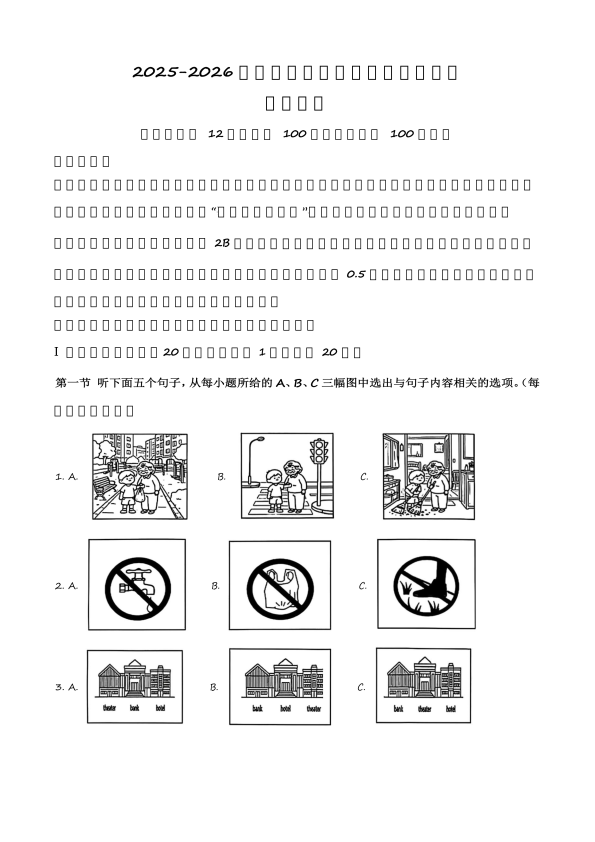
第一节 听下面五个句子,从每小题所给的A、B、C三幅图中选出与句子内容相符的选项。(每个句子读两遍)
1. A. B. C.
2. A. B. C.
3. A. B. C.
4. A. B. C.
5. A. B. C.
第二节 听下面七段对话,从每小题所给的 A、B、C 三个选项中选出正确答案。(每段对话读两遍)
听第1段对话,回答第6小题。
6. Hw des the by like “Digital Dunhuang”?
A. It’s cnvenient. B. It’s bring. C. It’s expensive.
听第 2 段对话,回答第 7 小题。
7. Wh went t the art museum with Sally?
A. Her cusin. B. Her sister. C. Her father.
听第 3 段对话,回答第 8 小题。
8. Hw ften des Xiaya d a science experiment?
A. Every Wednesday. B. Every Thursday. C. Every Friday.
听第 4 段对话,回答第 9 小题。
9. Why des the man always shp at Brwn’s?
A. It’s much bigger.
B. It’s less crwded.
C. It’s newly pened.
听第5段对话,回答第10、11小题。
10. What will the girl help t d?
A. Get three eggs. B. Call her mm. C. Cut tw tmates.
11. What’s the relatinship between the tw speakers?
A. Brther and sister. B. Mther and sn. C. Teacher and student.
听第6段对话,回答第12、13小题。
12. What is Jack ging t d this afternn?
A. Play ftball in a match.
B. Wrk as a vlunteer guide.
C. Watch a ftball match.
13. When will this activity end?
A. 3 ’clck. B. 4 ’clck. C. 6 ’clck.
听第7段对话,回答第14、15小题。
14. What des the by suggest the girl d?
A. Brrw a strybk.
B. Read the passages alud.
C. Make cnnectins with their wn life.
15. Where will the tw speakers practice tgether?
A. At the library.
B. At the girl’s hme.
C. At the by’s schl.
第三节 听下面短文,根据你所听到的短文内容,完成以下表格,每空填一词(短文读三遍)
II.补全对话(共5小题;每小题1分,满分5分)
根据对话内容,从对话后所给的五个选项中选出能填入对话空白处的最佳选项,使对话内容通顺、连贯、意思完整。
A: Gd afternn! ____1____
B: Yes. I’m lking fr sme clthes fr my grandpa.
A: Oh, great! What’s the ccasin (场合)?
B: Tmrrw is his 70th birthday, s I want t buy him a nice gift.
A: ____2____ What style des he usually like?
B: He prefers traditinal styles.
A: ____3____ It’s a traditinal Chinese style and many elderly peple lk great in it.
B: It lks nice. ____4____
A: Silk and cttn. It’s sft and cmfrtable t wear.
B: That sunds gd. ____5____
A: N wrries. Yu can exchange (调换) it within a week.
B: Great. I’ll take it.
A. That’s lvely!
B. Can I help yu?
C. What’s it made f?
D. Hw abut this Tang suit?
E. But I’m nt sure if he likes the clr.
【答案】1. B 2. A 3. D 4. C 5. E
【解析】
【导语】本文是顾客在服装店打算为即将七十岁生日的爷爷挑选传统风格的衣服,店员推荐了唐装,顾客询问材质并担心颜色不合适,在得知可一周内调换后决定买下这件衣服。
【1题详解】
根据下文B的回答“Yes. I’m lking fr...”可知,此处A作为店员应在问候后询问顾客是否需要帮助,选项B“Can I help yu?”符合语境。
【2题详解】
上文B提到明天是爷爷的70大寿,A作为店员听到这个好消息应表示赞美或祝贺,选项A“That’s lvely!”符合情景逻辑。
【3题详解】
上文B提到老人喜欢传统风格,下文A介绍这是“传统中式风格”,选项D“Hw abut this Tang suit?”中唐装属于中国传统服饰,与建议内容吻合。
【4题详解】
根据下文A的回答“Silk and cttn”可知,此处询问的是衣服的制作材料,选项C“What’s it made f?”符合提问逻辑。
【5题详解】
根据下文A的回答“N wrries. Yu can exchange it...”可知,顾客表达了某种顾虑,选项E“But I’m nt sure if he likes the clr.”表达了担忧,从而引出店员的调换政策说明。
III.完形填空(共10小题;每小题1分,满分10分)
阅读下面短文,从每小题所给的A、B、C三个选项中,选出可以填入空白处的最佳答案。
I was a by wh hated reading. When I was in Grade Seven, my Chinese teacher always asked us t read classic bks, but I fund them s ____6____. They were nthing like the funny bks I lved. I pretended (假装) t read. ____7____, I lked at the pages and daydreamed. My Chinese grades drpped. My teacher talked t me, but I didn’t ____8____.
One weekend, my dad gave me a thin bk. “Try this,” he said. I rlled my eyes, ____9____ I didn’t want t make Dad sad. I started reading it after dinner. T my ____10____, the stry was interesting and I was lst in it! The by met different peple and had exciting experiences. I laughed at ____11____ silly mistakes and held my breath whenever he gt int truble. I culdn’t ____12____ the stry and finished it that night.
Dad smiled when he saw me reading. “Reading is like building a huse: Every bk yu read adds a brick (砖块), and slwly, yu’ll have a beautiful ____13____ f knwledge.” His wrds hit me. I started trying different bks. Slwly, I fell in lve with reading. My Chinese grades ____14____, and I even jined the schl reading club with cnfidence.
Nw, I knw reading isn’t a chre. This experience taught me that many gd things dn’t shw their charm (魅力) at first sight. With a(an) ____15____ mind, we might find smething wnderful we never expected.
6. A. bringB. excitingC. relaxing
7. A. EspeciallyB. PssiblyC. Actually
8. A. agreeB. careC. refuse
9. A. andB. rC. but
10. A. surpriseB. fearC. pity
11. A. myB. hisC. their
12. A. put nB. put dwnC. put ut
13. A. libraryB. huseC. palace
14. A. imprvedB. drppedC. stayed
15. A. clearB. penC. peaceful
【答案】6. A 7. C 8. B 9. C 10. A 11. B 12. B 13. C 14. A 15. B
【解析】
【导语】本文讲述了一个男孩从讨厌阅读到爱上阅读的转变经历,父亲的引导和一本有趣的书让他发现阅读的魅力,最终成绩提高并加入读书俱乐部。
【6题详解】
句意:我发现它们如此无聊。
根据上文“I was a by wh hated reading.我是一个讨厌阅读的男孩”可知,作者对经典书籍的感觉是负面的。A 选项 bring 符合语境。
【7题详解】
句意:实际上,我看着书页发呆。
根据上文“I pretended t read.我假装阅读”可知,此处揭示真实情况。C 选项 Actually 表示转折揭示真相,符合语境。
【8题详解】
句意:我的老师找我谈话,但我并不在意。
根据上文成绩下降且作者讨厌阅读的背景,老师谈话后作者并未改变,说明态度冷漠。B 选项 care 符合语境。
【9题详解】
句意:我翻了个白眼,但我不想让爸爸伤心。
前半句“rlled my eyes”表示不情愿,后半句“didn’t want t make Dad sad”表示愿意读的原因,前后存在转折关系。C 选项 but 符合语境。
【10题详解】
句意:令我惊讶的是,故事很有趣。
固定搭配“T my surprise”意为“令我惊讶的是”。作者原本讨厌阅读,却发现书有趣,属于意外情况。A 选项 surprise 符合语境。
【11题详解】
句意:我嘲笑他的愚蠢错误。
根据上文“The by met different peple”可知,此处指代书中的那个男孩,为单数男性。B 选项 his 符合语境。
【12题详解】
句意:我无法放下这个故事,当晚就读完了。
根据下文“finished it that night”可知,作者非常投入,舍不得停止阅读。固定搭配put dwn意为“放下(书)”,此处指停止阅读。B 选项符合语境。
【13题详解】
句意:慢慢地,你将拥有一座美丽的知识宫殿。
虽然前文提到“building a huse”,但palace f knwledge是常见比喻,指代丰富的知识体系,比 huse 更具升华意义。C 选项 palace 符合语境。
【14题详解】
句意:我的语文成绩提高了。
根据上文作者爱上阅读并加入读书俱乐部,这是积极的变化,成绩理应好转。A 选项 imprved 符合语境。
【15题详解】
句意:带着开放的心态,我们可能会发现意想不到的美好。
固定搭配“pen mind”意为“开放的心态”,指愿意接受新事物。根据上文“很多好事起初不显魅力”,需要开放心态去发现。B 选项符合语境。
IV.阅读理解(共三节,20小题;满分37分)
第一节阅读下列短文,根据短文内容,从题中所给的A、B、C、D四个选项中,选出最佳答案。(共10小题。每小题2分,满分20分)
A
Earthquake Safety Drill(演习)
Earthquakes can happen withut warning. This drill will help yu learn hw t prtect yurself.
Wh: Grade 7-9 students
When: May 13, 2:00-2:30 p.m.
Where: Classrms → Schl field
What yu will d
Drp t the grund as sn as yu feel “shaking”.
Cver yur head and neck with yur arms. Get under yur desk.
Hld n t yur desk until “shaking” stps.
After “shaking” stps, leave in a single line (n running).
Walk t the schl field and keep away frm buildings, trees, and pwer lines.
Imprtant things t remember
Listen t yur teacher.
N shuting, pushing, r running.
If in the passage, stay away frm windws and shelves.
If utside, keep lw t the grund in an pen space.
After the drill, return t class fr a shrt talk.
What yu can learn
Why being under a desk is safer than running utside.
Hw t prtect yur head and neck frm falling things.
The difference between “shaking” and “after-shaking”.
Hw t fllw a safe way ut withut getting scared r pushing thers.
Why yu shuld never use the elevatr (电梯) during an earthquake.
Questins? Ask yur teacher r Ms. Chen (schl safety fficer).
16. When will the earthquake drill take place?
A. May 13 in the mrning.B. May 13 in the afternn.
C. May 30 in the mrning.D. May 30 in the afternn.
17. What shuld yu d as sn as yu feel the “shaking”?
A. Cver yur head.B. Shut fr help.
C. Drp t the grund.D. Run t the schl field.
18. During the “shaking” and after it stps, hw d yu act differently?
A. Stand near a windw. → Use the elevatr.
B. Stay under a desk. → Leave the classrm.
C. Listen t yur teacher. → Run utside quickly.
D. Cver yur head and neck: → Ask yur teacher fr help.
19. What happens after the drill?
A. Students g hme immediately.
B. Students practice again utside.
C. Students have a shrt talk in the classrm.
D. Students write a reprt abut the earthquake drill.
20. What is the main purpse f this text?
A. T explain hw t build a safe desk.
B. T ask parents t jin the schl drill.
C. T describe what an earthquake feels like.
D. T tell students abut an earthquake drill.
【答案】16. B 17. C 18. B 19. C 20. D
【解析】
【导语】本文是一则校园地震安全演习通知,面向七至九年级学生,清晰告知演习的时间、地点,详细讲解地震发生时、震动停止后的标准避险撤离步骤,罗列演习重要注意事项,同时说明本次演习学生能够学到的安全知识,并告知答疑渠道,向学生完整介绍本次校园地震演习相关全部安排与避险规范。
【16题详解】
根据文章中“When: May 13, 2:00-2:30 p.m.”可知,代表下午,对应B选项5月13日下午。
【17题详解】
根据文章What yu will d中第一条“Drp t the grund as sn as yu feel ‘shaking’”,说明感受到震动第一时间蹲在地上,对应C选项。
【18题详解】
根据文章What yu will d中震动过程中要求“Get under yur desk”躲在桌下;震动停止后“leave in a single line”排队离开教室,对应B选项“待在桌下→离开教室”。
【19题详解】
根据文章Imprtant things t remember中“After the drill, return t class fr a shrt talk.”,即学生回到教室进行简短讲解交流,对应C选项。
【20题详解】
全文围绕标题“Earthquake Safety Drill(演习)(地震安全演习)”展开,介绍演习时间、流程、规则与学习内容,核心是告知学生本次地震演习相关事宜。
B
Tday, millins f students use AI every day. AI can help yu find infrmatin, check grammar, r even explain difficult ideas. Hwever, if yu use it in the wrng way, it can als harm yur learning. S hw can we stay smart and safe with AI?
First, use AI as a helper, nt a replacer in yur study. AI is meant (意味着) t guide yu instead f ding all the wrk fr yu. When yu dn’t understand a histrical event, ask AI t explain it in simple wrds. But after that, try t retell it yurself. Never just cpy AI’s answers directly fr yur hmewrk.
Secnd, even if yu use AI prperly, dn’t trust AI t much. AI smetimes makes mistakes r gives wrng facts. Always duble-check imprtant infrmatin with bks r yur teacher. Remember: Yu shuld always be the ne in charge f (负责) yur learning.
Third, beynd checking facts, prtect yur wn thinking ability. If yu always ask AI fr ideas, yur brain will get lazy and lse the ability t think n yur wn. Try t slve prblems by yurself first. It’s kay t be wrng — that’s the best way t grw.
Finally, besides study and thinking, yu als need t pay attentin t nline safety when using AI. Sme apps may ask fr yur persnal infrmatin. Never share yur real name, age r schl with an AI chatbt. Whenever yu feel cnfused (困惑的) abut using AI, turn t yur parents r teachers.
AI is a wnderful tl. By using it prperly, we can learn faster and better — withut lsing ur wn abilities.
21. What des the wrd “replacer” in Paragraph 2 mst likely mean?
A. Smething that repeats yur answers.
B. Smething that checks yur hmewrk.
C. Smething that guides yu t learn well.
D. Smething that des the wrk instead f yu.
22. Which f the fllwing is a DON’T when using AI?
① Cpy AI’s answers directly fr hmewrk.
② Ask AI t explain a difficult histrical event.
③ Share yur real name and schl with an AI chatbt.
④ Duble-check infrmatin frm AI with a teacher.
A. ①③B. ②④C. ①④D. ②③
23. What can we infer (推断) abut “being wrng” in Paragraph 4?
A. Students shuld avid making mistakes at any cst.
B. Making mistakes is a natural part f learning.
C. AI never makes mistakes, but humans d.
D. Teachers will punish yu if yu are wrng.
24. What is the writer’s attitude (态度) tward AI?
A. AI is better than teachers.
B. AI has n disadvantages.
C. AI shuldn’t be allwed in schls.
D. AI is helpful but needs careful use.
25. What is the structure f the passage?
A. Tip-listing.B. Time-rdering.C. Prblem-slving.D. Example-giving.
【答案】21. D 22. A 23. B 24. D 25. A
【解析】
【导语】本文是一篇议论文,主要介绍AI对学生学习的利弊,分点给出合理使用AI的几条建议,倡导正确、谨慎使用人工智能工具。
【21题详解】
根据第二段画线词后文“use AI as a helper, nt a is meant t guide yu instead f ding all the wrk fr yu”,AI是辅助工具而非替你完成全部任务的事物,replacer指代代替你做事的事物。
【22题详解】
根据第二段“Never just cpy AI’s answers directly fr yur hmewrk”可知①是不可取的行为;根据第五段“Never share yur real name, age r schl with an AI chatbt”可知③是不可取的行为;②和④是文中推荐的正确做法,因此①③符合题意。
【23题详解】
第四段末尾“It’s kay t be wrng — that’s the best way t grw”,由此推断作者认为犯错是成长路上自然、有益的一部分。
【24题详解】
文章开篇点明AI有利也存在危害,结尾总结“AI is a wnderful tl. By using it prperly, we can learn faster and better”,能看出作者认为AI有帮助,但使用时需要谨慎留心。
【25题详解】
文章主体段落用“First, Secnd, Third, Finally”分层罗列使用AI的注意事项,属于Tip-listing(分点列举建议)的行文结构。
第二节 阅读下面短文,从短文后所给的五个选项中选出能填入短文空白处的最佳选项,使短文通顺、连贯,意思完整。(共5小题;每小题1分,满分5分)
C
This year is the Year f the Hrse. In Chinese culture, hrses stand fr energy and success. ____26____
Take “dark hrse” fr example. ____27____ It tells smene wh has a hidden talent wins unexpectedly. A quiet student wh suddenly wins a singing cmpetitin is a dark hrse. That’s why we shuld nt judge a persn t quickly.
____28____ When smene becmes t prud, we can say they are “n their high hrse”. Yu can tell them, “Get ff yur high hrse.” “Get ff yur high hrse” means “stp being s prud.”
D yu smetimes feel rushed? Then yu might need t hear “Hld yur hrses!” ____29____ It’s a friendly way t say “slw dwn”.
Finally, “hrses fr curses” reminds us that different peple are gd at different things. ____30____ Just find yur wn curse and run it well.
Nw yu knw several hrse expressins. Try using them tday! They can make yur English mre natural and vivid (生动的)!
A. It desn’t mean a black hrse.
B. S dn’t cmpare yurself t thers.
C. Anther phrase (短语) is abut pride (骄傲).
D. This phrase is ften used t ask smene t calm dwn.
E. Interestingly, English has many useful expressins with the wrd “hrse”.
【答案】26. E 27. A 28. C 29. D 30. B
【解析】
【导语】本文先介绍马在中国文化里代表活力与成功,随后介绍五个含“hrse”的英语习语,分别讲解含义、用法并给出生活示例。
【26题详解】
前文介绍中国文化中马的寓意,后文开始列举各类带hrse的英语短语,E项“Interestingly, English has many useful expressins with the wrd ‘hrse’.”承上启下,引出下文对英语马相关习语的介绍。
【27题详解】
本段讲解习语“dark hrse”,后文说明它指意外胜出、身怀潜力的人,A项“It desn’t mean a black hrse.”纠正字面误解,再引出该短语真实含义,逻辑通顺。
【28题详解】
本段围绕骄傲相关短语“n their high hrse”展开,C项“Anther phrase (短语) is abut pride (骄傲).”总起本段,点明本段要介绍和骄傲有关的另一个习语。
【29题详解】
前文出现短语“Hld yur hrses!”,后文解释它用来劝人放慢节奏,D项“This phrase is ften used t ask smene t calm dwn.”解释该短语的作用,和后文“slw dwn”表意呼应。
【30题详解】
前文说明“hrses fr curses”指人各有所长,B项“S dn’t cmpare yurself t thers.”由前文观点得出结论,衔接后文找到自身赛道、做好自己的内容。
第三节阅读下面短文,根据短文内容回答下列各小题。(共5小题;第51-54题每小题2分;第55题4分(其中第1小题1分,第2小题3分),满分12分)
D
What happens when yu mix Tibetan (西藏的) fd and cffee? Fr Cumu, a girl frm Xizang, the answer is her dream — a cup f cffee that tastes like her hmetwn.
Cumu left hme t study and wrk in big cities. But a car accident in 2018 changed her life. “I realized I hadn’t dne what I really wanted,” she said. S she gave up her jb and tk ver a small cffee shp in Lhasa. At first, she didn’t want t run a café. But she decided t d it well. She started Ningdu Cffee in 2019 — “Ningdu” means “best friend” in Tibetan.
Cumu wrked hard t learn abut cffee. She passed mre than 20 exams. But she wanted t create smething special — cffee with the taste f Lhasa. After many tries, she fund the answer in her childhd memry: dried milk curd (奶渣). She put it and butter in a bwl, and let custmers add them t their cffee. That’s hw “Lhasa Latte” (拉萨拿铁) was brn. “This cffee tastes like butter tea, but it’s als cffee. They mix Tibetan fd culture with cffee in a smart way,” said a visitr.
In May 2025, Cumu tk her cffee t the Lndn Cffee Festival. Visitrs frm arund the wrld tried her special drinks. “This is smething I’ve never tasted befre. It’s amazing!” said a British custmer.
Frm Lhasa t Lndn, Cumu’s cffee tells a stry: Smething frm ne place can becme a gift t the whle wrld.
31. Where is Cumu frm?
___________________________________________________________________________________________
32. What’s the main idea f Paragraph 2?
After a car accident changed her life, Cumu___________________________________________________________________________________________
33. What did Cumu add t her cffee t create the “Lhasa Latte”?
___________________________________________________________________________________________
34. Why did Cumu g t the Lndn Cffee Festival in May 2025?
___________________________________________________________________________________________
35. D yu think Cumu’s cffee can present Xizang’s culture? Give a reasn.
___________________________________________________________________________________________
【答案】31. She is frm Tibet/Xizang.
32. gave up her jb and tk ver a small cffee shp in Lhasa.
33. She added dried milk curd and butter./Dried milk curd and butter.
34. She wanted t shw special drinks/her cffee t the wrld./She wanted t make her cffee ppular.
35. Yes. Because she mixed traditinal Tibetan fd (dried milk curd and butter) with cffee, creating a taste similar t butter tea. This creative blend shws hw Xizang’s fd culture can be shared with the wrld.
【解析】
【导语】本文讲述了西藏女孩Cumu将家乡传统食物与咖啡结合,创造出“拉萨拿铁”并带到伦敦咖啡节的故事。
【31题详解】
第一段提到Cumu来自西藏“a girl frm Xizang”,答案是原文直接信息。
【32题详解】
第二段主要讲述Cumu在2018年车祸后改变人生,辞去工作并在拉萨接手了一家小咖啡店“gave up her jb and tk ver a small cffee shp in Lhasa”,整合信息作答。
【33题详解】
第三段提到Cumu在咖啡中加入干奶渣和黄油“dried milk curd and butter”,答案是原文直接信息。
【34题详解】
第四段提到Cumu参加伦敦咖啡节是为了向世界展示她的特色饮品“tk her cffee t the Lndn Cffee Festival”,整合信息作答。
【35题详解】
开放题,答案不唯一。需表达自己对Cumu的咖啡是否能代表西藏文化的看法并说明理由,合理即可。
V.看图写话(共5小题;每小题2分,满分10分)
根据每小题所提供的图画情景和提示词,写出一个与图画情景相符的句子。
36. hungry
_____________________________________________________
37. early, f all
_____________________________________________________
38. be able t, last year
_____________________________________________________
39. tmrrw
_____________________________________________________
40. while
_____________________________________________________
【答案】36. She is hungry./She lks hungry./She feels hungry./…
37. Lucy gets up the earliest f all the three girls./Lucy gt up the earliest f all the three girls./...
38. He was able t play the erhu last year./…
39. They will play chess tmrrw./They are ging t play chess tmrrw./…
40. The by was watering flwers while his mther was cking./He was watering the flwers while his mm was cking./…
【解析】
【36题详解】
根据图片中小女孩的一只手在摸着肚子,以及单词hungry的提示,可知句意为“她饿了。”,故填“She is hungry./She lks hungry./She feels hungry./…”。
【37题详解】
根据图片里三个女孩分别6:30、6:50、7 点起床,可知句意为“Lucy是所有人当中起得最早的。”,三者比较用最高级,early最高级为earliest,短语f all表示在所有人当中。故填“Lucy gets up/gt up the earliest f all the three girls./...”。
【38题详解】
根据图片中小男孩在拉二胡,以及单词last year、be able t可知,句意为“去年这个男孩就会拉二胡了。”,last year是过去时间,be able t变为was able t;play the erhu拉二胡,故填“He was able t play the erhu last year./...”。
【39题详解】
根据图片里两个男孩在下棋,以及单词tmrrw可知,句意为“他们明天将要下棋。”,tmrrw是将来时间,用一般将来时,will+动词原形或者be ging t,play chess下棋,故填“They will play chess tmrrw./They are ging t play chess tmrrw./...”。
【40题详解】
根据图片里小男孩浇花、妈妈做饭同时进行,以及单词while可知,句意为“妈妈做饭的时候,男孩正在浇花。”,故填“The by was watering flwers while his mther was cking./He was watering the flwers while his mm was cking./...”。
VI.短文填空(共8小题;每小题1分,满分8分)
阅读下面短文,根据语境或所给单词的提示,在每个空格内填入一个恰当的词,要求所填的词意义准确、形式正确,使短文意思完整,行文连贯。
It’s nt easy fr taiknauts t write in space. Gravity (重力) n Earth ____41____ (help) the ink g dwn t the tip f the pen. But in space, there is n gravity, ____42____ cmmn pens d nt wrk. At first, taiknauts used pencils. Hwever, pencils have prblems. They can break easily, and the tiny pieces can fly in the air. The pieces are ____43____ (danger) t taiknauts and the spaceship.
T slve this prblem, scientists ____44____ (create) the “space pen”. The space pen wrks well withut gravity. It has special ink and a small pump (泵) inside. This allws taiknauts t write in any directin, even upside dwn. The pen als wrks in hard ____45____ (cnditin), like in very ht r very cld envirnments.
Interestingly, Chinese taiknauts nce used traditinal brushes t write in space. The brush wrks differently ____46____ the pen. The ink stays n the brush tip thrugh surface tensin (表面张力), s taiknauts can write with the brush. Writing with traditinal brushes in space mixes science and culture, shwing the beauty f traditinal Chinese culture.
Taiknauts use ____47____ (this) special pens t take ntes, write messages, and slve prblems while they are in space. Thanks t the clever creatins, taiknauts can write ____48____ (safe) and easily in space.
【答案】41. helps
42. s 43. dangerus
44. created
45. cnditins
46. frm 47. these
48. safely
【解析】
【导语】本文是一篇说明文,主要讲述了宇航员在太空中书写面临的困难,以及科学家发明的“太空笔”和中国宇航员使用毛笔在太空中书写的有趣现象。
【41题详解】
句意:地球上的重力帮助墨水流到笔尖。主语“Gravity”是单数不可数名词,且此处陈述客观事实,应用一般现在时,谓语动词需用第三人称单数形式。
【42题详解】
句意:但是在太空中,没有重力,所以普通的笔不起作用。前后两句为因果关系,前因后果,表结果应用连词连接,故填s。
【43题详解】
句意:这些碎片对宇航员和宇宙飞船来说是危险的。空处在be动词“are”之后,需用形容词作表语。
【44题详解】
句意:为了解决这个问题,科学家们发明了“太空笔”。描述过去发生的事情,需用一般过去时。
【45题详解】
句意:这种笔在恶劣的条件下也能使用,比如在非常热或非常冷的环境中。“cnditin”为可数名词,根据语境及后文的“envirnments”可知,此处表示多种条件,应用复数形式。
【46题详解】
句意:毛笔的工作原理与钢笔不同。固定搭配:differently frm表示“与……不同”,故填frm。
【47题详解】
句意:宇航员在太空时使用这些特殊的笔做笔记、写信息和解决问题。空处修饰复数名词“pens”,应用“this”的复数形式。
【48题详解】
句意:多亏了这些聪明的发明,宇航员才能在太空中安全、轻松地书写。空处修饰动词“write”,且与副词“easily”并列,应用safe副词形式。
VII.书面表达(满分 10 分)
49. 假设你是李华,你的笔友 Mike 来信询问你最近参加的校园读书分享活动。请你根据以下提示,给他回一封邮件。词数 80 左右。
参考书名: Jurney t the West, A Dream f Red Mansins, The Old Man and the Sea, Harry Ptter, Tm Sawyer, /…
注意事项:
* 必须包含所有提示信息,可适当发挥,开头和结尾已给出,不计入总词数;
* 意思清楚,表达通顺,行文连贯,书写规范;
* 请勿在文中使用真实的姓名、校名和地名。
Dear Mike,
Hw is it ging? I learned frm yur email that yu’re interested in my campus bk sharing event. Nw I share it with yu.
__________________________________________________________________________________________________________________________________________________________________________________________________________________________________________________________________________________________________________________________________________________________________________________________________________________________________________________________________________________________________________________________________________________________________________________________
What’s yur favrite bk? Write t me sn.
Yurs,
Li Hua
【答案】Dear Mike,
Hw is it ging? I learned frm yur email that yu’re interested in my campus bk sharing event. Nw I share it with yu.
The event was held in the schl hall n April 23rd. During the activity, I shared my favrite bk, Jurney t the West. It is an excellent bk which tells the stry f Mnkey King and his friends. They went thrugh many difficulties t get the Buddhist texts. I like it very much because the characters are brave and they never give up. I think reading is nt nly relaxing but als helpful. It pens up a whle new wrld fr me.
What’s yur favrite bk? Write t me sn.
Yurs,
Li Hua
【解析】
【详解】写作步骤
[第一步:审题立意]
确定文体:电子邮件类应用文,一般过去时和一般现在时为主
明确要点:介绍校园读书分享活动的时间、地点;分享最喜欢的书籍(书名、内容、喜欢原因);表达读书感受。
确定人称: 第一人称(I/me)、第三人称(they/he/his)
注意事项:必须包含所有提示信息,可适当发挥;勿在文中使用真实的姓名、校名和地名。
[第二步:构思布局]
三段式结构:
开头段:承接邮件开头,引出下文对校园读书分享活动的介绍。
主体段:依次介绍读书分享活动的时间、地点;分享最喜欢的书籍相关信息(书名、内容、喜欢原因);表达读书感受。
结尾段:询问笔友最喜欢的书,自然收尾。
[第三步:要点展开]
要点一:介绍读书分享活动的时间和地点in the schl hall/n April 23rd
要点二:分享最喜欢的书籍Jurney t the West/an excellent bk/went thrugh many difficulties t get the Buddhist texts/Harry Ptter/tells magical stries/studies in a magic schl/fights against the bad wizard Vldemrt/等
说明喜欢原因brave/never give up/ stick t their dreams/teach me the imprtance f friendship/never fears dark pwer/ prtect his lved nes等
要点三:表达读书感受Relaxing/helpful/pens up a whle new wrld/bring us warmth and fun等
M Yan
Birth date
On February 16 , 1955.
Writing experiences
* Lved t 17 interesting stries frm daily life.
* Stuck t writing fr many years.
Main achievement
Became an excellent literary 18 .
Influence (影响力)
* Lts f his classic wrks get ppular 19 .
* Everyne thinks his thughts n life and sciety are very 20 .
Time: April, 23rd
Place: the schl hall
Activity:
* What’s yur favrite bk?
* What’s the bk abut?
* Why d yu like the bk?
Yur feeling(s): …
这是一份福建宁德市2025-2026学年度第二学期八年级期末考试 英语试题(含解析),文件包含《第5课从小爱劳动》教学课件pptx、《第5课从小爱劳动》教学设计docx、《第5课从小爱劳动》同步作业docx、劳动习惯养成记_20260610_16122829mp4、劳动小能手的一天_20260610_02332712mp4等5份课件配套教学资源,其中PPT共21页, 欢迎下载使用。
这是一份2025-2026学年福建省宁德市度第二学期八年级期末考试 英语试题(含答案),共37页。
这是一份2024-2025学年福建省宁德市八年级(下)期末英语试卷(含详细答案解析),共18页。试卷主要包含了看图填空,补全对话-选择,阅读六选五,完形填空,阅读理解,任务型阅读-简答,阅读填空,书面表达等内容,欢迎下载使用。
注册成功
资料篮

在线客服
添加在线客服
获取1对1服务
官方微信
关注“教习网”公众号
打开微信就能找资料
赛课定制
添加在线客服
获取1对1定制服务
职称咨询
添加在线客服
获取1V1专业指导服务

免费福利