 免费领取教师福利

若您为此资料的原创作者,认为该资料内容侵犯了您的知识产权,请扫码添加我们的相关工作人员,我们尽可能的保护您的合法权益。


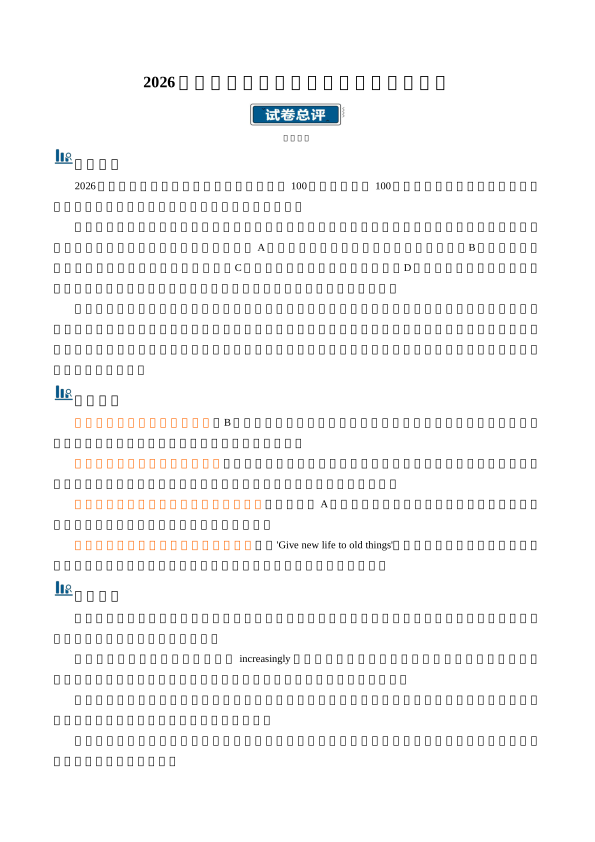
这是一份2026年中考英语真题完全解读(江苏扬州卷)含答案,文件包含广西贺州市昭平县2025-2026学年八年级下学期7月期末语文试题pdf、广西贺州市昭平县2025-2026学年八年级下学期7月期末语文试题docx、广西贺州市昭平县2025-2026学年八年级下学期7月期末语文试题答案docx等3份试卷配套教学资源,其中试卷共25页, 欢迎下载使用。
试题分析
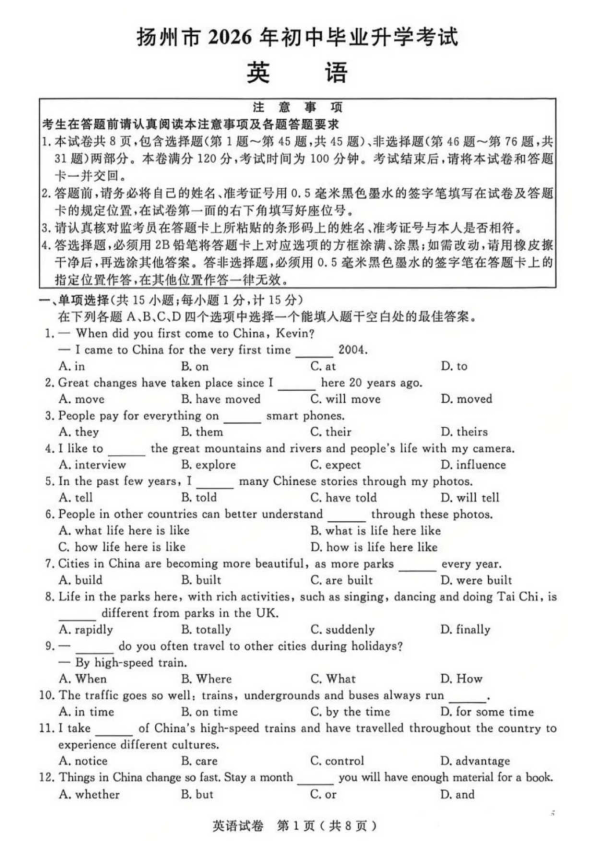
2026年扬州市中考英语试卷满分120分,考试时间100分钟。试卷包含单项选择、完形填空、阅读理解、词汇运用、阅读表达、缺词填空和书面表达七大题型,覆盖语言知识、阅读理解、书面表达三大能力维度。整体难度适中,立足基础,注重能力,体现素养导向。
情境材料选取丰富多元:单项选择以外国友人Kevin在中国20年的生活体验为连贯情境,完形填空围绕迎新会气球活动展开寓意教育,阅读理解涵盖太空生活、中俄文学交流、文学名著节选和野外指南四类文体,词汇运用和缺词填空分别聚焦骑行健康与长城文化,书面表达要求撰写家乡民俗艺术探寻计划。情境贴近学生生活、社会热点与传统文化,兼具国际视野与家国情怀。
知识模块覆盖全面:语法基础约占25%(单项选择+词汇运用),语篇理解约占45%(完形填空+阅读理解+阅读表达+缺词填空),书面表达约占25%。能力考查层次分明,既重视词汇语法等基础知识的准确运用,又强调在真实语篇中获取信息、分析推理和表达意义的能力,同时渗透文化意识与思维品质的培养。
试卷区分度良好,基础题与能力题比例合理。单项选择和词汇运用侧重基础落实,阅读理解C篇文学节选和阅读表达第60题体现较高思维要求,书面表达综合考查语言运用与策划能力,对应学业质量水平三至四级要求。
试题亮点
情境真实连贯,体现生活化导向。单项选择15道题统一嵌入"外国友人看中国"的宏观情境,从2004年初次来华到高铁游全国,再到对中国生活经历的评价,形成完整叙事链,使语法考查置于真实交际语境中,避免孤立辨题。
注重语篇育人,渗透价值引领。完形填空通过气球游戏引导学生理解"成功不必以牺牲他人为代价"的道理,将语言考查与品格教育自然融合;缺词填空以长城为话题,传递和平、团结与文化自信;阅读B篇介绍俄罗斯汉学家翻译中国文学获奖,彰显文明互鉴与文化传播意义。
文体类型丰富,考查多元阅读能力。四篇阅读材料涵盖说明文(太空微重力生活)、新闻报道(中华图书特殊贡献奖)、文学节选(《布鲁克林有棵树》)和书籍简介(《Nature f Prtland》野外指南),涉及信息定位、词义猜测、推理判断、主旨概括、写作意图等多种阅读技能。
关注地方文化,落实课标要求。书面表达以"家乡民俗艺术探寻"为主题,引导学生关注扬州地方文化(如扬州评话、剪纸等),体现英语学科在传播本土文化中的工具价值,呼应课标"用英语讲好中国故事"的导向。
命题趋势
主干知识稳定考查,注重基础落实。时态语态、介词代词、连词副词、非谓语动词、宾语从句等语法核心点持续覆盖,词汇运用继续聚焦词性转换、比较级、反身代词等高频考点。
真实情境与社会热点常态化。试题将继续依托学生生活经验、社会热点事件和中华优秀传统文化创设情境,强化"在语境中学英语、用英语"的理念。
阅读思维要求持续提升。阅读理解将更注重深层信息加工,推理判断题、主旨大意题和写作意图题占比可能进一步提高,对学生的语篇分析能力和批判性思维提出更高要求。
核心素养导向逐步显性化。文化意识(中外文化交流、本土文化传播)、思维品质(逻辑推理、批判性思考)和学习能力(学习策略、自主探究)的考查将更直接地体现在试题设计和评分标准中。
书面表达注重真实任务与条理规范。应用文写作将继续围绕真实生活任务展开,要求内容完整、逻辑清晰、语言得体,同时鼓励个性发挥和适当创新。
考点细目表
考点模块占比分析
语法基础(约25%):涵盖单项选择15分和词汇运用10分,重点考查时态语态、介词代词、连词、非谓语动词、词性转换和比较级等核心语法项目,是学生必须夯实的基础模块。
语篇理解(约45%):涵盖完形填空15分、阅读理解30分、阅读表达10分和缺词填空10分,是试卷占比最大的模块,突出在完整语篇中获取信息、分析推理和建构意义的能力。
书面表达(约25%):句子翻译10分和书面表达20分,综合考查学生用英语进行意义表达和交际的能力,强调语言准确性与得体性并重。
文化意识渗透(全卷):从Kevin的中国经历、中俄文学交流、长城文化到家乡民俗艺术,文化元素贯穿全卷,体现英语学科的人文性和工具性统一。
核心备考策略
1. 回归教材,夯实语言基础
(1)吃透核心语法体系。系统梳理时态(一般现在时、一般过去时、现在完成时、过去进行时)、语态(一般现在时和一般过去时的被动语态)、非谓语动词(不定式、动名词)、宾语从句(陈述句语序)、定语从句(关系代词基本用法)等高频考点,建立知识网络。
(2)熟练识记课标词汇。掌握《义务教育英语课程标准》要求的1600个左右单词和200-300个习惯用语或固定搭配,特别关注高频多义词(如take, get, make, put等短语动词)、易混词(如except/ besides, raise/ rise)和词性转换规则。
(3)关注教材话题与功能项目。译林版教材各单元的话题(如Schl life, Let's play sprts, Welcme t ur schl等)和功能意念项目(如问候、建议、邀请、道歉)是命题的重要来源,复习时应结合教材对话和课文巩固交际用语。
2. 专项突破,提升关键能力
(1)掌握阅读策略。训练略读(skimming)获取主旨大意、扫读(scanning)定位具体信息、精读(clse reading)分析长难句和推理判断的能力;针对不同文体(记叙文、说明文、议论文、应用文)采用相应的阅读方法。
(2)熟练处理典型题型。完形填空注重上下文语境和逻辑关系,先通读全文把握主旨再逐空推敲;阅读理解细节题回归原文找依据,推理题避免过度推断,主旨题关注首尾段和段落主题句;阅读表达严格控制词数,尽量使用原文信息作答。
3. 规范答题表达,建立英语思维习惯
(1)用英语思维组织答案,避免中式英语。书面表达和句子翻译要注意英语句法结构(如主谓一致、时态呼应、从句连接词),不要逐字翻译汉语。
(2)按逻辑层次组织答案。书面表达采用"总—分—总"或"引入—主体—结尾"的结构,使用恰当的连接词(first, besides, hwever, therefre, in cnclusin等)使文章连贯流畅。
避坑提醒
×孤立记语法规则,忽视语境判断。语法填空和单项选择都依托具体语境,不能仅凭规则硬套,如第2题since从句的时态判断必须结合"20 years ag"这一时间状语。
×阅读时先看选项再读文章。这种做题顺序容易陷入"找词匹配"的误区,导致断章取义。正确做法是先速读全文把握主旨,再带着问题精读相关段落。
×书面表达堆砌高级词汇和复杂句型。中考作文评分首先看内容是否完整、要点是否齐全、语言是否准确,过度追求"高大上"反而可能因语法错误失分,应在准确的基础上力求丰富。
×词汇拼写和形式变化粗心丢分。词汇运用和缺词填空常考名词复数、动词时态、形容词比较级、词性转换等,动笔前务必判断所填词的词性和形式,写完后要检查拼写。
×阅读表达答案超限或答非所问。题目明确要求"每题答案不超过10个词",作答时要精简语言,直接回应问题,避免抄录整句或添加无关信息。
×完形填空见空就填,不顾上下文。完形填空考查的是语篇层面的词汇运用,有些空的答案需要联系后文才能确定,如第25题"never"必须结合Rdriguez先生的解释才能判断。
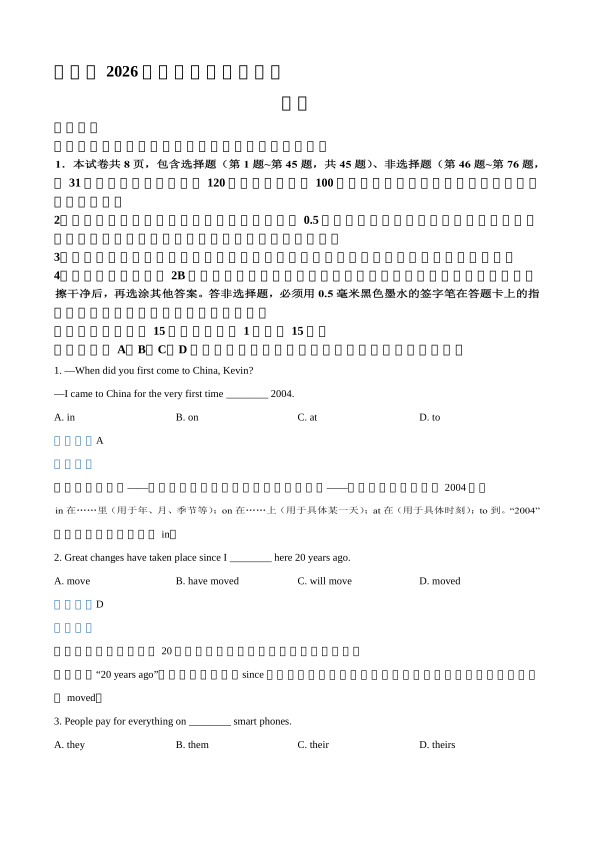
一、单项选择
1-5题
在下列各题A、B、C、D四个选项中选择一个能填入题干空白处的最佳答案。
1. —When did yu first cme t China, Kevin?
—I came t China fr the very first time ________ 2004.
A. in B. n C. at D. t
2. Great changes have taken place since I ________ here 20 years ag.
A. mve B. have mved C. will mve D. mved
3. Peple pay fr everything n ________ smart phnes.
A. they B. them C. their D. theirs
4. I like t ________ the great muntains and rivers and peple's life with my camera.
A. interview B. explre C. expect D. influence
5. In the past few years, I ________ many Chinese stries thrugh my phts.
A. tell B. tld C. have tld D. will tell
命题透视
►核心考点:介词辨析(第1题)、时态辨析(第2、5题)、代词辨析(第3题)、动词词义辨析(第4题)
►链接教材:译林版七年级下册Unit 4《Finding yur way》(介词)、八年级下册Unit 1《Past and Present》(现在完成时)、七年级上册Unit 3《Welcme t ur schl》(代词)、八年级上册Unit 6《Birdwatching》(动词辨析)
►命题分析:
(1)情境创设:以"外国友人Kevin首次来华—手机支付—相机探索—讲述中国故事"为叙事链,将语法考查嵌入真实交际场景,体现"在语境中考语法"的理念。
(2)问题设计:每题聚焦一个语法核心点,选项设置具有典型干扰性,如第2题用现在完成时have mved干扰since从句的一般过去时用法。
(3)考查目标:考查学生在真实语境中准确运用基础语法知识的能力,对应语言能力素养中的"语法知识运用"维度。
思路点拨
►第1题 抓核心时间标志。题干中"2004"是年份,表示在某一年用介词in。n用于具体某一天,at用于具体时刻,t表示方向。结论:选A。
►第2题 抓核心结构"since + 从句"。since引导时间状语从句时,从句用一般过去时,主句用现在完成时。题干中"20 years ag"是明确的过去时间点,从句谓语用mved。have mved是现在完成时,不能用于since从句;mve是一般现在时,will mve是一般将来时,均不符合。结论:选D。
►第3题 抓核心语法功能。空格后有名词smart phnes,需要形容词性物主代词修饰。they是主格,them是宾格,theirs是名词性物主代词(后面不接名词),只有their是形容词性物主代词。结论:选C。
►第4题 抓核心语境与搭配。根据"with my camera"(用相机)和"the great muntains and rivers"(大好河山)可知,此处表示"探索、发现"。interview通常用于采访人,expect表示期待,influence表示影响,均与"相机+山河"的语境不符。explre(探索)符合摄影旅行的主题。结论:选B。
►第5题 抓核心时间状语。"In the past few years"(在过去几年里)是现在完成时的典型标志,表示从过去持续到现在的动作。tell是一般现在时,tld是一般过去时,will tell是一般将来时,均不符合。结论:选C。
【答案】1.A 2.D 3.C 4.B 5.C
技巧点拨
单项选择解题策略:"一读二划三比四查"。一读:通读全句理解语境;二划:划出时间标志、关键动词、连词等解题线索;三比:对比选项差异,结合语境排除干扰;四查:将所选答案代入原句,检查时态一致、主谓一致、搭配合理。特别提醒:since引导的时间状语从句用一般过去时,主句用现在完成时,这是中考高频易错点。
6-10题 感受中国变化与便利生活
6. Peple in ther cuntries can better understand ________ thrugh these phts.
A. what life here is like B. what is life here like C. hw life here is like D. hw is life here like
7. Cities in China are becming mre beautiful, as mre parks ________ every year.
A. build B. built C. are built D. were built
8. Life in the parks here, with rich activities, such as singing, dancing and ding Tai Chi, is ________ different frm parks in the UK.
A. rapidly B. ttally C. suddenly D. finally
9. —________ d yu ften travel t ther cities during hlidays? —By high-speed train.
A. When B. Where C. What D. Hw
10. The traffic ges s well: trains, undergrunds and buses always run ________.
A. in time B. n time C. by the time D. fr sme time
命题透视
►核心考点:宾语从句语序(第6题)、被动语态(第7题)、副词辨析(第8题)、疑问词辨析(第9题)、短语辨析(第10题)
►链接教材:译林版九年级上册Unit 3《Teenage prblems》(宾语从句)、八年级下册Unit 8《A green wrld》(被动语态)、八年级上册Unit 4《D it yurself》(副词)、七年级上册Unit 5《Let's celebrate》(疑问词)
►命题分析:
(1)情境创设:延续Kevin视角,通过"照片传播中国文化—城市建设—公园生活—高铁出行—交通准时"展现中国的社会变迁和现代化成就,情境具有时代感和文化自信导向。
(2)问题设计:第6题将宾语从句语序和固定句型 like结合考查;第7题在原因状语从句中考查一般现在时的被动语态;第8题通过语境判断副词ttally的语义强度;第9、10题考查基础交际用语。
(3)考查目标:考查语法知识的综合运用和语境中的词汇辨析能力,渗透文化意识素养。
思路点拨
►第6题 抓核心语法规则:宾语从句用陈述句语序,排除B、D;询问"……是什么样的"用 like,hw不与like搭配。结论:选A。
►第7题 抓核心语态和时态。主语"mre parks"与build是被动关系,排除A、B;时间状语"every year"表示经常性动作,用一般现在时的被动语态are built,不用一般过去时的被动语态were built。结论:选C。
►第8题 抓核心语境差异。rapidly迅速地、ttally完全地、suddenly突然地、finally最终。语境强调中国公园生活(唱歌、跳舞、太极)与英国公园"完全不同",ttally different是固定搭配,表示程度。结论:选B。
►第9题 抓核心答语信息。答语"By high-speed train"表示交通方式,对方式提问用Hw。When问时间,Where问地点,What问事物。结论:选D。
►第10题 抓核心短语语义。in time及时;n time准时;by the time到……时候(连词);fr sme time一段时间。根据"The traffic ges s well"可知交通工具按时刻表运行,即"准时"。结论:选B。
【答案】6.A 7.C 8.B 9.D 10.B
易错提醒
宾语从句三注意:一是语序用陈述句(主语在前,谓语在后),二是时态与主句呼应(主句过去时从句相应过去,客观真理除外),三是连接词选择要看缺什么成分(缺主语/宾语/表语用what/wh,不缺成分用that/if/whether)。本题第6题同时考查了语序和固定句型,B选项what is life here like是疑问句语序,是常见陷阱。
11-15题 深度体验与情感升华
11. I take ________ f China's high-speed trains and have travelled thrughut the cuntry t experience different cultures.
A. ntice B. care C. cntrl D. advantage
12. Things in China change s fast. Stay a mnth ________ yu will have enugh material fr a bk.
A. whether B. but C. r D. and
13. If yu want t understand a culture better, yu need t ________ time with lcal peple.
A. spend B. lse C. cst D. change
14. China cntinues ________ me endless chances fr discvery.
A. ffer B. ffered C. t ffer D. t ffering
15. —What d yu ________ yur experience f living in China? —There is always smething new. 20 years n, China still surprises me.
A. think ver B. think f C. think back D. think ut
命题透视
►核心考点:短语动词辨析(第11题)、连词辨析(第12题)、动词辨析(第13题)、非谓语动词(第14题)、短语动词辨析(第15题)
►链接教材:译林版八年级上册Unit 5《Wild animals》(短语动词)、九年级上册Unit 1《Knw yurself》(连词)、七年级上册Unit 7《Shpping》(动词spend/cst)、八年级上册Unit 6《Birdwatching》(cntinue t d)、九年级上册Unit 2《Clurs》(think短语)
►命题分析:
(1)情境创设:从"利用高铁游全国"到"花时间和当地人相处"再到"对中国生活的评价",情境层层深入,最终以"20年后中国依然让我惊讶"收尾,形成情感升华,体现命题的人文关怀。
(2)问题设计:第11题考查take advantage f固定短语;第12题考查"祈使句 + and + 陈述句"结构;第13题区分spend/cst的主语差异;第14题考查cntinue t d sth.;第15题考查think f表示"认为"的用法。
(3)考查目标:在完整语篇中综合运用词汇和语法知识,同时感受中国的发展变化,培养文化自信和家国情怀。
思路点拨
►第11题 抓核心固定搭配。根据"have travelled thrughut the cuntry"可知此处表示"利用"高铁出行。take ntice f注意,take care f照顾,take cntrl f控制,take advantage f利用。结论:选D。
►第12题 抓核心句型结构。"Stay a mnth"是祈使句,"yu will have..."是陈述句,前后为顺承关系:待一个月,然后你就有足够的素材写书了。whether是否,but但是,r否则,and那么/而(表示顺承)。结论:选D。
►第13题 抓核心主语和搭配。主语是yu(人),宾语是time,spend time with sb.表示"花时间和某人在一起",主语为人。cst主语为物,lse失去、change改变均不符合语境。结论:选A。
►第14题 抓核心非谓语结构。cntinue后接不定式t d sth.表示"继续做另一件事",接ding表示"继续做同一件事"。此处指中国继续提供机会,用cntinue t ffer。ffered是过去式,t ffering结构错误。结论:选C。
►第15题 抓核心语境与短语语义。答语"There is always smething new. China still surprises me."表达的是对中国生活的感受和评价,问句应询问"你觉得……怎么样"。think ver仔细考虑,think f认为/想起,think back回想,think ut想出。What d yu think 是固定句型。结论:选B。
【答案】11.D 12.D 13.A 14.C 15.B
复习重点
短语动词是中考高频考点,常见的take短语有:take advantage f(利用)、take care f(照顾)、take part in(参加)、take place(发生)、take ff(起飞/脱下)、take up(开始从事/占据);think短语有:think f(认为/想起)、think abut(考虑)、think ver(仔细考虑)。复习时建议按动词归类整理,结合例句记忆,避免混淆。
二、完形填空
16-30题 迎新会气球游戏的启示
Amng the activities during student rientatin, the balln activity is my favrite. This year I wrked with Mr Rdriguez. We mved the tables t make a big pen space fr a muntain f blue ____16____. As the students entered, we handed each a sharp pencil and tld them t get a balln.
Mr Rdriguez annunced, "Let's circle up. We're ging t play a game. If yur balln ____17____ the next minute, yu get a prize. G!" The rm was in a mess as the kids ran arund ppping ne anther's ballns. Laughter, scream, and lud pps filled the rm. Sme kids hid under tables ____18____ thers jumped n tp f them. Even thse wh seemed ____19____ at first quickly started t pp thers' ballns happily.
"Stp! Cme back tgether and talk abut what happened," I shuted.
As the kids frmed a circle, they lked arund t ____20____ a surviving balln, a winner.
"N ne ____21____. Everyne's balln is ppped," said a girl sadly. She'd spent the minute under the table, trying t ____22____ her balln, but she failed.
"If n ne has a balln, maybe the winner can be the persn wh ppped ____23____ ballns," ffered a by, wh had ppped a lt f ballns.
"Yeah, I gt seven f them," ffered anther by. A few thers began t ____24____ their self-recrded scres.
"We ____25____ said yu had t pp anyne's balln t win," said Mr Rdriguez calmly.
"What? That is ____26____," said the by wh ppped seven ballns, "if n ne ppped anyne else's balln, then wh wuld win?"
"____27____," said Mr Rdriguez. He let the students think abut it fr a while. I culd see they were trying t ____28____ what it wuld be like when everyne culd win.
Mr Rdriguez started t describe ur schl. I then explained hw success wuld lk different fr each f us. ____29____ didn't have t cme at the cst f anyne else. Each f us culd be ____30____. And we culd help ne anther succeed as well.
【答案】16.B 17.A 18.D 19.C 20.B 21.D 22.A 23.C 24.D 25.B 26.C 27.A 28.C 29.A 30.D
命题透视
►核心考点:上下文语境理解、词汇辨析(名词、动词、副词、连词、形容词)、逻辑推理、情感态度判断
►链接教材:译林版八年级上册Unit 1《Friends》(人物描写与情感)、九年级上册Unit 3《Teenage prblems》(议论文逻辑)、八年级下册Unit 5《Gd manners》(情境交际)
►命题分析:
(1)情境创设:以迎新会气球游戏为叙事线索,从游戏规则→学生行为→游戏结果→规则反思→教育启示,形成完整的"事件—冲突—顿悟"叙事结构,将语言考查与品格教育有机融合。
(2)问题设计:15个空覆盖名词(16、23)、动词(17、20、21、22、24、28)、连词/副词(18、25)、形容词(19、26、30)、代词(29)等词类,兼顾语义理解和逻辑衔接。
(3)考查目标:考查学生在语篇层面准确把握上下文逻辑关系、词汇语义差异和作者情感态度的能力,对应语言能力素养中的"语篇理解"和思维品质素养中的"逻辑推理"维度。
思路点拨
►第16题 抓核心复现信息。后文提到"tld them t get a balln",全文围绕气球活动展开,因此场地是为ballns(气球)准备的。tables桌子、pencils铅笔、circles圆圈均与后文不符。结论:选B。
►第17题 抓核心后文呼应。后文说"Everyne's balln is ppped"(所有人的气球都爆了),说明游戏规则是气球要"幸存"下来才能赢。survives幸存,breaks打破,allws允许,avids避免。结论:选A。
►第18题 抓核心对比关系。前半句"Sme kids hid under tables"(一些孩子躲在桌下)与后半句"thers jumped n tp f them"(另一些跳到桌上)形成鲜明对比。while作连词时可表示"而/然而",表对比;until直到,unless除非,thugh虽然。结论:选D。
►第19题 抓核心语境推断。"Even thse wh seemed... at first quickly started t pp thers' ballns happily"中even表示让步:即使是那些一开始……的人,后来也很快开心地戳气球。说明一开始他们不太敢参与,即"害羞的"。active活跃的、lucky幸运的、frgetful健忘的均不符合。结论:选C。
►第20题 抓核心动作逻辑。孩子们围成圈后,四处"寻找"幸存的气球和获胜者。pay fr支付,search fr寻找,prepare fr准备,stand fr代表。结论:选B。
►第21题 抓核心后文解释。后文"Everyne's balln is ppped"说明每个人的气球都爆了,因此"没有人赢"。agreed同意,risked冒险,hurt受伤,wn赢。结论:选D。
►第22题 抓核心行为目的。女孩躲在桌子底下,目的是"保护"自己的气球不被戳破。prtect保护,present呈现,blw吹,change改变。结论:选A。
►第23题 抓核心数量比较。后文提到"I gt seven f them"(我戳破了七个),说明男孩提议以戳破气球"最多"的人为赢家。the biggest最大的,the smallest最小的,the mst最多的,the fewest最少的。结论:选C。
►第24题 抓核心社交行为。看到别人报数,其他人也开始"分享"自己记录的成绩。save保存,print打印,reduce减少,share分享。结论:选D。
►第25题 抓核心情感反应。学生听到Mr Rdriguez的话后感到惊讶("What?"),说明规则中"从未"说过要戳破别人的气球。ever曾经,never从未,ften经常,seldm很少。结论:选B。
►第26题 抓核心情感态度。男孩原本以为自己戳破最多就能赢,现在得知规则并非如此,他觉得这个说法"没意义"。endless无止境的,careless粗心的,meaningless无意义的,helpless无助的。结论:选C。
►第27题 抓核心主旨呼应。后文提到"when everyne culd win"(当每个人都能赢的时候),说明Mr Rdriguez的回答是"每个人"。Everyne每个人,Smene某人,Nne没有一个(常接f),N ne没有人。结论:选A。
►第28题 抓核心思维活动。学生们需要"想象"每个人都能赢会是什么样子。check检查,act行动,imagine想象,suggest建议。结论:选C。
►第29题 抓核心指代对象。前文提到"success wuld lk different fr each f us"(成功对我们每个人来说看起来不同),空格处指代success,用It。结论:选A。
►第30题 抓核心主旨复现。全文主旨是"每个人都可以赢、可以成功",因此此处填successful(成功的)。careful小心的,clrful多彩的,cheerful愉快的,successful成功的。结论:选D。
教学启示
完形填空复习应坚持"先通读后填空"的原则。第一遍快速浏览全文,把握文章主旨(本文主旨是"成功不必以牺牲他人为代价");第二遍逐空推敲,充分利用上下文线索(复现、对比、因果、递进等逻辑关系);第三遍代入答案通读检查。特别要注意完形填空中"词汇的语篇义"往往不同于"词汇的词典义",如第25题never的选择必须结合后文学生的惊讶反应才能确定。
三、阅读理解
A篇(31-33题) 宇航员的太空生活
What if things in yur hme—yur tthbrush, bks, desks, even yu!—suddenly seemed weightless and began t flat? This is what astrnauts experience in a space statin—micrgravity. Even thugh the space statin and the astrnauts inside are in space, Earth's gravity is still pulling n them, thugh very weak. Let's explre the astrnauts' life in space. Thugh there are sme challenges, life in space is a super-fun.
【Eating and sleeping】Need t get frm ne place t anther? Just push ff a surface and glide there! Nthing stays put. Imagine turning n a tap. Water wuld g flying everywhere. Astrnauts aren't allwed t eat anything in the space statin that creates crumbs. Fd crumbs can becme a disaster if they get int equipment. That's why astrnauts eat specially prepared meals. There's n "up" r "dwn" in space, s astrnauts sleep in sleeping bags tied t the wall. Their arms will flat in frnt f them while they sleep.
【Wrk and play】Astrnauts spend much f their time wrking. They d a lt f experiments—frm space life science t new spacecraft technlgies. Smetimes they d spacewalks t make repairs t the utside f the statin. When they have free time, astrnauts kick back by reading bks and lking dwn at Earth.
31. Accrding t the text, what may cause danger t the space statin?
A. Water in special bags. B. Very tiny fd pieces.
C. Specially prepared meals. D. Sleeping bags tied t the wall.
32. Which f the fllwing shuld g in the empty bx?
A. Exercising fr a strng heart. B. Mving freely.
C. Dealing with space lneliness. D. Staying strng.
33. What des the text mainly talk abut?
A. Strange changes t astrnauts' bdies in space.
B. Astrnauts' fun and challenging life in space.
C. Hw astrnauts d experiments in space envirnments.
D. Why astrnauts inside the space statin can't stay put.
命题透视
►核心考点:细节理解(第31题)、段落主旨(第32题)、全文主旨(第33题)
►链接教材:译林版九年级下册Unit 4《Life n Mars》(太空生活话题)、八年级下册Unit 8《A green wrld》(科普说明文阅读)
►命题分析:
(1)情境创设:以国际空间站微重力环境为背景,介绍宇航员的饮食、睡眠、运动和娱乐生活,话题具有科技前沿性和趣味性,符合初中生认知兴趣。
(2)问题设计:第31题考查细节定位能力;第32题考查段落主旨概括(材料中省略了该段落,但根据选项和上下文可推断为运动锻炼段落);第33题考查全文主旨。
(3)考查目标:考查学生快速定位信息、概括段落主旨和把握全文主题的能力,对应学习能力素养中的"信息获取与处理"维度。
思路点拨
►第31题 抓核心定位词"danger"。根据第二段"Fd crumbs can becme a disaster if they get int equipment"可知,食物碎屑(very tiny fd pieces)如果进入设备会造成危险。A项"特殊袋中的水"、C项"特制餐食"、D项"固定在墙上的睡袋"均不是危险源。结论:选B。
►第32题 抓核心段落内容。该段落应位于"Eating and sleeping"和"Wrk and play"之间,根据选项推断段落主题。A项"为强健心脏而锻炼"过于具体;B项"自由移动"属于微重力现象,已在开头提及;C项"应对太空孤独"文中未涉及;D项"保持强健"可涵盖骨骼、肌肉和心脏健康,与该段可能的运动主题匹配。结论:选D。
►第33题 抓核心首尾段和结构。首段以设问引入微重力话题,末句"Thugh there are sme challenges, life in space is a super-fun"点明主旨:太空生活既有挑战又有乐趣。A项只讲身体变化,C项只讲实验,D项只讲无法固定,均为局部信息。B项"有趣而充满挑战的太空生活"概括全文。结论:选B。
【答案】31.B 32.D 33.B
技巧点拨
说明文主旨题解题策略:关注文章首尾段和每段首句,寻找主题句(常含转折、总结性词汇如but, hwever, in cnclusin等)。本文首段末句"Thugh there are sme challenges, life in space is a super-fun"即为全文主旨句,直接对应B选项。避免以偏概全,将某一段的局部信息当作全文主旨。
B篇(34-37题) 中华图书特殊贡献奖得主Rdinv
16 winners frm 12 cuntries were awarded at the 18th Special Bk Awards f China held in Beijing in June 2025. Aleksei Rdinv, prfessr f Chinese studies at Saint Petersburg University, is a winner f the award in translating.
This award is the highest natinal award. It is presented each year t freign authrs, translatrs, and publishers fr their great cntributins in prmting Chinese publicatins and cultural exchanges between China and ther cuntries. "As a sinlgist and translatr f Chinese literature, this award will encurage me t d mre and d better in prmting cultural exchanges between Russia and China," said the prfessr.
Rdinv said that he feels a special cnnectin with China when he thught abut his jurney in Chinese literature. "I was brn n the Russian-Chinese brder. Frm the mment I was brn, I had a cnnectin with China. As smene with a great interest in freign languages, I naturally chse t learn Chinese. That's hw I started the jurney f studying the Chinese language and literature," he nted.
T the prfessr, translatin is, in fact, a very enjyable task. "Translating Chinese literary wrks is my lifelng calling. It brings me jy and gives my life a deeper sense f purpse," he said.
Fr decades, Rdinv has lng devted himself t translating and researching Chinese literature, having translated 26 wrks by Chinese authrs such as La She.
"Literary wrks are an imprtant gateway t understanding Chinese culture and the Chinese peple. They are imprtant bridges that cnnect ur hearts and minds. In Russia, authrs like M Yan and Yu Hua are very ppular," said the prfessr.
34. What was Aleksei Rdinv awarded fr?
A. Translating Chinese literature. B. Studying the Chinese language.
C. Teaching Russian in China. D. Publishing a bk in Chinese.
35. What d we knw abut the award?
A. It is held in Beijing every three years.
B. It is the highest natinal award in Russia.
C. It encurages Chinese writers, translatrs and publishers.
D. It praises freigners' effrts in spreading Chinese culture.
36. What des paragraph 5 mainly talk abut?
A. Rdinv's research int Chinese literature.
B. Rdinv's understanding f translatin.
C. Rdinv's experiences f learning Chinese.
D. Rdinv's findings f Russian readers.
37. What is the best title fr the text?
A. Cnnected by Literature B. Cmparing Cultural Differences
C. Rdinv's Learning Jurney in China D. Rdinv's Exchange Prgram with China
命题透视
►核心考点:细节理解(第34题)、推理判断(第35题)、段落大意(第36题)、标题概括(第37题)
►链接教材:译林版九年级上册Unit 5《Art wrld》(文学与艺术话题)、八年级下册Unit 3《Online turs》(中外文化交流)
►命题分析:
(1)情境创设:以2025年第十八届中华图书特殊贡献奖颁奖新闻为背景,讲述俄罗斯汉学家Rdinv与中国文学翻译的故事,体现"文明互鉴"和"中国文化走出去"的时代主题。
(2)问题设计:四题分别考查细节定位、信息推理、段落主旨和标题概括,覆盖阅读理解的主要考查类型。第37题要求从"个人故事"上升到"文化交流"的高度进行概括。
(3)考查目标:考查学生准确获取信息、进行简单推理和概括文章主旨的能力,渗透文化意识素养中的"中外文化理解"维度。
思路点拨
►第34题 抓核心定位信息。根据第一段"Aleksei Rdinv... is a winner f the award in translating"以及倒数第二段"devted himself t translating and researching Chinese literature"可知,他因"翻译中国文学作品"而获奖。B项"学习汉语"、C项"在中国教俄语"、D项"出版中文书籍"均非获奖原因。结论:选A。
►第35题 抓核心细节对比。根据第二段"It is presented each year t freign authrs, translatrs, and publishers fr their great cntributins in prmting Chinese publicatins and cultural exchanges"可知,该奖项每年颁发(非每三年),是中国国家级奖项(非俄罗斯),颁给外国人(非中国人),目的是表彰他们在传播中国文化方面的贡献。A、B、C三项均与原文不符。结论:选D。
►第36题 抓核心段落内容。第五段主要引用Rdinv的话:"translatin is... a very enjyable task""my lifelng calling""brings me jy",这些都是他对翻译工作的理解和感悟。A项"研究"、C项"学习经历"、D项"俄罗斯读者发现"均非该段重点。结论:选B。
►第37题 抓核心主旨升华。文章不仅讲述Rdinv个人学习翻译的经历,更强调文学作品是"imprtant bridges that cnnect ur hearts and minds",体现文学连接中俄两国人民心灵的主题。A项"因文学而相连"既点明文学媒介,又体现连接意义,最具概括力。B项"比较文化差异"偏离主题,C项只讲个人经历,D项"交流项目"无中生有。结论:选A。
【答案】34.A 35.D 36.B 37.A
复习重点
阅读理解标题选择题的解题策略:好的标题应具备三个特征——准确性(准确概括全文内容,不偏离主题)、鲜明性(突出文章核心或最吸引人的点)、简洁性(言简意赅)。本文核心是"文学翻译促进中俄文化交流",A项"Cnnected by Literature"用被动语态简洁有力地表达了"文学作为连接纽带"的主题,优于单纯描述个人经历的C项。
C篇(38-41题) 《布鲁克林有棵树》节选
It was 1912, in the Williamsburg sectin f Brklyn, New Yrk. Francie Nlan and her yunger brther, Neeley, spent Saturday cllecting and selling paper, metal, rubber and ther junk fr mney. They spent half f the mney and brught half hme t their parents. Francie's hme was in a third-flr walk-up flat in the shadw f the hardy ailanthus tree, the "nly tree that grew ut f cement," a tree "that liked pr peple."
It was tw 'clck. Francie walked twards the library. The library was a little ld place. Francie thught that all the bks in the wrld were in that library and she planned t read all the bks in the wrld. She was reading a bk a day in alphabetical rder, even the bring nes. She had been reading a bk a day fr a lng time nw and she was still in the B's.
On the librarian's desk std a neat rw f freshly sharpened pencils and the returned bks waiting t be put back. "When I have my wn hme, I'll have a desk like this, with pencils, 'always ready fr writing,' and "
Saturdays were different. She treated herself by reading a bk nt in the alphabetical rder. On that day, she asked the librarian t recmmend a bk. "Culd yu recmmend a gd bk fr a girl?" "Hw ld?" The librarian did nt even lk up. "She is eleven." The librarian never knew the little girl wh tk a bk ut every day and tw n Saturday.
Francie hurried hme, hlding the bks clse. The stry f Francis Villn was mre wnderful each time she read it. Smetimes she wrried the bk wuld be lst in the library. She had nce started cpying the bk in a tw-cent ntebk. "When I grw up, I'll wrk hard, save mney and buy every single bk I like."
Nw it was her weekly fire-escape-sitting time. She put glass, candy and bk n the windwsill and climbed ut n the fire-escape. Once ut there, she was living in a tree. Francie breathed the warm air, watched the dancing leaf shadws, ate the candy and drank the cled water in-between reading. The afternn passed.
38. What can yu learn frm the first paragraph?
A. Hw ld Francie Nlan was. B. What Francie's parents did fr a living.
C. What kind f family Francie came frm. D. Hw much Francie and her brther made.
39. What is Francie's favrite thing t d?
A. Cllecting materials fr recycling. B. Chatting with the librarian.
C. Reading bks. D. Watching leaves.
40. Which f the fllwing is true abut Francie's reading habits?
A. Cpying each bk she finished reading.
B. Cllecting her favrite bks in her study.
C. Reading every bk in the library frm Z thrugh A.
D. Reading a bk nt in the rder f the letters n Saturday.
41. Which f the fllwing can best describe Francie Nlan?
A. Strng-willed and hpeful. B. Brave and fashinable.
C. Hard-wrking and humrus. D. Curius and creative.
命题透视
►核心考点:推理判断(第38题)、细节理解(第39题)、细节判断(第40题)、人物评价(第41题)
►链接教材:译林版八年级下册Unit 4《A gd read》(文学阅读话题)、九年级上册Unit 4《Grwing up》(人物成长故事)
►命题分析:
(1)情境创设:选自美国经典文学作品《布鲁克林有棵树》,讲述贫困女孩Francie热爱阅读、憧憬未来的故事,文本语言优美、情感真挚,具有较高的文学价值和教育意义。
(2)问题设计:第38题要求根据第一段推断家庭背景;第39题考查对主人公核心爱好的理解;第40题考查阅读习惯的细节比对;第41题要求综合全文评价人物性格。四题由浅入深,从信息提取到推理评价。
(3)考查目标:考查学生在文学文本中获取信息、进行推理分析和评价人物的能力,对应思维品质素养中的"批判性思维"和"审美鉴赏"维度。
思路点拨
►第38题 抓核心段落细节与推理。第一段描述Francie和弟弟周六收集废品卖钱,住在一栋没有电梯的三楼公寓,"in the shadw f the hardy ailanthus tree""the nly tree that grew ut f cement""liked pr peple"等细节暗示家庭贫困。A项年龄未提及,B项父母职业未提及,D项收入数额未提及。结论:选C。
►第39题 抓核心行为频率与情感。文中多次描写Francie去图书馆借书、读书:"planned t read all the bks in the wrld""reading a bk a day""hlding the bks clse",说明阅读是她最喜欢的事。收集废品是为生计,与图书管理员交谈只是借书时的简短对话,看树叶是阅读时的伴随动作。结论:选C。
►第40题 抓核心细节比对。根据第四段"Saturdays were different. She treated herself by reading a bk nt in the alphabetical rder"可知,周六她读不按字母顺序的书。A项"抄完每本书"与原文"nce started cpying"(曾经开始抄)不符;B项"在书房收集书"与原文她住在贫困家庭不符;C项"从Z到A读"与原文"in alphabetical rder"(从A开始)相反。结论:选D。
►第41题 抓核心人物行为与语言。Francie"planned t read all the bks in the wrld"体现意志坚定(strng-willed),"When I grw up, I'll wrk hard, save mney and buy every single bk I like"体现对未来充满希望(hpeful)。brave勇敢和fashinable时尚无依据,hard-wrking勤劳虽有体现但humrus幽默无依据,curius好奇和creative创造性非核心特征。结论:选A。
【答案】38.C 39.C 40.D 41.A
教学启示
文学类阅读理解复习建议:一是关注人物描写手法(外貌、动作、语言、心理),通过细节把握人物性格;二是注意环境描写的作用,如本文"cement""pr peple"暗示主人公的贫困处境;三是体会作者情感态度,通过关键词(如"wnderful""wrried""breathed the warm air")感受文本氛围。文学阅读不仅考查语言技能,更是审美教育和情感熏陶的载体。
D篇(42-45题) 《Nature f Prtland》野外指南
If yu want t learn new stries abut familiar plants and animals, and discver new species t plant in yur wn yard, Nature f Prtland, is a must fr yu.
Mst f this bk is abut which plants and animals are natives in Prtland (a city in Oregn, USA). Many plants and animals in this bk have lng made their hmes here.
In this field guide, filled with lcal knwledge and humr, LeeAnn Kriegh describes mre than 350 plants and animals fund within an hur's ride f Prtland, Inside yu'll discver: ● Cmmn and scientific names ● Key details like size, blm time, and mnths seen ● Lcal natural histry, eclgy, stries, and fun facts ● Details n where t find every species ● Beautiful full-clr phts f every species
Take Western Starflwer frm the bk as an example...
At the back f the bk, yu'll find 10 "treasure hunts" in the Prtland area. The species are waiting t be fund. Reading abut plants and animals is fun, but getting utside t experience and cnnect with nature is what Nature f Prtland is all abut.
42. What is Nature f Prtland?
A. A fun, friendly guide t lcal plants and animals.
B. A pht cllectin f plants and animals in danger.
C. A field guide t the city's places f interest.
D. A bk mainly abut sme famus lcal landscapes.
43. What des the underlined wrd "natives" in paragraph 2 mean?
A. Animals r plants that live in the sea.
B. Animals that kill and eat ther animals.
C. Animals r plants that live r grw naturally in a place.
D. Unusual and exciting plants, especially frm ther cuntries.
44. In the table abut Western Starflwer, what can yu get frm the Flwers part?
A. Hw tall the flwer is. B. Hw many leaves the flwer has.
C. Why the flwer gets its name. D. Which parks yu can visit t see the flwer.
45. What is the purpse f the text?
A. T shw hw t write a bk review. B. T tell readers what t expect frm the bk.
C. T give advice n what t grw in yur yard.D. T encurage readers t find new lcal plants.
命题透视
►核心考点:细节理解(第42题)、词义猜测(第43题)、细节理解(第44题)、写作意图(第45题)
►链接教材:译林版八年级下册Unit 8《A green wrld》(自然与环保话题)、九年级上册Unit 3《Teenage prblems》(说明文阅读)
►命题分析:
(1)情境创设:以美国波特兰野外指南书籍为材料,介绍本土动植物知识和户外探索活动,话题贴近自然观察与实践,体现英语学科的跨学科性和实践性。
(2)问题设计:第42题考查文体判断;第43题考查利用上下文猜测词义;第44题考查信息定位;第45题考查作者写作目的。四题全面覆盖应用文阅读的核心技能。
(3)考查目标:考查学生识别文体、猜测词义、定位信息和判断写作意图的能力,对应学习能力素养中的"阅读策略运用"维度。
思路点拨
►第42题 抓核心文体特征。根据第三段"In this field guide... describes mre than 350 plants and animals"以及文中列举的"Cmmn and scientific names""full-clr phts"等信息可知,这是一本介绍当地动植物的野外指南(field guide)。B项"濒危动植物照片集"、C项"城市名胜指南"、D项"著名景观书籍"均与原文不符。结论:选A。
►第43题 抓核心上下文线索。第二段"Many plants and animals in this bk have lng made their hmes here"(这些动植物长期在此安家)是对natives的解释,即"自然生长在某地的动植物"。A项海洋生物、B项肉食动物、D项外来奇异植物均不符合。结论:选C。
►第44题 抓核心信息定位。根据Western Starflwer部分的 Flwers 段落:"A lt f flwers are in the shape f a star, but species like this ne win the starflwer name because f their thin flwer stalks"可知,该段解释了这种花为何得名Starflwer(星星花)。A项高度在ID tips中,B项叶片数量在ID tips中,D项公园位置在Lcatins中。结论:选C。
►第45题 抓核心写作目的。全文介绍书籍内容、收录物种、特色板块(如treasure hunts),目的是向读者展示这本书能提供什么信息、有什么特色,即"告诉读者能从书中期待什么"。A项"展示如何写书评"、C项"建议院子里种什么"、D项"鼓励读者寻找本地植物"均不是主要目的(D项是书籍本身的目的,而非本文的目的)。结论:选B。
【答案】42.A 43.C 44.C 45.B
技巧点拨
词义猜测题解题策略:一是利用定义或解释(如本文natives后的"have lng made their hmes here");二是利用同义或反义关系;三是利用举例说明;四是利用构词法(前缀、后缀、合成词);五是代入验证,将选项代入原句看是否通顺。注意避免用词典义直接判断,必须结合上下文语境。
四、词汇运用
46-55题
46. Peple first ________ Wrld Bicycle Day n 3 June 2018. (庆祝)
47. ________ yur age r bdy type, yu can get started n a biking jurney. (无论什么)
48. Biking is perfect fr kids and teenagers because they can't ________ yet. (开车)
49. If yu frm a habit f biking, yu will find ________ mre rganized. (你们自己)
50. Biking pens up a wrld f new friends with shared ________ and lifestyles. (价值观)
51. Yu're happier when yu're ________ with yur friends. (ride)
52. Even a shrt daily bike ride is gd fr yur health and ________. (weigh)
53. Fr thse with sleeping prblems, biking is a gd ________. (chse)
54. A pair f ________ shes and a bicycle prvide simple ways t cnnect with nature. (cmfrt)
55. Want t becme happier, strnger and ________? Why nt g biking? (healthy)
命题透视
►核心考点:动词时态(第46题)、连词(第47题)、动词(第48题)、反身代词(第49题)、名词复数(第50题)、现在分词(第51题)、名词(第52题)、名词(第53题)、形容词(第54题)、形容词比较级(第55题)
►链接教材:译林版七年级下册Unit 6《Outdr fun》(户外活动话题)、八年级上册Unit 3《A day ut》(出行方式)、八年级下册Unit 8《A green wrld》(健康与环保)
►命题分析:
(1)情境创设:以骑行运动为话题,从世界自行车日的设立到骑行对健康、社交和环保的益处,情境积极健康,贴近学生生活。
(2)问题设计:10题分别考查不同时态、词性转换和语法形式,覆盖动词、名词、形容词、代词、连词等主要词类,体现语法知识的综合运用。
(3)考查目标:考查学生根据语境和提示准确运用词汇和语法形式的能力,对应语言能力素养中的"词汇知识运用"维度。
思路点拨
►第46题 抓核心时间状语和词义。时间状语"n 3 June 2018"是过去时间点,动词用一般过去时;"庆祝"对应celebrate,过去式为celebrated。答案:celebrated。
►第47题 抓核心让步关系和词义。"无论什么"对应whatever,引导让步状语从句,位于句首首字母大写。答案:Whatever。
►第48题 抓核心情态动词用法。can't后接动词原形;"开车"对应drive。答案:drive。
►第49题 抓核心反身代词。"你们自己"对应yurselves,作find的宾语。答案:yurselves。
►第50题 抓核心名词复数。"价值观"对应value,与lifestyles并列且表泛指,用复数values。答案:values。
►第51题 抓核心现在进行时。when引导的时间状语从句中,主语yu与ride是主动关系,用现在分词riding表示"正在骑车"。答案:riding。
►第52题 抓核心词性转换。and连接并列名词,health是名词,故weigh需变为名词weight。答案:weight。
►第53题 抓核心词性转换。gd后接名词,chse是动词,名词形式为chice,且a后接单数。答案:chice。
►第54题 抓核心形容词用法。shes是名词,需用形容词修饰,cmfrt的形容词是cmfrtable。答案:cmfrtable。
►第55题 抓核心比较级并列。and连接happier, strnger和空格,三者并列均用比较级,healthy的比较级是healthier。答案:healthier。
【答案】46. celebrated 47. Whatever 48. drive 49. yurselves 50. values 51. riding 52. weight 53. chice 54. cmfrtable 55. healthier
易错提醒
词汇运用常见错误类型:一是忽视词性转换(如第52题weigh→weight,第53题chse→chice);二是忽视名词单复数(如第50题values);三是忽视比较级变化规则(如第55题healthy变y为i加er);四是忽视句首大写(如第47题Whatever)。动笔前务必判断所填词的词性、形式和数,填完后通读全句检查语法和语义是否通顺。
五、阅读表达
56-60题 动物帮助预防野火
Can animals help manage the risks f wildfires? In sme places, peple are turning t animals fr help. These animals may play a rle in stpping the spread f wildfires.
A fire needs three things t burn: fuel, heat, and xygen frm the air. Frest flrs are cvered in fire fuel. That includes dry grass, dead wd and leaves. They can catch fire easily. Heat can cme frm a burning match, lightning, r ht wd frm a campfire.
In the right cnditins, a whle frest can catch fire frm ne burning leaf. And this happens quickly. If there is n fuel, then the fire can't spread. But there's a way t deal with fire fuel. Grazing animals naturally clear ut these plants. Hw? By ding what they d best: eating! Yes, hungry animals can help prevent wildfires.
During the ht, dry summers in Prtugal and Spain, wildfire ften happens. It eats everything! Luckily, gats als eat everything. Prtugal's gvernment turns t gats fr help. The gats' jb is t eat plants under trees that cver the hills. Sme even climb trees t lk fr supper. In nrthern Spain, sheep are als jining in. Sheep and gats eat thrugh dry grass. Withut fuel, it's mre difficult fr a fire t spread.
Fire als needs xygen. Firefighters use water t put ut fires and blck their xygen. Enter beavers! When beavers build dams, they fld the area arund. Water cvers grass. And the sil stays nice and wet. They create a wide area f wetlands. The wetlands can prevent wildfire in ht, dry areas.
Because f climate change, many areas are experiencing htter, drier seasns. Wildfires are grwing in number and destructiveness. But we dn't have t fight these fires alne. Animals can be heres f prtecting the envirnment. They just have t d what cmes naturally.
56. Why are peple in sme places turning t animals fr help?
57. What may happen t dry grass, dead wd and leaves?
58. Hw d sheep reduce the risk f the spread f wildfire?
59. Hw d wetlands help in ht, dry areas?
60. What's yur understanding f the underlined sentence in the last paragraph?
命题透视
►核心考点:信息提取与整合(第56-59题)、开放理解(第60题)
►链接教材:译林版八年级下册Unit 8《A green wrld》(环境保护话题)、九年级上册Unit 2《Clurs》(动物与自然)
►命题分析:
(1)情境创设:以动物帮助预防野火为话题,介绍山羊、绵羊通过啃食干草减少燃料,河狸通过筑坝形成湿地阻断氧气,话题新颖有趣,兼具科普价值和环保意识。
(2)问题设计:前四题考查直接信息提取和简单整合能力,第60题要求理解划线句含义并进行简要阐释,体现从"信息查找"到"意义建构"的能力递进。
(3)考查目标:考查学生快速定位信息、准确提取要点和进行简单概括的能力,对应语言能力素养中的"信息转述"和思维品质素养中的"理解与概括"维度。
思路点拨
►第56题 抓核心因果定位。第一段明确指出"These animals may play a rle in stpping the spread f wildfires",说明人们求助动物的原因是它们能帮助阻止野火蔓延。答案:Because these animals may help stp the spread f wildfires.
►第57题 抓核心细节定位。第二段"That includes dry grass, dead wd and leaves. They can catch fire easily"直接说明这些易燃物容易着火。答案:They may catch fire easily.
►第58题 抓核心动作描述。第四段"Sheep and gats eat thrugh dry grass"说明绵羊通过啃食干草减少燃料。答案:By eating (thrugh dry grass).
►第59题 抓核心功能描述。第五段指出河狸筑坝后"Water cvers grass. And the sil stays nice and wet",整合两点即为湿地的作用。答案:They cver grass and keep sil nice and wet.
►第60题 抓核心句意推断。划线句"But we dn't have t fight these fires alne"意为"我们不必独自应对野火",结合前文动物的作用,说明动物可以成为我们的帮手。答案:We can turn t animals fr help t fight fires.
【答案】
56. Because these animals may help stp the spread f wildfires.
57. They may catch fire easily.
58. By eating (thrugh dry grass).
59. They cver grass and keep sil nice and wet.
60. We can turn t animals fr help t fight fires.
答题模板
阅读表达题答题规范:一是严格控制词数(本题要求不超过10个词),优先使用原文关键词进行精简回答;二是注意语法正确性,答句应是完整句子或符合语法规范的短语;三是开放理解题要紧扣文章主旨,不可脱离文本随意发挥。例如第60题必须围绕"动物帮助灭火"这一核心,不能泛泛而谈"要保护环境"。
六、缺词填空
61-70题 长城的历史与文化意义
The Great Wall is ne f the wnders f the wrld. N discussin abut Chinese culture is cmplete withut m____61____ f it. The wall was first built mre than 2,000 years ag. It runs fr ver 6,000 kilmetres frm Jiayu Pass in the western desert t Shanhai Pass n the e____62____ seashre.
Why did the Chinese build the Great Wall? It was built with peple's strng wishes fr p____63____. The Chinese knew that piling up stnes was b____64____ than thrwing them t hurt r kill. Peple wuld then rather take n the challenge t build the Great Wall. Only a natin wh lves peace and hates w____65____ culd have spent s much manpwer and materials n building the Great Wall.
There were n mdern machines t carry building materials back then! The d____66____ in building the Great Wall ges beynd ur imaginatin. Over the 2,000 years, mre than 100 millin peple had t leave their hmes t build this wnder f the wrld, many even lsing their lives. O____67____ the centuries, the Great Wall has becme a symbl f unity and strength fr the Chinese peple. It reminds us what humans can a____68____ thrugh cllective effrt, even under challenging cnditins. Just as a Chinese saying ges, "Effrts jined by many can build the Great Wall."
Tday, the Great Wall is v____69____ by millins f turists each year. Peple frm arund the wrld cme t witness its greatness and beauty. It's mre f a symbl f cnnectin between China and the wrld, past and present. N trip t China is c____70____ withut a visit t the Great Wall. If yu ever get a chance, cme and see it!
命题透视
►核心考点:名词(第61、63、65、66题)、形容词(第62、64、70题)、介词(第67题)、动词(第68、69题)
►链接教材:译林版八年级下册Unit 3《Online turs》(中国名胜话题)、九年级上册Unit 1《Knw yurself》(文化与历史)
►命题分析:
(1)情境创设:以长城为话题,从建筑规模、建造原因、建造难度到文化象征,层层深入,传递和平理念、团结精神和文化自信,具有鲜明的价值导向。
(2)问题设计:10个空覆盖名词、形容词、动词、介词等词类,既有根据上下文语义推断(如61、63、65),也有根据语法结构判断(如64比较级、69被动语态),还有根据固定搭配判断(如67 Over the centuries)。
(3)考查目标:考查学生在语篇中综合运用词汇知识和语法知识的能力,同时渗透文化意识素养中的"文化自信"维度。
思路点拨
►第61题 抓核心语义与搭配。"任何关于中国文化的讨论,如果不____长城就是不完整的"。withut后接名词,结合首字母m,mentin(提及)符合语境。答案:mentin。
►第62题 抓核心方位对应。前文提到western desert(西部沙漠),此处对应东部海滨,eastern(东部的)与western对应。答案:eastern。
►第63题 抓核心后文呼应。后文"Only a natin wh lves peace"明确提示此处为peace(和平)。答案:peace。
►第64题 抓核心比较级标志。than是比较级标志词,根据语境"堆砌石头比扔石头伤人更好",better(更好的)符合。答案:better。
►第65题 抓核心对立关系。与peace(和平)对立的是wars(战争),hates wars表示"憎恨战争"。答案:wars。
►第66题 抓核心名词作主语。根据"ges"可知主语为单数名词,结合"没有现代机器"和"超乎想象",difficulty(困难)符合。答案:difficulty。
►第67题 抓核心固定搭配。Over the centuries(几个世纪以来)是固定时间表达,位于句首首字母大写。答案:Over。
►第68题 抓核心情态动词后接动词原形。can后接动词原形,根据"thrugh cllective effrt"可知achieve(实现/达成)符合。答案:achieve。
►第69题 抓核心被动语态。长城被游客参观,用被动语态be visited,填过去分词visited。答案:visited。
►第70题 抓核心形容词作表语。"没有参观长城的中国之行是不____的",cmplete(完整的)符合语境,呼应首段"is cmplete withut"。答案:cmplete。
【答案】61. mentin 62. eastern 63. peace 64. better 65. wars 66. difficulty 67. Over 68. achieve 69. visited 70. cmplete
技巧点拨
缺词填空解题策略:"三步走"。第一步,跳过空格通读全文,把握文章主旨和情感基调;第二步,逐空分析,结合上下文语义、语法结构(如比较级、被动语态、从句)和固定搭配推断词义和词形;第三步,填完后再通读一遍,检查语义是否通顺、语法是否正确、首字母是否匹配。特别注意:有些空的答案需要联系后文才能确定(如63题peace需看后文"lves peace"),因此第一遍通读时不必强求每空都填出。
七、书面表达
A. 句子翻译(71-75题)
71. 李珊珊很小的时候就开始画画。(汉译英)
72. 当她们一家人去度假时,她喜欢画美丽的风景。(汉译英)
73. 她经常卖掉自己的画作,为慈善机构募集资金。(汉译英)
74. 她认为孩子也可以做一些事情来改变世界。(汉译英)
75. 我们用自己的才能去帮助别人是有意义的。(汉译英)
命题透视
►核心考点:时态运用(一般过去时、一般现在时)、固定句型(It's + adj. + fr sb. t d sth.)、从句(when引导时间状语从句、宾语从句)、不定式作目的状语
►链接教材:译林版七年级下册Unit 8《Pets》(一般过去时)、八年级上册Unit 6《Birdwatching》(不定式)、九年级上册Unit 2《Clurs》(宾语从句)
►命题分析:
(1)情境创设:以画家李珊珊从小画画、卖画做慈善的故事为话题,传递"用小行动改变世界"的积极价值观。
(2)问题设计:5句翻译分别考查不同时态和句型,从简单句到复合句逐步递进,第75题考查形式主语句型,是难度最高的一句。
(3)考查目标:考查学生准确运用英语句法结构和词汇进行汉英转换的能力,对应语言能力素养中的"书面表达能力"维度。
思路点拨
►第71题 抓核心时态和短语。"很小的时候就开始"表示过去发生的动作,用一般过去时;"开始做某事"用start t d sth.;"很小的时候"用frm a yung age。译文:Li Shanshan started t draw frm a yung age.
►第72题 抓核心复合句结构。主句"她喜欢画美丽的风景"(She likes t draw beautiful views),从句"当她们一家人去度假时"(when her family g n hliday),when引导时间状语从句。注意family此处指"家人",视为复数,谓语用g。译文:She likes t draw beautiful views when her family g n hliday.
►第73题 抓核心目的状语。"卖掉自己的画作"(sells her wn paintings)和"为慈善机构募集资金"是目的关系,用不定式t raise mney fr charity rganizatins作目的状语。译文:She ften sells her wn paintings t raise mney fr charity rganizatins.
►第74题 抓核心宾语从句。"她认为"后接宾语从句,that可省略;"做一些事情来改变世界"用d smething t change the wrld,不定式表目的。译文:She thinks children can als d smething t change the wrld.
►第75题 抓核心形式主语句型。"做某事对某人来说是……的"用It's + adj. + fr sb. t d sth.,it作形式主语,真正主语是不定式短语;"用自己的才能"用with ur wn talents。译文:It's meaningful fr us t help thers with ur wn talents.
【参考答案】
71. Li Shanshan started t draw frm a yung age.
72. She likes t draw beautiful views when her family g n hliday.
73. She ften sells her wn paintings t raise mney fr charity rganizatins.
74. She thinks children can als d smething t change the wrld.
75. It's meaningful fr us t help thers with ur wn talents.
复习重点
汉译英句子翻译的核心能力:一是准确判断时态(根据时间状语和语境);二是正确使用固定句型(如It's + adj. + fr sb. t d sth.);三是合理安排句子结构(主从复合句的连接词使用);四是注意主谓一致和名词单复数。建议每天练习5-10句翻译,对照参考答案分析差异,积累常用表达和句型。
B. 写作(76题)
为丰富学生文化体验,加深文化理解,你校英语社团暑期将开展"家乡民俗艺术探寻"主题活动。为更好地开展本次活动,现向同学们征集活动内容。请根据以下提示和要求,以"My plan fr explring flk art in my hmetwn"为题,用英语写一份活动计划。
提示:(1) What flk art are yu ging t explre? (chse ne frm: paper-cutting/Yangzhu pera/...)
(2) Why d yu chse it? (①...; ②...)
(3) Hw will yu explre it? (①visit lcal artists; ②...; ③...)
要求:(1)表达清楚,语法正确,上下文连贯;
(2)必须包括提示中的所有信息,并按要求适当发挥;
(3)词数:100词左右(开头已给出,不计入总词数);
(4)不得使用真实姓名、校名和地名等。
My plan fr explring flk art in my hmetwn
Many frms f flk art in my hmetwn have a lng histry. This summer hliday I'm ging t explre. _____
________________________________________________________________________________________________________________________________________________________________________________________
命题透视
►核心考点:应用文写作(活动计划)、要点完整性、语言准确性、逻辑连贯性
►链接教材:译林版八年级上册Unit 3《A day ut》(计划与安排)、八年级下册Unit 5《Gd manners》(文化礼仪)、九年级上册Unit 5《Art wrld》(艺术形式话题)
►命题分析:
(1)情境创设:以"家乡民俗艺术探寻"为主题,要求学生撰写暑期活动计划,情境真实具体,贴近学生生活,同时引导学生关注地方传统文化(如扬州的剪纸、评话、漆器等),体现英语学科在传播本土文化中的工具价值。
(2)问题设计:写作任务提供明确的内容框架(选择艺术形式—说明原因—探索计划),既保证内容完整性,又给学生适当的发挥空间。开头已给出,降低写作难度。
(3)考查目标:考查学生根据提示进行书面表达的能力,包括内容组织、语言运用和格式规范,对应语言能力、文化意识和思维品质三大素养维度。
思路点拨
►审题要点:文体为活动计划(应用文),时态以一般将来时为主,人称为第一人称。必须覆盖三个要点:选择的民俗艺术形式、选择原因(至少两点)、探索计划(至少三点)。
►谋篇布局:采用三段式结构。第一段(已给出):引出话题;第二段:说明选择的民俗艺术形式及原因;第三段:阐述具体探索计划并表达期望。
►语言策略:原因阐述可使用First... Secnd... Besides...等连接词;计划部分可使用I will... I als plan t... Finally...等表达;适当使用定语从句、原因状语从句等提升语言丰富度。
►注意事项:不得出现真实姓名、校名和地名,可用"in my hmetwn""ur city"等替代;词数控制在100词左右,不宜过少或过多;确保语法正确,时态一致,拼写无误。
【参考答案】
My plan fr explring flk art in my hmetwn
Many frms f flk art in my hmetwn have a lng histry. This summer hliday I'm ging t explre.
The flk art I'm ging t explre is paper-cutting. I chse it fr tw reasns. First, it is beautiful with bright clrs and delicate patterns. Secnd, it stands fr gd luck and happiness in Chinese culture and als a great way t learn abut ur ancestrs' wisdm.
T explre it, I have made a careful plan. I will visit lcal artists t learn the basic skills. I will als read bks abut its histry and develpment in the library. Finally, I plan t make sme wrks myself and shw them t friends. I hpe t spread ur traditinal culture.
答题模板
活动计划类书面表达模板:
开头段:引出活动主题(已给出或自行撰写)。
主体段:The... I'm ging t explre is... I chse it fr tw/three reasns. First,... Secnd,... Besides,...
结尾段:T explre it, I have made a careful plan. I will... I als plan t... Finally,... I hpe/expect...
常用连接词:t begin with, mrever, in additin, what's mre, therefre, in cnclusin。常用表达:stands fr(代表)、has a lng histry(历史悠久)、pass dwn frm generatin t generatin(代代相传)、carry frward(发扬光大)。题号
题型
分值
命题情境
涉及考点
考查核心素养
学业质量水平
1-15
单项选择
15
外国友人Kevin在中国的生活体验
介词、时态、代词、动词辨析、宾语从句、被动语态、副词、连词、非谓语动词、短语动词
语言能力、文化意识
三级
16-30
完形填空
15
迎新会气球游戏
上下文理解、词汇辨析、逻辑推理
语言能力、思维品质
三级-四级
31-33
阅读理解A
6
宇航员太空生活
细节理解、段落主旨、全文主旨
语言能力、学习能力
三级
34-37
阅读理解B
8
中华图书特殊贡献奖获奖者
细节理解、推理判断、段落大意、标题概括
语言能力、文化意识
三级-四级
38-41
阅读理解C
8
文学节选《布鲁克林有棵树》
推理判断、细节理解、细节判断、人物评价
语言能力、思维品质
四级
42-45
阅读理解D
8
《Nature f Prtland》野外指南
细节理解、词义猜测、细节理解、写作意图
语言能力、学习能力
三级-四级
46-55
词汇运用
10
骑行健康与环保
动词时态、连词、动词、反身代词、名词复数、现在分词、名词、名词、形容词、形容词比较级
语言能力
三级
56-60
阅读表达
10
动物帮助预防野火
信息提取与整合、开放理解
语言能力、思维品质
三级-四级
61-70
缺词填空
10
长城的历史与文化意义
名词、形容词、名词、形容词比较级、名词、名词、介词、动词、被动语态、形容词
语言能力、文化意识
三级
71-75
句子翻译
10
画家李珊珊的慈善故事
汉译英综合运用
语言能力
三级
76
书面表达
20
家乡民俗艺术探寻计划
应用文写作:计划与安排
语言能力、文化意识、思维品质
四级
这是一份2026年中考英语真题完全解读(江苏扬州卷)含答案,共20页。试卷主要包含了 回归教材,夯实语言基础, 专项突破,提升关键能力等内容,欢迎下载使用。
这是一份2026年江苏省扬州市中考真题英语试题含答案,共8页。
这是一份2026年江苏省扬州市中考英语试卷(含详细答案解析)试卷主要包含了单选题,完形填空,阅读理解,任务型阅读-多任务混合,首字母短文填空,单词拼写-单句,单句语法填空,句子翻译等内容,欢迎下载使用。
注册成功
资料篮

在线客服
添加在线客服
获取1对1服务
官方微信
关注“教习网”公众号
打开微信就能找资料
赛课定制
添加在线客服
获取1对1定制服务
职称咨询
添加在线客服
获取1V1专业指导服务

免费福利

.png)
.png)
