免费领取教师福利

若您为此资料的原创作者,认为该资料内容侵犯了您的知识产权,请扫码添加我们的相关工作人员,我们尽可能的保护您的合法权益。


这是一份专题16 短文填空30题(首字母或中文提示)(原卷版+解析版)2025-2026学年人教版七年级英语下册,共7页。试卷主要包含了短文填空等内容,欢迎下载使用。
姓名:___________学号:___________
一、短文填空
根据所给汉语意思及文章内容,写出单词的正确形式 (每空一词)。
Jack is a 12-year-ld middle schl student. He is 1 (有礼貌的). But he has few healthy habits. He usually has fd with a lt f 2 (脂肪). Als, he likes hamburgers, and he usually has them fr lunch and dinner. As a result, he puts n t much 3 (体重). What’s mre, he 4 (几乎不) ever des exercise. His mther is wrried because it may 5 (导致) health prblems. She tells Jack t have 6 (均衡的) meals and d sprts every day. 7 (然而), when Jack runs in the park, he always wants t stp.
One day, Jack’s friend Tm asks him t play sccer with him. Jack 8 (猜测;估计) it must be difficult and tiring at first, but he gives it a try. After playing sccer, Jack feels very happy. He decides t play sccer 9 (两次) a day. And he thinks it is ne f the best chices abut health. Nw Jack is making sme 10 (进步). Best wishes t him.
【答案】
1.plite 2.fat 3.weight 4.hardly 5.cause 6.balanced 7.Hwever 8.guesses 9.twice 10.prgress
【导语】本文是一篇记叙文,讲述了12岁的学生Jack改掉坏习惯,通过踢足球改善健康、取得进步的故事。
1.句意:他是有礼貌的。“有礼貌的”用plite表达,是形容词,在句中作表语,故填plite。
2.句意:他通常吃含有大量脂肪的食物。“脂肪”用fat表达,是不可数名词,在句中作宾语,故填fat。
3.句意:结果,他体重增加了太多。“体重”用weight表达,是不可数名词,“put n weight”是固定搭配,意为“体重增加”,故填weight。
4.句意:而且,他几乎不做运动。“几乎不”用hardly表达,是副词,在句中作状语,故填hardly。
5.句意:他的妈妈很担心,因为这可能会导致健康问题。“导致”用cause表达,是动词,may是情态动词,其后接动词原形,故填cause。
6.句意:她告诉Jack每天要吃均衡的饮食并做运动。“均衡的”用balanced表达,是形容词,在句中作定语,故填balanced。
7.句意:然而,当Jack在公园里跑步时,他总是想停下来。“然而”用hwever表达,是副词,在句中作状语,句首单词的首字母要大写,故填Hwever。
8.句意:Jack起初猜测这一定又难又累,但他还是试了试。“猜测;估计”用guess表达,是动词,根据上下文时态,可知句子是一般现在时,主语是第三人称单数,谓语动词用第三人称单数,guess的第三人称单数是guesses,故填guesses。
9.句意:他决定每天踢两次足球。“两次”用twice表达,twice a day意为“每天两次”,故填twice。
10.句意:现在Jack正在取得一些进步。“进步”用prgress表达,是不可数名词,在句中作宾语,故填prgress。
二、短文填空
根据括号中所给的汉语提示写出单词,使短文意思完整正确。
Our small twn is a great place t visit. There are abut a 1 (百) ld buildings here, all standing quietly like ld friends. When we walk 2 (沿着) the stne streets, we can see many 3 (古代的) walls and traditinal huses with small yards full f green plants. I ften 4 (琢磨) abut the life f peple here lng ag—what they did and hw they lived happily every day. Luckily, we can get mre 5 (信息) abut the twn frm the lcal museum.
It’s great t learn traditinal culture and enjy the beauty arund us every day. We are prud f ur warm and lvely small twn.
【答案】1.hundred 2.alng 3.ancient 4.wnder 5.infrmatin
【导语】本文描述了作者所在小镇的美丽景色和丰富的历史文化,表达了对小镇的热爱和自豪之情。
1.句意:这里大约有一百座古老的建筑,都像老朋友一样静静地矗立着。“百”对应的英文单词是“hundred”,当表示具体数量“一百”时,用原形即可,所以此处填“hundred”。
2.句意:当我们沿着石头街道行走时,我们可以看到许多古老的城墙和带有小院子的传统房屋,院子里满是绿色植物。“沿着”常见的英文表达是“alng”,“walk alng”表示“沿着……走”,所以这里填“alng”。
3.句意:当我们沿着石头街道行走时,我们可以看到许多古老的城墙和带有小院子的传统房屋,院子里满是绿色植物。“古代的”英文单词是“ancient”,在句中作定语修饰名词“walls”,所以填“ancient”。
4.句意:我经常琢磨很久以前这里人们的生活——他们做什么以及他们如何每天快乐地生活。“琢磨”对应的英文单词是“wnder”,“ften”表明句子时态是一般现在时,主语“I”是第一人称,谓语动词用原形,所以填“wnder”。
5.句意:幸运的是,我们可以从当地的博物馆得到更多关于这个小镇的信息。“信息”英文是“infrmatin”,它是不可数名词,“mre infrmatin”表示“更多信息”,所以此处填“infrmatin”。
三、短文填空
阅读下面短文,根据括号内所给汉语注释写出单词的正确形式(每空一词)。
Hi, everyne! I’m Lucy. I want t share my 1 (习惯) f keeping fit. Every mrning, I jump rpe fr 20 minutes, I play sccer 2 (两次) a week. My mm says it’s gd fr my bdy and 3 (头脑). I als eat 4 (均衡的) meals. Fr example, I have vegetables and fish, but I 5 (几乎不) eat fast fd. Last mnth, I jined a baseball team. We have t wear 6 (校服) and 7 (到达) n time. Our cach says, “ 8 (练习) makes perfect!” That’s why I am 9 (充满的) f energy every day. D yu want t 10 (改进) yur lifestyle? Let’s d it tgether!
【答案】
1.habit 2.twice 3.mind 4.balanced 5.hardly 6.unifrms 7.arrive 8.Practice 9.full 10.imprve
【导语】本文以露西的第一人称视角,分享了她的健身习惯与健康生活方式。文中不仅介绍了她日常的运动安排,还提及均衡饮食的原则,以及遵守球队规则、践行教练教导的态度,展现出积极健康的生活状态,最后还呼吁大家一起改进生活方式,传递出热爱生活、追求健康的正能量。
【详解】1.句意:我想分享我保持健康的习惯。habit“习惯”,名词,根据语境,此处指“保持健康的习惯”这一单个习惯,用单数形式即可。故填habit。
2.句意:我一周踢两次足球。twice“两次”,“twice a week”是常用时间频率短语,意为“一周两次”。故填twice。
3.句意:我妈妈说这对我的身体和头脑都有好处。mind“头脑”,可数名词,此处与“bdy”并列,用单数形式。故填mind。
4.句意:我还吃均衡的饮食。balanced“均衡的”,形容词,此处用于修饰名词“meals”,作定语。故填balanced。
5.句意:例如,我吃蔬菜和鱼,但我几乎不吃快餐。 hardly“几乎不”,副词,用于修饰动词“eat”,表示否定含义“几乎不做某事”。故填hardly。
6.句意:我们必须穿校服并且准时到达。unifrm“校服”,可数名词,根据主语“we”可知,此处指多人的校服,应用复数形式“unifrms”。故填unifrms。
7.句意:我们必须穿校服并且准时到达。arrive“到达”,动词。空前“have t”后接动词原形,and表并列,故填arrive。
8.句意:我们的教练说:“熟能生巧!” practice“练习”,此处为名词,且位于句首作主语,首字母需大写。“Practice makes perfect”是固定谚语,意为“熟能生巧”。故填Practice。
9.句意:这就是为什么我每天都充满活力。full“充满的”,形容词,“be full f”是固定短语,意为“充满……”。故填full。
10.句意:你想改进你的生活方式吗?imprve“改进”,动词。根据“want t”可知,后接动词原形,故填imprve。
四、短文填空
Lk at the pictures. There are many animals. The mnkey has a lng 1 (尾巴). The panda has tw big 2 (眼睛). The giraffe has a lng 3 (脖子). The bird has tw 4 (翅膀). The dg has fur 5 (腿). The fish has n 6 (腿) r 7 (胳膊).
【答案】1.tail 2.eyes 3.neck 4.wings 5.legs 6.legs 7.arms
【导语】本文介绍了图画中的动物们。
1.句意:猴子有一条长尾巴。tail“尾巴”,名词,a后接单数名词。故填tail。
2.句意:熊猫有两个大眼睛。eye“眼睛”,名词,tw修饰复数名词。故填eyes。
3.句意:长颈鹿有长脖子。neck“脖子”,名词,a后接单数名词。故填neck。
4.句意:鸟有两个翅膀。wing“翅膀”,名词,tw修饰复数名词。故填wings。
5.句意:狗有四条腿。leg“腿”,名词,fur修饰复数名词。故填legs。
6.句意:鱼没有腿和胳膊。leg“腿”,名词,应用复数表示泛指。故填legs。
7.句意:鱼没有腿和胳膊。arm“胳膊”,名词,应用复数表示泛指。故填arms。
五、短文填空
阅读下面短文,根据括号内所给汉语注释写出单词的正确形式,每空一词。
Lucy is a middle schl student. She has t fllw many rules. Her parents are strict with her. She must 1 (尊重) the elders and help with the husewrk. She can’t be t nisy when she is eating. She can’t 2 (闲逛) ut with her friends n schl nights. She can’t g t the cinema t relax herself n weekends, 3 (也). She has t practice the pian after dinner. Then she has t finish her hmewrk. She thinks it’s difficult t 4 (集中注意力) her mind all the time. She knws rules are imprtant but they are really awful. Culd yu give her sme 5 (建议)?
【答案】1.respect 2.hang 3.either 4.fcus/cncentrate 5.advice/suggestins
【导语】本文是一篇记叙文。文章主要讲述了中学生Lucy需要遵守许多严格的家庭规则,包括尊重长辈、做家务、限制社交活动等,导致她感到压力很大。虽然她知道规则很重要,但仍觉得难以忍受,因此希望获得一些建议。
1.句意:她必须尊重长辈并帮忙做家务。根据句意和汉语提示可知,此处考查respect“尊重”,动词;空前“must”为情态动词,这里应用动词原形。故填respect。
2.句意:上学日的晚上她不能和朋友们出去闲逛。根据空后“ut”和汉语提示可知,此处考查hang ut“闲逛”,动词短语;空前为“can’t”,这里应用动词原形。故填hang。
3.句意:周末她也不能去电影院放松自己。句子为否定句,根据句意和汉语提示可知,此处考查either“也”,副词。故填either。
4.句意:她觉得很难一直集中注意力。根据“her mind”和汉语提示可知,此处考查fcus/cncentrate ne’s mind“集中注意力”,动词短语;空前为动词不定式符号t,这里应用动词原形。故填fcus/cncentrate。
5.句意:你能给她一些建议吗?根据句意和汉语提示可知,此处考查suggestin/advice“建议”,名词,其中advice为不可数名词,而suggestin为可数名词;空前“sme”后接不可数名词或可数名词的复数形式。故填advice/suggestins。
六、短文填空
My PE teacher is ne f the best teachers in ur schl. He asks us t 1 (徒步) every Mnday mrning. 2 (例如), last winter we climbed a muntain cvered with snw—it was s fun.
Our classrm has a special rule: “Be strict abut time!” If yu finish hmewrk quickly, yu can play basketball. Our desks are 3 (由……做成) wd. They are strng and light. We will 4 (保管好) them.
Sme friends say, “It’s interesting t play games after wrk.” But I think falling asleep early is mre imprtant. If yu g t bed at 10 PM, yu can wake up fresh fr class.
Remember: Small habits create big results. Try t 5 (对你自己严格), and yu can achieve anything!
【答案】1.g hiking 2.Fr example 3.made f 4.take gd care f 5.be strict with yurself
【导语】本文主要讲述了作者的体育老师以及班级的特殊规则,强调了良好习惯的重要性。
1.句意:他要求我们每周一早上徒步。“徒步”g hiking,ask sb t d sth“叫某人做某事”。故填g hiking。
2.句意:例如,去年冬天我们爬了一座被雪覆盖的山——非常有趣。“例如”fr example,位于句首,fr的首字母大写。故填Fr example。
3.句意:我们的课桌由木头制成。“由……做成”be made f,此处表示看得出原材料。故填made f。
4.句意:我们会保管好它们。“保管好”take gd care f,will后接动词原形。故填take gd take f。
5.句意:努力严格要求自己,你就能达成任何目标!“对你自己严格”be strict with yurself,try t d sth“努力做某事”。故填be strict with yurself。
七、短文填空
翻译,词数不限。
Dlphins are cnsidered as (被认为是) 1 (所有动物中最聪明的动物). Last summer, my family 2 (出发前往一个小村庄) by the sea where wild dlphins ften appeared.
One mrning, we saw a grup f dlphins playing in waves. Their jumps were 3 (一场视觉盛宴). The beach 4 (主要由沙子构成) frm crushed (破碎的) seashells, making it extra white.
When I felt sad abut leaving, the dlphins did a special dance t 5 (使我们振奋起来). That’s why I believe dlphins are nt just smart, but als kind!
【答案】1.the smartest animals f all 2.set ff fr a small village 3.a visual feast 4.is mainly made f sand 5.cheer us up
【导语】本文以一次海边偶遇野生海豚的经历,介绍海豚的聪慧与友善,展现人与自然和谐相处的美好画面。
1.句意:海豚被认为是所有动物中最聪明的动物。“f all”表示范围,三者及以上范围比较需用形容词最高级,smart的最高级为smartest,最高级前加定冠词the。故填the smartest animals f all。
2.句意:去年夏天,我们一家人出发前往海边的一座小村庄。时间状语“Last summer”为一般过去时标志,set ff fr是固定短语,意为出发前往,set过去式仍为set。故填set ff fr a small village。
3.句意:它们的跳跃是一场视觉盛宴。“a visual feast”为固定搭配,visual作定语修饰名词feast,表视觉的。故填a visual feast。
4.句意:这片海滩主要由破碎贝壳形成的沙子构成。描述事物客观属性用一般现在时,be made f为固定短语,意为“由……构成”,主语The beach为单数,be动词用is。故填is mainly made f sand。
5.句意:海豚跳起特别的舞蹈来使我们振奋起来。不定式符号t后接动词原形,cheer sb. up是固定短语,意为使某人振奋起来。故填cheer us up。
八、短文填空
阅读下面短文,根据小括号内所给汉语注释写出单词的正确形式,每空限填一词。
One day, a grasshpper relaxed in a 1 (田野). He ate as much grass as he culd. When he was 2 (饱的), he began t play music and jump abut happily.
Then, an ant walked by slwly and 3 (搬运) sme crn. “Cme and sing with me!” called the grasshpper.
“N,” replied the ant, “I’m busy 4 (收集) fd fr the winter.”
“There’s n 5 (需要) fr that! Dn’t wrry abut the winter!” said the grasshpper, “It is 6 (夏天) nw. And we have s much fd and it is sunny tday.”
But the ant 7 (摇动) his head and still went n his way. Nearly every day, he walked slwly 8 (经过) the grasshpper with sme crn n his back.
“What a silly ant!” said the grasshpper. “He shuld wrry abut winter when it is winter!”
When winter 9 (最后) came and the snw was n the grund, the grasshpper was hungry. Hwever, the ant and his family had plenty t eat.
What we can learn frm the stry is: Wrk 10 (努力地) tday t get ready fr tmrrw.
【答案】
1.field 2.full 3.carried 4.cllecting 5.need 6.summer 7.shk 8.past 9.finally 10.hard
【导语】本文主要讲述了蚱蜢在夏天只顾享乐不储备食物,而蚂蚁则忙着为冬天收集食物,到了冬天蚱蜢挨饿而蚂蚁有充足食物的故事,告诉人们要为未来努力的道理。
1. 句意:一天,一只蚱蜢在田野里休息。括号内给出的汉语注释是“田野”,对应的英文单词是field,且前面有不定冠词a,用单数形式即可。故填field。
2.句意:当他吃饱了,他开始演奏音乐并快乐地跳来跳去。括号内的汉语是“饱的”,英文表达为full,在句中作表语,符合语境。故填full。
3.句意:然后,一只蚂蚁慢慢地走过,搬运着一些玉米。“搬运”对应的英文单词是carry,文章整体时态为一般过去时,and连接并列动作walked和carried,所以用过去式。故填carried。
4.句意:蚂蚁回答:“不,我正忙着为冬天收集食物。”“收集”的英文是cllect,be busy ding sth.是固定短语,意为“忙于做某事”,所以此处用动名词形式cllecting。故填cllecting。
5. 句意:蚱蜢说:“没必要那样做!不用担心冬天!”“需要”对应的英文单词是need,There’s n need fr...是固定句型,意为“……是没必要的”。故填need。
6.句意:现在是夏天。括号内“夏天”的英文是summer,此处表示季节,用单数形式即可,符合语境。故填summer。
7.句意:但是蚂蚁摇了摇头,仍然继续赶路。“摇动”的英文是shake,文章为一般过去时,所以用其过去式shk。故填shk。
8.句意:几乎每天,他都背着一些玉米慢慢地从蚱蜢身边经过。“经过”对应的英文是past,walk past意为“走过,经过”,是固定短语。故填past。
9.句意:当冬天最终到来,地上铺满积雪时,蚱蜢饿了。括号内“最后”的英文是finally,在句中作状语,修饰动词came。故填finally。
10.句意:我们从这个故事中能学到的是:今天努力工作,为明天做准备。“努力地”对应的英文是hard,wrk hard意为“努力工作”,是固定短语。故填hard。
九、短文填空
根据短文内容及括号内所给汉语注释,写出空白处各单词的正确形式。
I had a 7-day hliday last mnth. I went n a trip t China. I went t Beijing first. I stayed 1 (那里) fr three days. After I gt t Beijing, I went t the htel 2 (乘) subway. The htel was near Beihai Park, s I went t the park n ft. I 3 (看到) lts f beautiful flwers in it. After that I went t Beijing Z. I visited many 4 (动物) in the z. I liked the pandas very much. I think they are very 5 (可爱). The next day, I went t the Great Wall. It started t 6 (下雨) in the afternn, but I climbed it all day. On my last day in Beijing, I went 7 (购物) at Wangfujing Street. I bught many gifts fr my friends and family. Then I 8 (飞) t Xi’an. I walked arund the city and learned a lt. I came 9 (回来) hme n the last day f the hliday. I was 10 (疲劳) but happy. I had a nice vacatin!
【答案】
1.there 2.by 3.saw 4.animals 5.cute/lvely 6.rain 7.shpping 8.flew 9.back 10.tired
【导语】本文讲述了作者上个月去中国旅行的经历,包括在北京和西安的游玩情况。
【详解】1.句意:我在那里待了三天。根据汉语提示“那里”可知,此处应用副词“there”作地点状语。故填there。
2.句意:到达北京后,我乘地铁去了旅馆。根据汉语提示“乘”以及“subway”可知,此处应用介词“by”表示乘坐某种交通工具。故填by。
3.句意:我看到里面有许多美丽的花。根据汉语提示“看到”以及语境可知,此处描述的是过去发生的事情,因此应用一般过去时,“see”的过去式是“saw”。故填saw。
4.句意:我在动物园里参观了许多动物。根据汉语提示“动物”以及“many”可知,此处应用名词复数形式“animals”。故填animals。
5.句意:我认为它们非常可爱。根据汉语提示“可爱”以及“are”可知,此处应用形容词作表语,“cute”和“lvely”都有可爱的意思。故填cute/lvely。
6.句意:下午开始下雨了,但我爬了一整天。根据汉语提示“下雨”以及“started t”可知,此处应用动词原形“rain”构成不定式结构。故填rain。
7.句意:在北京的最后一天,我去王府井大街购物。根据汉语提示“购物”以及“went”可知,此处应用“g shpping”这一固定短语表示去购物。故填shpping。
8.句意:然后我飞往西安。根据汉语提示“飞”以及语境可知,此处描述的是过去发生的事情,因此应用一般过去时,“fly”的过去式是“flew”。故填flew。
9.句意:我在假期的最后一天回家了。根据汉语提示“回来”以及“came”可知,此处应用副词“back”与“came”构成“came back”表示回来。故填back。
10.句意:我很累但很高兴。根据汉语提示“疲劳”以及“was”可知,此处应用形容词作表语,“tired”表示疲劳的。故填tired。
十、短文填空
根据括号内所给汉语意思,写出空白处各单词的正确形式 (每空一词)。
D yu ften feel 1 (困倦的) r tired? Have yu ever imagined what will happen if yu lead an unhealthy lifestyle (生活方式)? It’s imprtant fr us t keep 2 (健康的). Here is sme 3 (建议) fr yu.
First, yu can keep fit by 4 (锻炼) at least ne hur a day. Yu can 5 (慢跑) three times a week r mre. Yu can als jump rpe every day. Yu will be full f 6 (精力;能量) after ding sprts. Secnd, try nt t eat t much 7 (甜的) fd, because it is bad fr yur bdy, especially yur 8 (牙齿). Yu shuld eat less fast fd t. Third, g t bed early and dn’t stay up t late. Furth, it’s impssible t be healthy if yu are 9 (总是) in a bad md. We 10 (鼓励) yu t keep sme cute pets at hme because they can be yur friends and make yu feel happy.
If yu d s, I believe yu can be in gd cnditin (状况).
【答案】
1.sleepy 2.healthy/fit 3.advice 4.exercising 5.jg 6.energy 7.sweet 8.teeth 9.always 10.encurage
【导语】本文主要是针对如何保持健康给出一些建议。
1.句意:你经常感到困倦或疲倦吗?根据汉语提示可知,sleepy意为“困的”,是形容词,作表语,故填sleepy。
2.句意:对我们来说保持健康很重要。根据汉语提示可知,healthy/fit意为“健康的”,keep healthy/fit表示“保持健康”。故填healthy/fit。
3.句意:这里有一些建议给你。根据汉语提示可知,advice意为“建议”,advice是不可数名词,故填advice。
4.句意:首先,你可以通过每天至少锻炼一小时来保持健康。根据汉语提示可知,exercise意为“锻炼”,介词by后跟动名词。故填exercising。
5.句意:你可以每周慢跑三次或更多。根据汉语提示可知,jg意为“慢跑”,动词,情态动词can后跟动词原形。故填jg。
6.句意:运动后你会充满能量。根据汉语提示可知,energy意为“精力;能量”,不可数名词。故填energy。
7.句意:第二,尽量不要吃太多甜食,因为甜食对身体不好,尤其是牙齿。根据汉语提示可知,sweet意为“甜的”,形容词修饰名词fd。故填sweet。
8.句意:第二,尽量不要吃太多甜食,因为甜食对身体不好,尤其是牙齿。根据汉语提示可知,tth意为“牙齿”,是可数名词,此处是泛指所有的牙齿,应用复数形式,故填teeth。
9.句意:第四,如果你总是心情不好,就不可能健康。根据汉语提示可知,always意为“总是”,副词。故填always。
10.句意:我们鼓励你在家养些可爱的宠物因为它们可以是你的朋友,并且让你感到快乐。根据汉语提示可知,encurage意为“鼓励”,动词,本句时态为一般现在时,主语为We,谓语动词用动词原形。故填encurage。
十一、短文填空
根据短文内容及首字母提示,填写所缺单词,使短文意思完整。每空限填一词。
Wild (野生的) animals are very imprtant t us. They l 1 with us n Earth tgether. If t 2 were n animals n Earth, we wuld nt be able t live. S we shuld take gd c 3 f them t help us live a healthy life.
But sme peple still dn’t knw the i 4 f prtecting wild animals. They even k 5 animals fr fd r ther purpses. Many f them are sld t the black market. Nw many wild animals are in d 6 . If we dn’t prtect them, they will die ut (灭绝).
Luckily, mre and mre peple begin t prtect wild animals. They ask peple t s 7 killing wild animals. Nw many c 8 make sme laws (法律) t prtect wild animals. Fr example, China has made laws t p 9 the bidiversity (生物多样性).
Wild animals are s imprtant t us. We shuld try 10 best t prtect them. We can make friends with them, t.
【答案】
1.live/ive 2.there/here 3.care/are 4.imprtance/mprtance 5.kill/ill 6.danger/anger 7.stp/tp 8.cuntries/untries 9.prtect/rtect 10.ur/ur
【导语】本文主要讲述了野生动物对人类的重要性,指出部分人伤害野生动物的行为导致许多野生动物处于危险之中,介绍了人们为保护野生动物所做的努力,并呼吁大家尽最大努力保护野生动物。
1.句意:它们和我们一起生活在地球上。结合首字母l及文意,此处表示“居住、生活”,主语They为复数,时态为一般现在时,动词用原形live。
2.句意:如果地球上没有动物,我们就无法生存。固定句型If there were...(如果有……),符合虚拟语气及文意,首字母t对应there。
3.句意:所以我们应该好好照顾它们,帮助我们过健康的生活。固定搭配take gd care f(照顾),首字母c对应care。
4.句意:但是有些人仍然不知道保护野生动物的重要性。结合首字母i及文意,此处表示“重要性”,需用名词形式imprtance。
5.句意:他们甚至为了食物或其他东西而杀死动物。结合首字母k及文意,此处表示“杀死”,主语They为复数,时态为一般现在时,动词用原形kill。
6.句意:现在许多野生动物处于危险之中。固定搭配in danger(处于危险中),结合后文“they will die ut”,首字母d对应danger。
7.句意:他们呼吁人们停止杀害野生动物。结合首字母s及文意,此处表示“停止”,ask sb. t d sth.(呼吁某人做某事),用动词原形stp。
8.句意:现在许多国家制定了一些法律来保护野生动物。结合首字母c及后文“China has made laws”,此处表示“国家”,many后接可数名词复数cuntries。
9.句意:例如,中国制定了法律来保护生物多样性。结合首字母p及文意,此处表示“保护”,不定式t后接动词原形,与前文“prtect wild animals”呼应。因此填prtect。
10.句意:我们应该尽我们最大的努力保护它们。固定搭配try ne's best t d sth.(尽某人最大努力做某事),主语为We,对应ur,首字母对应ur。
十二、短文填空
根据短文内容及所给首字母提示写出所缺单词,使短文意思完整。
If yu want t live a lng and happy life, yu need t eat healthy fd and d a lt f exercise.
In the mrning, yu shuld have a big and nice b 1 . It can help yu start a day with enugh energy. Fr l 2 , yu can have rice and all kinds f v 3 such as cabbages and carrts. Healthy peple s 4 eat t many snacks. Yu can have an a 5 every day. There is an ld saying: An apple a day keeps the d 6 away.
Yu need a lt f exercise. Yu can d s 7 fr 30 minutes every day. Keep ding this fr a mnth, and yu will f 8 healthier. Yu can swim, run r play ball games. But dn’t p 9 cmputer games r chat n the Internet fr many hurs every day.
Get up frm yur chair, everyne! C 10 yur diet (饮食) and lifestyle tday!
【答案】
1.(b)reakfast 2.(l)unch 3.(v)egetables 4.(s)eldm 5.(a)pple 6.(d)ctr 7.(s)prts 8.(f)eel 9.(p)lay 10.(C)hange
【导语】本文是一篇说明文,主要讲述了如果想活得更长久快乐,需要吃健康的食物和做大量的运动。
1.句意:早上,你应该吃一顿丰盛美味的早餐。根据“In the mrning”和首字母提示,可知此处指的是“早餐”,英语表达是breakfast,此处是名词单数形式,故填(b)reakfast。
2.句意:午餐,你可以吃米饭和各种蔬菜,比如卷心菜和胡萝卜。根据“yu can have rice”和首字母提示,可知此处指的是“午餐”,英语表达是lunch,故填(l)unch。
3.句意:午餐,你可以吃米饭和各种蔬菜,比如卷心菜和胡萝卜。根据“such as cabbages and carrts”和首字母提示,可知此处指的是“蔬菜”,英语表达是vegetable,此处是名词复数形式,故填(v)egetables。
4.句意:健康的人很少吃太多的零食。根据“Healthy peple”和“eat t many snacks”及首字母提示,可知,此处指的是 “很少”,英语表达是seldm,副词,修饰动词eat,故填(s)eldm。
5.句意:你可以每天吃一个苹果。根据“There is an ld saying: An apple a day keeps ”和首字母提示,可知此处指的是 “苹果”,英语表达是apple,此处是名词单数形式,故填(a)pple。
6.句意:有句老话说:一天一苹果,医生远离我。根据“An apple a day keeps ”和首字母提示,可知此处指的是“医生”,英语表达是dctr,此处是名词单数形式,故填(d)ctr。
7.句意:你可以每天做30分钟的运动。根据“Yu need a lt f exercise”和首字母提示,可知此处指的是“运动”,英语表达是sprt,此处是名词复数形式,故填(s)prts。
8.句意:坚持这样做一个月,你会感觉更健康。根据“Keep ding this fr a mnth”和“healthier”及首字母提示,可知此处指的是 “感觉”,英语表达是feel,此处是动词原形,will后接动词原形,故填(f)eel。
9.句意:但是不要每天花很多小时玩电脑游戏或在网上聊天。根据“cmputer games r chat n the Internet”和首字母提示,可知此处指的是“玩”,英语表达是play,此处是祈使句的否定形式,dn’t后接动词原形,故填(p)lay。
10.句意:从今天开始改变你的饮食和生活方式!根据“yur diet (饮食) and lifestyle tday”和首字母提示,可知此处指的是 “改变”,英语表达是change,此处是动词原形,祈使句用动词原形开头,故填(C)hange。
十三、短文填空
Hlly Gabrielle White, frm University f Cambridge (剑桥大学), shwed us her schedule (时间表): She g 1 up at 6:30 a. m. and ges t bed at 10:30 p. m. every d 2 . In between, she balances (平衡) studying, cking, huse cleaning and exercising. Smetimes she spends sme time ging arund with friends and t 3 with her family nline.
Anther student frm Tsinghua University (清华大学) u 4 ges t bed at 1:00 a. m. and gets up at 6:00 a. m. He starts his day by pre- reading (预读) his textbks at 6: 40 a. m., and ends with a summary (总结) f his studies. If he feels it is hard t stick t (坚持) his schedule, he writes encuragements (鼓励的话) t himself, like, “Yu’re the b 5 “, and “G fr it”.
F 6 the tw stries, we can see the tw s 7 learn a way f managing (管理) time efficiently (高效地). And nw, we h 8 a questin: hw can they avid stress (避免压力)?
White may tell us the answer. She advises (建议) us t write dwn a list. “There shuld be sme time fr exercise and hbbies n the list,” she said. After cmpleting (完成) everything n the list, she will e 9 dancing. Then she will g t the bedrm and have a g 10 sleep.
【答案】
1.(g)ets 2.(d)ay 3.(t)alking 4.(u)sually 5.(b)est 6.(F)rm 7.(s)tudents 8.(h)ave 9.(e)njy 10.(g)d
【导语】本文讲述了剑桥大学的Hlly Gabrielle White和清华大学的一名学生的日常时间安排,并探讨了他们如何高效管理时间以及如何避免压力。
1.句意:她每天早上6:30起床,晚上10:30睡觉。根据“up at 6:30 a. m.”可知,此处表示起床,用动词短语“get up”,且主语“She”是第三人称单数,动词用第三人称单数形式“gets”。故填(g)ets。
2.句意:她每天早上6:30起床,晚上10:30睡觉。根据“every”可知,此处表示每天,用名词“day”。故填(d)ay。
3.句意:有时她会花一些时间和朋友出去玩,并在网上和家人聊天。根据“with her family nline”可知,此处表示在网上和家人聊天,用动词短语“talk with”,且根据“spends sme time ging arund with friends and”可知,此处用动名词形式“talking”与“ging”并列。故填(t)alking。
4.句意:清华大学的另一名学生通常凌晨1点睡觉,早上6点起床。根据“ges t bed at 1:00 a. m. and gets up at 6:00 a. m.”可知,此处表示通常的作息时间,用副词“usually”。故填(u)sually。
5.句意:你是最棒的。根据“If he feels it is hard t stick t (坚持) his schedule, he writes encuragements (鼓励的话) t himself”可知,此处表示鼓励自己的话,用形容词最高级“best”表示“最棒的”。故填(b)est。
6.句意:从这两个故事中,我们可以看到这两个学生都学会了一种高效管理时间的方法。根据“the tw stries”和“we can see”可知,此处表示从这两个故事中,用介词“frm”,且位于句首,首字母大写。故填(F)rm。
7.句意:从这两个故事中,我们可以看到这两个学生都学会了一种高效管理时间的方法。根据“Anther student frm Tsinghua University”和“Hlly Gabrielle White, frm University f Cambridge”可知,此处表示两个学生,用名词复数“students”。故填(s)tudents。
8.句意:现在,我们有一个问题:他们如何避免压力?根据“a questin”可知,此处表示有一个问题,用动词“have”,且主语“we”是复数,动词用原形。故填(h)ave。
9.句意:完成清单上的所有事情后,她会享受跳舞。根据“dancing”可知,此处表示享受跳舞,用动词“enjy”,且位于情态动词“will”后,用动词原形。故填(e)njy。
10.句意:然后她会去卧室好好睡一觉。根据“sleep”可知,此处表示好好睡一觉,用形容词“gd”修饰名词“sleep”。故填(g)d。
十四、短文填空
根据短文内容及首字母提示,写出所缺单词。
D yu knw what the animals are in the picture? They are Milu deer (麋鹿). Sme Chinese peple call the Milu deer sibuxiang because they lk s 1 . They lk like fur different animals, but they are nt the same a 2 them.
Our hmetwn Yancheng is als f 3 fr Milu deer. Dafeng Milu Natinal Nature Reserve is nw the largest nature reserve fr wild Milu deer a 4 the wrld.
Every year, mre than 110, 000 v 5 cme here. They will have f 6 feeding Milu deer with carrts and crn. If yu d nt have e 7 time t cme t visit, yu can take the trip n the Internet as well.
At the same time, many cllege students wrk as v 8 . If yu want t knw mre abut the reserve during the trip, they are r 9 t help yu!
Spring is c 10 . Hw abut taking a trip t Dafeng Milu Natinal Nature Reserve with yur family and friends?
【答案】
1.strange/trange 2.as/s 3.famus/amus 4.arund/rund/acrss/crss 5.visitrs/isitrs 6.fun/un 7.enugh/nugh 8.vlunteers/lunteers 9.ready/eady 10.cming/ming
【导语】本文介绍了麋鹿的特点以及盐城大丰麋鹿国家级自然保护区的相关情况,包括游客数量、志愿者服务和游览建议等。
1.句意:一些中国人称麋鹿为“四不像”,因为它们看起来很奇怪。根据首字母“s”和“they lk like fur different animals”可知因为它们看起来很奇怪,此处应填“strange”(奇怪的)作表语。故填strange。
2.句意:它们看起来像四种不同的动物,但和它们并不完全一样。“the same as”是固定搭配,意为“和……一样”,根据首字母“a”,故填as。
3.句意:我们的家乡盐城也因麋鹿而闻名。“be famus fr”是固定短语,意为“因……而闻名”,根据首字母“f”,故填famus。
4.句意:大丰麋鹿国家级自然保护区现在是世界上最大的野生麋鹿自然保护区。“arund/acrss the wrld”都可以表示“全世界”,根据首字母“a”,故填arund/acrss。
5.句意:每年有超过11万名游客来到这里。根据首字母“v”和“cme here”可知是指游客来到这里,此处应填“visitrs”(游客),复数形式表示泛指。故填visitrs。
6.句意:他们用胡萝卜和玉米喂麋鹿会很开心。“have fun ding sth.”是固定短语,意为“做某事很开心”,根据首字母“f”,故填fun。
7.句意:如果你没有足够的时间来参观,你也可以在网上旅行。根据首字母“e”和“time”可知是指足够的时间来参观,此处应填“enugh”(足够的)。故填enugh。
8.句意:同时,许多大学生作为志愿者工作。根据首字母“v”和“wrk as”可知大学生作为志愿者工作,此处应填“vlunteers”(志愿者),复数形式表示泛指。故填vlunteers。
9.句意:如果你想在旅行中更多地了解这个保护区,他们随时准备帮助你!“be ready t d sth.”是固定短语,意为“准备好做某事”,根据首字母“r”,故填ready。
10.句意:春天就要来了。根据首字母“c”和“Spring”可知春天就要来了,此处应填“cming”(到来),用现在进行时表将来。故填cming。
十五、短文填空
Fd is an imprtant part f ur life. China has rich f 1 stries abut fd. A stry tells abut an emperr in the Tang Dynasty. He lved his peple. On cld days, he asked cks t make ht p 2 fr everyne. It was a simple m 3 f rice and beans. That’s the simplest fd n any Chinese m 4 . But it helped many peple live. Even tday, we still lve this traditinal fd, and we als like nice W 5 fd like sandwiches and hamburgers. N matter what kind f fd it is, gd fd always brings peple warmth and happiness.
【答案】1.flk/lk 2.prridge/rridge 3.mixture/ixture 4.menu/enu 5.Western/estern
【导语】本文讲述中国民间饮食故事,古代帝王冬日分发杂粮粥,这种米豆混合物是中式餐桌常见食物,如今人们也喜爱西式美食,美食总能带来温暖与幸福。
1.句意:中国有很多丰富的食物相关民间故事。后文讲述唐代帝王的食物典故,结合首字母f,此处指民间故事,flk stries是固定表达“民间故事”,符合语境。
2.句意:在寒冷的日子里,他让厨师为所有人做热粥。文中交代天气寒冷,结合中国传统民俗与首字母p,prridge表示“粥”,是寒冬里常见的温热吃食,符合古人冬日接济百姓的情节。
3.句意:这是一种由大米和豆子组成的混合物。空后说明由大米和豆子两种食材构成,结合首字母m,mixture意为“混合物”,用来指代两种食材调配而成的食物,贴合句式和内容逻辑。
4.句意:那是中式菜单上最简单的食物。前文介绍这种由米豆做成的吃食,结合首字母m,menu表示“菜单”,表达这款食物在中式菜品列表里十分常见,符合上下文语义。
5.句意:我们也喜欢美味的西式食物,比如三明治和汉堡。后文三明治、汉堡都属于西方食物,首字母W提示填Western,表示“西方的”。
十六、短文填空
阅读下面短文,掌握其大意,用所给单词的首字母写出所缺单词。(每空限填一词)
Last summer hliday, my parents tk me t Beijing fr a trip. The mst memrable experience was watching the sunrise.
At first, I p 1 t stay in bed, but my parents wanted t g. In the mrning, we gt up befre 3 a.m. We shwed the a 2 the driver and he tk us t the ft f the muntain. Then we carried flashlights(手电筒)in ne hand and walking sticks in the ther, walking twards the tp step by step. Smetimes I wanted t give up, but my dad e 3 me, “Cme n. Yu can d it.” F 4 , we gt t the tp f the muntain after abut 2 hurs. When I saw the beautiful sunrise, I felt excited. Yu can’t imagine hw wnderful it was!
【答案】1.(p)referred 2.(a)ddress 3.(e)ncuraged 4.(F)inally
【导语】本文介绍了去北京旅行看日出的经历。
1. 句意:起初,我宁愿呆在床上,但我父母想去。根据“wanted t g”可知,该句应用一般过去时。根据首字母和“t stay”可知,此处说的是宁愿待在床上,prefer t d sth表示“宁愿做某事”,其过去式为preferred。故填(p)referred。
2.句意:我们把地址给司机看,他把我们带到山脚下。定冠词the后接名词。根据“he tk us t the ft f the muntain”可知,司机应是看了地址后把我们带到山脚下,address“地址”,名词,故填(a)ddress。
3.句意:有时我想放弃,但我爸爸鼓励我。根据“Smetimes I wanted t give up”可知,句子应用一般过去时,此处应填入动词的过去式,虽然有时想放弃,但爸爸鼓励我,encurage“鼓励”,其过去式为encuraged。故填(e)ncuraged。
4.句意:最后,大约两个小时后我们到了山顶。根据“we gt t the tp f the muntain after abut 2 hurs”可知,此处指最终结果,副词修饰句子,finally“最后”,副词,故填(F)inally。
十七、短文填空
根据短文内容和首字母提示,在下文空格处填入适当的词使短文完整。(每空一词)
One f the wrld’s richest men steps dwn.
Warren Buffett is a man with a lt f m 1 . In May, he said he will leave his jb as the bss f Berkshire Hathaway at the e 2 f the year. This decisin ends a special stry in the b 3 wrld.
Buffett was b 4 in 1930. He lved finding ways t make mney when he was y 5 . At 8, he picked up used glf balls and sld them. At 11, he bught stck fr the f 6 time. He nly made 5 dllars (abut 36 yuan) but he learned a big l 7 : making mney takes patience!
After schl, Buffett kept b 8 stcks. In 1965, he tk cntrl f Berkshire Hathaway. He turned it int a “piggy bank” t buy parts f 9 cmpanies, such as Cca-Cla and Apple Inc.
Buffett t 10 peple imprtant ideas abut mney: be safe, be patient, and pick really gd businesses. His success made him knwn all ver the wrld.
【答案】
1.(m)ney 2.(e)nd 3.(b)usiness 4.(b)rn 5.(y)ung 6.(f)irst 7.(l)essn 8.(b)uying 9.()ther 10.(t)eaches
【导语】本文围绕世界富豪之一沃伦・巴菲特展开,讲述他宣布卸任伯克希尔・哈撒韦公司老板的决定,以及回顾他的成长、赚钱经历、对公司的运作和向人们传递的金钱观念。
1.句意:沃伦・巴菲特是一个有很多钱的人。根据“One f the wrld’s richest men”及首字母“m”提示,可知应用名词mney“钱”,不可数名词。故填(m)ney。
2.句意:5月,他表示将在年末辞去伯克希尔・哈撒韦公司老板的职位。根据“at the year”及首字母“e”提示,“at the end f...”是固定短语,应用名词end“末尾;结束”。故填(e)nd。
3.句意:这个决定结束了商业世界里一段特别的故事。结合前文提到巴菲特的商业身份及首字母“b”提示,应用名词business“商业;生意”,“in the business wrld”符合语境。故填(b)usiness。
4.句意:巴菲特出生于1930年。根据“in 1930”及首字母“b”提示,“be brn in...”是固定表达,应用过去分词brn“出生”。故填(b)rn。
5.句意:他年轻时就喜欢找赚钱的办法。根据“At ”描述年少经历及首字母“y”提示,应用形容词yung“年轻的”,“when he was yung”符合语境。故填(y)ung。
6.句意:11岁时,他第一次买股票。根据“At 11”及首字母“f”提示,“fr the first time”是固定短语,应用序数词first“第一”。故填(f)irst。
7.句意:他只赚了5美元(约36元),但学到了重要的一课:赚钱需要耐心!根据“making mney takes patience”及首字母“l”提示,应用名词lessn“课;教训”,“a big lessn”符合语境。故填(l)essn。
8.句意:毕业后,巴菲特继续买股票。根据“stcks”及首字母“b”提示,“keep ding sth.(继续做某事)”,应用动名词buying“买”,“keep buying stcks”符合语境。故填(b)uying。
9.句意:他把它(伯克希尔・哈撒韦公司)变成“存钱罐”去购买其他公司的股份,比如可口可乐和苹果公司。根据“such as Cca - Cla and Apple Inc.”及首字母“”提示,应用形容词ther“其他的”,修饰cmpanies“公司”。故填()ther。
10.句意:巴菲特向人们传授关于金钱的重要观念:稳妥、有耐心,以及挑选真正好的生意。根据“imprtant ideas abut mney”及首字母“t”提示,主语“Buffett”是第三人称单数,一般现在时中谓语动词用第三人称单数形式teaches“教;传授”。故填(t)eaches。
十八、短文填空
根据短文内容和首字母提示,在下文空格处填入适当的词使短文完整。(每空一词)
There are a lt f ld twns in China. Hngcun and Xidi are p 1 with visitrs. The villages have a h 2 f mre than 900 years. Many visitrs g there t enjy the beauty f n 3 and well-kept Anhui style buildings.
The tw villages are nly abut 40 kilmetres away frm Munt Huang, s yu can visit b 4 f them at a time.
Hngcun is prbably the mst famus village in Anhui. All the ld huses in Hngcun usually lk the s 5 : the main hall f each huse sits in the middle, with tw side halls n its tw sides; stairs are in the main hall; and there is always a small windw n the rf t help b 6 mre light int the huse. Visitrs can travel arund the village, chat with lcal peple, listen t ld stries and t 7 lcal fd.
When yu walk a 8 the stne rads in Xidi, yu will feel like passing thrugh ld time and space. Many peple als enjy watching sunrise r s 9 there, they can always take pictures at that time.
If yu dn’t knw w 10 t travel next time, cme t Hngcun and Xidi. They wn’t let yu feel bred!
【答案】
1.(p)pular 2.(h)istry 3.(n)ature 4.(b)th 5.(s)ame 6.(b)ring 7.(t)aste/(t)ry 8.(a)lng/(a)crss 9.(s)unset 10.(w)here
【导语】本文介绍了中国的两个古镇——宏村和西递,描述了它们的特色、历史以及游客可以进行的活动。
1.句意:宏村和西递深受游客欢迎。根据语境和首字母提示,此处表示“受欢迎的”,因此用形容词“ppular”。故填(p)pular。
2.句意:这些村庄有900多年的历史。根据语境和首字母提示,此处表示“历史”,因此用名词“histry”。a histry f表示“……的历史”。故填(h)istry。
3.句意:许多游客去那里欣赏自然美景和保存完好的徽派建筑。根据语境和首字母提示,此处表示“自然”,因此用名词“nature”。the beauty f nature表示 “自然之美”。故填(n)ature。
4.句意:这两个村庄离黄山只有大约40公里,所以你可以一次游览这两个地方。根据语境和首字母提示,此处表示“两者都”,因此用代词“bth”。bth f表示“两者都”。故填(b)th。
5.句意:宏村所有的老房子通常看起来都一样:每座房子的正厅在中间,两边各有一个侧厅;楼梯在正厅里;屋顶上总是有一个小窗户,以便让更多的光线进入房子。根据语境和首字母提示,此处表示“相同的”,因此用形容词“same”。lk the same表示 “看起来一样”。故填(s)ame。
6.句意:宏村所有的老房子通常看起来都一样:每座房子的正厅在中间,两边各有一个侧厅;楼梯在正厅里;屋顶上总是有一个小窗户,以便让更多的光线进入房子。根据语境和首字母提示,此处表示“带来”,因此用动词“bring”。help d sth.表示“帮助做某事”。故填(b)ring。
7.句意:游客可以在村里四处游览,与当地人聊天,听古老的故事,品尝/尝试当地的食物。根据语境和首字母提示,此处表示“品尝”或“尝试”,因此用动词“taste”或“try”。listen t... and...为并列结构,动词用原形。故填(t)aste/(t)ry。
8.句意:当你沿着/穿过西递的石路行走时,你会感觉像是穿越了古老的时间和空间。根据语境和首字母提示,此处表示“沿着”或“穿过”,因此用介词“alng”或“acrss”。walk alng/acrss表示“沿着/穿过……行走”。故填(a)lng/(a)crss。
9.句意:许多人还喜欢在那里看日出或日落,他们可以在那个时候拍照。根据语境和首字母提示,此处表示“日落”,因此用名词“sunset”。watch sunrise r sunset表示“看日出或日落”。故填(s)unset。
10.句意:如果你不知道下次去哪里旅行,那就来宏村和西递吧。根据语境和首字母提示,此处表示“哪里”,因此用疑问词“where”。故填(w)here。
十九、短文填空
根据短文及首字母提示,写出所缺单词,并注意使用适当形式。(每空限填一词)
The envirnment is an imprtant t 1 tday. Many species, such as tigers and elephants, are e 2 because f habitat lss (栖息地丧失). T save them, human effrts are necessary. Simple actins, like using cnvenient reusable water bttles instead f plastic nes, can reduce waste. Hwever, if we 3 these small steps, it culd lead t a natural d 4 , such as pllutin r extreme climate changes. Scientists warn (警告) that if we dn’t act nw, the prblem will p 5 becme wrse and wrse (越来越糟糕). Everyne’s cntributin matters—let’s prtect ur planet befre it’s t late!
【答案】1.(t)pic 2.(e)ndangered 3.()verlk 4.(d)isaster 5.(p)rbably
【导语】本文主要讲述了如今环境是重要话题,许多物种因栖息地丧失濒临灭绝,忽视环保小举措可能引发自然灾难,科学家警告不及时行动环境问题会愈发严重,并呼吁大家贡献力量保护地球。
1.句意:如今,环境是一个重要的话题。根据“The envirnment is an imprtant ...”以及首字母提示可知,此处填tpic“话题”,为可数名词;句中“an”后接可数名词单数形式。故填(t)pic。
2.句意:许多物种,比如老虎和大象,由于栖息地丧失而濒临灭绝。根据“because f habitat lss”以及首字母提示,结合常识可知,栖息地丧失会导致物种面临灭绝风险,endangered“濒临灭绝的”,为形容词;作系动词“are”的表语。故填(e)ndangered。
3.句意:然而,如果我们忽视这些小举措,可能会引发一场自然灾难,比如污染或极端气候变化。根据“hwever”以及“it culd lead t...”的负面结果,结合首字母提示,可推断此处指“忽视”这些小步骤,verlk“忽视、忽略”,为动词;句子时态为一般现在时,主语“we”为第一人称复数,谓语动词用原形即可。故填()verlk。
4.句意:然而,如果我们忽视这些小举措,可能会引发一场自然灾难,比如污染或极端气候变化。根据“such as pllutin r extreme climate changes”可知,这些均属于自然灾难范畴,结合首字母提示,disaster“灾难”,为可数名词;句中“a”后接可数名词单数形式。故填(d)isaster。
5.句意:科学家警告说,如果我们现在不采取行动,这个问题很可能会变得越来越糟糕。根据“if we dn’t act nw”以及“becme wrse and wrse”,结合首字母提示,此处需填入副词prbably“可能、大概”修饰动词“becme”,表“很可能”。故填(p)rbably。
二十、短文填空
In China,there is a s 1 abut an ld farmer. He had an ld hrse fr farming. One day the h 2 ran away int the hills. All the ther peple tk pity n (可怜) the ld man ver his bad luck, but the farmer said “Bad luck? Gd luck? Wh knws?”
After a week, the hrse returned w 3 a lt f ther hrses frm the hills. This time peple arund cngratulated (祝贺) the farmer n his gd l 4 . His answer was the s 5 , “Bad luck? Gd luck? Wh knws?”
Then when the farmer’s sn was trying t ride ne f the hrses, he fell ff its back and b 6 his leg. E 7 thught this was very bad luck, but nt the farmer. His nly answer was, “Bad luck? Gd luck? Wh knws?”
Sme weeks l 8 , the army (军队) came int the village and asked every h 9 man t jin the army. When they s 10 the brken leg f the farmer’s sn, they let him ff. Nw was that gd luck? Wh knws?
【答案】
1. (s)try 153. (h)rse 154. (w)ith 155. (l)uck 156. (s)ame 157. (b)rke 158. (E)veryne 159. (l)ater 160. (h)ealthy 161. (s)aw
【导语】本文讲述了塞翁失马的故事。
【详解】1.句意:在中国,有一个关于一位老农的故事。通读全文以及首字母提示,本文讲述了塞翁失马的故事;stry故事。故(s)try。
2.句意:一天,那匹马逃进了山里。根据下文的“ran away int the hills”和“After a week, the hrse returned”可知,一个星期后,逃进了山里的这匹马又回来了,所以填hrse符合语境。故填(h)rse。
3.句意:一周后,这匹马和山里的许多其它马一起回来了。with和……一起,用作介词。故填(w)ith。
4.句意:这一次周围的邻居们祝贺老农好运。根据上文的“After a week, the hrse returned ... a lt f ther hrses frm the hills.”可知,周围的邻居们看到逃进了山里的这匹马又回来了,还带来了许多其它马,都来贺老农的好运;luck运气,gd luck好运。故填(l)uck。
5.句意:他的回答还是同样的一句话。根据下文的“Bad luck? Gd luck? Wh knws?”可知,老农的回答还是和丢马时同样的话;the same同样的。故填(s)ame。
6.句意:然后,当农夫的儿子试图骑其中一匹马时,他从马背上摔了下来,摔断了腿。根据文中的“he fell ff its back”和下文的“the brken leg f the farmer's sn”可知,老农的儿子从马背上摔下来,摔断了腿;break ne’s leg摔断腿;该句为一般过去时,break的过去式是brke。故填(b)rke。
7.句意:每个人都认为这是厄运,但是农民不这样认为。根据上文的“All the ther peple”和“peple arund”可知,这次还是周围的所有其他人都认为这是厄运;everyn每个人,位于句首,所以首字母要大写。故填(E)veryn。
8.句意:几周后,军队来到了村子里,要求每个健康的男人参军。根据文中的“One day ... A week later ... Then ... ”及首字母提示可知,此处表示时间顺序“几周后”;later以后。故填(l)ater。
9.句意:几周后,军队来到了村子里,要求每个健康的男人参军。根据下文的“When they ... the brken leg f the farmer’s sn, they let him ff.”可知,当看到农夫的儿子摔断了的腿时,他们就把给他放了,所以军队要的是健康的男人参军;healthy健康的。故填(h)ealthy。
10.句意:当看到农夫的儿子摔断了的腿时,他们就把给他放了。根据下文的“they let him ff”可知,他们看到了农夫的儿子摔断了的腿,所以才把给他放了;see看到,该句为一般过去时,过去式是saw。故填(s)aw。
二十一、短文填空
阅读下面短文,在空白处填入1个适当的单词或括号内单词的正确形式。
Which ne d yu think is “the king f the animals”, the elephant, the lin r the tiger? The tiger fr sure! If yu take a lk at the tiger, yu will find 1 Chinese character (文字) “WANG” n the tiger’s frehead (额头). It 2 (mean) “the king” in Chinese.
Mst tigers cme frm China and India. They lk really scary. They enjy eating meat. Tigers can run very 3 (fast) and they are als gd 4 (swim). Tigers need lts f sleep. They sleep fr abut 15 hurs every day.
Sme peple think they are 5 (anger) and are afraid t get clse t them. But they dn’t knw mst tigers are in great danger. Tday the number f the tigers is drpping greatly. The reasn is that peple kill tigers fr mney and they als cut 6 t many trees, making many tigers lse 7 (they) lives and hmes!
S it is very imprtant fr us t save tigers. Let’s 8 (take) actins (行动) nw! 9 everyne tries his best, tigers will have a better wrld t live in. What can we d? D yu have any 10 (advice)?
【答案】
1.the 2.means 3.fast 4.at swimming/swimmers 5.angry 6.dwn 7.their 8.take 9.If 10.advice
【导语】本文主要介绍了老虎的相关特征、生活习性以及它们面临的生存危机,呼吁人们保护老虎,培养学生爱护动物、保护自然的意识。
1.句意:如果你看一下老虎,你会在它的额头上发现汉字 “王”。此处特指“王”这个特定的汉字,需用定冠词the表示特指,故填the。
2.句意:它在中文里的意思是 “国王”。主语It为第三人称单数,句子描述客观事实,用一般现在时,谓语动词需用第三人称单数形式,mean的第三人称单数是means,故填means。
3.句意:老虎能跑得非常快,它们也很擅长游泳。此处修饰动词run,需用副词,fast本身兼具形容词和副词词性,无需变形,故填fast。
4.句意:老虎能跑得非常快,它们也很擅长游泳。be gd at ding sth.固定搭配,意为“擅长做某事”,swim的动名词形式为swimming;也可理解为“老虎是游泳健将”,用复数名词swimmers。
5.句意:有些人认为它们很凶猛,害怕靠近它们。此处作表语,需用形容词,anger的形容词形式为angry,意为“生气的、凶猛的”,故填angry。
6.句意:原因是人们为了钱财猎杀老虎,而且还砍伐了太多的树木,让许多老虎失去了它们的生命和家园!cut dwn为固定短语,意为“砍伐(树木)”,故填dwn。
7.句意:原因是人们为了钱财猎杀老虎,而且还砍伐了太多的树木,让许多老虎失去了它们的生命和家园!此处修饰名词lives and hmes,需用形容词性物主代词,they的形容词性物主代词为their,故填their。
8.句意:让我们现在就行动起来吧!Let’s d sth.为固定句型,意为“让我们做某事”,let’s后接动词原形,故填take。
9.句意:如果每个人都尽自己的一份力,老虎将会有一个更好的生存世界。此处引导条件状语从句,表示“如果”,用连词If,句首首字母需大写,故填If。
10.句意:你有什么建议吗?advice为不可数名词,没有复数形式,any后接不可数名词表示“一些”,故填advice。
二十二、短文填空
The taste and smell f a certain fd can ften bring back memries. D yu have any favurite fd memries? Mine start with my mther. She can d 1 (魔法) in the kitchen: Tfu and b 2 becme red, ht map tfu; carrts and muttn becme lvely dumplings, a big 3 [fæt] hen becmes a pt f warm chicken sup, even eggs and green nins becme wnderful pancakes. I always grw hungry thinking f them!
But my favurite fd is prridge. I ften wake up t the smell f prridge. Smetimes, it’s sweet eight-treasure prridge. Other times, it’s prridge with prk and thusand-year-ld eggs. Each kind f prridge tastes great in its wn way. When I fall ill, my mther always makes plain rice prridge fr me. That’s the simplest fd n any Chinese 4 (菜单). Fr me, hwever, it’s the best fd in the wrld. And it’s better medicine than a pill.
Nw I’m studying away frm hme. But all the warm memries stay with me. The ld days still feel s s 5 in my heart. What fd remains strng in yur memry?
【答案】1.magic 2.(b)eef 3.fat 4.menu 5.(s)weet
【导语】本文主要讲述了作者回忆起母亲做的各种美食,尤其喜爱母亲做的粥,这些美食承载的温暖记忆在作者心中印象深刻。
1.句意:她能在厨房里施展魔法。magic“魔法”,为不可数名词。故填magic。
2.句意:豆腐牛肉变红,麻婆豆腐变热;胡萝卜和羊肉变成了可爱的饺子,一只大肥母鸡变成了一锅温热的鸡汤,就连鸡蛋和大葱也变成了美妙的煎饼。根据“Tfu and…becme red, ht map tfu”以及首字母提示可知,此处说的是豆腐牛肉变红,beef意为“牛肉”,不可数名词。故填(b)eef。
3.句意:豆腐牛肉变红,麻婆豆腐变热;胡萝卜和羊肉变成了可爱的饺子,一只大肥母鸡变成了一锅温热的鸡汤,就连鸡蛋和大葱也变成了美妙的煎饼。根据音标[fæt]可知,对应的单词是fat,意为“肥的”,用于修饰名词hen,符合语境。故填fat。
4.句意:那是任何中式菜单上最简单的食物。根据中文提示“菜单”,对应的英文单词是menu,此处用单数形式,符合语境。故填menu。
5.句意:旧时光在我心里还是觉得那么甜蜜。根据“The ld days still feel s…in my heart.”以及首字母提示可知,此处说的是旧时光让作者觉得很甜蜜,sweet意为“甜蜜的”,形容词作表语。故填(s)weet。
二十三、短文填空
阅读短文,根据方框中的内容和各小题的提示,完成句子。1-4小题,每空一词,含缩略词。
Sprts are gd and imprtant t us. 1 2 ften d sprts in yur life? (一般疑问句) What sprts d yu usually play? My friend Tm 3 4 sprts. (否定句) S he ften gets tired easily. Our class teacher Ms Lee tells him t start with jgging. He fllws her advice. 5 6 des Tm g jgging? (对划线部分提问) Fur times a week. Nw, he is 7 8 energy every day. (完成译句) And he can fcus n studies. Sprts help us t be better peple. 9 ? (连词成句)
【答案】1.D 2.yu 3.desn’t 4.like 5.Hw 6.ften 7.full 8.f 9.Wuld yu like t have a try
【导语】本文介绍了运动的重要性,和作者朋友运动的经历。
1.句意:我们经常在生活中做运动。原句为一般现在时,主语“We”是第一人称复数,谓语“d”是实义动词,变一般疑问句需借助助动词“D”,置于句首首字母大写,其余部分不变。一般疑问句为“D yu ften d sprts in yur life?”,故填D。
2.句意:我们经常在生活中做运动。原句为一般现在时,主语“We”是第一人称复数,谓语“d”是实义动词,变一般疑问句需借助助动词“D”,置于句首首字母大写,其余部分不变。一般疑问句为“D yu ften d sprts in yur life?”,故填yu。
3.句意:我的朋友汤姆喜欢运动。原句为一般现在时,主语“My friend Tm”为第三人称单数,谓语“likes”是实义动词,变否定句需借助助动词“des”,加“nt”缩写为“desn’t”,动词“likes”恢复原形“like”。否定句为“My friend Tm desn’t like sprts.”,故填desn’t。
4.句意:我的朋友汤姆喜欢运动。原句为一般现在时,主语“My friend Tm”为第三人称单数,谓语“likes”是实义动词,变否定句需借助助动词“des”,加“nt”缩写为“desn’t”,动词“likes”恢复原形“like”。否定句为“My friend Tm desn’t like sprts.”,故填like。
5.句意:汤姆每周慢跑四次。划线部分“fur times a week”表示频率,询问频率用“Hw ften”。原句为一般现在时,主语“Tm”为第三人称单数,变疑问句时需借助助动词“des”,动词“ges”恢复原形“g”。疑问句为“Hw ften des Tm g jgging?”,故填Hw。
6.句意:汤姆每周慢跑四次。划线部分“fur times a week”表示频率,询问频率用“Hw ften”。原句为一般现在时,主语“Tm”为第三人称单数,变疑问句时需借助助动词“des”,动词“ges”恢复原形“g”。疑问句为“Hw ften des Tm g jgging?”,故填ften。
7.“现在他每天都充满能量。”译为“Nw he is full f energy every day.”。根据汉语意思可知,本句时态为一般现在时,“现在”和“每天”表示当前的习惯状态。“充满能量”英文为“is full f energy”,其中“be full f”意为“充满”,故填full。
8.“现在他每天都充满能量。”译为“Nw he is full f energy every day.”。根据汉语意思可知,本句时态为一般现在时,“现在”和“每天”表示当前的习惯状态。“充满能量”英文为“is full f energy”,其中“be full f”意为“充满”,故填f。
9.句意:你想试一试吗?所给单词为“t, wuld, like, yu, a, try, have”。连词成句时,“yu”作主语,“wuld like”意为“想要”,后接动词不定式“t have a try”,“have a try”意为“试一试”,句首首字母大写,句尾加问号。故答案为Wuld yu like t have a try。
二十四、短文填空
阅读下面短文,在空白处填入一个适当的单词 (有提示词的,填入所给单词的正确形式)。
Rules are everywhere in ur life. They help us live safely and mre rderly. Fr example, in schl, we have class rules. We shuld 1 [əˈraɪv] at schl n time and listen t the teachers 2 (careful) in class. We mustn’t talk ludly 3 play games during lessns.
At hme, there are als rules. We shuld help with 4 [ˈhaʊswɜːk] and respect ur parents. We can’t g t bed t late at night 5 it’s bad fr ur health.
In public 6 (place), we have t fllw ther rules. When we walk acrss a street, we shuld wait at the red light. We shuld als be plite 7 thers and nt litter arund.
If everyne 8 (fllw) the rules, ur wrld will be a 9 (gd) place. Rules may seem strict smetimes, but they are really necessary fr ur grwth and the harmny f sciety. S let’s keep 10 (they) in mind.
【答案】
1.arrive 2.carefully 3.r 4.husewrk 5.because 6.places 7.t 8.fllws 9.better 10.them
【导语】本文是一篇说明文,介绍了学校、家庭和公共场所的规则及其重要性。
1.句意:我们应该准时到达学校。根据音标/ˈrɑːvɪ/和句意,arrive意为“到达”,情态动词shuld后接动词原形。
2.句意:在课堂上认真听老师讲课。所给词careful是形容词,此处修饰动词listen,需变为副词carefully。
3.句意:上课时我们不得大声说话或玩游戏。mustn’t后接两个并列动词,否定句中用r连接,表示“也不”。
4.句意:我们应该帮忙做家务并尊重父母。根据音标/ˈhʌtswɜːk/和句意,husewrk意为“家务”。
5.句意:我们晚上不能睡得太晚,因为这对健康有害。前后句为因果关系,because意为“因为”。
6.句意:在公共场所,我们必须遵守其他规则。place意为“地方”,in public places为固定搭配,需用复数形式places。
7.句意:我们也应该对他人有礼貌。be plite t sb.为固定搭配,意为“对某人有礼貌”。
8.句意:如果每个人都遵守规则,我们的世界将会变得更好。if引导的条件状语从句用一般现在时,主语everyne为第三人称单数,fllw需加s变为fllws。
9.句意:我们的世界将会变得更好。a后接比较级,gd需变为比较级better。
10.句意:所以让我们把它们记在心里。keep sth. in mind为固定搭配,them指代rules,需将they变为宾格them。
二十五、短文填空
阅读下面短文,根据所给首字母、上下文或括号内的单词等提示,在空白处填入适当的单词。每个空只能填一个词。
I am a muse. My n 1 is Tm. My hme is near a tall building (大楼). My hme is nt b 2 . It has a small dr but n windw, s it is dark (黑暗的). But I like 3 , because
I feel safe in the dark. I usually have t 4 meals (餐) a day—brunch (早午餐) and dinner. I have brunch in a rm near 5 (I) hme at abut 11:00 a. m. The restaurant is nt pen until 12:00p. m. , s there 6 (be) n peple at that time. I usually h 7 milk, rice and sme vegetables. After brunch, I g t bed. W 8 midnight (午夜) cmes, I g ut t visit my friends. Then we have dinner tgether in a restaurant at midnight. There is a lt f n 9 fd in it. And I can make many new 10 (friend) there.
【答案】
1.name 2.big 3.dark 4.tw 5.my 6.are 7.have 8.When 9.nice 10.friends
【导语】本文讲述了一只叫汤姆的老鼠的生活,包括它的家的位置和环境、一日两餐的安排、休息和社交活动等 。
1.句意:我的名字是汤姆。Tm指的是名字,name名字,可数名词,is表明主语是单数,所以填name。
2.句意:我的家不大。根据后句It has a small dr(门很小),结合首字母可知讲的是家不是很大,big大的,形容词,be动词is后面用形容词,所以填big。
3.句意:但我喜欢黑暗,因为我在黑暗中感到安全。根据because I feel safe in the dark(因为我在黑暗中感到安全),结合首字母可知讲的是喜欢黑暗,dark黑暗,不可数名词,所以填dark。
4.句意:我通常一天吃两餐——早午餐和晚餐。根据brunch (早午餐) and dinner(早午餐和晚餐),结合首字母可知讲的是吃两餐,tw,基数词,修饰可数名词复数meals,所以填tw。
5.句意:我在家附近的一个房间吃早午餐。I我,主格,做主语。hme家,名词,形容词性物主代词修饰名词,I的形容词性物主代词是my,我的,所以填my。
6.句意:所以那时没有人。be是,时态是一般现在时,主语peple是复数,所以be动词用are,所以填are。
7.句意:我通常喝牛奶,吃米饭和蔬菜。句子缺少谓语,milk牛奶,结合首字母可知讲的是喝牛奶,have喝,实义动词,时态是一般现在时,主语是I,所以have用原形,所以填have。
8.句意:当午夜来临时,我出去拜访朋友。句子缺少连词,结合首字母可知讲的是当午夜来临时,时候,连词,注意句首首字母大写,所以填When。
9.句意:里面有很多美味的食物。fd食物,名词,形容词修饰名词,结合首字母可知讲的是餐馆里有许多美味的食物,nice美味的,所以填nice。
10.句意:我能在那里交很多新朋友。friend朋友,可数名词,many修饰可数名词复数,所以用复数friends,所以填friends。
二十六、短文填空
阅读下面短文,根据上下文或者括号内的提示,填入恰当的词。
When we think f ancient China, we ften think f big palaces, great pets, and famus inventins. 1 , it’s mre than these. Peple in ancient China als had 2 (they) wn sprts. One f the ldest sprts frm ancient China is jiju.
It is als called “damaqiu”. In this sprt, there are many 3 (rule). Players play 4 the hrses and use lng sticks t hit a small ball. T 5 (success) in winning the game, players must hit the ball int the gal. The team with mre gals wins. Befre the game, players always practise 6 (ride) hrses every day and learn t use the stick very 7 (gd). It als needs team 8 (/ˈspɪrɪt).
Peple in the Tang Dynasty lved jiju very much. It was still ppular in the Yuan Dynasty. But in the Qing Dynasty, peple 9 (hard) played it. That is because cmmn peple culdn’t keep hrses.
Tday, jiju is nt as ppular as befre, but it shws that Chinese peple frm the past enjyed their 10 (clur) life by ding sprts.
【答案】
1.Hwever 2.their 3.rules 4.n 5.succeed 6.riding 7.well 8.spirit 9.hardly 10.clurful
【导语】本文介绍了中国古代的一项古老运动“击鞠” (马球),包括其规则、训练方式、历史兴衰以及它反映出的古人对多彩生活的追求。
【详解】1.句意:然而,它远不止这些。前文提到古代中国有宫殿、诗人和发明,后文转折说“不止这些”,表示转折关系,且后有逗号,用Hwever,句首首字母大写。。
2.句意:古代中国人也有他们自己的运动。修饰名词“sprts”需要用形容词性物主代词,“they”对应的形式为“their”。
3.句意:这项运动有许多规则。“many”后接可数名词复数,“rule”的复数形式为“rules”。
4.句意:运动员骑在马上,用长棍击打一个小球。表示“骑在马上”用介词“n”。
5.句意:为了成功赢得比赛,运动员必须将球击入球门。动词不定式符号“t”后接动词原形,“success”的动词形式为“succeed”。
6.句意:赛前,运动员们总是每天练习骑马并学会非常好地使用棍子。“practise ding sth”为固定用法,意为“练习做某事”,“ride”的动名词形式为“riding”。
7.句意:赛前,运动员们总是每天练习骑马并学会非常好地使用棍子。修饰动词“use”需要用副词,“gd”的副词形式为“well”。
8.句意:它还需要团队精神。根据音标“/ˈspɪrɪt/”可知,单词为“spirit”,意为“精神”。
9.句意:但在清朝,人们几乎不玩这项运动了。修饰动词“played”需要用副词,“hard”作副词时意为“努力地”,不符合语境。表示“几乎不”用“hardly”。
10.句意:但它表明,中国人过去是通过运动来享受他们多彩的生活。修饰名词“life”需要用形容词,“clur”的形容词形式为“clurful”。
二十七、短文填空
阅读下面短文,根据语境、音标或所给单词的提示,在每个空格内填入一个恰当的词,要求所填的词意义准确、形式正确,使短文意思完整、行文连贯。
My family and I visited 1 animal shelter (收容所) in Dawei, Hefei. It was my first time t g t this shelter.
When we gt ut f ur car, we 2 (hear) barking (狗叫声). I thught that there must be 3 ['hʌndrədz] f dgs there. Far 4 frm the shelter, we saw different kinds f dgs jumping excitedly behind the gate. They were hungry fr attentin (关注).
Entering the shelter, I fund that there 5 (be) indeed lts f dgs. I decided 6 walk ne f the dgs. The dg never left my side as I walked arund the curtyard. Bth f us enjyed 7 (we) fr the whle afternn.
After playing in a crp field (庄稼地) and 8 (walk) alng the shres (岸边) f a lake, it was time t say gdbye t the 9 [kju:t] dgs. It seemed that they didn’t want t see us leave.
Wh set up this shelter and wh was taking care f the animals? I didn’t meet the wner, but I plan t cme here next time t visit him 10 her and d smething nice fr the animals.
【答案】
1.an 2.heard 3.hundreds 4.away 5.were 6.t 7.urselves 8.walking 9.cute 10.r
【导语】本文讲述了作者和家人参观合肥大圩一个动物收容所的经历,包括看到的狗狗、和狗狗互动等内容。
【详解】1.句意:我和家人参观了合肥大圩的一个动物收容所。根据“animal shelter”是可数名词单数,且此处表泛指,“animal”以元音音素开头,可知用不定冠词“an”。故填an。
2.句意:当我们下车时,我们听到了狗叫声。根据“When we gt ut f ur car”可知,句子用一般过去时,“hear”的过去式是“heard”。故填heard。
3.句意:我想那里一定有成百上千只狗。根据音标['hʌndrədz]可知是“hundreds”,“hundreds f”表示“成百上千的”。故填hundreds。
4.句意:在离收容所很远的地方,我们看到各种各样的狗在大门后兴奋地跳着。根据“”是固定短语“离……远”。故填away。
5.句意:进入收容所后,我发现确实有很多狗。根据“there be”句型遵循“就近原则”,“lts f dgs”是复数,且句子是一般过去时,可知用“were”。故填were。
6.句意:我决定遛其中一只狗。decide t d sth.“决定做某事”,是固定用法。故填t。
7.句意:我们整个下午都玩得很开心。根据“enjy neself”是固定短语“玩得开心”,主语是“Bth f us”,可知用“urselves”。故填urselves。
8.句意:在庄稼地玩耍并沿着湖边散步后,是时候和这些可爱的狗说再见了。根据“and”连接并列成分,前面“playing”是动名词,可知“walk”也用动名词“walking” 。故填walking。
9.句意:在庄稼地玩耍并沿着湖边散步后,是时候和这些可爱的狗说再见了。根据音标[kju:t]可知是“cute”,形容词,修饰“dgs”。故填cute。
10.句意:我没见到主人,但我计划下次来拜访他或她,并为这些动物做些好事。根据“him”和“her”是选择关系,可知用“r”。故填r。
二十八、短文填空
阅读下面短文,根据语境、音标或所给单词的提示,在每个空格内填入一个恰当的词,要求所填的词意义准确、形式正确,使短文意思完整、行文连贯。
If yu want a slw (慢的) and easy trip, Lingnan in Suth China is a great 1 /tʃɔɪs/ . It has rich culture, delicius fd and beautiful ld buildings.
The trip 2 (begin) in Guangzhu at the Chen Clan Ancestral Hall. This ld building cmes frm the Qing Dynasty. It is famus 3 its wd and stne carvings (雕刻) . Tday, it is als a museum. Yu can learn abut lcal art and culture there.
Frm here, the trip mves t Yngqingfang, 4 ld place with small streets and traditinal buildings. There 5 (be) ld-style huses and shps. This area is lively and 6 /fʊl/ f daily life. Yu can als try lcal fd, such as sweet rice balls.
7 enjying the ld streets, it is time t travel t Fshan. It is very ld and imprtant. Yu can watch lin dances and martial arts shws. These activities are 8 (excite) and shw lcal traditins.
Nt far away is Lingnan Xintiandi. Here, ld buildings meet mdern (现代的) life. Traditinal streets are still there, while cafés and shps 9 /æd/ new clr t the place.
Finally, dn’t miss Qinghui Garden. It is quiet and beautiful. Yu can enjy 10 (yu) nice time here.
Cme t Lingnan, and yu will find its true beauty.
【答案】
1.chice 2.begins 3.fr 4.an 5.are 6.full 7.After 8.exciting 9.add 10.yur
【导语】本文主要介绍了岭南慢旅行路线,依次游览广州、佛山等地,感受当地建筑、美食与传统文化。
1.句意:如果你想要一场轻松悠闲的旅行,中国南方的岭南是一个绝佳选择。音标/tʃɔɪs/,不定冠词a后接可数名词单数,所以填写名词chice。
2.句意:这场旅行始于广州的陈家祠。全文为一般现在时,主语“the trip”是单数,谓语动词用第三人称单数。
3.句意:它因木雕和石雕而闻名。固定搭配be famus fr,介词fr,意为“因……而出名”。
4.句意:从这里,旅程来到永庆坊,一处有着小巷和传统建筑的古老地方。ld以元音音素开头,表泛指,填不定冠词an。
5.句意:这里有老式的房屋和店铺。there be句型,后面“huses”为复数,be动词用复数are。
6.句意:这片区域热闹,充满了日常生活气息。音标/fʊl/,固定搭配be full f,表示“充满”。
7.句意:在逛完老街之后,就该前往佛山了。后文表示开启下一段行程,表时间先后,介词After,句首大写。
8.句意:这些活动十分精彩,展现了当地传统。修饰名词“activities”,表事物属性,所以填形容词exciting(令人兴奋的)。
9.句意:咖啡馆和商铺为这里增添了新色彩。音标/æd/,主语“cafés and shps”为复数,一般现在时,动词原形add,add…t…,表示“给……增添……”。
10.句意:你可以在这里度过你的美好时光。修饰名词“time ”,所以填形容词性物主代词yur。
二十九、短文填空
阅读下面短文,根据括号中所给汉语注释或音标写出单词的正确形式(每空一词)。
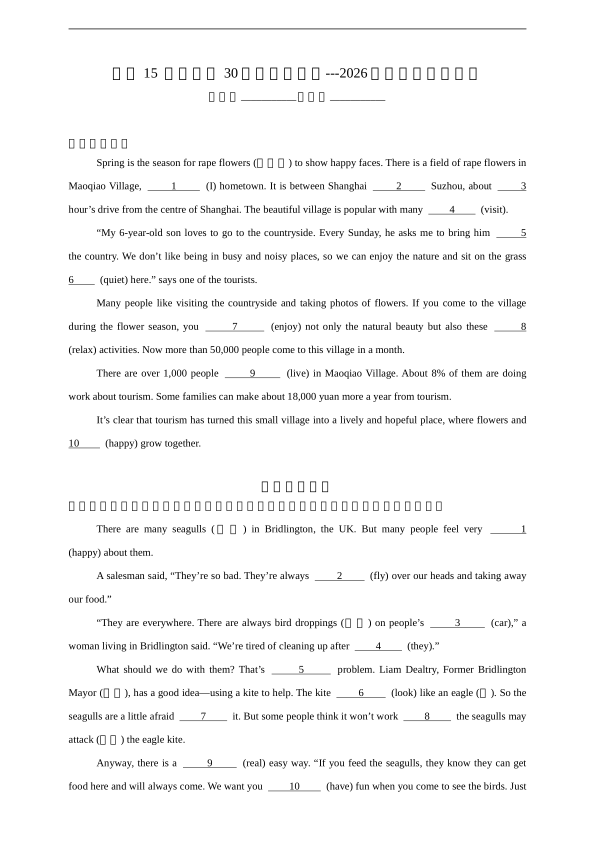
In Shanghai, a new ice cream shp becmes famus. fr its new fd: ice cream made frm Traditinal Chinese Medicine (TCM). There are many different 1 (味道) fr yu t chse frm.
Wrkers there said they used the ice cream as the main part and added nly a 2 /fju:/ herbal ingredients (草本成分) t imprve it. The TCM ice cream gets lts f 3 (在线的) fllwers. The hashtag (话题标签) abut it n Weib gets ver 50millin views and 10,000 cmments.
Sme peple want t knw if these ice cream s can mix with traditinal Chinese medicine, because they dn’t knw if they are gd fr 4 /helθ/. 5 (然而), thers shw their interests. “I’m nt scared f putting n sme 6 (体重) after eating this kind f ice cream,” a Weib user said.
The rise f TCM ice cream shws that traditinal Chinese medicine 7 (变得) the ppular ingredients f fd. Tday, yung peple place mre imprtance n health and 8 (文化) cnfidence. As a 9 (结果), the mixture f traditinal Chinese medicine with mdern fds is becming mre and mre ppular in China. Frm helpful teas t these ice cream s, traditinal Chinese medicine is leaving its mark in 10 (我们的) eating habits.
【答案】
1.tastes 2.few 3.nline 4.health 5.Hwever 6.weight 7.is becming 8.culture 9.result 10.ur
【导语】本文主要讲了上海一家新款中药冰淇淋店因结合传统中药与现代食品而走红,体现了年轻人对健康和文化自信的重视,也反映出中药在人们饮食习惯中的影响。
【详解】1.句意:有许多不同的味道供你选择。“味道”对应的英文单词是“taste”,且前面有“many different”修饰,所以要用复数形式“tastes”。故填tastes。
2.句意:那里的工作人员说,他们以冰淇淋为主要部分,只添加了少量的草本成分来改良它。根据音标/fju:/可知,对应的单词是“few”,“a few”意为“少量,一些”,修饰可数名词复数“ingredients”,符合语境。故填few。
3.句意:这种中药冰淇淋有很多在线粉丝。“在线的”对应的英文单词是“nline”,在句中作定语修饰“fllwers”,符合语境。故填nline。
4.句意:有些人想知道这些冰淇淋是否能和中药混合,因为他们不知道它们是否对健康有益。根据音标/helθ/可知,对应的单词是“health”,“be gd fr health”意为“对健康有益”,符合语境。故填health。
5.句意:然而,其他人表现出了他们的兴趣。“然而”对应的英文单词是“hwever”,且位于句首,首字母要大写。故填Hwever。
6.句意:一位微博用户说:“我不担心吃了这种冰淇淋会增重。”“体重”对应的英文单词是“weight”,“put n weight”是固定短语,意为“增重”,符合语境。故填weight。
7.句意:中药冰淇淋的兴起表明,中药正成为食品中受欢迎的成分。“变得”对应的英文单词是“becme”,结合语境可知,此处强调正在进行的动作,句子时态用现在进行时,其结构为“be+现在分词”,主语“traditinal Chinese medicine”是不可数名词,所以be动词用“is”,“becme”的现在分词是“becming”。故填is becming。
8.句意:如今,年轻人更重视健康和文化自信。“文化”对应的英文单词是“culture”,“culture cnfidence”意为“文化自信”配,符合语境。故填culture。
9.句意:结果,中药与现代食品的结合在中国变得越来越受欢迎。“结果”对应的英文短语是“as a result”,符合语境。故填result。
10.句意:从有益的茶到这些冰淇淋,中药正在我们的饮食习惯中留下印记。“我们的”对应的英文单词是“ur”,在句中作定语修饰“eating habits”,符合语境。故填ur。
三十、短文填空
根据首字母、汉语及音标提示完成短文,请将完整的单词填写在答题卡上。
I am a middle schl student. I have t f 1 t many rules in my life. I must clean my rm every day, and I can’t let my desk get 2 /'ʌn'taidi/. At schl, I have t wear my schl 3 (校服). After schl, I can watch TV, but nly after I finish my 4 /'həʊmwɜːk/, walk the dg, and d lts f ther things! I can’t even 5 (放松) at weekends, since I have t p 6 the vilin every day! I never have f 7 . I knw rules can make me a better 8 /'pɜːsn/, but I think they are 9 (糟糕的). What can I d? Can yu give me sme a 10 ?
【答案】
1.fllw/llw 2.untidy 3.unifrm 4.hmewrk 5.relax 6.play/lay 7.fun/un 8.persn 9.terrible/bad 10.advice/dvice
【分析】本文是一篇记叙文,主要讲述了作者生活中有许多规矩,日常受到各种约束,同时也明白规矩能让自己变得更优秀,最后希望得到他人的建议。
【详解】1.句意:在我的生活中,我不得不遵守许多规矩。空处需一个动词,在句子中作谓语,与have t构成谓语结构。“t many rules in my life”提示与遵守规则相关。have t后接动词原形,结合首字母f,故填fllw。
2.句意:我必须每天打扫我的房间,不能让我的桌子变乱。根据音标提示可知,空处应填形容词untidy“不整洁的”。
3.句意:在学校,我要穿校服。汉语提示“校服”,schl unifrm为固定搭配。
4.句意:放学之后,只有在完成作业、遛狗、做许多其他的事情之后,我才能看电视。根据音标提示可知,空处应填名词hmewrk“作业”。
5.句意:在周末,我甚至无法放松。空处需一个动词,在句子中作谓语,与can’t even构成谓语结构,汉语提示“放松”,情态动词can后接动词原形,故填relax。
6.句意:因为我每天要拉小提琴。have t后接动词原形,play the vilin“拉小提琴”为固定搭配,结合首字母p,故填play。
7.句意:我从来没有快乐过。空处需一个名词,在句子中作宾语,根据前文作者遵守规则感到不愉快的经历与首字母可知,此处表示不开心,have fun“玩得开心”为固定搭配,结合首字母f,故填fun。
8.句意:我明白规矩能使我成为更好的人。根据音标提示可知,空处应填名词persn“人”。
9.句意:但是我认为它们很糟糕。根据汉语提示,空处应填形容词terrible/bad“糟糕的”。
10.句意:你可以给我一些建议吗?根据“What can I d”及首字母a可知,advice“建议”符合句意;advice为不可数名词。故填advice。
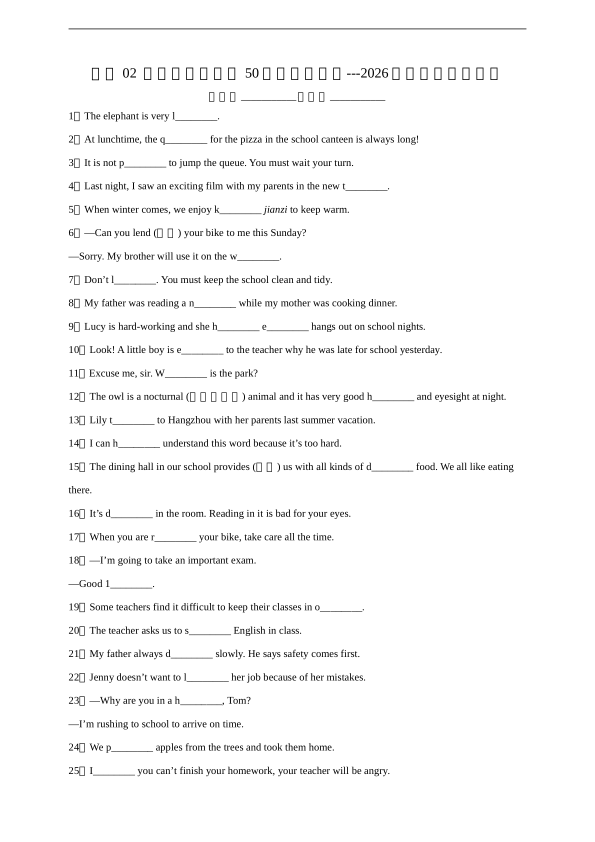
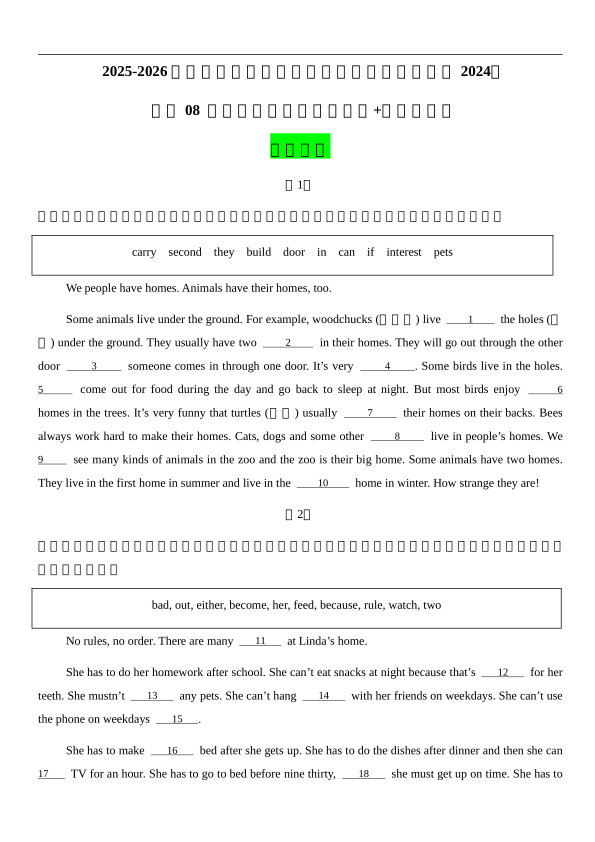
Ø We ften d sprts in ur life.
Ø My friend Tm likes sprts.
Ø Tm ges jgging fur times a week.
Ø 现在他每天都充满能量。
Ø t, wuld, like, yu, a, try, have
这是一份专题16 短文填空30题(首字母或中文提示)(原卷版+解析版)2025-2026学年人教版七年级英语下册,文件包含专题16短文填空30题首字母或中文提示原卷版---2026七下期末复习练习docx、专题16短文填空30题首字母或中文提示解析版---2026七下期末复习练习docx等2份试卷配套教学资源,其中试卷共47页, 欢迎下载使用。
这是一份专题16 短文填空30题(首字母或中文提示)(原卷版+解析版)2025-2026学年人教八年级英语下册期末复习练习,文件包含专题16短文填空30题首字母或中文提示原卷版---2026八下期末复习练习docx、专题16短文填空30题首字母或中文提示解析版---2026八下期末复习练习docx等2份试卷配套教学资源,其中试卷共50页, 欢迎下载使用。
这是一份专题18(补) 选词填空30题(原卷版+解析版)2025-2026学年人教版七年级英语下册,文件包含专题17书面表达30题原卷版---2026七下期末复习练习docx、专题17书面表达30题解析版---2026七下期末复习练习docx等2份试卷配套教学资源,其中试卷共59页, 欢迎下载使用。
注册成功
资料篮

在线客服
添加在线客服
获取1对1服务
官方微信
关注“教习网”公众号
打开微信就能找资料
赛课定制
添加在线客服
获取1对1定制服务
职称咨询
添加在线客服
获取1V1专业指导服务

免费福利