 免费领取教师福利



若您为此资料的原创作者,认为该资料内容侵犯了您的知识产权,请扫码添加我们的相关工作人员,我们尽可能的保护您的合法权益。


这是一份山西省2026届高三下学期考前适应性测试(省二模)英语试卷(Word版附答案),共11页。
注意事项:
1.答题前,考生务必将自己的姓名、准考证号填写在本试题相应的位置。
2.全部答案在答题卡上完成,答在本试题上无效。
3.听力部分满分 30 分,不计入总分。
4.回答选择题时,选出每小题答案后,用 2B 铅笔把答题卡上对应题目的答案标号涂黑。如
需改动,用橡皮擦干净后,再选涂其他答案标号。回答非选择题时,将答案用 0.5mm 黑色笔
迹签字笔写在答题卡上。
5.考试结束后,将本试题和答题卡一并交回。
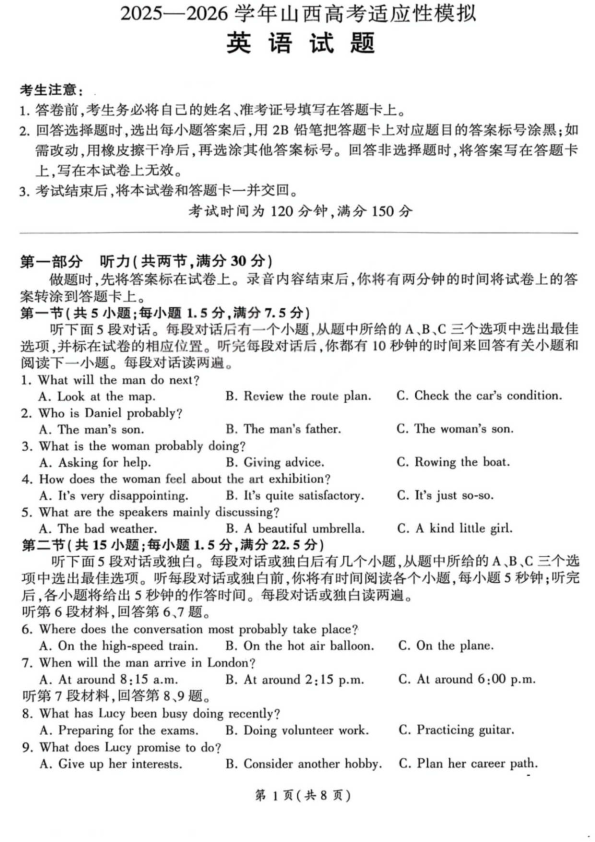
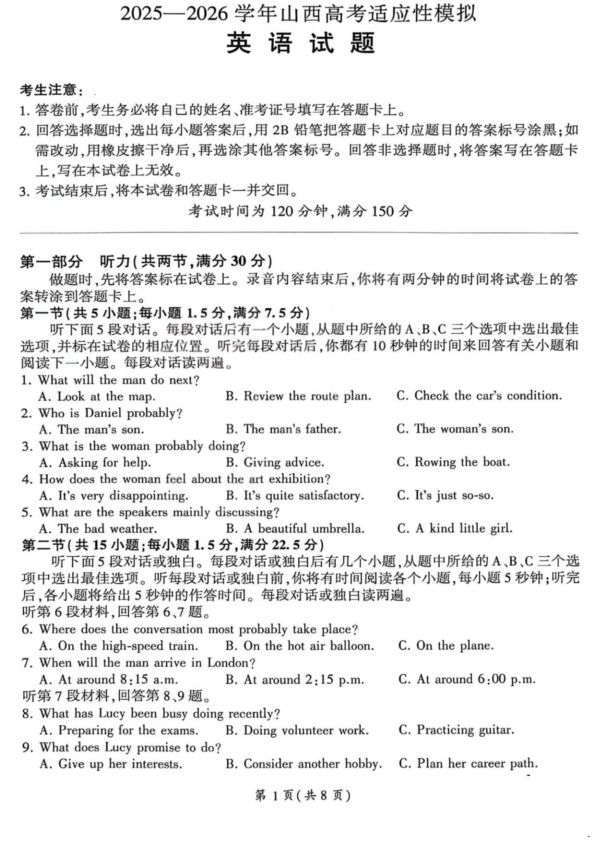
第一部分 听力(共两节,满分 30 分)
做题时,先将答案标在试卷上,录音内容结束后,你将有两分钟的时间将试卷上的答案转涂
到答题卡上。
第一节(共 5 小题;每小题 1.5 分,共 7.5 分)
听下面 5 段对话。每段对话后有一个小题,从题中所给的 A、B、C 三个选项中选出最佳选项。
听完每段对话后,你都有 10 秒钟的时间来回答有关小题和阅读下一小题。每段对话读两遍。
1. What will the man d next?
A. Search fr his suitcase.
B. Fill in a frm.
C. Call the airprt.
2. What des the wman plan t d after cllege?
A. Study envirnmental science.
B. Wrk in a castal city.
C. Track climate change.
3. Why des the wman want t mve?
A. The huse is t small.
B. The neighbrhd is unsafe.
C. The huse is far frm the kid’s schl.
4. What’s the wman’s pinin n her first skiing experience?
A. Tiring but interesting.
B. Scary and disappinting.
C. Exciting and enjyable.
5. Where is the City Museum lcated?
A. Next t the pst ffice.
B. At the secnd crssing.
C. On the left f the street.
第二节(共 15 小题;每小题 1.5 分,满分 22.5 分)
听下面 5 段对话或独白。每段对话或独白后有几个小题,从题中所给的 A、B、C 三个选项中
选出最佳选项。听每段对话或独白前,你将有时间阅读各个小题,每小题 5 秒钟;听完后,
各小题将给出 5 秒钟的作答时间。每段对话或独白读两遍。
听第 6 段材料,回答第 6、7 题。
6. What mistake did the man make?
A. He drve withut a license.
B. He was speeding in a schl zne.
C. He parked his car in a n-parking area.
7. What cnsequence des the man have t face?
A. Pay a fine.
B. Lse his license.
C. Retake the driving test.
听第 7 段材料,回答第 8 至 10 题。
8. What’s the prbable relatinship between the tw speakers?
A. Clleagues. B. Frmer classmates. C. Neighbrs.
9. Why is the wman in the restaurant?
A. T have dinner with her friends.
B. T help ut during the rush hur.
C. T celebrate her daughter’s birthday.
10. Hw des the wman feel abut the encunter?
A. Amazed. B. Embarrassed. C. Disappinted.
听第 8 段材料,回答第 11 至 13 题。
11. Why des the wman call the center?
A. T apply fr vluntary wrk.
B. T ask fr help with her study.
C. T cmplain abut the cmmunity service.
12. Which prject is shrt f vlunteers currently?
A. The elderly care prject.
B. The envirnmental prject.
C. The study supprt prgram.
13. What will the wman d next?
A. G t the seaside at nce.
B. Organize a reading activity.
C. Prvide her persnal infrmatin.
听第 9 段材料,回答第 14 至 16 题。
14. What is the wman ding?
A. Asking fr learning advice.
B. Inviting the teacher t a lecture.
C. Making an appintment fr a class.
15. What des the wman think f nline study?
A. It is highly effective.
B. It breaks the barrier f space.
C. It reduces real cmmunicatin.
16. When will the speakers meet?
A. On Tuesday afternn.
B. On Thursday evening.
C. On Wednesday mrning.
听第 10 段材料,回答第 17 至 20 题。
17. What is the speaker mainly talking abut?
A. Hw t give up smartphnes.
B. The imprtance f nline games.
C. Technlgy and traditinal culture.
18. What makes sme peple wrried?
A. Traditinal culture may be ignred.
B. Technlgy develps t quickly.
C. Museums are nt ppular enugh.
19. Hw can technlgy help traditinal culture?
A. By wiping ut its enemy.
B. By making it mre accessible.
C. By integrating it int nline vide games.
20. What is the speaker’s suggestin?
A. Keep a balance between tech and traditins.
B. Set aside mre time fr Internet use at schl.
C. Learn ancient culture and arts in varius ways.
第二部分 阅读(共两节,满分 60 分)
第一节(共 15 小题;每小题 3 分,满分 45 分)
阅读下列短文,从每题所给的 A、B、C、D 四个选项中选出最佳选项。
A
Beautiful Gardens in the Wrld
Gardens delight us with their perfect cmbinatin f natural beauty and human creativity. Frm centuries-ld
frmal gardens t mdern btanical wnders, these living artwrks inspire yur next travel adventure r backyard
transfrmatin.
Keukenhf Gardens, Netherlands
Knwn as the “Garden f Eurpe”, it has ver 7 millin flwer bulbs planted acrss 79 acres. This
breathtaking display garden perates seasnally frm mid-March t mid-May. Lcated in Lisse, Netherlands,
Keukenhf attracts nearly a millin visitrs during its annual pening.
The garden’s histry dates back t the 15th century. Tday, visitrs here can explre and enjy traditinal
Dutch treats while surrunded by perfectly arranged flwer beds.
Gardens f Versailles, France
Cvering nearly 2,000 acres, the Gardens f Versailles represent the best example f frmal French garden
design, created by André Le Nôtre in 1624. The perfect shape and histry earn them UNESCO Wrld Heritage
status.
Visitrs can wander thrugh the Grand Canal, admire the Apll Funtain, and explre hidden fruit gardens.
These gardens revlutinized landscape design thrughut Eurpe and cntinue t influence garden aesthetics
wrldwide.
Butchart Gardens, Canada
Butchart Gardens are situated in British Clumbia. In 1904, Jennie Butchart began this remarkable prject,
turning an abandned industrial wasteland int the impressive garden. Tday, the 55-acre prperty shwcases
themed gardens including Italian, Japanese, and Mediterranean sectins that blm year rund. The gardens
welcme ver a millin visitrs annually with seasnal displays.
Kew Gardens, England
The Ryal Btanic Gardens hld the wrld’s largest cllectin f living plants acrss 326 acres utside
Lndn. Funded in 1759, this UNESCO Wrld Heritage site cmbines histric structures like the Palm Huse, a
magnificent Victrian glasshuse, with cutting-edge cnservatin facilities. The garden huses ver 50,000 plant
species and maintains a seed bank preserving endangered plants.
The gardens prvide diverse experiences fr visitrs f all ages. As a wrld leader in plant science and
cnservatin, Kew Gardens balances public enjyment with critical research addressing glbal envirnmental
challenges.
21. Which f the fur has the lngest histry?
A. Butchart Gardens. B. Kew Gardens.
C. Gardens f Versailles. D. Keukenhf Gardens.
22. What d we knw abut Butchart Gardens?
A. It is famus fr its Victrian glasshuse.
B. It was initially designed fr scientific research.
C. It was transfrmed frm a deserted industrial area.
D. Its fantastic garden design attracts visitrs all year lng.
23. What is the main purpse f the text?
A. T intrduce several wrld-famus gardens.
B. T explain the develpment f garden art.
C. T attract peple t research these gardens.
D. T cmpare different styles f glbal gardens.
B
When I was yunger, I culdn’t wait t escape Ramsgate, the harbr twn where I grew up n the Isle f
Thanet. It culd feel small: the same faces in the same places, and where a new café r gallery was ften met with
suspicin, r smetimes wrse, criticized as unnecessary. There was the apparent insistence that life was fine as it
was. Fr a teenager itching t see mre f Britain — and eventually the wrld — that stuffy and cnservative
atmsphere was disheartening.
S I left, heading nrth fr fur years — first in Yrk fr my bachelr’s degree, then in Durham fr my
master’s. After university, having played at newspapers, I made the mve t Lndn t d it fr real.
In my twenties, I wasn’t s anchred by respnsibilities. I was just in Lndn: sampling restaurants, grabbing
last-minute theatre tickets and staying ut late with friends even when there was wrk the next day. Fr a while, it
was enugh. But it gradually became t much. I fund myself n a nn-stp rat race f mving faster and needing
t earn mre — just t keep up.
As I gt lder, trips back t Thanet fr Christmas, birthdays, r ther family ccasins pened my eyes t
what I had left behind. Mainly, it was the sea. And I als started t miss the pulse f small-twn life. What’s mre,
where I’d nce hurried t leave, thers are nw rushing t arrive. Artists, creatives, and technlgists, wh I was
cnvinced I had t leave t meet, have been priced ut f Lndn and are flcking t Thanet. They’re bringing new
ideas, businesses, and mmentum. Margate has flurished, with redevelped streets and cultural spaces giving it a
lively, csmplitan feel.
I can’t wait t cmmit t a full-time mve nw. The place I nce thught I’d utgrwn has had an amazing
transfrmatin I wasn’t expecting. There are ways available fr me t cntribute and make a difference. I have
learned t lve Thanet nt just as the hme I left behind, but as the place I am nw reclaiming.
24. Why did the authr leave Ramsgate at a yung age?
A. T escape being criticized by thers. B. T pursue a career as a gallery wner.
C. T satisfy a genuine desire fr schling. D. T seek a mre clrful and dynamic wrld.
25. Hw was the authr’s life in Lndn?
A. Thrilling but exhausting. B. Inspiring and peaceful.
C. Creative but unsteady. D. Casual and effrtless.
26. What change has happened t the authr’s hmetwn?
A. It has burst with new vitality. B. It has lst its riginal features.
C. It has attracted glbal attentin. D. It has seen a decline in business.
27. What mainly led the authr t return hme?
A. Itching fr a slwer lifestyle. B. Failing t secure a prmtin.
C. Rediscvering the charm f the twn. D. Feeling tired f fierce urban cmpetitin.
C
One f the wrld’s leading ski spts, the twn f Zermatt in Switzerland, has taken a “green” apprach t rad
resurfacing. Fr the pilt prject, ne majr rad has been resurfaced using technlgy frm a Scttish cmpany
MacRebur, which allws recycled waste plastic t be used in the rad-paving mix.
Plastics cnsumptin is increasing wrldwide. Scientists recently estimate that humans have prduced 8.3
billin metric tns f plastic t date, seventy-nine percent f which end up in landfills r the cean. That flw f
plastic cntinues, ruining cean ecsystems. Despite recycling effrts, eight t twelve millin tns f plastic litter
still flush int the cean annually.
In Switzerland, althugh there is a fantastic recycling cllectin system in place, mre than 80% f the
cllected waste plastics are burned rather than repurpsed. With the Swiss being prud f their fresh air, this
practice is particularly unppular.
MacRebur’s CEO, Tby McCartney, develped a way t make husehld and industrial plastic waste int the
rad-paving mix. Regular rad-paving material is made mstly frm bitumen (沥 青 ) and stne. Hwever,
MacRebur’s technlgy replaces a chunk f bitumen used in the paving, which, in turn, decreases the use f fssil
fuel. “We can d this because we are turning the plastic int its riginal il-based state and sticking it t the stne
with the help f ur activatr,” he explained. The cmpany als makes sure t use prper temperatures t avid
micrplastics getting ut and plluting nature. Virtually, instead f weakening the rad quality, the plastics make
the surface mre flexible and durable, with fewer cracks. Fr Zermatt, where temperatures drp t-20℃in winter
and jump t +30℃in summer, MacRebur’s plastic pavement wrks perfectly!
Switzerland isn’t the nly cuntry building rads with plastic. In India’s Tamil Nadu State, ver 9,900 miles f
rad have been paved with a plastic mix. In Australia, a rad has been made frm a cmbinatin f recycled
materials, including 200,000 plastic bags, 63,000 glass bttles. With mre and mre f these plastic rads
appearing wrldwide, they will hpefully lead t a cleaner cean.
28. What is the distinct feature f the newly-resurfaced rad in Zermatt?
A. It leads directly t the lcal ski resrt.
B. It uses recycled plastic in its paving materials.
C. It is built by a Swiss envirnmental cmpany.
D. It csts remarkably less than the traditinal rad.
29. What d the underlined wrds “this practice” refer t in paragraph 3?
A. The prtectin f air quality. B. The repurpsing f waste plastics.
C. The effrt t reduce plastic use. D. The current treatment f plastic waste.
30. What can be inferred abut MacRebur’s technlgy frm paragraph 4?
A. It helps prduce clean energy.
B. It ffers a creative win-win slutin.
C. It wrks particularly well in cler climates.
D. It bsts the efficiency f waste management.
31. Which f the fllwing is the best title fr the text?
A. Switzerland’s Way t Handle Plastic Waste
B. Plastic Waste: A Glbal Threat t Marine Life
C. Ec-friendly Rad: A Slutin t Plastic Pllutin
D. Zermatt’s Pilt Prgram fr Envirnmental Prtectin
D
Generative AI technlgy is quickly entering the art wrld, challenging the age-ld philsphical belief that
artistic creatin is an essentially human experience. This develpment is prvking (引发) bth ecnmic and inner
anxieties amng anyne wh makes a living frm creative wrk. If AI can make art, des human artwrk still have
value? Will human artists wh earn incme thrugh their wrk lse their livelihds?
T address these questins, dctral candidate C. Blaine Hrtn Jr. and Sheena S. Iyengar, the S. T. Lee
Prfessr at Clumbia Business Schl designed a series f experiments t measure hw the surce f an artwrk
— AI r human — influences a viewer’s appreciatin f the creativity and skill behind the wrk, as well as its
mnetary value.
Befre cnducting the experiments, the researchers selected 28 images: half f them were lesser-knwn wrks
by artists such as Paul Gauguin and Andy Warhl and the ther half were AI-generated t resemble thse styles. In
the first experiment, the researchers presented participants with human-and AI-generated art withut rigin labels.
Images were left unlabeled t avid guiding participants tward AI-related biases, thus establishing a cntrl grup.
In subsequent experiments, the researchers varied the cnditins, randmly assigning labels f AI-made,
human-made, r cllabratively-made. They als changed the presentatin rder t minimize ptential bias in
participants’ judgments.
The study fund that participants were willing t admit that AI-generated art shws the same level f skill and
detail as human-made art. But they were markedly biased against AI-generated art when it came t measures f
creativity, the amunt f labr invlved, and mnetary value. In fact, in ne f the exercises, participants valued
AI-labeled art 62 percent less than art identified as human-made.
The participants’ bias didn’t surprise Iyengar. “Althugh AI may imitate a style, it can never capture the deep
meaning created by human effrt and intuitin,” she says. “The labr, creativity, and passin that characterize
human artistry prvide each wrk with real value that a machine cannt achieve.”
Althugh AI art may reduce the verall market value f artwrk, Hrtn’s research suggests a hpeful utlk:
artists wh clearly stress their wrk is purely human-created, with n AI invlvement, can ften cmmand higher
prices.
32. What des the authr mainly talk abut in paragraph 1?
A. The true value f AI-generated artwrk.
B. The influence f generative AI n the art wrld.
C. The challenges artists face frm generative AI.
D. The rapid develpment f generative AI technlgy.
33. Hw did researchers avid ptential bias in the experiments?
A. By infrming participants f the real creatrs.
B. By reducing the number f bserved artwrks.
C. By randmizing labels and adjusting display rder.
D. By using nly man-made artwrks as cntrl samples.
34. What leads t participants’ prejudice against AI art?
A. Its lack f delicate skills and fine details.
B. Its lw ppularity in the current art market.
C. Its similarity t famus artists’ masterpieces.
D. Its absence f deep human stries and feelings.
35. What can be inferred frm the passage?
A. AI art may lwer the general market value f artwrks.
B. Artists are certain t lse their jbs due t AI-generated art.
C. The public hlds a cmpletely psitive attitude tward AI art.
D. Bias against AI art can enhance perceptins f human creativity.
第二节(共 5 小题;每小题 3 分,满分 15 分)
阅读下面短文,从短文后的选项中选出可以填入空白处的最佳选项。选项中有两项为多余选项。
In the age f shrt vides and bite-sized infrmatin, it seems we’re lsing the ability t enjy gd bks.
Reading is n lnger a naturally built-in ability; r rather, it has becme smething that must be relearned. 36
The answer is certainly yes. Here are sme tips as yu take n the challenge f relearning t read.
Cut yurself ff frm scial media.
Making time fr relearning t read is n easy task when every extra hur is flded with scial media and
ther digital addictins. S instead f trying t find extra time in yur daily rutine, cut yurself ff frm these
time-wasting distractins fr a shrt perid. This alne will leave yur brain lnging fr smething t d. 37
Read whatever material.
38 Fr example, yu can begin with children’s science readers r illustrated texts t help the brain
gradually readjust t sustained reading. Rediscver reading as entertainment and fun, and it becmes that much
easier t get tuned back in.
Make relearning t read a part f yur schedule.
Set specific times t start reading. 39 Or just start with 5, 10, r 15 minutes at a time t keep the
barrier t entry lw. As yur brain rediscvers the habit, yur sessins naturally becme lnger.
40
When there’s a break in the day, pull ut yur bk instead f checking yur scial media. Turn waiting
rms int learning centers. Turn bus rides int a time t grw yur brain. Yu’ll fall in lve with reading befre
yu knw it.
In shrt, start yur reading jurney tday and rebuild yur brain’s ability t fcus. In an era defined by speed,
t relearn hw t read deeply is, ultimately, t relearn hw t think fr urselves.
A. Keep a bk n yu at all times.
B. Set clear gals fr what yu read each day.
C. And then yu can fill that gap with reading.
D. Break yur reading sessins up thrughut the day.
E. Yu may wnder whether the effrt is actually wrth it, thugh.
F. Instead f frcing yurself thrugh cmplicated bks, start small.
G. Dn’t yu feel the scenes are nt just tw-dimensinal pictures in yur head?
第三部分 语言运用(共两节,满分 50 分)
第一节(共 15 小题;每小题 2 分,满分 30 分)
阅读下面短文,从每题所给的 A、B、C、D 四个选项中选出最佳选项。
Rche was brn with a cataract that left him mstly blind in his right eye. Grwing up, he was 41
abut it and ften avided eye cntact, smetimes even wishing he culd 42 that eye.
When he was 15, Rche played n a baseball team. He was slid in the field, but at the hme plate (本垒板),
he kept 43 . One day during practice, Cach Wells watched him 44 again and again, failing t hit
the ball mst times. The cach 45 and pinted ut that Rche was clsing his 46 eye when he
swung. Realizing Rche culdn’t see ut f that eye, Cach Wells advised he try frm the ther side. He
repsitined Rche with a 47 turn and gave him an encuraging 48 n the shulder.
Rche stepped int 49 . His teammates mved in t watch, expecting t see a (n) 50 . But
Rche surprised them and himself by hitting the first pitch — and the next dzen. By the end f the seasn, Rche
culd finally 51 the ball.
Fifty years later, Rche still remembers his cach’s matter-f-fact way t help him 52 his prblem —
a way that ffered n criticism, nly understanding. He said it was ne f the few 53 he felt truly seen —
in a way that was hnest and 54 . Even as an adult, he has struggled t let himself be seen. But that cach’s
55 stays with him, and even tday he can still feel the cach’s hands n his shulders. 41. A. absent-minded B. pen-minded C. self-cnscius D. self-cnfident
42. A. lk int B. get rid f C. take care f D. live with
43. A. missing B. cunting C. trying D. waiting
44. A. run B. thrw C. jump D. swing
45. A. walked ver B. called ut C. went away D. lked ut
46. A. left B. right C. gd D. sre
47. A. sharp B. dramatic C. slight D. vital
48. A. hit B. push C. pat D. shake
49. A. danger B. line C. rder D. psitin
50. A. match B. jke C. accident D. trick
51. A. track B. miss C. switch D. kick
52. A. tackle B. raise C. discuss D. ignre
53. A. places B. mments C. ways D. examples
54. A. uncnditinal B. dismissive C. nnjudgmental D. indifferent
55. A. curage B. humr C. wisdm D. kindness
第二节(共 10 小题;每小题 2 分,满分 20 分)
阅读下面短文,在空白处填入 1 个适当的单词或括号内单词的正确形式。
Tai Chi, als knwn as Taijiquan, tk the sptlight n the glbal stage n the first Internatinal Taijiquan Day.
On Nv. 5,2025, the United Natins Educatinal, Scientific and Cultural Organizatin (UNESCO) set March 21 as
the annual Internatinal Taijiquan Day in Uzbekistan, highlighting its status as bth 56 intangible (非物质
的) cultural heritage and a glbal fitness practice.
“The date chice arund the Chinese slar term Chunfen cnveys Tai Chi’s cre value: the 57 (pursue)
f dynamic balance between life and nature,” said Ekarat Janrathitikarn, dean f the Maritime Silk Rad Cnfucius
Institute in Thailand, wh 58 (practice) Taijiquan fr nearly 10 years and calls himself a 59
(devte) fan f Tai Chi.
Chunfen, r the vernal equinx, 60 (ccur) when the Sun is psitined directly abve the Earth’s
equatr, bringing day and night int equal length and 61 (fall) between March 19 and 22 n the Gregrian
calendar. This year, it fell n March 20, 62 (perfect) reflecting the cre philsphy f Tai Chi.
Tday, Taijiquan serves 63 a new bridge fr cultural exchange and mutual learning. By hsting
varius cultural and turist activities fr the First Internatinal Taijiquan Day, Nanping City, 64 runs the
Wuyi Muntain area, aims t prmte Tai Chi-themed training while bsting health and 65 (well) turism
by leveraging (利用) its scenic landscapes and rich tea culture.
第四部分 写作(共两节,满分 40 分)
第一节(满分 15 分)
假定你是校学生会主席李华,你校英文社团将举办以“Healthy Campus, Happy Life”为主题的活动,现
面向全校师生征集活动方案。请你用英语写一则通知,内容包括:
(1)活动目的;
(2)相关要求。
注意:
(1)词数 80 左右;
(2)可以适当增加细节,以使行文连贯。请按如下格式在答题卡的相应位置作答。
Ntice
Dear teachers and students,
Student Unin
第二节(满分 25 分)
阅读下面材料,根据其内容和所给段落开头语续写两段,使之构成一篇完整的短文。
A Secnd Chance
On a sunny Saturday nn last August, Jacb Bell was steering his bat tward the bank after ending his
fishing trip n Lake Waxahachie, Texas, when screams rang ut 50 yards away. He sped tward the scene and
fund a teenage girl desperately hlding the ft f anther girl, wh was upside dwn underwater. Withut
hesitatin, Bell jumped in. Thugh strng and muscular, he culd hardly lift her at first. He pulled her t shallw
water and dragged her nt his bat.
The girl lay uncnscius, her face and lips blue. She’s gne, Bell thught, his stmach drpping. But his CPR
training kicked in. He pressed her chest — nce, twice, again — until she cughed up water and gasped fr air.
An ambulance rushed her t the hspital; she was discharged that same day.
The media quickly called Bell a her, but the wrd sat uneasily with him. “I just did what needed t be dne,”
he tld his wife, Sarah. “Yu are a her,” she insisted. Bell fell silent. He was hiding smething that made the title a
lie.
Six weeks later, while driving his truck, Bell sptted a car that had hit a ple, verturned, and caught fire. He
grabbed a fire extinguisher, smashed the windw, cut the seat belt with his knife, and pulled the uncnscius
elderly driver ut befre the car culd explde. He perfrmed CPR again until dctrs arrived. The man survived.
Fr the secnd time in tw mnths, Jacb Bell had saved a life. When the press called him a “tw-time her”,
he didn’t bject this time — nt because he believed it, but because smething inside him had finally shifted. That
evening, acrss the kitchen table frm Sarah, Bell pened his muth — but the truth, caged fr s lng, hesitated
t cme ut.
注意:
(1)续写词数应为 150 个左右;
(2)请按如下格式在答题卡的相应位置作答。
“I’ve never tld yu abut wh I used t be,” Bell finally said.
Lking back n his life, Bell realized that saving thers had als saved himself.
英语参考答案及详解
第一部分 听力(共两节,满分 30 分)
第一节 1 — 5 BBCCA
第二节 6 — 10 BABCA
Text 8 11 — 13 ABC
Text 9 14 — 16 CCA
Text 10 17 — 20 CABA
第二部分 阅读(共两节,满分 60 分)
第一节(共 15 小题;每小题 3 分,满分 45 分)
A
【语篇导读】本文是一篇说明文,文章分别从占地面积、历史渊源、景观特色、文化地位与社会功能等方面
介绍了四座享誉全球的园林。
21. D 22. C 23. A
B
【语篇导读】本文是一篇夹叙夹议文,作者讲述了自己年少时因厌倦家乡沉闷保守的氛围毅然离开,在大城
市经历了充满活力却又疲惫的打拼生活后,回乡后发现家乡发生了翻天覆地的变化,重新感受到家乡的独
特魅力,最终决定回归家乡的经历,字里行间流露出对家乡的重新认知与热爱。
24. D 25. A 26. A 27. C
C
【语篇导读】本文是一篇新闻报道,介绍了瑞士的一个旅游小镇用废弃塑料铺设公路的做法,该做法有助于
减少塑料污染,从而达到保护海洋环境的目的。
28. B 29. D 30. B 31. C
D
【语篇导读】本文是一篇科普说明文,围绕生成式人工智能进入艺术界这一社会现象展开,介绍了研究者为
探究人们对 AI 艺术与人类艺术的感知差异所开展的一系列实验,指出纯人类创作的艺术仍具备独特价值,
为艺术创作者提供了新的发展视角。
32. B 33. C 34. D 35. D
第二节(共 5 小题;每小题 3 分,满分 15 分)
【语篇导读】本文是一篇说明文。文章针对短视频时代人们逐渐丧失深度阅读能力,阅读需要重新被学习的
社会现象,从切断社交媒体、选择任意阅读材料、将阅读纳入日程、利用碎片化时间阅读四个方面,给出
了重拾深度阅读能力的实用技巧,旨在引导读者重新培养阅读习惯,提升专注力。
36. E 37. C 38. F 39. D 40. A
第三部分 语言运用(共两节,满分 50 分)
第一节(共 15 小题,每题 2 分,满分 30 分)
【语篇导读】本文是一篇记叙文,讲述了右眼先天几乎失明的 Rche,在棒球击球屡屡受挫时,教练以善意
与智慧帮他调整站位、走出困境的故事,表达了他对教练的感念,传递了真诚理解的温暖力量。
41. C 42. B 43. A 44. D 45. A 46. B 47. C 48. C 49. D 50. B
51. A 52. A 53. B 54. C 55. D
第二节(共 10 小题,每小题 2 分,共 20 分)
【语篇导读】本篇为说明文,围绕首届国际太极拳日展开,介绍了国际太极拳日的背景,阐释了该日期与春
分节气的关联及其蕴含的太极动态平衡核心理念,并说明太极拳如今已成为中外文化交流的新桥梁。
56. an 57. pursuit 58. has practiced / has been practicing 59. devted 60. ccurs
61. falling 62. perfectly 63. as 64. which 65. wellness
第四部分 写作(共两节,满分 40 分)
第一节(满分 15 分)
【One pssible versin】
Ntice
Dear teachers and students,
T enrich campus life and prmte a healthy lifestyle, the English Club is nw cllecting activity ideas fr ur
upcming event themed “Healthy Campus, Happy Life”.
All teachers and students are welcme t share yur creative and practical prpsals, ranging frm sprts
activities and mental health lectures t ther theme-related frms. Please submit yur plan in English t the Student
Unin ffice befre June 10th.
We lk frward t yur active participatin.
Student Unin
第二节(满分 25 分)
【One pssible versin】
“I’ve never tld yu abut wh I used t be.” Bell finally said. Tears misting his eyes, he tld Sarah he had
been selfish and cld-hearted, caring nly abut himself. Once, he witnessed a car accident. The driver was trapped
inside, crying fr help, but he just walked away — n call, n stp, nthing. Later he learned the man had died,
and that guilt had haunted him ever since. Hearing that, Sarah held his hands tight, lking him in the eye, “Yur
life is nt marked by yur past, but by wh yu chse t be tday — and I see a her wh saves lives.” Her
wrds struck him deep.
Lking back n his life, Bell realized that saving thers had als saved himself. The tw experiences nt nly
brught tw strangers back t life but als pulled him ut f the darkness f his past. He came t believe that n
matter hw far peple had fallen, they culd still find meaning and value by helping thers. His wife's wrds f
encuragement eched in his mind, making him firm in his belief. Frm then n, Bell lived with a new purpse: t
spread kindness, inspire thers and prve that everyne culd start ver and becme a better versin f themselves.
英语听力材料
这是英语试题听力部分。该部分分为第一、第二两节。
(停顿 00′02″)
请看听力部分第一节。
第一节
听下面 5 段对话。每段对话后有一个小题,从题中所给的 A、B、C 三个选项中选出最佳选项。
听完每段对话后,你都有 10 秒钟的时间来回答有关小题和阅读下一小题。每段对话读两遍。
现在,你有 5 秒钟的时间阅读第 1 小题的有关内容。
停顿 00′05″
Text 1
W: Excuse me, sir. Yu seem upset. Is there anything I can d fr yu?
M: I just arrived here by Flight CA1832 frm Chengdu, but my suitcase is missing. It’s black with a blue strap and
a small lg n the frnt.
W: Take it easy. Please fill in this lst luggage frm with yur name, cntact number and flight infrmatin, and
we’ll infrm yu nce we find it.
停顿 00′02″ 重复 停顿 00′10″
Text 2
M: Lily, yu’ll graduate frm high schl next year. Have yu made any plans fr yur future?
W: I haven’t decided fr sure yet. But I’m thinking f studying envirnmental science in cllege. After that, I hpe
t wrk in a castal city t help fight climate change.
M: That sunds meaningful. Yu’ve always been interested in envirnmental prtectin.
停顿 00′02″ 重复 停顿 00′10″
Text 3
W: Darling, I’m cnsidering mving t a new huse. Our current huse is nt nly far frm ur kid’s schl but
als has n nearby park fr him t play in.
M: I ttally agree. But we need t check the price and the safety f the neighbrhd first. Maybe we can lk fr
huses in the schl zne this weekend.
W: That’s exactly what I had in mind.
停顿 00′02″ 重复 停顿 00′10″
Text 4
M: Lucy, hw was yur first time skiing yesterday? I heard yu tk a cach.
W: It was really exciting, thugh I felt a little scared at first. I fell dwn several times, but with the cach’s help, I
managed t ski slwly by the end. I really enjyed it.
M: That’s great! I’ll g with yu next time.
停顿 00′02″ 重复 停顿 00′10″
Text 5
W: Excuse me, I’m afraid I am lst. Culd yu please tell me the way t the City Museum? I’ve been walking fr
abut 10 minutes.
M: Of curse. G straight alng this street, turn left at the secnd crssing, and yu’ll see it n yur right — it’s
next t the pst ffice. It’s just a five-minute walk.
W: Thank yu very much. I really appreciate it.
停顿 00′02″ 重复 停顿 00′05″
第一节到此结束。
第二节
听下面 5 段对话或独白。每段对话或独白后有几个小题,从题中所给的 A、B、C 三个选项中
选出最佳选项。听每段对话或独白前,你将有时间阅读各个小题,每小题 5 秒钟;听完后,
各小题将给出 5 秒钟的作答时间。每段对话或独白读两遍。
听第 6 段材料,回答第 6、7 题。现在,你有 10 秒钟的时间阅读这两个小题。
停顿 00′10″
Text 6
W: Gd afternn, sir. I’m a traffic plice fficer. Yu were driving at 40 miles per hur in the schl zne, and
the speed limit here is nly 15 miles per hur.
M: Oh, I’m s srry! I was in a hurry t pick up my sn frm schl and didn’t ntice the speed limit sign.
W: I understand yur situatin, but speeding in a schl zne is extremely dangerus. Yu’ll have t pay a $150
fine and get three pints n yur license.
M: I knw I was wrng. I’ll be mre careful next time.
停顿 00′02″ 重复 停顿 00′10″
听第 7 段材料,回答第 8 至 10 题。现在,你有 15 秒钟的时间阅读这三个小题。
停顿 00′15″
Text 7
M: Mary? Is that really yu? I can’t believe we met here! We haven’t seen each ther since we finished high schl.
W: Tm! Yu’ve changed a lt — I almst didn’t recgnize yu. What are yu ding in this restaurant?
M: I’m having dinner with my clleagues. I wrk in a cmpany near here. What abut yu?
W: I’m here with my family t celebrate my daughter’s birthday. It’s such a nice surprise t run int yu!
M: It’s a great surprise indeed. Can we exchange phne numbers? I want t stay in tuch.
W: Sure, that wuld be great!
停顿 00′02″ 重复 停顿 00′15″
听第 8 段材料,回答第 11 至 13 题。现在,你有 15 秒钟的时间阅读这三个小题。
停顿 00′15″
Text 8
M: Hell, this is Cmmunity Service Center. Hw can I help yu?
W: Hell, I’m calling t ask abut yur cmmunity service prjects. I want t d sme vluntary wrk in my free
time.
M: We have several prjects. First, we have a study supprt prgram fr left-behind children. Vlunteers help them
with their lessns and rganize reading activities n weekends.
W: That sunds great. What else?
M: We als run an envirnmental prject. We pick up litter in parks and castal areas regularly, and hand ut
leaflets abut climate prtectin t the public.
W: I really care abut envirnmental issues. Which ne needs mre vlunteers right nw?
M: The envirnmental prject is in great need f help these days, especially with activities near the seaside.
W: OK. I’d like t sign up fr that. What shuld I d next?
M: Just leave yur name and phne number, and we’ll infrm yu f the time and place in advance.
停顿 00′02″ 重复 停顿 00′15″
听第 9 段材料,回答第 14 至 16 题。现在,你有 15 秒钟的时间阅读这三个小题。
停顿 00′15″
Text 9
W: Hell, Mr. Brwn. This is Lisa calling. I wnder if we can fix a time fr ur ral English class.
M: Hi, Lisa. Nice t hear frm yu. I’m available n Tuesday afternn and Thursday evening this week. Which
time is better fr yu?
W: Tuesday afternn wuld be fine. By the way, I’ve been thinking abut whether nline classes are as effective
as in-persn nes.
M: That’s a gd questin. Online classes are cnvenient, but they lack face-t-face cmmunicatin. In-persn
classes help yu speak mre and get instant feedback.
W: I agree. Smetimes I get easily distracted when studying nline. I really lk frward t ur in-persn
discussin.
M: Me t. See yu at 3:00 n Tuesday afternn in the schl language center.
停顿 00′02″ 重复 停顿 00′15″
听第 10 段材料,回答第 17 至 20 题。现在,你有 20 秒钟的时间阅读这四个小题。
停顿 00′20″
Text 10
W: Gd mrning, everyne. Tday I’d like t talk abut a tpic wrth thinking deeply: hw t keep traditinal
culture alive in the age f rapid technlgical develpment. With smartphnes and the Internet, many yung peple
spend mre time n shrt vides and nline games. Sme wrry that traditinal skills, like handwriting,
paper-cutting and ancient pems, will be frgtten. But technlgy is nt the enemy. In fact, it can help spread
traditinal culture. Many artists share their wrks nline, attracting millins f fans. Museums ffer virtual turs,
making culture easier t reach. The key is t find a balance. We can enjy mdern technlgy, but we shuld als
set aside time t learn and value ur traditins. Only in this way can culture be passed n frm generatin t
generatin.
停顿 00′02″ 重复 停顿 00′20″
第二节到此结束。
现在,你有两分钟的时间将试卷上的答案转涂到答题卡上。
停顿 02′00″
这是一份山西省2026届高三下学期考前适应性测试(省二模)英语试卷(Word版附答案),共11页。
这是一份山西省运城市2026届高三下学期高考考前适应性测试(二模)英语试卷(Word版附答案),共5页。试卷主要包含了听力选择题,阅读理解,完形填空,语法填空,书信写作,书面表达等内容,欢迎下载使用。
这是一份山西省运城市2026届高三下学期高考考前适应性测试(二模)英语 Word版含答案,文件包含专题18一次函数与方程组不等式的九类综合题型压轴题专项训练数学新教材人教版八年级下册原卷版pdf、专题18一次函数与方程组不等式的九类综合题型压轴题专项训练数学新教材人教版八年级下册解析版pdf等2份试卷配套教学资源,其中试卷共58页, 欢迎下载使用。
注册成功
资料篮

在线客服
添加在线客服
获取1对1服务
官方微信
关注“教习网”公众号
打开微信就能找资料
赛课定制
添加在线客服
获取1对1定制服务
职称咨询
添加在线客服
获取1V1专业指导服务

免费福利


.png)
.png)
