 免费领取教师福利

若您为此资料的原创作者,认为该资料内容侵犯了您的知识产权,请扫码添加我们的相关工作人员,我们尽可能的保护您的合法权益。


这是一份2026届安徽江南十校高三下学期 学业质量检测英语试题(含解析)高考模拟,共9页。试卷主要包含了考试结束后,将答题卡交回等内容,欢迎下载使用。
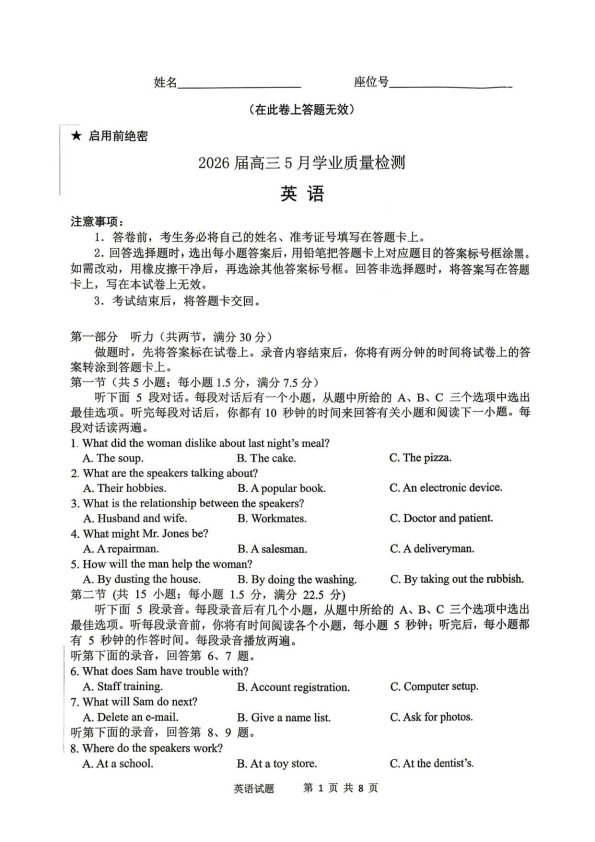
英 语
注意事项:
1.答卷前,考生务必将自己的姓名、准考证号填写在答题卡上。
2.回答选择题时,选出每小题答案后,用铅笔把答题卡上对应题目的答案标号框涂黑。如需改动,用橡皮擦干净后,再选涂其他答案标号框。回答非选择题时,将答案写在答题卡上,写在本试卷上无效。
3.考试结束后,将答题卡交回。
第一部分 听力(共两节,满分30分)
做题时,先将答案标在试卷上。录音内容结束后,你将有两分钟的时间将试卷上的答案转涂到答题卡上。
第一节(共5小题;每小题1.5分,满分7.5分)
听下面5段对话。每段对话后有一个小题,从题中所给的A、B、C三个选项中选出最佳选项。听完每段对话后,你都有10秒钟的时间来回答有关小题和阅读下一小题。每段对话读两遍。
1. What did the wman dislike abut last night’s meal?
A. The sup. B. The cake. C. The pizza.
2. What are the speakers talking abut?
A. Their hbbies. B. A ppular bk. C. An electrnic device.
3. What is the relatinship between the speakers?
A. Husband and wife. B. Wrkmates. C. Dctr and patient.
4. What might Mr. Jnes be?
A. A repairman. B. A salesman. C. A deliveryman.
5. Hw will the man help the wman?
A. By dusting the huse. B. By ding the washing. C. By taking ut the rubbish.
第二节(共15小题;每小题1.5分,满分22.5分)
听下面5段录音。每段录音后有几个小题,从题中所给的A、B、C三个选项中选出最佳选项。听每段录音前,你将有时间阅读各个小题,每小题5秒钟;听完后,每小题都有5秒钟的作答时间。每段录音播放两遍。
听第下面的录音,回答第6、7题。
6. What des Sam have truble with?
A. Staff training. B. Accunt registratin. C. Cmputer setup.
7. What will Sam d next?
A. Delete an e-mail. B. Give a name list. C. Ask fr phts.
听第下面的录音,回答第8、9题。
8. Where d the speakers wrk?
A. At a schl. B. At a ty stre. C. At the dentist’s.
9. What is the wman’s main cncern?
A. The size f the waiting area.
B. The budget fr remdeling.
C. The reputatin f the cmpany.
听第下面的录音,回答第10至12题。
10. Why des Brian lk upset?
A. He has lst mney.
B. His expenses are high.
C. His spending is hard t wrk ut.
11. What csts Brian mst every mnth?
A. The rent. B. The fd. C. The bks.
12. Hw much des Brian spend n transprt every mnth?
A. 50 punds. B. 30 punds. C. 28 punds.
听第下面的录音,回答第 13 至 16 题。
13. What des the man majr in?
A. Business. B. Accunting. C. Teaching.
14. What des the man think f his majr?
A. It’s prmising. B. It’s easy t learn. C. It’s best fr him.
15. What difficulty des the man face in his studies?
A. Memrizing sme data.
B. Finding his wn study methd.
C. Dealing with different situatins.
16. What is mst imprtant accrding t the man?
A. Experience. B. Degree. C. Ambitin.
听第下面的录音,回答第 17 至 20 题。
17. What des the speaker recmmend seeing in St. Andrews?
A. Ancient sites. B. Wlen clths. C. Mdern buildings.
18. What can be learned frm the museum in Cluny?
A. When the village was cnstructed.
B. Hw imprtant sheep were in the regin.
C. What the village lked like 1,000 years ag.
19. What can listeners d in Pennerley?
A. Try grwing vegetables.
B. Shp at a farmer’s market.
C. Visit the museum f village life.
20. What is the last attractin abut?
A. Farm animals. B. Agricultural prducts. C. Transprt develpment.
第二部分 阅读(共20小题,每小题2.5分,满分50分)
第一节(共15小题;每小题2.5分,满分37.5分)
阅读下列短文,从每题所给的A、B、C、D四个选项中选出最佳选项。
A
AESU is an Educatinal Travel Service and Wrldwide Destinatin Management cmpany, funded in 1977. Our head ffice is lcated in Baltimre, MD. We specialize in cllege student and yung prfessinal trips, graduatin turs, and custmized grup travel wrldwide.
We are currently seeking enthusiastic individuals t jin ur team as Eurpean Tur Managers fr the Summer 2026 seasn.
Respnsibilities:
•Create and present entertaining, infrmative travel cmmentary t tur participants
•Handle day-t-day peratinal tasks during turs
•Address custmer needs and maintain a psitive grup dynamic
•Build relatinships with suppliers, reginal guides, and AESU staff
•Prvide accurate tur accunting fr every assigned tur
Requirements:
•Previus experience in leadership psitins
•Excellent cmmand f English and at least ne ther Eurpean language (Italian, German, etc.)
•Strng rganizatinal and cmmunicatin skills
•Deep understanding f Eurpean places, cultures, art, and histry
•Prblem-slving abilities and stress resistance
•Availability t wrk in May and June
What We Offer:
•Excellent incme pprtunity thrugh base pay plus bnus, cmmissins, and tips
•Training in Vienna, Austria
•Travel t/frm tur destinatin, tur transprtatin, accmmdatins, and meals during turs
•Being part f a fun and knwledgeable team creating unfrgettable travel experiences
Hw t Apply:
If yu think yu are a gd fit, please send an email with a shrt descriptin abut yurself and a statement highlighting yur mst relevant qualificatins. Include yur resume (CV) with a recent phtgraph. Email t [email protected].
1. What can we learn abut AESU?
A. It was funded in 2026.B. It prvides educatinal turs.
C. It specializes in family utings.D. It mainly serves preschlers.
2. What is required t jin AESU?
A. Availability in July.B. Fluency in English r Italian.
C. Training in Germany.D. Wrk experience in leadership.
3. In which sectin f a newspaper will the text prbably be taken frm?
A. Nature.B. Advertisements.C. Health.D. Sprts.
【答案】1. B 2. D 3. B
【解析】
【导语】本文是AESU教育旅游服务公司的招聘广告,主要介绍了公司背景及2026年夏季欧洲旅游经理职位的职责、要求、待遇和申请方式。
【1题详解】
细节理解题。根据第一段中的“AESU is an Educatinal Travel Service and Wrldwide Destinatin Management cmpany, funded in 1977. (AESU是一家教育旅游服务和全球目的地管理公司,成立于1977年。)”以及“We specialize in cllege student and yung prfessinal trips, graduatin turs, and custmized grup travel wrldwide. (我们专门为大学生、年轻职场人士旅行、毕业旅行以及全球定制团体旅行提供服务。)”可知,这家公司提供教育类旅游服务。
【2题详解】
细节理解题。根据“Requirements”部分的第一点“Previus experience in leadership psitins(有领导岗位的既往经验)”可知,应聘者需要具备领导力相关的工作经验。
【3题详解】
推理判断题。通读全文,尤其根据第二段“We are currently seeking enthusiastic individuals t jin ur team as Eurpean Tur Managers fr the Summer 2026 seasn. (我们现诚聘热心积极之士,加入团队担任2026 年夏季欧洲线路领队。)”可知,本文是一则招聘广告,介绍了公司背景、招聘职位、职责要求、待遇福利和申请方式等信息,这类内容通常出现在报纸的广告版块。
B
The American pet Luise Glück, whse wrk mainly explres difficult human emtins, has been awarded the 2020 Nbel Prize in Literature. The Nbel Cmmittee praised her “unique mythlgical perspective that makes individual feelings universal,” describing her as “a pet f fundamental change and rebirth, where the leap frward is made frm a deep sense f lss.”
Glück, 77, learned the news by phne early Thursday mrning. She said after the call she was still in a state f “astundment,” with phtgraphers gathered utside her hme. Recalling the cnversatin with a Nbel Cmmittee member, she said, “I almst cried, and it seemed t me unbelievable that they wuld chse an American pet.”
Glück’s petry frequently draws n mythlgical language, using figures like Persephne t represent persnal transfrmatin. Nbel Cmmittee chairman Anders Olssn pinted ut her seemingly natural style and direct images f painful family relatinships. Laureate Rbert Pinsky, a U.S. pet, admired her intelligence and sharp writing style. Harvard prfessr Stephanie Burt nted that Glück’ pems are knwn fr their free verse and hnest expressin.
Brn in New Yrk in 1943, Glück published her first cllectin in 1968, quickly building her reputatin fr using simple language t explre deep human cncerns like lneliness and lss. At Yale, where she was a prfessr, she wrked clsely with yung students as a judge fr the Yale Series f Yunger Pets Prize, setting the tne fr their wrks later. Clleague Langdn Hammer said, “She’s smene wh has a deep vcatin as a teacher with a calling.” Over the decades, Glück has becme ne f America’s mst celebrated pets, winning US Pet in 2003-04 and a Natinal Humanities Medal in 2015.
4. What des Glück’s petry fcus n accrding t the first paragraph?
A. Human emtins.B. Mythlgical themes.
C. Scial changes.D. Unslved mysteries.
5. What des the underlined wrd “astundment” in paragraph 2 prbably mean?
A. Calmness and indifference.B. Inspiratin and amusement.
C. Shck and excitement.D. Nervusness and wrry.
6. Why are these academics’ cmments mentined in paragraph 3?
A. T reveal Glück’s family relatinship.B. T stress Glück’s writing style.
C. T intrduce Glück’s educatin backgrund.D. T shw Glück’s transfrmatin.
7. What can we infer abut Glück as a teacher?
A. She influenced her students’ wrks.B. She wn prizes as a teaching expert.
C. She wrked at several universities.D. She called n students t be judges.
【答案】4. A 5. C 6. B 7. A
【解析】
【导语】本文主要介绍了美国诗人Luise Glück获得2020年诺贝尔文学奖的消息,以及她的诗歌风格、创作主题和在教育领域的贡献。
【4题详解】
细节理解题。 根据第一段中的“The American pet Luise Glück, whse wrk mainly explres difficult human emtins, has been awarded the 2020 Nbel Prize in Literature. (美国诗人路易丝·格鲁克的作品主要探索艰难的人类情感,她被授予2020年诺贝尔文学奖。)”可知,格鲁克的诗歌主要关注人类情感。
【5题详解】
词句猜测题。 根据第二段“Glück, 77, learned the news by phne early Thursday mrning. She said after the call she was still in a state f ‘astundment,’ with phtgraphers gathered utside her hme. Recalling the cnversatin with a Nbel Cmmittee member, she said, ‘I almst cried, and it seemed t me unbelievable that they wuld chse an American pet.’ (77岁的格鲁克于周四清晨通过电话得知了这一消息。她在通话后表示自己仍处于‘astundment’状态,摄影师聚集在她家门外。回忆起与诺贝尔奖委员会成员的谈话时,她说:‘我差点哭了,在我看来他们选择一个美国诗人是不可思议的。’)”可知,得知获奖消息时她情绪激动,甚至差点流泪,并感到难以置信,这说明她处于震惊和激动的状态。“astundment”意为“震惊”,与“Shck and excitement”意思相近。
【6题详解】
推理判断题。 根据第三段中的“Nbel Cmmittee chairman Anders Olssn pinted ut her seemingly natural style and direct images f painful family relatinships. Laureate Rbert Pinsky, a U.S. pet, admired her intelligence and sharp writing style. Harvard prfessr Stephanie Burt nted that Glück’ pems are knwn fr their free verse and hnest expressin. (诺贝尔委员会主席Anders Olssn指出了她看似自然的风格和对痛苦家庭关系的直接描写。美国桂冠诗人Rbert Pinsky赞赏她的智慧和犀利的写作风格。哈佛教授Stephanie Burt指出Glück的诗歌以自由诗体和诚实表达著称。)”可知,这些学者的评论都在强调Glück的写作风格——自然、犀利、自由诗体和诚实表达。
【7题详解】
推理判断题。 根据最后一段中的“At Yale, where she was a prfessr, she wrked clsely with yung students as a judge fr the Yale Series f Yunger Pets Prize, setting the tne fr their wrks later. Clleague Langdn Hammer said, ‘She’s smene wh has a deep vcatin as a teacher with a calling.’ (在耶鲁大学担任教授期间,她作为耶鲁青年诗人系列奖的评委与年轻学生密切合作,为他们后来的作品定下了基调。同事Langdn Hammer说:‘她是一位有着使命感、具有深厚天职感的教师。’)”可知,Glück作为评委为年轻诗人的作品定下基调,说明她影响了学生们的创作。
C
What if yur daily habits in yur twenties culd predict hw lng yu will live? A recent study suggests that, at least fr ne species f fish, this might be the case. Scientists have discvered that sleep patterns and activity levels in yuth can serve as reliable indicatrs f future lifespan in the African turquise killifish, a small species knwn fr its unusually shrt life.
The research team tracked 81 killifish frm their adlescence all the way t death. Using an autmated vide system, they captured the fishes’ every mvement 24 hurs a day thrughut their entire lives. T make sense f the massive amunt f data, the researchers built a machine-learning mdel t identify patterns in varius behaviral characteristics, such as mvement frequency, swimming speed and rest perids.
The results were striking. At the age f 100 days — which equals rughly the early middle age fr killifish — individuals that wuld eventually live lnger (surviving beynd 200 days) were, n average, mre active and faster-mving than thse with shrter lives. The lng-lived fish als shwed a clear preference fr sleeping during the night, while the shrt-lived nes were mre likely t take naps during the daytime. These behaviral differences emerged lng befre any visible signs f aging r disease appeared.
Accrding t a neurscientist wh was nt invlved in the study, these findings suggest that even early-adulthd behavir can ffer clues abut hw aging will unfld. The study raises the exciting pssibility that scientists might ne day be able t estimate an individual’s bilgical age and predict lifespan lng befre traditinal markers f aging becme apparent.
Hwever, the researchers cautin that applying these findings t humans remains a distant gal. Tracking every single mvement ver an entire human lifetime is currently impssible, and the relatinship between behavir, aging and lifespan in peple is far mre cmplex. Nevertheless, the study pens new drs fr aging research, particularly in testing hw lifestyle interventins (干预) might influence lngevity.
8. Hw des the authr intrduce the tpic in paragraph 1?
A. By making a cmparisn.B. By prviding data.
C. By reprting a discvery.D. By defining a term.
9. What was special abut the lng-lived killifish in their early adulthd?
A. They were shrter in length.B. They mved at a slwer speed.
C. They tk naps in daylight.D. They preferred t sleep at night.
10. What is a challenge f applying the findings?
A. Tracking lifetime human mvements.B. Testing lifestyle interventins.
C. Simplifying human aging patterns.D. Picking ut the key factrs.
11. What can be a best title fr the text?
A. Daily Habits Decide Yur CharactersB. Yuth Behavirs Predict Lifespan
C. Enugh Sleep Cntributes t Lng LifeD. Machine Learning Unlcks Aging
【答案】8. C 9. D 10. A 11. B
【解析】
【导语】本文主要介绍了科学家针对非洲蓝鳉鱼的一项研究。研究发现,这种鱼类在青年时期的睡眠模式和活动水平可以作为预测其未来寿命的可靠指标,这为衰老研究提供了新视角,但也指出了将该发现应用于人类的挑战。
【8题详解】
推理判断题。 根据第一段中的“What if yur daily habits in yur twenties culd predict hw lng yu will live? A recent study suggests that, at least fr ne species f fish, this might be the case. (如果你二十多岁的日常习惯能预测你能活多久会怎样?最近的一项研究表明,至少对一种鱼类来说,情况可能是这样。)”可知,作者通过讲述一项科学发现引出文章话题。
【9题详解】
细节理解题。 根据第三段中的“The lng-lived fish als shwed a clear preference fr sleeping during the night, while the shrt-lived nes were mre likely t take naps during the daytime. (长寿的鱼还表现出明显的夜间睡眠偏好,而短寿的鱼则更可能在白天小睡。)”可知,长寿鳉鱼成年早期的特点是偏爱夜间睡眠。
【10题详解】
细节理解题。 根据最后一段中的“Tracking every single mvement ver an entire human lifetime is currently impssible, and the relatinship between behavir, aging and lifespan in peple is far mre cmplex. (目前不可能追踪整个人类一生的每一个动作,而且人的行为、衰老和寿命之间的关系要复杂得多。)”可知,将这些发现应用于人类的一个主要挑战是追踪人类一生的运动轨迹。
【11题详解】
主旨大意题。 通读全文,尤其是第一段中的“Scientists have discvered that sleep patterns and activity levels in yuth can serve as reliable indicatrs f future lifespan in the African turquise killifish, a small species knwn fr its unusually shrt life. (科学家们发现,非洲蓝鳉鱼(一种以寿命异常短暂而闻名的小型鱼类)在幼年时期的睡眠模式和活动水平,可作为其未来寿命的可靠指标。)”以及后文内容可知,文章开篇提出日常习惯能否预测寿命的问题,接着介绍鳉鱼幼年行为可预判寿命的研究,后文围绕该研究意义、局限和研究价值展开,全文核心是幼年行为可预测寿命。B项“Yuth Behavirs Predict Lifespan (幼年行为预测寿命)”最贴合文章主旨,适合作为标题。
D
Fr decades, cancer research has been disturbed by a persistent prblem: the data used t train artificial intelligence (AI) ften excludes diverse ppulatins. Many medical datasets are verwhelmingly cllected frm patients f Eurpean descent (血统), meaning AI mdels learn t diagnse and treat cancer depending n a narrw slice f humanity. This lack f diversity can lead t misdiagnsis r ineffective treatment fr underrepresented grups.
Nw, a team at MIT’s Cmputer Science and Artificial Intelligence Labratry (CSAIL) has develped a nvel technique that uses generative AI t address this inequality head-n. Instead f simply getting rid f biased data, their mdel creates synthetic (合成的) medical images — such as breast cancer scans — that are based n the characteristics f real patients frm diverse racial and ethnic backgrunds. These synthetic images are nt f real peple; they are digitally generated representatins designed t fill the gaps in existing datasets.
The ptential is transfrmative. By training diagnstic AI n a mre balanced dataset enriched with these synthetic images, the system’s accuracy acrss all ppulatin grups imprves significantly. Early tests shw that the technique can reduce a frm f algrithmic bias knwn as “underspecificatin,” where mdels perfrm well n paper but fail in real-wrld, diverse clinical settings. “We are nt just fixing the data; we are fundamentally re-engineering the fairness f the mdel.” explains lead researcher Dr. Sarah Chen.
Hwever, the methd is a duble-edged swrd. While it can “unbias” data, the very same technlgy culd be weapnized t increase bias. If an ill-intentined researcher uses the same technique t generate synthetic data that ver-represents a particular grup r leads t harmful steretypes (刻板印象), it culd create AI mdels that are even mre prejudiced than thse trained n real-wrld data. The line between crrecting histrical unfairness and creating new, synthetic nes is pretty thin.
This cncern places a significant ethical burden n researchers. What shuld be cnfirmed is n lnger the accuracy f an AI mdel but the ethical sundness. After all, in the scientists’ eyes it can prmise fairer healthcare in the years t cme.
12. What prblem has puzzled researchers in cancer treatment?
A. High cst f cllecting data.B. Overuse f AI in diagnsis.
C. Biased data sampling.D. Misdiagnsis fr patients.
13. What is paragraph 2 f the text mainly abut?
A. The principle f the technique.B. The prcess f the representatin.
C. The purpse f the study.D. The achievements f the design.
14. What is Dr. Sarah Chen’s attitude twards the new methd?
A. Objective.B. Wrried.C. OptimisticD. Dubtful.
15. What shuld future scientists pay attentin t when using AI mdels?
A. Getting rid f the cncern.B. Creating mre training images.
C. Checking fr ethical risks.D. Aviding negative steretypes.
【答案】12. C 13. A 14. C 15. C
【解析】
【导语】本文主要介绍了麻省理工学院(MIT)研究团队开发的一项新技术,利用生成式人工智能解决癌症研究中医疗数据集缺乏多样性的问题。文章阐述了该技术的工作原理、潜力、面临的伦理风险以及对未来科研的启示。
【12题详解】
细节理解题。根据第一段中的“Fr decades, cancer research has been disturbed by a persistent prblem: the data used t train artificial intelligence (AI) ften excludes diverse ppulatins. Many medical datasets are verwhelmingly cllected frm patients f Eurpean descent (血统), meaning AI mdels learn t diagnse and treat cancer depending n a narrw slice f humanity. (几十年来,癌症研究一直被一个顽固的问题困扰:用于训练人工智能的数据往往排除了多样化的人群。许多医疗数据集绝大多数来自欧洲血统的患者,这意味着人工智能模型是在人类的一个狭窄切片上进行癌症诊断和治疗的。)”可知,困扰癌症治疗研究人员的核心问题是数据采样存在偏见,缺乏多样性。
【13题详解】
主旨大意题。第二段首句“Nw, a team at MIT’s Cmputer Science and Artificial Intelligence Labratry (CSAIL) has develped a nvel technique that uses generative AI t address this inequality head-n. (现在,麻省理工学院计算机科学与人工智能实验室的一个团队开发了一种新技术,利用生成式人工智能正面解决这种不平等。)”点明了段落主旨;随后进一步说明:“Instead f simply getting rid f biased data, their mdel creates synthetic (合成的) medical images — such as breast cancer scans — that are based n the characteristics f real patients frm diverse racial and ethnic backgrunds. (他们的模型不是简单地剔除有偏差的数据,而是创造合成医学图像——如乳腺癌扫描图像——这些图像基于来自不同种族和民族背景的真实患者的特征。)”可知,本段整体围绕这项技术的运作原理展开介绍。
【14题详解】
推理判断题。根据第三段中Dr. Chen所说的“We are nt just fixing the data; we are fundamentally re-engineering the fairness f the mdel. (我们不仅仅是在修复数据;我们从根本上重新设计了模型的公平性。)”可知,Dr. Chen对这项新方法持积极乐观的态度,认为它能从根本上重新设计模型的公平性,而不仅仅是修补数据。
【15题详解】
细节理解题。根据最后一段中的“This cncern places a significant ethical burden n researchers. What shuld be cnfirmed is n lnger the accuracy f an AI mdel but the ethical sundness. (这种担忧给研究人员带来了重大的伦理负担。现在需要确认的不再是人工智能模型的准确性,而是其伦理合理性。)”可知,未来的科学家在使用人工智能模型时应关注伦理风险的核查。
第二节(共5小题;每小题2.5分,满分12.5分)
根据短文内容,从短文后的选项中选出能填入空白处的最佳选项。选项中有两项为多余选项。
In a wrld crazy abut grades and rankings, it’s easy t define ur wrth by external utcmes. Hwever, psychlgist Carl Dweck’s cncept f “mindset” ffers a different path. She distinguishes between a fixed mindset (the belief that ur intelligence is stable) and a grwth mindset (the belief that abilities can be develped thrugh dedicatin and hard wrk). ____16____ They shape ur relatinship with challenges and effrt.
S, hw des this play ut in daily life? The answer lies in hw we handle difficulties. Thse with a fixed mindset tend t avid challenges, fearing that failure might expse a lack f intelligence. ____17____ They understand that struggle is nt a sign f weakness but an essential part f mastering smething new. Fr them, effrt is what actually strengthens their abilities.
This perspective is backed by neurscience. ____18____ When we step ut f ur cmfrt zne and tackle difficult prblems, ur brain frms new neural cnnectins. This prcess, knwn as neurplasticity, prves that we can literally make urselves smarter thrugh learning and practice.
Hw can we develp this mindset? Start by listening t yur inner vice. When yu think, “I can’t d this,” add ne simple wrd: “yet” ____19____ It transfrms a statement f limitatin int a prmise f future ptential. This small shift in self-talk can be the first step tward embracing lifelng grwth.
Ultimately, a grwth mindset frees us frm the need fr cnstant cnfirmatin. It allws us t see setbacks nt as judgments f ur wrth, but as valuable feedback. ____20____ We begin t value the prcess f learning itself, finding jy in the jurney f imprvement rather than just the final destinatin.
A. This tiny wrd implies that learning is a gradual prcess.
B. Hwever, the ther grup f peple d exactly the ppsite.
C. There is a scientific explanatin fr why this mindset wrks.
D. These tw mindsets fundamentally alter hw we view urselves.
E. They firmly believe that true ptential is unknwn and achievable.
F. Therefre, we shuld avid difficult tasks t prtect ur self-esteem.
G. It als helps us separate ur cre identity frm the utcmes we experience.
【答案】16. D 17. B 18. C 19. A 20. G
【解析】
【导语】本文主要介绍了心理学家Carl Dweck提出的“成长型思维模式”概念,阐述了固定型思维与成长型思维的区别,并从日常生活表现、神经科学依据、培养方法和最终价值四个方面进行了详细说明。
【16题详解】
上文“Hwever, psychlgist Carl Dweck’s cncept f “mindset” ffers a different path. She distinguishes between a fixed mindset (the belief that ur intelligence is stable) and a grwth mindset (the belief that abilities can be develped thrugh dedicatin and hard wrk). (然而,心理学家Carl Dweck提出的“心态”概念提供了另一种思路。她区分了固定型思维(认为我们的智力是稳定的)和成长型思维(认为能力可以通过专注和努力来发展)。)”介绍了Carl Dweck区分的两种思维模式——固定型思维(认为智力是稳定的)和成长型思维(认为能力可通过努力发展)。下文“They shape ur relatinship with challenges and effrt. (它们塑造了我们与挑战和努力的关系。)”中的“They”指代前文提到的两种思维。D选项“These tw mindsets fundamentally alter hw we view urselves. (这两种思维模式从根本上改变了我们看待自己的方式。)”中“These tw mindsets”恰好指代上文的两种思维,“alter hw we view urselves”与下文“shape ur relatinship with challenges and effrt”形成递进补充关系。
【17题详解】
上文“Thse with a fixed mindset tend t avid challenges, fearing that failure might expse a lack f intelligence. (固定型思维的人倾向于回避挑战,害怕失败暴露智力不足。)”描述了固定型思维者的表现。下文“They understand that struggle is nt a sign f weakness but an essential part f mastering smething new. (他们明白挣扎不是软弱的标志,而是掌握新事物的重要部分。)”描述的是另一类人——成长型思维者。B选项“Hwever, the ther grup f peple d exactly the ppsite. (然而,另一群人的做法完全相反。)”中“Hwever”形成转折,“the ther grup”与上文“Thse with a fixed mindset”形成对比,“d exactly the ppsite”自然引出下文成长型思维者的积极态度。
【18题详解】
上文“This perspective is backed by neurscience. (这一观点有神经科学的支持。)”引出科学依据。下文“When we step ut f ur cmfrt zne and tackle difficult prblems, ur brain frms new neural cnnectins. (当我们走出舒适区解决难题时,大脑会形成新的神经连接。)”开始具体解释科学原理。C选项“There is a scientific explanatin fr why this mindset wrks. (这种思维模式之所以有效,有科学的解释。)”承上启下,既呼应上文“neurscience”,又引出下文关于神经可塑性的具体解释。
【19题详解】
上文“When yu think, ‘I can’t d this,' add ne simple wrd: ‘yet’ (当你想‘我做不到’时,加一个简单的词:‘还’)”介绍了在自我对话中加“yet”的技巧。下文“It transfrms a statement f limitatin int a prmise f future ptential. (它将限制性陈述转化为对未来潜力的承诺。)”说明了这一技巧的效果。A选项“This tiny wrd implies that learning is a gradual prcess. (这个小小的词暗示学习是一个渐进的过程。)”中“This tiny wrd”指代上文的“yet”,解释了为什么加“yet”能将“做不到”转化为“还做不到但未来可以”,与下文“transfrms a statement f limitatin int a prmise f future ptential”逻辑一致。
【20题详解】
上文“It allws us t see setbacks nt as judgments f ur wrth, but as valuable feedback. (它让我们将挫折视为有价值的反馈,而非对自身价值的评判。)”阐述了成长型思维的一个好处。下文“We begin t value the prcess f learning itself, finding jy in the jurney f imprvement rather than just the final destinatin. (我们开始重视学习过程本身,在进步的旅途中找到乐趣,而非只关注最终结果。)”是在讲另一个好处。G选项“It als helps us separate ur cre identity frm the utcmes we experience. (它还帮助我们将核心身份与所经历的结果分开。)”中“als”表示递进,补充了成长型思维的另一重要作用——将自我认同与外在结果剥离,这与下文“value the prcess f learning itself, finding jy in the jurney f imprvement rather than just the final destinatin.”形成呼应。
第三部分 英语知识运用(共两节,满分30分)
第一节 完形填空(共15小题;每小题1分,满分15分)
阅读下面短文,从每题所给的A、B、C、D四个选项中选出可以填入空白处的最佳选项。
68-year-ld Ana had been living alne in her small apartment. She rarely spke t anyne, and her lneliness seemed t be a wall that n ne culd ____21____
One day, a vlunteer named Sarah arrived with a glden retriever (寻回犬) named Buddy, a therapy dg. Ana didn’t even lk up when they entered. Quietly, Buddy lay dwn n the flr. “This is Buddy,” Sarah said sftly. “He cmes t visit every week.” Ana didn’t ____22____
Fr the first few visits, nthing changed. Ana remained ____23____. Hwever, each time, Buddy wuld lie quietly near her chair, ccasinally lking up at her with his gentle brwn eyes. On the furth visit, smething ____24____ happened. As Buddy lay beside her, Ana slwly lwered her hand and let it rest n his back. Her fingers mved slightly, ____25____ his sft fur. Sarah held her breath, nt wanting t ____26____ the mment.
“He’s warm!” Ana whispered. Frm that day n, things changed. She started ____27____ Buddy’s visits. She began t talk — first abut Buddy, then ____28____ abut her life.
The ____29____ was bvius. Ana was eating mre, sleeping better, and even ____30____ a smile nw and then. She als jined grup activities she had ____31____ refused t d.
Actually, therapy dgs can greatly reduce lneliness by ____32____ stress levels and increasing scial interactin. The simple presence f a nn-judgmental animal can be deeply ____33____.
On Sarah’s last visit, Ana hugged Buddy and whispered int his ear. “Yu ____34____ me!”
She std up, lking ut the windw, her eyes filled with ____35____.
21. A. build upB. turn tC. set asideD. break thrugh
22. A. respndB. singC. runD. argue
23. A. angryB. happyC. activeD. silent
24. A. funnyB. magicalC. terribleD. rdinary
25. A. tuchingB. pullingC. hldingD. wetting
26. A. ruinB. seizeC. frgetD. treasure
27. A. mnitringB. expectingC. shrteningD. aviding
28. A. badlyB. graduallyC. merelyD. suddenly
29. A. mistakeB. expressinC. differenceD. pressure
30. A. fakingB. hidingC. cntrllingD. wearing
31. A. willinglyB. previuslyC. immediatelyD. eagerly
32. A. raisingB. ignringC. lweringD. assessing
33. A. healingB. cnvincingC. challengingD. embarrassing
34. A. hurtB. savedC. disappintedD. warned
35. A. prideB. inncenceC. dubtD. hpe
【答案】21. D 22. A 23. D 24. B 25. A 26. A 27. B 28. B 29. C 30. D 31. B 32. C 33. A 34. B 35. D
【解析】
【导语】本文讲述了68岁独居老人Ana长期孤独沉默,在治疗犬Buddy的每周陪伴下逐渐打开心扉。从最初的漠不关心,到第一次抚摸Buddy,再到主动交流、参与活动,她的身心状况明显改善。故事揭示了治疗犬通过无条件的陪伴,能有效缓解孤独、促进社交互动,并最终给Ana的生活带来了希望。
【21题详解】
考查动词短语。句意:她很少与任何人交谈,孤独似乎是一堵没有人能打破的墙。A. build up建立;B. turn t转向;C. set aside搁置;D. break thrugh突破、打破。根据前文“her lneliness seemed t be a wall”可知,孤独像一堵墙,n ne culd break thrugh表示“没人能打破(这堵墙)”,与wall构成搭配。
【22题详解】
考查动词。句意:Ana没有回应。A. respnd回应;B. sing唱歌;C. run跑;D. argue争论。根据前文“Ana didn’t even lk up when they entered”可知,Ana连头都没抬,自然也没有“回应”。
【23题详解】
考查形容词。句意:Ana依然沉默。A. angry生气的;B. happy快乐的;C. active活跃的;D. silent沉默的。根据前文“She rarely spke t anyne”以及“Fr the first few visits, nthing changed”可知,最初几次探访Ana没有任何变化,依然“沉默”。
【24题详解】
考查形容词。句意:在第四次探访时,一些神奇的事情发生了。A. funny有趣的;B. magical神奇的;C. terrible可怕的;D. rdinary普通的。根据后文“Ana slwly lwered her hand and let it rest n his back.”Ana主动伸手抚摸Buddy可知,这是一个突破性的、令人感到“神奇的”时刻。
【25题详解】
考查动词。句意:她的手指微微移动,抚摸着他柔软的皮毛。A. tuching抚摸;B. pulling拉;C. hlding抓住;D. wetting弄湿。根据前文“let it rest n his back”和“mved slightly”可知,手指轻轻“抚摸”皮毛,动作温柔。
【26题详解】
考查动词。句意:Sarah屏住呼吸,不想破坏这一刻。A. ruin破坏;B. seize抓住;C. frget忘记;D. treasure珍惜。根据前文“Sarah held her breath”可知,Sarah屏住呼吸是怕发出声响“破坏”这个珍贵的时刻。
【27题详解】
考查动词。句意:她开始期待Buddy的来访。A. mnitring监控;B. expecting期待;C. shrtening缩短;D. aviding避免。根据前文“Frm that day n, things changed”可知,Ana开始发生积极变化,“期待”来访。
【28题详解】
考查副词。句意:她开始说话——先是关于Buddy,然后逐渐谈到自己的生活。A. badly糟糕地;B. gradually逐渐地;C. merely仅仅;D. suddenly突然地。根据前文“first abut Buddy, then”可知,从谈论狗到谈论自己的生活,是一个“逐渐”的过程。
【29题详解】
考查名词。句意:变化是显而易见的。A. mistake错误;B. expressin表达;C. difference不同,变化;D. pressure压力。根据后文“eating mre, sleeping better”等描述可知,这些都是Ana身上明显的“变化”。
【30题详解】
考查动词。句意:甚至偶尔还会露出微笑。A. faking假装;B. hiding隐藏;C. cntrlling控制;D. wearing穿戴。根据前文“eating mre, sleeping better, and even”可知,这里描述的是Ana积极的变化的表现。wear a smile是固定搭配,意为“面带微笑”。
【31题详解】
考查副词。句意:她还参加了以前拒绝参加的团体活动。A. willingly愿意地;B. previusly以前;C. immediately立即;D. eagerly渴望地。根据后文“refused t d”可知,这些活动是她“以前”拒绝的,现在却参加了,形成对比。
【32题详解】
考查动词。句意:事实上,治疗犬可以通过降低压力水平和增加社交互动来大大减少孤独感。A. raising提高;B. ignring忽视;C. lwering降低;D. assessing评估。根据常识及前文“reduce lneliness”可知,治疗犬能“降低”压力,进而减少孤独感。
【33题详解】
考查形容词。句意:一只不作评判的动物的简单陪伴可以是非常治愈的。A. healing治愈的;B. cnvincing令人信服的;C. challenging有挑战的;D. embarrassing尴尬的。全文讲述了Buddy如何帮助Ana从孤独封闭中走出来,这正是“治愈”过程的体现。“healing”一词准确地概括了治疗犬陪伴的核心作用。
【34题详解】
考查动词。句意:“你救了我!” A. hurt伤害;B. saved拯救;C. disappinted使失望;D. warned警告。根据全文,Buddy治愈了Ana的孤独,改变了她的生活,相当于“拯救”了她。
【35题详解】
考查名词。句意:她站起来,望向窗外,眼里充满了希望。A. pride骄傲;B. inncence天真;C. dubt怀疑;D. hpe希望。根据前文“She als jined grup activities she had ____ refused t d.”并结合全文语境可知,Ana从孤独沉默变得开朗,望向窗外,眼中充满的是对未来的“希望”。
第二节(共10小题;每小题1.5分,满分15分)
阅读下面短文,在空白处填入1个适当的单词或括号内单词的正确形式。
The 2026 CCTV Spring Festival Gala, knwn as “Chunwan” t Chinese peple, kicked ff n the eve f the Chinese New Year, ____36____ (mark) the arrival f the Year f the Hrse. Under the theme “Gallping Steed, Onward Unstppable”, the gala was characterized by a rich variety f ____37____ (shw), frm singing and dancing t pera, martial arts, and sketches.
This year’s gala was particularly special because f its ____38____ (impress) use f technlgy. The integratin f artificial intelligence and rbtics created ____39____ visual experience that amazed audiences wrldwide. Accrding t China Media Grup, the gala used advanced “5G+4K/8K+AI” technlgies ____40____ (enhance) the viewing experience.
The gala als made histry by bradcasting an accessible versin ____41____ the first time n CCTV-15 channel, ____42____ featured sign language perfrmances and AI-generated captins. This imprtant step tward inclusivity ensured that the deaf and hard-f-hearing culd als enjy the cultural feast.
____43____ (internatinal), the gala cperated with mre than 3,300 media utlets in ver 200 cuntries and regins and ____44____ (bradcast) t a glbal audience thrugh CGTN’s multi-language channels. Fr millins f Chinese peple at hme and abrad, watching Chunwan n New Year’s Eve is nt just entertainment ____45____ a symbl f family reunin and cultural identity.
【答案】36. marking
37. shws 38. impressive
39. a 40. t enhance
41. fr 42. which
43. Internatinally
44. was bradcast##was bradcasted
45. but
【解析】
【导语】本文主要介绍了2026年中央电视台春节联欢晚会(春晚)的举办情况、节目特色、科技应用以及无障碍播出和国际传播等方面的亮点。
【36题详解】
考查非谓语动词。句意:2026年中央电视台春节联欢晚会,被中国人称为“春晚”,在农历新年前夕拉开帷幕,标志着马年的到来。此处作状语,此处是前句产生的自然而然的结果,因此用现在分词作结果状语,表示自然而然的结果。
【37题详解】
考查名词复数。句意:晚会以“骐骥驰骋, 势不可挡”为主题,节目形式丰富多彩,从歌舞、戏曲到武术、小品。a variety f意为“各种各样的”,后接可数名词复数形式。shw为可数名词。
【38题详解】
考查形容词。句意:今年的春晚因其令人印象深刻的科技应用而格外特别。此处修饰名词use,需要用形容词作定语。impress的形容词形式为impressive,意为“令人印象深刻的”。
【39题详解】
考查冠词。句意:人工智能和机器人技术的融合创造了一种令全世界观众惊叹的视觉体验。此处泛指“一种视觉体验”,visual以辅音音素开头,应用不定冠词a。
【40题详解】
考查非谓语动词。句意:据中央广播电视总台报道,春晚使用了先进的“5G+4K/8K+AI”技术来提升观看体验。此处用不定式作目的状语,表示使用技术的目的。
【41题详解】
考查介词。句意:春晚还通过在CCTV-15频道首次播出无障碍版本而创造了历史,该版本包含了手语表演和AI生成的字幕。fr the first time为固定搭配,意为“第一次,首次”。
【42题详解】
考查定语从句。句意同上。此处为非限制性定语从句,修饰先行词an accessible versin,指物,关系词在从句中作主语,故用关系代词which引导。
【43题详解】
考查副词。句意:在国际上,春晚与200多个国家和地区的超过3300家媒体机构合作,并通过CGTN的多语种频道向全球观众播出。此处位于句首,作状语修饰整个句子,需要用副词形式internatinally,句首单词首字母大写。
【44题详解】
考查动词时态。句意同上。此处与前面的cperated并列作谓语,描述过去发生的事情,应用一般过去时,主语the gala,与bradcast之间是被动关系,应用一般过去时的被动语态,be动词用was,bradcast的过去分词为bradcast或bradcasted。
【45题详解】
考查固定搭配。句意:对于海内外数以百万计的中国人来说,在除夕夜观看春晚不仅仅是娱乐,更是家庭团聚和文化认同的象征。nt (als)...为固定搭配,意为“不仅……而且……”。
第四部分 写作(共两节,满分40分)
第一节(满分15分)
46. 假定你是李华,你刚参观了一场令你深受触动的中国传统艺术展览——“发现中国美”。你的英国笔友Chris对中国文化很感兴趣,请你给他写一封邮件,分享这次观展的经历与感受。
注意:
1.写作词数应为80左右;
2.请按如下格式在答题卡的相应位置作答。
Dear Chris,
Hw’s everything ging?
____________________________________________________________________________________________________________________________________________________________________________________________________________________________________________________________________________________________________________________________________________________________________________________________________________________________________________________________________________
Yurs,
Li Hua
【答案】Dear Chris,
Hw’s everything ging?
I just visited an amazing exhibitin called “Discvering the Beauty f China,” and I culdn’t wait t share it with yu. The exhibitin featured traditinal Chinese art frms, including delicate paper-cutting, elegant calligraphy, and clrful prcelain. What tuched me mst was a live demnstratin f ink wash painting. Watching the artist create a beautiful muntain scene with just a few brushstrkes was truly magical.
I was deeply mved by hw these artwrks reflect Chinese philsphy and aesthetics. It made me pruder f ur cultural heritage. Since yu’re interested in Chinese culture, I really hpe yu can experience it yurself smeday.
Yurs,
Li Hua
【解析】
【导语】本篇书面表达要求考生给英国笔友Chris写一封邮件,分享参观中国传统艺术展览——“发现中国美”的经历。
【详解】1. 词汇积累:
感动;触动:tuch → mve
展览:exhibitin → display
优雅的:elegant → graceful
神奇的:magical → miraculus
2. 句式拓展
简单句变复合句
原句:The exhibitin featured traditinal Chinese art frms, including delicate paper-cutting, elegant calligraphy, and clrful prcelain.
拓展句:The exhibitin featured traditinal Chinese art frms, which included delicate paper-cutting, elegant calligraphy, and clrful prcelain.
【高分句型1】What tuched me mst was a live demnstratin f ink wash painting.(运用了what引导的主语从句)
【高分句型2】Since yu’re interested in Chinese culture, I really hpe yu can experience it yurself smeday.(运用了since引导的原因状语从句)
第二节(满分25分)
47. 阅读下面材料,根据其内容和所给段落开头语续写两段,使之构成一篇完整的短文。
If smene had tld me in June that I wuld take part in a marathn event, I wuld have laughed. Yet there I was n an Octber mrning with a medal arund my neck.
Okay, it was nly the 4.2K race, and I walked mre than I ran. But I still did it.
Did I mentin that I weigh arund 300 punds? I als have asthma, but medicatin helps. What’s mre, I live with fur anxiety disrders. Scial anxiety makes me deadly afraid f peple’s judgment. But in August, I decided that registering fr the 4.2K event f ur lcal marathn wuld be a great mtivatr t get in shape. S I signed up and started walking every day. I tld nly a few peple — my family and sme trusted friends.
Training went well until mid-September, when wrk gt s exhausting that I culd barely d anything. Still, I kept ging. The real struggle came when I went t pick up my race number. I kept wndering what thers wuld think. I didn’t have the usual runner’s prfile. When I saw the T-shirt table, I turned away quickly. There were n shirts that wuld fit me. That made me dubt myself again. What was I ding here? The 4.2K was the “ppular event,” with families and yung children. But I was willing t bet that nt many bese peple had registered.
The night befre the race, I had nightmares. When I wke up, I cnsidered nt ging. Then I realized I had frgtten t wash my best running pants. Walmart pened at 8 a. m., and the race wasn’t until 10 a. m. I drve there, bught a pair, and headed t the starting line.
Once there, I quickly fund that peple didn’t really care abut me; they were fcused n their wn experience. That relaxed me a little, but nt cmpletely. Sn I fund myself at the back f the pack. Thse real athletes must be wndering what I was ding there. But it was t late t turn back. I started walking, my earphnes playing lud music t drwn ut pssible hurtful cmments.
注意:
1.续写词数应为150词左右;
2.请按如下格式在答题卡的相应位置作答。
Hwever, it turned ut that the vices I was afraid f never came.
____________________________________________________________________________________________________________________________________________________________________________________________________________________________________________________________________________________________________________________________________________________________________________________________________________________________________________________________________________
When I finally crssed the finish line, I heard smene calling my name.
____________________________________________________________________________________________________________________________________________________________________________________________________________________________________________________________________________________________________________________________________________________________________________________________________________________________________________________________________________
【答案】 Hwever, it turned ut that the vices I was afraid f never came. Instead, a wman running past smiled and said, “Yu’ve gt this!” A man with tw kids pinted at me and tld them, “Lk hw hard she’s trying.” My eyes stung — nt frm sweat, but frm unexpected warmth. I began t run shrt stretches between walks, my breath ragged but my spirit lifting. The pack thinned, but vlunteers alng the rute clapped fr every straggler. “Almst there!” they called. Fr the first time, I didn’t feel like an impster; I felt like a runner.
When I finally crssed the finish line, I heard smene calling my name. My sister waved wildly frm the sidelines, tears streaming dwn her face. My friends held a handmade sign: “300 POUNDS OF COURAGE.” A vlunteer hung the medal arund my neck, and I clutched it, gasping, grinning, sbbing all at nce. That medal wasn’t fr speed r grace; it was fr shwing up when every instinct screamed t hide. I had utrun nt the clck, but the prisn f my wn fears. And that, I realized, was the real finish line.
【解析】
【导语】本文以人物为线索展开,讲述一位体重约300磅、患有哮喘和四种焦虑症的叙述者,克服内心恐惧参加4.2公里马拉松的经历。从报名时的自我怀疑、赛前夜的噩梦,到起跑时的紧张不安,最终发现外界并无恶意,并在冲线时收获意外支持。
【详解】1. 段落续写:
① 由第一段首句可知,第一段应描写叙述者发现周围并无嘲讽,反而遇到鼓励与善意,逐步放松并坚持完成比赛。
② 由第二段首句可知,第二段应描写冲线后家人朋友的欢呼、颁奖场景,以及叙述者对自我突破的深刻感悟。
2. 续写线索:恐惧未现——发现善意——获得鼓励——坚持完赛——冲线欢呼——感悟成长
3. 词汇激活
行为类:
① 出现:shw up / turn up / appear
② 鼓掌:clap / applaud
情绪类:
① 恐惧:fear / terrr
② 意外的: unexpected / unanticipated
【高分句型1】My sister waved wildly frm the sidelines, tears streaming dwn her face.(运用了“逻辑主语+现在分词”构成的独立主格)
【高分句型2】That medal wasn’t fr speed r grace; it was fr shwing up when every instinct screamed t hide.(运用了when引导的时间状语从句)
这是一份2026届安徽江南十校高三下学期 学业质量检测英语试题(含解析)高考模拟,共9页。试卷主要包含了考试结束后,将答题卡交回等内容,欢迎下载使用。
这是一份安徽省江南十校2026届高三下学期5月学业质量检测 英语试卷(含解析),共12页。试卷主要包含了5分,满分50分)等内容,欢迎下载使用。
这是一份2026年安徽江南十校高三下学期5月学业质量检测英语试题(附答案解析),共36页。试卷主要包含了阅读理解,完形填空,语法填空,书信写作,书面表达等内容,欢迎下载使用。
注册成功
资料篮

在线客服
添加在线客服
获取1对1服务
官方微信
关注“教习网”公众号
打开微信就能找资料
赛课定制
添加在线客服
获取1对1定制服务
职称咨询
添加在线客服
获取1V1专业指导服务

免费福利


.png)
.png)
