 免费领取教师福利


若您为此资料的原创作者,认为该资料内容侵犯了您的知识产权,请扫码添加我们的相关工作人员,我们尽可能的保护您的合法权益。

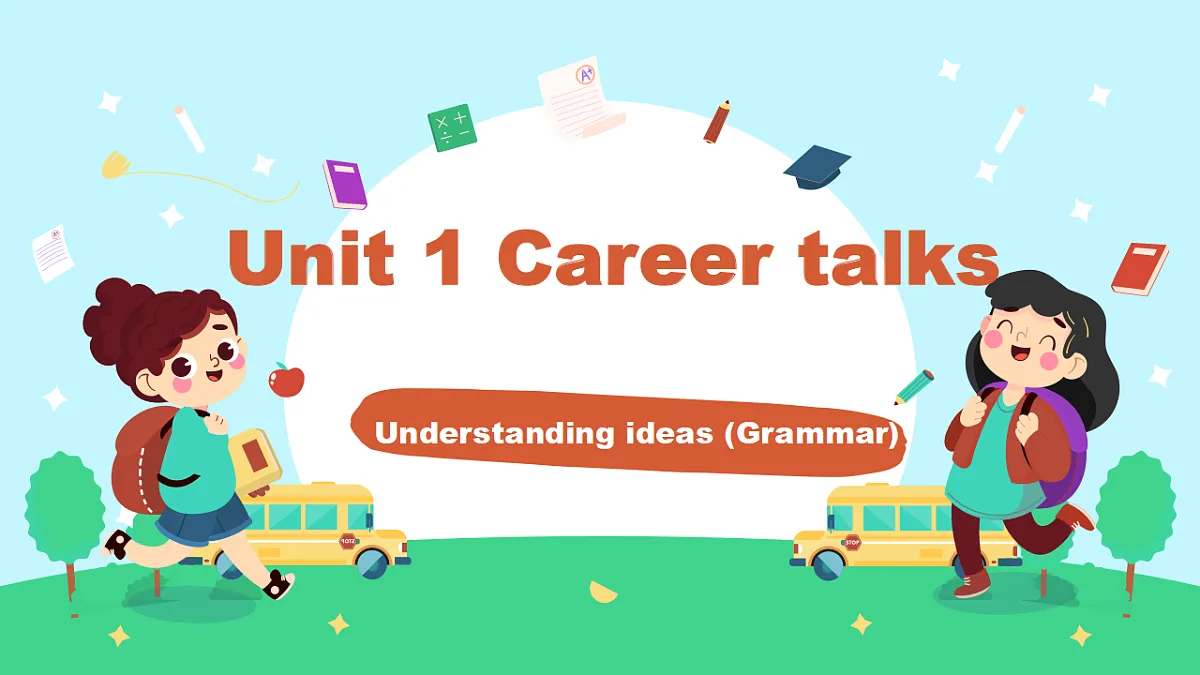
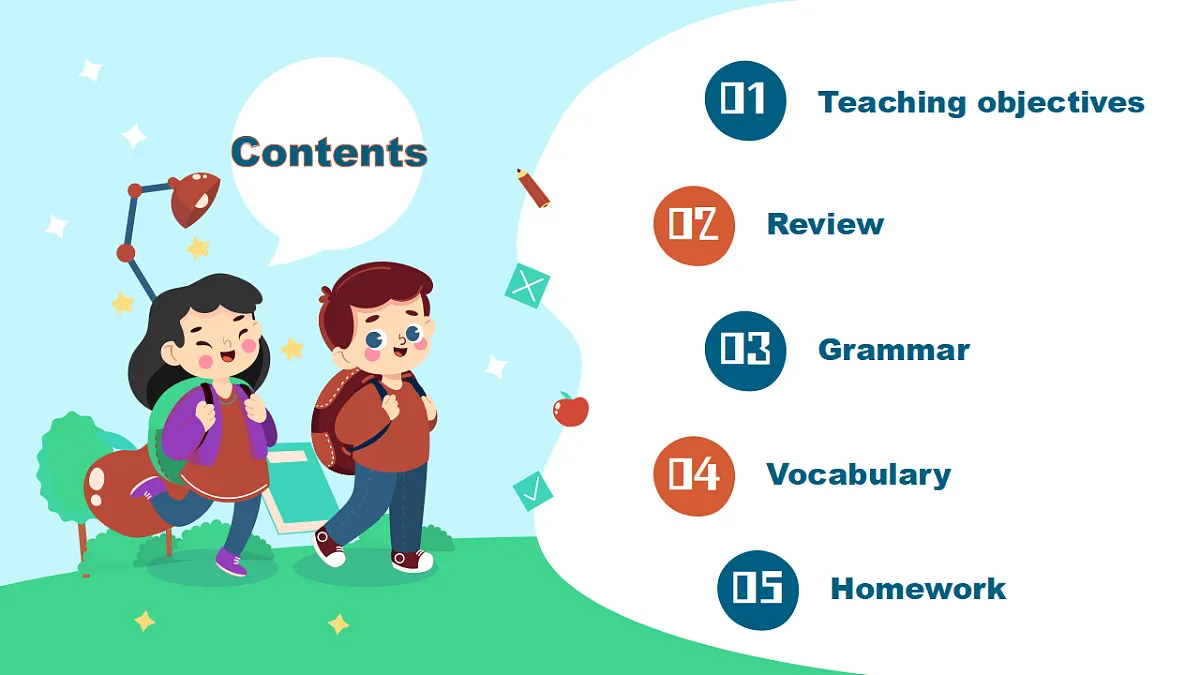

这是一份初中英语Understanding ideas教学ppt课件,共37页。PPT课件主要包含了Contents,语言能力,思维品质,学习能力,文化意识,教学重点,教学难点,教学重难点,Exercise,drives等内容,欢迎下载使用。
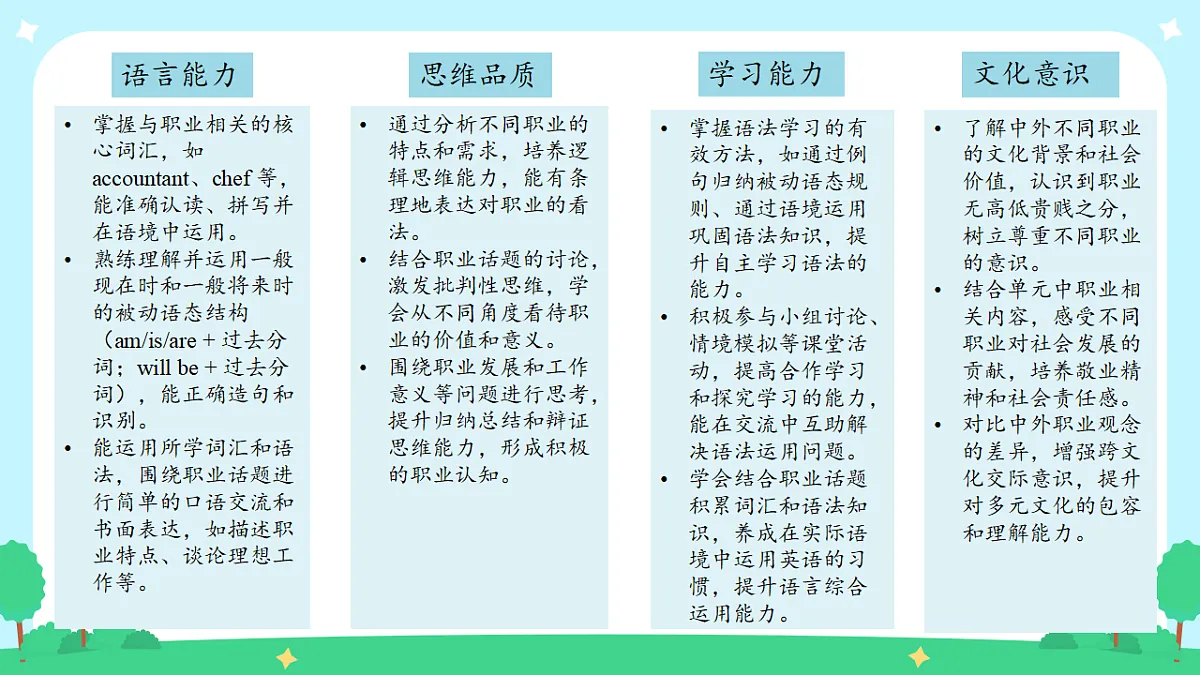
掌握与职业相关的核心词汇,如 accuntant、chef 等,能准确认读、拼写并在语境中运用。熟练理解并运用一般现在时和一般将来时的被动语态结构(am/is/are + 过去分词;will be + 过去分词),能正确造句和识别。能运用所学词汇和语法,围绕职业话题进行简单的口语交流和书面表达,如描述职业特点、谈论理想工作等。
通过分析不同职业的特点和需求,培养逻辑思维能力,能有条理地表达对职业的看法。结合职业话题的讨论,激发批判性思维,学会从不同角度看待职业的价值和意义。围绕职业发展和工作意义等问题进行思考,提升归纳总结和辩证思维能力,形成积极的职业认知。
掌握语法学习的有效方法,如通过例句归纳被动语态规则、通过语境运用巩固语法知识,提升自主学习语法的能力。积极参与小组讨论、情境模拟等课堂活动,提高合作学习和探究学习的能力,能在交流中互助解决语法运用问题。学会结合职业话题积累词汇和语法知识,养成在实际语境中运用英语的习惯,提升语言综合运用能力。
了解中外不同职业的文化背景和社会价值,认识到职业无高低贵贱之分,树立尊重不同职业的意识。结合单元中职业相关内容,感受不同职业对社会发展的贡献,培养敬业精神和社会责任感。对比中外职业观念的差异,增强跨文化交际意识,提升对多元文化的包容和理解能力。
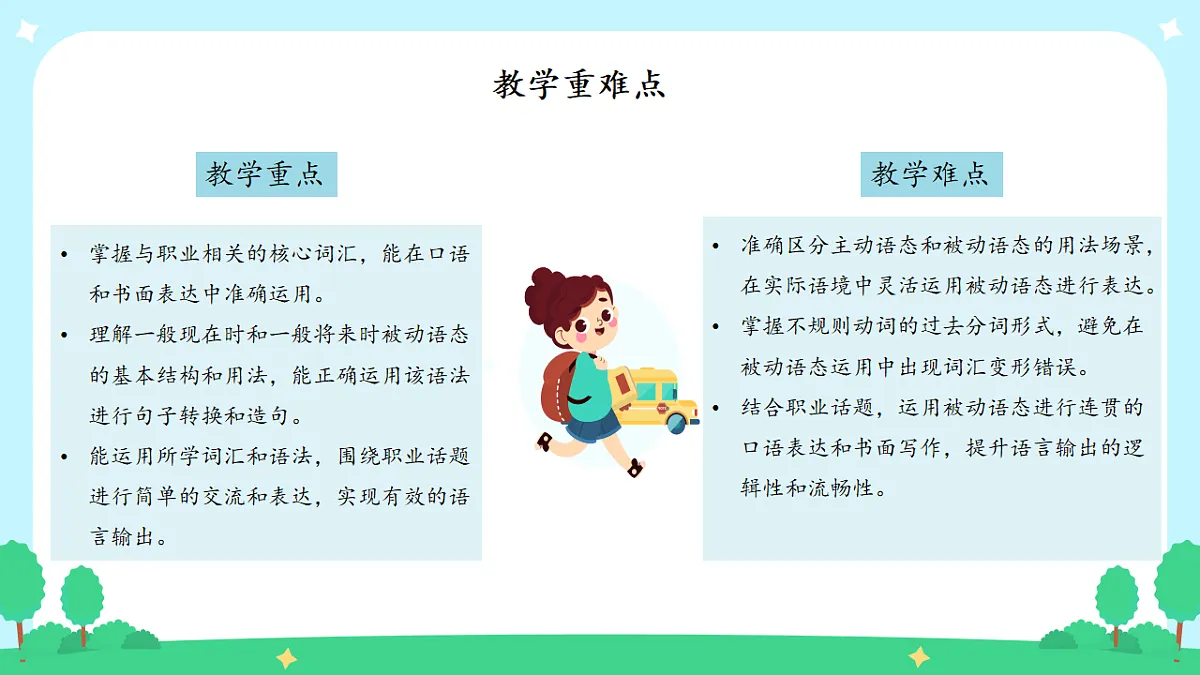
掌握与职业相关的核心词汇,能在口语和书面表达中准确运用。理解一般现在时和一般将来时被动语态的基本结构和用法,能正确运用该语法进行句子转换和造句。能运用所学词汇和语法,围绕职业话题进行简单的交流和表达,实现有效的语言输出。
准确区分主动语态和被动语态的用法场景,在实际语境中灵活运用被动语态进行表达。掌握不规则动词的过去分词形式,避免在被动语态运用中出现词汇变形错误。结合职业话题,运用被动语态进行连贯的口语表达和书面写作,提升语言输出的逻辑性和流畅性。
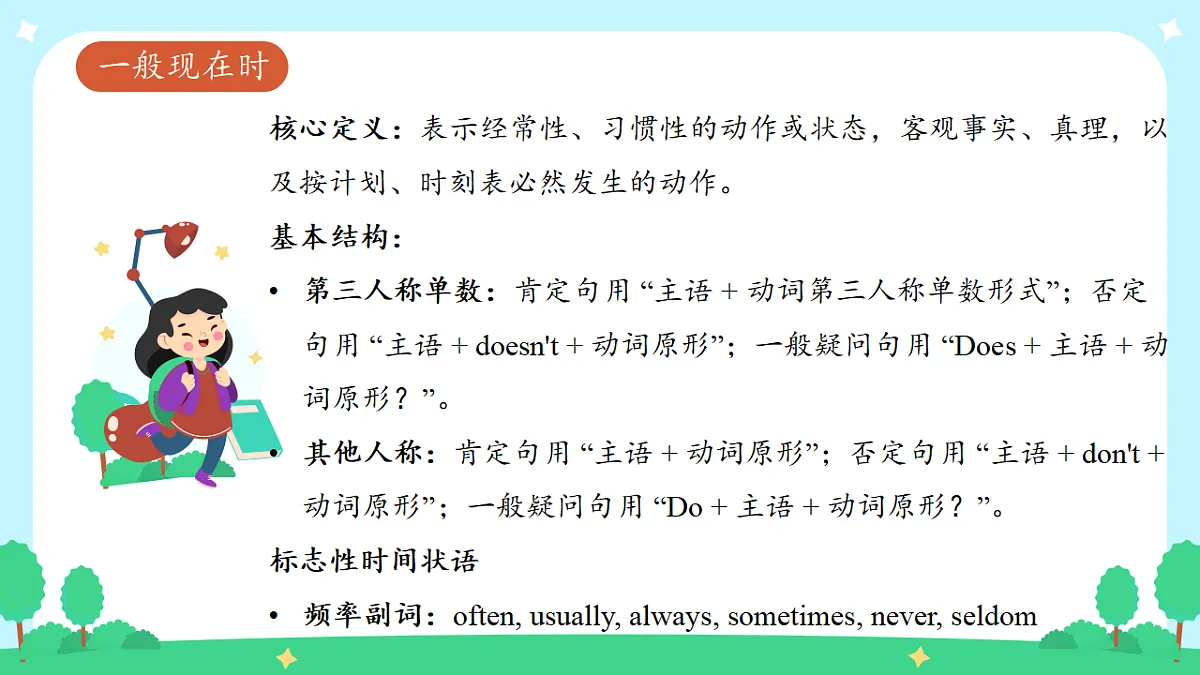
核心定义:表示经常性、习惯性的动作或状态,客观事实、真理,以及按计划、时刻表必然发生的动作。基本结构:第三人称单数:肯定句用 “主语 + 动词第三人称单数形式”;否定句用 “主语 + desn't + 动词原形”;一般疑问句用 “Des + 主语 + 动词原形?”。其他人称:肯定句用 “主语 + 动词原形”;否定句用 “主语 + dn't + 动词原形”;一般疑问句用 “D + 主语 + 动词原形?”。标志性时间状语频率副词:ften, usually, always, smetimes, never, seldm
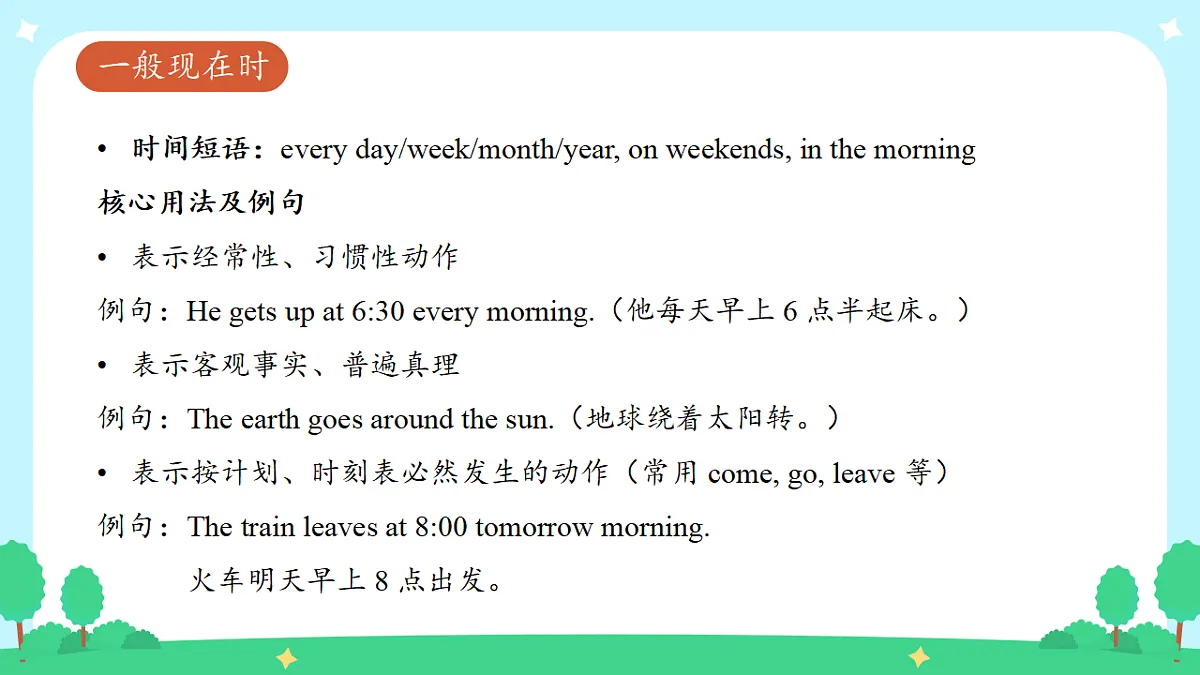
时间短语:every day/week/mnth/year, n weekends, in the mrning核心用法及例句表示经常性、习惯性动作例句:He gets up at 6:30 every mrning.(他每天早上 6 点半起床。)表示客观事实、普遍真理例句:The earth ges arund the sun.(地球绕着太阳转。)表示按计划、时刻表必然发生的动作(常用 cme, g, leave 等)例句:The train leaves at 8:00 tmrrw mrning.火车明天早上 8 点出发。
核心定义:表示将来某个时间要发生的动作或存在的状态,以及将来经常性、习惯性的动作。基本结构及用法will + 动词原形构成:主语 + will + 动词原形用法:表示将来发生的动作或状态、临时决定以及预测。例句:I will visit my grandparents next week. 我下周要去看望祖父母。be ging t + 动词原形构成:主语 + am/is/are+ging t + 动词原形用法:表示计划、打算做某事,或根据迹象预测即将发生的事。例句:She is ging t learn French next year. 她明年打算学法语。
be + 动词 - ing 形式构成:主语 + am/is/are + 动词 - ing 形式用法:表示按计划、安排即将发生的动作,常用 cme, g, leave, arrive 等表示位移的动词。例句:We are leaving fr Beijing tmrrw.(我们明天要去北京。)一般现在时表将来构成:使用一般现在式结构用法:表示按时刻表、日程表等必然发生的将来动作,常用于火车、飞机等交通方式或固定活动。例句:The class begins at 8:00 in the mrning. 早上 8 点开始上课。标志性时间状语:tmrrw, next day/week/mnth/year, sn, in + 一段时间(如 in three days), this evening/weekend
一般现在时表将来 vs 一般将来时一般现在时表将来强调 “按计划、时刻表必然发生”,不可随意改动;一般将来时表将来更侧重主观意愿、计划或预测。例句:The plane takes ff at 9:00. 飞机 9 点起飞,时刻表固定I will take a plane t Shanghai.我要坐飞机去上海,主观计划will vs be ging t临时决定用 will,提前计划用 be ging t。例句:—I'm thirsty. —I will get yu sme water.(临时决定)I am ging t buy a new bk this weekend.(提前计划)
1. My father usually (drive) t wrk, but tmrrw he (take) the bus because his car is being repaired.2. The earth (g) arund the sun, and next year we (learn) mre abut the slar system in science class.3. If yu (study) hard, yu (pass) the final exam easily.4. The schl meeting (start) at 9:00 every Mnday, but this Mnday it (hld) at 10:00 due t a teacher's training.5. —What are yur plans fr this weekend? —I (visit) my grandparents, and we usually .(have) dinner tgether n weekends.
will be held
am ging t visit / will visit
Read the sentences frm the reading passage and summarise thegrammar rules.
(a) All my days up high in the air will be kept in my memry.(b) I'm reminded f sme ther friends I met thrugh the glass.
Nw find ne mre sentence with these structures in the reading passage.
Windw cleaning is nt always cnsidered a gd jb.
核心定义:表示经常性、习惯性的被动动作,或客观事实、普遍真理的被动表达,强调主语是动作的承受者。基本结构:肯定句:主语 + am/is/are + 动词过去分词 (dne)否定句:主语 + am/is/are + nt + 动词过去分词一般疑问句:Am/Is/Are + 主语 + 动词过去分词?特殊疑问句:特殊疑问词 + am/is/are + 主语 + 动词过去分词?用法及例句:经常性、习惯性的被动动作
The classrm is cleaned by students every day.(教室每天由学生打扫。)English is spken in many cuntries arund the wrld.(世界上许多国家都讲英语。)客观事实、普遍真理的被动表达Rice is grwn mainly in the suth f China.(水稻主要种植在中国南方。)This kind f plant is fund nly in trpical frests.(这种植物只生长在热带雨林中。)强调动作承受者,执行者不重要或未知My bike is repaired by my uncle every time it breaks dwn.(我的自行车每次坏了都是我叔叔修的。)The letters are sent at 3 'clck every afternn.(信件每天下午 3 点被寄出。)
核心定义:表示将来某个时间要发生的被动动作,或将来会经常性出现的被动状态,主语是动作的承受者。基本结构:will be + 动词过去分词(通用形式,表预测、客观安排)肯定句:主语 + will be + 动词过去分词否定句:主语 + will nt (wn't) be + 动词过去分词疑问句:Will + 主语 + be + 动词过去分词?am/is/are ging t be + 动词过去分词(表计划、打算的被动动作)
肯定句:主语 + am/is/are ging t be + 动词过去分词否定句:主语 + am/is/are nt ging t be + 动词过去分词疑问句:Am/Is/Are + 主语 + ging t be + 动词过去分词?用法及例句:将来要发生的被动动作(客观安排或预测)A new hspital will be built in ur city next year.(明年我们城市将新建一家医院。)计划、打算好的被动动作The sprts meeting is ging t be held next mnth.(运动会计划下个月举行。)This prblem is ging t be discussed in tmrrw's class.(这个问题将在明天的课上被讨论。)
时态辨析:根据时间状语判断使用哪种被动语态一般现在时被动:every day, usually, ften, always 等(经常性动作)一般将来时被动:tmrrw, next week, in + 一段时间等(将来动作)主动变被动的通用步骤主动宾语→被动主语;主动谓语→被动结构(be + 过去分词);主动主语→by 短语(可省略)主动:Peple plant trees in spring.(人们春天种树。)
被动(一般现在时):Trees are planted in spring.(树在春天被种植。)被动(一般将来时):Mre trees will be planted this spring.(今年春天将种植更多的树。)不规则动词过去分词的正确使用(如 write-written, take-taken, d-dne)例句:This bk was written by a famus authr.(一般过去时被动,拓展参考)例句:A new nvel will be written by her next year.(一般将来时被动)
Rewrite the sentences in the passive in the simple present r the simple future.
1 The farmer plants flwers in early spring.2 We usually clean up ur ffice fr the hlidays.3 The schl always hlds a party t welcme new teachers.4 The cmpany will hld a jb interview next mnth.
Flwers are planted by the farmer in early spring.
Our ffice is usually cleaned up fr hlidays.
A party is always held by the schl t welcme new teachers.
A jb interview will be held by the cmpany next mnth.
Cmplete the jb psting using the crrect passive frm f the verbs in brackets.
What yu’ll dPlan and rganise fun events fr the year ahead.Make sure the vices f students 4 . (hear) n imprtant matters.What yu’ll getYu will make new friends.Yur leadership skills 5 .(develp).
Creative students 1 (need) fr ur team! Excellent cmmunicatin skills 2 (expect), and a psitive persnality 3 . (require).
Jin us and make a difference! Cme t Rm 401 fr mre infrmatin.
will be heard
will be develped
are expected
is required
Wrk in pairs. Chse a jb and cmplete the table. Then have a discussinabut the jys and challenges f ding the jb. Use the wrds and expressinsfrm the reading passage and the Useful expressins t help yu.
Jb: .Jys f ding the jb: .Challenges f ding the jb: .
Useful filled with bth challenges and always cnsidered a gd jb.I have fund a sense f achievement jb will make... shine.
cmpany /ˈkʌmpəni/ n.公司,陪伴,同伴;v.陪伴
例句:She wrks fr a big cmpany in Shanghai. 她在上海的一家大公司工作。She was cmpanied by her sister t the hspital. 她由姐姐陪着去了医院。in cmpany with 与…… 一起;陪伴例句:He came t the party in cmpany with his wife. 他和妻子一起来参加派对。keep sb. cmpany 陪伴某人例句:Can yu keep me cmpany while I wait fr the bus?我等公交车的时候你能陪我一下吗?v. accmpany 陪伴;陪同(更常用动词形式,过去式 / 过去分词:accmpanied)例句:Her mther accmpanied her t the dentist. 她妈妈陪她去看牙医。n. cmpanin 同伴;伙伴例句:He has been my lyal cmpanin fr many years.他多年来一直是我忠实的伙伴。
interview /ˈɪntəvjuː/ n./v. 面试,面谈
例句:She has an interview fr a jb as a teacher tmrrw.她明天有一场教师岗位的面试。)The manager will interview three candidates this afternn.经理今天下午要面试三位候选人。n. interviewer 面试官;采访者例句:The interviewer asked sme difficult questins during the interview.面试过程中面试官问了一些难题。n. interviewee 被面试者;被采访者例句:The interviewee was very nervus when answering questins.被面试者回答问题时非常紧张。
cmmunicatin /kəˌmjuːnɪˈkeɪʃn/ n.信息交流;沟通
例句:Gd cmmunicatin is the key t a successful team.良好的沟通是团队成功的关键。in cmmunicatin with 与…… 保持联系 / 沟通例句:Our cmpany is in cmmunicatin with several verseas partners.我们公司正与几家海外合作伙伴保持沟通。v. cmmunicate 沟通;交流(过去式 / 过去分词:cmmunicated)例句:She cmmunicates with her parents every day. 她每天都和父母沟通。adj. cmmunicative 善于沟通的;爱说话的例句:He is a cmmunicative by wh likes t share his ideas.他是个善于沟通的男孩,喜欢分享自己的想法。
require /rɪˈkwaɪə/ v.需要(某物)
例句:This jb requires a lt f patience and care. 这份工作需要极大的耐心和细心。require sb. t d sth. 要求某人做某事例句:The teacher requires us t finish ur hmewrk n time.老师要求我们按时完成作业。require ding sth. 需要做某事(主动形式表被动含义)例句:The ld huse requires repairing befre we mve in.我们搬进去之前,这栋老房子需要修缮。require sth. f sb. 要求某人某事例句:The manager requires a high standard f wrk f every emplyee.经理要求每位员工都要有高标准的工作表现。
n. requirement 要求;必要条件例句:One f the requirements fr this jb is tw years f wrk experience.这份工作的要求之一是两年的工作经验。adj. required 必需的;规定的例句:English is a required subject in middle schls.英语是中学的一门必修课。adj. requiring 需要的;要求高的例句:It's a requiring task that needs careful planning.这是一项需要周密计划的高要求任务。
rganise /ˈɔːɡənaɪz/ v.组织,策划,安排
例句:She vlunteered t rganise the schl sprts meeting.她主动提出组织学校运动会。We need t rganise ur time better t finish the prject.我们需要更好地安排时间来完成这个项目。rganise neself 自我管理;安排自己的事务例句:Cllege students shuld learn t rganise themselves independently.大学生应该学会独立安排自己的事务。rganise int 把…… 组织成例句:We rganised the students int fur grups fr the activity.我们把学生分成四个小组进行活动。
n. rganisatin 组织;机构;安排例句:She wrks fr a nn-prfit rganisatin in the city.她在市里的一家非营利性机构工作。n. rganiser 组织者;筹办者例句:The rganiser f the cncert made sure everything went smthly.音乐会的组织者确保一切顺利进行。adj. rganised 有组织的;有条理的例句:He is an rganised persn wh keeps his desk tidy.他是个有条理的人,总是保持书桌整洁。
benefit /ˈbenɪfɪt/ n.好处,益处,裨益
例句:Regular exercise has many benefits fr bth bdy and mind.规律运动对身心都有很多益处。Reading widely can bring great benefit t yur study.广泛阅读能给你的学习带来很大裨益。fr the benefit f 为了…… 的利益;为帮助……例句:The charity event was held fr the benefit f hmeless children.这场慈善活动是为了帮助无家可归的儿童而举办的。benefit frm 从…… 中受益;得益于例句:Students can benefit frm grup discussins in class.学生可以从课堂小组讨论中受益。
get benefit frm 从…… 获得好处例句:Yu will get benefit frm learning a freign language.学习一门外语会让你受益良多。v. benefit 有益于;受益(过去式 / 过去分词:benefited)例句:This new plicy will benefit thusands f families.这项新政策将使数千个家庭受益。adj. beneficial 有益的;有利的例句:Eating mre vegetables is beneficial t yur health.多吃蔬菜对你的健康有益。
training /ˈtreɪnɪŋ/ n.训练,培训
例句:She has received prfessinal training in nursing. 她接受过专业的护理培训。v. train 训练;培训(过去式 / 过去分词:trained)例句:The cach trains the team fr tw hurs every day.教练每天带球队训练两小时。n. trainer 训练员;教练;培训师例句:Our trainer has many years f experience in sprts training.我们的教练拥有多年的运动训练经验。adj. trained 受过训练的;训练有素的例句:Only trained wrkers can perate this machine.只有受过训练的工人才能操作这台机器。
这是一份外研版(2024)八年级下册(2024))Understanding ideas教学课件ppt,共36页。PPT课件主要包含了Contents,语言能力,思维品质,学习能力,文化意识,教学重点,教学难点,教学重难点,farmer,teacher等内容,欢迎下载使用。
这是一份英语八年级下册(2024))Understanding ideas图文课件ppt,共27页。PPT课件主要包含了bit by bit,warm story等内容,欢迎下载使用。
这是一份初中英语外研版(2024)八年级下册(2024))Unit 1 Career talksUnderstanding ideas教学ppt课件,共27页。PPT课件主要包含了Practice,Lead in,be + 过去分词,✅Para 1,✅Para 2,✅Para 3,✅Para 5,一般现在时被动语态,一般将来时被动语态,核心区别等内容,欢迎下载使用。
注册成功
资料篮

在线客服
添加在线客服
获取1对1服务
官方微信
关注“教习网”公众号
打开微信就能找资料
赛课定制
添加在线客服
获取1对1定制服务
职称咨询
添加在线客服
获取1V1专业指导服务

免费福利


.png)
.png)
.png)
