免费领取教师福利

若您为此资料的原创作者,认为该资料内容侵犯了您的知识产权,请扫码添加我们的相关工作人员,我们尽可能的保护您的合法权益。


这是一份福建省2026届高三下学期适应性练习(省质检)英语(漳州版)试题(Word版附答案)含听力音频,共22页。
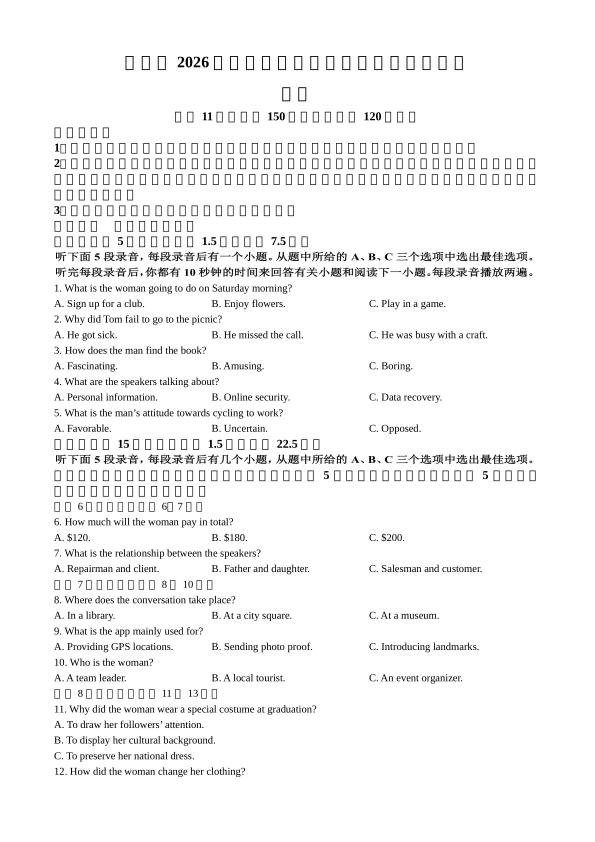
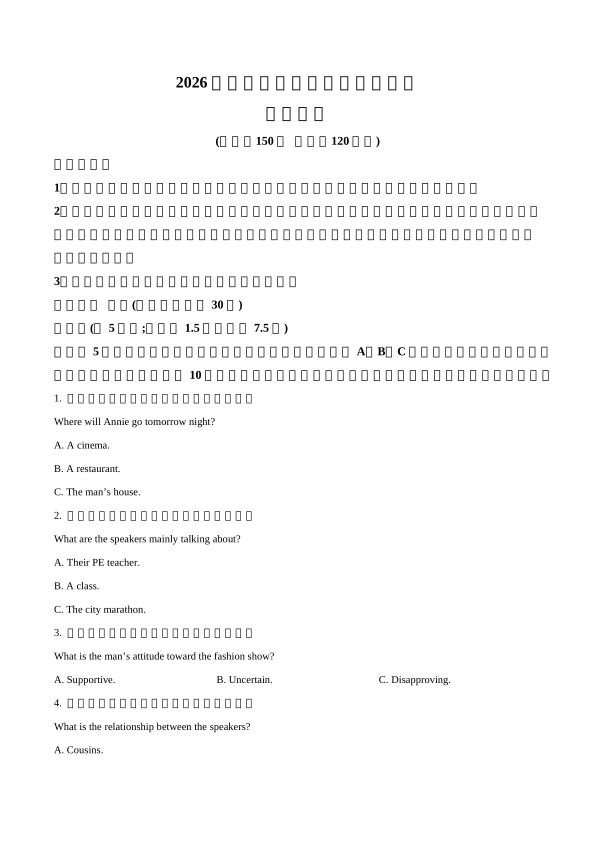
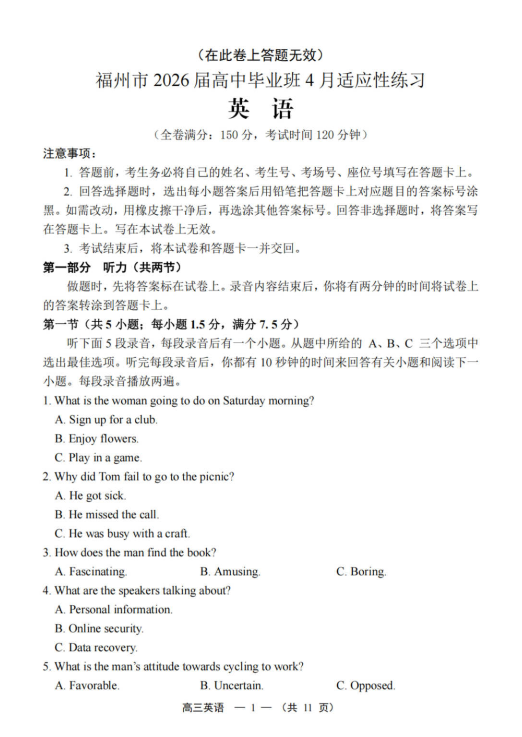
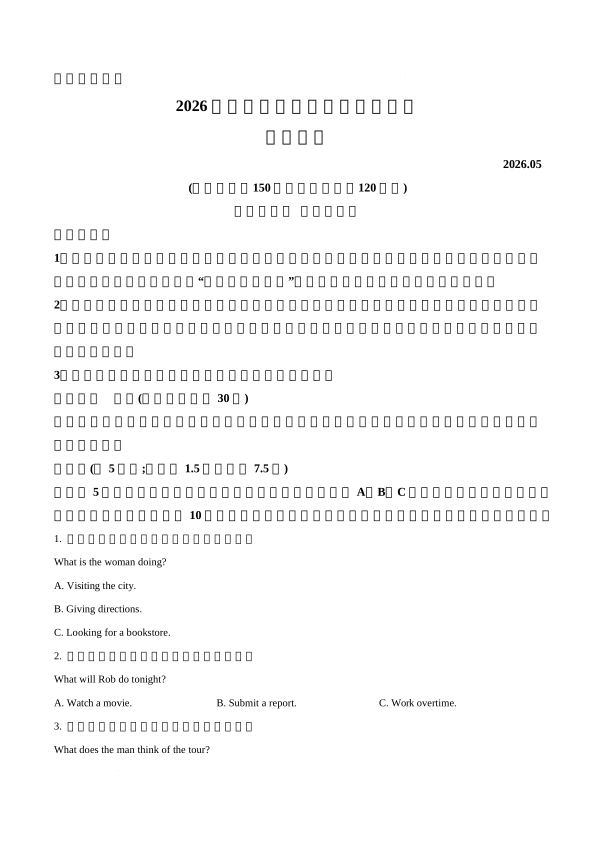
注意事项:
1.答卷前,考生务必将自己的姓名、考生号、考场号、座位号填写在答题卡上。
2.回答选择题时,选出每小题答案后,用铅笔把答题卡上对应题目的答案标号涂黑。如需改动,用橡皮擦干净后,再选涂其他答案标号。回答非选择题时,将答案写在答题卡上,写在本试卷上无效。
3.考试结束后,将本试卷和答题卡一并交回。
第一部分 听力(共两节)
第一节(共5小题;每小题1.5分,满分7.5分)
听下面5段录音,每段录音后有一个小题。从题中所给的A、B、C三个选项中选出最佳选项。听完每段录音后,你都有10秒钟的时间来回答有关小题和阅读下一小题。每段录音播放两遍。
1. What is the wman ging t d n Saturday mrning?
A. Sign up fr a club.B. Enjy flwers.C. Play in a game.
2. Why did Tm fail t g t the picnic?
A. He gt sick.
B. He missed the call.
C. He was busy with a craft.
3. Hw des the man find the bk?
A. Fascinating.B. Amusing.C. Bring.
4. What are the speakers talking abut?
A. Persnal infrmatin.B. Online security.C. Data recvery.
5. What is the man’s attitude twards cycling t wrk?
A. Favrable.B. Uncertain.C. Oppsed.
第二节(共15小题;每小题1.5分,满分22.5分)
听下面5段录音,每段录音后有几个小题,从题中所给的A、B、C三个选项中选出最佳选项。听每段录音前,你将有时间阅读各个小题,每小题5秒钟。听完后,每小题都有5秒钟的作答时间,每段录音播放两遍。
听第6段录音,回答第6、7题。
6. Hw much will the wman pay in ttal?
A. $120.B. $180.C. $200.
7. What is the relatinship between the speakers?
A. Repairman and client.
B. Father and daughter.
C. Salesman and custmer.
听第7段录音,回答第8至10题。
8. Where des the cnversatin take place?
A. In a library.B. At a city square.C. At a museum.
9. What is the app mainly used fr?
A. Prviding GPS lcatins.
B. Sending pht prf.
C. Intrducing landmarks.
10. Wh is the wman?
A. A team leader.B. A lcal turist.C. An event rganizer.
听第8段录音,回答第11至13题。
11. Why did the wman wear a special cstume at graduatin?
A. T draw her fllwers’ attentin.
B. T display her cultural backgrund.
C. T preserve her natinal dress.
12. Hw did the wman change her clthing?
A. By brightening the clr.
B. By using a lighter material.
C. By lengthening the sleeves.
13. What will the wman d next week?
A. Start her wn clthing shp.
B. Apply fr a new prject.
C. Share a vide n DIY clthes.
听第9段录音,回答第14至17题。
14. Why des Le visit Prfessr Smith?
A. T seek suggestins.B. T hand in a prject.C. T check a system.
15. What des the cmpetitin fcus n?
A. Attracting city-wide students.
B. Integrating labr with technlgy.
C. Advcating a management system.
16. What mtivates Le’s design?
A. Engaging students better.
B. Advancing labr skills.
C. Increasing vegetable utput.
17. What is the functin f the sensr device?
A. T water the plants autmatically.
B. T speed up planting prgress.
C. T ffer guidance fr plant care.
听第10段录音,回答第18至20题。
18. Wh are the target learners f the prgram?
A. AI designers.B. Senir citizens.C. The yuth.
19. Hw did Lyu Pinghuang feel at first?
A. Uncmfrtable.B. Embarrassed.C. Cnfused.
20. Hw is the prgram?
A. Challenging.B. Prfitable.C. Ppular.
第二部分 阅读(共两节,满分30分)
第一节(共15小题;每小题2.5分,满分37.5分)
阅读下列短文,从每题所给的A、B、C和D四个选项中选出最佳选项。
A
Ecturism Activities and Types
Nt every utdr r nature-based activity qualifies as ecturism. Overturism has made this clear. As utlined in ur blg, ecturism mainly includes wildlife viewing, cultural ecturism, hiking and recreatin and citizen science and vlunturism.
Wildlife Viewing
Respnsible wildlife viewing ffers the chance t bserve animals behaving naturally and mving freely within healthy ecsystems. This may invlve guided frest walks t spt birds, watching elephants walking acrss pen plains, r bserving whales frm a distance.
Cultural Ecturism
Cultural ecturism ffers insight int lcal traditins and lifestyles. Experiences may include learning frm lng-established cmmunities, visiting imprtant sites, r jining nature-related activities. Such activities must get permissin frm lcal cmmunities and shuld directly benefit cmmunities, ensuring heritage is shared n the cmmunity’s wn terms.
Hiking and Recreatin
Hiking and recreatin ecturism activities might include cycling alng castlines, r snwsheing thrugh valleys. These activities slw the pace f travel, making it easier t ntice details like wildflwers r bird sngs that are ften missed. T be cnsidered ecturism, recreatinal activities must fllw the Leave N Trace principles, stay n selected rads and park legally.
Citizen Science and Vlunturism
Citizen science and vlunturism engage travelers in hands-n cnservatin activities such as wildlife mnitring, habitat restratin, r rad maintenance. These experiences give participants a clearer understanding f envirnmental challenges while supprting scientific research. Well-designed activities create a mutually beneficial exchange: travelers learn frm lcal experts, and cnservatin prgrams gain extra capacity.
21. Which experience requires lcal permissin?
A. Wildlife Viewing.B. Cultural Ecturism.
C. Hiking and Recreatin.D. Citizen Science and Vlunturism.
22. Which activity belngs t Citizen Science and Vlunturism?
A. Riding trained elephants.B. Repairing natural paths.
C. Visiting turist-nly villages.D. Taking phts with dlphins clsely.
23. What is the authr’s purpse f writing the blg?
A. T tell travel stries.B. T explain verturism.
C. T intrduce real ecturism.D. T shw fun utdr activities.
B
In a busy cmmunity hall, a vlunteer sits at a sewing machine, mending (修补) smene’s much-lved dress, while at anther table, husehld tls are fixed. This is the Share and Repair Café, run by Transitin Crich, a “share and repair” prject, in the village f Crich.
This prject began five years ag, when the lcal magazine asked if anyne was interested in cming tgether as vlunteers t make their village becme mre sustainable and envirnmentally friendly. “We’ve grwn frm just mending items t having craft activities, a café area, and stands frm lcal grups,” says cmmittee member Linda. Crucially, the grup desn’t charge fr its services. “Yu dn’t have t pay fr yur repairs. We just ask fr dnatins t cver ur csts,” says Linda.
Alan vlunteers at the Share and Repair Café as part f the sharpening service, helping give new life t everything frm kitchen knives t garden tls. “The cmmunity in Crich have been, and cntinue t be, an amazing supprt t my family, fllwing my cancer diagnsis (诊断),” he says. “Getting invlved has helped shape a psitive mindset, and helped extend my time n the planet. Giving smething back is the least I can d.”
This cmmitment t actin is evident in ther prjects Transitin Crich facilitates. A fashin shw is cming up, t. Peple will write their creative ideas abut sustainable clthing n pieces f fabric t call n individuals t fight against fast fashin. A phtgraphy cmpetitin encurages peple t take phts while being cgnizant f nature. The grup als wrks with a junir schl n envirnmental awareness prjects, helping yung students learn t mend their cnnectin t the natural wrld.
Whether a vlunteer r event attendee, the cmmunity benefit greatly frm being invlved with Transitin Crich. As we all knw, lneliness isn’t reserved fr ne particular grup f sciety. What makes inclusin initiatives like Transitin Crich truly wnderful is their ability t mend the gaps between generatins, bringing tgether peple f different ages in ways that might therwise be hard t achieve.
24. What inspired the start f the “share and repair” prject?
A. A repaired item.B. A dnatin campaign.
C. A vlunteer appeal.D. A classic handcraft.
25. What des the sharpening service bring t Alan?
A. An ptimistic attitude t life.B. Better treatments f cancer.
C. A steady ecnmic supprt.D. Imprved prfessinal skills.
26. What des the underlined wrd “cgnizant” in paragraph 4 prbably mean?
A. Analytical.B. Mindful.
C. Curius.D. Independent.
27. What is the best title f the text?
A. Friends Wh MendB. Dnatins That Cunt
C. Sharing Cffee, Enjying LivesD. Designing Prjects, Meeting Lcals
C
My great-grandfather mved t Mexic ver a century ag. He learned Spanish and raised five children in a mixed German-Mexican husehld, but he didn’t teach them German, and the language was lst in ne generatin. Yet three generatins later, my children recvered it during visits t Germany. This stry is a case study abut human cgnitin (认知).
When bilinguals (双语者) switch languages, they chse the right language system by mapping cntexts t respnses while keeping utput cnsistent. This mechanism (机制) wrks acrss fields. Taxi drivers develp brain adaptatins t manage thusands f rutes and pick the best ne. Prfessinal musicians cnstantly switch between musical ntes, rhythms, and emtinal expressins, requiring frequent cgnitive adjustments. Learning, understanding, and adaptatin are all frms f translatin—matching expectatins with the envirnment. This reframes intelligence itself. Intelligence isn’t just cmputatin within a single dmain. It’s the ability t mve between dmains, t translate meaning int actin.
This matters urgently because f AI. Large language mdels prcess infrmatin at massive scales and match humans n many tasks, but they are stuck in cmputatinal framewrks. They fail when the envirnment changes in ways unfreseen by training data, lacking dmain translatin, physical experience, and real life.
Humans survive change by switching cgnitive dmains: when ne system fails, we turn t anther—frm symblic thught t sensry experience. This flexibility is ur greatest strength. We are nt just infrmatin prcessrs; we are dmain translatrs. If crss-dmain translatin is ur fundamental adaptive mechanism, succeeding in the AI age means strengthening this ability: identifying dmain traps, translating acrss dmains, and building cgnitive architectures that facilitate dmain switching.
AI will cntinue imprving at fixed-dmain tasks, but nly humans can mve between discnnected dmains. The future wn’t belng t thse wh prcess the mst infrmatin, but t thse wh translate between humans and AI, between multiple meaning systems, and between ur present and future selves. Adaptatin is essentially translatin. And translatin is fundamentally human.
28. Why des the authr mentin the family stry?
A. T stress human capacity.B. T present a language bias.
C. T praise family educatin.D. T illustrate a mechanism.
29. What is the intelligence reframed in paragraph 2?
A. Effective actin-taking.B. Cmputatinal abilities at scale.
C. Crss-field translatin.D. Cnstant shifts in thughts.
30. What is paragraph 4 mainly abut?
A. Human’s cgnitive advantage.B. Human’s intellectual dmain.
C. AI’s multi-system adaptability.D. AI’s huge infrmatin strage.
31. Wh wuld have a brighter future based n the last paragraph?
A. Thse prcessing much infrmatin.B. Thse adapting t different dmains.
C. Thse cncentrating n a fixed field.D. Thse develping meaning systems.
D
On a ht summer day, a cld drink is a welcme treat. But the cling technlgy behind it cmes at a cst. Traditinal refrigeratrs use gases called hydrflurcarbns (HFCs), which are pwerful cntributrs t glbal warming. Finding a better way has lng been an unslved prblem. Nw, scientists have develped a new cling methd that may change this.
Researchers frm Lawrence Berkeley Natinal Labratry released a technique called incalric (离子热) cling. As the name suggests, it uses ins—charged particles (粒子) — t create a cling effect. The idea builds n a simple physical prcess and theretical mdeling: melting takes heat. Yu’ve seen this n a winter rad—salt n ice causes it t melt, even in freezing temperatures. The incalric cycle als uses salt t change a liquid’s phase and cl its surrundings.
Thrugh mdeling, the team predicted that mving ins culd change a material’s melting pint, allwing it t absrb heat n demand. T test this predictin, scientists mixed a salt — sdium idide — int a liquid, ethylene carbnate (EC, 碳酸乙烯酯). When a small electric current was applied, the salt ins mved, which changed the melting pint f the liquid, causing it t melt. As the liquid melted, it absrbed heat, cling the space like melting ice. The team measured a temperature drp f 25℃ with less than ne vlt — utperfrming ther similar technlgies.
These results pint t a bigger stry. The system balances efficiency, cst, and envirnmental impact. Early tests shw prmise in all three. One reasn is the wrking liquid, EC, can be made frm CO2, meaning the system culd be carbn-negative — it avids harm and helps clean up. “The incalric cycle has the ptential t meet all these gals,” said Drew Lilley, the leading engineer.
If successful, this technlgy culd help natins meet the gals f the Kigali Amendment, which aims t cut HFC use by 80%. Nw, researchers face the next challenge: mving the technlgy frm the lab t the real wrld. With further develpment, these systems culd ne day prvide bth cling and heating — withut harming the planet.
32. What is the principle f the incalric cling?
A. Melting absrbs heat frm surrundings.
B. Expanding gas can prduce cling.
C. Electricity can generate heat in materials.
D. Salt lwers the freezing pint f water.
33. Hw did researchers test their predictin?
A. By reducing the amunt f HFCs.
B. By measuring CO2 in the atmsphere.
C. By mnitring real-time winter rad cnditins.
D. By cnducting current in a salt-cntaining liquid.
34. Why des the authr stress EC can be made frm CO2?
A. T state hw the system cuts HFCs.
B. T prve the system can save electricity.
C. T explain hw the system brings cling effect.
D. T shw the system can help ease glbal warming.
35. What is the authr’s attitude twards incalric cling?
A. Negative.B. Dubtful.C. Hpeful.D. Dismissive.
第二节(共5小题;每小题2.5分,满分12.5分)
阅读下面短文,从短文后的选项中选出可以填入空白处的最佳选项。选项中有两项为多余选项。
Fd Technlgy is a vital subject but has fallen ut f favur in recent years, vershadwed by “academic” subjects. 36 As a Fd Technlgy teacher, I firmly believe that the time has cme t reinvent it.
Engaging students in Fd Technlgy can help shape practical prblem-slving skills, enabling them t make mre infrmed chices abut their diets. But Fd Technlgy must evlve t meet the demands f the mdern age. 37 Instead, a mdern fd tech prgram must be reflective f current culinary (烹饪的) innvatins. We need a curricula (课程) that emphasises fresh, seasnal ingredients, and internatinal cuisines.
In an era when students can shw ff their recipes via scial media, we can als seize the pprtunity t intrduce technlgy int ur fd tech classes. Beynd being tls fr accessing infrmatin, digital platfrms have the ptential t enhance ur culinary instructin techniques. We can task students with develping their wn meal-planning apps. 38
In my reimagined Fd Technlgy classes, inclusivity wuld play a further crucial rle. We nw live in a multicultural sciety, where fd practices vary widely. By celebrating diverse culinary traditins, we can teach students abut nutritin frm a range f cultural perspectives. 39 It’s imprtant that students learn t respect and celebrate the differences that fd represents. Such an apprach wuld nt nly help t build their understanding and empathy, but als t enrich and expand their culinary hrizns and fuel their interest in trying new fds.
40 Wh knws — we might well end up with classrms full f future chefs, health advcates and fd scientists, all eager t cme up with their wn slutins t the wrld’s culinary challenges.
A. Cking can bridge differences.
B. Each dish tells a unique cultural stry.
C. Or we can engage them in interactive cking lessns.
D. Gne, after all, are the days f simply biling cabbage.
E. Yet there is a grwing awareness f diet-related health issues.
F. T achieve that, hwever, we’ll need mre passinate educatrs.
G. Diverse lcal recipes are seldm mentined in mdern Fd Technlgy.
第三部分 语言运用(共两节,满分30分)
第一节(共15小题;每小题1分,满分15分)
阅读下面短文,从每题所给的A、B、C、D四个选项中选出可以填入空白处的最佳选项。
Daniel and Martin bth wrk full-time — Daniel as a landscaper, Martin in the chemical industry. But when they’re nt n the clck, they’re ut 41 peple wh are struggling t make ends meet.
What started as free lawn care nce a week has nw grwn int anther 42 : free cleaning service. Whether it’s a driveway r sidewalk, the brthers shw up 43 t help—n payment required. “Yu never knw what peple are 44 ,” Martin said. “It may just be cleaning service, but it can 45 their day and even change hw they see life.”
Their 46 kicked ff fur years ag. While wrking a 47 lawn care jb with their father, they met a client wh admitted she culdn’t 48 her medicine. Daniel recalls the mment 49 : “Frm there, we saw the lk n her face.” S they decided t d her lawn fr free and restructured their 50 t reserve at least ne day a week fr helping thse in need — tackling vergrwn lts and 51 yards at n cst. Sn after, cleaning service became part f their 52 . Nw n a vide platfrm, they 53 their wrk, where their tw channels have grwn t ver 450,000 subscribers each.
Fr Daniel and Martin, it all cmes dwn t ne 54 gal: encuraging thers t make a difference. “We hpe t mtivate peple t lend a hand and spread 55 thrughut the city,” Daniel said.
41. A. bservingB. emplyingC. teachingD. helping
42. A. dreamB. marketC. actD. rule
43. A. readyB. hesitantC. cnfidentD. careful
44. A. dreaming fB. ging thrughC. lking frD. calling up
45. A. ccupyB. brightenC. cntrlD. rganize
46. A. hbbyB. curseC. missinD. cnflict
47. A. paidB. burdenedC. permanentD. steady
48. A. affrdB. receiveC. switchD. stre
49. A. randmlyB. cautiuslyC. clearlyD. nervusly
50. A. purpseB. investmentC. budgetD. schedule
51. A. shadedB. fencedC. preservedD. ignred
52. A. strategyB. educatinC. rutineD. research
53. A. shareB. cmpareC. interruptD. arrange
54. A. ppularB. simpleC. cmpetitiveD. standard
55. A. justiceB. patienceC. curageD. genersity
第二节(共10小题;每小题1.5分,满分15分)
阅读下面短文,在空白处填入1个适当的单词或括号内单词的正确形式。
China is nt nly famus fr pandas, but als their fd — bamb. The Chinese lve bamb. And bamb culture 56 (prmte) ver the past thusands f years. In China, the 57 (apply) f bamb in science and technlgy is really amazing. The Chinese invented a bamb drill 58 (date) back t the Shang Dynasty. Arund 256 BCE, Li Bing led the lcal peple in building Dujiangyan, the first irrigatin netwrk in the wrld, 59 bamb played an imprtant rle.
In the Han Dynasty, peple began t use bamb t make paper, which was f excellent quality and 60 (reasn) price. Even nw, bamb is used as ne f the imprtant raw materials in paper making. Fr example, sme f the xuan paper fr traditinal Chinese painting is made frm sft bamb. 61 the inventin f the abacus (算盘), the ancient Chinese peple emplyed bamb chips 62 (calculate) with.
As gunpwder was invented, the Chinese peple wished t g int space. In the Yuan Dynasty, a man tied a big bamb tube n each f the fur legs f 63 chair and filled them with gunpwder, and what he wanted t d was 64 (magic) send the persn n the chair t space by reactive frce after lighting the gunpwder. Althugh it seems smewhat crazy, it is undubtedly valuable as the earliest frm f the “ 65 (man) rcket.”
第四部分 写作(共两节,满分40分)
第一节(满分15分)
为推进绿色校园建设,你校英语报举办主题为“Ging Green in the Classrm”的征文活动。请你针对教室内某一种能源浪费现象,写一篇短文投稿,内容包括:
(1)现象描述;
(2)改进建议。
注意:
(1)写作词数应为80个左右;
(2)请在答题卡的相应位置作答。
第二节(满分25分)
阅读下面材料,根据其内容和所给段落开头语续写两段,使之构成一篇完整的短文。
I crssed my arms as I waited fr my vlleyball cach t finish talking t the fficials. There was a prblem with the scre. But did it really matter? The Lins were ahead f us, 24-14, and the game wuld end at 25. On the ther side f the net, number 8 cvered her muth and yawned, as if the result had already been decided.
A team needed t win tw ut f three games t win the match, and we had already wn the first. As captain, I called my teammates tgether and tld them that the Lins prbably thught the game was already ver. Maybe they were right, but I didn’t want t give up s easily. We had cme t far t let it end like this. “It’s yur serve, Kait,” I said. “Frm here n ut, nthing drps.” Kait ndded.
The whistle (口哨) blew. Kait threw the ball int the air. Smack (砰的一声)! Her serve flew ver the net and landed untuched. Our team cheered. She served again, and then again. Pint by pint, we fught back, each f us ding ur part, the scre climbing t 24-18. “Cme n, guys!” a player n the Lins called ut. Kait served again, and after anther tw pints, we pulled the scre up t 24-20. Even number 8n lnger lked s relaxed.
Kait served again. The Lins returned the ball, and it came back quickly t ur side. I rushed frward and managed t keep the play ging, sending the ball back ver the net. Fr a mment, I thught we still had a chance — but it went straight t number 8. Smack! She hit it hard nt ur curt. Game ver. The Lins burst int cheers, gathering tgether in excitement.
I stayed where I was fr a mment, the nise fading arund me. Fr a secnd, I wndered if we had lst mre than just a game. Then my teammate Kait reached ut a hand and pulled me t my feet. “Maybe this game is ver,” she said, “but the match isn’t. Nthing drps.”
注意:
(1)续写词数应为150个左右;
(2)请按如下格式在答题卡的相应位置作答。2026年4月9日。
2026 届 高 中 毕 业 班 适 应 性 练 习 题 库
英 语
参考答案及评分标准
第一部分 听力(共两节,满分30分)
1—5 CCABA6—10 CABBC11—15 BBCAB16—20 ACBAC
第二部分 阅读(共两节,满分50分)
第一节(共15小题;每小题2.5分,满分37.5分)
21—25 BBCCA26—30 BAADD31—35 CDCAB
第二节(共5小题;每小题2.5分,满分12.5分)
36—40 EDCBF
第三部分 语言运用(共两节,满分30分)
第一节 (共15小题;每小题1分,满分15分)
41—45 DCABB46—50 CAACD51—55 DCABD
第二节(共10小题;每小题1.5分,满分15分)
56. has been prmted 57. applicatin58. dating 59. where 60. reasnable
61. Befre 62. t calculate63. a 64. magically 65. manned
第四部分 写作(共两节,满分40分)
第一节 (满分15分)
Ging Green in the Classrm
I’ve nticed a typical waste f energy in ur classrms: electrnic screens are ften left n during the nn break. This nt nly wastes electricity but als shrtens the equipment’s lifespan.
T tackle this, I suggest each class appint an “Energy Mnitr” t ensure all displays are switched ff befre lunch. Additinally, placing “Pwer Dwn” stickers n screen frames wuld serve as a cnstant reminder fr everyne.
By making these small changes, we can all be a greener persn and cntribute t ur Green Campus Initiative. Let’s act nw!
1. 本题总分为15分,按5个档次给分。
2. 评分时,先根据文章的内容和语言初步确定其所属档次,然后以该档次的要求来衡量,确定或调整档次,最后给分。
3. 词数少于60和多于100的,酌情扣分。
4. 评分时应注意的主要内容为:内容要点、应用词汇和语法结构的丰富性和准确性及上下文的连贯性。
5. 拼写与标点符号是语言准确性的一个方面,评分时,应视其对交际的影响程度予以考虑。 英、美拼写及词汇用法均可接受。
6. 如书写较差以致影响交际,可将分数降低一个档次。
二、内容要点
描述教室内某一种能源浪费现象;
给出改进建议。
【说明】内容要点可用不同方式表达;应紧扣主题,可适当发挥。
各档次的给分范围和要求
第二节(满分25分)
Anxius, I decided t turn t Ms. Garcia. Vice trembling, I admitted Hayley wasn’t real. T my surprise, instead f being angry, she listened quietly and smiled. “It takes curage t tell the truth,” she said, patting me gently. “Maybe this is yur chance t find a real partner. Just start with a hell.” Fr the first time, I felt a little lighter, as if I stepped ut frm behind the stry I had created. And her wrds finally encuraged me t take that step.
The next day, I went t the music rm t find Emily. She was practicing as usual, fcused and calm. Gathering my curage, I tld her everything and asked if she wuld play with me. Withut the slightest hesitatin, she brke int that familiar, encuraging smile. “Of curse. Yu’ve gt this,” she replied sftly. After several rehearsals, we finally std n the festival stage side by side, and I saw my teacher smiling in the crwd. Our harmnius perfrmance cnvinced me that the friendship I curageusly wn wrked wnders, even thugh Hayley never truly existed.
一、评分原则
1. 本题总分为25分,按五个档次进行评分。
2. 评分时,主要从内容、语言表达和篇章结构三个方面考查,具体为:
( 1 ) 续写内容的质量、续写的完整性以及与原文情境的融洽度。
( 2 ) 所使用词汇和语法结构的准确性、恰当性和多样性。
( 3 ) 上下文的衔接和全文的连贯性。
3. 评分时,应先根据作答的整体情况确定其所属的档次,然后以该档次的要求来综合衡量,
确定或调整档次,最后给分。
4. 评分时还应注意:
( 1 ) 词数少于120的,酌情扣分。
( 2 ) 单词拼写和标点符号是写作规范的重要方面,评分时应视其对交际的影响程度予以考
虑,英美拼写及词汇用法均可接受。
( 3 ) 书写较差以致影响交际的,酌情扣分。
二、各档次的给分范围和要求
2026 届高中毕业班适应性练习题库英语听力部分录音稿
Text 1
M: Hey, the Phtgraphy Club is rganizing a field trip t the btanical park this Saturday. Wuld yu like t jin us?
W: I’d lve t see the flwers, but I have a basketball match in the mrning.
Text 2
W: Tm, we didn’t see yu at the picnic yesterday. Hpe everything’s alright.
M: I was engaged in wdcarving with my grandfather. I’m srry. I frgt t call yu.
W: That’s OK.
Text 3
W: Jasn, have yu finished that new histrical nvel? The reviews claim the strytelling is a bit dry.
M: I have. Hnestly, I think it’s well-researched, interesting and appealing.
W: That’s a surprise. Mst peple find it hard t stay fcused while reading it.
Text 4
W: I nearly lst all my persnal data n my cmputer.
M: Really? But hw?
W: An email virus infected my cmputer.
M: Pr yu. We must be careful abut what we click.
Text 5
W: Carter, I’m thinking f cycling t wrk n the new bike paths.
M: Well, I was wrried abut the traffic, but since they’re car-free, I’m all fr it!
Text 6
W: Mike, I’m back t fix that ld watch we talked abut yesterday.
M: Ah, yur grandfather’s? Let me see... It’s a tugh jb. The basic cleaning is $60, and the internal repair csts anther $120.
W: I see. My dad really treasures it. Can I have it by this Thursday?
M: That’s a “rush jb”, s there’s an extra $20.
W: N prblem. I’m glad yur shp is still pen at this hur.
Text 7
W: Welcme t the registratin desk fr the City Explratin Challenge.
M: Thanks. I’m with the Red Team. I was suppsed t meet my team leader at the library, but I gt lst.
W: N wrries. Yu’re at the city square, the starting pint. Have yu dwnladed the task app?
M: Is that fr GPS guidance?
W: It can d that, but we mainly use it fr uplading phts f the landmarks t earn pints.
M: Gt it. And what’s the prize?
W: A ne-year pass t the lcal museum.
M: Sunds great!
Text 8
M: I’m speaking with Chen Hui, a student whse graduatin vide in Lndn has recently becme a hit. Chen Hui, yu chse t wear traditinal Chinese clthing n stage. Why?
W: Many internatinal students there wear their natinal dress fr graduatin. I wanted t shw my cultural identity, but it had t be practical.
M: Hw did yu make it?
W: Yu knw, I lve the riginal clr! But traditinal sets are ften t heavy. S, I replaced the thick material with a lighter fabric and shrtened the sleeves.
M: That’s prbably why millins f peple liked yur vide. What’s the mst cmmn questin yu get nw?
W: Peple keep asking where they can purchase such an utfit.
M: Are yu planning t start a business r apply fr a prject n this?
W: Nt yet. I’m ging t pst a vide next week t shw peple hw t change and imprve their wn traditinal clthes.
Text 9
M: Hell, Prfessr Smith. I’m Le Campbell. I’m wrking n my entry fr the Schl Labr Educatin Innvatin Cmpetitin. My teacher suggested I cme t yu fr advice.
W: Ah, yes, Le. I’ve read yur plan. What exactly is this cmpetitin abut?
M: It’s a city‑wide student cmpetitin. The highlight f the cmpetitin is t cmbine traditinal labr skills with mdern technlgy. I’ve decided t design a schl vegetable garden management system.
W: What inspired yu?
M: Well, grwing vegetables is cmmn, but mst f the prjects are nt s attractive. I believe many students wuld lve t take part if the system is smart and interesting. D yu think it will wrk?
W: Definitely!
M: But I gt stuck. D yu have any suggestins?
W: I think yu’d better nt make it just a garden but a statin, where students learn t wrk, bserve plants, and recrd grwth.
M: Great!
W: There’s a small sensr device in yur design. Is it just fr recrding temperature?
M: N, it has several uses. It cllects light and sil data, and helps students decide when t water r feed the plants.
W: That’s creative.
Text 10
As night falls, a classrm in Shenzhen cmes alive with silver-haired AI learners. Lyu Pinghuang, aged 65, arrives early, jining ther retirees. Frm text generatin t image and vide creatin, they master digital skills step by step, using AI as a cnvenient tl t recrd stries and recnnect with their persnal memries.
In this innvatin-driven city, many elderly newcmers feel lnely after mving t lk after their grandchildren and struggle t integrate int the cmmunity. Free AI night schls nw prvide accessible public services nearby. At first, Lyu felt ttally ut f place, yet she kept practicing and attended varius curses.
Nw Lyu uses AI skillfully. She ntes that it has enriched and brightened her life. The prgram nw runs in 625 cmmunities, ffering ver 5,000 classes fr mre than 400,000 senir learners, with 8,000 mre waiting t sign up. Technlgy becmes a warm cmpanin, a symbl f the city’s kindness t its elderly.
Ging Green in the Classrm
As the final game began, we stepped nt the curt again.
Cheers frm ur team rising, number 8 walked twards us.
第五档
13~15分
完全完成了试题规定的任务。
—覆盖所有内容要点。
—应用了较多的语法结构和词汇。
—语法结构或词汇方面有些许错误,但为尽力使用较复杂结构或较高级词汇所致;具备较强的语言运用能力。
—有效地使用了语句间的连接成分,使全文结构紧凑。
完全达到了预期的写作目的。
第四档
10~12分
完全完成了试题规定的任务。
—虽漏掉1、2个次重点,但覆盖所有主要内容。
—应用的语法结构和词汇能满足任务的要求。
—语法结构或词汇方面应用基本准确,些许错误主要是因尝试较复杂语法结构或词汇所致。
—应用简单的语句间连接成分,使全文结构紧凑。
达到了预期的写作目的。
第三档
7~9分
基本完成了试题规定的任务。
—虽漏掉一些内容,但覆盖所有主要内容。
—应用的语法结构和词汇能满足任务的要求。
—有一些语法结构和词汇方面的错误,但不影响理解。
—应用简单的语句间连接成分,使全文内容连贯。
整体而言,基本达到了预期的写作目的。
第二档
4~6分
未适当完成试题规定的任务。
—漏掉或未描述清楚一些主要内容,写了一些无关内容。
—语法结构单调,词汇项目有限。
—有一些语法结构或词汇方面的错误,影响了对写作内容的理解。
—较少使用语句间的连接成分,内容缺少连贯性。
信息未能清楚地传达给读者。
第一档
1~3分
未完成试题规定的任务。
—明显遗漏主要内容,写了一些无关内容,原因可能是未理解试题要求。
—语法结构单调、词汇项目有限。
—较多语法结构或词汇方面的错误,影响对写作内容的理解。
—缺乏语句间的连接成分,内容不连贯。
信息未能传达给读者。
0分
未能传达给读者任何信息:内容太少,无法评判;写的内容均与所要求内容无关或所写内容无法看清。
第五档
—创造了丰富、合理的内容,富有逻辑性,续写完整,与原文情境融合度高。
—使用了多样且恰当的词汇和语法结构,可能有个别小错,但完全不影响理解。
—有效地使用了语句间衔接手段,全文结构清晰,意义连贯。
(21~25分)
第四档
—创造了比较丰富、合理的内容,比较富有逻辑性,续写比较完整,与原文情境融合度比较高。
—使用了比较多样且恰当的词汇和语法结构,可能有个别小错,但完全不影响理解。
—比较有效地使用了语句间衔接手段,全文结构清晰,意义连贯。
(16~20分)
第三档
—创造了基本合理的内容,有一定的逻辑性,续写基本完整,与原文情境相关。
—使用了简单的词汇和语法结构,有一些错误和不恰当之处,但基本不影响理解。
—基本有效地使用了语句间的衔接手段,全文结构基本清晰,意义基本连贯。
(11~15分)
第二档
—未能创造合理的内容,全文逻辑性较差,续写不完整,与原文相关度不高。
—使用了较少词汇和语法结构,有较多错误,影响理解。
—很少使用语句间的衔接手段,结构不够清晰,意义不够连贯。
(6~10分)
第一档
—未能创造合理的内容,全文逻辑性差,续写不完整,与原文情境无关。
—未能使用合适的词汇和语法结构,有很多错误,影响理解。
—未能使用语句间的衔接手段,结构不清晰,意义不连贯。
(1~5分)
0分
—未能传达给读者任何信息:内容太少,无法评判;写的内容均与所要求内容无关或所写内容无法看清。
这是一份福建省2026届高三下学期适应性练习(省质检)英语(漳州版)试题(Word版附答案)含听力音频,共22页。
这是一份福建省2026届高三下学期高中毕业班适应性练习(省质检)英语试卷(含答案、听力原文),文件包含沪教牛津版八年级下册Unit4Artsandheritage知识清单背诵版docx、沪教牛津版八年级下册Unit4Artsandheritage知识清单默写版docx等2份学案配套教学资源,其中学案共30页, 欢迎下载使用。
这是一份福建省2026届高三下学期4月适应性练习(省质检)英语试卷(PDF版附答案)含听力原文,共18页。
注册成功
资料篮

在线客服
添加在线客服
获取1对1服务
官方微信
关注“教习网”公众号
打开微信就能找资料
赛课定制
添加在线客服
获取1对1定制服务
职称咨询
添加在线客服
获取1V1专业指导服务

免费福利

添加在线客服
领取免费福利


.png)