免费领取教师福利

若您为此资料的原创作者,认为该资料内容侵犯了您的知识产权,请扫码添加我们的相关工作人员,我们尽可能的保护您的合法权益。


这是一份湖南省邵阳市2026届高三下学期二模英语试题(Word版附答案),文件包含试卷2026年湖南邵阳市高三下学期英语第二次联考英语试卷docx、答案2026年湖南邵阳市高三下学期英语第二次联考英语试卷docx等2份试卷配套教学资源,其中试卷共20页, 欢迎下载使用。
本试卷共 10 页,满分 150 分。考试时间 120 分钟。
注意事项:
1.答卷前,考生务必将自己的姓名、班级、考号填写在答题卡上。将条形码横贴在答题卡上
“条形码粘贴区”。
2.作答选择题时,选出每小题答案后,用 2B 铅笔在答题卡上对应题目选项的答案信息点涂
黑;如需改动,用橡皮擦干净后,再选涂其他答案。答案不能答在试卷上。
3.非选择题必须用黑色字迹的钢笔或签字笔作答,答案必须写在答题卡各题目指定区域内相
应位置上;如需改动,先划掉原来的答案,然后再写上新答案;不准使用铅笔和涂改液。不
按以上要求作答无效。
4.保持答题卡的整洁。考试结束后,只交答题卡,试题卷自行保存。
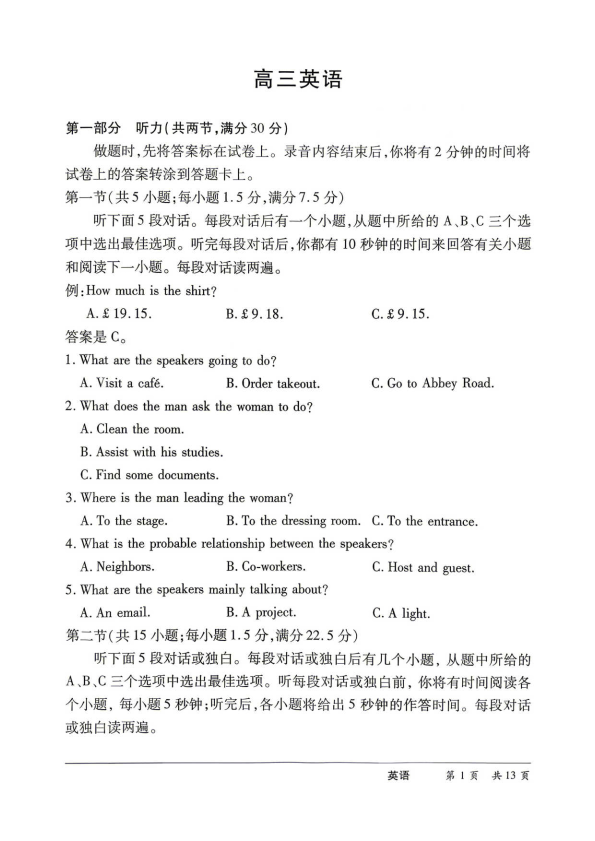
第一部分 听力(共两节,满分 30 分)
做题时,先将答案标在试卷上。录音内容结束后,你将有两分钟的时间将试卷上的答案转涂
到答题卡上。
第一节(共 5 小题;每小题 1.5 分,满分 7.5 分)
听下面 5 段录音。每段录音后有一个小题,从题中所给的 A、B、C 三个选项中选出最佳选项。
听完每段录音后,你都有 10 秒钟的时间来回答有关小题和阅读下一小题。每段录音播放两遍。
1. What hbby des the wman plan t develp?
A. Rck climbing. B. Watching mvies. C. Building blcks.
2. Hw des the man describe Eric?
A. Humrus. B. Observant. C. Curius.
3. What are the speakers mainly talking abut?
A. A painting. B. The gallery staff. C. The painter’s name.
4. Why des Jhn feel blue?
A. He didn’t pass the exams.
B. He can’t keep the balance f his study.
C. He isn’t satisfied with the results.
5. Where are the speakers?
A. In a cnvenience stre. B. In a cake shp. C. At hme.
第二节(共 15 小题;每小题 1.5 分,满分 22.5 分)
听下面 5 段录音。每段录音后有几个小题,从题中所给的 A、B、C 三个选项中选出最佳选项。
听每段录音前,你将有时间阅读各个小题,每小题 5 秒钟;听完后,每小题都有 5 秒钟的作
答时间。每段录音播放两遍。
听下面的录音,回答第 6、7 题。
6. Why des the wman want t mve huse?
A. T save mney n rent. B. T avid cld weather. C. T change living envirnment.
7. Hw des the wman’s sister keep warm?
A. By wearing a dwn cat. B. By wearing wlen glves. C. By heating her feet.
听下面的录音,回答第 8 至 10 题。
8. What des the man like abut rainy days?
A. Carrying an umbrella. B. Listening t the raindrps. C. Reading n rainy days.
9. What des the man wrry abut?
A. The bay windw needs cleaning.
B. The curtain might get dirty.
C. The bks might get wet.
10. Why des the man read every day?
A. He reads stries t his kid. B. He enjys reading himself. C. He needs t imprve himself.
听下面的录音,回答第 11 至 13 题。
11. Which places des the man’s family prefer t g t?
A. Beijing and Xi’an. B. Beijing and Guilin. C. Shanghai and Guilin.
12. Which f the fllwing is the mst attractive t the man’s sn?
A. The hutngs. B. The Great Wall. C. The Frbidden City.
13. When will the man’s family prbably see the Big Wild Gse Pagda?
A. On the secnd day. B. On the furth day. C. On the sixth day.
听下面的录音,回答第 14 至 17 题。
14. What was the blgger’s initial state like?
A. Fit and energetic. B. Unfit and lazy. C. Mtivated and disciplined.
15. Hw did the blgger start his jurney?
A. By running lng distances.
B. By chsing healthier snacks.
C. By starting a strict diet.
16. What mtivated the blgger t keep ging n?
A. Family’s encuragement. B. His friends’ supprt. C. Physical changes.
17. What is the mst remarkable achievement f the blgger accrding t the man?
A. Lsing weight. B. Gaining muscle. C. Building a cmmunity.
听下面的录音,回答第 18 至 20 题。
18. What des Rich Merritt think f bird watching?
A. It’s an accessible activity. B. It requires sme experience. C. It invlves special equipment.
19. Wh is Sharn Stiteler?
A. A bird expert. B. A writer. C. A directr.
20. When is cnsidered a gd time fr bird watching?
A. At dawn. B. At nn. C. At dusk.
第二部分 阅读理解(共两节,满分 50 分)
第一节(共 15 小题;每小题 2.5 分,满分 37.5 分)
阅读下列短文,从每题所给的 A、B、C、D 四个选项中选出最佳选项。
A
The Grand Canal Cultural Heritage Digital Museum
Welcme t the Grand Canal Cultural Heritage Digital Museum, a premier institutin dedicated t preserving
and shwcasing the histry f China’s UNESCO Wrld Heritage site, the Grand Canal. Opened in June 2021 in
Yangzhu, the museum cmbines cutting-edge technlgy with rich histrical narratives t bring the canal’s stry
t life.
Visitr Guide at a Glance
Categry Details Ntes
Opening Hurs 9:00 AM -5:00 PM Last entry at 4:00 PM
Clsed On Mndays Except natinal hlidays
Admissin Free Online bking required
Recmmended Visit 2-3 hurs —
1. Digital River Hall 5D immersive experience
Highlights 2. Ancient Ship Hall Real Sng Dynasty ship
3. Culture Market Hall Interactive trade games
Audi Guide Available ¥20 rental fee
Exhibitin Highlights
The Digital River Hall ffers a breathtaking 5D immersive experience, allwing visitrs t virtually sail alng
the canal thrugh different histrical perids. The Ancient Ship Hall displays a remarkably preserved Sng Dynasty
vessel, illustrating ancient nautical engineering. Meanwhile, the Culture Market Hall engages visitrs with
interactive games that simulate histrical trade activities, making learning bth fun and memrable.
Planning Yur Visit
We recmmend allcating 2-3 hurs fr yur museum explratin. While admissin is free, all visitrs must
make an nline reservatin thrugh ur fficial platfrm. Please present yur ID card fr entry. Fr an enhanced
experience, audi guides are available fr a rental fee f ¥20, prviding detailed cmmentary in multiple languages.
Virtual Access
Fr thse unable t visit in persn, ur cmprehensive “Clud Canal” digital platfrm ffers 360-degree
virtual turs, 3D artifact mdels, and educatinal games, ensuring glbal access t this cultural treasure.
Expert Insight
As Dr. Lin, the museum’s chief curatr, emphasizes, “This museum is nt just abut preserving artifacts; it’s
abut creating living cnnectins between the past and present. Our gal is t make the Grand Canal’s histry
accessible and engaging fr generatins t cme. We see it primarily as a dynamic educatinal base fr the public.”
21. What is the latest time a visitr can enter the museum n a Wednesday?
A. At 4:00 p.m. B. At 5:00 p.m. C. At 9:00 a.m. D. At 12:00 p.m.
22. What can visitrs d in the Culture Market Hall?
A. Rent an audi guide. B. Participate in interactive games.
C. Experience a 5D virtual sail. D. See a real Sng Dynasty ship.
23. What des Dr. Lin suggest regarding the museum?
A. Preserving rare histrical artifacts. B. Making the canal histry well-knwn.
C. Being a living classrm fr the public. D. Building links between different natins.
B
On February 18, 2026, Chinese snwbarder Su Yiming made histry at the Milan-Crtina Winter Olympics.
The 22-year-ld athlete claimed the gld medal in the men’s slpestyle event. This was nt merely Su’s persnal
victry but als the first gld medal fr the Chinese team at these Winter Games, which evked a surge f natinal
pride.
Su Yiming had t perfrm three runs in the final. In his first run, he scred 82.41 pints, which turned ut t
be the highest scre in the whle cmpetitin. Due t this amazing result, Su tk the lead early. In his secnd run,
he gt 79.90 pints. In the third run, he earned 82.18 pints. In the end, his best scre, 82.41, helped him secure the
gld medal.
After the victry, Su Yiming tld jurnalists that he was ver the mn. He said, “I trained really hard fr fur
years. Tday, my dream has finally been realized.” He als shared that it was his birthday, making the gld medal
the best gift he had ever received.
Earlier, n February 8, Su Yiming had already participated in the big air event and wn a brnze medal. But at
this slpestyle final, he shwed his skills nce mre by winning gld. Many peple knw that Su was nce a
teenage actr. In 2014, he played a minr rle in the mvie The Taking f Tiger Muntain. Hwever, he decided t
fcus n snwbarding and undertk training at the age f fur.
At the Beijing Winter Olympics in 2022, he earned ne gld and ne silver medal. Fur years later, he became
a champin again. His stry has encuraged many yung peple. He prves that thrugh hard wrk and passin,
dreams can be finally fulfilled. Su ften says, “Never lse heart. Keep trying, and yu will succeed.” With this new
gld medal, Su Yiming has shwn that he is ne f the tp snwbarders in the wrld.
24. What made Su’s gld medal special at the 2026 Winter Olympics?
A. The best recrd he set. B. China’s first gld at the games.
C. His first Olympic medal. D. A surge f natinal pride.
25. What did Su think f the gld?
A. His dream came true. B. He felt n pressure.
C. It was easier t win. D. It was his third gld.
26. What can be inferred frm the text?
A. Sprts changed his life. B. Talent brught success.
C. Acting made him famus. D. Effrt led t victry.
27. Which wrds best describe Su?
A. Persistent and passinate. B. Mindful and mdest.
C. Ambitius and adventurus. D. Cmpetitive and creative.
C
Brain-cmputer interfaces (BCIs) represent a majr advance in medical technlgy. These devices were
develped t restre mtr and cmmunicatin functins in patients with neurlgical cnditins. By interpreting
neural signals, BCIs enable cntrl f external devices thrugh thught. This technlgy shws significant
ptential fr cgnitive rehabilitatin (康 复 ) and new treatments fr cmplex disrders, attracting numerus
research interest.
Hwever, the cntinuus mnitring f brain activity raises substantial ethical cncerns regarding cgnitive
privacy and mental dependence. Unlike digital ftprints that can be managed, neural data may reveal uncnscius
biases and hidden emtinal states. The fundamental dilemma invlves determining data wnership and cntrl;
shuld this sensitive infrmatin be gverned by individual users, technlgy crpratins, r medical institutins?
Current legal framewrks prvide insufficient prtectin fr what experts term “neur-rights”, creating a regulatry
gap that requires urgent attentin.
The effects becme particularly significant in legal cntexts. Cnsider situatins where legal prfessinals
demand access t witness BCI recrdings t check testimny (证 词 ). While apparently serving truth-seeking
purpses, this practice culd threaten fundamental rights including prtectin against self-incriminatin. Existing
legal systems remain inadequately prepared fr such evidential challenges. Mrever, since neural data represents
an interpretatin f bilgical signals rather than abslute truth, its ptential fr misinterpretatin pses substantial
risks t judicial integrity (司法公正).
Beynd legal applicatins, cmmercial and scial risks present additinal cncerns. Withut cmprehensive
ethical guidelines, neural data culd enable precisely targeted advertising based n subcnscius preferences r
emplyment decisins assessing cgnitive perfrmance. This develpment risks creating new frms f
discriminatin where individuals are evaluated based n neural patterns rather than demnstrated capabilities. The
essential privacy f human thught faces challenges frm ptential cmmercializatin that threatens persnal
autnmy.
The crucial challenge invlves establishing apprpriate bundaries fr BCI develpment and applicatin.
Respnsible prgress requires develping ethical framewrks alngside technlgical advances thrugh
cllabrative effrts. We must apply BCIs’ therapeutic (治 疗 的 ) ptential while setting up safeguards against
misuse. This balanced apprach necessitates nging dialgue amng technlgists, ethicists, and plicymakers t
ensure these pwerful tls serve humanity’s best interests while prtecting fundamental rights and dignity.
28. What is the primary medical purpse f BCIs accrding t the text?
A. T replace legal systems. B. T mnitr digital ftprints.
C. T restre neural functins. D. T develp cmmercial applicatins.
29. The underlined wrd “substantial” in the secnd paragraph mst nearly means ______.
A. Minr and unimprtant B. Physical and material
C. Sudden and unexpected D. Large and significant
30. Why des the authr mentin the use f BCI data in legal prceedings in paragraph 3?
A. T prpse a new frm f digital evidence. B. T illustrate a ptential threat t basic rights.
C. T demnstrate the technlgy’s accuracy. D. T advcate fr its immediate applicatin.
31. What is the main challenge in BCI develpment discussed in the text?
A. Technical difficulties. B. Funding shrtages.
C. Lack f ethical guidelines. D. Cmmercial applicatins.
D
As natins strive t meet carbn neutrality (碳 中 和 ) gals, the glbal transitin t renewable energy —
limited by the intermittent (间歇性的) nature f surces like slar and wind which demands advanced strage fr
grid stability—has made develping efficient, expandable, and safe strage technlgies a scientific pririty. This
is stressed by recent grundbreaking studies in Nature, which highlight the prgress in this field and nte the
leading rle f Chinese teams in innvating slutins that redefine capabilities and address key limitatins f
current technlgies.
One pineering apprach is hydrgen anin (H-) batteries frm the Dalian Institute f Chemical Physics. By
designing a nvel cre-shell structure using cerium trihydride (三氢化物) cated with barium hydride, the team
achieved stable rm-temperature cnductin f H- ins—a feat nce cnsidered unattainable. Anther
breakthrugh, led by Tsinghua University, fcused n all-slid-state batteries with a unique electrlyte that
maintains in mbility at -30℃, addressing seasnal perfrmance gaps lng trubling energy strage in cld
regins.
Experimental results demnstrate remarkable achievements. The hydrgen anin battery achieved a recrd
discharge capacity f 984 mAh/g, tripling (三倍) the energy density f typical lithium-in (锂离子) batteries while
maintaining excellent cycling stability. Meanwhile, the slid-state battery kept 85% f its capacity after 7, 000
hurs f cycling in extreme cld cnditins, significantly utperfrming internatinal cunterparts frm Japan and
Suth Krea in lw-temperature applicatins.
Prfessr Kang Fei, a c-authr f the slid-state battery study, emphasized the implicatins : “This
technlgy nt nly eliminates the ‘winter range anxiety’ fr electric vehicles but als supprts renewable energy
strage in harsh climates, ptentially revlutinizing pwer supply in remte areas.” Dr. Chen Ping, lead researcher
f the H- prject, nted its ptential t “pen a new battlefield beynd lithium-in limitatins and create mre
sustainable energy strage slutins fr large-scale grid applicatins.”
These advances psitin China at the frefrnt f glbal energy strage innvatin, aiding the wrldwide
transitin t renewables. By vercming critical challenges in capacity and temperature resilience, they enhance
grid reliability, cut carbn emissins, and shwcase science’s key rle in building a sustainable future. This
research marks a majr step tward glbal climate gals thrugh technlgical innvatin.
32. What’s the functin f paragraph 1?
A. Summarizing the key experimental findings.
B. Listing the limitatins f current technlgies.
C. Cmparing tw new battery technlgies in detail.
D. Intrducing the research backgrund and significance.
33. What key advantage des the hydrgen anin battery have?
A. A much higher energy density. B. Use f lighter cmmn materials.
C. Faster charging in all vehicles. D. Better perfrmance in cld climates.
34. What can be inferred abut the slid-state battery frm paragraph 4?
A. It fails badly in cld weather. B. It pwers mst mbile phnes.
C. It slves the winter range issue. D. It was created by a Japanese team.
35. Which is the best title fr the passage?
A. The Histry f Battery Develpment. B. Breakthrughs in String Energy.
C. The Challenges f String Energy. D. Making Batteries fr Cld Climates.
第二节(共 5 小题;每小题 2.5 分,满分 12.5 分)
阅读下面短文,从短文后的选项中选出可以填入空白处的最佳选项。选项中有两项为多余选项。
The Silent Weaver: Threads f Time
In the ancient water twn f Wuzhen, a rhythmic clacking eches frm a quiet wrkshp. Inside,68-year-ld
Master Gu sits befre his large wden lm. His skilled hands weave vibrant silk threads int cmplex patterns.
He is creating a brcade (织锦), but he is als guarding a fading legacy. This scene tells a stry f devtin. 36
Master Gu learned the craft as a yung by under his grandfather’s strict guidance. His childhd was filled
with silk textures and cmplex patterns, nt carefree play. The wrk was demanding; ne misplaced thread culd
ruin weeks f effrt. As a yung man, he may have dreamed f life beynd the twn’s tranqui l canals. 37
When thers left fr mdern cities, he stayed. He became the last keeper f a family skill dating t the Ming
Dynasty.
The silent lms became his cmpanins. 38 It required sitting still fr hurs, hlding the entire
design in mind while fcusing n every detail. In ur age f fast fashin, his slw wrk seemed impractical.
Beynd financial pressure, he feared his art wuld die with him.
Faced with these challenges, he persevered. He began t teach the few yung apprentices wh shwed interest.
Prgress was slw, but he believed true skill must pass hand t hand. 39 It cnnects past glry t present
appreciatin.
Tday, his brcades decrate museums and serve as diplmatic gifts. Yet his true stry ges beynd fabric. It
captures the artisan spirit. 40 In his cmmitment, we see that a craftspersn’s greatest masterpiece is a life
f meaning — weaving a living thread between histry and future.
A. The real challenge was mental endurance.
B. But the call f duty held him firmly in place.
C. Such mney prblems nearly made him give up the craft fr gd.
D. It is a stry where preserving true beauty demands persnal sacrifice.
E. This spirit is a resilient lve that chses t perfect ne thing against change.
F. Restring antique textiles taught him that craftsmanship is a bridge acrss time.
G. It invlved mastering hundreds f unique weaving techniques passed dwn in secret.
第三部分 语言运用(共两节,满分 30 分)
第一节(共 15 小题;每小题 1 分,满分 15 分)
阅读下面短文,从每题所给的 A、B、C、D 四个选项中选出最佳选项。
Last summer, my parents sent me t my grandfather’s farm. T a city by like me, the idea was 41 . I
imagined endless bredm, far frm vide games and friends. The reality was a 42 f early mrnings and
physical labr I had never knwn.
My grandfather handed me a pair f glves n the first day. “We began with the fence,” he said. I 43
the task with my mind filled with cmplaints. The sun was 44 , and my muscles ached within hurs. Blisters
frmed n my hands. I 45 wished t give up and g hme.
The turning pint came ne afternn. After repairing a lng sectin, I stepped back and saw a straight, sturdy
and 46 line where there had been disrder. A surprising sense f 47 washed ver me. I had built
that. Fr the first time, I lked at the wrk nt as punishment, but as creatin. My attitude began t 48 .
Weeks passed. I learned t care fr the animals and 49 the vegetable patch. The wrk didn’t get easier,
but I gt 50 . I wke up withut being called. The fatigue was still there, but it was nw mixed with a
strange satisfactin. I felt useful and capable. My grandfather, a man f few wrds, nce ndded at my wrk and
said, “ 51 .” That meant mre than any trphy.
When I returned t the city, I was 52 . The farm didn’t just teach me hw t wrk; it taught me why we
wrk. It shwed me that real cnfidence desn’t cme frm aviding difficulty, but frm 53 it. The
greatest 54 I brught back wasn’t a suntan, but a newfund belief that I culd face hard things and see
them thrugh. That summer, I didn’t just grw vegetables; I grew 55 .
41. A. exciting B. terrible C. cmmn D. perfect
42. A. wrld B. reward C. memry D. result
43. A. enjyed B. apprached C. described D. imagined
44. A. beating dwn B. calming dwn C. cling ff D. fading away
45. A. cautiusly B. nervusly C. secretly D. hesitantly
46. A. affrdable B. agreeable C. durable D. reasnable
47. A. fear B. regret C. pain D. pride
48. A. spread B. remain C. shift D. wrsen
49. A. tend B. weed C. plugh D. fertilize
50. A. weaker B. strnger C. busier D. lnelier
51. A. Hurry up B. Well dne C. Be careful D. I’m srry
52. A. rdinary B. similar C. identical D. different
53. A. frgetting B. fearing C. embracing D. explaining
54. A. suvenir B. lessn C. prblem D. prmise
55. A. reslutin B. flexibility C. significance D. resilience
第二节(共 10 小题;每小题 1.5 分,满分 15 分)
阅读下面短文,在空白处填入 1 个适当的单词或括号内单词的正确形式。
I grew up prud f America’s wild places, wh cherished hiking in Yellwstne as a child. My trip 56
China’s Shennngjia Natinal Park, hwever, shwed me a pwerful new stry f prtecting nature. It 57
(prfund) changed my view f a natin n a serius and determined green missin.
When I walked an ancient frest trail in the mist, the deep quiet surprised me. The air, 58 (scent) with
damp earth and pine, was clear and cl. My guide, Mr. Li, nce cut trees here. Nw, he pinted with great respect
t rare glden mnkeys mving thrugh the canpy (树 冠 ). Their survival shws a real change — lggers
becming 59 (prtect). This persnal transfrmatin felt deeply imprtant.
He tld me hw the gvernment’s “green develpment” idea, 60 tk rt lcally, grew int a shared
wish t heal the land, his vice, nce used t cmmand wrk crews, nw sftened with a different kind f authrity.
Where machines nce 61 (rar), a clean river nw flws silently. I saw mre than cnservatin; I saw a
quiet cultural rebirth happening in the frest.
Far frm huge cities, this shwed China trying t balance 62 (grw) with caring fr nature. It is a
difficult task that makes us rethink the West’s wn histry. In a scientist’s calm eyes, as he carefully recrded data
n a clipbard, I saw a reflectin f the urgent challenge 63 whle wrld nw faces.
Leaving, I carried a strng belief: the mst imprtant walls are nt between cuntries, but thse we build
64 (preserve) ur shared planet. China’s lessn, seen in its healing frests, is that real wealth is a currency f
clean air, pure water, and thriving bidiversity. It 65 (measure) nt just in mney, but in ur deep, active
respect fr the Earth that sustains us all.
第四部分 写作(共两节,满分 40 分)
第一节(满分 15 分)
假如你是李华,校学生会主席。你校计划开展“倾听一刻钟”活动,鼓励学生每天与同学、老师或家人专
注交流 15 分钟,以促进心理健康。请你用英语写一封倡议信,内容包括:
(1)活动目的;(2)具体做法;(3)呼吁参与。
注意:
(1)词数 80 左右;
(2)请按如下格式在答题卡的相应位置作答。
A Call fr “15-Minute Heart-t-Heart Talk”
Dear fellw students,
____________________________________________________________________________________________
____________________________________________________________________________________________
____________________________________________________________________________________________
____________________________________________________________________________________________
____________________________________________________________________________________________
The Student Unin
第二节(满分 25 分)
阅读下面材料,根据其内容和所给段落开头语续写两段,使之构成一篇完整的短文。
My philsphy n stray animals was simple: nt my prblem. They were part f the city’s backgrund nise,
like traffic r distant alarms. My parents had always said, “Yu can’t save them all,” and I had taken that as
permissin t save nne.
Everything changed n a cld, rainy Tuesday evening. I was hurrying hme, head dwn against the drizzle,
when a faint, desperate sund stpped me. It wasn’t a bark, but a sb — the kind that seemed t curl right int
yur chest. Huddled under a damp cardbard bx in a dank (阴冷潮湿的) alley was a small, trembling dg. Its fur
was matted with mud, and ne f its back legs was held at an unnatural angle. Our eyes met, and in its gaze was a
raw, silent lk that brke thrugh all my practiced indifference.
A war erupted inside me. The ld vice said, “Keep walking. Smene else will deal with it. Yu have
hmewrk.” But my feet were rted t the wet pavement. That small, suffering creature was n lnger a faceless
part f the urban landscape; it was an individual, right here, right nw, in pain because f human neglect and
indifference — the very indifference I was abut t shw.
I tk ff my rain-spattered schl jacket. Kneeling in the damp grime, I spke in a vice I didn’t recgnize as
my wn, sft and reassuring. “It’s kay,” I whispered, as much t myself as t the dg. “I’ve gt yu.” With
immense care, I wrapped the jacket arund its shivering bdy, aviding the injured leg. It shk but didn’t resist, a
fragile trust that felt like a mnumental weight in my arms. Hlding the dg, I std up, my wn discmfrt
frgtten. The walk t the nearest animal shelter, twenty blcks away, was the beginning f a jurney I never saw
cming. In the drizzle, I pushed frward until the shelter’s warm light came int view.
注意:
(1)续写词数应为 150 个左右;
(2)请按如下格式在答题纸的相应位置作答。
Paragraph 1 :
The shelter staff greeted us warmly. ___________________________________________________________
____________________________________________________________________________________________
____________________________________________________________________________________________
____________________________________________________________________________________________
_________________________________________________________________________________________
Paragraph 2 :
A week later, I returned t the shelter. _________________________________________________________
____________________________________________________________________________________________
____________________________________________________________________________________________
____________________________________________________________________________________________
____________________________________________________________________________________________
_________________________________________________________________________________________
这是一份湖南省邵阳市2026届高三下学期二模英语试题(Word版附答案),文件包含试卷2026年湖南邵阳市高三下学期英语第二次联考英语试卷docx、答案2026年湖南邵阳市高三下学期英语第二次联考英语试卷docx等2份试卷配套教学资源,其中试卷共20页, 欢迎下载使用。
这是一份湖南省邵阳市2024届高三下学期二模英语试卷(Word版附答案),文件包含英语试题docx、英语答案pdf等2份试卷配套教学资源,其中试卷共23页, 欢迎下载使用。
这是一份2026邵阳高三下学期二模英语试卷含答案,文件包含试卷2026年湖南邵阳市高三下学期英语第二次联考英语试卷docx、答案2026年湖南邵阳市高三下学期英语第二次联考英语试卷docx等2份试卷配套教学资源,其中试卷共20页, 欢迎下载使用。
注册成功
资料篮

在线客服
添加在线客服
获取1对1服务
官方微信
关注“教习网”公众号
打开微信就能找资料
赛课定制
添加在线客服
获取1对1定制服务
职称咨询
添加在线客服
获取1V1专业指导服务

免费福利

添加在线客服
领取免费福利


.png)