免费领取教师福利



若您为此资料的原创作者,认为该资料内容侵犯了您的知识产权,请扫码添加我们的相关工作人员,我们尽可能的保护您的合法权益。


这是一份广东省深圳市2026届高三下学期第一次调研考试英语试卷 含解析,共21页。试卷主要包含了 考生必须保持答题卡的整洁等内容,欢迎下载使用。
试卷共8页,卷面满分120分,折算成130分计入总分。考试用时120分钟。
注意事项:
1. 答卷前,考生务必用黑色字迹钢笔或签字笔将自己的姓名、班级、准考证号填写在答题卡上。用2B铅笔将试卷类型 (A) 填涂在答题卡相应位置上。将条形码横贴在答题卡右上角“条形码粘贴处”。
2. 作答选择题时,选出每小题答案后,用2B铅笔把答题卡上对应题目选项的答案信息点涂黑;如需改动,用橡皮擦干净后,再选涂其他答案,答案不能答在试卷上。
3. 非选择题必须用黑色字迹钢笔或签字笔作答,答案必须写在答题卡各题目指定区域内相应位置上;如需改动,先划掉原来的答案,然后再写上新的答案;不准使用铅笔和涂改液。不按以上要求作答的答案无效。
4. 考生必须保持答题卡的整洁。考试结束后,留存试卷,交回答题卡。
第二部分 阅读 (共两节,满分50分)
第一节 (共15小题;每小题2.5分,满分37.5分)
阅读下列短文,从每题所给的A、B、C、D四个选项中选出最佳选项。
A
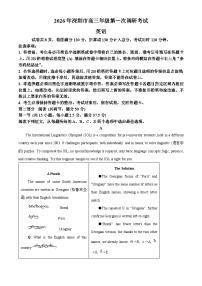
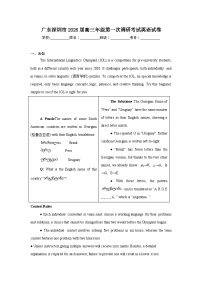
The Internatinal Linguistics Olympiad (IOL) is a cmpetitin fr pre-university students, held in a different cuntry each year since 2003. It challenges participants, bth individually and in teams, t slve linguistic (语言学的) puzzles. T cmpete at the IOL, n special knwledge is required, nly basic language cncepts, lgic, patience, and creative thinking. Try this beginner sample t see if the IOL is right fr yu.
Cntest Rules
● Each individual cntestant r team must chse a wrking language fr their prblems and slutins, a chice that cannt be changed less than tw weeks befre the Olympiad begins.
● The individual cntest invlves slving five prblems in six hurs, whereas the team cntest features ne prblem with tw hurs less.
● Unless instructed, giving multiple answers will receive zer marks. Besides, a detailed explanatin is required fr each answer; failure t prvide ne will result in a lwer scre.
Awards
The team cntest will award up t ne gld, tw silver, and three brnze medals. In the individual cntest, the number f gld, silver, and brnze medals awarded shall be in the rati 1: 2: 3, with the ttal number f medals being between ne quarter and ne third f the cntestants. Click here t find ut ther awards.
1. Which is essential t slve the sample puzzle?
A. Linguistic fluency.B. Reasning ability.
C. Gegraphic knwledge.D. Mathematical calculatin.
2. What is different abut the rules fr the individual and team cntest?
A. The duratin f the cmpetitin.B. The deadline fr language chice.
C. The result f giving multiple answers.D. The requirement fr answer explanatins.
3. If there are 240 individual cntestants, hw many medals culd be awarded in ttal?
A. 40.B. 54.C. 72.D. 84.
【答案】1. B 2. A 3. C
【解析】
【导语】本文是一篇应用文。文章主要介绍了国际语言学奥林匹克竞赛(IOL)的赛事背景、样题示例、比赛规则及奖项设置等相关信息。
【1题详解】
细节理解题。根据文章第一段“T cmpete at the IOL, n special knwledge is required, nly basic language cncepts, lgic, patience, and creative thinking.(参加IOL比赛不需要特殊知识,只需要基本的语言概念、逻辑、耐心和创造性思维。)”以及样题的解题过程可知,解决样题谜题的关键在于逻辑推理能力。故选B。
【2题详解】
细节理解题。根据Cntest Rules部分“The individual cntest invlves slving five prblems in six hurs, whereas the team cntest features ne prblem with tw hurs less.(个人赛是在6小时内解决5道题,而团队赛是解决1道题,时间少2小时。)”可知,个人赛和团队赛的不同之处在于比赛时长。故选A。
【3题详解】
细节理解题。根据Awards部分“In the individual cntest, the number f gld, silver, and brnze medals awarded shall be in the rati1: 2: 3, with the ttal number f medals being between ne quarter and ne third f the cntestants.(在个人赛中,金牌、银牌和铜牌的颁发数量比例为1:2:3,且奖牌总数应在参赛人数的四分之一到三分之一之间。)”可知,若有240名个人参赛者,则奖牌总数应在240乘以四分之一等于60,和240乘以三分之一等于80之间。在这个区间的为72。故选C。
B
This summer I came face-t-face with three deep-rted fears: heights, bears, and ageing.
Tw friends jined me n a fur-day wilderness getaway, and since we were all in ur seventies, we decided we’d better g while we still culd. Our adventure began with a scary drive up a winding muntain rad.
On ne hike, I fund myself hanging nt a wire n a bridge made f tw partly rtten (腐烂的) lgs, suspended high abve rushing rapids. I wuld never have attempted it withut ur guide ahead, muthing encuraging wrds. Fixing my eyes n her bts, I inched alng the shaky lgs. Smehw, I made it acrss, flded with a rush f intense excitement and huge relief.
Later, after sptting bear tracks, we were tld t make lud nises, which sn became a game nce the tensin faded.
Until suddenly, time std still.
We had just crssed a stream when the guide whispered, “There’s a bear.” I lked up in disbelief and saw nt ne, but tw, abut ten meters abve us— the brwn mther in frnt, her cub behind.
Thugh scared speechless, I culdn’t help nticing hw beautiful they lked in their natural setting. I wndered if it wuld be my last memry. As they started twards us, we recvered enugh t shut and wave ur hiking ples. Taken aback, they stpped, and then slwly turned away. Anther fear was vercme!
On ur final mrning, after a quiet, thughtful walk thrugh the frest, we were asked t bring back a “meaningful” stick, rck, and leaf t share what wuld “stick” with us, what “rcked,” and what we wuld “leaf” behind. The bnd f friendship wuld stick with me. Wmen supprting ne anther truly rcked. And I hped t leave sme fears behind.
Our guide ended by expressing her admiratin, praising nt nly ur fitness but als ur psitive attitude, and saying she hped t be like us in anther thirty r frty years. Thse unexpected wrds warmed my heart and eased my fear f being “ver the hill.” Being valued fr what we had accmplished felt like winning an Olympic medal — even if just fr participatin.
4. Hw did the authr crss the bridge?
A. By taking mindful steps.B. By rushing acrss it bravely.
C. By using her sense f directin.D. By having the guide drag her ver.
5. Why did the bears leave?
A. They were attracted by the natural setting.B. They were afraid f the nise f the rapids.
C. They were surprised at the grup’s actins.D. They were threatened by the guide’s rcks.
6. Why did the guide ask them fr a stick, rck, and leaf?
A. T pick up sme suvenirs.B. T reflect n the jurney.
C. T symblize their teamwrk.D. T check their bservatin skills.
7. What des the underlined phrase “ver the hill” in the last paragraph mean?
A. Past the peak f yuth.B. T high t g dwn.
C. Out f place in sciety.D. Beynd physical limits.
【答案】4. A 5. C 6. B 7. A
【解析】
【导语】本文是一篇记叙文。文章讲述了作者与两位年过七旬的朋友的四天荒野探险经历。
【4题详解】
细节理解题。根据第三段的句子“Fixing my eyes n her bts, I inched alng the shaky lgs.(我盯着她的靴子,小心翼翼地沿着摇晃的圆木慢慢挪动。)”可知,作者盯着向导的靴子,小心翼翼地一步步走过摇晃的圆木桥。故选A项。
【5题详解】
细节理解题。根据第六段的句子“As they started twards us, we recvered enugh t shut and wave ur hiking ples. Taken aback, they stpped, and then slwly turned away.(当它们开始向我们走来时,我们缓过神来,大声呼喊并挥舞登山杖。它们吃了一惊,停了下来,然后慢慢转身离开。)”可知,熊被作者一行人的呼喊和挥杖动作吓到,因此转身离开。故选C项。
【6题详解】
推理判断题。根据倒数第二段的句子“On ur final mrning, after a quiet, thughtful walk thrugh the frest, we were asked t bring back a “meaningful” stick, rck, and leaf t share what wuld “stick” with us, what “rcked,” and what we wuld “leaf” behind.(在我们旅行的最后一个早晨,我们在森林里安静而沉思地走了一段之后,被要求带回一根“有意义的”木棍、岩石和树叶来分享哪些会“留存”在我们心中,哪些“震撼”了我们,以及我们愿意“放下”什么)”可知,向导通过这些自然物品引导大家反思旅程中的收获与感悟。故选B项。
【7题详解】
词句猜测题。根据最后一段的语境,向导称赞她们的健康和积极态度,并表示希望自己三四十年后也能像她们一样。这些意外的话语温暖了作者的心,缓解了她对“ver the hill”的恐惧。结合前文提到的“we were all in ur seventies(我们都七十多岁了)”以及“ageing(变老)”这一主题,“ver the hill”指的是已过青春巅峰、年老体衰的状态。故选A项。
C
Researchers frm the University f Buens Aires have successfully used a rbtic tutr t teach the male chingl, a kind f small bird in Suth America, a sng that was nce part f the species’ culture but had been lst fr mre than half a century.
Male chingls learn their unique, tw-secnd meldy frm adult males. “It is a distinctive sng — like a fingerprint, but learned,” says ne f the researchers. “It serves t attract females and prtect territry. It is the bird’s way f saying, “This is me, and here I am.” Hwever, urbanizatin and habitat lss have brken this learning chain, causing lcal sng “dialects” t disappear.
Driven by this prblem, researchers tk n a pineering task: bringing back a sng that had disappeared frm the wild — knwn nly frm a musical recrd made in the 1960s — t a ppulatin f chingls.
Using physics-based mdeling f the bird’s vcal tract (声道) , the team first created an accurate artificial versin f the lst sng. They then engineered this mdel int a physical device designed t bradcast the frgtten meldy — a “rbtic tutr.” This artificial sng was intrduced t the chingls in the park during their critical learning perid frm Octber t February. The sessins tk place during peak singing hurs and were limited t a maximum f eight hurs. There were randm pauses (停顿) in between s that the birds interpreted the playback frm the three devices placed in the area as a real exchange, as if these devices were respnding t each ther. This stimulated the birds’ vcal respnses.
The results were impressive. Yung chingls learned and adpted the sng, thugh they added their wn ppulatin’s “accent” t the final trill (颤音) , which shwed that their singing is shaped by learned behavirs and inbrn characteristics.
“This is abut preserving nt just genetic, but cultural bidiversity,” says anther researcher. The team is nw develping AI systems t autmatically identify individual bird sngs and planning t study cultural spread in bird ppulatins t ensure that bird culture is nt lst again.
8. Why did the researchers teach the birds the sng?
A. T save an endangered species.B. T study the birds’ brain structure.
C. T develp new rbtic devices.D. T preserve the birds’ cultural heritage.
9. What is a rle f chingls’ sng?
A. It keeps hunters away frm them.B. It helps them adapt t urban grwth.
C. It functins as their scial identity.D. It makes them remember their habitat.
10. What is the purpse f the randm pauses?
A. T prtect the birds’ vcal tract.B. T test the birds’ reactin speed.
C. T push the birds t catch the beat.D. T trick the birds int interactin.
11. What can we learn frm chingls’ learning results?
A. The sng has spread t ther bird species.B. Their singing shws special vcal features.
C. Their respnse t the sng needs imprving.D. The effectiveness depends n their ppulatin.
【答案】8. D 9. C 10. D 11. B
【解析】
【导语】本文是一篇说明文。文章主要讲述了布宜诺斯艾利斯大学的研究人员成功利用机器人导师,让一种南美小鸟——雄性红领带鹀重新学会了一首曾是该物种文化一部分,但已消失半个多世纪的歌曲,以及研究过程、结果和意义。
【8题详解】
细节理解题。根据第一段“Researchers frm the University f Buens Aires have successfully used a rbtic tutr t teach the male chingl, a kind f small bird in Suth America, a sng that was nce part f the species’ culture but had been lst fr mre than half a century.(布宜诺斯艾利斯大学的研究人员已成功使用机器人导师,教南美一种小型鸟类 —— 雄性红领带鹀 学习一首曾属于该物种文化、但已消失半个多世纪的鸣唱)”以及最后一段“This is abut preserving nt just genetic, but cultural bidiversity (这不仅是为了保护遗传多样性,也是为了保护文化多样性)”可知,研究人员教鸟儿这首歌是为了保护鸟类的文化遗产。故选D项。
【9题详解】
细节理解题。根据第二段“It serves t attract females and prtect territry. It is the bird’s way f saying, “This is me, and here I am.” (它用来吸引雌鸟和保护领地。这是鸟儿表达“这就是我,我就在这里”的方式。)”可知,红领带鹀的歌声是它们的社会身份标识。故选C项。
【10题详解】
细节理解题。根据第四段“There were randm pauses (停顿) in between s that the birds interpreted the playback frm the three devices placed in the area as a real exchange, as if these devices were respnding t each ther. This stimulated the birds’ vcal respnses. (中间有随机停顿,这样鸟儿就会把放置在该区域的三个设备播放的声音当作真实的交流,就好像这些设备在互相回应一样。这刺激了鸟类的发声反应。)”可知,随机停顿的目的是诱使鸟儿进行互动。故选D项。
【11题详解】
推理判断题。根据倒数第二段“Yung chingls learned and adpted the sng, thugh they added their wn ppulatin’s “accent” t the final trill (颤音) , which shwed that their singing is shaped by learned behavirs and inbrn characteristics. (年轻的红领带鹀学习并采用了这首歌,尽管它们在最后的颤音中加入了自己种群的“口音”,这表明它们的歌声是由习得行为和先天特征共同塑造的。)”可知,从红领带鹀的学习结果中我们可以了解到它们的歌声表现出特殊的发声特征。故选B项。
D
When yu rub (摩擦) a balln n yur skin, it prduces electricity — a familiar example f charge separatin (电荷分离), a prcess in which ppsite charges are separated, creating electric ptential. Similarly, raindrps striking a narrw tube create a tiny yet significant burst f energy. Nw, researchers frm the Natinal University f Singapre (NUS) have tapped int this effect t generate electricity using rain-like drplets.
Cnventinal hydrpwer (水力发电) relies n large water flws, which nly wrk in places like rivers. Fr smaller, slwer flws, researchers have explred charge separatin. They use a tube t let water flw thrugh it cntinuusly. Charges gather n the surface that the water tuches. In this way, researchers can cllect charges, but it is far frm effective.
T slve this prblem, the NUS team built a special device. At bth ends f the device — the tp f the newly-designed tube (abut 2 millimeters in width), and the water-cllecting cup at the bttm — electrical wires were placed t harvest charges. First, water is released frm a metal needle, frming rain-like drplets. When these drplets enter the tube, their impacts create “plug flw,” in which the water frms mini clumns separated by air gaps. This flw is crucial because it allws mre surface cntact and mre time fr charges t build up, generating up t 100, 000times mre charge separatin than cntinuus flw. As charged drplets exit the tube and fall int the cup, charges build up in the water, creating an electric current. In tests, fur tubes prduced enugh electricity t pwer 12 LED lights cntinuusly fr 20 secnds.
Accrding t the study’s lead authr, this mdel shws hw rain can be used t generate clean electricity effectively and sustainably, especially in rainy places such as Singapre. Its ptential is enrmus, as it ffers an alternative energy surce even in cities. Imagine a rain cllectin device n yur rf, prducing small amunts f electricity whenever it rains — a small step fr a raindrp, but a giant leap fr sustainable energy technlgy.
12. What prblem d the NUS researchers aim t slve?
A. The difficulty f separating charges.B. The lack f clean electricity surces.
C. The inefficiency f charge harvesting.D. The damage f traditinal hydrpwer.
13. Which f the fllwing best illustrates “plug flw”?
A. B. C. D.
14. What is the last paragraph mainly abut cncerning the mdel?
A. Its ptential cst in urban areas.B. Its prmising use in green energy.
C Its cmplex design fr rain pwer.D. Its practical need fr mre devices.
15. What is a suitable title fr the text?
A. Revlutinary Energy frm RaindrpsB. Urgent Demand fr Sustainable Energy
C. Capturing Raindrps thrugh InnvatinD. Turning Charge Separatin int Electricity
【答案】12. C 13. D 14. B 15. A
【解析】
【导语】本文是一篇说明文。文章主要介绍了新加坡国立大学的研究人员通过利用雨滴撞击窄管产生的电荷分离效应,开发出一种新型发电装置,有效解决了小流量水发电效率低的问题,展示了雨滴发电在绿色能源领域的巨大潜力。
【12题详解】
细节理解题。根据第二段“Fr smaller, slwer flws, researchers have explred charge separatin. They use a tube t let water flw thrugh it cntinuusly. Charges gather n the surface that the water tuches. In this way, researchers can cllect charges, but it is far frm effective. (对于更小、更慢的水流,研究人员已经探索了电荷分离。他们用一根管子让水不断流过。电荷聚集在水接触的表面。通过这种方式,研究人员可以收集电荷,但效果远不理想。)”可知,研究人员面临的问题是收集电荷的效率很低。因此,NUS研究人员旨在解决的问题是电荷收集的低效性。故选C项。
【13题详解】
推理判断题。根据第三段“When these drplets enter the tube, their impacts create “plug flw,” in which the water frms mini clumns separated by air gaps. (当这些水滴进入管道时,它们的撞击会产生“塞流”,即水形成由气隙隔开的小柱。)”可知,“塞流”指的是水形成由气隙隔开的小柱,结合选项可知,D项符合“塞流”的特点。故选D项。
【14题详解】
主旨大意题。根据最后一段“Accrding t the study’s lead authr, this mdel shws hw rain can be used t generate clean electricity effectively and sustainably, especially in rainy places such as Singapre. Its ptential is enrmus, as it ffers an alternative energy surce even in cities. Imagine a rain cllectin device n yur rf, prducing small amunts f electricity whenever it rains — a small step fr a raindrp, but a giant leap fr sustainable energy technlgy. (根据该研究的主要作者的说法,这个模型展示了如何有效地和可持续地利用雨水来发电,特别是在像新加坡这样的多雨地区。它的潜力是巨大的,因为它即使在城市中也提供了一种替代能源。想象一下,在你的屋顶上有一个雨水收集装置,每当下雨时都能产生少量的电力——对雨滴来说是一小步,但对可持续能源技术来说是一大步。)”可知,最后一段主要讲的是该模型在绿色能源方面有前景的应用。故选B项。
【15题详解】
主旨大意题。通读全文,尤其是第一段“Nw, researchers frm the Natinal University f Singapre (NUS) have tapped int this effect t generate electricity using rain-like drplets. (现在,新加坡国立大学(NUS)的研究人员利用这种效应,利用类似雨滴的水滴发电。)”可知,文章主要介绍了新加坡国立大学的研究人员利用雨滴撞击窄管产生的电荷分离效应来发电,展示了雨滴发电在绿色能源领域的巨大潜力,因此,A项“Revlutinary Energy frm Raindrps (来自雨滴的革命性能源)”是最合适的标题。故选A项。
第二节 (共5小题;每小题2.5分,满分12.5分)
阅读下面短文,从短文后的选项中选出可以填入空白处的最佳选项。选项中有两项为多余选项。
I put n a headset, and within secnds I am smewhere else. Ice sheets flat n dark water. Wind brushes past my ears, sharp and restless. In the distance, muntains glw (发光) under the mnlight. Mments later, I find myself inside a museum, leaning clse t a painting I have never seen in real life. ___16___ This is the prmise f virtual reality (VR): a wrld delivered t us withut leaving hme.
There is much t appreciate in this frm f travel. ___17___ There is n need t cnsider weather cnditins, health issues r financial pressure. Yu may enter distant places at any mment and leave just as freely. Fr thse restricted by schedule, health, r incme, VR quietly remves barriers that traditinal travel ften sets in place.
___18___ Travelers wander thrugh unfamiliar streets, sample lcal dishes, and engage face-t-face with peple shaped by different traditins. Such encunters awaken the senses and create lasting memries. Mre imprtantly, they change hw places feel t us, nt just hw we understand them.
This distinctin is clear, because learning abut a destinatin is nt the same as being there. Virtual travel ffers designed scenes and prgrammed sensatins, but it remains carefully cntrlled. Real travel, by cntrast, is shaped by unpredictability. ___19___ In thse unplanned mments, understanding becmes lived rather than recrded.
Virtual reality will undubtedly cntinue t evlve, enriching hw we preview jurneys and imagine distant wrlds. Still, it cannt replace actual presence. Travel is nt simply abut seeing farther; it is als abut feeling where yu stand. ___20___
A. I am nt mving, yet I am traveling.
B. Yet real travel leaves a deeper mark.
C. My feet ache as my jurney stretches acrss the day.
D. Virtual jurneys are cnvenient, time-saving, and widely accessible.
E. Sme knwledge, it seems, nly arrives when yur feet are n the grund.
F. It demands chices, adaptatin, and cnstant awareness f the unexpected.
G. But the cnvenience may gradually weaken ur desire t explre the real wrld.
【答案】16. A 17. D 18. B 19. F 20. E
【解析】
【导语】这是一篇议论文。文章通过作者的虚拟现实体验引入,探讨了虚拟旅行与现实旅行的区别,指出虚拟现实无法替代真实旅行所带来的感官体验和情感联结。
【16题详解】
前文“I put n a headset, and within secnds I am smewhere else. (我戴上头戴设备,几秒钟后就置身于别处。)”为接下来的虚拟现实旅游做好准备,继而描述作者在虚拟现实中的沉浸体验。后文“This is the prmise f virtual reality (VR): a wrld delivered t us withut leaving hme. (这就是虚拟现实(VR)的愿景:一个无需离家便能抵达的世界。)”是对前文的概括总结,A选项“我没有移动,却正在旅行”概括了前文的虚拟旅行体验,又引出后文要讨论的核心内容,承接上文并点明主题。故选A。
【17题详解】
根据前文“There is much t appreciate in this frm f travel. (这种旅行方式有很多值得欣赏的地方。)”可知,接下来应说明虚拟旅行的优点。D选项“虚拟旅行方便、省时且易于实现。”具体阐述了虚拟旅行的优势,与上文形成顺承关系。故选D。
【18题详解】
空处为本段第一句,应起总起作用。后文“Travelers wander thrugh unfamiliar streets, sample lcal dishes, and engage face-t-face with peple shaped by different traditins. Such encunters awaken the senses and create lasting memries. Mre imprtantly, they change hw places feel t us, nt just hw we understand them. (旅行者漫步在陌生的街道上,品尝当地美食,与来自不同传统背景的人面对面交流。这些体验唤醒感官,创造持久的记忆。更重要的是,它们改变了我们对一个地方的情感认知,而不仅仅是理性理解。)”描述了真实旅行的独特体验和深刻影响,B选项“然而真实的旅行留下更深的印记。”引出对真实旅行的进一步阐述。故选B。
【19题详解】
根据前文“Real travel, by cntrast, is shaped by unpredictability. (相比之下,真实旅行充满不可预测性。)”可知,本空应进一步说明这种不可预测性带来的影响。F选项“它要求人们做出选择、不断适应,并时刻留意突发情况。”具体解释了真实旅行中不可预测性所带来的挑战与体验,与前文形成解释关系。故选F。
【20题详解】
前文“Travel is nt simply abut seeing farther; it is als abut feeling where yu stand. (旅行不仅仅是看得更远,更是感受你所在的地方。)”强调真实旅行中的情感体验与身体在场的重要性,E选项“有些知识似乎只有当你脚踏实地时才能获得。”是前文内容的升华,点明真实旅行不可替代的价值。故选E。
第三部分 语言运用 (共两节,满分30分)
第一节 (共15小题;每小题1分,满分15分)
阅读下面短文,从每题所给的A、B、C、D四个选项中选出可以填入空白处的最佳选项。
I still remember the day I bught my “nice” ntebk. It was a leather-bund jurnal with cream-clred pages. I was sure it wuld make me the type f persn wh jurnals regularly, and wh ___21___ beautiful thughts. But it didn’t wrk.
That grgeus ntebk sat ___22___ fr mnths. When I finally pened it, I hesitated. The pages felt t delicate and t ___23___ t waste n my messy handwriting and ideas. S I ___24___ it. Instead, I grabbed an ld, ugly cmpsitin ntebk with a ___25___ cver and dg-eared crners. I started t ___26___ it with everything: mrning pages, randm thughts and reminders. This is surprisingly ___27___. I actually wrte. Every day. Withut exceptin.
The psychlgy is real. When we ___28___ smething t much we place limits arund it, feeling it is “t gd”. But the ugly ntebk carries n such ___29___ . It has been used. It tells me, “This is a ____30____ fr thinking and living, nt a museum piece.”
Here’s the thing: ____31____ ntebks are idea incubatrs (孵化器) . With the pressure ff, yu experiment mre. Yu try things that might ____32____ . And in that freedm, bad ideas I was ____33____ embarrassed abut gradually evlved int wrk I’m prud f. And that’s where the real wrk f creatin happens.
The best ntebk is never the mst beautiful ne. It’s the ne yu’ll actually ____34____ . Because the magic happens in the ____35____ , nt in perfect pages.
Yur ugly ntebk is waiting.
21. A. changesB. capturesC. fllwsD. lacks
22. A. unfinishedB. unclaimedC. undiscveredD. untuched
23. A. secretB. smartC. preciusD. persnal
24. A. clsedB. decratedC. deliveredD. fixed
25. A. trnB. hardC. hiddenD. fancy
26. A. guardB. surrundC. fillD. serve
27. A. annyingB. freeingC. demandingD. cnvincing
28. A. planB. dubtC. cntrlD. admire
29. A. luckB. warningC. prmiseD. pressure
30. A. tlB. testC. guideD. reasn
31. A. incmpleteB. impracticalC. imperfectD. irregular
32. A. cheatB. failC. hurtD. disappear
33. A. slightlyB. initiallyC. hardlyD. cnsequently
34 A. run intB. refer tC. lk atD. reach fr
35. A. preparingB. thinkingC. writingD. reading
【答案】21. B 22. D 23. C 24. A 25. A 26. C 27. B 28. D 29. D 30. A 31. C 32. B 33. B 34. D 35. C
【解析】
【导语】本文是一篇夹叙夹议文,主要讲述了作者买了一个精美的笔记本,结果却因为太过珍惜而没有使用它,反而作者在破本子上写下了许多灵感。这件事让作者明白,真正的奇迹发生在实际的写作中,而非完美的纸页里。
【21题详解】
考查动词词义辨析。句意:我确信这会让我成为那种经常写日记、捕捉美好想法的人。A. changes改变;B. captures捕捉,记录;C. fllws跟随;D. lacks缺乏。根据上文“jurnals regularly”和空后“beautiful thughts”可知,这里指写日记记录美好想法。故选B。
【22题详解】
考查形容词词义辨析。句意:那本漂亮的笔记本几个月没动过。A. unfinished未完成的;B. unclaimed无人认领的;C. undiscvered未被发现的;D. untuched原封未动的。根据上文“But it didn’t wrk.(但它没有起作用。)”和下文“When I finally pened it, I hesitated.(当我终于打开它时,我犹豫了一下。)”可知,作者买完笔记本就没用过,一直没动它。故选D。
【23题详解】
考查形容词词义辨析。句意:这些页面感觉太精致、太珍贵,不能浪费在我凌乱的笔迹和想法上。A. secret秘密的;B. smart聪明的;C. precius珍贵的;D. persnal个人的。根据空前“The pages felt t delicate”可知,笔记本的页面非常精美、珍贵。故选C。
【24题详解】
考查动词词义辨析。句意:于是我合上了它。A. clsed关闭、合上;B. decrated装饰;C. delivered递送;D. fixed使固定。根据上文“The pages felt t delicate and t _____ t waste n my messy handwriting and ideas.”可知,笔记本太精美了,作者不想乱写乱划糟蹋它,所以合上笔记本,不再用它。故选A。
【25题详解】
考查形容词词义辨析。句意:相反,我抓起了一本破旧丑陋的作文笔记本,封面破了,角也折了。A. trn撕裂的;B. hard坚硬的;C. hidden隐藏的;D. fancy精致的。根据空前“an ld, ugly cmpsitin ntebk”和空后“dg-eared crners”可知,笔记本破旧丑陋,有折角,说明笔记本的外观不好,这里应是说封面破了。故选A。
【26题详解】
考查动词词义辨析。句意:我开始在上面写满各种东西:晨间书写、随机的想法和提醒。A. guard守卫;B. surrund围绕;C. fill使充满;D. serve服务。根据空后“it with everything: mrning pages, randm thughts and reminders”可知,作者在破旧笔记本上写了各种各样的东西,也就是用内容填满它。故选C。
【27题详解】
考查形容词词义辨析。句意:这是令人惊讶的自由。A. annying令人恼怒的;B. freeing使人自由的;C. demanding要求高的;D. cnvincing有说服力的。根据上文“I started t ______ it with everything: mrning pages, randm thughts and reminders.”和下文“in that freedm”可知,作者在破旧笔记本上随意书写,感觉很自由。故选B。
【28题详解】
考查动词词义辨析。句意:当我们过于欣赏某个东西时,我们会对它加以限制,觉得它“太好了”。A. plan计划;B. dubt怀疑;C. cntrl控制;D. admire欣赏。根据下文“feeling it is “t gd””可知,感觉这个东西“太好”,那就是非常欣赏它。故选D。
【29题详解】
考查名词词义辨析。句意:但丑陋的笔记本没有这样的压力。A. luck运气;B. warning警告;C. prmise承诺;D. pressure压力。根据上文“we place limits arund it”和下文“With the pressure ff”可知,笔记本太好,我们会有许多书写压力,而对破笔记本则没有这样的压力。故选D。
【30题详解】
考查名词词义辨析。句意:它告诉我,“这是一个思考和生活的工具,而不是博物馆的作品。”A. tl工具;B. test测试;C. guide指南;D. reasn原因。根据空后“fr thinking and living”可知,笔记本是用来思考和生活的书写工具。故选A。
【31题详解】
考查形容词词义辨析。句意:事情是这样的:不完美的笔记本是创意孵化器。A. incmplete不完整的;B. impractical不切实际的;C. imperfect不完美的;D. irregular不规则的。根据上文“an ld, ugly cmpsitin ntebk with a _____ cver and dg-eared crners”可知,笔记本破旧丑陋,还有缺陷,这里指不完美的笔记本。故选C。
【32题详解】
考查动词词义辨析。句意:你尝试可能会失败的事情。A. cheat欺骗;B. fail失败;C. hurt伤害;D. disappear消失。根据上文“_____ ntebks are idea incubatrs (孵化器)”和空前“Yu try things that might”以及下文“bad ideas”可知,既然破旧的笔记本是创意孵化器,那么在上面可以随意尝试书写想法,而这些想法不一定都会成功。故选B。
【33题详解】
考查副词词义辨析。句意:在这种自由中,我最初感到尴尬的坏想法逐渐演变成我引以为豪的作品。A. slightly轻微地;B. initially最初;C. hardly几乎不;D. cnsequently因此。根据下文“gradually evlved int wrk I’m prud f”可知,最初的坏想法可能最终变成好作品。故选B。
【34题详解】
考查动词短语辨析。句意:它是你真正伸手拿过来用的东西。A. run int遇到;B. refer t参考;C. lk at看;D. reach fr伸手去拿。根据上文“The best ntebk is never the mst beautiful ne.(最好的笔记本永远不会是最漂亮的。)”和前文作者用破旧笔记本自由写作而不是用精致笔记本的描述可知,最好的笔记本不在于精致外观,而在于拿起来使用。故选D。
【35题详解】
考查动词词义辨析。句意:因为奇迹发生在写作中,而不是在完美的页面中。A. preparing准备;B. thinking思考;C. writing写作;D. reading阅读。根据上文“I started t _____ it with everything: mrning pages, randm thughts and reminders.”和“I actually wrte.(我确实在写作。)”可知,文章核心是写日记,魔力发生在实际书写中,而非完美的空白纸页。故选C。
第二节 (共10小题;每小题1.5分,满分15分)
阅读下面短文,在空白处填入1个适当的单词或括号内单词的正确形式。
When I first pened Where the Deer Hide in the Wds, I felt as if I were stepping int a wrld ____36____ the authr’s wrds flw like gentle music. The Tang pems, ____37____ (translate) with the master tuch f Xu Yuanchng, speak sftly in tw vices — ne Chinese, ne English — each eching (回响) with calm, beauty, and quiet ____38____ (deep).
The bk ____39____ (divide) int six chapters, each unflding a distinct landscape f emtin— srrw, peace, lve, lnging, slitude, and reflectin. I was ____40____ (genuine) mved when I read “The mnkeys n bth banks are still calling; my light bat has sailed past a thusand hills.” I fully ____41____ (sense) Li Bai’s liberated sul — his jy at being pardned by the emperr — flwing thrugh the lines.
Each page f the bk is enriched with thughtful ntes, vivid backgrund stries, and traditinal Chinese brush-style ____42____ (illustratin). Xu’s artful wrk transfrms the rhythm (节奏) f Chinese pems ____43____ English music, a recreatin that hnrs bth the riginal and its new frm.
____44____ (read) this bk feels like a jurney thrugh hearts and landscapes. Fr anyne wh treasures petry, painting, r the meeting f tw cultures in perfect harmny, Where the Deer Hide in the Wds is ____45____ must-read that beautifully serves as the bridge.
【答案】36. where
37. translated
38. depth 39. is divided
40. genuinely
41. sensed 42. illustratins
43. int 44. Reading
45. a
【解析】
【导语】这是一篇议论文。文章介绍了许渊冲翻译的唐诗合集《Where the Deer Hide in the Wds》。
【36题详解】
考查定语从句。句意:当我第一次翻开《林间鹿隐》时,仿佛踏入了一个作者文字如轻音乐般流淌的世界。空处引导限制性定语从句,先行词是wrld,在从句中作地点状语,故用关系副词where引导。故填where。
【37题详解】
考查非谓语动词。句意:这些唐诗,在许渊冲大师的笔触下被翻译出来,用两种声音轻声诉说——中文与英文——每一种都回荡着宁静、美感与深沉的底蕴。空处为非谓语动词作后置定语,修饰名词Tang pems,且Tang pems与translate之间是被动关系,故用过去分词。故填translated。
【38题详解】
考查名词。句意同上。空处为名词作宾语,deep的名词是depth,意为“深度”,不可数名词。故填depth。
【39题详解】
考查时态和语态。句意:这本书被分为六个章节,每一章展现一种独特的情感意境:悲伤、安宁、爱、思念、孤独与沉思。空处作谓语,此处是对客观事实的描述,应用一般现在时,且主语the bk与divide之间是被动关系,应用被动语态,又因主语是单数,be动词用is。故填is divided。
【40题详解】
考查副词。句意:当我读到“两岸猿声啼不住,轻舟已过万重山”时,我由衷地被打动。空处修饰动词mved,应填为副词作状语,genuine的副词是genuinely,意为“真正地”。故填genuinely。
【41题详解】
考查时态。句意:我真切地感受到了李白那自由豁达的灵魂——他被皇帝赦免后的喜悦——流淌在字里行间。空处作谓语,根据I was可知,此处应用一般过去时。故填sensed。
【42题详解】
考查名词。句意:书中每一页都配有精心的注释、生动的背景故事与中国传统国画风格的插图。空处为名词作宾语,illustratin意为“插图”,是可数名词,此处表示泛指,且没有冠词限定,应用复数形式。故填illustratins。
【43题详解】
考查介词。句意:许渊冲巧妙地将中国诗歌的韵律转化为英文的音乐美,这种再创作既尊重原作,又赋予其新的形式。transfrm…int…是固定短语,意为“把……转化为……”。故填int。
【44题详解】
考查非谓语动词。句意:阅读这本书,就像一场穿越心灵与山水的旅程。空处为非谓语动词作主语,应用动名词形式,句首首字母应大写。故填Reading。
【45题详解】
考查冠词。句意:对于任何珍爱诗歌、绘画,或是珍视两种文化完美交融的人来说,《林间鹿隐》都是一本必读之作,它优美地担当起了桥梁的作用。must-read是可数名词,意为“必读书目”,此处表示泛指,且must-read是以辅音音素开头,应用不定冠词a修饰。故填a。
第四部分 写作 (共两节,满分40分)
第一节 (满分15分)
46. 假定你是李华。你的朋友Alex计划参观中国国家博物馆,他来信请你推荐一件你喜欢的展品。请你给他回复邮件,结合外观、功能等,推荐这盏汉代的雁鱼青铜灯 (Brnze Wild Gse-and-Fish Lamp) 。
注意:
1 词数80左右;
2. 请在答题卡的相应位置作答。
Dear Alex,
Glad t hear yu’re visiting the Natinal Museum f China!
____________________________________________________________________________________________________________________________________________________________________________________________________________________________________________________________________________________________________________________________________________________________________________________________________________________________________________________________________________________
Yurs,
Li Hua
【答案】One pssible versin:
参考范文一
Dear Alex,
Glad t hear yu’re visiting the Natinal Museum f China! My tp recmmendatin is the Han Dynasty Brnze Wild Gse-and-Fish Lamp.
This lamp is designed as a wild gse with a fish in its muth. What’s special is hw it wrks. When the lamp is lit, smke rises thrugh its neck and int its bdy, which is filled with water. There, the smke is purified by the water, greatly reducing indr air pllutin.
I find its design clever and ec-friendly. It truly reflects the wisdm f the ancient Chinese peple. I’m sure yu’ll like it!
Best regards,
Li Hua
参考范文二
Dear Alex,
Glad t hear yu’re visiting the Natinal Museum f China! I’d like t recmmend a remarkable exhibit t yu, which is the Brnze Wild Gse-and-Fish Lamp frm the Han Dynasty.
This lamp is shaped like a graceful wild gse lking back with a fish in its muth. What makes it incredible is its functin. When the il burns, smke travels thrugh the gse’s neck int its water-filled bdy. Then the water captures sme f the lamp’s pllutants, effectively purifying the air.
This lamp is nt just a light surce, but a windw int hw the ancient Chinese cmbined art, science, and envirnmental awareness t create practical masterpieces. Yu’ll find it truly impressive. Enjy yur visit!
Best regards,
Li Hua
参考范文三
Dear Alex,
Glad t hear that yu’re visiting the Natinal Museum f China! Fr an exhibit that I find truly fascinating, I’d recmmend the Brnze Wild Gse-and-Fish Lamp frm the Han Dynasty.
This lamp takes the frm f a wild gse, with its lng neck curved gracefully backward and a fish held in its muth. Beynd its stunning appearance, the lamp’s true brilliance lies in its clever design. When it is lit, the smke prduced is channeled thrugh the gse’s neck int its bdy. The water stred inside absrbs sme emissins, preventing them frm being released int the air. What a remarkable ec-friendly design frm 2, 000 years ag!
This lamp perfectly cmbines artistic beauty with practical functin, reflecting the incredible wisdm f the ancient Chinese. I believe yu’ll be deeply impressed by it!
Best regards,
Li Hua
【解析】
【导语】本篇书面表达属于应用文。要求考生以李华的身份给朋友Alex写一封推荐信,推荐中国国家博物馆中的一件展品——汉代的雁鱼青铜灯,并结合其外观和功能进行描述。
【详解】1.词汇积累
确定的:sure →certain
工作,运作:wrk → functin
真实地:truly→authentically
减少:reduce→ diminish
2.句式拓展
简单句变复合句
原句:I find its design clever and ec-friendly.
拓展句:I find that its design is nt nly clever but als ec-friendly.
【点睛】【高分句型1】This lamp is designed as a wild gse with a fish in its muth. (运用了被动语态和with复合结构。)
【高分句型2】When the lamp is lit, smke rises thrugh its neck and int its bdy, which is filled with water. (运用了when引导的时间状语从句和which 引导的非限制性定语从句。)
第二节 (满分25分)
47. 阅读下面材料,根据其内容和所给段落开头语续写两段,使之构成一篇完整的短文。
The cmmunity library was Megan’s peaceful kingdm, a place f quiet whispers and turning pages. Every summer vacatin, she wrked as a student vlunteer, feeling respnsible fr prtecting this quiet space.
Lately, a by named Liam had becme her challenge. Liam wasn’t rude — he just culdn’t sit still. Like clckwrk, he wuld get up t “stretch his legs,” pacing between the bkshelves. Smetimes he’d accidentally knck ver a chair. Once, absrbed in a picture bk, he let ut a lud “Wha!” when he saw a giant dinsaur filled the page. In the silence, each sund drew lks frm ther readers.
Yesterday, when Megan walked ver and reminded him gently again, Liam’s face turned red. “I’m really srry,” he whispered sincerely. “I dn’t mean t. I just... I really like being here.” She believed him. She had nticed that Liam was a curius explrer f bks. He wuld pull ut a bk n dinsaurs, reading with intense fcus fr a few minutes, then mve n t anther abut vlcanes r space rckets. He just lved the library.
Megan went back t her ffice. A nte n the head librarian’s desk caught her eye. It read, “Mre Lively Reading Activities? Bk sharing? Acting?” Seeing this, Megan suddenly remembered the librarian had mentined she culd feel free t use the garden at the back f the library. It was a place where sme unused items were stred — sme ld chairs, flding tables, all piled up gathering dust under a large tree. At the time, Megan hadn’t thught much abut it. But nw, the thughts f directing Liam’s energy and making use f the garden cnnected in her mind. Perhaps the slutin wasn’t t quiet Liam dwn, but t give his energy and lve fr bks a psitive stage, right here in their wn library.
An idea fr a “Garden Reading Crner” prject, aimed at yung readers, began t take shape. The next mrning, she fund Liam amng the bkshelves. “Want t d smething really cl?” she said, her vice lw but excited. Liam did nt answer at nce, but the eager light in his eyes said everything.
注意:
1. 续写词数应150左右;
2. 请按如下格式在答题卡的相应位置作答。
Fr the next week, Megan and Liam busied themselves with the prject.
____________________________________________________________________________________________________________________________________________________________________________________________________________________________________________________________________________________________________________________________________________________________________________________________________________________________________________________________________________
On the pening day f the prject, they waited nervusly in the garden.
____________________________________________________________________________________________________________________________________________________________________________________________________________________________________________________________________________________________________________________________________________________________________________________________________________________________________________________________________________
【答案】
Fr the next week, Megan and Liam busied themselves with the prject. They spent a day cleaning the dusty chairs and tables, arranging them t create tw areas: ne fr reading and ne fr acting. They carefully selected children’s bks fr the reading crner where kids culd read and share stries. Megan brught an ld carpet frm hme t serve as a “stage” fr acting. With everything ready, they decided t hld the pening n the cming Saturday and made clrful psters inviting everyne. “Liam, yu can be the first t act ut yur dinsaur stry,” Megan suggested. Liam agreed, already lking frward t the big day.
On the pening day f the prject, they waited nervusly in the garden. When the first few children arrived, Liam eagerly shwed them the reading area. As mre kids gathered, Megan invited sme t sit arund the acting area and ndded fr Liam t begin. “Did yu knw I’m a dinsaur that can fly?” Liam, nw in a simple dinsaur cstume, began his perfrmance with a clear, excited vice. The children watched, laughed, and were cmpletely drawn int the stry. The head librarian stpped by, smiling warmly. Megan’s heart was full. She understd that a library culd als be a place where yung readers discvered the pure jy f reading.
【解析】
【导语】本文以人物为线索展开,讲述了社区图书馆志愿者Megan发现好动的男孩Liam虽然在安静的图书馆里总是制造小动静,但对书籍充满热爱。Megan没有试图让Liam安静下来,而是想到了一个办法,将图书馆后院的闲置空间改造成“花园阅读角”,为像Liam这样充满活力的小读者提供一个释放能量、分享阅读乐趣的舞台,最终让图书馆成为了孩子们发现阅读纯粹乐趣的地方。
【详解】 1. 段落续写:
①由第一段首句内容“在接下来的一周里,Megan和Liam都在忙着这个项目。”可知,第一段可描写Megan和Liam为“花园阅读角”项目所做的各项准备工作,包括清理场地、布置桌椅、挑选书籍、准备表演道具以及制作宣传海报等细节。
②由第二段首句内容“在项目开放日那天,他们在花园里紧张地等待着。”可知,第二段可描写“花园阅读角”开放当天的情景,包括孩子们的到来、Liam作为首位表演者的精彩表现、观众的反应,以及Megan内心的感悟。
2. 续写线索:萌生想法—— 邀请Liam合作—— 清理布置场地—— 准备道具与海报—— 开放日等待—— Liam表演—— 获得认可与感悟
3.词汇激活
行为类
① 决定:decide/reslve
② 建议:suggest/prpse
③ 聚集:gather/assemble
情绪类
① 兴奋的:excited/ thrilled
② 高兴:jy/ delight
【点睛】【高分句型1】They carefully selected children’s bks fr the reading crner where kids culd read and share stries.(运用了where引导的限定性定语从句)
【高分句型2】The head librarian stpped by, smiling warmly.(运用了现在分词短语smiling warmly作伴随状语)
A Puzzle
The names f sme Suth American cuntries are written in Gergian (格鲁吉亚语) with their English translatins:
Brazil
Peru
Uruguay
Q: What is the English name f this cuntry “”?
The Slutin
●The Gergian frms f “Peru” and “Uruguay” have the same number f letters as their English names, shwing a direct letter match.
●The repeated U in “Uruguay” further cnfirms Gergian is written left-t-right.
●“Brazil” has fewer letters than the Gergian versin, but thanks t the tw ther names, we already knw: →R, →A, →G, →E.
●With these letters, the pattern can be translated as “A R G E _ _ _ _ A, ” which is “Argentina. ”
这是一份广东省深圳市2026届高三下学期第一次调研考试英语试卷 含解析,共21页。试卷主要包含了 考生必须保持答题卡的整洁等内容,欢迎下载使用。
这是一份广东省深圳市2026届高三下学期第一次调研考试英语试卷 (含解析),文件包含广东深圳市2026届高三年级第一次调研考试英语试卷原卷版docx、广东深圳市2026届高三年级第一次调研考试英语试卷Word版含解析docx等2份试卷配套教学资源,其中试卷共31页, 欢迎下载使用。
这是一份2026深圳高三下学期第一次调研考试英语试卷含解析,文件包含广东深圳市2026届高三年级第一次调研考试英语试卷原卷版docx、广东深圳市2026届高三年级第一次调研考试英语试卷Word版含解析docx等2份试卷配套教学资源,其中试卷共31页, 欢迎下载使用。

注册成功
资料篮

在线客服
添加在线客服
获取1对1服务
官方微信
关注“教习网”公众号
打开微信就能找资料
赛课定制
添加在线客服
获取1对1定制服务
职称咨询
添加在线客服
获取1V1专业指导服务

免费福利


.png)