 免费领取教师福利


若您为此资料的原创作者,认为该资料内容侵犯了您的知识产权,请扫码添加我们的相关工作人员,我们尽可能的保护您的合法权益。


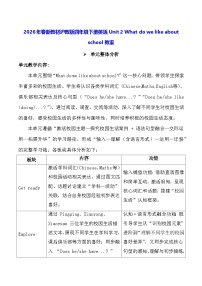
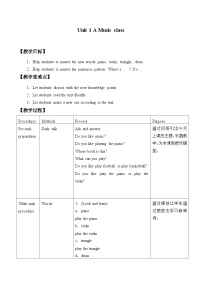
这是一份小学英语沪教牛津版(六三制一起)(2024)四年级下册(2024)Unit 4 How can we make music?教学设计及反思,共22页。教案主要包含了教学目标,教学重难点,教学过程设计,作业设计等内容,欢迎下载使用。
单元教学内容:
本单元围绕“Hw can we make music?”核心问题展开,引导学生认识多种乐器(triangle, vilin, pian 等),了解音乐制作的多元方式,包括使用专业乐器和日常物品。掌握核心词汇(乐器类、动作类)和句型(“I am (ding)... ”“We are (ding)... ”“He/She isn't (ding)... ”),通过实践、合作、创作等活动,感受音乐的乐趣,激发音乐表达的积极性。
单元学习遵循“激活乐器主题—探究音乐制作案例+语法融合—交际运用—拓展升华”的逻辑链,各板块功能如下:
单元教学目标
教学过程设计
Get ready 教学设计
一、教学目标
1. 听、说、认读词汇:triangle, vilin, pian, guitar, erhu, flute, pipa, drum, musical instrument, play, hit。
2. 正确使用句型“He/She is playing the... ”“They are playing the... ”描述乐器演奏。
3. 建立“乐器名称—外形—发声动作”的关联认知(如 drum → hit)。
4. 激发对音乐和乐器的兴趣,愿意用英语谈论乐器。
5. 情境任务:制作“乐器卡片”(含乐器图片 + 1 句演奏描述):“She is playing the pian.”
二、教学重难点
重点:乐器词汇的认读与记忆;基础句型“He/She is playing the... ”的初步运用。
难点:部分乐器词汇的发音(如 vilin, triangle, pipa);“play + 乐器”的固定搭配(play the pian 而非 play pian)。
三、教学过程设计
(一)导入:激活经验,建立语境
活动1:Listen and guess(听音辨器)
过程:① 教师播放不同乐器的声音片段(如钢琴、鼓、小提琴),让学生猜测乐器名称。② 学生用中文或英文回应,教师顺势呈现对应的英文词汇和乐器图片。③ 教师领读词汇,强调发音要点(如 vilin 注意 /ˌvaɪəˈlɪn/ 的发音,pipa 直接读 /ˈpiːpə/)。
语言:T: Listen t the sund. What instrument is it? Ss: 钢琴!T: Yes! It’s a pian. Read after me: pian, pian. Ss: pian, pian.
活动2:Talk abut familiar instruments(谈论熟悉的乐器)
过程:① 教师示范:“I can see a guitar in ur classrm. Smene is playing the guitar.” ② 学生结合自身经验,分享见过或听过的乐器。③ 教师引导学生用英语关键词回应,如学生说“我见过二胡”,教师补充:“It’s an erhu. Peple play the erhu.”
语言:T: What instruments have yu seen? S1: 二胡。T: Great! It’s an erhu. Play the erhu. Read after me: erhu, erhu.
(二)新知呈现:词汇与句型输入
活动1:Lk, pint and say(看图指说)
过程:① 课件按顺序呈现乐器图片、词汇及对应的发声动作(如 drum 配“hit”动作图),播放录音。② 学生边听录音,边快速指出对应的图片,模仿发声动作。③ 分组竞赛:教师展示乐器图片,小组抢答词汇和动作,答对加分。
语言:T: Lk at the picture. “vilin” Pint! Ss: (指向小提琴图片)vilin! T: Hw d we play it? Ss: (模仿拉琴动作)Play the vilin!
活动2:Match instruments and actins(乐器与动作匹配)
过程:① 课件呈现乐器词汇和动作词汇(play, hit, blw)。② 学生小组讨论,将乐器与对应的发声动作匹配(如 flute → blw, drum → hit, pian → play)。③ 集体核对答案,教师引导学生用句型描述:“We hit the drum.”“We play the pian.”
语言:T: Match the instrument with the actin. Let’s check: We blw the flute. Crrect! We hit the triangle. Yes!
活动3:Rle-play - “I’m a Musician”(角色扮演)
过程:① 教师给学生分发乐器卡片,学生手持卡片模仿演奏动作。② 教师提问:“What are yu playing?” 学生回应:“I’m playing the erhu.” ③ 学生两人一组,轮流提问和回应,教师巡视纠错。
语言:T: What are yu playing? S2: I’m playing the guitar. (做弹吉他动作)T: Perfect! What abut yu? S3: I’m playing the drum. (做敲鼓动作)
(三)输出:练习巩固,表达自我
活动1:Quick respnse(快速回应)
过程:① 教师展示乐器图片,学生快速说出对应的词汇和动作(如展示 pian 说“play the pian”)。② 教师说动作和乐器组合(如“hit the drum”),学生快速做出动作。③ 增加难度:教师提问“What is she playing?” 学生快速回应“She is playing the... ”
语言:T: (展示 flute 图片)Ss: flute, play the flute! T: “blw the flute!” Ss: (做吹气动作)T: “What is he playing?” S4: He is playing the pipa.
活动2:Draw and intrduce(绘画介绍)
过程:① 学生用3分钟画出自己最喜欢的一种乐器,标注乐器名称。② 教师巡视,对绘画困难的学生提供简笔画模板。③ 邀请4-5名学生上台展示,用句型介绍:“This is a vilin. She is playing the vilin.”
语言:T: Draw yur favrite instrument. Write the wrd. Shw us yur picture! S5: This is a drum. They are hitting the drum. T: Great! Clear and crrect.
活动3:Fill in the blanks(填空练习)
过程:① 课件呈现句型框架,学生根据提示填空:“She is playing the ______. He is playing the ______.” ② 同桌互查答案,教师抽查并点评,强调“play + the + 乐器”的搭配。
语言:T: Fill in the blanks. Remember: play + the + instrument. Let’s read Lucy’s answer: “She is playing the pian. He is playing the guitar.” Perfect!
四、作业设计
1. Read the wrds and phrases.
2. Draw a “My Favrite Musical Instrument” picture and write a sentence: “He/She is playing the... ”
Explre 教学设计
一、教学目标
1. 能理解并朗读“Let's make music!”的文本,提取学生制作乐器的材料、动作及音乐会结果等关键信息。
2. 能听懂并运用现在进行时句型“I am (ding)... ”“We are (ding)... ”“He/She isn't (ding)... ”描述正在进行的动作。
3. 能结合文本内容,用简单语言说明“如何用日常物品制作音乐”(如“They use jars and candies t make music.”)。
4. 感知字母组合“c, gr”的发音(如 circle, green, guitar),能认读含该发音的单词。
二、教学重难点
重点:理解现在进行时的用法;提取并梳理文本中“问题—解决方案—结果”的逻辑线索。
难点:正确使用现在分词形式(play→playing, hit→hitting);在语境中区分现在进行时的肯定式和否定式。
三、教学过程设计
(一)热身复习
活动1:词汇与句型回顾
过程:① 课件快速展示乐器词汇和演奏动作图片,学生抢答,教师纠正发音和搭配错误。② 集体操练基础句型:“She is playing the flute. They are hitting the drum.” ③ 过渡提问:“If we dn’t have musical instruments, can we make music? Let’s find ut in the text.” 引出文本主题。
语言:T: “pipa!” Ss: pipa! T: “What is she playing?” Ss: She is playing the pipa. T: N instruments, n music? Let’s read the stry.
活动2:Chant 导入
过程:① 播放 Grammar in use 中的歌谣“Making music”,学生跟唱。② 提问歌谣中的关键信息:“What is the speaker playing?” “What aren’t they playing?” 引导学生用现在进行时回应。③ 强调歌谣中的现在分词形式(playing, hitting)和句型结构。
语言:T: Listen t the chant. What is the speaker playing? Ss: He is playing the triangle. T: What aren’t they playing? Ss: They aren’t playing the triangles.
(二)探究文本:音乐制作故事
活动1:Read and match(问题与解决方案匹配)
过程:① 课件呈现文本中的3个问题和3个解决方案(参考文本中的 Prblem 和 Slutin)。② 学生默读文本1分钟,将问题与对应的解决方案匹配。③ 集体核对答案,教师引导学生朗读文本中对应的关键句子。
语言:T: Read the text. Match the prblems with the slutins. Let’s check: The students can’t play prfessinal instruments. S they make sme musical instruments. Crrect!
活动2:Answer the questins(问题探究)
过程:① 课件呈现问题:“What d the students use t make musical instruments?” “Why d they ask Mrs King fr help?” “Hw is the cncert at last?” ② 学生再次阅读文本,寻找答案,小组讨论后举手回答。③ 教师将关键信息板书在“问题—材料—结果”表格中。
语言:T: What d the students use t make musical instruments? S1: They use jars, candies, buckets and pts. T: Why d they ask Mrs King fr help? S2: Because they dn’t sund beautiful tgether.
活动3:Find the key sentences(寻找关键句)
过程:① 学生在文本中找出描述制作乐器和音乐会场景的关键句子(“We're using jars and candies.” “These buckets and pts are ur drums.” “Peple are clapping their hands.”)。② 教师领读句子,引导学生体会现在进行时的用法(描述正在发生的动作)。③ 学生分组朗读文本片段,模仿语气和情感。
语言:T: Find the sentences abut making instruments. Ss: “We're using jars and candies. Oscar and Fay are shaking them.” T: Find the sentences abut the cncert. Ss: “Peple are clapping their hands. What a wnderful cncert!”
(三)语法操练:现在进行时运用
活动1:Fill in the blanks with -ing frm(用现在分词填空)
过程:① 课件呈现文本中的关键句子,空出动词部分(如 “They are ______ (use) jars and candies.” “Craig is ______ (hit) the pts.”)。② 学生独立填空,同桌互查。③ 教师讲解现在分词变化规则(一般动词加 -ing,如 play→playing;重读闭音节双写尾字母加 -ing,如 hit→hitting)。
语言:T: Fill in the blanks with the right frm. Let’s check: “They are using jars and candies.” Crrect! “Craig is hitting the pts.” Yes!
活动2:Lk, ask and answer(看图问答)
过程:① 课件呈现不同学生演奏自制乐器的图片(如摇罐子、敲桶、拍手)。② 学生两人一组,轮流提问:“What are they ding?” 对方回答:“They are shaking the jars.” ③ 邀请2-3组上台展示。
语言:T: Pair wrk! Ask and answer abut the pictures. Grup 1, yur turn. S3: What are they ding? S4: They are hitting the buckets. They are making music.
活动3:Rle-play - “Making Music Tgether”(角色扮演)
过程:① 学生分组,每组分配不同的“自制乐器”道具(如罐子、尺子、铅笔盒)。② 学生模仿文本中的场景,一边做动作一边用现在进行时描述:“I’m shaking the jar. She is hitting the ruler.” ③ 教师巡视,鼓励学生大胆创新动作和表达。
语言:Grup 2 (S5): I’m shaking the candies in the jar. S6: I’m hitting the pencil bx. We are making music!
(四)语音学习:字母组合“c, gr”的发音
活动1:Listen and find(听辨发音)
过程:① 课件呈现含“c, gr”的单词(circle, cat, guitar, green, grape)及对应图片。② 播放单词录音,学生跟读,感受发音特点(“c”在 circle 中发 /s/,在 cat 中发 /k/;“gr”发 /ɡr/)。③ 教师用手势辅助记忆(如“gr”双手握拳做“生长”状,发出 /ɡr/ 音)。
语言:T: Listen t the wrds: circle, cat. “c” has tw sunds: /s/ and /k/. Read after me: /s/ circle. Ss: /s/ circle. T: guitar, green. /ɡr/ guitar. Ss: /ɡr/ guitar.
活动2:Read and srt(发音分类)
过程:① 课件呈现含“c, gr”的单词,学生根据发音将单词分为 /s/, /k/, /ɡr/ 三类。② 小组讨论后核对答案,集体朗读分类后的单词,强化发音记忆。
语言:T: Srt the wrds by their sunds. “circle” ges t /s/. “cat” ges t /k/. “green” ges t /ɡr/. Let’s read all the wrds tgether.
四、总结与作业
课堂总结:教师引导学生回顾本节课核心内容:“Tday we learned abut hw Maddie and her classmates make music with daily things. We can use ‘I am ding... ’ t talk abut what is happening nw.” 学生集体复述核心句型。
作业设计:
Read Explre frm Student’s Bk 4B n Page 34-35.
Write 3 sentences abut making music: “They are using... ”“He is hitting... ”“We are making music with... ”
Cmmunicate 教学设计
一、教学目标
1. 能运用“What is he/she ding? ”“What are they ding? ”句型完成对演奏场景的观察和描述,准确记录信息。
2. 能根据观察结果,口头描述他人正在进行的乐器演奏,包含乐器名称和演奏动作。
3. 能模仿写作模板,完成一篇简单的乐器介绍短文,语句通顺,信息完整。
4. 培养合作表演和大胆表达的能力,感受音乐制作的乐趣。
二、教学重难点
重点:运用现在进行时句型完成观察描述;根据提示仿写乐器介绍。
难点:在表演和描述中灵活运用现在进行时的肯定式和否定式;写作中准确使用“play + 乐器”搭配和相关动作词汇。
三、教学过程设计
(一)热身复习
活动1:Review the句型
过程:① 教师播放学生演奏乐器的短视频(无声音),学生用句型“What is he/she ding? He/She is playing the... ”描述。② 邀请1名学生上台模仿演奏动作,其他学生提问,该学生回答。③ 集体点评,纠正表达错误(如遗漏 the、现在分词形式错误)。
语言:T: Lk at the vide. What is she ding? Ss: She is playing the erhu. T: Tm, act like playing the guitar. Ss: What is he ding? Tm: He is playing the guitar.
活动2:Listen and match(听力练习)
过程:① 播放 Cmmunicate A 中“We lve making music”的听力材料。② 学生根据听力内容,将人物与对应的演奏乐器及动作匹配(如 Zhng Yu → playing the big drum)。③ 集体核对答案,学生用句型描述:“Zhng Yu is playing the big drum.”
语言:T: Listen t the tape. Match the peple with their instruments. Let’s check: What is Li Wen ding? Ss: She is playing the flute.
(二)表演准备:明确任务与练习
活动1:Learn the perfrmance task(明确表演任务)
过程:① 课件呈现表演任务:“Our Cncerts”,要求小组合作,选择一种乐器(或自制乐器),进行30秒的模拟演奏,并能用英语描述表演内容。② 学生分组讨论,确定乐器和表演形式,分配角色(演奏者、描述者)。③ 教师提供句型参考:“He is playing the... ”“They are hitting the... ”“We are making beautiful music.”
语言:T: Tday we’ll have a class cncert. Each grup chses an instrument. One student plays, thers describe. Use the sentences n the screen.
活动2:Practice the perfrmance(模拟表演)
过程:① 各小组进行5分钟排练,教师巡视指导,纠正语言表达和动作配合。② 邀请1组进行试表演,其他学生认真观看,评价表演是否清晰、描述是否准确。③ 教师针对试表演进行点评,提出改进建议(如描述时加上动作细节:“She is playing the pian gently.”)。
语言:Grup 3 (Describer): He is playing the guitar. He is hitting the strings. T: Gd! Yu can say “He is playing the guitar. His fingers are mving quickly.”
(三)班级音乐会:表演与交流
活动1:Grup perfrmance(小组表演)
过程:① 各小组依次上台进行表演,演奏者做动作,描述者用英语描述表演内容,时间控制在30秒内。② 其他学生认真观看,表演结束后鼓掌鼓励。③ 教师在旁协助,及时纠正明显的语言错误。
语言:Grup 4 (Describer): We are playing the drums. We are hitting the buckets. Listen! The sund is great. Ss: (鼓掌)
活动2:Guess the instrument(猜乐器)
过程:① 邀请1名学生上台,背对全班模仿某种乐器的演奏动作,不说话。② 其他学生用句型“What is he/she playing? ”提问,表演者只能用“Yes”或“N”回应。③ 猜对的学生获得小奖励,继续上台模仿。
语言:S1: (模仿拉小提琴动作)Ss: Is he playing the pian? S1: N. Ss: Is he playing the vilin? S1: Yes!
(四)书面表达:仿写乐器介绍
活动1:Analyze the mdel(分析范文)
过程:① 课件呈现写作模板范文(参考 Extend 中的乐器介绍):“The pian is a ppular musical instrument. Peple play the pian with their fingers. The sund is beautiful.” ② 教师引导学生分析范文结构:开头(介绍乐器)— 主体(描述演奏方式)— 结尾(评价声音/特点)。③ 标注范文中的核心句型和关键词(musical instrument, play... with, sund)。
语言:T: Read the mdel. Hw des it start? Ss: It intrduces the pian first. T: What des it say abut playing? Ss: Peple play the pian with their fingers.
活动2:Write yur intrductin(仿写介绍)
过程:① 学生选择自己喜欢的一种乐器,参考模板进行写作,字数50词左右。② 教师巡视指导,对有困难的学生提供关键词提示(如 erhu: play with a bw, sund sft)。③ 学生完成后,同桌互查,纠正语法和拼写错误。
语言:T: Write abut yur favrite instrument. Use the mdel. Remember t use “play the + instrument”. Let’s check yur partner’s wrk.
活动3:Shw and cmment(展示点评)
过程:① 邀请3-4名学生上台展示自己的作文,朗读给全班听。② 其他学生认真倾听,给出积极评价(如 “Gd! Yu tld us hw t play the flute.”)。③ 教师总结共性优点和改进方向(如部分学生遗漏 the,需注意“play the erhu”的搭配)。
语言:T: Let’s listen t Amy’s reprt. She wrte abut the pipa clearly. What a gd jb! Jack, yu can add “The sund is nice.” t make it better.
四、总结与作业
课堂总结:教师引导学生回顾表演和写作流程:“Tday we had a great cncert and wrte abut ur favrite instruments. We can use ‘is/are playing’ t talk abut what is happening, and intrduce instruments with simple wrds.” 学生集体复述核心句型。
作业设计:
Ask and answer with the sentence structure n Page 39.
Revise yur instrument intrductin and stick a pht f the instrument (r draw a picture) next t it.
Extend 教学设计
一、教学目标
1. 能理解短文“Different musical instruments”的主要内容,提取不同乐器的发声方式和特点等关键信息。
2. 能运用核心词汇和句型(“Peple play the... with... ”“The sund is... ”)复述短文主要内容。
3. 能参与“Hw can we make music with daily things? ”的讨论,用简单理由表达观点(如 “We can use bttles and water t make music.”)。
4. 激发创新思维,培养对音乐制作的探索兴趣,理解“音乐无处不在”的理念。
二、教学重难点
重点:理解短文内容,掌握不同乐器的发声特点;运用核心词汇和句型复述短文。
难点:在讨论中清晰表达“用日常物品制作音乐”的想法;将短文知识迁移,进行创新实践。
三、教学过程设计
(一)热身复习
活动1:Review instruments and actins(回顾乐器与动作)
过程:① 课件展示不同乐器的图片(长笛、三角铁、鼓),学生用句型“Peple play the... with... ”描述发声方式。② 提问:“Can we make music withut these instruments? ” 引导学生用简单英语或中文回答(如 use cups, use hands)。③ 引出短文主题:“Tday we’ll learn mre abut musical instruments and find mre ways t make music.”
语言:T: Lk at the flute. Hw d peple play it? Ss: Peple play the flute with their muths. They blw it. T: Can we make music with cups? S1: Yes! We can hit the cups.
活动2:Predict the passage(预测短文)
过程:① 课件呈现短文标题和不同乐器的图片,提问:“What d yu think the passage will talk abut? ” ② 学生自由猜测,教师汇总关键词(musical instruments, play, sund)。③ 播放短文录音(无文字),验证猜测。
语言:T: The passage is “Different musical instruments”. What d yu think it will talk abut? S2: It will talk abut hw t play different instruments. T: Let’s listen t the tape t check.
(二)短文精读:梳理信息与细节
活动1:Read and fill in the chart(阅读填表格)
过程:① 课件呈现表格,包含“乐器名称”“发声动作”“声音特点”三列。② 学生默读短文,从文中提取信息填写表格(如 flute: blw, nice; triangle: hit, nice; drums: play tgether, lud)。③ 集体核对答案,教师引导学生朗读对应的句子。
语言:T: Read the passage and fill in the chart. Let’s check: The flute. Hw t play? Blw it. Sund? Nice. Crrect!
活动2:Answer the questins(问题探究)
过程:① 课件呈现问题:“Hw d peple play the triangle? ”“Can peple play the drums alne? ”“What can yu learn frm the passage? ” ② 学生再次阅读短文,寻找答案,小组讨论后回答。③ 教师将关键信息板书:“Different instruments → different ways t play → different sunds.”
语言:T: Hw d peple play the triangle? S3: Peple hit the triangle with a stick. T: Can peple play the drums alne? S4: Yes, but they can als play tgether.
活动3:Find the key sentences(寻找关键句)
过程:① 学生在短文中找出描述每种乐器的关键句子(“It is a flute. We blw it t make sunds.”“This is a triangle. The by is hitting the triangle.”)。② 教师领读句子,引导学生体会不同乐器的独特性。③ 学生分组朗读短文,感受语言节奏。
语言:T: Find the sentences abut the drums. Ss: “Here are the drums. Peple can play the drums tgether.” T: Find the sentences abut the triangle. Ss: “This is a triangle. The by is hitting the triangle. The sund is nice.”
(三)短文巩固:复述与讨论
活动1:Retell the passage with a chart(借助表格复述)
过程:① 学生以小组为单位,根据填写的表格,分工复述短文内容(一人负责一种乐器)。② 教师示范复述:“There are different musical instruments. The flute is ne f them. We blw it t make nice sunds.” ③ 邀请1-2组全班复述。
语言:Grup 5 (S5): The flute. We blw it t make sunds. S6: The triangle. We hit it. The sund is nice. S7: The drums. Peple can play them tgether.
活动2:Grup discussin(小组讨论)
过程:① 课件呈现问题:“What daily things can we use t make music? Hw? ” ② 学生分组讨论,用中文或简单英语记录想法(如 bttles + water → blw, pencils + desk → hit)。③ 每组派代表分享,教师汇总创意想法,鼓励学生大胆尝试。
语言:T: Discuss in grups. What daily things can we use? Grup 2, share yur ideas. S8: We can use bttles with water. Blw them like flutes. S9: We can use pencils t hit the desk.
(四)拓展延伸:实践创作音乐
活动1:Make music with daily things(用日常物品制作音乐)
过程:① 学生分组,利用自带的日常物品(如瓶子、尺子、铅笔盒、水杯),尝试制作音乐。② 教师巡视指导,鼓励学生结合所学句型描述自己的创作:“We are hitting the bttles. We are making music.” ③ 各小组展示自己的“自制乐器”和演奏成果,全班欣赏。
语言:Grup 6 (Describer): We have cups with different amunts f water. We hit them. The sunds are different. We are making music!
活动2:Talk abut my creative music(谈论我的创意音乐)
过程:① 学生结合自己的创作,分享感受和想法:“I think it’s fun t make music with cups. The sund is nice.” ② 教师给予积极评价,鼓励学生保持创新思维,发现生活中的音乐。
语言:T: Hw d yu feel abut making music with daily things? S10: It’s interesting. I want t try mre things. T: Great! Music is everywhere in ur life.
四、总结与作业
课堂总结:教师引导学生总结短文道理:“Different instruments have different ways t play, but we can als make music with daily things. Music is arund us. Let’s keep explring! ” 学生集体回应。
作业设计:
Read Extend frm Student’s Bk 4B n Page 40.
Try t make music with a daily thing at hme, and write a shrt passage: “I use... t make music. I... It sunds... ”
板块
内容
功能
Get ready
激活乐器类核心词汇(triangle, vilin 等),通过“看图指认”“听音辨器”建立“乐器名称—外形—声音”的关联,初步感知音乐制作的基本动作(play, hit 等)。
输入铺垫功能:借助直观教具和听觉体验,激活学生对乐器的已有认知,呈现核心词汇和话题,搭建“音乐制作”认知框架。
Explre
通过“Let's make music!”的文本,讲述学生利用日常物品(罐子、糖果、桶、锅)制作乐器并参与音乐会的故事;同步融入现在进行时句型,区分肯定式和否定式表达。
认知+语言形式融合功能:既引导学生从“识别乐器”进阶到“创新制作音乐”,又同步完成现在进行时的感知、理解与初步操练,为后续交际提供语言工具。
Cmmunicate
通过“匹配人物与演奏乐器”“模拟音乐会表演”“仿写乐器介绍”等活动,将所学知识转化为实际交流能力,解决“如何用英语描述正在进行的音乐演奏”的问题。
语言输出功能:创设真实表演和交流情境,让学生运用词汇和句型进行表达、合作与书写,实现知识向能力的转化。
Extend
通过“Different musical instruments”的短文,介绍长笛、三角铁、鼓等乐器的发声方式和特点,引导学生了解乐器的多样性,渗透“音乐无处不在”的理念,鼓励学生探索音乐的更多可能。
主题升华与价值引领功能:将“乐器演奏”延伸到“音乐认知”,让学生了解不同乐器的独特魅力,培养对音乐的热爱和探索精神。
语言能力目标
能听、说、读、写乐器类核心词汇;能正确使用现在进行时句型“I am (ding)... ”“We are (ding)... ”“He/She isn't (ding)... ”描述正在进行的音乐演奏;能结合动作和场景,简单说明音乐制作的方式(如“We hit the pts t make music.”);能仿写简单的乐器介绍短文。
思维品质发展目标
通过分析不同乐器的发声方式和音乐制作案例,培养观察、分类、创新思维;能从“材料”“动作”“声音”等角度思考音乐制作的可能性;发展提取文本关键信息、逻辑表达观点的能力。
文化意识目标
感受音乐的多样性和包容性,了解不同乐器的文化背景;培养对音乐的兴趣和审美能力;初步建立“人人都能参与音乐制作”的认知,鼓励大胆尝试和合作创新。
学习策略目标
运用“乐器—动作—声音”思维导图梳理知识;通过小组合作、角色扮演、实践创作等活动实践语言交际;借助句型模板、关键词提示完成写作任务。
这是一份小学英语沪教牛津版(六三制一起)(2024)四年级下册(2024)Unit 4 How can we make music?教学设计及反思,共22页。教案主要包含了教学目标,教学重难点,教学过程设计,作业设计等内容,欢迎下载使用。
这是一份沪教牛津版(六三制一起)(2024)四年级下册(2024)Unit 4 How can we make music?教学设计,共13页。教案主要包含了核心素养目标,教学重难点,教学过程,板书设计,课堂练习,参考答案及解析,重点知识归纳概括,反思与感悟等内容,欢迎下载使用。
这是一份小学英语沪教牛津版(六三制一起)(2024)四年级下册(2024)Unit 5 How do we make art?教学设计,共24页。教案主要包含了教学目标,教学重难点,教学过程设计,作业设计等内容,欢迎下载使用。

 新教材
新教材
注册成功
资料篮

在线客服
添加在线客服
获取1对1服务
官方微信
关注“教习网”公众号
打开微信就能找资料
赛课定制
添加在线客服
获取1对1定制服务
职称咨询
添加在线客服
获取1V1专业指导服务

免费福利


.png)
.png)
(1)(1).png)
