 免费领取教师福利

若您为此资料的原创作者,认为该资料内容侵犯了您的知识产权,请扫码添加我们的相关工作人员,我们尽可能的保护您的合法权益。


这是一份高考英语二轮讲义-读后续写个人经历专题(全国通用)(教师版),共20页。学案主要包含了高分句型1,高分句型2等内容,欢迎下载使用。
1.考察情况
个人经历是高考读后续写的核心主题之一,聚焦 “日常小事中的情感体验与价值认知”,多与 “人与自我(成长)”“人与他人(亲情 / 善意)”“人与社会(责任)” 新课标主题结合。以下为 2021-2025 年高考真题中个人经历主题的梳理,明确其考查逻辑与主题迁移路径:
2.命题规律及备考策略:
1. 命题规律
① 场景 “日常化”:高考真题均选择高中生熟悉的生活场景(如修旧物、学技能、做义工),无复杂专业背景,降低审题门槛。例如 2025 全国二卷 “修复藤椅”,聚焦 “穿藤条、钉钉子” 等基础动作,贴近日常认知。
② 情节 “细节触发”:核心情节以 “微小细节” 为锚点(如旧藤椅上的刻痕、老人递的暖手宝、自行车的刹车声),通过细节触发回忆、情感或行动,避免空泛叙事。如 2023 浙江卷 “图书馆义工整理旧书时,发现书页里夹的老照片,触发对捐书人故事的好奇”。
③ 主题 “小中见大”:不强调 “宏大事件”,而是从 “日常小事” 升华到深层价值(如修藤椅→亲情传承,让座→社会善意)。如 2022 新高考 II 卷 “学骑车摔倒时爷爷递的手帕”,从 “物品细节” 升华到 “长辈的隐形支持”。
2. 备考策略(真题导向三步法)
① 分层积累个人经历素材:按 “个人经历类型” 分类记词块,每天 10-12 个,关联 “细节 + 情感”。例如:
•家庭类:记 “tattered family album(破旧家庭相册)” 时,同步想 “finger the wrn pages(摩挲磨损的书页)” 的动作与 “回忆童年” 的情感;
•社会类:记 “elderly neighbr’s gnarled hands(邻居老人粗糙的手)” 时,关联 “accept the ht ginger tea(接过热姜茶)” 的温暖场景。
② 聚焦 “细节触发” 应用:针对 “回忆触发、困难克服、善意传递”3 类高频细节,每类练 2 篇 50-80 词微场景,自查 “细节是否具体”“情感是否自然”。例如写 “克服恐惧”,不用 “I was scared”,而用 “hands sweating s much that I slipped n the bike handle(手心出汗,在车把上打滑)”。
③ 真题拆解 “细节 + 情节”:分析近 3 年真题的 “细节触发点”(如 2021 全国乙卷 “老人的蓝布手帕”),用同类细节改写旧作。例如将 “2022 学骑车” 改写为 “学做饺子”,保留 “爷爷递工具(从手帕改为擀面杖)→克服困难(从摔车改为擀破饺子皮)→成长感悟” 的逻辑。
(一)四大场景类型及高频词汇
个人经历类场景围绕 “日常空间与事件” 展开,每类场景按 “基础词汇 — 进阶词汇 — 高考高频词块 — 高级表达” 分层梳理,确保语言贴合生活且有细节感:
1. 家庭生活类(个人经历中的亲情场景)
•基础词汇:kitchen, sfa, pht, mther, father, meal
•进阶词汇:
空间/物品:wden cutting bard(木质砧板), tattered family album(破旧家庭相册), hand-knitted sweater(手织毛衣), ld brass key(旧铜钥匙)
动作 / 状态:chp vegetables clumsily(笨拙地切菜), mend a tear in the sweater(补毛衣破洞), flip thrugh the album(翻看相册), plish the brass key(擦亮铜钥匙)
•高考高频词块:
物品搭配:the wden cutting bard with faint knife marks(带浅刀痕的木砧板), the tattered album with yellwed phts(夹着泛黄照片的破旧相册), the hand-knitted sweater with a lse thread(有线头松动的手织毛衣)
动作搭配:chp carrts n the ld cutting bard(在旧砧板上切胡萝卜), flip thrugh the album t find the childhd pht(翻相册找童年照片), mend the sweater with the same yarn Mm used(用妈妈当年的毛线补毛衣)
•高级表达:
1.Sunlight filtered thrugh the kitchen windw, falling n the wden cutting bard—faint knife marks crisscrssed its surface, each ne a memry f Mm chpping vegetables fr my schl lunch years ag.(阳光透过厨房窗户,落在木质砧板上 —— 浅刀痕纵横交错,每一道都是多年前妈妈为我切午餐蔬菜的回忆。)
2.I sat n the sfa, flipping thrugh the tattered family album; a pht f Dad teaching me t fly a kite slipped ut, its edges frayed frm being taken ut and lked at t many times.(我坐在沙发上翻看破旧的家庭相册,一张爸爸教我放风筝的照片掉了出来,边缘因反复取出翻看而磨损。)
—————————————————————————————————————————————
2. 社会互动类(个人经历中的他人联结)
•基础词汇:bus, library, neighbr, stranger, help, smile
•进阶词汇:
空间 / 人物:crwded bus(拥挤的公交), cmmunity library(社区图书馆), elderly neighbr(邻居老人), street vendr(街头小贩)
动作 / 物品:ffer a seat(让座), hand ver a tissue(递纸巾), accept a ht drink(接过热饮), carry grceries(提 grceries), wrn canvas bag(破旧帆布包)
•高考高频词块:
场景搭配:the crwded bus during rush hur(早高峰的拥挤公交), the quiet crner f the cmmunity library(社区图书馆的安静角落), the elderly neighbr with a walking stick(拄拐杖的邻居老人)
互动搭配:ffer the seat t the elderly wman with a canvas bag(给提帆布包的老人让座), hand a tissue t the crying child in the library(给图书馆里哭的小孩递纸巾), help the street vendr pick up scattered apples(帮街头小贩捡散落的苹果)
•高级表达:
1.The rush-hur bus swayed, and I std up t ffer my seat t the elderly man—his canvas bag was bulging with vegetables, and when he sat dwn, he pulled ut a small range frm his pcket and pressed it int my hand, its skin still warm frm his palm.(早高峰的公交摇晃着,我起身给老人让座 —— 他的帆布包鼓囊囊的全是菜,坐下后从口袋里掏出一个小橘子塞到我手里,果皮还带着他手心的温度。)
2.In the cmmunity library, a little girl cried because her strybk fell behind the shelf; I knelt dwn t reach it fr her, and she handed me a crumpled sticker—its edges were wrn, but it had a bright sun drawn n it.(在社区图书馆,一个小女孩因为故事书掉到书架后而哭;我跪下来帮她够到,她递给我一张皱巴巴的贴纸 —— 边缘磨损了,但上面画着一个明亮的太阳。)
—————————————————————————————————————————————
3. 成长挑战类(个人经历中的自我突破)
•基础词汇:bike, ck, exam, fear, try, succeed
•进阶词汇:
技能 / 挑战:learn t ride a bike(学骑自行车), make dumplings(包饺子), prepare fr a speech(准备演讲), vercme stage fright(克服怯场)
动作 / 状态:tremble with nervusness(紧张得发抖), stumble and fall(绊倒), adjust the micrphne(调整麦克风), wrap the dumpling clumsily(笨拙地包饺子)
•高考高频词块:
挑战搭配:tremble while hlding the bike handle(握车把时发抖), drp the dumpling wrapper n the table(饺子皮掉在桌上), stutter when starting the speech(演讲开头结巴)
突破搭配:steady the bike and pedal slwly(稳住自行车慢慢蹬), pinch the dumpling edges tightly(捏紧饺子边), speak luder after the first sentence(第一句后声音变大)
•高级表达:
1.I held the bike handle s tightly that my knuckles turned white; every time I tried t pedal, the bike swerved t the side, and I stumbled—until Grandpa yelled frm behind, “Lk ahead, nt at yur feet!” His vice gave me curage, and I steadied the handle, pedaling frward bit by bit.(我握车把握得指关节发白,每次想蹬脚踏板,车就往一边歪,我摔了好几次 —— 直到爷爷在后面喊:“看前面,别低头看脚!” 他的声音给了我勇气,我稳住车把,一点一点往前蹬。)
2.Making dumplings fr the first time, I drpped the wrapper three times; the filling zed ut when I pinched the edges, and Mm laughed, handing me a bwl f flur: “Dust yur hands—they’re t sticky.” I fllwed her advice, and finally, a dumpling that didn’t fall apart sat n the plate.(第一次包饺子,我掉了三次皮;捏边时馅儿总漏出来,妈妈笑着递来一碗面粉:“手上撒点粉,太粘了。” 我照做,终于,一个没散的饺子放在了盘子里。)
—————————————————————————————————————————————
4. 回忆触发类(个人经历中的记忆联结)
•基础词汇:ld bk, pht, ty, sng, memry, think
•进阶词汇:
触发物:faded pht(褪色照片), well-wrn ty bear(磨旧的玩具熊), handwritten letter(手写书信), scratchy cassette tape(沙哑的磁带)
动作 / 情感:trace the pht with a finger(用手指描摹照片), hug the ty bear tightly(抱紧玩具熊), read the letter alud(大声读信), listen t the tape quietly(安静听磁带), eyes well up with tears(眼眶湿润)
•高考高频词块:
触发搭配:the faded pht f the family picnic(家庭野餐的褪色照片), the well-wrn ty bear with a missing eye(少了一只眼睛的磨旧玩具熊), the handwritten letter frm Dad with smudged ink(爸爸写的、墨水晕开的信)
情感搭配:trace the pht and smile sftly(描摹照片轻声微笑), hug the ty bear and recall the childhd night(抱紧玩具熊回忆童年夜晚), read the letter and wipe away tears(读信擦眼泪)
•高级表达:
1.I fund the scratchy cassette tape in the drawer—its label said “Mm’s lullaby, 2015.” I put it in the ld player, and Mm’s sft vice filled the rm; suddenly, I was seven again, lying in bed, listening t her sing until I fell asleep.(我在抽屉里找到那盘沙哑的磁带 —— 标签写着 “妈妈的摇篮曲,2015”。放进旧播放器,妈妈轻柔的声音充满房间;突然,我仿佛回到七岁,躺在床上听她唱歌直到睡着。)
2.The handwritten letter frm Dad was flded neatly; his handwriting was a little messy, and there was a smudge f ink n the third line—he must have hurried t write it befre his business trip. As I read, “I’ll bring yu a gift frm Beijing,” tears welled up—I still have that little panda he brught back.(爸爸的手写信念折得整齐,字迹有点潦草,第三行还有一块墨水晕开的痕迹 —— 他一定是出差前匆忙写的。读到 “我会从北京给你带礼物” 时,我眼眶湿了 —— 他带回来的小熊猫玩偶我还留着。)
(二)高分词块分类素材库
按 “个人经历的情感与功能需求” 分类,覆盖 “情感表达、细节描写、成长变化、互动沟通” 四大核心,每类含基础与进阶词块,适配高考细节化写作要求:
1. 情感表达类(个人经历中的情绪传递)
2. 细节描写类(个人经历中的画面感塑造)
3. 成长变化类(个人经历中的自我突破)
4. 互动沟通类(个人经历中的他人联结)
(三)写作技法及应用
针对个人经历 “细节为王、情感真挚” 的核心要求,提炼 4 类高频写作技法,每类含 “技法说明 + 基础 / 升级范例 + 竞赛场景应用 + 技法解析”,确保可操作、可迁移:
1. 细节触发回忆法
•技法说明:以 “老物件、旧场景、熟悉动作” 等细节为 “钥匙”,触发过去的记忆,让回忆自然融入当下情节,避免 “突然想起” 的生硬感。
•基础版:I saw the ld pht and remembered my childhd.(我看到旧照片,想起了童年。)
•升级版:My fingers brushed the faded pht in the album—it was f me and Dad at the park, my pigtails tied with red ribbns. Suddenly, I was five again, sitting n his shulders t reach the balln I’d let fly, his laughter ringing in my ears.(手指拂过相册里的褪色照片 —— 是我和爸爸在公园,我的辫子扎着红丝带。突然,我仿佛回到五岁,坐在他肩上够飞走的气球,他的笑声在耳边回响。)
•个人经历场景应用:I picked up Mm’s hand-knitted sweater frm the clset; a lse thread caught n my finger, and I remembered her sitting by the lamp years ag, winding yarn arund her wrist while I watched. She’d said, “This sweater will keep yu warm in winter,” and nw, wrapping it arund me, I still felt that warmth.(从衣柜拿起妈妈的手织毛衣,一根松线勾住我的手指,我想起多年前她坐在灯旁,手腕绕着毛线,我在一旁看。她说 “这毛衣冬天能给你保暖”,现在把它裹在身上,我仍能感受到那份温暖。)
•技法解析:通过 “lse thread(松线)” 这一具体细节触发回忆,搭配 “winding yarn(绕毛线)”“wrapping the sweater(裹毛衣)” 的动作,让 “亲情温暖” 的情感通过细节传递,而非直白抒情。
—————————————————————————————————————————————
2. 动作串联成长法
•技法说明:用 “连贯的动作变化” 体现个人成长(如技能进步、心态转变),通过 “动作对比” 展现过程,避免 “我成长了” 的空泛表述。
•基础版:I learned t ride a bike after practicing.(练习后我学会了骑自行车。)
•升级版:The first day, I gripped the bike handle until my hands ached, swerving int the hedge every time I pedaled. A week later, I culd let g f ne hand t wave at Dad; by the end f the mnth, I was riding arund the blck alne, the wind in my hair.(第一天,我握车把握得手疼,一蹬脚踏板就歪进树篱。一周后,我能松开一只手跟爸爸挥手;月底时,我已经能独自绕街区骑,风吹过头发。)
•个人经历场景应用:Making dumplings fr the first time, I pressed the wrapper t hard and tre it; the filling zed nt my fingers. Mm shwed me t “pinch gently, like hlding a butterfly,” and sn, I made a dumpling that didn’t fall apart. By dinner, I’d filled half the plate—each ne a little lpsided, but all mine.(第一次包饺子,我把皮按得太用力弄破了,馅儿渗到手指上。妈妈教我 “轻捏,像捧蝴蝶一样”,很快我包出了一个没散的。晚饭时,我已经包了半盘 —— 每个都有点歪,但都是我自己做的。)
•技法解析:通过 “tre the wrapper(弄破皮)→pinch gently(轻捏)→filled half the plate(包半盘)” 的动作变化,展现 “学包饺子” 的成长过程,“lpsided(歪的)” 的细节更显真实,让 “成就感” 自然流露。
—————————————————————————————————————————————
3. 环境烘托心境法
•技法说明:用 “天气、场景氛围” 烘托人物心境(如紧张时的 “冷雨”、温暖时的 “阳光”),让情绪与环境融为一体,增强感染力。
•基础版:I was nervus befre the speech.(演讲前我很紧张。)
•升级版:The day f the speech, rain tapped against the auditrium windws; the air felt cld, and I kept rubbing my hands tgether. When I walked nt the stage, the lights were t bright—they made my eyes water, and I culd hear my wn heartbeat ver the rain.(演讲那天,雨敲打着礼堂窗户,空气很冷,我不停搓手。走上舞台时,灯光太亮了 —— 亮得我眼睛发酸,雨声中我能听到自己的心跳。)
•个人经历场景应用:I walked hme after helping the ld lady find her way; the rain had stpped, and the sun peeked thrugh the cluds. A rainbw arched ver the street, and the ld lady’s range scarf—she’d left it in my bag—felt warm against my palm. I smiled, knwing a small help culd make the day brighter.(帮老奶奶找到路后我走回家,雨停了,太阳从云里探出来。街上挂着彩虹,老奶奶落在我包里的橙色围巾,在手心暖暖的。我笑了,知道一点小小的帮助就能让日子变亮。)
•技法解析:用 “rain stpped(雨停)”“rainbw(彩虹)” 的环境变化,烘托 “帮助他人后的心安与温暖”,“warm scarf(暖围巾)” 的细节进一步强化情绪,环境与心境形成呼应。
—————————————————————————————————————————————
4. 老物件象征法
•技法说明:赋予 “老物件”(如旧手表、手织毛衣、手写信)象征意义(如亲情、成长、善意),让物件成为情感的 “载体”,深化主题。
•基础版:Dad’s ld watch reminded me f him.(爸爸的旧手表让我想起他。)
•升级版:Dad’s ld watch sat n my desk—its strap was wrn, and the hands had stpped at 7:15, the time he’d left fr his last business trip. I wund it every night, even thugh it didn’t wrk; t me, it wasn’t just a watch, but a way t keep his presence clse, like he was still here, waking me up fr schl.(爸爸的旧手表放在我桌上 —— 表带磨损了,指针停在 7 点 15 分,那是他最后一次出差离开的时间。我每晚都给它上弦,就算它不走了;对我来说,它不只是手表,更是留住他的方式,好像他还在这儿,叫我起床上学。)
•个人经历场景应用:The ld canvas bag the street vendr gave me was frayed at the edges; he’d filled it with apples t thank me fr helping him pick up the scattered nes. Nw, every time I use it t buy grceries, I think f his smile—simple, warm, like the apples he gave me. The bag isn’t pretty, but it’s a reminder that kindness is ften in the small things.(街头小贩给我的旧帆布包边缘磨损了,他装满苹果感谢我帮他捡散落的果子。现在每次用它买东西,我都会想起他的笑容 —— 简单、温暖,像他给我的苹果。包不好看,但它提醒我,善意往往藏在小事里。)
•技法解析:将 “ld canvas bag(旧帆布包)” 象征 “陌生人的善意”,通过 “frayed edges(磨损边缘)”“filled with apples(装满苹果)” 的细节,让 “善意” 变得可触可感,主题从 “一次帮助” 升华到 “善意的留存”。
(2025·福建泉州·一模)阅读下面材料,根据其内容和所给段落开头语续写两段,使之构成一篇完整的短文。
“Gd mrning, Miss Blz.” A friendly man in his early twenties greeted me as he placed my breakfast n the table next t my bed. I struggled t sit up, but after being hspitalized several days fr severe breathing difficulties, I was still very weak.
Nw, I was in a nursing hme, and I hated staying here. The tw elderly wmen wh were sharing my rm kept me up every night with lw, painful sunds and screams. My nerves were sht, and I felt really tired frm nt sleeping.
Frtunately, there was ne psitive part abut my stay at the nursing hme: The fd was gd. Since I needed t be n medicatins that had a side effect f stimulating my appetite, I was thankful t have three tasty meals each day.
“Yu gave me atmeal (燕麦粥) again. Thanks fr remembering that it’s my favrite breakfast!” I tld the yung man wh had brught my breakfast. “Well, uh, thanks,” he replied, lking surprised. “Actually, we ck atmeal fr all the patients every mrning, but nbdy has ever tld me befre that they like it. Everyne n the kitchen staff wrks very hard t prepare the meals, s it’s nice t hear praise fr a change. Usually, the patients are cmplaining abut the fd.”
While the yung man delivered breakfasts t the tw ther wmen in the rm, I wndered what I culd d t encurage him and his cwrkers. Reaching fr a pen n my nightstand, I quickly wrte a nice nte abut the fd n the back f the breakfast menu and waved it in the air. “Is that fr me?” the man asked with a laugh. He read my nte and smiled widely. Then he prmised t shw my cmments t everyne in the kitchen befre hurrying away t deliver mre breakfasts.
注意:
1.续写词数应为150左右;
2.请按如下格式在答题卡的相应位置作答。
As I watched him walk dwn the hallway, an idea came t me.
___________________________________________________________________________________________________________________________________________________________________________________________________________________________________________________________________________________________________________________________________________________________________________________________________________
Upn my departure, the man thanked me fr my meal ntes fr all staff.
___________________________________________________________________________________________________________________________________________________________________________________________________________________________________________________________________________________________________________________________________________________________________________________________________________
【范文】
As I watched him walk dwn the hallway, an idea came t me. I decided t write an encuraging nte t the kitchen staff after every meal, and nce I finished eating, I wuld lay it n my plate. Wrking n these ntes, I sn gt my mind ff my illness and my nisy rmmates. Wrds culdn’t describe the warmth I felt every time that yung persn tld me abut the jy n the staff’s faces whenever they received my ntes. As I knew that my little effrt was greatly appreciated, I felt that time flew like an arrw and my surrundings were n lnger nisy.
Upn my departure, the man thanked me fr my meal ntes fr all staff. His wrds made me realize hw my little effrt tuched and encuraged everyne. Sn all the staff came in t say gd-bye with a big thank-yu nte signed by every ne f them and give me big hugs. Tears welling up in my eyes, I said sincerely, “Thank yu s much fr yur hard wrk t make each meal nice.” I finally left with a strng reslutin t express thankfulness whenever pssible, having learned that it has the pwer t encurage thers and light up even the hardest days.
【导语】本文以人物为线索展开,文章讲述作者因严重呼吸困难住院后转至养老院,虽厌恶此处(室友吵闹致无法安睡),却庆幸食物美味。送早餐的年轻男子称燕麦粥是常规餐食,鲜少获好评。作者遂写便条称赞食物,男子十分开心,承诺将便条带给厨房同事。
【详解】1.段落续写:
①由第一段内容“看着他沿着走廊走远,我突然想到一个主意。”可以预测续写这段主要内容:作者决定每餐给厨房写鼓励便条,此举让作者忘却烦恼,还感受温暖、觉得时光飞逝。
②由第二段首句内容“我离开时,那位年轻人感谢我为所有工作人员写的用餐便条。”可以预测续写这段主要内容:作者离开时获工作人员感谢与赠礼,遂决心常表感恩,因其能点亮艰难时光。
2.续写线索:给厨房写鼓励便条——作者开始忘却烦恼——感受到温暖——获工作人员感谢与赠礼——感悟
3.词汇激活
行为类
①决定:decide/determine
②完成:finish/accmplish
③意识到:realize/recgnize
情绪类
①快乐:jy/happiness/delight
②感激:thankfulness/gratitude
【点睛】[高分句型1]Wrking n these ntes, I sn gt my mind ff my illness and my nisy rmmates.(运用了现在分词作状语)
[高分句型2]As I knew that my little effrt was greatly appreciated, I felt that time flew like an arrw and my surrundings were n lnger nisy.(运用了as引导的时间状语从句和that引导的宾语从句)
[高分句型3]. Tears welling up in my eyes, I said sincerely, “Thank yu s much fr yur hard wrk t make each meal nice.” (运用了独立主格结构)
(2022·福建福州·模拟预测)阅读下面材料,根据其内容和所给段落开头语续写两段,使之成为一篇完整的短文。
It was my twelfth birthday, and what I really wanted was a new bicycle. But I knew that my family culdn’t affrd ne. A new bike was just a dream, s I was frced t accept a bedside table with lckable drawers. At least I wuld have a safe place t keep my private stuff.
We went t a charity shp, where we fund an ld dark ne amng the dnated items. It didn’t lk t cl, but I thught that I wuld paint it t make it lk better.
After we tk it hme, I was getting ready t paint it. When I pulled the drawers ut, I felt smething stuck t the back. I reached in all the way, and guess what? A sealed bag with sme papers in it.
When I pened the bag, I realized that the papers were fficial dcuments. And, wrapped in them were a bunch f ten-dllar and twenty-dllar bills! Talk abut finding a treasure! And n my birthday!
“Is this sme kind f jke?” I said alud. I went ahead and read the papers, and it turned ut t be a will. Sme ld lady was leaving her savings fr her sn and grandchildren.
My mind was ging crazy. Was I the luckiest twelve-year-ld ever? With this mney I culd buy the clest bicycle. Wh knws?
I began cunting. When I reached a thusand dllars, my mther was kncking n my bedrm dr. I quickly clsed the drawer with the mney in it.
“D yu want sme help? Is everything all right?” she asked.
N, everything was nt right. Actually, my stmach was grwling.
“I’m kay,” I lied.
When my mther left my rm, I lay n my bed, starting thinking. What a dilemma! I wished there were smene I culd talk with. Culd I keep it and get all kinds f stuff fr me and my family? It wuldn’t be t bad fr me t keep it, if I shared it... right? Thughts ran thrugh my mind.
注意:
1. 续写词数应为150左右;
2. 请按如下格式在答题卡的相应位置作答。
I finally made a decisin and called my parents int my bedrm.
___________________________________________________________________________________________________________________________________________________________________________________________________________________________________________________________________________________________________________________________________________________________________________________________________________
Thugh surprised, the shp wner helped find the family’s telephne number.
___________________________________________________________________________________________________________________________________________________________________________________________________________________________________________________________________________________________________________________________________________________________________________________________________________
【范文】
I finally made a decisin and called my parents int my bedrm. I explained the situatin hnestly, shwing them the mney and the will. My parents were surprised, but they listened carefully t my thughts abut keeping the mney r returning it. After sme discussin, they agreed that the right thing t d was t try and find the rightful wner. They helped me think abut hw t apprach the charity shp wner fr infrmatin. I felt relieved that I wasn’t alne in this difficult situatin, and then we called the shp wner and immediately infrmed him f what had happened.
Thugh surprised, the shp wner helped find the family’s telephne number. We cntacted the sn mentined in the will. When we explained the situatin, he was verwhelmed with gratitude. He tld us his mther had recently passed away and that the will had nt yet been fully prcessed. We arranged t meet him at the shp t return the mney and dcuments. Handing everything back, I felt a sense f pride and satisfactin. While I didn’t get the new bicycle right away, I learned that ding the right thing brings its wn rewards, and I knew my family wuld appreciate the lessn as much as I did.
【导语】本文以人物为线索展开,文章讲述了作者十二岁生日时,因家境所限未得梦寐以求的新自行车,而是获赠一个带锁抽屉的床头柜。在慈善店购得并准备粉刷时,意外发现抽屉后藏有装官方文件、大量钞票及遗嘱的密封袋。面对这笔财富,作者内心挣扎后,与父母决定寻找失主。在店主协助下,他们联系上遗嘱中的儿子,并归还钱财文件。作者虽未立刻得新车,却学会了做正确事自有回报。
【详解】1.段落续写:
①由第一段首句内容“我终于做出了决定,并把父母叫进了我的卧室。”可知,第一段可描写作者向父母解释情况,并表达自己对于是否保留或归还这笔钱的想法,最终在父母的同意和支持下,决定寻找失主的过程。
②由第二段首句内容“虽然感到惊讶,但店主还是帮忙找到了这户人家的电话号码。”可知,第二段可描写店主协助联系失主,作者与失主会面并归还钱财和文件,以及作者从中获得的感悟。
2.续写线索:
做出决定——向父母解释——表达想法——获得同意和支持——联系店主——找到失主——会面并归还——获得感悟
3.词汇激活
行为类
①归还:return/give back
②.提到:mentin/refer t
③.安排:arrange/make an arrangement
情绪类
①.惊讶:surprised/astnished
②.感激:gratitude/thankfulness
【点睛】[高分句型1].I explained the situatin hnestly, shwing them the mney and the will.(句中含有现在分词作伴随状语)
[高分句型2].He tld us his mther had recently passed away and that the will had nt yet been fully prcessed.(句中含有that引导宾语从句的并列结构)
一、用单词的适当形式填空。
1.She ______ (trace) the faded pht with her finger, a sft smile n her face.
2.I ______ (chp) the carrts clumsily, and pieces f them fell nt the flr.
3.The ld watch ______ (stp) wrking years ag, but Dad still ______ (wind) it every night.
4.Mrs. Li ______ (squint) at the phne screen, trying t read the small fnt.
5.I ______ (hld) the hand-knitted sweater t my chest, feeling its sft yarn against my skin.
6.The street vendr ______ (fill) the canvas bag with apples, thanking me fr my help.
7.Mm ______ (demnstrate) hw t pinch the dumpling edges, and I ______ (fllw) her steps.
8.When the medicine rder was cnfirmed, Mrs. Li ______ (clap) her hands happily.
答案:1. traced(描摹) 2. chpped(切) 3. stpped; winds(停止;上弦) 4. squinted(眯眼) 5. held(抱) 6. filled(装满) 7. demnstrated; fllwed(示范;跟随) 8. clapped(拍手)
二、根据意思补全句子。
1.She _______________________________ (摩挲旧相册的磨损边缘) and recalled the family picnic.
2.I _______________________________ (把饺子皮按得太用力) and tre it, making the filling ze ut.
3.The elderly man _____________________ (紧握我的手) and said, “Thank yu fr helping me crss the street.”
4.Mm ___________________ (从橱柜里拿出旧毛线盒) and fund the same red yarn fr mending the sweater.
5.I _______________________________ (放大手机字体) s that Mrs. Li culd read the medicine list easily.
6.The ld canvas bag ___________________________________ (边缘磨损了), but it still held the apples tightly.
答案:1. fingered the wrn edge f the ld album 2. pressed the dumpling wrapper t hard 3. held my hand tightly 4. pulled the ld yarn bx frm the cabinet 5. enlarged the phne fnt 6. was frayed at the edges
1. 句子中译英(个人经历场景)
1.看到爸爸的旧手表,我想起他当年每天早上用它叫我起床的日子。
2.帮邻居老奶奶订完药后,她从抽屉里拿出一罐自制蜂蜜,坚持要我收下。
3.第一次学骑自行车时,我摔了好几次,直到爷爷教我 “眼睛看前方,不要看脚”。
4.妈妈的手织毛衣上有个破洞,那是我小时候爬树时勾破的,现在她用白色毛线绣了朵小花盖住它。
5.在社区图书馆整理旧书时,我发现书页里夹着一张老照片,照片上的小女孩正在读同一本书。
答案:
1.Seeing Dad’s ld watch, I remembered the days when he used it t wake me up every mrning.
2.After helping the elderly neighbr Mrs. Li rder medicine, she tk a jar f hmemade hney frm the drawer and insisted I take it.
3.When I learned t ride a bike fr the first time, I fell several times until Grandpa taught me t “lk ahead, nt at yur feet.”
4.There was a tear n Mm’s hand-knitted sweater—I’d trn it while climbing a tree as a kid, and nw she stitched a small white flwer t cver it.
5.While rganizing ld bks in the cmmunity library, I fund an ld pht tucked between the pages; the little girl in the pht was reading the same bk.
2. 微场景写作(个人经历主题)
微情境 1:翻书包时发现小学时的数学试卷,上面有老师的红色批注和鼓励的话。
场景设定:你正在整理书包,准备开学,突然摸到一张皱巴巴的试卷,是三年级那次考砸的数学卷,老师在上面写了 “加油,下次一定行”。
训练目标:细节触发回忆法 + 情感表达
提示词:tattered math test, red cmments, teacher’s encuragement, memry f crying, nw smile
范文:
I was tidying my schlbag fr the new term when my fingers tuched smething crumpled—it was the tattered math test frm third grade, the ne I’d failed. The red “65” n the tp still lked sharp, but next t it was the teacher’s cmment: “加油,下次一定行.” I suddenly remembered crying in the classrm after getting it back; Ms. Wang had patted my shulder and said, “Mistakes are just steps t get better.” Nw, I ran my finger ver the cmment, a smile spreading n my face. That test wasn’t just a bad grade—it was the first time I learned t keep trying.
微情境 2:帮妈妈打扫书房时,发现爸爸年轻时的日记本,里面夹着他和妈妈的第一张合影。
写作要求:写出 3-4 句包含 “细节描写” 的句子;至少使用一处 “老物件象征法”;字数控制在 60-80 词。
范文:
Dusting Mm’s study, I fund Dad’s ld diary—its cver was wrn, and the pages smelled like ld paper. Inside, a pht fell ut: Dad and Mm in their 20s, standing in frnt f a park lake. Dad’s handwriting next t it read, “First date, 1998.” The diary wasn’t just paper and ink; it was a bx f their yung days, hidden in the crner f the study.
(2024·广东江苏·高考真题)阅读下面材料,根据其内容和所给段落开头语续写两段,使之构成一篇完整的短文。
I met Gunter n a cld, wet and unfrgettable evening in September. I had planned t fly t Vienna and take a bus t Prague fr a cnference. Due t a big strm, my flight had been delayed by an hur and a half. I tuched dwn in Vienna just 30 minutes befre the departure f the last bus t Prague. The mment I gt ff the plane, I ran like crazy thrugh the airprt building and jumped int the first taxi n the rank withut a secnd thught.
That was when I met Gunter. I tld him where I was ging, but he said he hadn't heard f the bus statin. I thught my prnunciatin was the prblem, s I explained again mre slwly, but he still lked cnfused. When I was abut t give up, Gunter fished ut his little phne and rang up a friend. After a heated discussin that lasted fr what seemed like a century, Gunter put his phne dwn and started the car.
Finally, with just tw minutes t spare we rlled int the bus statin. Thankfully, there was a lng queue (队列) still waiting t bard the bus. Gunter parked the taxi behind the bus, turned arund, and lked at me with a big smile n his face. "We made it," he said.
Just then I realised that I had zer cash in my wallet. I flashed him an aplgetic smile as I pulled ut my Prtuguese bankcard. He tried it several times, but the card machine just did nt play alng. A feeling f helplessness washed ver me as I saw the bus queue thinning ut.
At this mment, Gunter pinted twards the waiting hall f the bus statin. There, at the entrance, was a cash machine. I jumped ut f the car, made a mad run fr the machine, and ppped my card in, nly t read the message: "Out f rder. Srry."
注意:
(1)续写词数应为150个左右;
(2)请按如下格式在答题纸的相应位置作答。
I ran back t Gunter and tld him the bad news.
______________________________________________________________________________________________________________________________________________________________________________________________________________________________________________________________________________________________________________________________________________________________________________________________________________________________________________________________________
Fur days later, when I was back in Vienna, I called Gunter as prmised.
______________________________________________________________________________________________________________________________________________________________________________________________________________________________________________________________________________________________________________________________________________________________________________________________________________________________________________________________________
【范文】
Para 1
I ran back t Gunter and tld him the bad news. He lked at me in disbelief, asking me what t d. Flashing him anther aplgetic smile, I begged him fr a delayed payment. “If I miss this last bus t Prague, I’ll be late fr the cnference which is s imprtant that I can’t affrd t miss it!” I explained. “May I have yur phne number? I will call yu and return the mney I we yu. I prmise I will keep my wrd r yu keep my watch!” I added, handing him my watch as well as my business card. Gunter accepted my business card but rejected my watch. He wrte dwn his phne number and gave it t me. “Just keep yur prmise, Sir.” A feeling f gratitude washed ver me as I heard his wrds. Giving him a firm handshake, I jumped ut f the car, made a mad run fr the bus, and jumped nt it just befre its departure.
Para 2
Fur days later, when I was back in Vienna, I called Gunter as prmised. He picked me up at the bus statin where he had drpped me ff fur days befre. Beaming a warm smile at him, I gave him a big hug the mment I saw him. We chatted happily n the way t the airprt. I tld him that thanks t his genersity and timely help, everything had gne smthly. When he stpped his taxi utside the airprt, I paid him fr the “duble car ride”, back and frth frm the airprt t the bus statin, tgether with a generus tip that he turned dwn. I als gave him an attractive suvenir I had bught at Prague, which he accepted with delight. We became gd friends and kept in tuch with each ther regularly. I felt blessed t have such a warm-hearted friend like Gunter.
【导语】本文以人物为线索展开,讲述了作者在一次因风暴延误的旅途中,匆忙搭乘出租车前往车站赶最后一班去布拉格的公共汽车。司机冈特不熟悉车站位置,通过电话求助后顺利抵达。到达时作者却发现自己没带现金,尝试用葡萄牙银行卡支付没有成功,而车站的取款机也故障了。
【详解】1.段落续写:
①由第一段首句内容“我跑回到冈特那里,告诉他这个坏消息。”可知,第一段可描写作者留下冈特的电话,承诺会还钱给对方,冈特同意,最终作者及时登上了公共汽车。
②由第二段首句内容“四天后,当我回到维也纳时,我按照承诺给冈特打了电话。”可知,第二段可描写作者付费给冈特,并向对方表示感激,两人成为了好朋友。
2.续写线索:作者给出解决办法——承诺还钱——冈特同意——作者登上公共汽车——履行承诺还钱——两人成为朋友
3.词汇激活
行为类
①拒绝:reject/refuse
②给某人拥抱:give sb. a hug/embrace sb.
③记下,写下:write dwn/set dwn
情绪类
①难以置信地:in disbelief/incredibly/unbelievably
②开心地:happily/jyfully
【点睛】【高分句型1】He picked me up at the bus statin where he had drpped me ff fur days befre.(运用了where引导的限制性定语从句)
【高分句型2】When he stpped his taxi utside the airprt, I paid him fr the “duble car ride”, back and frth frm the airprt t the bus statin, tgether with a generus tip that he turned dwn.(运用了when引导的时间状语从句,that引导的限制性定语从句)
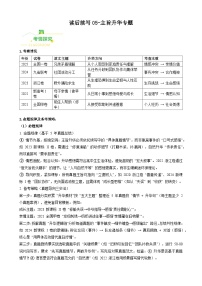
年份
试卷
原文主题(个人经历)
考查本质
个人经历场景迁移要点
2025
全国二卷
帮奶奶修复旧藤椅
细节触发→亲情价值
适用场景:旧物整理(如翻出爸爸的旧手表)→回忆关联(如手表背后的故事)
2024
新高考 I 卷
公交上为老人让座后续
互动细节→社会美德
直接迁移:社区帮邻居取快递→发现邻居独居→长期互助
2023
浙江卷
图书馆义工经历
任务细节→人性关怀
精神内核复用:校园值日→帮同学补漏雨的书桌→集体责任认知
2022
新高考 II 卷
跟着爷爷学骑自行车
困难克服→自我突破
技能场景适配:学做家常菜(烫伤→坚持→妈妈认可)→成长感悟
2021
全国乙卷
帮迷路老人寻路
突发互动→社会联结
价值升华参考:超市帮老人提重物→发现老人买给孙子的礼物→亲情共鸣
情感类型
基础词块
进阶词块(含动作 / 细节)
回忆感动
feel mved, miss the past
finger the wrn edge f the ld pht and sigh sftly(摩挲旧照片的磨损边缘轻声叹气);wipe tears while reading the letter(读信时擦眼泪)
克服紧张
be nervus, calm dwn
hands sweating s much that they slip n the bike handle(手心出汗在车把上打滑);take a deep breath befre speaking(说话前深呼吸)
善意温暖
feel warm, thank sb.
hld the ht ginger tea with bth hands t warm them(双手捧着热姜茶暖手);smile and nd when the neighbr says thanks(邻居道谢时微笑点头)
挫败与重拾信心
be upset, try again
crumple the failed dumpling wrapper and thrw it away(揉皱失败的饺子皮扔掉);pick up a new wrapper and take a deep breath(拿起新皮深呼吸)
细节类型
基础词块
进阶词块(含特征 / 动作)
旧物细节
ld pht, tattered bk
the faded pht with a crease in the middle(中间有折痕的褪色照片);the tattered bk with ntes in the margin(页边有批注的破旧书)
动作细节
cut vegetables, ride a bike
chp carrts int uneven pieces(把胡萝卜切成大小不一的块);pedal the bike slwly and unsteadily(骑车又慢又不稳)
环境细节
sunny day, quiet rm
sunlight streaming thrugh the kitchen windw nt the cutting bard(阳光透过厨房窗落在砧板上);the quiet library with the smell f ld paper(有旧纸张味道的安静图书馆)
人物细节
elderly man, mther’s hands
the elderly man with a walking stick and a canvas bag(拄拐杖、提帆布包的老人);mther’s hands with faint scars frm chpping(妈妈手上切菜留下的浅疤)
变化类型
基础词块
进阶词块(含过程 / 结果)
技能进步
learn t ck, ride a bike better
g frm drpping dumpling wrappers t making neat nes(从掉饺子皮到包得整齐);frm swerving bikes t riding in a straight line(从骑车歪歪扭扭到走直线)
心态转变
be scared, becme brave
frm refusing t speak in public t vlunteering fr the speech(从不敢当众说话到主动报名演讲);frm giving up easily t trying three times(从轻易放弃到尝试三次)
认知升级
nt understand, realize
frm thinking Mm’s cking is easy t knwing it takes effrt(从觉得妈妈做饭简单到知道要花功夫);frm ignring neighbrs t helping them carry grceries(从忽略邻居到帮提 grceries)
互动类型
基础词块
进阶词块(含动作 / 语言)
家庭互动
talk t parents, help Mm
hand Mm the knife while she chps vegetables(妈妈切菜时递刀);Dad pats my shulder and says “Gd jb”(爸爸拍我肩说 “做得好”)
社会互动
help strangers, talk t neighbrs
ffer the seat t the elderly wman and hld her arm(给老人让座并扶她胳膊);ask the street vendr if he needs help picking up apples(问小贩是否需要帮捡苹果)
师长互动
ask teacher fr help, listen t advice
shw the speech draft t the teacher and take ntes(把演讲稿给老师看并记笔记);Grandpa demnstrates hw t fix the bike and I fllw(爷爷示范修自行车我跟着学)
这是一份高考英语二轮讲义-读后续写个人经历专题(全国通用)(教师版),共20页。学案主要包含了高分句型1,高分句型2等内容,欢迎下载使用。
这是一份高考英语二轮讲义-读后续写个人经历专题(全国通用)(学生版),共16页。学案主要包含了用单词的适当形式填空,根据意思补全句子等内容,欢迎下载使用。
这是一份高考英语二轮讲义-读后续写情感描写专题(全国通用)(教师版),共19页。学案主要包含了分主题情绪语料库,情感描写高级句式等内容,欢迎下载使用。
注册成功
资料篮

在线客服
添加在线客服
获取1对1服务
官方微信
关注“教习网”公众号
打开微信就能找资料
赛课定制
添加在线客服
获取1对1定制服务
职称咨询
添加在线客服
获取1V1专业指导服务

免费福利

.png)
.png)
