 免费领取教师福利


若您为此资料的原创作者,认为该资料内容侵犯了您的知识产权,请扫码添加我们的相关工作人员,我们尽可能的保护您的合法权益。


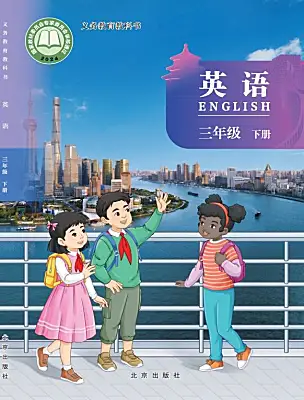
这是一份小学英语北京版(2024)三年级下册(2024)Lesson 1 Where Is Your Red Scarf?教案设计,共14页。教案主要包含了教材分析,学情分析,教学目标,教学重难点,教学方法,教学准备,教学过程,教学反思等内容,欢迎下载使用。
(一)教材地位与作用
本节课选自北京版 2024 英语三年级下册 Unit One “Keep Things in Order” 的 Lessn 1 “Where Is Yur Red Scarf?”。本单元围绕 “整理物品,保持有序” 这一主题展开,旨在让学生学习如何描述物品位置,培养学生良好的生活习惯。而第一课作为单元起始课,通过引导学生用英语询问和回答物品位置,为后续学习奠定基础,在整个单元学习中起着关键的导入和铺垫作用。
(二)教学内容分析
词汇方面:主要学习方位介词 in(在…… 里面)、n(在…… 上面)、under(在…… 下面)以及物品类名词 scarf(围巾,复数形式 scarves)。这些词汇贴近学生日常生活,实用性强,是学生描述物品位置的基础。
句型方面:重点教授询问物品位置的句型 “Where is + 单数物品?” 及其答语 “It's + 方位介词短语”。此句型结构简单,易于学生理解和模仿,有助于学生在实际情境中运用英语进行交流。
语法方面:初步接触方位介词的用法,了解其表示物体间位置关系的功能,以及名词单复数形式的变化,如 scarf 的复数形式,为学生后续语法学习构建基础框架。
二、学情分析
(一)已有知识储备
三年级学生经过之前的英语学习,已积累了一定的基础词汇,如常见的动物、颜色、数字等,对简单的英语句型和日常用语也有了初步认识,能够进行简单的打招呼、自我介绍等交流活动。同时,他们在生活中对物品的位置有直观感受,具备一定的空间认知能力。
(二)学习特点
好奇心旺盛:对新鲜事物充满好奇,对英语学习有较高热情,课堂上乐于参与各种活动,喜欢在游戏、情境中学习英语。
形象思维为主:该阶段学生的思维方式以形象思维为主,更易于接受直观、生动、有趣的教学内容,对于抽象的语法知识理解和掌握有一定难度。
注意力易分散:注意力集中时间较短,在课堂学习中容易受到外界干扰,需要多样化、趣味性强的教学形式来吸引和维持注意力。
三、教学目标
(一)知识与技能目标
学生能够正确认读、书写并运用方位介词 in、n、under 以及单词 scarf,理解其含义。
熟练掌握询问物品位置的句型 “Where is + 单数物品?”,并能用答语 “It's + 方位介词短语” 准确描述物品位置,语音语调自然、准确。
能够在实际情境中,运用所学词汇和句型,询问和回答物品的位置,提升语言运用能力。
(二)过程与方法目标
通过情境创设、角色扮演等活动,培养学生在真实情境中运用英语进行交流的能力,提升语言交际能力。
借助小组合作学习,增强学生的团队协作意识,鼓励学生相互交流、相互帮助,共同完成学习任务。
引导学生观察、模仿、练习,培养学生自主学习能力和学习策略,使其学会自主探索知识。
(三)情感态度与价值观目标
激发学生对英语学习的兴趣,培养学生积极参与课堂活动的态度,增强学生学习英语的自信心。
通过学习描述物品位置,引导学生关注生活细节,养成整理物品、保持环境整洁有序的良好习惯。
四、教学重难点
(一)教学重点
掌握方位介词 in、n、under 和单词 scarf 的发音、拼写和用法。
熟练运用句型 “Where is + 单数物品?” 及其答语 “It's + 方位介词短语” 进行对话交流。
(二)教学难点
准确运用方位介词描述物品位置,区分 in、n、under 在不同情境中的用法。
在实际情境中,灵活运用所学词汇和句型,进行自然、流畅的交流,提升语言综合运用能力。
五、教学方法
(一)情境教学法
创设贴近学生生活的情境,如教室场景、卧室场景等,将教学内容融入其中,让学生在真实情境中感受和运用英语,增强语言学习的实用性和趣味性。例如,在教室中,让学生用英语描述文具、书本等物品的位置。
(二)游戏教学法
设计各类英语游戏,如 “藏猫猫” 游戏,将物品藏在教室不同位置,让学生用所学句型询问物品位置;开展 “快速反应” 游戏,教师说出方位介词,学生迅速做出相应动作,通过游戏激发学生学习兴趣,提高学习积极性。
(三)直观演示法
利用实物、图片、多媒体等直观教具,展示方位介词的含义和物品位置关系,帮助学生直观理解抽象知识。如通过展示书包里放着书本(in the schlbag)、书桌上放着铅笔(n the desk)、椅子下有个球(under the chair)等图片,让学生清晰感知方位介词的用法。
(四)小组合作学习法
组织学生进行小组合作学习,如小组对话练习、小组任务完成等。学生在小组中相互交流、讨论、合作,共同完成学习任务,培养团队协作能力和语言表达能力。例如,让小组内成员互相询问和介绍自己书包里物品的位置。
六、教学准备
多媒体课件,包含与教学内容相关的图片、动画、视频、音频等资料,如展示不同物品位置的图片、课文对话动画、单词和句型的朗读音频。
实物道具,如红色围巾、书本、铅笔、盒子、书包、玩具等,用于课堂演示和学生实际操作。
自制单词卡片,包括方位介词 in、n、under 以及单词 scarf,卡片上配有生动形象的图案,便于学生记忆。
奖励小贴纸,如可爱的动物贴纸、星星贴纸等,用于奖励课堂上表现积极的学生。
七、教学过程
(一)Warming - up
Greeting
T: Hell, bys and girls! Nice t see yu again. Hw are yu tday?
Ss: Fine, thank yu. And yu?
T: I'm very well, t. Are yu ready fr ur English class?
Sing a sng
Play the sng “Where is Thumbkin?” n the multimedia. Let the students sing alng with the music and d the actins.
After singing, ask sme students t cme t the frnt f the class and shw the actins again, while the thers sing.
设计意图:通过热情的问候拉近师生距离,营造轻松的课堂氛围。播放欢快的英文歌曲并配合动作,吸引学生注意力,激发学习兴趣,同时自然地引出本节课关于位置的主题。
(二)Lead - in
Shw a picture
Display a picture f a messy rm n the screen. There are bks, tys, clthes everywhere.
T: Lk at this picture. What d yu think f this rm?
Ss: It's messy.
T: Yes, it's really messy. Let's help clean it up. But first, we need t knw where the things are. S tday, we are ging t learn hw t ask and answer abut the lcatin f things.
Free talk
T: Nw, lk arund ur classrm. Can yu see any things? Talk abut them with yur deskmate.
Let the students talk freely fr abut 1 minute, then invite sme pairs t share their cnversatins.
设计意图:通过展示凌乱房间图片,引发学生对整理物品的思考,自然导入本节课主题。自由讨论环节让学生初步关注教室中物品位置,激活已有知识经验,为新知识学习做铺垫。
(三)Presentatin
Teach the wrd “scarf”
Take ut a red scarf and shw it t the students.
T: Lk! What's this? It's a scarf. It's red. Repeat after me, scarf.
Teach the students t read the wrd “scarf” several times, paying attentin t the prnunciatin /skɑːf/.
Write the wrd “scarf” n the blackbard, and let the students spell it tgether.
Then shw sme different scarves n the multimedia, and ask: Hw many scarves can yu see? Teach the plural frm “scarves”.
Teach the prepsitins “in”, “n”, “under”
Put a bk in a schlbag, then ask: Where is the bk? Answer: It's in the schlbag. Write the sentence n the blackbard and teach the students t read it. Explain the meaning f “in” as “在…… 里面”.
Put a pencil n the desk, and ask the same questin: Where is the pencil? Guide the students t answer: It's n the desk. Teach the wrd “n” /ɒn/, meaning “在…… 上面”,and write the sentence n the blackbard.
Hide a ball under a chair, and ask: Where is the ball nw? Help the students answer: It's under the chair. Teach the wrd “under” /ˈʌndə(r)/, meaning “在…… 下面”,and write the sentence n the blackbard.
Use the multimedia t shw mre pictures with different items in different psitins, and let the students practice saying sentences with “in”, “n”, “under”.
Teach the sentence pattern “Where ” and its answer
Pint t the red scarf and ask: Where is the red scarf? Encurage the students t answer with the learned prepsitins, fr example, if the scarf is n the chair, the students answer: It's n the chair.
Write the questin “Where is yur red scarf?” n the blackbard, and teach the students t read it. Explain that we use this sentence t ask abut the lcatin f a single thing.
Then let the students practice asking and answering questins in pairs, using the items arund them. Walk arund the classrm t give help and guidance.
设计意图:通过实物展示、动作演示、多媒体辅助等多种方式,直观形象地教授单词和句型,符合三年级学生形象思维为主的学习特点,便于学生理解和记忆。多样化的练习活动让学生在实践中巩固所学知识,提升语言运用能力。
(四)Practice
Game 1: Hide and Seek
Chse several students t cme t the frnt f the class. Give each f them an item, such as a bk, a ty, r a scarf.
The ther students clse their eyes. The chsen students hide their items in different places in the classrm, such as in a desk, n a windwsill, under a chair.
After hiding, the ther students pen their eyes and ask: Where The students wh hid the items answer: It's...
If the answer is crrect, the student wh asked gets a small sticker as a reward.
Game 2: Quick Respnse
Shw the students sme pictures f items in different psitins n the multimedia. The pictures flash quickly n the screen.
As sn as a picture appears, the students need t quickly say a sentence t describe the lcatin f the item, fr example, “The cat is under the table.”
The first student t answer crrectly gets a sticker.
Grup wrk
Divide the students int grups f fur. Give each grup a set f pictures shwing different items in different psitins, and a piece f paper with the questin “Where ” written n it.
The students in each grup take turns t pick a picture, ask the questin with the sentence pattern, and the ther grup members answer.
After that, each grup makes up a shrt dialgue using the learned wrds and sentence pattern, and then acts it ut in frnt f the class.
设计意图:通过游戏和小组活动,为学生提供大量语言实践机会,让学生在轻松愉快的氛围中巩固所学词汇和句型,增强学习趣味性,培养学生的竞争意识和团队协作能力,同时提高学生语言运用的熟练程度和灵活性。
(五)Prductin
Rle - play
Set up tw scenaris: a bedrm and a classrm. Prvide sme prps fr each scenari, such as beds, desks, chairs, bks, clthes, etc.
Divide the students int grups. Each grup chses a scenari and makes up a dialgue abut finding things. Fr example, in the bedrm scenari, ne student may ask: “Where is my blue T - shirt?” The ther student answers: “It's n the bed.”
Let the grups practice their dialgues fr a few minutes, and then invite sme grups t cme t the frnt f the class and perfrm their rle - plays.
After each perfrmance, ask the ther students t give cmments and feedback.
Make a survey
Hand ut a survey frm t each student. The frm has sme pictures f items, such as a schlbag, a pencil case, a ball, etc.
The students need t walk arund the classrm, ask their classmates: “Where is ” and write dwn their classmates' answers n the frm.
After finishing the survey, each student reprts the results t the class, fr example, “Tm's schlbag is in his desk. Lucy's pencil case is n her desk...”
设计意图:角色扮演和调查活动将学生所学知识运用到真实情境中,培养学生综合运用语言的能力和解决实际问题的能力。学生在活动中能够发挥想象力和创造力,进一步提升语言表达能力和交际能力,同时增强学生的自信心和学习成就感。
(六)Summary
Review
Use the multimedia t review the wrds “scarf”, “in”, “n”, “under” and the sentence pattern “Where It's...” with the students. Ask sme students t cme t the blackbard and write dwn the wrds and sentences frm memry.
Then play a shrt vide that reviews all the key pints learned in this class.
Summary
T: Bys and girls, tday we learned sme new wrds and a sentence pattern. We learned hw t ask and answer abut the lcatin f things. Can yu tell me what we learned?
Invite several students t summarize the main cntent f this class.
T: Very gd. Remember t use these wrds and sentences in yur daily life. And always keep yur things in rder.
设计意图:通过回顾单词、句型和播放总结视频,帮助学生梳理本节课所学知识,加深记忆。让学生自己总结课堂内容,培养学生的总结归纳能力和语言表达能力,同时强化学生对知识的掌握程度。
(七)Hmewrk
Oral hmewrk
Ask the students t talk abut the lcatin f things in their rms with their parents in English. Fr example, “Where is my ty car? It's under my bed.” Recrd a shrt vide f the cnversatin and send it t the class grup.
Written hmewrk
Let the students draw a picture f their rms, and then write at least five sentences t describe the lcatin f things in their rms, using the wrds and sentence pattern learned in this class. Fr example, “My bks are n the bkshelf. My ball is under the chair.”
设计意图:布置口语和书面作业,将课堂学习延伸到课后,让学生在实际生活中运用英语,巩固所学知识,提高语言运用能力。通过录制视频和完成书面作业,培养学生自主学习能力和学习习惯,同时增强学生与家长的互动交流,营造良好的英语学习氛围。
板书设计
九、教学反思
在教学过程中,要充分关注学生的个体差异,对于学习困难的学生,及时给予更多的指导和帮助,确保每个学生都能跟上教学进度。在游戏和活动环节,要注意把控时间和秩序,保证活动的顺利开展。同时,在教学评价方面,应采用多元化的评价方式,不仅关注学生的学习结果,更要注重学生在学习过程中的表现,如参与度、合作能力、语言表达能力等,及时给予肯定和鼓励,增强学生学习英语的信心。此外,在今后的教学中,可以进一步拓展教学内容,引导学生用所学知识描述更复杂的场景和位置关系,提升学生的语言综合运用能力。
区域
内容
主板书
Unit One Keep Things in Order - Lessn 1 Where Is Yur Red Scarf? scarf in n under Where is yur red scarf? It's...
副板书
展示学生课堂生成的句子和词汇,如学生在练习和活动中说出的描述物品位置的句子示例,以及拓展的相关词汇
装饰区
在黑板角落绘制一些与主题相关的简笔画,如可爱的小房子、摆放整齐的物品等,增加板书的趣味性和吸引力
这是一份小学英语北京版(2024)三年级下册(2024)Lesson 10 What Do We Wear in the Four Seasons?教案,共11页。教案主要包含了教学目标,教学重难点,教学方法,教学过程,教学资源,教学反思等内容,欢迎下载使用。
这是一份北京版(2024)Lesson 2 My Book Is on My Desk教案设计,共6页。教案主要包含了教学目标,教学重难点,教学方法,教学过程,教学资源,教学反思等内容,欢迎下载使用。
这是一份小学英语北京版(2024)三年级下册(2024)Lesson 1 Where Is Your Red Scarf?教案,共10页。教案主要包含了教学目标,教学重难点,教学方法,教学过程,教学资源,教学反思等内容,欢迎下载使用。
注册成功
资料篮

在线客服
添加在线客服
获取1对1服务
官方微信
关注“教习网”公众号
打开微信就能找资料
赛课定制
添加在线客服
获取1对1定制服务
职称咨询
添加在线客服
获取1V1专业指导服务

免费福利

.png)
.png)
(1)(1).png)
