 免费领取教师福利
若您为此资料的原创作者,认为该资料内容侵犯了您的知识产权,请扫码添加我们的相关工作人员,我们尽可能的保护您的合法权益。


这是一份江苏省无锡市新吴区2025-2026学年七年级下学期6月期末英语试题(含解析),文件包含《第5课从小爱劳动》教学课件pptx、《第5课从小爱劳动》教学设计docx、《第5课从小爱劳动》同步作业docx、劳动习惯养成记_20260610_16122829mp4、劳动小能手的一天_20260610_02332712mp4等5份课件配套教学资源,其中PPT共21页, 欢迎下载使用。
本样卷分I、II两卷。第I卷(选择题)在第1至第4页,第II卷(非选择题)在第5至第6页。建议测试时间为100分钟。样卷满分为100分。
第I卷 选择题(共45分)
一、完形填空(本大题共10小题,每小题1分,共10分)
阅读短文,在每小题所给的四个选项中,选出可以填入空白处的最佳选项。
Last week, my lng-standing fiddle leaf fig tree (琴叶榕) was dying. I texted (发信息) my neighbur Karen. She texted me back ____1____ and tld me hw t turn its yellw leaves green again. I felt really ____2____ t have such a kind neighbur wh cares abut my plants.
My family mved here in 2017. Sn after we arrived, Karen made a ____3____ f all the huses nearby t help me get t knw peple arund and fit in easily.
Karen ften stpped by t talk with me when I stayed in the yard. We bth ___4___ flwers. Once I was a gardener. Later, I had t lk after my 10-year-ld daughter wh has a special illness, s I had little time fr gardening. Karen truly understd hw ____5____ it is t take care f a disabled (残疾的) child.
She ____6____ helped me make ur yard mre beautiful. We planted dark pink rses (玫瑰) tgether years ag. Nw they ____7____ almst as high as the rf. Every time I see these lvely flwers, I feel warm and never ____8____.
My husband and I nce thught abut mving t a larger huse in the cuntryside. But we finally decide t ____9____, because we dn’t want t leave a nice neighbur like Karen. She helps me t be a better ____10____ like her and a better persn, just like the beautiful rses in frnt f ur huse.
1. A. carefullyB. suddenlyC. quicklyD. clearly
2. A. safeB. luckyC. strangeD. funny
3. A. mapB. cardC. psterD. mdel
4. A. watchB. drawC. knwD. lve
5. A. slwB. fastC. hardD. easy
6. A. stillB. evenC. justD. ever
7. A. runB. jumpC. flyD. climb
8. A. lnelyB. gladC. tiredD. relaxed
9. A. leaveB. lseC. stayD. sell
10. A. exampleB. teacherC. partnerD. neighbur
【答案】1. C 2. B 3. A 4. D 5. C 6. B 7. D 8. A 9. C 10. D
【解析】
【导语】本文讲述了作者家琴叶榕濒临死亡时,邻居Karen迅速回复并提供帮助的故事。通过回忆Karen帮忙制作周边地图、理解作者照顾病儿的艰辛、一起种花等往事,表达了作者对这位善良邻居的感激之情,以及因为不想离开这样的好邻居而决定留在原地的温馨故事。
【1题详解】
句意:她很快给我回了短信,并告诉我如何让它的黄叶变绿。
根据上文“Last week, my lng-standing fiddle leaf fig tree (琴叶榕) was dying. I texted my neighbur Karen”可知,作者的琴叶榕快枯死,她向邻居求助,邻居立刻回信,用 quickly(快速回复)符合语境;carefully仔细地、suddenly突然地、clearly清楚地,均不如quickly贴切。
【2题详解】
句意:拥有这样一个关心我植物的善良邻居,我感到真的很幸运。
根据后文“t have such a kind neighbur”可知,遇到好心人热心帮忙,作者内心感慨自己幸运。lucky意为“幸运的”,最符合语境;safe安全的、strange奇怪的、funny有趣的,均不符合语境。
【3题详解】
句意:Karen做了一张附近所有房子的地图,来帮助我认识周围的人并轻松融入。
根据后半句“help me get t knw peple arund”推断,Karen制作的应该是一份能展示居住环境和人员分布的图表。map意为“地图”且 a map f …… (的地图),是固定搭配,符合语境;card卡片、pster海报、mdel模型,无法起到“指引认人”的作用。
【4题详解】
句意:我们都喜爱花朵。
根据下文提到的“gardener”园丁、“gardening”园艺,以及两人一起种玫瑰的经历可知,两人的共同点是喜欢花草。lve意为“喜爱”,符合语境;watch观看、draw画、knw知道,程度不够深,无法引出下文一起种花的情节。
【5题详解】
句意:Karen真正明白照顾一个残疾儿童是多么艰难。
根据前文“I had t lk after my 10-year-ld daughter wh has a special illness”以及空后“take care f a disabled (残疾的) child”可知,照顾患病孩子是一件艰难的事。hard意为“困难的、艰难的”,符合语境;slw慢的、fast快的、easy容易的,均与照顾病儿的实际情况不符。
【6题详解】
句意:她甚至帮我把我们的院子变得更漂亮。
上文提到Karen理解作者的难处,这里进一步递进,说明她不仅理解,还付出了实际行动帮助美化环境。even意为“甚至”,表示程度的加深,符合语境逻辑;still仍然、just仅仅、ever曾经,无法体现这种递进关系。
【7题详解】
句意:现在它们长得几乎和屋顶一样高了。
主语是“rses”,这类攀援或直立生长的植物长高,用动词climb最为生动形象,常用来形容藤蔓或灌木长得很高;run跑、jump跳、fly飞,均不能用来形容植物生长。
【8题详解】
句意:每次看到这些可爱的花,我都感到温暖,从不感到孤独。
根据前文“I had t lk after my 10-year-ld daughter wh has a special illness”以及“Every time I see these lvely flwers, I feel warm”可知,作者独自照顾生病女儿,容易孤单;但是邻居一同栽种的花带来慰藉,不再孤单。lnely意为“孤独的”,符合语境,表示因为有花和邻居的陪伴而不孤单;glad高兴的、tired累的、relaxed放松的,虽然也是形容词,但“never lnely”更能呼应前文提到的搬家融入新环境的背景。
【9题详解】
句意:但我们最终决定留下来,因为我们不想离开像Karen这样的好邻居。
根据转折连词“But”和后文“dn't want t leave”可知,尽管想过搬去乡下大房子,最终还是选择了不搬,留下来。stay意为“留下、逗留”,符合语境;leave离开、lse失去、sell卖,均与语境相反。
【10题详解】
句意:她帮助我成为一个像她一样的好邻居和一个更好的人,就像我们房子前面美丽的玫瑰一样。
根据上文“we dn’t want t leave a nice neighbur like Karen”以及通读全文可知,全文主线是邻里情谊,Karen是作者的邻居,并且她的行为影响了作者,让作者也想成为像她那样的好邻居。example榜样、teacher老师、partner伙伴,虽然语义尚可,但结合全文核心人物关系,neighbur意为“邻居”,最为准确且呼应前文。
二、阅读理解 阅读短文,在每小题所给的四个选项中选出最佳选项。(本大题共15小题,每小题2分,共30分)
A
Hell everyne! Are yu interested in reading bks? Let’s lk at the pictures belw and learn mre tgether!
11. Where can we prbably (可能) see the pictures?
A. In a science lab.B. In a schl gym.
C. In a reading crner.D. In a cmputer rm.
12. Picture 1 is abut ________.
A. sprts newsB. music newsC. fantasy striesD. histry stries
13. What des Picture 2 tell us?
A. A reading skill.B. A speaking skill.C. A writing skill.D. A listening skill.
14. Why d we ask questins when reading?
A. T keep writing mre plts.B. T use questin wrds better.
C. T stp spending mre time.D. T help understand the text better.
15. What can we learn frm the pictures?
A. Fantasy stries never take place in big cities.
B. Fantasy stries usually have friendly characters.
C. Events in fantasy stries never happen in real life.
D. Events in fantasy stries slve prblems in ld ways.
【答案】11. C 12. C 13. A 14. D 15. C
【解析】
【导语】本文是一篇应用文,主要介绍了奇幻故事的人物、背景和事件是如何展开的,以及在阅读时的需要回答的问题来提升对文章的理解和阅读能力。
【11题详解】
通读全文,文章主要介绍了奇幻故事的构成,以及在读书时,根据文章内容,回答故事的时间、原因和如何展开问题,以此提升阅读能力,因此这篇文章最有可能出现在阅读角。
【12题详解】
图片一标题直接点明,其主要是有关奇幻故事的。
【13题详解】
图片二是关于提问和回答的,且提到“Lk arund in the text and pictures fr details t help yu ANSWER”,在文章和图片中寻找细节,明显是发生在阅读过程中,因此是有关阅读技巧。
【14题详解】
根据图片二Why部分:“T get infrmatin; T help yu understand the text...”,即阅读时提出问题的目的包括获取信息,帮助我们理解文章。
【15题详解】
根据图片一Events部分:“culd nt happen in real life; wrk ut prblems in an unusual way”,因此奇幻故事不会发生在现实生活中。
B
In a quiet rm f the Prince Kung’s Palace Museum in Beijing, visitrs can enjy a special kind f traditinal Chinese art—wdblck New Year paintings.
Tw artists are wrking there. One is Tai Liping, an ld man frm Nrthwest China. He carefully cuts wd with a small knife. The ther is Sun Yib frm Suzhu. He puts thin paper n the carved wd and prints (印刷) clurful pictures step by step.
These paintings have a lng histry in China. Fr hundreds f years, families have put them n drs and walls during the Spring Festival. Peple believe these pictures can bring gd luck, happiness, and a better life. Many paintings shw children, animals, and beautiful wishes.
Making these paintings is nt easy. Artists first draw a picture n a piece f wd, and then cut away parts f the wd t make shapes. Befre they print the picture carefully n paper, they shuld rll the paint n the wd. At last, they slwly lift the paper and let it dry. Smetimes it takes several weeks t finish ne painting.
Tai’s paintings are bld and bright, while Sun’s wrks are sfter and mre detailed. They bth lve this traditinal art very much.
Tday, fewer peple learn this skill. Hwever, these artists are trying hard t keep it alive by teaching yung peple and using new ideas. This ld art is still full f life and hpe.
16. Which picture shws wdblck New Year paintings?
A. B. C. D.
17. Why d peple use these paintings during the Spring Festival?
A. T bring gd luck and happiness.B. T learn the ancient painting skills.
C. T make their hmes lk beautiful.D. T teach traditinal Chinese culture.
18. Which is the crrect rder f making the painting?
a. Rll the paint n the wd.
b. Slwly lift the paper and let it dry.
c. Draw a picture n a piece f wd.
d. Print the picture carefully n paper.
e. Cut away parts f the wd t make shapes.
A. a-c-b-d-eB. a-b-c-d-e
C. c-e-a-d-bD. c-e-d-a-b
19. What can we learn abut the tw artists?
A. Their styles are quite different.B. Their hmetwns are the same.
C. They bth teach yung peple.D. They bth express new ideas.
20. What is the passage (文章) mainly abut?
A. Visiting a museum in Beijing.B. Intrducing a traditinal art.
C. The histry f Chinese paintings.D. The stry f tw great artists.
【答案】16. D 17. A 18. C 19. A 20. B
【解析】
【导语】本文是一篇说明文。文章主要介绍了中国传统艺术——木版年画。通过描述北京恭王府内两位艺术家制作年画的过程,阐述了年画的历史寓意、复杂的制作工序以及两位艺术家截然不同的风格。最后提到尽管学习这门技艺的人变少了,但艺术家们正努力通过教学和创新让这门古老的艺术焕发新生。
【16题详解】
根据第三段“Many paintings shw children, animals, and beautiful wishes”可知,许多年画展示孩子、动物和美好祝愿,结合选项图片特征,可知D选项的图片符合木版年画的视觉特征。
【17题详解】
根据第三段“Peple believe these pictures can bring gd luck, happiness, and a better life”可知,人们在春节使用年画是为了祈求好运和幸福。
【18题详解】
根据第四段制作流程:“Artists first draw a picture n a piece f wd,先在木头上画画,对应c→ cut away parts f the wd t make shapes,再切割木头造型,对应e→ rll the paint n the wd,然后在木头上涂抹颜料,对应a→ print the picture carefully n paper,接着仔细印刷到纸上,对应d→ slwly lift the paper and let it dry最后慢慢揭纸晾干,对应b”。
【19题详解】
根据第五段“Tai’s paintings are bld and bright, while Sun’s wrks are sfter and mre detailed”可知,两位艺术家的风格差异很大。
【20题详解】
文章围绕“wdblck New Year paintings”展开,介绍了其艺术形式、历史寓意、制作工艺、艺术家风格及传承现状,可知文章主要是在介绍一种传统艺术。
C
A lng time ag, a little grey wlf lived in a cld frest in nrthern Canada. One day, his mther went ut t lk fr fd. Feeling hungry and bred, the little wlf went t the river t find her. Sme Indians (印第安人) saw him and named him White Fang because f his white teeth.
An Indian called Grey Beaver tk White Fang t the village. The wlf felt cld and hungry, and he missed his mther. He was even hurt when he tuched fire fr the first time. Later, White Fang became a sled dg. Other dgs disliked him, s he learned t fight and grew quick, clever and cld. N ne was kind t him, s he was unfriendly t everyne.
Grey Beaver tk him t Frt Yukn, where many peple lked fr gld. Sn Grey Beaver sld White Fang t a cruel man called Beauty Smith. Smith kept him in a cage and made him fight ther dgs fr mney. White Fang became angrier and mre dangerus.
Once he fught a bulldg and was nearly killed (被杀害). Luckily, a kind man named Sctt saved him and bught him. Sctt treated White Fang with patience (耐心) and kindness. White Fang trusted him and became ▲ .
When Sctt planned t return t Califrnia, White Fang ran after him and fllwed him hme. In Sctt’s big huse, White Fang had a better and better relatinship with the family and anther dg named Cllie.
One night, a dangerus man brke int the huse. White Fang bravely fught him and prtected the family, but he was badly hurt. With gd care frm Sctt’s family, White Fang slwly felt better. At last, he became a father f six lvely baby dgs and lived a happy life with his new family.
21. Why did peple name the wlf White Fang?
A. Because f his teeth.B. Because f his fur.
C. Because f his master.D. Because f his partner.
22. What des the wrd “cruel” mean?
A. 吝啬的B. 残忍的C. 勤劳的D. 慷慨的
23. Which wrd is the mst suitable fr ▲ ?
A. Calm.B. Strng.C. Kind.D. Smart.
24. What made White Fang change a lt at last?
A. Other dgs’ supprt.B. His lvely baby dgs.
C. Different living places.D. The master’s care and lve.
25. What can we infer (推断) frm the passage?
A. White Fang had an enjyable time with his mther.
B. Sctt helped White Fang learn t trust peple again.
C. Other dgs had fights with White Fang fr mre fd.
D. Smith kept White Fang just ut f great lve fr dgs.
【答案】21. A 22. B 23. C 24. D 25. B
【解析】
【导语】本文主要介绍了小狼White Fang从与母亲失散,被印第安人收养、成为雪橇犬,后被卖给残忍的主人被迫打斗,最终被善良的Sctt救出并得到关爱,逐渐变得温顺忠诚,并在Sctt家过上幸福生活的成长故事。
【21题详解】
第一段末尾明确说“named him White Fang because f his white teeth”,因为他的牙齿,因此选A。
【22题详解】
根据划线词下一句内容,Smith把White Fang关在笼子里,逼他和其他狗打斗赚钱,行为残忍,因此cruel意为“残忍的”。
【23题详解】
根据第四段内容可知,Sctt用耐心和善良对待White Fang,White Fang信任他并变得友善(kind)。之前他是凶狠的,现在变温和,所以选C。
【24题详解】
第四段“Sctt treated White Fang with patience (耐心) and kindness. ”明确说Sctt用耐心和善良对待他,他因此改变。选项D正确。
【25题详解】
A错误,文中未描述与母亲的愉快时光;B正确,结合第四段“Sctt treated White Fang with patience (耐心) and kindness. White Fang trusted him and became...”可知,Sctt的关爱使White Fang重新信任人类;C错误,未提及争食物;D错误,Smith并非出于爱狗。
三、信息还原(本大题共5分,每小题1分)
阅读对话,从所给选项中选出可以填入空白处的最佳选项,选项中有两项为多余选项。
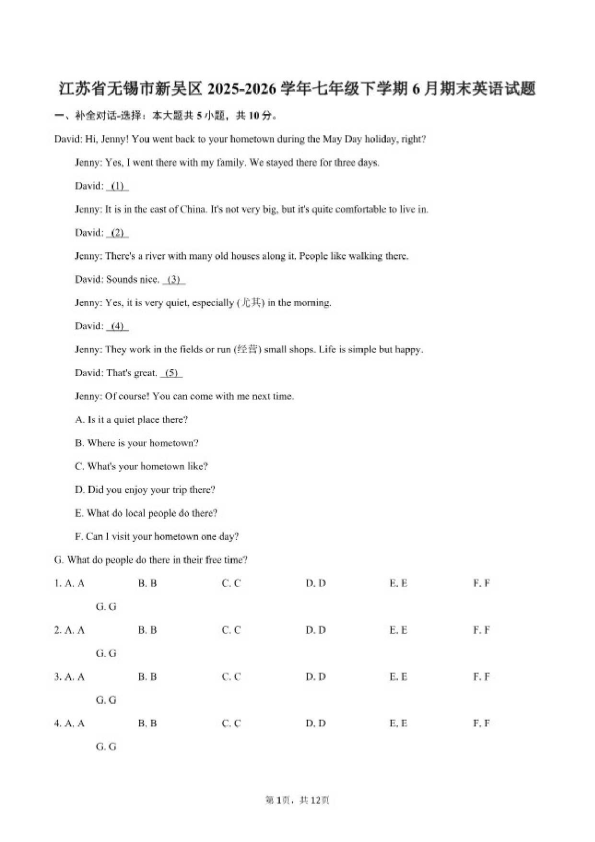
David: Hi, Jenny! Yu went back t yur hmetwn during the May Day hliday, right?
Jenny: Yes, I went there with my family. We stayed there fr three days.
David: ____26____
Jenny: It is in the east f China. It’s nt very big, but it’s quite cmfrtable t live in.
David: ____27____
Jenny: There’s a river with many ld huses alng it. Peple like walking there.
David: Sunds nice. ____28____
Jenny: Yes, it is very quiet, especially (尤其) in the mrning.
David: ____29____
Jenny: They wrk in the fields r run (经营) small shps. Life is simple but happy.
David: That’s great. ____30____
Jenny: Of curse! Yu can cme with me next time.
A. Is it a quiet place there?
B. Where is yur hmetwn?
C. What’s yur hmetwn like?
D. Did yu enjy yur trip there?
E. What d lcal peple d there?
F. Can I visit yur hmetwn ne day?
G. What d peple d there in their free time?
【答案】26. B 27. C 28. A 29. E 30. F
【解析】
【导语】本文是David和Jenny关于Jenny五一假期回老家的对话。两人讨论了Jenny老家的地理位置、环境特点、当地人的生活状态,最后David表达了想去参观的愿望。
【26题详解】
根据下文Jenny的回答“It is in the east f China.”可知,上文是在询问地点,B项“Where is yur hmetwn?”符合语境。
【27题详解】
根据下文Jenny的描述“There’s a river with many ld huses alng it...”可知,这是在描述家乡的样子或特征,C项“What’s yur hmetwn like?”符合语境。
【28题详解】
根据下文Jenny的回答“Yes, it is very quiet...”可知,上文是一个关于是否安静的一般疑问句,A项“Is it a quiet place there?”符合语境。
【29题详解】
根据下文Jenny的回答“They wrk in the fields r run small shps.”可知,上文是在询问人们的工作或职业,E项“What d lcal peple d there?”符合语境。
【30题详解】
根据下文Jenny的回答“Of curse! Yu can cme with me next time.”可知,上文应该是David提出了想要去参观的请求,F项“Can I visit yur hmetwn ne day?”符合语境。
第II卷 非选择题(共55分)
四、单词拼写 根据句意和中文注释,写出所给单词的正确形式。(本大题共10分,每小题1分)
31. When it rains heavily, the river may ________ (淹没) the rads.
【答案】
fld
【解析】
【详解】句意:当雨下得很大时,河流可能会淹没道路。中文提示“淹没”对应英文动词fld。情态动词may后接动词原形,故填fld。
32. The apps ________ (使可能) peple t talk with friends far away.
【答案】
enable
【解析】
【详解】句意:这些应用程序使人们能够与远方的朋友交谈。“使可能”在这个语境里,对应的英文动词是enable,它的含义是“使能够、使成为可能”,正好契合句子里“应用程序让人们能和远方朋友交谈”的意思。句子的主语是The apps(复数),句子描述的是客观事实,用一般现在时,所以动词用原形。
33. Please dn’t miss these ________ (机会) t practise yur English.
【答案】
chances
【解析】
【详解】句意:请不要错过这些练习英语的机会。括号提示词义“机会”,对应可数名词chance;限定词these表示“这些”,后接可数名词复数,因此填chances。
34. My father usually ges ________ (钓鱼) by the lake when he has free time.
【答案】
fishing
【解析】
【详解】句意:我的爸爸有空的时候经常去湖边钓鱼。g fishing“去钓鱼”,固定搭配。
35. T attract mre turists, the park added sme shws full f ________ (魔力).
【答案】
magic
【解析】
【详解】空格前是介词“f”,后需接名词做宾语。表示“魔力”的单词是magic,为不可数名词,无需变形。故填magic。
36. Yung peple like t ________ (发布) their daily life phts n the internet.
【答案】
pst
【解析】
【详解】句意:年轻人喜欢在网上发布他们的日常生活照。like t d sth.“喜欢做某事”,固定搭配,此处需填动词原形;中文提示“发布”对应的动词为pst。
37. By reading the picture bk, the kids learned hw t play ________ (安全地) tgether.
【答案】
safely
【解析】
【详解】句意:通过阅读这本图画书,孩子们学会了如何一起安全地玩耍。根据中文提示“安全地”,此处需要副词修饰动词play,safely意为“安全地”,符合语境。
38. Jane felt ________ (自豪的) f herself when getting t the tp f Munt Huangshan.
【答案】
prud
【解析】
【详解】句意:登上黄山山顶时,简感到很自豪。feel prud f“为……感到自豪”是固定搭配。
39. Living away frm the city center, Femi can enjy ________ (新鲜的) air with his family.
【答案】
fresh
【解析】
【详解】句意:Femi住在远离市中心的地方,可以和家人享受新鲜的空气。“新鲜的”对应英文形容词fresh,这里修饰不可数名词air。故填fresh。
40. Learning Chinese flk art can help us t get an ________ (体验) f the traditinal culture.
【答案】
experience
【解析】
【详解】句意:学习中国民间艺术可以帮助我们获得一种对传统文化的体验。句中“get ”为固定搭配,意为“获得……的体验/经历”。根据中文提示“体验”可知,此处应填名词experience。因为空前有不定冠词“an”,且experience在此处作可数名词使用,故填experience。
五、句子转换 将下列句子改为同义句,每格限填一词。(本大题共10分,每格0.5分)
41. We shuld respect and lk after the ld peple in ur neighburhd.
We shuld respect and ________ ________ the ld peple in ur neighburhd.
【答案】 ①. care ②. fr
【解析】
【详解】句意:我们应该尊重和照顾我们社区里的老人。原句中“lk after”表示“照顾”,可用同义短语care fr替换,且只有两个词。句中有情态动词shuld,后接动词原形,故填care;fr。
42. 句子转换。将下列句子改为同义句,每格限填一词。
Suzy hurried t catch the bus this mrning.
Suzy caught the bus ________ ________ ________ this mrning.
【答案】 ①.
in ②.
a ③.
hurry
【解析】
【详解】原句中“hurried t…”是关键词,意为“匆忙做某事”。在同义句中,谓语动词变成了“caught”,后需加状语来修饰动词,表示“匆忙地”的固定短语是“in a hurry”,符合题目中三个空格的要求。
43. My sister made a zisha teapt by herself.
My sister made a zisha teapt ________ ________ ________.
【答案】 ①.
n ②.
her ③.
wn
【解析】
【详解】句意:我姐姐独自做了一把紫砂壶。改为同义句,应用短语n her wn“独自”,相当于by herself,且主语My sister是女性,故用形容词性物主代词her。
44. Hw healthy Millie’s lifestyle is!
________ ________ ________ ________ Millie has!
【答案】 ①.
What ②.
a ③.
healthy ④.
lifestyle
【解析】
【详解】句意:米莉的生活方式多么健康啊!原句是由Hw引导的感叹句,结构为“Hw+形容词/副词+主语+谓语!”;改为同义句,应用由What引导的感叹句,其结构为“What+(a/an)+形容词+名词+主语+谓语!”;因为“lifestyle”是可数名词单数,且“healthy”以辅音音素开头,所以不定冠词用“a”。
45. The guinea pig is frm ne f my friends.
The guinea pig is frm ________ ________ ________ ________.
【答案】 ①. a ②. friend ③. f ④. mine
【解析】
【详解】句意:这只豚鼠来自我的一个朋友。对比两个句子,具体为“ne f+名词复数”与“双重所有格”结构的互换。“ne f my friends”(我的朋友之一)可以用双重所有格结构“a friend f mine”来表达,两者意思相同。
46. The little by is very yung and he can’t g camping alne.
The little by is ________ ________ ________ ________ camping alne.
【答案】 ①.
t ②.
yung ③.
t ④.
g
【解析】
【详解】句意:这个小男孩非常小,他不能独自去露营。改为同义句,可使用“t…t…”结构,意为“太……而不能……”。“very yung”对应“t yung”,“can’t g”对应“t g”,故填t;yung;t;g。
六、语法填空(本大题共10分,每小题1分)
阅读短文,用括号内单词的正确形式填空。
My hmetwn is n the Qingzang Plateau (青藏高原). The gegraphy here is amazing. It is famus fr the ____47____ (wrld) highest muntain. But this area is als full f the mst amazing clurs in nature.
The clur white____48____ (meet) yur eyes all arund. The cluds are clean and sft, like ur white sheep. Yu can ____49____ (happy) see the muntains shining in the sun, like white sea waves. Under the lvely blue sky, yu may never feel ____50____ (wrry). It is like a great sea abve the plateau. There are a hundred kinds f blue in the water. Our grasslands, frests and fields there are all green. It means hpe because it is the clur f life. But green is nt just the clur f nature. Nw trains ____51____ (run) acrss the plateau day and night, bringing peple clser t this land. They are this beautiful clur, t.
Last summer, I visited a big lake with my family, and it ____52____ (leave) a deep impressin (印象) n me. When I was watching the cluds change in the sky by the lake, thse nice mments in my childhd ____53____ (cme) back t me. And wrds can’t express my lve fr the lake till nw.
My hmetwn is quieter than the big cities. We have fewer shps and restaurants. But we have the best presents frm nature. I’m glad I’m frm ne f the mst beautiful ____54____ (place) in the wrld. In the future, mre peple ____55____ (get) here t enjy its beauty. I will als invite my friends ____56____ (visit) my hmetwn and experience this amazing place.
【答案】47.
wrld’s 48.
meets 49.
happily 50.
wrried 51.
are running
52.
left 53.
came 54.
places 55.
will get 56.
t visit
【解析】
【导语】本文通过介绍作者家乡青藏高原的地理风貌、自然色彩以及个人回忆,展现了家乡的美丽与独特魅力,表达了对家乡的热爱之情。
【47题详解】
句意:它以世界上最高的山而闻名。“the wrld’s highest muntain”表示“世界上最高的山”,此处需要用名词所有格形式来修饰“highest muntain”,wrld的所有格是wrld’s。
【48题详解】
句意:白色随处可见,映入眼帘。句子主语“The clur white”是单数,且描述的是客观事实,用一般现在时,动词meet要用第三人称单数形式meets。
【49题详解】
句意:你可以开心地看到山脉在阳光下闪耀,像白色的海浪一样。此处需要一个副词来修饰动词“see”,happy的副词形式是happily。
【50题详解】
句意:在可爱的蓝天下,你可能永远不会感到担忧。“feel wrried”是固定搭配,意为“感到担忧”,wrry的形容词形式是wrried。
【51题详解】
句意:现在火车日夜不停地穿过高原,让人们更靠近这片土地。根据时间状语“Nw”以及语境可知,此处强调现阶段正在发生或持续进行的动作,应用现在进行时。主语“trains”是复数,be动词用are,run的现在分词需双写n加ing,即running。
【52题详解】
句意:去年夏天,我和家人参观了一个大湖,它给我留下了深刻的印象。根据“Last summer”可知句子用一般过去时,leave的过去式是left。
【53题详解】
句意:当我在湖边看着天空中的云变化时,童年那些美好的时光又浮现在我眼前。根据“When I was watching...”可知句子用一般过去时,cme的过去式是came。
【54题详解】
句意:我很高兴我来自世界上最美丽的地方之一。“ne f+可数名词复数”表示“……之一”,place的复数是places。
【55题详解】
句意:将来,会有更多的人来这里欣赏它的美丽。根据“In the future”可知句子用一般将来时,结构为“will+动词原形”。
【56题详解】
句意:我也会邀请我的朋友来我的家乡,体验这个神奇的地方。“invite sb. t d sth.”是固定搭配,意为“邀请某人做某事”,所以此处用动词不定式t visit。
七、完成句子 按所给的汉语,用英语完成下列句子。(本大题共 10 分,每小题 2 分)
57. 志愿者们一点一点地将旧社区中心变成了温馨家园。
_______________________, vlunteers turned the ld cmmunity centre int a sweet hme.
【答案】
Little by little
【解析】
【详解】原句中“一点一点地”对应的固定短语是little by little,该短语在句中作方式状语,置于句首时首字母需大写,因此此处填Little by little。
58. 尼尔在情绪低落时,一部有趣的电影总能使他振奋起来。
When Neil feels dwn, a funny film can always _______________________.
【答案】
cheer him up
【解析】
【详解】原句中“使他振奋起来”是关键词,对应英文短语cheer him up,情态动词can后接动词原形,him指代Neil,up为副词;cheer up是“动词 + 副词”构成的短语,当宾语是人称代词时,代词必须放在动词和副词之间。
59. 采蜜后,工蜂们刚才在花朵上歇息了一下。
After cllecting hney, the wrker bees _______________________ n the flwers just nw.
【答案】
tk a rest
【解析】
【详解】原句中“歇息”是关键词,表示“歇息、休息”的短语是take a rest。本句中有时间状语just nw,提示句子时态为一般过去时,动词take需变为过去式tk。
60. 我们团队在执行任务时面对挫折并未放弃。
Our team didn’t _______________________ the truble while ding the task.
【答案】
give up
【解析】
【详解】原句中“并未放弃”是关键词,表示“放弃”的短语是give up。本句为一般过去时的否定句,助动词didn’t后接动词原形。故填give up。
61. 随着成长,孩子们将能够处理各种问题。
As the children grw up, they will _______________________ all kinds f prblems.
【答案】
be able t deal with
【解析】
【详解】原句中“将能够处理”是关键词,表示“能够”的短语是be able t;“处理”对应的短语是deal with。本句为一般将来时,will后接动词原形,故填be able t deal with。
八、书面表达(本大题共 15 分)
62. 为倡导健康生活,鼓励学生探索自然,学校英语社团特开展以An Outdr Adventure为主题的征文活动。假设你是该校学生李华,打算参加本次征文活动,请根据以下要点提示记录一次印象深刻的户外出行经历。
1. What was the adventure? Wh was there? When and where did it happen?
2. What prblem did yu meet? (get lst in the frest/fall dwn n the rad/feel tired and can’t g n/…) What did yu d with it?
3. What d yu think f the adventure?
注意事项:
1.征文稿须根据以上要点提示自拟,要求语句通顺、意思连贯、符合题意;
2.要点提示中括号部分为非限定性内容,仅供参考;
3.词数不少于70个,征文稿标题已给出,不计入总词数;
4.征文稿不得使用真实的个人及学校信息;
5.征文稿必须写在答题卡指定的位置上。
________________________________________________________________________________________________________________________________________________________________________________________________________________________________________________________________________________________________________________________________________________________________________________________________________________________________________________________________________________________________________________________________________________________________________________________________________________________________________________________________________________________________________________________________________________________________
【答案】
示例
An Outdr Adventure
Last summer, my friends and I had an utdr adventure in a frest near ur city.
We gt lst in the dense wds as we were t fcused n the scenery. At first, we felt panicked, but then we used the cmpass t find the right path. This adventure was unfrgettable. It helped us get clse t nature and taught us t stay calm when facing difficulties.
Such experiences make us braver and mre independent.
【解析】
【详解】写作步骤
[第一步:审题立意]
确定文体:记叙文,以一般过去时为主
明确要点:户外探险经历、遇到的困难及解决办法、对这次经历的感悟
确定人称:第一人称(I/we)
注意事项:不得透露真实姓名和学校名称;词数不少于70个
[第二步:构思布局]
三段式结构:
开头段:交代事件基础信息——和同学去山林徒步探险,点明本次户外出行
主体段:详细描述遇到的困难以及如何解决的,这是文章的核心情节
结尾段:总结全文,表达对这次探险的看法或学到的道理
[第三步:要点展开]
要点一:基本信息
活动选择:hiking/camping/climbing a muntain/visiting a frest等
时间地点:last summer/last weekend/in the muntains/near a lake/in a big frest等
同伴:with my classmates/with my parents/with my friends等
要点二:遇到困难与解决
困难选择:gt lst/fell dwn/felt tired/it started t rain等
解决办法:used a map/helped each ther/had a rest and drank sme water/fund a shelter等
常用句型:Suddenly, , decided t...等
要点三:感悟
形容词:meaningful/unfrgettable/exciting/tiring but happy等
升华主题:learned the imprtance f teamwrk/nature is amazing/never give up等
这是一份江苏省无锡市新吴区2025-2026学年七年级下学期6月期末英语试题(含解析),文件包含《第5课从小爱劳动》教学课件pptx、《第5课从小爱劳动》教学设计docx、《第5课从小爱劳动》同步作业docx、劳动习惯养成记_20260610_16122829mp4、劳动小能手的一天_20260610_02332712mp4等5份课件配套教学资源,其中PPT共21页, 欢迎下载使用。
这是一份江苏省无锡市新吴区2025-2026学年七年级下学期6月期末英语试题,共9页。试卷主要包含了补全对话-选择,完形填空,阅读理解,阅读填空,单词拼写-单句,句型转换,完成句子,书面表达等内容,欢迎下载使用。
这是一份江苏省无锡市新吴区2022-2023学年七年级下学期6月期末英语试题,文件包含7年级英语期末卷pdf、7年级英语答案pdf等2份试卷配套教学资源,其中试卷共8页, 欢迎下载使用。
注册成功
资料篮

在线客服
添加在线客服
获取1对1服务
官方微信
关注“教习网”公众号
打开微信就能找资料
赛课定制
添加在线客服
获取1对1定制服务
职称咨询
添加在线客服
获取1V1专业指导服务

免费福利

添加在线客服
领取免费福利



.png)
