 免费领取教师福利
若您为此资料的原创作者,认为该资料内容侵犯了您的知识产权,请扫码添加我们的相关工作人员,我们尽可能的保护您的合法权益。


这是一份北京市大兴区2026年第二学期初三年级中考二模 英语试题(含答案),文件包含高三3月份历史PPT课件2026届高三年级3月份学情诊断pptx、高三3月份历史正文2026届高三年级3月份学情诊断pdf、高三3月份历史答案2026届高三年级3月份学情诊断pdf、高三3月份历史网评卡2026届高三年级3月份学情诊断pdf、高三3月份历史细目表2026届高三年级3月份学情诊断xls等5份课件配套教学资源,其中PPT共61页, 欢迎下载使用。
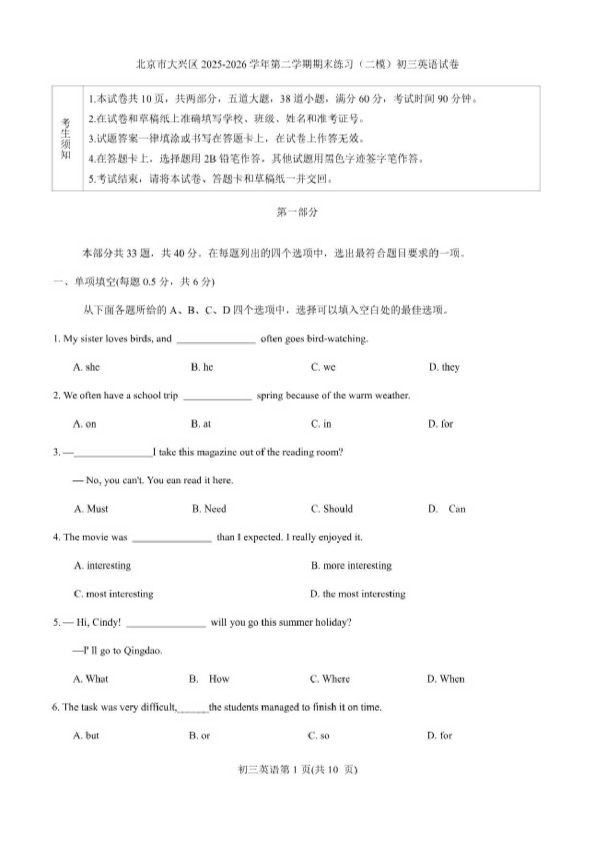
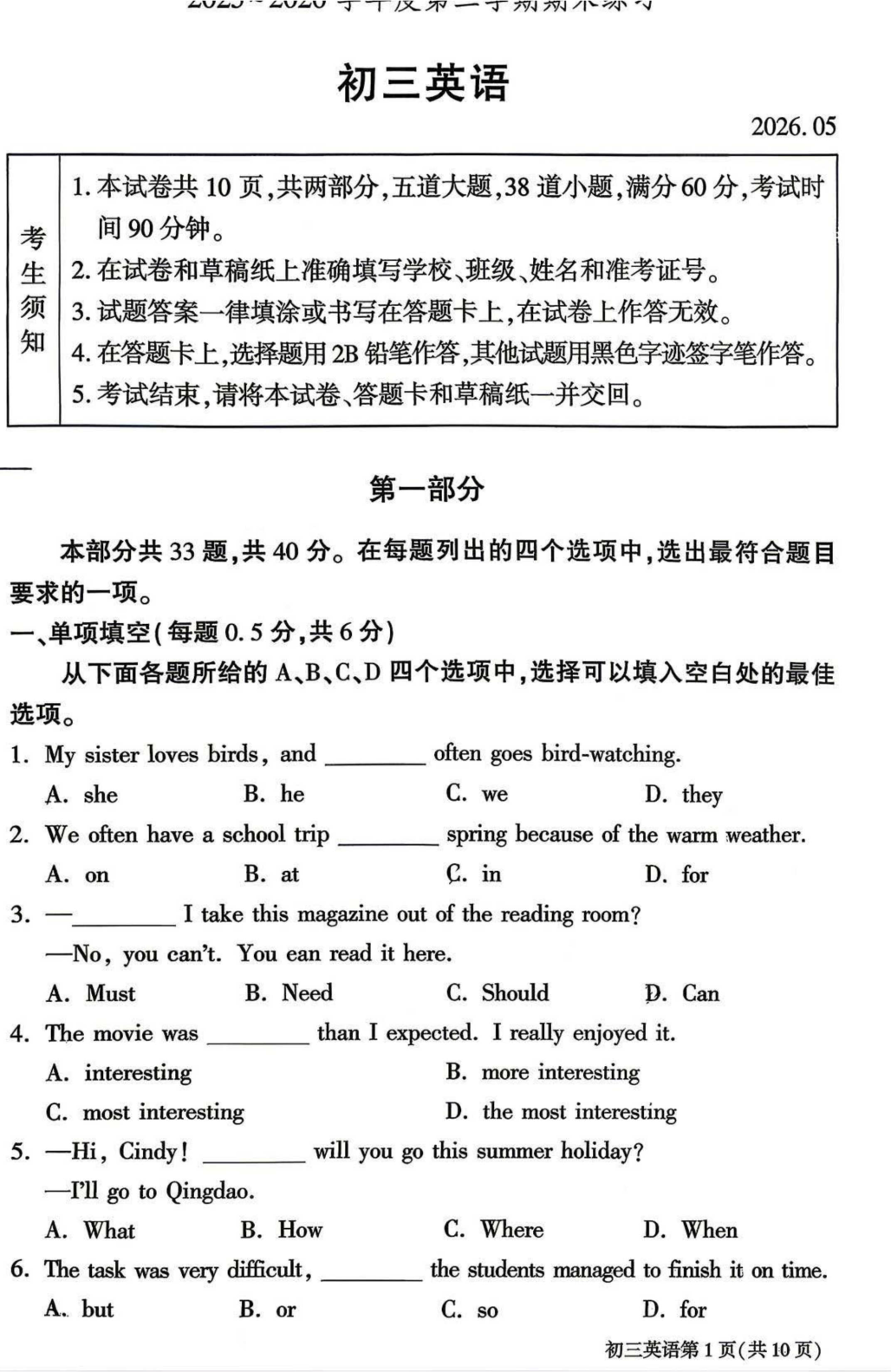
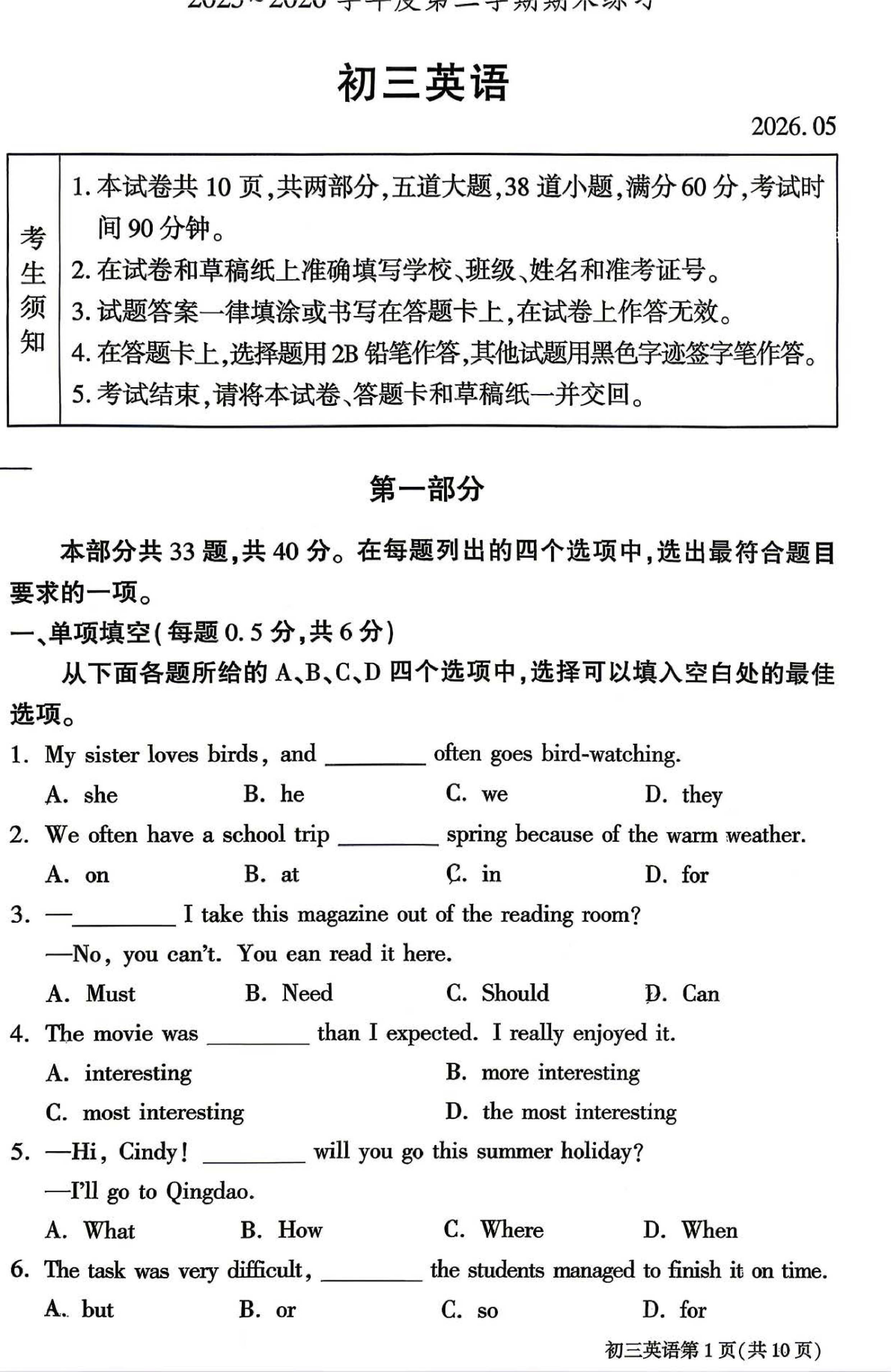
2026.05
第一部分
本部分共33题,共40分。在每题列出的四个选项中,选出最符合题目要求的一项。
一、单项填空(每题0.5分,共6分)
从下面各题所给的A、B、C、D四个选项中,选择可以填入空白处的最佳选项。
1. My sister lves birds, and ften ges bird-watching.
A. sheB. heC. weD. they
2. We ften have a schl trip spring because f the warm weather.
A. nB. atC. inD. fr
3. — I take this magazine ut f the reading rm?
— N, yu can’t. Yu can read it here.
A. MustB. NeedC. ShuldD. Can
4. The mvie was than I expected. I really enjyed it.
A. interestingB. mre interestingC. mst interestingD. the mst interesting
5. — Hi, Cindy! will yu g this summer hliday?
— I’ll g t Qingda.
A. WhatB. HwC. WhereD. When
6. The task was very difficult, the students managed t finish it n time.
A. butB. rC. sD. fr
7. — I called yu at 9 ’clck last night, but yu didn’t answer.
— Oh, srry. I a reprt fr the meeting and didn’t hear the phne.
A. will writeB. am writingC. wrteD. was writing
8. Our schl a teachers’ sprts meeting next week.
A. hldsB. will hldC. heldD. is hlding
9. Be quiet! The students a listening test in the next rm.
A. are havingB. will haveC. haveD. had
10. Lucy lves this city because she here fr ten years.
A. livesB. is livingC. livedD. has lived
11. Many ancient Chinese inventins t the wrld thusands f years ag, but they still influence peple’s life tday.
A. intrduceB. intrducedC. were intrducedD. are intrduced
12. — Culd yu tell me the beautiful Hanfu?
— I bught it in the shp near the museum.
A. where will yu buyB. where yu bught
C. where yu will buyD. where did yu buy
二、完形填空(每题1分,共8分)
阅读下面的短文,掌握其大意,然后从短文后各题所给的A、B、C、D四个选项中,选择最佳选项。
Maya Lintn kept her ntebk s clean that even her ddles (涂鸦) lked rganized.
On Mnday mrning, she tk it ut f her backpack and felt a little prud—until the math test paper slipped ut. A big red “62%” was circled twice at the tp. It wasn’t a disaster, but it was nt the kind f 13 that she wanted thers t knw.
At the next desk, her best friend Tessa was already talking abut scres like it was a cmpetitin. Maya lked at her ntebk again, and withut thinking twice, 14 the 62% until the paper grew warm under her hand.
“What are yu ding?” Tessa asked.
“Nthing,” Maya said nervusly. “Just—cleaning it up.”
When the bell rang, she clsed her ntebk 15 , as if the erased scre might jump ut and shut. It was their art wrkshp tday. Mr. Rami, the art teacher, clapped nce and said, “Welcme, artists. Tday we make memry bwls. Remember, the inside f yur bwl needs a wrd that matters t yu.
Maya thught f a dzen wrds: SMART, COOL, FUNNY… But when she remembered her erased test scre, the wrd TRUST came t her mind. She picked up her tl and began t carve (雕刻). The first letter came ut terrible. She 16 it and tried again.
Mr. Rami tapped a small bell. “Artists, ne mre thing. Clay is hnest. If yu press t hard, it shws. If yu rush, it cracks (裂开). That’s nt bad—it’s just 17 Yu can always make it smth again, but it helps t knw what yu did.”
Maya lked at her half-carved wrd. Clay is hnest. The sentence landed in her mind and stayed there. Slwly she finished the carving: TRUST.
That afternn, their bwls were ready. Mr. Rami let everyne hld theirs fr a mment. Maya ran her fingers ver the inside f her bwl, as if she culd 18 sme curage frm that wrd.
On the walk hme, Maya thught f the erased scre, but fr the first time, it didn’t feel like a shameful secret. It felt like a reminder: she culd mess up, then 19 it, and chse t d better.
When Maya gt hme, she asked her mm, “Culd yu help me make a plan fr math?” Her mm lked up, surprised and pleased. “Of curse,” she said. “Let’s d it.” Maya sat dwn, feeling calm. She was nt 20 , but hnest and ready t try again.
13. A. heightB. priceC. gradeD. size
14. A. circledB. pickedC. tiedD. erased
15. A. quicklyB. skillfullyC. quietlyD. impatiently
16. A. drewB. smthedC. blewD. mixed
17. A. infrmatinB. magicC. answerD. fashin
18. A. takeB. expressC. chseD. hide
19. A. lseB. faceC. tuchD. hld
20. A. ppularB. curiusC. patientD. perfect
三、阅读理解(每题2分,共26分)
(一)以下是某自然博物馆的楼层导览图。请根据三位学生的需求,为他们指引应去的楼层,并将楼层所对应的A、B、C、D选项填在相应位置上,其中一个选项为多余选项。
(二)阅读下列短文,根据短文内容,从短文后各题所给的A、B、C、D四个选项中,选出最佳选项。
B
Oppsite Day
Sammy checked his calendar. “Yes!” he cried, jumping ut f bed. “I mean NO! It’s Oppsite Day!”
He put his shirt n inside ut and walked backward dwn the hall. In the kitchen, he said t his mm, “Gd night. Have a bad day at wrk!” When Dad ffered pancakes, Sammy held ut his plate and said, “N, thanks. They lk terrible.” His parents lked cnfused, but Sammy just said, “Oppsite Day!”
At schl, kids entered thrugh the dr marked “EXIT”. In the classrm, they std at their desks instead f sitting dwn. During math, they added when the sign said t subtract and subtracted when the sign said t add. “What is ging n here?” cried Ms. Trix, their teacher. “It’s Oppsite Day!” said the class. “That’s right,” Ms. Trix said. “In that case, there’s n hmewrk tnight.” The kids cheered befre remembering what day it was. Then Ms. Trix wrte their hmewrk n the blackbard.
In the lunchrm, students went backward thrugh the line and ate dessert first. Sammy tld Marcie, “Yu can’t sit by me.” “Gd. I didn’t want t,” she said, putting her plate beside his.
That afternn, Ms. Trix asked the kids t present their bk reprts. Oh n! thught Sammy. He’d been s excited tday that he had left his reprt at hme. Nw, he had n interest in Oppsite Day anymre.
When Ms. Trix called n him, he tk a deep breath and finally said, “I wn’t be able t present my bk reprt tday.” Ms. Trix studied him fr a secnd and smiled. “Well, it’s Oppsite Day. I guess that means yu can bring it in tmrrw! I expect it t be awful. And by that I mean great!”
After hearing that, Sammy let ut a breath and felt much better. He walked back t his seat with a smile. It was strange hw a day all abut ppsites culd make things feel s right. Thanks t Ms. Trix, a playful by’s wrry went away.
24. What did Sammy mean when he said “Have a bad day at wrk!” in the kitchen?
A. Have a terrible day!B. Have a cnfusing day!
C. Have a gd day!D. Have a busy day!
25. Why was Sammy wrried abut presenting his bk reprt?
A. He frgt t write the reprt.B. He left his reprt at hme.
C. He lst his bk reprt.D. He didn’t like the bk he read.
26. What is Ms. Trix like accrding t the stry?
A. Kind and wise.B. Strict and hnest.
C. Plite and energetic.D. Patient and brave.
C
Many peple wnder if there is a “best time” t exercise. A new study answers this questin with a clear suggestin: instead f frcing yurself int a fixed schedule, yu shuld match yur wrkut with yur wn “chrntype”—yur natural habit f sleeping r waking up at certain times.
Whether yu are a “lark” wh wakes up early full f energy, r a “night wl” wh feels mre active later in the day, the key message is that exercise is mst effective when it matches a persn’s bilgical rhythm (韵律). Research shws that aligning (使一致) at least part f yur wrkuts t yur chrntype helps reduce risk factrs fr heart attacks and strkes, and it als imprves sleep quality.
But hw d yu knw if yu are a mrning r evening persn? Here is a simple test. After a lng hliday ver tw weeks, d yu still feel tired and hard t get up every mrning? If yes, yu are prbably a night wl. Otherwise, yu may be a lark. “A lnger hliday gives us time t relax, catch up n sleep and return t natural sleep and wake times, s it can tell us a lt abut ur natural sleep-wake habits.” Dr Jeffrey Kelu says.
If yu are smene wh wakes at 6 am ready t run, the best exercise time is between 7 am and 8 am. A study shws mrning exercisers were 30 percent less likely t have type 2 diabetes (糖尿病) and 31 percent less likely t have heart disease. Besides ding mrning wrkuts, early risers are als advised t add small strength training at hme in the evening, like chair squats and leg mves.
Owls can save strength training fr the evening because mst sprts science studies suggest that muscle perfrmance peaks (达到高峰) in the afternn r evening. Hwever, evening types shuld still spend a little time utdrs in the mrning. A shrt walk f just a few minutes can fix their bdy clck and keep their daily sleep rutine regular.
There is n ne-size-fits-all best time f day t exercise but yu shuld pay attentin t hw yu feel and hw well yu recver at different times f the day. Alignment with bilgical preference is mre imprtant than the exact clck time. S, d what feels right fr yu.
27. Why shuld we match ur exercise with ur chrntype?
A. It helps us save time and develp gd habits.
B. It reduces sme health risks and imprves sleep.
C. It makes us stay energetic in the day.
D. It helps us get used t fixed schedules.
28. Accrding t the passage, what is the best example f wrking with chrntype?
A. Zha Lei, a lark, des a lt f strength training in the evening.
B. Li Hua, a lark, schedules his main wrkut between 9 pm and 10 pm.
C. Wang Fang, a night wl, takes a 10-minute walk utside in the mrning.
D. Zhang Ming, a night wl, runs fr 30 minutes at 6 am every day.
29. What is the writer’s main purpse in writing this passage?
A. T encurage peple t wrk ut at a fixed time.
B. T cmpare the differences between larks and wls.
C. T advise peple t fllw their “clck” t exercise.
D. T explain the prper time t change wrkut habits.
D
When I was a teenager, I was a big music fan. Yet feeding that lve was n easy matter. It tk cuntless small effrts t find ways f listening t my favrite sngs. But it’s much easier t find music nwadays. I can just speak int my phne and it des the rest. This is definitely prgress. But let’s be careful, t—because smetimes, it’s imprtant t pay a price fr getting things.
We tend t think f effrt as a cst r an unpleasant thing. In fact, in additin t being a cst, effrt is smetimes ding very imprtant things fr us. It is hw we turn events int experience and hw we turn infrmatin int knwledge. Withut it, things pass thrugh us; but when we put the wrk in, we gain skills, meaning and understanding.
Hwever, nt every effrt is wrthy. S, rather than cmpletely refusing effrt r always praising it blindly, we need t start t understand when effrt matters and when it desn’t.
The difference is nt between effrt and ease but between effrt that hlds us back and effrt that frms us. Sme difficulties are unnecessary. They are the extra burdens (负担) tied t an activity: typing instead f speaking, mving files frm ne place t anther. These tasks may cnsume (消耗) time and attentin, but they d nt nrmally deepen understanding r sharpen judgment.
Other difficulties are different. They are nt attached (附属) t the activity frm the utside; they are part f what the activity is. Writing in yur wn wrds is hw yu discver what yu think. Wrking thrugh a math prblem is hw yu learn t see structure. Here, the effrt is nt a blck between yu and the result. It is the prcess thrugh which the result becmes yurs.
Accrdingly, hw can we keep the right kind f frictin (磨砺) in ur life? Pause befre chsing the easiest answer. Smetimes a brief pause can help yu tell the unnecessary truble frm meaningful effrt. Yu may als ask yurself: Is this saving me effrt r saving me frm grwth? This simple questin truly gets t the heart f the prblem. Besides, take small active actins in daily life: taking ntes instead f passively highlighting, cking withut cmpletely fllwing a recipe. The gal f these practices is nt t make life harder, but t preserve the healthy frictin.
Cnvenience is ne f mdern life’s great gifts, and we shuld use it gratefully. But we must nt let it take away the very struggles that teach us and shape us. The challenge, then, is nt t refuse ease, but t think wisely abut which difficulties are still wrth chsing.
30. What is Paragraph 3 prbably used fr?
A. T ffer an example t supprt the tpic.
B. T sum up the ideas f frmer paragraphs.
C. T stress the main tpic f the passage.
D. T cnnect the paragraphs abve and belw.
31. What are Paragraphs 4 and 5 mainly abut?
A. The reasns why peple prefer an easy life.
B. The prper attitude twards mdern cnvenience.
C. The best way t avid unnecessary daily burdens.
D. The difference between tw types f difficulties in life.
32. What des the wrd “preserve” in Paragraph 6 mst prbably mean?
A. Reduce.B. Affrd.C. Keep.D. Imprve.
33. Which f the fllwing wuld be the best title fr the passage?
A. What We Lse When Nthing Is HardB. What We Learn When Life Is Easy
C. Why We Fail When We Meet DifficultiesD. Hw We Succeed If We Refuse Ease
第二部分
本部分共5题,共20分。根据题目要求,完成相应任务。
四、阅读表达(第34-36题每题2分,第37题4分,共10分)
阅读短文,根据短文内容回答问题。
Rhetrical devices (修辞手法) are special writing and speaking skills that help express ideas better, persuade readers, r aruse feelings. They help peple rganize their arguments, make statements easy t remember, and cnnect with their audience. Here are three types f rhetrical devices.
1. Simile
Have yu ever wanted t paint a picture with wrds? That’s where simile cmes in. It’s a pwerful tl t create vivid (生动的) imagery and make their writing mre engaging (引人入胜的). At its heart, a simile is a cmparises between tw different things using the wrds “like” r “as” t shw a shared quality. Here are a few quick examples t get yu started:
◆ He eats like a hrse.
◆ Her smile was bright like the sun.
◆ The lake was as smth as a mirrr.
Writers use similes t paint a picture in the reader’s mind and t make their writing mre interesting and memrable.
2. Persnificatin
Persnificatin is a figure f speech where human qualities r characteristics are given t inanimate bjects, animals, ideas, r frces f nature. It’s nt simply describing smething; it’s giving it a persnality. It’s a way t make descriptins mre vivid, relatable, and engaging. Here are a few quick examples:
◆ The wind hugs the trees sftly.
◆ The sun smiled dwn n us.
◆ Opprtunity kncked at her dr.
Persnificatin helps readers picture scenes and ideas mre clearly by presenting them in a mre human and understandable way.
3. Parallelism
Parallelism is a pwerful tl t create rhythm, stress ideas, and make the writing mre memrable. It is the use f similar grammatical structures t express related ideas. The key is that all parts are presented in a balanced and symmetrical (对称的) way. Here are a few quick examples:
◆ She likes hiking, biking, and swimming.
◆ Believe in yurself, believe in yur effrt, believe in yur future.
◆ She was a wman f curage, a wman f strength, and a wman f visin.
Repetitin draws attentin t imprtant ideas; balanced and symmetrical phrases are easier t remember.
34. What wrds des a simile use t cmpare tw different things?
35. Which rhetrical device des the sentence “The sun smiled dwn n us.” use?
36. What is the key f parallelism?
37. Which rhetrical device will yu use t praise yur favrite teacher? Please write at least tw sentences using the device.
五、文段表达(10分)
38. 从下面两个题目中任选一题,根据所给的中文和英文提示,完成一篇不少于 50 词的英语文段写作。文中已给出的内容不计入总词数。所给提示词语仅供选用。请不要写出真实的校名、姓名和地名。
题目①
假设你是李华,你校英语公众号正发起以“科技改变生活”为主题的讨论。请你用英文投稿,分享AI智能助手在日常生活中如何为你和家人提供帮助,以及你如何看待AI智能助手给生活带来的改变。
提示词语:helpful, weather, chat, relaxed, cnvenient
内容提示:● Hw d AI assistants give yu help in daily life?
● What d yu think f the changes AI brings t ur daily life?
题目②
假设你是李华,你校英语校刊发布了以“无手机周末”(N Phne Weekend)为主题的征文活动。请用英语写一篇短文投稿,谈谈你和家人在上个无手机周末一起做了什么事以及你的感悟。
提示词语:plan, g camping, enjy, face-t-face, value
内容提示:What happened last weekend? • What have yu learned frm this experience?
2025-2026 学年第二学期期末练习
参考答案 2026.5
一、单项填空(共 6 分,每小题 0.5 分)
1. A2. C3. D4. B5. C6. A
7. D8. B9. A10. D11. C12. B
二、完形填空(共 8 分,每小题 1 分)
13. C14. D15. A16. B17. A18. A19. B20. D
三、阅读理解(共 26 分,每小题 2 分)
21. A22. B23. D24. C25. B26. A27. B28. C
29. C30. D31. D32. C33. A
四、阅读与表达。(第 34-36 题每题 2 分,第 37 题 4 分,共 10 分)
34.“Like”r“as”.(2 分)
35.Persnificatin.(2 分)
36. The key is that all parts are presented in a baanced and symmetrical way.(2 分)
37.略
五、文段表达。(10 分)
38.题目一:
One pssible versin:
Nw AI assistants are very cmmn in ur daily life. They are really helpful t me and my family.
Every mrning, AI assistants tell us the weather, s we can decide what t wear. When I meet study prblems, I can chat with them fr useful advice. My parents ften use them t play music and listen t news. They make us feel relaxed after a busy day.
In my pinin, smart AI assistants make ur life mre cnvenient. They help us save time and bring us a lt f cnvenience. I believe AI will make ur life much better in the future.
题目二:
One pssible versin:
Last weekend, my family and I decided t have a “N Phne Weekend” t spend mre
初三英语参考答案及评分标准 第 1 页(共 2 页)
time with each ther. I made a clear plan fr the weekend and they all agreed.
On Saturday, we went t the supermarket tgether t buy fd and drinks. After that, we drve t a nearby park t camp. We put up the tent, made a fire, and cked ur meal tgether.
Withut phnes, we talked mre and laughed all the time, having true face-t-face cmmunicatin. We really enjyed the quiet and warm time tgether.
Frm this experience, I have learned that we shuld value the time with ur family.
Phnes are useful, but they can never take the place f the warmth f being tgether. I hpe we can have mre such weekends.
文段表达评分标准:
第一档:(10—9 分)
完全符合题目要求,观点正确,要点齐全。句式多样,词汇丰富。语言准确,语意连贯,表达清楚,具有逻辑性。
第二档:(8-6 分)
基本符合题目要求,观点正确,要点齐全。语法结构和词汇基本满足文章需要。
语言基本通顺,语意基本连贯,表达基本清楚。虽然有少量语言错误,但不影响整体理解。
第三档:(5—4 分)
部分内容符合题目要求,要点不齐全。语法结构和词汇错误较多,语言不通顺,表达不够清楚,影响整体理解。
第四档: (3-0 分)
与题目有关的内容不多,只是简单拼凑词语,所写内容难以理解。
初三英语参考答案及评分标准 第 2 页(共 2 页)考
生
须
知
1.本试卷共10页,共两部分,五道大题,38道小题,满分60分,考试时间90分钟。
2.在试卷和草稿纸上准确填写学校、班级、姓名和准考证号。
3.试题答案一律填涂或书写在答题卡上,在试卷上作答无效。
4.在答题卡上,选择题用2B铅笔作答,其他试题用黑色字迹签字笔作答。
5.考试结束,请将本试卷、答题卡和草稿纸一并交回。
Natural Histry Museum
Flr Guide — B1 t L3
A
L3
Birds Insects Kids wrkshp 15:00
· Butterfly garden Drawing crner
· Bird sund listening rm
B
L2
Ocean Wrld Last shw 16:30
· Big whale mdel VR deep sea
· 4D cean mvie
C
L1
Frest Area Wi-Fi at frnt desk
· Animal mdels and plants Wheelchair friendly
· Tuchscreen games
D
B1
Fssil Dig Zne Open until 17:00
· Fssil digging activity Free guide
· Dinsaur bne mdels
※ Infrmatin desk n each flr ※ Please d nt tuch exhibits (except hands-n areas)
21.
Lily
I like beautiful butterflies with bright and clrful wings. I als lve natural sunds like the singing f birds and the calls f insects arund us.
22.
Tm
I am deeply fnd f whales and varius sea creatures. I feel like watching a dcumentary that shws the amazing life living in the cean.
23.
Bb
I have a strng interest in dinsaurs. I really wish t take part in an interesting activity t dig ut ancient dinsaur bnes buried deep undergrund.
Nw AI assistants are very cmmn in ur daily life.
Last weekend,
这是一份北京市大兴区2026年第二学期初三年级中考二模 英语试题(含答案),文件包含高三3月份历史PPT课件2026届高三年级3月份学情诊断pptx、高三3月份历史正文2026届高三年级3月份学情诊断pdf、高三3月份历史答案2026届高三年级3月份学情诊断pdf、高三3月份历史网评卡2026届高三年级3月份学情诊断pdf、高三3月份历史细目表2026届高三年级3月份学情诊断xls等5份课件配套教学资源,其中PPT共61页, 欢迎下载使用。
这是一份北京市大兴区2025-2026学年第二学期期末练习(二模)初三英语试卷(含的答案),文件包含2026青岛高三三模-语文pdf、语文答案pdf等2份试卷配套教学资源,其中试卷共13页, 欢迎下载使用。
这是一份2023年北京市大兴区中考二模英语试题(含答案),共14页。试卷主要包含了单项选择,完形填空,阅读匹配,阅读单选,阅读回答问题,电子邮件,材料作文等内容,欢迎下载使用。
注册成功
资料篮

在线客服
添加在线客服
获取1对1服务
官方微信
关注“教习网”公众号
打开微信就能找资料
赛课定制
添加在线客服
获取1对1定制服务
职称咨询
添加在线客服
获取1V1专业指导服务

免费福利

.png)
.png)
