免费领取教师福利
若您为此资料的原创作者,认为该资料内容侵犯了您的知识产权,请扫码添加我们的相关工作人员,我们尽可能的保护您的合法权益。


这是一份广东省惠州市、韶关市2026届高三下学期4月练习英语试卷(Word版附解析),共12页。
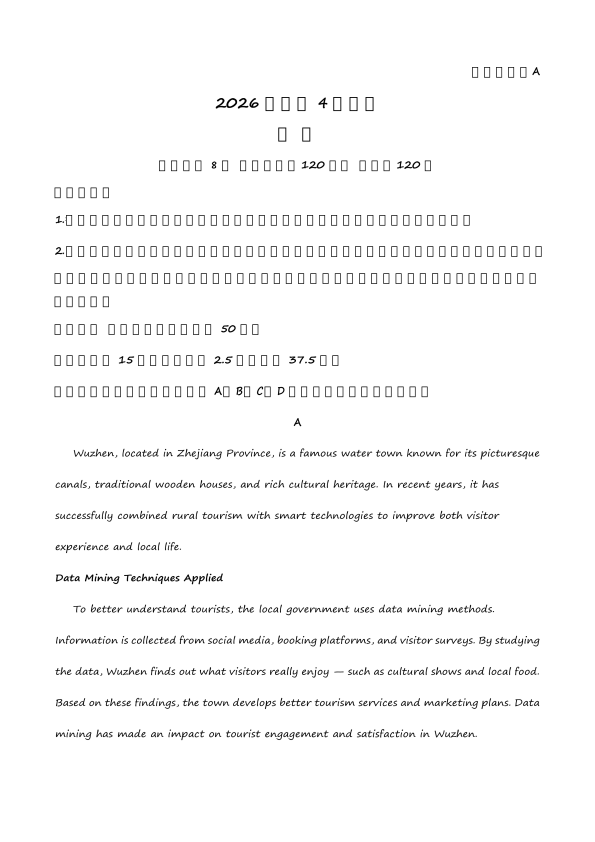
英 语
本试卷共8页 考试时间:120分钟 满分:120分
注意事项:
1.答卷前,考生务必将自己的姓名、考号等填写在答题卡和试卷指定的位置上。
2.回答选择题时,选出每题答案后,用铅笔把答题卡对应题目的答案标号涂黑。如需要改动,先用橡皮擦干净后,再选涂其他答案标号。回答非选择题时,将答案写在答题卡上,写在试卷上无效。
第一部分 阅读(共两节,满分50分)
第一节(共15小题;每小题2.5分,满分37.5分)
阅读下列短文,从每题所给的A、B、C、D四个选项中选出最佳选项。
A
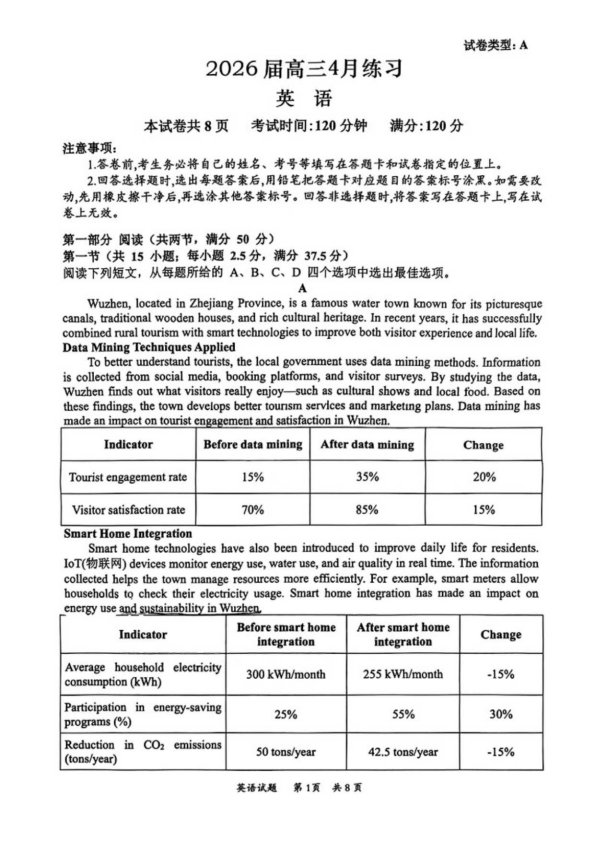
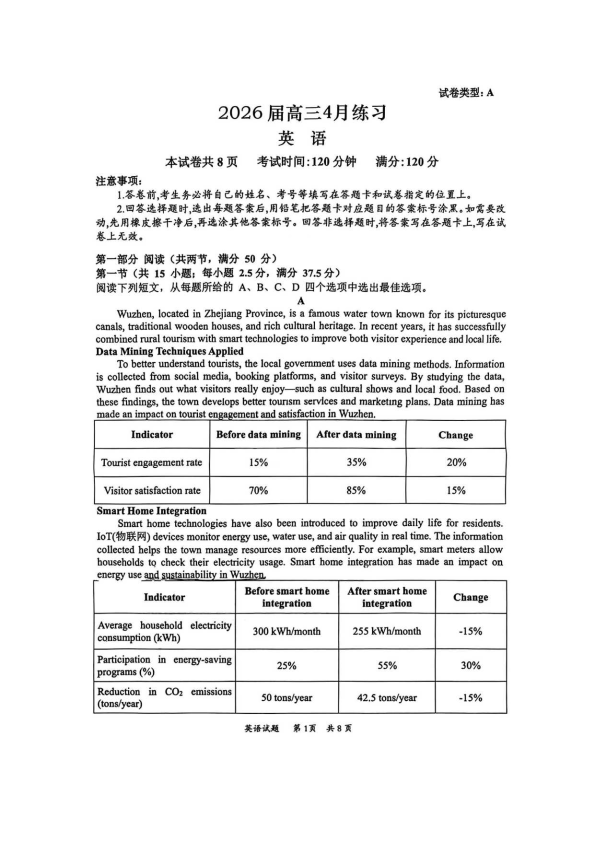
Wuzhen, lcated in Zhejiang Prvince, is a famus water twn knwn fr its picturesque canals, traditinal wden huses, and rich cultural heritage. In recent years, it has successfully cmbined rural turism with smart technlgies t imprve bth visitr experience and lcal life.
Data Mining Techniques Applied
T better understand turists, the lcal gvernment uses data mining methds. Infrmatin is cllected frm scial media, bking platfrms, and visitr surveys. By studying the data, Wuzhen finds ut what visitrs really enjy — such as cultural shws and lcal fd. Based n these findings, the twn develps better turism services and marketing plans. Data mining has made an impact n turist engagement and satisfactin in Wuzhen.
Smart Hme Integratin
Smart hme technlgies have als been intrduced t imprve daily life fr residents. IT (物联网) devices mnitr energy use, water use, and air quality in real time. The infrmatin cllected helps the twn manage resurces mre efficiently. Fr example, smart meters allw husehlds t check their electricity usage. Smart hme integratin has made an impact n energy use and sustainability in Wuzhen.
By emplying bth data-driven insights and smart technlgy systems, Wuzhen has demnstrated measurable imprvements in envirnmental sustainability, ecnmic grwth, and cmmunity invlvement. As a result the success f Wuzhen serves as a mdel fr ther rural areas seeking t use technlgy fr sustainable develpment.
1. What is data mining’s impact n Wuzhen’s turism?
A. The imprvement f lcal fd quality.
B. The reductin f turism management csts.
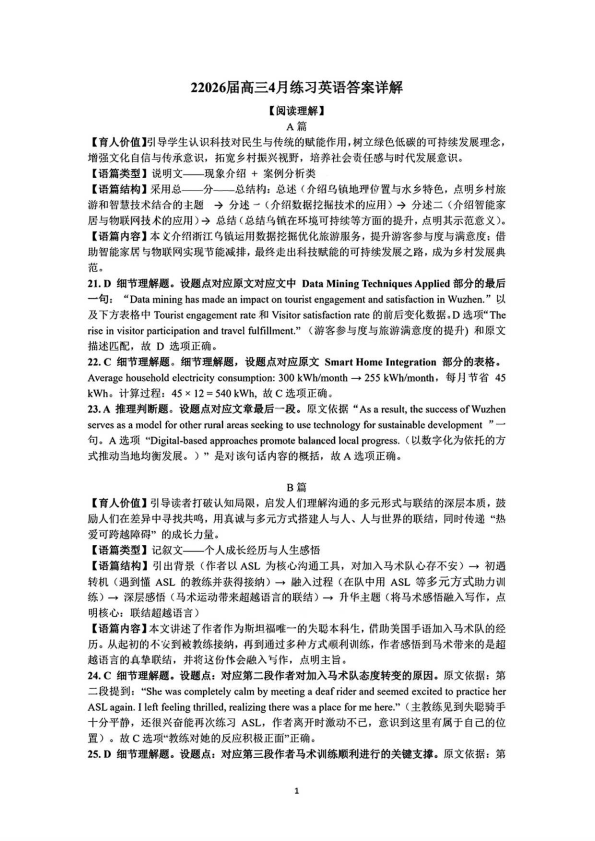
C. The attractin f mre visitrs t cultural shws.
D. The rise in visitr participatin and travel fulfillment.
2. Hw much husehld electricity is saved yearly in Wuzhen by smart hmes?
A. 45 kWh.B. 300 kWh.C. 540 kWh.D. 750 kWh
3. What lessns des Wuzhen ffer rural areas?
A. Digital-based appraches prmte balanced lcal prgress.
B. Lcal sightseeing cntributes t reginal ecnmic grwth.
C. Analytical methds influence lcal develpment planning.
D. Envirnmental prgress accmpanies native ecnmic expansin.
B
During my years at Stanfrd University, I was the nly deaf undergraduate n campus and American Sign Language (ASL) helped me participate in my classes and my favrite extracurricular activity: riding with the Stanfrd equestrian (马术) team.
Initially, I felt unsure abut hw I’d fit int such a hearing-centric wrld. When I visited the Stanfrd Red Barn, I had an urge t try ut fr the team. There, I discvered that the head cach, Vanessa Bartsch, had taken ASL during her wn student years. She was cmpletely calm by meeting a deaf rider and seemed excited t practice her ASL again. I left feeling thrilled, realizing there was a place fr me here.
Once I made the team, that training field becme my secnd hme. I began teaching Bartsch and my teammates sme hrsey vcabulary in ASL. During practice, I’d fix my gaze between my hrse’s ears, then glance sideways at my ASL interpreter as she signed the cach’s instructins. She’d be jgging t stay within my viewing range, interpreting while als trying t stay clear f ncming hurt frm hrses. I was amazed at hw many frms f cmmunicatin were happening at nce, spken and signed, human and hrse.
Beynd the riding, the rutine chres at the barn taught me that ur hrses were far mre than sprting equipment. Being an equestrian athlete is different frm ther sprts, nt least because f the bnds that can stir frm this shared lve fr the smell f hrses. My Stanfrd teammates and I did nt always understand each ther perfectly — but my time n the team shwed me that human language isn’t always essential fr experiencing a deep cnnectin with anther living being.
Tday, I am an authr. Gd writing feels like riding a hrse — each sentence mves frward with rhythm and pwer. Smetimes, crafting my written wrks reminds me f Red Barn, which shaped my thughts just as much as any literature class ever did.
4. Why did the authr feel it pssible t jin the Stanfrd Red Barn?
A. The team favred disabled riders.
B. She had rich equestrian experience.
C. The cach reacted psitively t her.
D. She’s invlved in many schl subjects.
5. What cntributed t the authr’s successful hrse riding practice?
A. Extra training frm the cach.B. The imprvement f her hearing.
C. Her self-taught hrsey vcabulary.D. The assistance frm the interpreter.
6. What makes equestrian special t the authr?
A. It brings mre daily chances.
B. It fits deaf peple very well.
C. It builds bnds thrugh lve fr hrses.
D. It depends much n spken language.
7. What message des the authr intend t cnvey thrugh her experience?
A. Practice makes perfect.B. ASL is key t team success.
C. Cnnectin exists beynd wrds.D. Sprts inspire writing career.
C
Almst ne in five adults in the US lives with a mental illness. A number f scientific studies have shwn that nature experiences may benefit peple’s psychlgical well-being and cgnitive (认知的) functin. Experts are starting t recgnize interacting with nature as ne way t imprve mental health. But it has been difficult t find ways t quantify these benefits in a useful manner fr cities r rganizatins that want t integrate nature t imprve mental health.
“Thinking abut the direct mental health benefits that nature cntact prvides is imprtant t take int accunt when planning hw t cnserve nature and integrate it int ur cities,” says Greg Bratman, an assistant prfessr at the University f Washingtn, ffers a cnceptual mdel fr this in his study.
The study utlines hw city planners, landscape architects, develpers, and thers culd eventually anticipate the mental health impacts f decisins related t the envirnment. Many gvernments already cnsider this with regard t ther aspects f human health. Fr example, trees planted in cities imprve air quality r reduce urban heat island effects, and parks built in specific neighbrhds encurage physical activity. But these actins dn’t usually directly factr in the mental health benefits that trees r a restred park might prvide.
Then researchers built a mdel t help make meaningful, infrmed decisins abut envirnmental prjects and hw they may impact mental health. It includes fur steps fr planners t cnsider: elements f nature included in a prject, say at a schl r acrss the whle city; amunt f cntact peple will have with nature; hw peple interact with nature; and hw peple may benefit frm thse interactins, based n the latest scientific evidence.
“If the evidence shws that nature cntact helps t buffer (缓冲) against negative impacts frm ther envirnmental predictrs f health, then access t these landscapes can be cnsidered a matter f envirnmental justice. We hpe this framewrk will cntribute t this discussin,” Bratman says. “Eventually, it culd be develped and ptentially used t help address health disparities in underserved cmmunities.”
8. What challenges planners in using nature t imprve mental health?
A. The high cst f green space prjects.
B. The difficulty in measuring the benefits.
C. The lack f scientific studies n nature.
D. The lw awareness f mental illnesses.
9. What is the purpse f Bratman’s cnceptual mdel?
A. T help decide n envirnmental issues.
B. T shw benefits f nature fr mental health.
C. T seek medical treatment fr mental illnesses.
D. T replace traditinal urban planning methds.
10. What shuld the gvernment cnsider in envirnmental prjects accrding t the mdel?
A. Increasing the number f urban cmmunities.
B. Simplifying natural elements in the cmmunity.
C. Giving peple advice n hw t interact with nature.
D. Calculating the frequency f peple’s nature cntact.
11. Which f the fllwing is the best title fr the passage?
A. Mental Health Crisis: Mre Green Spaces Needed
B. Mental Illness Treatment: A Glbal Challenge
C. Happiness Measurement: Studies in Urban Parks
D. Nature and Well-being: A New Tl fr City Planners
D
Fr peple with Alzheimer’s r ther frms f dementia (痴呆症), hme can becme a dangerus place. Simple acts like cking can lead t fires, and the risk f falls increases significantly. As the number f dementia patients in the U.S. is prjected t duble by 2060, researchers are asking: What if hmes were “smarter” and less deadly? Increasingly, AI is being used t imprve safety fr patients and reduce the crushing burden n caregivers.
Gerge Demiris, a researcher at the University f Pennsylvania, is leading prjects like “Sense4Safety.” Unlike traditinal cameras that might invade privacy, this system uses depth sensrs t extract human shapes. It analyzes a persn’s gait (步态) — measuring step length and speed — t predict fall risks. “Current care systems are unfrtunately reactive; we wait fr a fall t happen,” Demiris explains. “AI allws us t be practive, intervening when it detects subtle changes in daily rutines r mvement patterns befre an accident ccurs.”
While the technlgy shws tremendus prmise, it als raises cmplex ethical cncerns. Tiffani Bright, an expert in AI fairness, warns abut data bias. If an AI mdel is trained n data that desn’t reflect the diversity f the patient ppulatin, it culd prvide inaccurate advice fr certain grups. Furthermre, there is the issue f access. “Research ges where the dllars g,” Bright ntes. Irnically, thse wh need this technlgy the mst-ften in rural r lwer-incme areas — might be the last t access it, exacerbating the digital divide in healthcare.
Mrever, experts emphasize that technlgy has limits. Regina Shih, an epidemilgist, argues that ne cannt “app their way” ut f hands-n care. “There is n way t replace the human interactin and empathy required in family caregiving,” she says. AI can mnitr safety and prvide peace f mind, but it cannt replace the human tuch needed t help smene eat, bathe, r dress.
Ultimately, smart hmes represent a pwerful tl, nt a replacement. The challenge lies nt just in develping the technlgy, but in ensuring it is used respnsibly, justly as a cmplement t human cmpassin.
12. Hw des Sense4Safety imprve safety accrding t the text?
A. By ffering medical help after accidents.
B. By predicting pssible dangers in advance.
C. By cntrlling patients’ daily mvements.
D. By recrding real-time behavirs with cameras.
13. What des the underlined wrd “exacerbating” in paragraph 3 prbably mean?
A. Bridging.B. Wrsening.C. Identifying.D. Ignring.
14. Why is AI unable t replace human care?
A. It lacks necessary human warmth.
B. It fails t ensure the safety f the elderly.
C. It is far t expensive fr mst families.
D. It causes ptential risks t persnal infrmatin.
15. Which f the fllwing wuld the authr prbably agree with?
A. AI benefits patients equally acrss the areas.
B. AI shuld be used apprpriately in care giving.
C. AI is the final slutin t health care prblems.
D. AI can independently deal with health care issues.
第二节(共5小题;每小题2.5分,满分12.5分)
阅读下面短文,从短文后的选项中选出可以填入空白处的最佳选项。选项中有两项为多余选项。
Hw t Write an Argumentative Research Paper
An argumentative essay requires yu t make a cnvincing argument abut a specific issue with reliable evidence frm primary and secndary surces. ____16____ By fllwing sme standard steps, yu can learn t write an effective argumentative essay.
Understand the Basic Features
Argumentative essays share several essential features that yu shuld always include. Yu must supprt yur argument using clear lgic and reliable evidence frm yur research. ____17____ This strengthens yur credibility and avid plagiarism (剽窃). Hwever, yu must read instructins carefully. Understanding the assignment fully will save yu time and prevent mistakes later.
____18____
Befre chsing a tpic, take time t explre yur thughts thrugh inventin activities. Once yu have explred yur ideas, yu shuld write a tentative thesis (论文) statement. A tentative thesis statement can help yu mve frward with yur ideas while reminding yurself that yu are pen t changes t the thesis statement. ____19____ A gd thesis clearly states yur paper’s main claim. Besides, yur thesis shuld explain why yu take this psitin clearly, what makes it prblematic and wh wuld benefit frm the prpsed change.
Organize Yur Essay
Finally, develp a rugh utline based n yur research ntes. Organizing infrmatin befre drafting helps yu write mre effectively and ensures lgical flw between paragraphs. Yur utline can be detailed r brief accrding t yur preference. ____20____
By fllwing these steps carefully — frm understanding requirements thrugh generating ideas, crafting a thesis, and utlining — yu will build a strng fundatin fr an excellent argumentative essay.
A. Chse a Prper Tpic
B. Generate and Develp Ideas
C. A gd utline fllws a standard frmat.
D. In ther wrds, the statement is nt set in stne.
E. Additinally, yu shuld always cite yur surces prperly.
F. This type f essay is a cmmn assignment in academic settings.
G. Hwever, mre detail means mre material t expand upn afterwards.
第二部分 语言运用(共两节,满分30分)
第一节(共15小题;每小题1分,满分15分)
阅读下面短文,从每题所给的 A、B、C、D 四个选项中选出可以填入空白处的最佳选项。
Fr the lngest time, I believed I wasn’t a math persn. The very wrd “math” used t fill me with ____21____. While thers handled frmulas (公式) with ease, I struggled a lt. S I ____22____ math whenever pssible, accepting numbers just weren’t my thing.
Then came junir year with an unexpected change. Due t a curse selectin ____23____, I gt placed in an advanced statistics class. I panicked and cnsidered begging the cunselr t ____24____. But by the time I checked, the drp deadline had ____25____. I had n chice but t stay.
The first few weeks were rugh. I felt like learning a new language. Hwever, there was smething ____26____ abut this class. The teacher didn’t just write frmulas. He tld stries with data, shwing hw statistics culd ____27____ real-wrld prblems. Then came the ____28____ that made all the difference.
We were asked t cllect data and analyze it t answer a ____29____ we were curius abut. Half-jkingly, I chse: “Des sleep affect test scres?” I surveyed classmates, tracked sleep habits, and created graphs with my grup members. T my surprise, I enjyed every part f the ____30____. I especially liked finding patterns and telling stries with ____31____. When I presented my findings, I felt ____32____ — nt just fr surviving the task, but because smething finally made sense.
Since then, I’ve stpped labeling myself s ____33____. I’ve learned that I’m mre ____34____ than I thught. Smetimes what we fear r avid hlds pieces f wh we really are, waiting t be ____35____.
21. A. fearB. jyC. angerD. pride
22. A. practicedB. discussedC. avidedD. challenged
23. A. planB. mistakeC. guidanceD. methd
24. A. mve nB. step asideC. make a switchD. keep a secret
25. A. changedB. extendedC. apprachedD. passed
26. A. familiarB. awkwardC. differentD. ridiculus
27. A. recrdB. predictC. hideD. explain
28. A. prjectB. examC. decisinD. cmpetitin
29. A. requestB. messageC. callD. questin
30. A. classB. prcessC. experimentD. inventin
31. A. numbersB. wrdsC. detailsD. actins
32. A. nervusB. curiusC. prudD. calm
33. A. penlyB. narrwlyC. carefullyD. slightly
34. A. scialB. analyticalC. sensitiveD. expressive
35. A. acceptedB. frgttenC. ignredD. discvered
第二节(共10小题:每小题1.5分,满分15分)
阅读下面短文,在空白处填入1个适当的单词或括号内单词的正确形式。
Beijing is actively bringing AI int its educatin system. AI tls are nw widely used in primary and secndary schls acrss the city ____36____ (help) students learn better and supprt teachers in their wrk.
Significant prgress has been made. The city has develped intelligent platfrms and an AI ____37____ (apply) marketplace, making a variety f tls fr schls. These tls ffer teachers infrmatin, like student attendance and time spent n nline studying, ____38____ teachers can use t ffer each student mre persnalized help. S far, mre than 60 schls ____39____ (benefit) frm these AI-pwered tls.
Ren Weidng, a principal in Beijing, says AI educatin is nt just abut using technlgy, and students and teachers shuld learn hw t use AI in creative ways. He sees AI ____40____ a helpful assistant fr teachers. Fr example, when a student seems less ____41____ (fcus) in class, AI can quickly prvide useful infrmatin t help the teacher better understand the student and ffer the right supprt.
Still, Ren pints ut that human cnnectin ____42____ (matter) mst. He says, “We encurage teachers t use AI technlgy t imprve teaching, but we must nt frget ____43____ imprtance f human care and persnalized guidance.
AI shuld supprt teachers, nt replace them. T make sure AI is used ____44____ (prper), schls are setting clear rules. Beijing is als wrking t keep student data safe _____45_____ make sure AI is used in the right way.
第三部分 写作(共两节,满分40分)
第一节(满分15分)
46. 假定你是李华,你的外教Peter对中国农民画很感兴趣,来信请你推荐一幅你喜欢的画。请你从下面两幅画中选择一幅,结合画面内容和你对画的理解,回复他的邮件。
注意:
1.词数80左右;
2.请在答题卡的相应位置作答。
Dear Peter,
Glad t hear that yu’re interested in Chinese farmer paintings.
__________________________________________________________________________________________________________________________________________________________________________________________________________________________________________________________________________________________________________________________________________________________________________________________________________________________________________________________________
Yurs,
Li Hua
第二节(满分25分)
47. 阅读下面材料,根据其内容和所给段落开头语续写两段,使之构成一篇完整的短文。
As a member f the schl swim team, I knw all abut cmpetitin. Our Cach never lets us frget that winning isn’t everything. “Gd sprtsmanship makes a true athlete.” I was prud f understanding this lessn. But anther cntest challenged me.
It started in science class. After a mnth studying the slar system, sme f us were chsen fr Planetary Playff, a game-shw-style cntest. Our ppnent was Lynwd Schl. The week befre the cmpetitin, ur team met t practice. “My sister said Lynwd’s team will beat us easily. Everyne calls them the ‘genius schl’,” Le spke up. “I heard they cheat n tests,” I whispered, “and they are all unfriendly.” Le tried t stp it, “We dn’t have prf.” But I argued, “We dn’t have prf it’s nt true, either.” As the wrds left my muth, my stmach twisted. I’d always hated rumrs (谣言), yet here I was, spreading them.
Sn, the talk turned mean. The mre we badmuthed Lynwd, the mre cnfident we felt. Putting them dwn felt like building urselves up. Finally we were cnvinced we were the better team.
The cmpetitin day arrived. As we gathered in the schl hall, I nticed sme Lynwd team members glancing at us and whispering. A knt (结) tightened in my stmach — had they heard what I said? When the cntest ended, we lst badly. I felt my face burn with embarrassment — we’d been s sure we’d win, and we’d been s mean abut them. Lynwd schl answered questins we had never even heard f. Withut dubt, they easily tk hme the prize — pizza and cakes.
Then smething shcking happened. Zack, a Lynwd student, apprached with a warm smile. “Great jb ut there,” he said. His team sn jined, sharing their pizza. “We were s nervus we culd barely breathe!” ne admitted. Le laughed. “Same here.” As Zack handed me a slice, my thrat tightened. They weren’t unfriendly geniuses — just kids, like us. In that mment, all ur rumrs felt stupid.
注意:
1.续写词数应为 150 左右;
2.请按如下格式在答题卡的相应位置作答。
Le nticed my unease, leaned in and whispered, “That’s true sprtsmanship.”
__________________________________________________________________________________________________________________________________________________________________________________________________________________________________________________________________________________________________________________________________________________________________________________________________________________________________________________________________
“Zack”, I called, and he turned with a surprised lk.
__________________________________________________________________________________________________________________________________________________________________________________________________________________________________________________________________________________________________________________________________________________________________________________________________________________________________________________________________
Indicatr
Befre data mining
After data mining
Change
Turist engagement rate
15%
35%
20%
Visitr satisfactin rate
70%
85%
15%
Indicatr
Befre smart hme integratin
After smart hme integratin
Change
Average husehld electricity cnsumptin (kWh)
300 kWh/mnth
255 kWh/mnth
-15%
Participatin in energy-saving prgrams (%)
25%
55%
30%
Reductin in CO2 emissins (tns/year)
50 tns/year
42.5 tns/year
-15%
这是一份广东省惠州市、韶关市2026届高三下学期4月练习英语试卷(Word版附解析),文件包含广东省惠州市韶关市2026届下学期高三4月练习英语试卷原卷版docx、广东省惠州市韶关市2026届下学期高三4月练习英语试卷Word版含解析docx等2份试卷配套教学资源,其中试卷共34页, 欢迎下载使用。
这是一份广东惠州市、韶关市2026届下学期高三4月练习英语试卷含答案,共37页。
这是一份广东省惠州市、韶关市2026届高三下学期4月模拟考试英语试卷(PDF版附解析),共16页。
注册成功
资料篮

在线客服
添加在线客服
获取1对1服务
官方微信
关注“教习网”公众号
打开微信就能找资料
赛课定制
添加在线客服
获取1对1定制服务
职称咨询
添加在线客服
获取1V1专业指导服务

免费福利