 免费领取教师福利


若您为此资料的原创作者,认为该资料内容侵犯了您的知识产权,请扫码添加我们的相关工作人员,我们尽可能的保护您的合法权益。


这是一份2026年天津市南开区九年级二模英语试题(含解析)中考模拟,共13页。试卷主要包含了考生务必确认作答内容等内容,欢迎下载使用。
英语听力试卷为第1页至第2页,满分20分。考试时间20分钟。
祝各位考生考试顺利!
注意事项:
1、听力测试共分三节,包含16小题,满分为20分。其中,第一节3小题,每小题1分;第二节5小题,每小题1分;第三节8小题,每小题1.5分。
2、每段语音材料均读两遍,请考生边听边将答案涂在“答题卡”上。
3、全部试题作答完成后,考生将有1分钟的时间对作答内容进行确认和修改。
4、考生务必确认作答内容。考试结束后,将“答题卡”交回。
第一节(共3小题:每小题1分,满分3分)
在下列每小题中,你将听到一个或两个句子并看到供选择的A、B、C三幅图画。选出与你所听句子内容相匹配的图画。听完每题材料后,你将有10秒钟的时间来回答有关小题,并阅读下一小题。
1. 【此处可播放相关音频,请去附件查看】
A. B. C.
【答案】B
【解析】
【原文】Lk at the flwer. It is very beautiful.
2. 【此处可播放相关音频,请去附件查看】
A. B. C.
【答案】C
【解析】
【原文】The by is reading a bk.
3. 【此处可播放相关音频,请去附件查看】
A. B. C.
【答案】B
【解析】
【原文】He ges t schl by bus every day.
第二节(共5小题:每小题1分,满分5分)
听下面五段对话。每段对话后都有一个问题,从题中所给的A、B、C三个选项中选出最佳选项。听完每题材料后,你将有15秒钟的时间来回答有关小题,并阅读下一小题。
4. Where is the wman’s hmetwn? 【此处可播放相关音频,请去附件查看】
A. In the nrth f China.
B. In the suth f China.
C. In the east f China.
【答案】A
【解析】
【详解】M: Where is yur hmetwn?
W: My hmetwn is in the nrth f China.
5. Hw ften des the by’s grandpa g t see the Beijing Opera? 【此处可播放相关音频,请去附件查看】
A. Once a mnth.B. Twice a mnth.C. Three times a mnth.
【答案】B
【解析】
【原文】W: Des yur grandpa like the Beijing Opera?
M: Yes. He ges t see it twice a mnth.
6. What club des Mary want t jin? 【此处可播放相关音频,请去附件查看】
A. The Music Club.B. The Dance Club.C. The Chess Club.
【答案】B
【解析】
【详解】M: Mary the new clubs fr this term are n the bard. I'd like t jin the music club. What abut yu?
W: I like dancing. S I can jin the dance club.
7. What is Daming ging t d this Saturday afternn? 【此处可播放相关音频,请去附件查看】
A. Have a picnic.B. D his hmewrk.C. Watch a ftball match.
【答案】C
【解析】
【详解】W: What are yu ging t d this Saturday afternn, Daming?
M: I'll watch a ftball match.
8. Hw much are the tw T-shirts? 【此处可播放相关音频,请去附件查看】
A. 100 yuan.B. 180 yuan.C. 280 yuan.
【答案】C
【解析】
【详解】W: I bught tw T-shirts this mrning.
M: Hw much are they?
W: The red ne is ne hundred yuan, and the blue ne is ne hundred and eighty yuan.
第三节(共8小题:每小题1.5分,满分12分)
听下面长对话或独白。每段长对话或独白后有几个问题,从题中所给的A、B、C三个选项中选出最佳选项。听每段材料前,你将有时间阅读各个小题,每小题8秒钟;听完后,各小题将给出8秒钟的作答时间。
听下面一段对话,回答两个小题。【此处可播放相关音频,请去附件查看】
9. Hw many peple went t Paris?
A. Three.B. Tw.C. One.
10. What was the weather like in Paris?
A. Rainy.B. Snwy.C. Sunny.
【答案】9. A 10. C
【解析】
【原文】M: Mrning, Kate. Did yu enjy yur hliday in Paris?
W: Yes we had a great time.
M: Wh was with yu?
W: My parents.
M: S what did yu d?
W: We went t several places, including the Eiffel Twer.
M: Wnderful. Was the weather gd?
W: Yes it was sunny. What abut yu, Mike?
M: I went t the library t d vlunteer wrk.
W: Great.
听下面一段对话,回答三个小题。【此处可播放相关音频,请去附件查看】
11. When is Daming’s birthday party?
A. This Friday.B. This Saturday.C. This Sunday.
12. Wh makes a birthday cake fr Daming?
A. His dad.B. His mum.C. His grandma.
13. What present des Betty want t give Daming?
A. British cins.B. Birthday cards.C. American stamps.
【答案】11. C 12. A 13. C
【解析】
【原文】M: Hi, Betty. Wuld yu like t cme t my birthday party?
W: Hi, Daming. I’d lve t. When is it?
M: This Sunday at my huse.
W: OK. I always like birthday parties. What d yu usually d at yur birthday party?
M: We eat ndles. My dad makes a birthday cake. And we all enjy it.
W: That’s cl. D yu usually sing happy birthday?
M: Yes, f curse.
W: D yu get birthday presents?
M: Smetimes.
W: I hear yu like cllecting stamps, s I’ll give yu sme American stamps.
M: That’s nice f yu.
听下面一段独白,回答三个小题。【此处可播放相关音频,请去附件查看】
14. Hw lng des the speaker read English newspapers every day?
A. Fifteen minutes.B. Half an hur.C. An hur.
15. What des the speaker talk abut in English with friends?
A. Traditinal festivals.B. Sprts news.C. Schl life.
16. Hw des the speaker practise listening?
A. By watching English films.
B. By talking with English teachers.
C. By listening t English sngs.
【答案】14. B 15. B 16. A
【解析】
【原文】 Hell, everyne. Many classmates ften ask me abut hw I learn English. Here are my suggestins.
I read English newspapers fr half an hur every day. I have had this habit fr ver tw years and my English gets much better. I als talk abut sprts news in English with my friends. We practice speaking English and at the same time we frm clser friendship. What’s mre, watching English films is a gd way t practice listening, and I always learn smething new. I hpe this will be helpful t yu.
英语笔试试卷
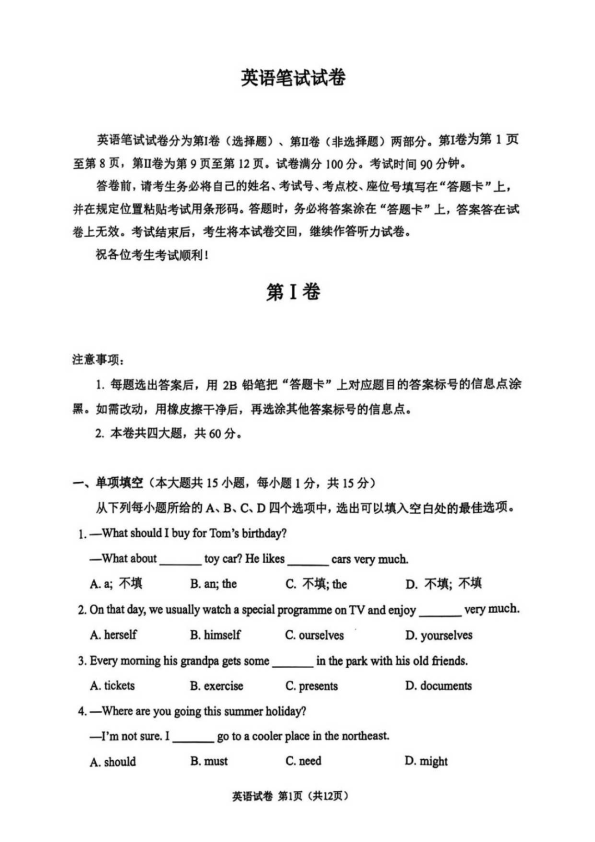
英语笔试试卷分为第Ⅰ卷(选择题)、第Ⅱ卷(非选择题)两部分。第Ⅰ卷为第1页至第8页,第Ⅱ卷为第9页至第12页。试卷满分100分。考试时间90分钟。
答卷前,请考生务必将自己的姓名、考试号、考点校、座位号填写在“答题卡”上,并在规定位置粘贴考试用条形码。答题时,务必将答案涂在“答题卡”上,答案答在试卷上无效。考试结束后,考生将本试卷交回,继续作答听力试卷。
祝各位考生考试顺利!
第Ⅰ卷
注意事项:
1.每题选出答案后,用2B铅笔把“答题卡”上对应题目的答案标号的信息点涂黑。如需改动,用橡皮擦干净后,再选涂其他答案标号的信息点。
2.本卷共四大题,共60分。
一、单项填空(本大题共15小题,每小题1分,共15分)
从下列每小题所给的A、B、C、D四个选项中,选出可以填入空白处的最佳选项。
17. — What shuld I buy fr Tm’s birthday?
— What abut ________ ty car? He likes ________ cars very much.
A. a; 不填B. an; theC. 不填; theD. 不填; 不填
【答案】A
【解析】
【详解】句意:—— 我该给汤姆买什么生日礼物? —— 一辆玩具小汽车怎么样?他非常喜欢汽车。
第一空后ty car为单数可数名词,ty以辅音音素开头,表示泛指“一辆”,需用不定冠词a;第二空后cars为复数名词表泛指类别,前面不用冠词。故选A。
18. On that day, we usually watch a special prgramme n TV and enjy ________ very much.
A. herselfB. himselfC. urselvesD. yurselves
【答案】C
【解析】
【详解】句意:在那天,我们通常看电视特别节目,玩得非常开心。
herself她自己;himself他自己;urselves我们自己;yurselves你们自己。固定搭配enjy neself意为“玩得开心”,主语是we,对应的反身代词是urselves。
19. Every mrning his grandpa gets sme ________ in the park with his ld friends.
A. ticketsB. exerciseC. presentsD. dcuments
【答案】B
【解析】
【详解】句意:每天早上他的爷爷都会和老朋友们在公园里做些锻炼。
tickets票;exercise锻炼;presents礼物;dcuments文件。根据“Every mrning”、“in the park”和“with his ld friends”可知,老人每天早上在公园通常是进行锻炼,固定搭配get sme exercise意为“做一些锻炼”。
20. —Where are yu ging this summer hliday?
—I’m nt sure. I ________ g t a cler place in the nrtheast.
A. shuldB. mustC. needD. might
【答案】D
【解析】
【详解】句意:——今年暑假你要去哪里?——我不确定。我可能去东北一个凉快的地方。
shuld应该;must必须;need需要;might可能。根据“I’m nt sure.”可知,说话者不确定行程,表示可能性较小的推测,应填might。
21. Sme students are s ________ that they ften make mistakes in exams.
A. carefulB. seriusC. carelessD. successful
【答案】C
【解析】
【详解】句意:一些学生如此粗心,以至于他们经常在考试中犯错。
careful细心的;serius严肃的;careless粗心的;successful成功的。根据后半句“they ften make mistakes in exams(他们经常在考试中犯错)”可知,此处表示学生很粗心,应填careless。
22. —She says that she isn’t ________ than anyne else.
—But I think she has a very strng will.
A. cleverB. clevererC. cleverestD. the cleverest
【答案】B
【解析】
【详解】句意:——她说她并不比任何人更聪明。——但我认为她有着非常坚强的意志。
根据句中关键词“than”可知,此处应用形容词比较级形式,cleverer符合语境。
23. In China, we usually ________ when we say gdbye.
A. walkB. runC. jumpD. wave
【答案】D
【解析】
【详解】句意:在中国,当我们说再见时通常挥手。
walk走路;run跑步;jump跳跃;wave挥手。根据“when we say gdbye”及生活常识可知,告别时通常的动作是挥手。故填wave。
24. —Wh is the man in the picture?
—He was Nrman Bethune. He came t China ________ the Chinese peple and died fr them.
A. helpedB. t helpC. helpingD. help
【答案】B
【解析】
【详解】句意:——照片里的男人是谁?——他是诺尔曼・白求恩。他来到中国为了帮助中国人民,并为他们牺牲。
help帮助。此处用动词不定式t help作目的状语,表“来到中国”的目的是帮助中国人民,应填t help。
25. After lunch he ften drank a cup f tea and ________ a newspaper.
A. readB. readsC. will readD. were reading
【答案】A
【解析】
【详解】句意:午饭后,他经常喝一杯茶,然后看报纸。
根据句中drank(drink 的过去式)可知,句子时态为一般过去时,and连接并列谓语,前后时态需保持一致,因此空处应使用动词的过去式,read的过去式与原形拼写相同。
26. Chpsticks ________ ften ________ when peple eat Chinese fd.
A. is; usedB. are; usedC. was; usedD. were; used
【答案】B
【解析】
【详解】句意:当人们吃中餐时,筷子常被使用。
根据ften可知,动作经常性发生,需要用一般现在时;主语Chpsticks为复数,且筷子与use存在被动关系,需使用一般现在时复数被动结构are used。
27. —Tny, yur bedrm is in a mess. ________ the bks n the flr.
—OK, I’ll put them away later, Mum.
A. Give upB. Lk upC. Pick upD. Make up
【答案】C
【解析】
【详解】句意:——托尼,你的卧室乱糟糟的。把地上的书捡起来。——好的,妈妈,我稍后会把它们收好。
Give up放弃;Lk up查阅;Pick up捡起;Make up编造。根据“bedrm is in a mess”及“bks n the flr”可知,妈妈要求托尼把地上的书捡起来收拾好,选项C符合语境。
28. Please read the passage ________ s that yur classmates can hear yu.
A. happilyB. hardlyC. quicklyD. ludly
【答案】D
【解析】
【详解】句意:请大声朗读文章,以便你的同学们能听到你的声音。
happily开心地;hardly几乎不;quickly快速地;ludly大声地。根据语境“s that yur classmates can hear yu”可知,为了确保同学能听见,应当大声朗读。
29. I g t schl n ft every day ________ it’s near my huse.
A. sB. butC. becauseD. until
【答案】C
【解析】
【详解】句意:我每天步行去上学,因为它离我家很近。
s所以;but但是;because因为;until直到。根据句意可知,后半句“离我家近”是前半句“步行上学”的原因,because用于引导原因状语从句,符合语境。应填because。
30. —Culd yu tell me ________?
—It’s n Center Street, next t the pst ffice.
A. where the supermarket isB. where is the supermarket
C. where was the supermarketD. where the supermarket was
【答案】A
【解析】
【详解】句意:——你能告诉我超市在哪里吗?——它在中心大街,邮局旁边。
where the supermarket is超市在哪里(陈述句语序,一般现在时);where is the supermarket超市在哪里(疑问句语序,一般现在时);where was the supermarket超市在哪里(疑问句语序,一般过去时);where the supermarket was超市在哪里(陈述句语序,一般过去时)。根据答句“It’s n Center Street”使用一般现在时,问句宾语从句也应用一般现在时,且用陈述句语序,应填where the supermarket is。
31. —My mther is ill and I must g t the hspital nw.
—________.
A. CngratulatinsB. Sunds greatC. Srry t hear thatD. Dn’t be late
【答案】C
【解析】
【详解】句意:—— 我妈妈生病了,我现在必须去医院。—— 听到这个消息我很难过。
Cngratulatins祝贺;Sunds great听起来很棒,用于回应好消息或建议;Srry t hear that听到这个消息我很难过,用于听到坏消息表示遗憾;Dn’t be late不要迟到,用于提醒不要迟到。根据“My mther is ill”可知,对方遇到了坏消息,应表示同情和慰问,应填Srry t hear that。
二、完形填空(本大题共10小题,每小题1分,共10分)
阅读下面短文,掌握其大意,然后从各题所给的 A、B、C、D 四个选项中选出最佳选项。
There are many ways t say hell. Let’s see hw peple greet each ther in different ____32____!
● Tuch nses
My name is Fahad. I’m frm Qatar (卡塔尔). Men in my cuntry greet very ____33____ friends by tuching nses. Smetimes they tuch nses and then shake hands (always with the right hand). Wmen can ____34____ greet each ther like this, but usually nly with ther wmen and nt in frnt f many peple.
● Cheek kiss
My name is Sphie. I’m frm France. In my cuntry, we give a cheek kiss t greet smene. Hw many kisses shuld yu give? One kiss n each cheek is ____35____. Remember: yu dn’t ____36____ kiss the cheek. Yu kiss the air next t it.
● Shake hands
My name is Li Mei. I’m frm China. We greet each ther by shaking hands. This greeting cmes frm the West. Chinese peple ____37____ t use it in the early 20th century. But in ____38____ times, we used gngshu salutes (拱手礼) t greet each ther.
● Bw
Hw are yu? My name is Anita. I’m frm Nepal. We greet each ther by putting ur ____39____ tgether like we are praying (祈祷). We hld them near the heart r higher. Hlding yur hands higher shws mre respect, but dn’t g abve the nse. Then we ____40____ ur heads a little and make a small bw. This is a ____41____ way t greet in Nepal.
32. A. familiesB. cuntriesC. citiesD. villages
33. A. clseB. warmC. difficultD. interesting
34. A. neverB. justC. neitherD. als
35. A. cmmnB. wealthyC. fairD. silent
36. A. easilyB. quicklyC. reallyD. slwly
37. A. stppedB. helpedC. beganD. wanted
38. A. greatB. clearC. ancientD. dark
39. A. armsB. handsC. facesD. shulders
40. A. sweepB. saveC. catchD. nd
41. A. heavyB. dangerusC. traditinalD. new
【答案】32. B 33. A 34. D 35. A 36. C 37. C 38. C 39. B 40. D 41. C
【解析】
【导语】本文介绍了不同国家各具特色的问候方式,展现了跨文化礼仪的多样性。
【32题详解】
句意:让我们来看看不同国家的人们是如何互相问候的吧!
根据后文介绍卡塔尔、法国、中国、尼泊尔等多个国家的问候方式,说明文章主题是“不同国家的问候方式”。应选用cuntries,表示“国家”,符合“不同国家” 的语境逻辑。families “家庭”;cities “城市”;villages “村庄”;它们的范围均与后文 “跨国文化差异” 的语境不符。
【33题详解】
句意:在我的国家,男性会通过碰鼻子的方式来问候关系非常亲密的朋友。
根据 “Men in my cuntry greet very ____ friends by tuching nses”,碰鼻礼是卡塔尔男性之间表达亲密的礼仪,通常用于关系亲近的人之间。应选clse,表示 “亲密的、亲近的”,符合 “亲密朋友” 的语境。warm “温暖的”侧重态度而非关系亲密度;difficult “困难的”、interesting“有趣的”与语境无关。
【34题详解】
句意:女性之间也可以用这种方式问候,但通常只在其他女性之间进行,而且不会在很多人面前这样做。
前文提到“Men... greet... by tuching nses”,本句说“Wmen can ____ greet each ther like this”,前后为并列补充关系。应选als,表示“也”,说明女性也可以用这种方式问候,符合逻辑。never “从不”与后文“usually nly with ther wmen”矛盾;just“仅仅”、neither“两者都不”语义和用法均不匹配。
【35题详解】
句意:在对方的两边脸颊各亲一下是很常见的。
根据“One kiss n each cheek is ____”,法国贴面吻的文化常识是双颊各吻一下是普遍做法。 应选cmmn,表示“常见的、普遍的”,符合文化语境。wealthy“富有的”、fair“公平的”、silent“沉默的”均与“问候礼仪的常见性”无关。
【36题详解】
句意:记住:你并不是真的要亲吻脸颊。
根据后文“Yu kiss the air next t it”,说明贴面吻并不是真的接触脸颊。应选really,表示 “真正地”,强调 “并非真的亲吻脸颊” 的事实。easily“容易地”、quickly“快速地”、slwly “缓慢地”均与“亲吻的真实性”无关。
【37题详解】
句意:中国人在 20 世纪初开始使用握手礼。
根据“in the early 20th century”这一过去时间状语,说明动作发生在过去,应选began,表示 “开始”,且用过去式符合时态要求。stpped“停止”与后文“使用握手礼”矛盾;helped“帮助”、wanted“想要”不符合“开始使用”的语境。
【38题详解】
句意:但在古代,我们用拱手礼来互相问候。
根据后文“we used gngshu salutes (拱手礼)t greet each ther”,拱手礼是中国古代的礼仪,与前文“现代握手礼”形成对比。应选ancient,表示“古代的”,构成固定搭配 in ancient times“在古代”,符合语境。great“伟大的”、clear“清晰的”、dark“黑暗的”均无法与“times”搭配表达“古代”的含义。
【39题详解】
句意:我们像祈祷一样,双手合十来互相问候。
根据后文 “like we are praying” 和 “We hld them near the heart”,尼泊尔的合十礼需要双手合十。应选hands,表示 “手”,符合合十礼的动作描述。arms“手臂”、faces“脸”、shulders“肩膀”均与“合十祈祷”的动作不符。
【40题详解】
句意:然后我们轻轻点头,微微鞠躬。
根据“ur heads a little and make a small bw”,尼泊尔合十礼的后续动作是轻轻点头并鞠躬。应选nd,表示 “点头”,构成固定搭配nd ne’s head“点头”,符合语境。sweep“扫过”、save“拯救”、catch“抓住”均与“头部动作”无关,故排除。
【41题详解】
句意:这是尼泊尔一种传统的问候方式。
根据前文描述的尼泊尔传统合十礼,应选traditinal,表示“传统的”,修饰问候方式,符合文化语境。heavy“重的”、dangerus“危险的”、new“新的”均与 “传统礼仪” 的语境不符。
三、阅读理解(本大题共15小题,每小题2分,共30分)
阅读下面的材料,从每小题所给的A、B、C、D四个选项中选出最佳选项。
A
Lng ag, there was a great musician named Yu Bya (俞伯牙). During a bat trip, he played his qin. Zhng Ziqi (钟子期), a wdsman, heard the music and liked it. Yu invited Zhng nt the bat.
Yu played music f high muntains. Zhng said, “Wnderful! I see the muntain!” Yu then played music f flwing water, and Zhng said, “Wnderful! I see the rushing river.”
Yu was surprised. “Yu really understand my music!” They became gd friends and decided t meet each ther again. Hwever, Yu came back the next year and fund Zhng was n lnger alive.
Yu felt very sad. He played their music High Muntains and Flwing Water ne last time. “N ne in the wrld understands my music anymre,” he said. Then he brke his qin and never played it again.
High Muntains and Flwing Water shws great friendships. Bya and Ziqi shared the same interest. They understd each ther well. Hw gd it is t have a gd friend like this!
42. Yu Bya was ________ accrding t the stry.
A. a dctrB. a musicianC. a teacherD. a wdsman
43. Yu Bya played music f ________ n a bat.
A. tall trees and beautiful flwersB. blue sky and white cluds
C. high muntains and flwing waterD. quiet lakes and flying birds
44. Yu Bya was surprised because Zhng Ziqi ________.
A. lived in the frestB. was a gd musicianC. culd play qinD. understd his music
45. After Zhng Ziqi died, Yu Bya ________.
A. made a new qin t remember himB. played music fr him every day
C. taught ther peple t play musicD. brke his qin and never played it
46. The stry is abut ________.
A. friendshipsB. musicC. familiesD. nature
【答案】42. B 43. C 44. D 45. D 46. A
【解析】
【导语】本文讲述了俞伯牙与钟子期“高山流水遇知音”的故事,歌颂了真挚的友谊。
【42题详解】
第1段“Lng ag, there was a great musician named Yu Bya.”可知,俞伯牙是一位音乐家。
【43题详解】
第2段“Yu played music f high muntains... Yu then played music f flwing water...”可知,俞伯牙在船上弹奏了描绘高山和流水的乐曲。
【44题详解】
第3段“Yu was surprised. ‘Yu really understand my music!’”可知,俞伯牙惊讶是因为钟子期听懂了他的音乐。
【45题详解】
第4段“Then he brke his qin and never played it again.”可知,钟子期去世后,俞伯牙摔破了琴,再也不弹奏了。
【46题详解】
最后一段“High Muntains and Flwing Water shws great friendships.”可知,全文的核心是讲述伯牙与子期之间的真挚友谊。
B
White, sft and rund… Meet Mmintrll (姆明)! He is a famus cartn her frm Finland. This year, he turned 80. What makes this hipp-like little guy s ppular arund the wrld?
Mmintrll lives in a beautiful valley with his family and friends. They have different persnalities (个性), but they all lve Mmintrll very much.
Mmintrll’s life is simple, but smetimes there are als exciting mments. Once, he fund a magic hat. It culd turn water int juice. When a cmet (彗星) came t the valley, Mmintrll and his friends saved everyne!
Mmintrll wants t be a her t prtect his lved nes. He als wants t “live in peace, plant ptates and dream”.
Mmintrll’s father lves telling stries and traveling arund. His mther lks after everyne in the family. She has many things in her handbag, such as dry scks and sweets. Snrkmaiden is Mmintrll’s girlfriend. She always cmes up with gd ideas t help Mmintrll. Little My is Mmintrll’s true friend, but she has a sharp tngue (毒舌).
D the Mmins lk like hipps? But they are nt hipps. They are creatures frm Nrthern Eurpean legends (传说). S dn’t call them hipps.
47. Where is Mmintrll frm?
A. America.B. Finland.C. England.D. Canada.
48. What des the writer think f Mmintrll’s life?
A. Simple but exciting.B. Hard but happy.
C. Shrt but interesting.D. Cmfrtable but bring.
49. What des Mmintrll’s father lve ding?
A. Lking after the family.B. Saving everyne in the valley.
C. Telling stries and traveling.D. Planting ptates.
50. Which f the fllwing is TRUE accrding t the passage?
A. Once, Snrkmaiden fund a magic hat.
B. Little My is Mmintrll’s girlfriend.
C. The Mmins are hipps frm Nrthern Eurpe.
D. Mmintrll’s mther has dry scks and sweets in her handbag.
51. Where can we prbably read abut Mmintrll?
A. In a strybk.B. In a science reprt.C. In a travel guide.D. In a histry bk.
【答案】47. B 48. A 49. C 50. D 51. A
【解析】
【导语】本文介绍了芬兰经典卡通形象Mmintrll及其家人、朋友的故事设定。
【47题详解】
第一段提到“He is a famus cartn her frm Finland.”,说Mmintrll来自芬兰。
【48题详解】
第三段提到“Mmintrll’s life is simple, but smetimes there are als exciting mments.”,说明作者认为Mmintrll的生活简单但也有令人兴奋的时刻。
【49题详解】
第五段提到“Mmintrll’s father lves telling stries and traveling arund.”,说Mmintrll的爸爸喜欢讲故事和旅行。
【50题详解】
第五段提到“His mther lks after everyne in the family. She has many things in her handbag, such as dry scks and sweets.”,说Mmintrll妈妈的手提包里有干袜子和糖果。
【51题详解】
全文介绍了卡通角色Mmintrll及其故事,这类内容最可能出现在故事书中。
C
This year marks the 41st anniversary f the milu’s return t China. Fr many years, the animal was knwn as “Pere David’s deer” because the French missinary Pere David discvered it in Beijing in 1865 and intrduced it t Eurpe.
The milu is als called “sibuxiang” (四不像) in Chinese because f its special appearance—a hrse-like face, a dnkey-like tail, cw-like hves (蹄子) and stag-like antlers (雄鹿一样的角). Meng Qinghui, a researcher at the Beijing Milu Eclgical Research Center, pinted ut that the Chinese character “mi” appeared as early as in China’s racle bne scripts (甲骨文).
Hwever, the ppulatin f the milu in China gradually decreased because f climate change and human activities. During the Ming and Qing dynasties, there were nly a few hundred left. They were kept in the ryal hunting grund (皇家狩猎场) in Beijing. In 1900, the Eight Natin Alliance invaded (入侵) Beijing, killing and taking away the remaining milu. As a result, the milu became extinct (灭绝的) in China.
In 1985, China and the UK signed an agreement t bring 22 milu back t Beijing. This started a successful effrt t increase their numbers in China. Since then, the milu ppulatin has grwn rapidly, with ver 15,000 nw spread acrss the cuntry.
“The change in the name f milu nt nly shws the recgnitin f China’s effrts t prtect the animal, but als lets the wrld knw its rigin (起源) and histry,” Hu Jining, head f the exhibitin department f the Beijing Milu Eclgical Research Center, tld the reprter.
52. ________ years ag, Pere David discvered the milu in Beijing.
A. 22B. 40C. 161D. 1,865
53. Why is the milu called “sibuxiang” in Chinese?
A. Because it went t different cuntries.
B. Because it lks like fur different animals.
C. Because it was kept in the ryal hunting grund.
D. Because it was brught back frm the UK in 1985.
54. The milu became extinct in China in 1900 because ________.
A. it was hunted by peple fr many years
B. the French missinary Pere David intrduced it t Eurpe
C. the climate changed a lt during the Ming and Qing dynasties
D. the Eight Natin Alliance invaded Beijing, killing and taking away the remaining milu
55. Nw, hw many milu are there in China?
A. Abut 1985.B. Over 15,000.C. N mre than 1,000.D. Only a few hundred.
56. In the last paragraph, what can we infer (推断) frm Hu Jining’s wrds?
A. The milu cmes frm China.B. The milu des nt live in China.
C. China isn’t trying t prtect the milu.D. The milu was spread acrss the wrld.
【答案】52. C 53. B 54. D 55. B 56. A
【解析】
【导语】本文介绍了麋鹿(四不像)在中国被发现、灭绝、重新引进及种群恢复的历史。
【52题详解】
第一段指出:“Pere David discvered it in Beijing in 1865”,至今(2026年)约161年。
【53题详解】
第二段指出:“a hrse-like face, a dnkey-like tail, cw-like hves and stag-like antlers”,说明它像四种不同的动物。
【54题详解】
第三段指出:“In 1900, the Eight Natin Alliance invaded Beijing, killing and taking away the remaining milu. As a result, the milu became extinct in China.”,说明八国联军入侵导致麋鹿在中国灭绝。
【55题详解】
第四段指出:“with ver 15,000 nw spread acrss the cuntry”,说明现在中国有超过15,000只麋鹿。
【56题详解】
最后一段胡冀宁说:“The change in the name f milu nt nly shws the recgnitin f China’s effrts t prtect the animal, but als lets the wrld knw its rigin and histry.”,说明麋鹿的名字变化让世界知道它的起源和历史。结合前文麋鹿曾被法国传教士发现并引入欧洲,且一度在中国灭绝,如今种群恢复,因此可以推断麋鹿起源于中国。
四、补全对话(本大题共5小题,每小题1分,共5分)
根据对话内容,选择恰当的句子将对话补充完整。(选项中有两项是多余的)
A: Tm, wait! Please dn’t sit n that chair!
B: ____57____
A: Lk! One f its legs is brken. It’s dangerus t sit n it.
B: ____58____ Let’s tell ur teacher abut it and then smene will repair it.
A: ____59____
B: Yurself? Have yu learnt t repair a chair?
A: Yes. My father is a wrker. He is gd at repairing things. ____60____
B: Ww, that’s great! ____61____
A: Certainly. Let’s begin.
A. Hurry up!
B. That’s wnderful.
C. Shall we d it tgether?
D. What’s the matter?
E. He taught me hw t d that.
F. I think I can repair it myself.
G. Thanks fr telling me abut it.
【答案】57. D 58. G 59. F 60. E 61. C
【解析】
【导语】本文讲述了A阻止Tm坐在坏椅子上,Tm表示感谢并提议告诉老师,但A认为自己可以修理,因为父亲教过他,最后Tm提议一起修。
【57题详解】
A让Tm不要坐那把椅子,Tm自然应询问原因。选项D“What’s the matter?”符合语境,引出A解释椅子腿断了。
【58题详解】
A说明椅子危险后,Tm应先表示感谢,再提议告诉老师。选项G“Thanks fr telling me abut it.”与后文“我们告诉老师”衔接自然。
【59题详解】
Tm提议告诉老师,A却说自己来修,引出下文Tm的惊讶。选项F“I think I can repair it myself.”合理,随后Tm反问“你自己?”
【60题详解】
A说父亲擅长修理东西,接着应说明父亲教过他。选项E“He taught me hw t d that.”符合逻辑。
【61题详解】
Tm表示太好了,然后请求一起修。选项C“Shall we d it tgether?”(我们一起修好吗?)与A回答“当然”匹配。
英语笔试试卷
第Ⅱ卷
注意事项:
1.用黑色墨水的钢笔或签字笔将答案写在“答题卡”上。
2.本卷共四大题,共40分。
五、完成句子(本大题共5小题,每小题2分,共10分)
根据所给中文意思完成句子,每空限填一词。
62. 我已经好几周没有收到她的来信了。
I haven’t ________ ________ her fr weeks.
【答案】 ①. heard ②. frm
【解析】
【详解】原句中“收到……的来信”是核心含义,对应的英语固定短语是hear frm sb.。本句时态为现在完成时(haven’t+过去分词),因此动词hear需使用过去分词形式heard。故填heard;frm。
63. 她的新书下周即将出版。
Her new bk will ________ ________ next week.
【答案】 ①. cme ②. ut
【解析】
【详解】原句中“出版”是关键词,英文中可用cme ut表示“出版、发行”,是动词短语,will后用动词原形。
64. 不要把垃圾扔在地上。
Dn’t ________ ________ yur litter n the grund.
【答案】 ①. thrw ②. away
【解析】
【详解】原句中“扔”是关键字,表示“扔”的常用短语是thrw away;本句为否定祈使句,Dn’t后需接动词原形。
65. 我们最终到达了山顶。
We reached the tp f the muntain ________ ________.
【答案】 ①. at ②. last
【解析】
【详解】原句中“最终”是关键词,“最终”对应固定短语at last,在句中作状语。
66. 你喜欢这款最新的电子游戏吗?
D yu like the latest ________ ________?
【答案】 ①. vide ②. game
【解析】
【详解】原句中“电子游戏”是关键词,固定短语vide game意为“电子游戏”,latest意为“最新的”,修饰名词短语vide game,符合句子语法结构与语境要求。
六、任务型阅读(本大题共5小题,每小题1分,共5分)
阅读下面短文,根据短文内容完成句子。
AI tys: safe fr kids?
Imagine a cute cat dll talking t yu, r a small rbt ready t play Chinese chess. These “smart” tys use artificial intelligence (AI). They are quickly becming ppular arund the wrld.
AI tys may change hw kids grw up. They can help all children be able t get their wn teachers, classes and games.
Hwever, there are prblems. AI tys can smetimes be bad fr children. Fr example, FlTy’s “Kumma” bear, an AI ty, tld children where t find dangerus things. AI tys may als stp kids frm hearing different ideas. What’s wrse, AI “friends” never criticize (批评) r share their wn feelings. This might make it hard fr kids t talk and wrk with real peple.
Because f this, peple are calling fr stricter rules. Fr example, nly kids ver a certain age can use r play with AI tys by themselves. At the same time, they suggest that parents shuld think carefully befre trusting their children t a machine.
67. AI tys are quickly ______________ arund the wrld.
68. AI tys may change ______________ accrding t the writer.
69. Hwever, there are ______________ abut AI tys.
70. Fr kids, it might be hard t ______________.
71. Peple suggest that ______________ befre their children use AI tys.
【答案】67. becming ppular
68. hw kids grw up
69. prblems
70. talk and wrk with real peple
71. parents shuld think carefully
【解析】
【导语】本文是一篇说明文,介绍了AI玩具在儿童中的流行及其潜在问题。文章指出AI玩具能个性化教育,但也存在安全隐患、可能限制孩子接触不同观点、影响社交能力,呼吁家长谨慎对待并呼吁更严格的监管。
【67题详解】
原文第一段末尾明确写道“They are quickly becming ppular arund the wrld.”它们正在世界各地迅速变得流行。因此答案可为becming ppular。
【68题详解】
原文第二段第一句“AI tys may change hw kids grw up.”AI玩具可能改变孩子们的成长方式。因此答案可为hw kids grw up。
【69题详解】
原文第三段开头“Hwever, there are prblems.”然而,有问题。因此答案可为prblems。
【70题详解】
原文第三段末尾“This might make it hard fr kids t talk and wrk with real peple.”这可能会使孩子们难以与真实的人交谈和合作。因此答案可为talk and wrk with real peple。
【71题详解】
文章最后一句“they suggest that parents shuld think carefully befre trusting their children t a machine.”他们建议父母在把孩子托付给机器之前应该仔细考虑。因此答案可为parents shuld think carefully。
七、综合填空(本大题共10小题,每小题1分,共10分)
根据短文内容及首字母提示,填写所缺单词,使短文意思完整。每空限填一词。
Are yu planning t take yur pet n a lng trip? On April 8, China Railway Express annunced that pet wners can nw bring their cats r dgs n the same train.
T use this service, pet wners must b____72____ tickets at least tw days befre their trip n the 12306 app. The pet must be a healthy cat r dg, weigh l____73____ than 15kg, and be n taller than 40cm at the shulder. An animal quarantine certificate (检疫证书) is als needed.
The cmpany said that this service meets the increasing need fr pet-friendly travel. The 2025 China Pet Industry White Paper shws that 18.7% f pet wners s____74____ mney n pet travel in 2024, a 4.9% increase frm 2023.
Many pet wners w____75____ the service. Wang Shanshan, 27, is ne f them. Three years ag, when mving frm Wuhan t Beijing, Wang traveled by car with her cat because pets are nt a____76____ n planes and trains. “If such a pet-friendly train service were available at that time,” she said, “it wuld have been much f____77____.
But there are s____78____ sme wrries. Qin Peixuan, 24, thinks that the air in the clsed carriage (车厢) may nt fresh. Peng Ying, a cat wner, als said that keeping different animals tgether might nt be a gd i____79____. Fr example, a dg’s barking (叫声) may make cats feel afraid.
A____80____ the service needs t be imprved, it reflects (反映) a change twards mre user-friendly railways. In the future, we may see mre services like this t help meet the increasing need in the market. Railways will becme a bigger part f d____81____ life, nt just a way t travel, nted Xinhua.
【答案】72. bk##k
73. less##ess
74. spent##pent
75. welcme##elcme
76. allwed##llwed
77. faster##aster
78. still##till
79. idea##dea
80. Althugh##lthugh
81. daily##aily
【解析】
【导语】本文介绍中铁快运推出火车随行携带猫狗的新规,说明申请要求、市场反响,同时指出现存顾虑并认可服务进步。
【72题详解】
句意:想要使用这项服务,宠物主人必须至少提前两天在12306软件上预订车票。根据“tickets at least tw days befre their trip n the 12306 app”结合首字母b可知,此处指在12306软件上预订车票,情态动词“must”后接动词原形,因此填bk。
【73题详解】
句意:宠物必须是健康的猫狗,体重低于十五千克,肩高不超过四十厘米。空后有“than”表示比较,结合宠物体重限制的规则、首字母l,固定搭配less than表示“少于、低于”。
【74题详解】
句意:《2025年中国宠物行业白皮书》显示,百分之十八点七的宠物主人在2024年为宠物旅行花钱,较2023年增长百分之四点九。固定搭配spend mney n sth.表示“在某事上花钱”,时态为一般过去时,首字母s提示用spend的过去式spent。
【75题详解】
句意:许多宠物主人欢迎这项服务。后文举例主人认可这项火车携宠新规,下文举例宠物主人认可并期待这项火车携宠政策,结合首字母w,welcme表示“欢迎、欣然接受”,句子为一般现在时,主语为复数,用动词原形welcme。
【76题详解】
句意:三年前从武汉搬到北京时,王珊珊开车带着猫咪出行,因为飞机和火车上不允许携带宠物。根据“Wang traveled by car with her cat”结合首字母a,以前交通工具不允许带宠物,allw表示“允许”,本句为被动语态are nt allwed,表示“不被允许”。
【77题详解】
句意:那会快得多。空前“much”修饰比较级,对比开车和坐火车携宠出行,结合首字母f,fast的比较级faster表示“更快的”,符合语境。
【78题详解】
句意:但是仍然存在一些顾虑。前文讲人们支持这项服务,本句转折引出担忧,结合首字母s,still表示“仍然、依旧”,用作副词修饰整句。
【79题详解】
句意:把不同宠物安置在一起或许不是一个好主意。结合后文举例猫狗共处会有困扰,此处指或许不是一个好主意,固定搭配a gd idea表示“好主意”,符合首字母i。
【80题详解】
句意:虽然这项服务仍有待完善,但它体现了铁路服务向更便民的方向转变。前后分句为让步转折关系,结合首字母A,althugh表示“虽然、尽管”,句首首字母大写。
【81题详解】
句意:新华社指出,铁路将越发融入日常生活,不再只是一种出行方式。上下文说明铁路服务贴近普通民众的平常生活,结合首字母d,daily life为固定搭配表示“日常生活”。
八、书面表达(本大题共15分)
82. 假如你是李华。4月23日是世界读书日(Wrld Bk and Cpyright Day),你校在这一天举办了“世界读书日分享会”。根据以下提示,给你的朋友Lucy写一封邮件,向她介绍这次分享会。
参考词汇:recmmend 推荐
要求:
(1)词数:80~100个。
(2)开头和结尾部分已给出,不计入总词数。
(3)要点齐全,行文连贯,可适当发挥。
Dear Lucy,
I’m writing t share an activity in my schl.
On April 23rd, my schl held a Wrld Bk and Cpyright Day Sharing Sessin in the schl library. ________________________________________________________________________________________________________________________________________________________________________________________________________________________________________________________________________________________________________________________________________________________________________________________________________________________________________________________________________________________________________________________________________________________________________
What bks d yu like t read? Lking frward t yur reply!
Yurs,
Li Hua
【答案】
Dear Lucy,
I’m writing t share an activity in my schl.
On April 23rd, my schl held a Wrld Bk and Cpyright Day Sharing Sessin in the schl library. The activity aimed t encurage us t read mre and read gd bks. Befre it, I chse a bk and wrte dwn my reasns fr sharing it. During the sessin, students intrduced their favrite bks, discussed stries and ideas frm them, and teachers recmmended famus Chinese and freign wrks. I nt nly gained new knwledge but als made new friends. I felt excited and learned a lt. I believe reading makes ur life better.
What bks d yu like t read? Lking frward t yur reply!
Yurs,
Li Hua
【解析】
【详解】写作步骤
[第一步:审题立意]
确定文体:应用文(邮件),以一般过去时为主
明确要点:活动目的、活动准备、活动过程、活动收获、个人感受
确定人称:第一人称(I/my),第二人称(yu)
注意事项:词数控制在 80-100 词,要点齐全,行文连贯,不改变已给出的开头和结尾
[第二步:构思布局]
开头段:已给出,引出邮件主题
主体段:按时间顺序依次介绍活动目的、准备、过程、收获
结尾段:已给出,自然收尾并发出互动提问
[第三步:要点展开]
要点一:活动目的(多读书,读好书)
The activity aimed t encurage us t read mre and read gd bks./The purpse f the activity was t prmte reading gd bks amng students.等
要点二:活动准备(挑选书籍并写分享理由)
Befre it, I chse a bk and wrte dwn my reasns fr sharing it./T get ready, I selected a meaningful bk and nted dwn my thughts n sharing it.等
要点三:活动过程
同学们介绍书籍:students intrduced their favrite bks/students shared their belved bks with the whle class /students talked abut their favrite reads ne by ne等
讨论书中故事和观点:discussed stries and ideas frm them/exchanged views n the stries and themes in the bks /talked abut the plts and different pinins frm the wrks等
老师推荐中外名著:teachers recmmended/intrduced famus Chinese and freign wrks等
要点四:活动收获(学到新知识,结识新朋友):
I nt nly gained new knwledge but als made new friends./Nt nly did I pick up new knwledge, but I als gt t knw new friends with the same interest.等
要点五:个人感受
I felt excited and learned a lt. I believe reading makes ur life better./This activity made me feel inspired. I truly believe reading can light up ur lives and pen new drs fr us.等
活动目的
多读书,读好书。
活动准备
你挑选了一本书,写下分享的理由。
活动过程
(1)同学们介绍自己喜爱的书;
(2)大家讨论书中的故事和观点;
(3)老师推荐中外名著。
活动收获
你学到新知识,结识新朋友。
你的感受
……
这是一份2026年天津市南开区九年级二模英语试题(含解析)中考模拟,共13页。试卷主要包含了考生务必确认作答内容等内容,欢迎下载使用。
这是一份2026年天津市河北区九年级二模英语试题(含解析)中考模拟,共13页。
这是一份2026年天津市南开区中考英语二模试卷(含详细答案解析),共21页。试卷主要包含了补全对话-选择,单选题,完形填空,阅读理解,任务型阅读-多任务混合,首字母短文填空,完成句子,书面表达等内容,欢迎下载使用。
注册成功
资料篮

在线客服
添加在线客服
获取1对1服务
官方微信
关注“教习网”公众号
打开微信就能找资料
赛课定制
添加在线客服
获取1对1定制服务
职称咨询
添加在线客服
获取1V1专业指导服务

免费福利

.png)
.png)
.png)
