 免费领取教师福利
若您为此资料的原创作者,认为该资料内容侵犯了您的知识产权,请扫码添加我们的相关工作人员,我们尽可能的保护您的合法权益。

这是一份Unit4The art of having fun 知识点总结课件 2024-2025学年外研版七年级英语下册,共19页。
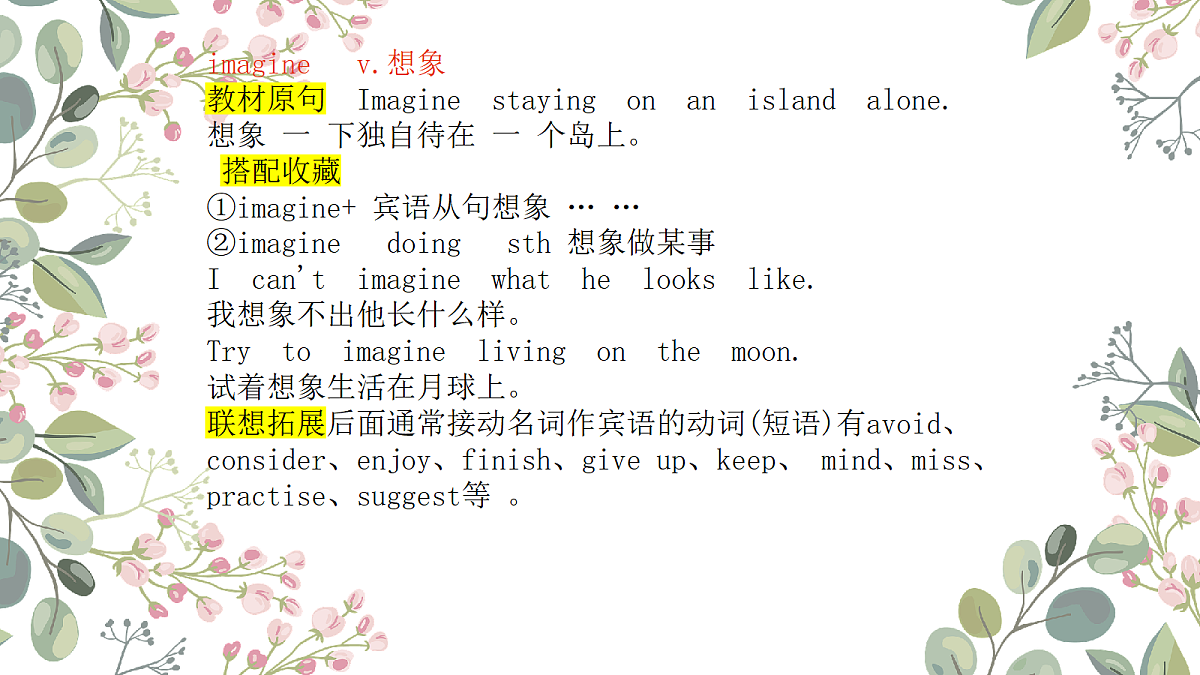
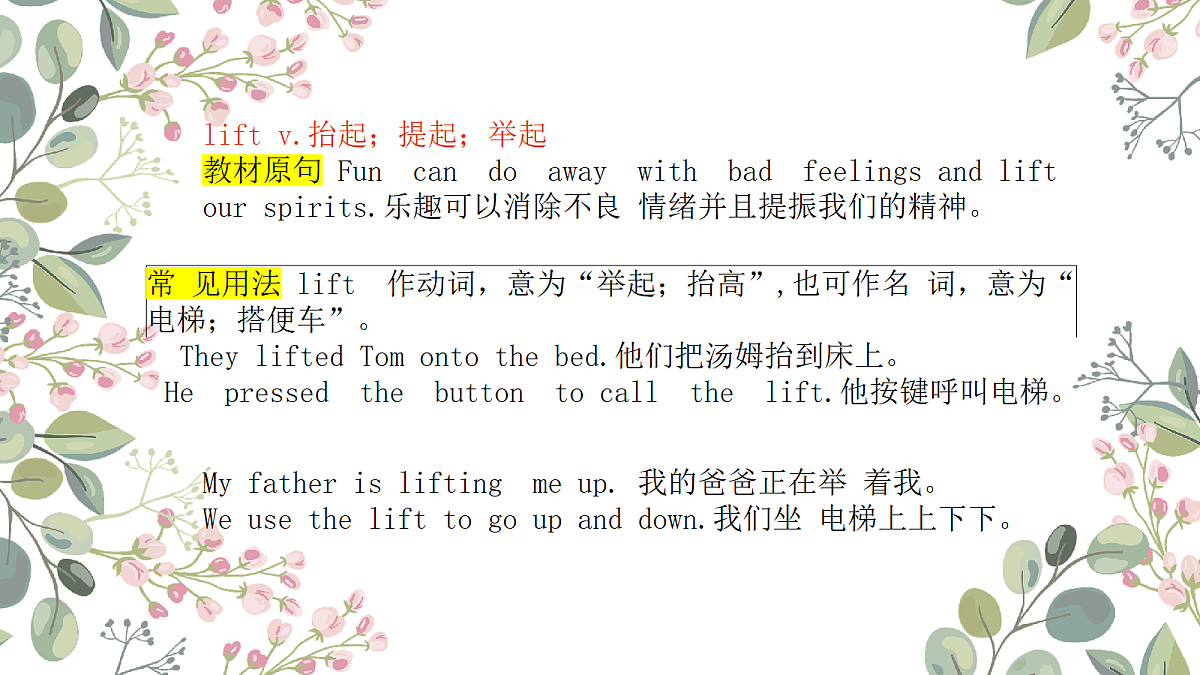
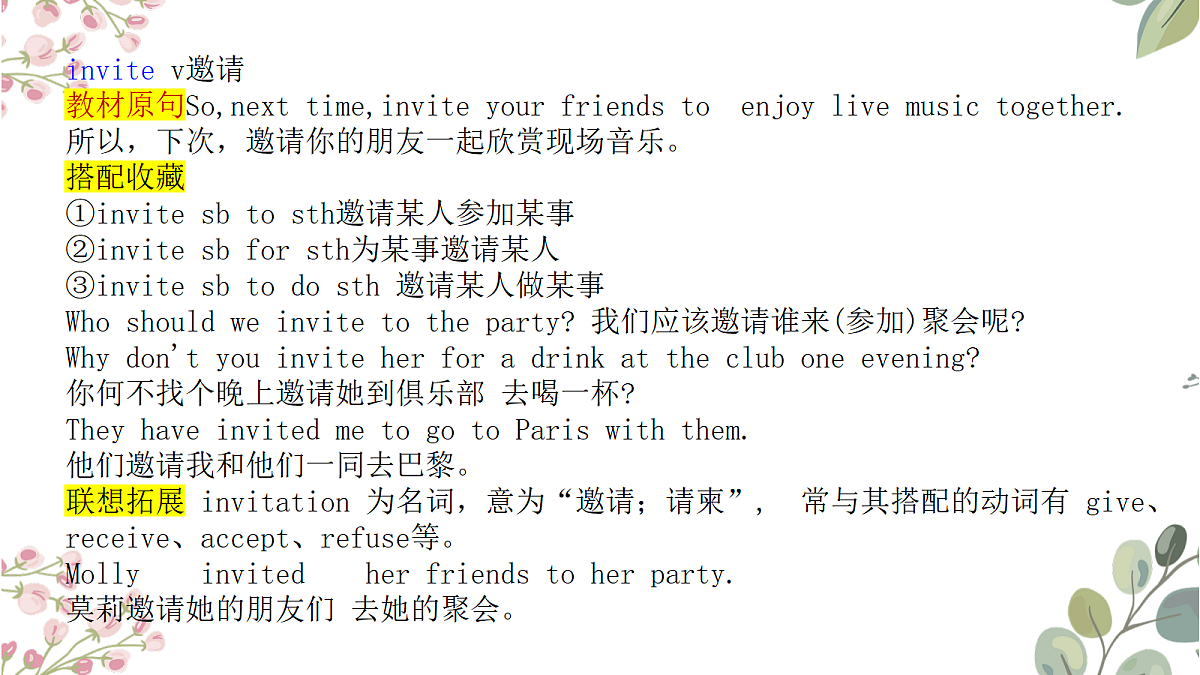
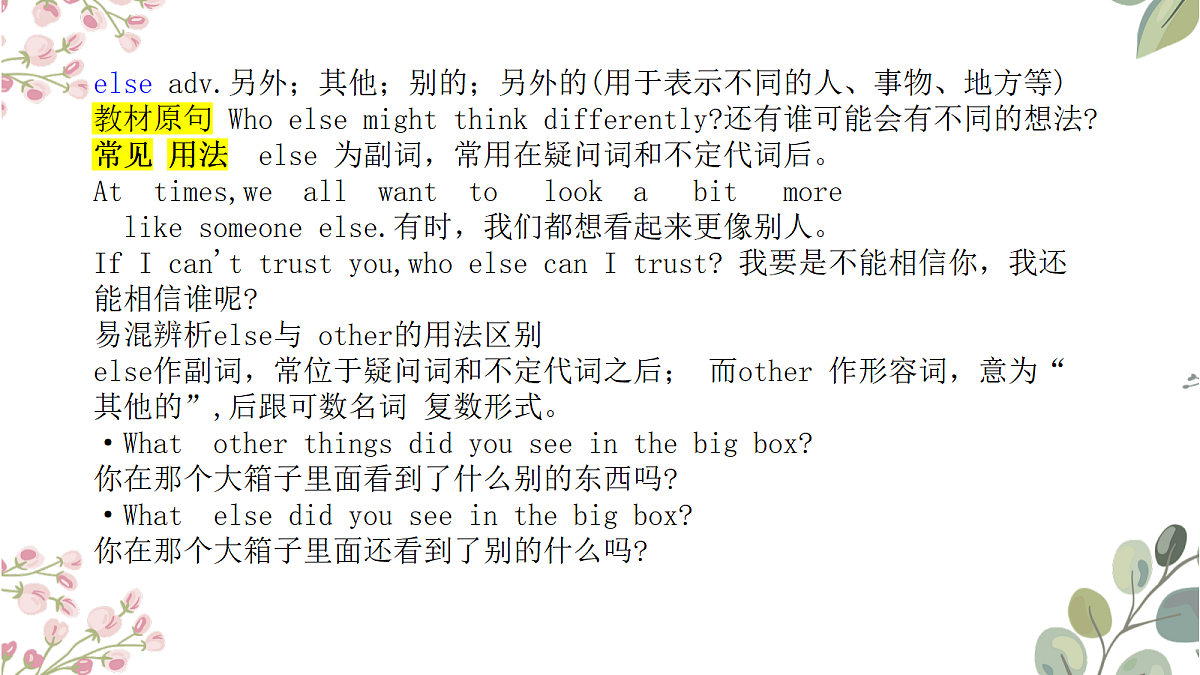
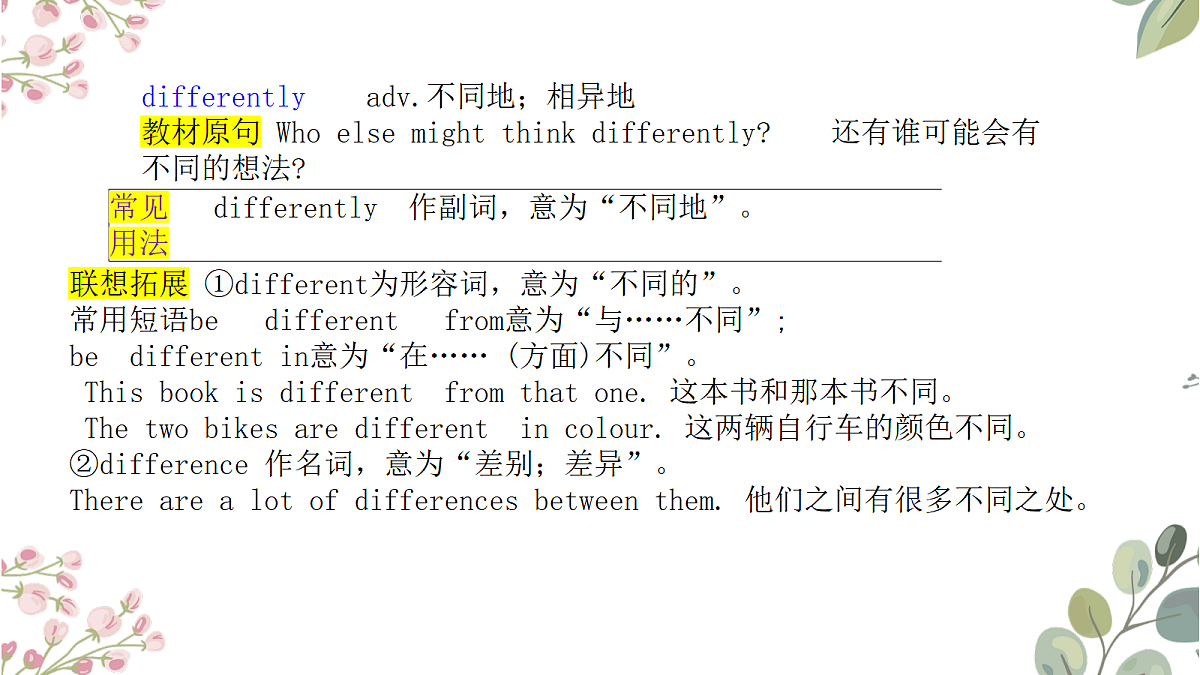
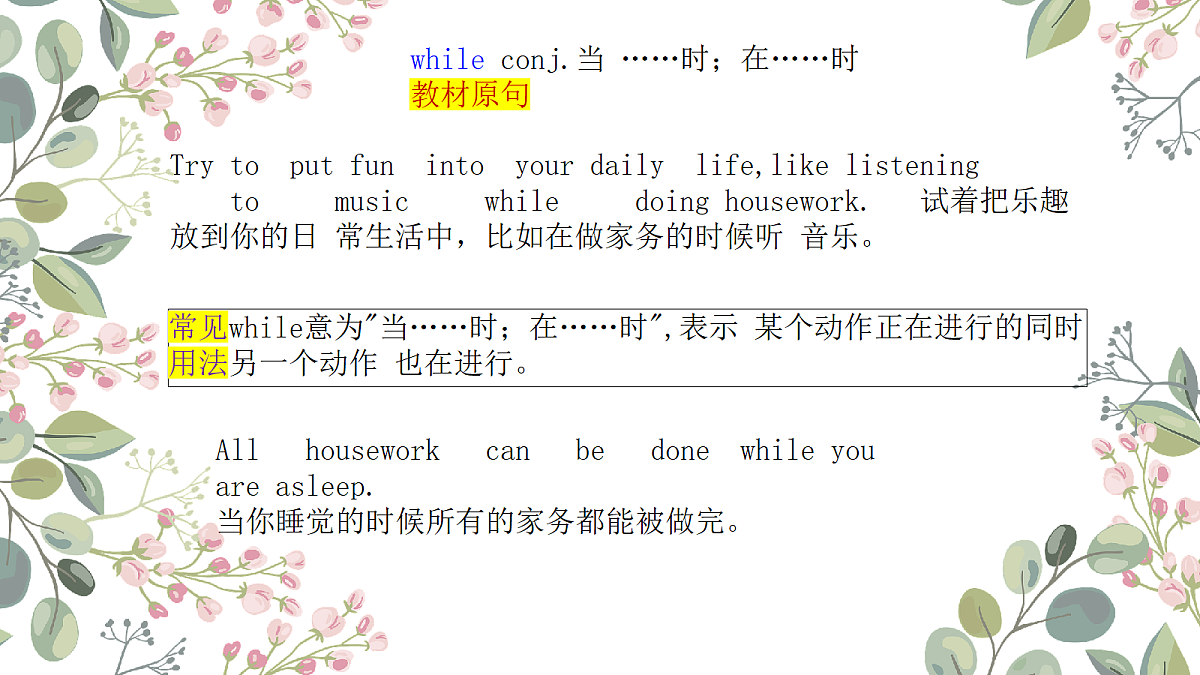
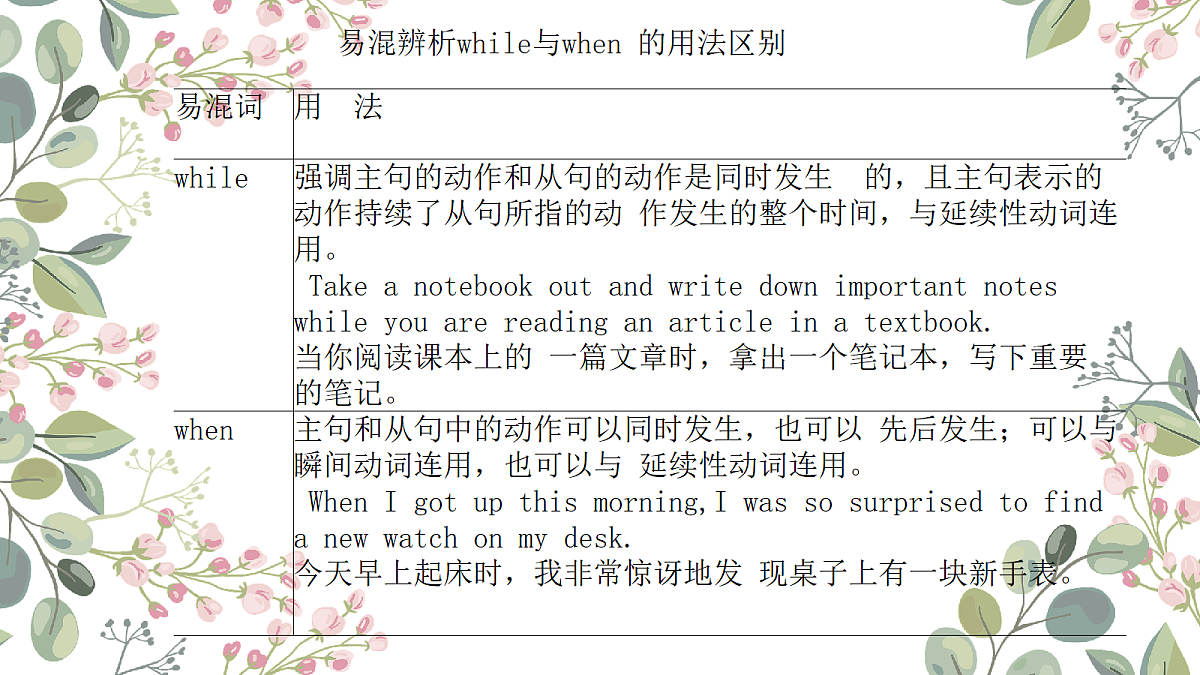
Unit 4 The art of having funimagine v.想象教材原句 Imagine staying on an island alone. 想象 一 下独自待在 一 个岛上。 搭配收藏①imagine+ 宾语从句想象 … …②imagine doing sth 想象做某事I can't imagine what he looks like. 我想象不出他长什么样。Try to imagine living on the moon. 试着想象生活在月球上。联想拓展后面通常接动名词作宾语的动词(短语)有avoid、consider、enjoy、finish、give up、keep、 mind、miss、practise、suggest等 。lift v.抬起;提起;举起教材原句 Fun can do away with bad feelings and lift our spirits.乐趣可以消除不良 情绪并且提振我们的精神。My father is lifting me up. 我的爸爸正在举 着我。We use the lift to go up and down.我们坐 电梯上上下下。invite v邀请教材原句So,next time,invite your friends to enjoy live music together.所以,下次,邀请你的朋友一起欣赏现场音乐。搭配收藏①invite sb to sth邀请某人参加某事②invite sb for sth为某事邀请某人③invite sb to do sth 邀请某人做某事Who should we invite to the party? 我们应该邀请谁来(参加)聚会呢?Why don't you invite her for a drink at the club one evening?你何不找个晚上邀请她到俱乐部 去喝一杯?They have invited me to go to Paris with them. 他们邀请我和他们一同去巴黎。联想拓展 invitation 为名词,意为“邀请;请柬”, 常与其搭配的动词有 give、receive、accept、refuse等。Molly invited her friends to her party. 莫莉邀请她的朋友们 去她的聚会。else adv.另外;其他;别的;另外的(用于表示不同的人、事物、地方等)教材原句 Who else might think differently?还有谁可能会有不同的想法?常见 用法 else 为副词,常用在疑问词和不定代词后。At times,we all want to look a bit more like someone else.有时,我们都想看起来更像别人。If I can't trust you,who else can I trust? 我要是不能相信你,我还能相信谁呢?易混辨析else与 other的用法区别else作副词,常位于疑问词和不定代词之后; 而other 作形容词,意为“其他的”,后跟可数名词 复数形式。·What other things did you see in the big box? 你在那个大箱子里面看到了什么别的东西吗?·What else did you see in the big box?你在那个大箱子里面还看到了别的什么吗?differently adv.不同地;相异地 教材原句 Who else might think differently? 还有谁可能会有不同的想法?联想拓展 ①different为形容词,意为“不同的”。 常用短语be different from意为“与……不同”;be different in意为“在…… (方面)不同”。 This book is different from that one. 这本书和那本书不同。 The two bikes are different in colour. 这两辆自行车的颜色不同。②difference 作名词,意为“差别;差异”。There are a lot of differences between them. 他们之间有很多不同之处。while conj.当 ……时;在……时教材原句Try to put fun into your daily life,like listening to music while doing housework. 试着把乐趣放到你的日 常生活中,比如在做家务的时候听 音乐。All housework can be done while you are asleep. 当你睡觉的时候所有的家务都能被做完。易混辨析while与when 的用法区别discussion n.讨论;谈论;商讨教材 原句Share your thoughts in exciting discussions.在令人激动的讨论中分 享你的想法。He joined us in the discussion yesterday. 他昨天加入了我们的讨论。联想拓展①discussion 作名词时的常见短语有:have a discussion进行讨论under discussion 在讨论中a discussion about/on…关于……的讨论②discuss 作动词,意为“谈论;讨论”,相当于talk about,其后直接接讨论的内容。They are discussing the way of solving the problem. 他们正在讨论解决这个问题的方法。We are having a discussion.我 们 正 在 进行讨论。notice v.看到;听到;感觉到;注意到教材原句Have you ever noticed a monster around us?你有没有注意到我们周围有怪物?I noticed Tom take away your pen.我注意到汤姆拿走了你的钢笔。We noticed them playing soccer in the playground.我们注意到他们正在操场上踢足球。 Did you see the notice on the wall?你看到墙上的告示了吗?联想拓展 notice 作名词时的常见短语有: take notice of 注意到come to one's notice引起某人注意bring sth to sb's notice提醒某人注意某事 until further notice 直至另行通知 Did you notice the change of this plant? 你注意到这棵植物的 变化了吗?dangerous adj.危险的;有危害的教材 原句It's not big or scary,but it's very dangerous.它不大也不可怕,但它非 常危险。He talked about being a reporter during exciting and dangerous events.他谈到在激动人心和危险的事件中担任记者的情况。联想拓展 dangerously 为副词,意为“危险地”; danger为名词,意为“危险”,be in danger意为“处 于危险之中”,be out of danger意为“脱离危险”。 The monkey was smart when he was in danger.这只猴子在处于危险之中时很聪明。The patient is out of danger. 这个病人已脱离危险。She was standing dangerously close to the fire.她站得离火太近,有危险。It's dangerous to climb up the tree.爬树是危险的。句式 SENTENCES 一、动名词(短语)作主语 教材原句 Having fun is a good way to connect with others.玩得开心是与他人相处的好方法。Eating vegetables is good for your health. 吃蔬菜对你的健康有好处。Doing exercise and having a balanced diet help you lose weight.运动和均衡饮食有助于你减肥。典例Drinking some water and milk____very good for you.A.are B.is C.be D.was【解析】分析句子结构并结合语境可知,本句应用一般现在时;动名词短语Drinking some water and milk 作本句主语,为第三人称单数,故谓语动词应 用第三人称单数形式。【答案】B—Do you like watching TV?你喜欢看电视吗?—Yes,I do.是的,我喜欢。—Do you like it?你喜欢它吗?—Yes,I do.是的,我喜欢。—Does he like cats? 他喜欢猫吗?—No,he doesn't.不,他不喜欢。 —Gina,do you like apples? 吉娜,你喜欢苹果吗?—Yes,I do.是的,我喜欢。 GRAMMAR祈使句教材原句① Don't forget to take some time out to have fun and enjoy life!别 忘 了抽点时间去玩得开心并享受生活!②Let's start with his/her passion. 让我们从他/她的激情开始。③ So,stand up and leave the screens! 所以,站起来,离开屏幕1.概述祈使句常表达说话人的劝告、叮嘱、请求或命令等。祈使句因对象(即主语)是第二人称,所以通 常省略主语。肯定祈使句通常以动词原形开头,句 末使用句号或叹号来表示结束。祈使句通常有以下三种类型:①do型 Open the door,please.请打开门。②be型 Be quiet!安静!③let型 Let's fly a kite.让我们放风筝吧。2.否定祈使句的基本结构否定祈使句通常有以下几种基本结构:① Don't+动词原形(+其他).②Let+宾语+not+ 动词原形(+其他)/Don't let+宾 语+动词原形(+其他).③No+ 名词/动名词.Don't run in the classroom.不要在教室里跑。Let the dog not go into the room,=Don't let the dog go into the room.不要让狗进入房间。No photos.禁止拍照。thanks
 新教材
新教材
注册成功
资料篮

在线客服
添加在线客服
获取1对1服务
官方微信
关注“教习网”公众号
打开微信就能找资料
赛课定制
添加在线客服
获取1对1定制服务
职称咨询
添加在线客服
获取1V1专业指导服务

免费福利

.png)
.png)
.png)
