免费领取教师福利
若您为此资料的原创作者,认为该资料内容侵犯了您的知识产权,请扫码添加我们的相关工作人员,我们尽可能的保护您的合法权益。


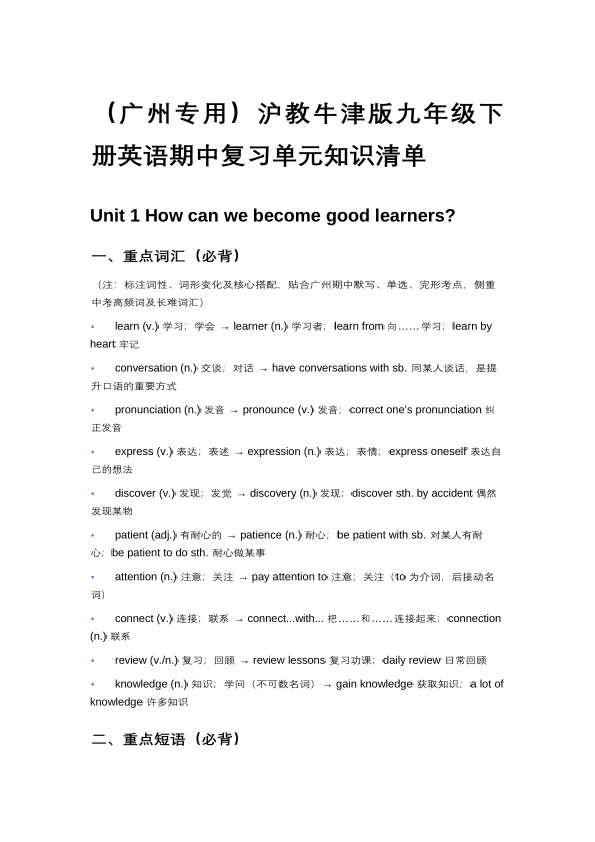
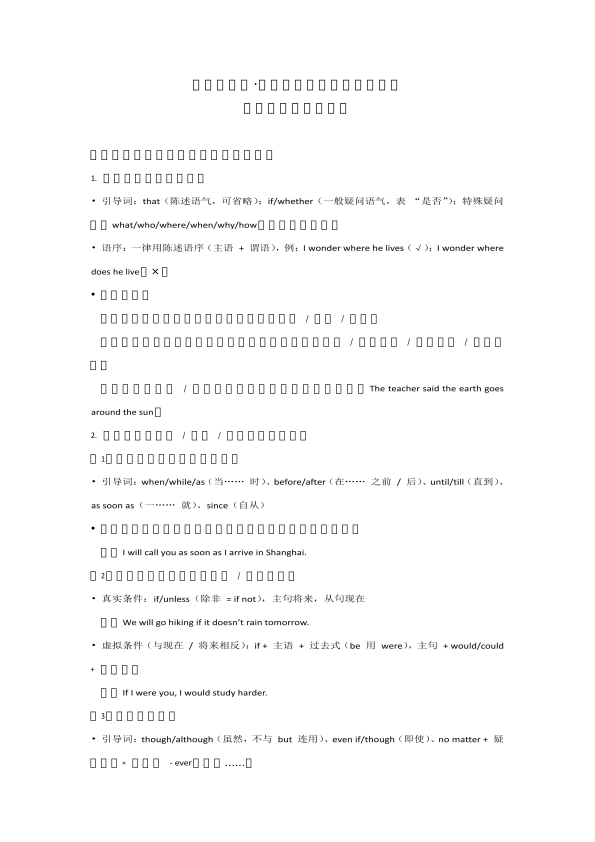
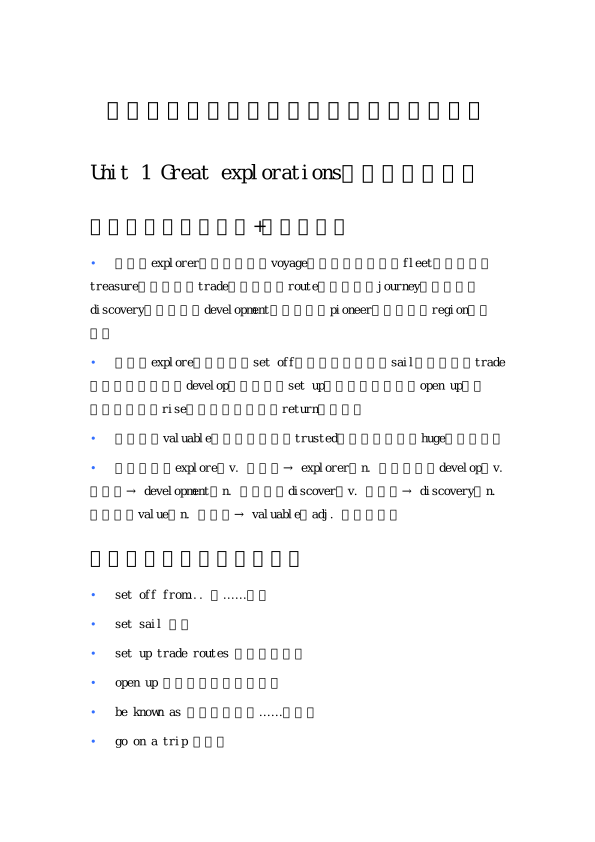
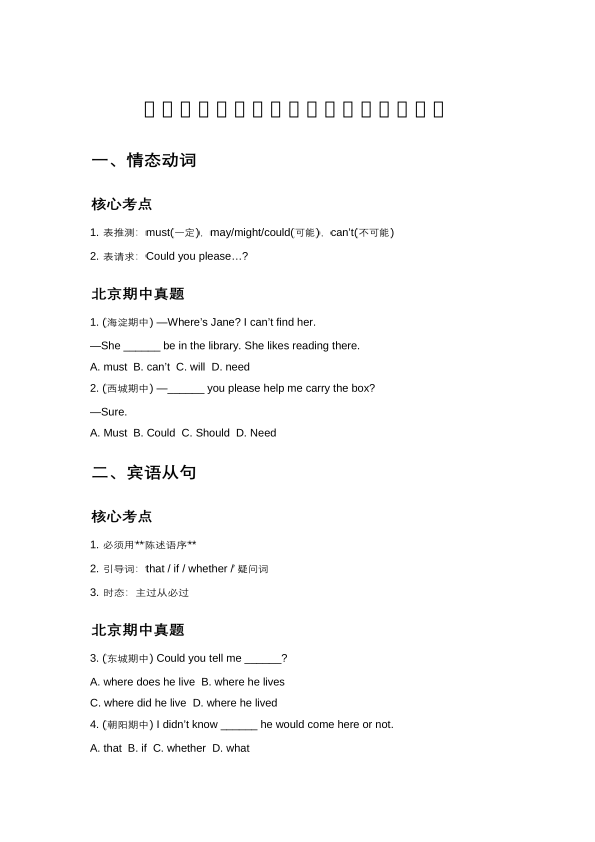
这是一份(广州专用)沪教牛津版九年级下册英语期中核心考点清单(Module 1–6),共15页。学案主要包含了核心词汇,核心语法,作文万能模板,必背句型,易错点汇总,广州期中高频考点补充等内容,欢迎下载使用。
Mdule 1 Asia(亚洲)
★ 重点单词:Asia(亚洲)、Asian(亚洲的;亚洲人)、ancient(古代的)、capital(首都)、emperr(皇帝)、palace(宫殿)、symbl(象征)、attractin(吸引力)、wnder(奇观)、natural(自然的)、scenery(风景)、lcatin(位置)、ppulatin(人口)、huge(巨大的)、wide(宽的)、lng(长的)
★ 必背短语:the Great Wall(长城)、the Frbidden City(故宫)、place f interest(名胜古迹)、be famus fr(因……闻名)、a symbl f(……的象征)、in the nrth f(在……的北部)、with a ppulatin f(有……人口)
★ 考点补充:ppulatin为不可数名词,提问人口用what(What’s the ppulatin );形容词ancient、natural修饰名词,可用于定语从句;Asian可作形容词(Asian cuntries)或名词(an Asian)
Mdule 2 Turism(旅游业)
★ 重点单词:turism(旅游业)、turist(游客)、travel(旅行)、destinatin(目的地)、guide(导游)、sightseeing(观光)、service(服务)、accmmdatin(住宿)、transprt(交通)、ticket(门票)、bk(预订)、reserve(预订)、culture(文化)、experience(体验)、traditinal(传统的)
★ 必背短语:g sightseeing(去观光)、bk a ticket(预订门票)、bk accmmdatin(预订住宿)、prvide service(提供服务)、take a tur(参观)、learn abut(了解)、be different frm(与……不同)、in additin(此外)
★ 考点补充:bk/reserve后可接名词(bk a rm),也可接不定式(bk t stay);现在完成时(have/has + 过去分词)表已完成的动作(I have bked the ticket.)
Mdule 3 The envirnment(环境)
★ 重点单词:envirnment(环境)、pllutin(污染)、pllute(污染)、harmful(有害的)、recycle(回收利用)、prtect(保护)、preserve(保护)、destry(破坏)、waste(浪费)、reduce(减少)、reuse(重复使用)、energy(能源)、natural(自然的)、balance(平衡)
★ 必背短语:prtect the envirnment(保护环境)、reduce pllutin(减少污染)、recycle waste(回收垃圾)、save energy(节约能源)、be harmful t(对……有害)、cut dwn(砍倒)、take actin(采取行动)、in danger(处于危险中)
★ 考点补充:pllute(动词)→ pllutin(名词);harmful(形容词)→ harm(名词/动词);被动语态(be + 过去分词)表动作承受者(Trees are cut dwn.);it is + 形容词 + t d sth.(It is imprtant t prtect the envirnment.)
Mdule 4 Culture shck(文化冲击)
★ 重点单词:culture(文化)、shck(冲击)、custm(习俗)、traditin(传统)、value(价值)、belief(信仰)、behavir(行为)、plite(礼貌的)、implite(不礼貌的)、greet(问候)、cmmunicate(交流)、understand(理解)、respect(尊重)、difference(差异)、similar(相似的)
★ 必背短语:culture shck(文化冲击)、different custms(不同的习俗)、greet each ther(互相问候)、cmmunicate with(与……交流)、shw respect t(对……表示尊重)、be similar t(与……相似)、learn frm(向……学习)
★ 考点补充:一般现在时表客观事实(Peple in different cuntries have different custms.);形容词比较级(different、similar)的用法;宾语从句(I knw that different cuntries have different traditins.)
Mdule 5 Films(电影)
★ 重点单词:film(电影)、mvie(电影)、directr(导演)、actr(演员)、actress(女演员)、character(角色)、plt(情节)、scene(场景)、script(剧本)、perfrmance(表演)、award(奖项)、ppular(受欢迎的)、successful(成功的)、exciting(令人兴奋的)、mving(感人的)、entertaining(有趣的)
★ 必背短语:make a film(拍电影)、star in(主演)、win an award(赢得奖项)、a scene frm(……的场景)、be ppular with(受……欢迎)、in my pinin(在我看来)、take place(发生)
★ 考点补充:一般过去时表过去发生的动作(The film wn an award last year.);现在完成时表动作对现在的影响(This film has been ppular fr many years.);形容词exciting(令人兴奋的)修饰物,excited(感到兴奋的)修饰人
Mdule 6 Emtins(情绪)
★ 重点单词:emtin(情绪)、feeling(感觉)、happy(开心的)、sad(难过的)、angry(生气的)、wrried(担心的)、nervus(紧张的)、calm(冷静的)、cnfident(自信的)、prud(自豪的)、disappinted(失望的)、satisfied(满意的)、cheerful(愉快的)
★ 必背短语:be happy abut(对……开心)、be wrried abut(担心……)、be nervus abut(对……紧张)、be prud f(为……自豪)、be disappinted with(对……失望)、calm dwn(冷静下来)、cheer up(振作起来)
★ 考点补充:系动词(be、feel、lk)后接形容词作表语(He feels nervus.);情态动词can/culd表建议(Yu culd calm dwn.);宾语从句(I feel that he is angry.)
二、核心语法(必考点,掌握结构+例句,高频易错标注)
1. 定语从句(Mdule 1/4)
● 结构:先行词 + 关系代词(wh/whm/which/that) + 定语从句
● 关系代词用法:wh(指代人,作主语/宾语);whm(指代人,作宾语,可省略);which(指代物,作主语/宾语);that(指代人/物,作主语/宾语,可省略)
● 例句:This is the palace that was built in ancient times.(这是一座古代建造的宫殿。);The turist wh is frm China likes Beijing very much.(那个来自中国的游客非常喜欢北京。)
● 考点易错点:当先行词是人时,可用wh/that;先行词是物时,可用which/that;关系代词在从句中作宾语时可省略(The bk (that) I read is interesting.)
2. 现在完成时(Mdule 2/5)
● 结构:主语 + have/has + 过去分词(第三人称单数用has,其余用have)
● 用法:表过去发生的动作对现在造成的影响;表从过去持续到现在的动作/状态(标志词:already、yet、ever、never、since、fr、s far)
● 否定形式:have/has + nt = haven’t/hasn’t
● 疑问形式:Have/Has + 主语 + 过去分词?(回答:Yes, 主语 + have/has. / N, 主语 + haven’t/hasn’t.)
● 例句:I have bked the ticket fr the Great Wall.(我已经预订了长城的门票。);He has lived in Guangzhu fr 10 years.(他已经在广州住了10年了。)
● 考点易错点:since后接时间点(since 2020),fr后接时间段(fr 5 years);不规则动词过去分词记忆(see→seen、g→gne、d→dne)
3. 被动语态(一般现在时/一般过去时/现在完成时)(Mdule 3)
● 一般现在时被动:am/is/are + 过去分词
● 一般过去时被动:was/were + 过去分词
● 现在完成时被动:have/has + been + 过去分词
● 用法:强调动作的承受者,而非执行者(主动:Peple prtect the envirnment. 被动:The envirnment is prtected by peple.)
● 例句:Trees are planted every spring.(每年春天种树。);The bridge was built last year.(这座桥是去年建成的。);The envirnment has been prtected well.(环境已经被保护得很好。)
● 考点易错点:不规则动词过去分词记忆(break→brken、write→written);by短语表执行者,可省略;被动语态与主动语态的转换
4. 宾语从句(Mdule 4/6)
● 结构:主句 + 引导词(that/if/whether/特殊疑问词) + 宾语从句(陈述句语序)
● 引导词用法:that(无意义,可省略);if/whether(是否,可互换,whether可与r nt连用);what/wh/where等(特殊疑问词,表疑问)
● 时态一致:主句为一般现在时,从句可根据句意用任意时态;主句为一般过去时,从句用相应过去时态(一般过去时、过去进行时、过去完成时)
● 例句:I knw that he is a turist.(我知道他是一名游客。);She asked if I had been t Beijing.(她问我是否去过北京。);I dn’t knw where he is.(我不知道他在哪里。)
● 考点易错点:宾语从句必须用陈述句语序(易错:I dn’t knw where is he. → 正确:I dn’t knw where he is.);if与whether的区别(whether可接r nt,if不可)
5. 形容词比较级和最高级(Mdule 1/6)
● 变化规则:① 单音节词:直接加er/est(tall→taller→tallest);② 以e结尾加r/st(nice→nicer→nicest);③ 重读闭音节双写尾字母加er/est(big→bigger→biggest);④ 多音节词:mre/mst + 形容词(beautiful→mre beautiful→mst beautiful);⑤ 不规则变化(gd→better→best、bad→wrse→wrst)
● 用法:比较级(两者比较,用than);最高级(三者及以上比较,用the + 最高级 + in/f)
● 例句:This palace is bigger than that ne.(这座宫殿比那座大。);This is the mst beautiful scenery in Asia.(这是亚洲最美的风景。)
● 考点易错点:多音节词比较级/最高级加mre/mst,不可直接加er/est;最高级前必须加the;than后接比较对象,需与主语一致
6. 情态动词(can/culd/must/shuld)(Mdule 6)
● 用法:can(能,表能力/许可);culd(能,表过去能力/委婉请求);must(必须,表义务);shuld(应该,表建议)
● 否定形式:can’t(不能)、culdn’t(过去不能)、mustn’t(禁止)、shuldn’t(不应该)
● 例句:I can speak English.(我会说英语。);Culd yu help me?(你能帮我吗?);Yu must prtect the envirnment.(你必须保护环境。);Yu shuld calm dwn.(你应该冷静下来。)
● 考点易错点:mustn’t表示“禁止”,而非“不必”(不必用dn’t have t);shuld表建议,语气委婉;culd表过去能力或委婉请求,比can更礼貌
三、作文万能模板(期中常考,直接套入关键词即可)
模板1:介绍一处名胜古迹(Mdule 1)
There are many places f interest in Asia. My favrite ne is ______ (如:the Great Wall/the Frbidden City). It is lcated in ______ (如:Beijing/China) and it is a symbl f ______ (如:Chinese culture/Asia). It has a lng histry and is famus all ver the wrld.
The ______ (名胜名称) is very huge and beautiful. It was built in ______ (年代/朝代) and has a histry f ______ years. Every year, thusands f turists frm all ver the wrld cme t visit it. They are all attracted by its beautiful scenery and ancient culture.
In my pinin, we shuld prtect this wnderful place f interest. We shuld nt thrw rubbish r damage it. Let’s wrk tgether t keep it beautiful frever.
模板2:关于旅游业的建议(Mdule 2)
Turism is develping fast in ur cuntry. It brings many benefits, but it als causes sme prblems. Fr example, sme turists thrw rubbish everywhere and damage the envirnment. Sme scenic spts are t crwded, which affects the visiting experience.
T imprve ur turism, I have sme advice. First, we shuld prtect the envirnment and keep scenic spts clean. Secnd, we can bk tickets nline t reduce crwding. Third, guides shuld tell turists abut the rules and help them understand the lcal culture.
I believe with these suggestins, ur turism will becme better and better. Mre and mre peple will cme t visit ur cuntry and knw mre abut ur culture.
模板3:保护环境的建议(Mdule 3)
The envirnment is very imprtant t ur life, but it is facing many prblems nw. Many rivers are plluted, many trees are cut dwn, and air pllutin is getting wrse. These prblems are harmful t ur health and the earth.
As students, we shuld take actin t prtect the envirnment. First, we can recycle paper, plastic and glass t reduce waste. Secnd, we shuld save water and electricity in ur daily life. Third, we can plant mre trees and ask ur family and friends t jin us.
Prtecting the envirnment is everyne’s duty. If we wrk tgether, we can make the earth a better place t live in.
模板4:文化差异(Mdule 4)
Different cuntries have different cultures and custms. There are many differences between ______ (如:Chinese culture) and ______ (如:Western culture). Fr example, peple in China greet each ther by shaking hands, while peple in Western cuntries ften hug r kiss n the cheek.
When we cmmunicate with peple frm different cuntries, we shuld shw respect t their custms. We shuld learn abut their culture and avid ding implite things. We can als share ur wn culture with them.
I think understanding different cultures is very imprtant. It can help us cmmunicate better and make mre friends. Let’s learn frm each ther and respect cultural differences.
模板5:介绍一部喜欢的电影(Mdule 5)
My favrite film is ______ (电影名称). It is directed by ______ (导演) and stars ______ (演员). The plt f the film is very ______ (exciting/mving/interesting). It tells a stry abut ______ (电影情节简介).
I like this film because the characters are very vivid and the plt is wnderful. The perfrmance f the actrs is great, and it makes me feel ______ (emtin:happy/sad/mved). It als teaches me ______ (电影传达的道理,如:the imprtance f friendship/prtecting the envirnment).
I recmmend this film t everyne. It is nt nly entertaining but als educatinal. I believe yu will like it t.
模板6:表达情绪与建议(Mdule 6)
Recently, I have sme emtins. Smetimes I feel ______ (nervus/wrried/angry) because ______ (原因,如:exams/schl life). When I feel like this, I usually ______ (方式,如:calm dwn/talk t my friends/listen t music).
I think everyne has different emtins. When yu feel sad r nervus, yu can talk t yur parents r friends. They can give yu help and cmfrt. Yu can als d smething yu like t cheer yurself up.
Emtins are imprtant t us. We shuld learn t cntrl ur emtins and stay psitive. Let’s face ur life with a cheerful heart.
四、必背句型(默写+灵活运用,期中高频考查)
1. What’s the ppulatin f China? It has a ppulatin f abut 1.4 billin.(中国的人口是多少?它大约有14亿人口。)
2. This is the place which/that I visited last year.(这是我去年参观过的地方。)
3. I have been t Beijing twice.(我去过北京两次。)
4. The envirnment is prtected by peple all ver the wrld.(环境被全世界的人们保护着。)
5. I dn’t knw if/whether he will cme.(我不知道他是否会来。)
6. This scenery is mre beautiful than that ne.(这处风景比那处更美丽。)
7. Yu mustn’t thrw rubbish in the scenic spts.(你禁止在名胜古迹乱扔垃圾。)
8. Culd yu give me sme advice n hw t prtect the envirnment?(你能给我一些保护环境的建议吗?)
★ 句型拓展(考点延伸):
1. It is + 形容词 + t d sth.(It is imprtant t prtect the envirnment. 保护环境很重要。)
2. Nt als...(Nt nly des he like films, but als he likes reading. 他不仅喜欢电影,还喜欢阅读。)
3. As lng as we wrk hard, we can slve the prblem.(只要我们努力,就能解决这个问题。)
五、易错点汇总(期中高频丢分点,重点规避)
1. 定语从句:关系代词wh/which/that的用法混淆;关系代词在从句中作宾语时可省略,作主语时不可省略。
2. 现在完成时:since与fr的用法区分(since接时间点,fr接时间段);不规则动词过去分词记忆错误(如:g→gne、see→seen,易错写为g→went、see→saw)。
3. 被动语态:遗漏be动词(易错:The bk written by him. → 正确:The bk is written by him.);不规则动词过去分词写错。
4. 宾语从句:疑问句语序错误(易错:I dn’t knw where is he. → 正确:I dn’t knw where he is.);主句与从句时态不一致。
5. 形容词比较级/最高级:多音节词直接加er/est(易错:beautiful→beautifuler → 正确:mre beautiful);最高级前遗漏the。
6. 词汇辨析:turist(游客)与traveler(旅行者);bk(预订)与reserve(预订);pllute(动词)与pllutin(名词);interested(修饰人)与interesting(修饰物)。
六、广州期中高频考点补充(贴合本地考情)
1. 情景交际:重点考查名胜介绍、旅游建议、环保倡议、文化交流、情绪表达等场景,多出现于听力、单项选择(如:问路、提建议、表达观点)。
2. 词汇辨析:重点考查词性转换(如:pllute→pllutin、different→difference、happy→happiness),广州期中常考单词拼写及词性转换填空。
3. 句型转换:重点考查被动语态与主动语态转换、宾语从句改写、比较级/最高级转换、现在完成时与一般过去时转换,是期中句型转换题的核心。
4. 书面表达:字数要求100–120词,重点考查“名胜介绍、环保建议、文化差异、电影推荐”四大主题,要求时态一致、无语法错误、书写规范,可直接套用上述模板。
5. 语音:广州期中必考元音、辅音发音辨析(如:/e/与/æ/、/θ/与/ð/),以及多音节词的重音位置(如:envirnment /ɪnˈvaɪrənmənt/),需重点记忆。
这是一份(广州专用)沪教牛津版九年级下册英语期中核心考点清单(Module 1–6),共9页。学案主要包含了核心词汇,核心语法,作文万能模板,必背句型,易错点汇总,广州期中高频考点补充等内容,欢迎下载使用。
这是一份(广州专用)沪教牛津版八年级下册英语期中核心考点清单(Module 1–6),共25页。学案主要包含了核心词汇,核心语法,作文万能模板,必背句型,易错点汇总,广州期中高频考点补充等内容,欢迎下载使用。
这是一份(广州专用)沪教牛津版七年级下册英语期中核心考点清单(Module 1–6),共25页。学案主要包含了核心词汇,核心语法,作文万能模板,必背句型,易错点汇总,广州期中高频考点补充等内容,欢迎下载使用。
注册成功
资料篮

在线客服
添加在线客服
获取1对1服务
官方微信
关注“教习网”公众号
打开微信就能找资料
赛课定制
添加在线客服
获取1对1定制服务
职称咨询
添加在线客服
获取1V1专业指导服务

免费福利

(1).png)