 免费领取教师福利

若您为此资料的原创作者,认为该资料内容侵犯了您的知识产权,请扫码添加我们的相关工作人员,我们尽可能的保护您的合法权益。


这是一份初中英语牛津译林版(2024)八年级上册(2024)Welcome to the unit优秀学案,共28页。学案主要包含了完形填空,阅读理解,单项选择等内容,欢迎下载使用。
Give suggestins n hw t imprve schl life. 就如何改善学校生活提出建议
Suggestin(可数) advice(不可数)
make a suggestin (fr/abut/n sth.) 提出(的)建议
take/fllw ne’s suggestin 听从某人的意见
suggest (ding) sth. 推荐(做)某事
suggest that sb. (shuld) d sth. 建议某人做某事
advise sb t d sth 建议某人做某事
imprvement (n.)改进;改善
2. Better understand the imprtance f educatin. 更好地了解教育的重要性
understd(过去式)
imprtance (n.) 重要性the imprtance f … 的重要性
imprtance (n.)重要性
the imprtance f… …的重要性
imprtant (adj)重要的
be imprtant t... 对…重要
=be f imprtance t... 对…重要
Educate (v.)教育
Welcme t the unit
1.Children live far away frm schl. 孩子们住得离学校远。
Child(单数)
far (away) frm ... 离远
距离+away frm 表示两地之间的距离,away不可以省略
2.Heavy flds happen ften. 大洪水经常发生。
heavy adj. 重的adj. 大量的,严重的adj. 数量大,程度大
sth happen 发生(偶然发生的事件)
What happened? 发生什么?
happen t d sth碰巧做某事
happen t sb发生在某人身上
sth take place 发生;举行(计划)
sb hld sth举办活动
3.Many children frm pr families wrk at train statins r n trains. 许多来自贫困家庭的孩子在火车站或火车上工作。
the pr (the+adj表示一类人)
n+大型交通工具 如train、plane、bus等
in+小型交通工具 如car、taxi等,
介词n/in和后面的交通工具之间必须要有冠词a/the,或者交通工具变为复数。
4.D yu knw any unusual schls arund the wrld? 你知道世界上有什么不寻常的学校吗?
all ver the wrld/acrss the wrld/ the whle wrld
5.During the rainy seasn, there’s much mre rain in Bangladesh than in many ther parts f the wrld. 在雨季,孟加拉国的降雨量比世界许多其他地区多得多。
during ... 在期间
there be sth. (t d) 有(可) there be sb./sth. ding sth. 有某人/某物在做某事
There’s nthing t eat in the fridge. Let’s g and buy sme. 冰箱里没有什么东西可吃了,我们去买点把。
There are many students playing basketball n the playgrund. 操场上有很多学生正在打篮球。
6.With the bat schl, children have a chance t learn even when there are flds. 有了船上学校,即使有洪水时,孩子们也能得以学习。
have a chance t d sth有做某事的一个机会
get t d sth得以/有幸做成某事
get sb (nt) t d sth让某人(不)做某事
get sb ding sth 让某人处于正在做某事的状态中
7. What a gd way t get the children learning! 这是让孩子们学习的好方法!
感叹句句型:What a/an 形容词+可数名词单数 (+主语+谓语动词)!
What 形容词+可数名词复数 (+主语+谓语动词)!
Hw 形容词/副词 (+主语+谓语动词)!
What a thughtful persn he is! = Hw thughtful he is! 他好体贴啊!
让某人做某事: make sb. d sth. have sb. d sth. let sb. d sth.
8.This is very cheap and gd fr the envirnment. 这非常便宜,对环境也有好处。
cheaply adv.便宜地
反义词:expensive adj.昂贵的
be gd fr 对有好处(强调长远的影响)
be gd/kind/nice/friendly t sb. 对某人友好(态度好)
be gd at ... = d well in ... 擅长
She is gd at learning languages. 她擅长学习语言。
envirnmental adj.环境的——envirnmentally adv.环保地
prtect the envirnment 保护环境
Reading
1.Our schl is small, s we have fewer students and smaller classes than mst schls. 我们的学校很小,所以我们的学生和班级都比大多数学校少。
few 很少;几乎没有(否定,修饰可数名词复数)
a few 一些;几个(肯定,修饰可数名词复数)
little 很少;几乎没有(否定,修饰不可数名词)
a little 一些;少量(肯定,修饰不可数名词)= a bit f
注意:a few 可用于肯定句、疑问句或条件句,表达 “少量存在”:
例:Wuld yu like a few mre ckies?你想再要几块饼干吗?
few 常用于否定句或含否定含义的语境,强调 “数量少”:
例:Few peple knw the secret.很少有人知道这个秘密。
(little & a little同理)
2. There are many interesting subjects t chse frm, such as drama and freign languages. 有许多有趣的科目可供选择例如戏剧和外语。
dramatic adj.戏剧性的——dramatically adv.戏剧性地
play n.戏剧
drama club 戏剧社团
fr example 放首或句中,后用逗号隔开;such as只放句中,后不用逗号隔开;两者后面都不能和s n连用
chse…frm… 从…中选择…
chse t d sth选择做某事 (过)chse→chse
chse sth./sb. t d选择……做…
chse sb as/t be… 选择某人为…
make a chice 做出选择
have n chice but t d sth. 除了做某事以外别无选择
freign (adj.)外国的 → freigner (n.)外国人
3. T us, learning Chinese may nt be as simple as learning French r German, but I am lking frward t having a g.对于我们而言,学习汉语可能并不像学习法语或德语那么简单,但是我期待试一试。
as…as… /æz … æz/和… 一样…
用法:as + 形容词/副词原级 + as
例句:He runs as fast as his brther.他跑得和哥哥一样快。
反义词组:nt as…as… 不如…
simple (adj.) 简单的=easy; 简朴的 → simply 仅仅, 只=nly; 简单地; 简朴地
He isn't angry. He's simply wrried abut yu. 他没生气,他只是担心你。
French un. 法语 adj. 法国的; 法国人的;法语的 n. the French 法国人(表总称,为复数概念)
Frenchman n. 法国人(复数为Frenchman)
France n. 法国
German un. 德语 adj. 德国的;德国人的;德语的 n. 德国人(复数为Germans)
German n. 德国
lk frward t (ding) sth. 盼望(做)某事
(adv.) mve frward 前进
(adj.) the frward part f the bus公交车的前部
have a g (at ding sth.) 尝试, 试图(做某事)
have a try at sth.尝试某事
have a try at ding sth.尝试做某事
4. Being creative is great and it helps us study better in ther subjects. 有创造力很棒,它可以帮助我们更好地学习其他科目。
creative (adj.) 有创造力的、创造性的 → create (v.) 创作、创造、产生 → creatr (n.) 创作者
5. Japan is ne f the cuntries with the mst earthquakes in the wrld, s ur schl ffers different safety prgrammes t teach us hw t survive in the face f danger. 日本是世界上地震最多的国家之一,所以我们学校提供不同的安全课程,来教我们面对危险时如何生存下来。
ffer t d sth. 主动提出做某事
ffer sb. sth. = ffer sth. t sb.为某人提供某物
give sb. sth. = give sth. t sb. 给某人某物
prvide sth. fr sb. = prvide sb. with sth. 为某人提供某物
safety (un.) 安全 → safe (adj.) 安全的
survive (v.) 幸存,存活 survive sth. 从中活下来 → survivr (n.) 幸存者
in the face f ... 面对face t face 面对面
6.We get plenty f hands-n experience frm these prgrammes. 我们从这些课程中获得了丰富的实践经验。
hands-n experience 实践经验
TV prgramme 电视节目
“大量的”的相关词组
后接可数名词复数:a large/great number f
a number f
后接不可数名词:a large amunt f
a great deal f
既可接可数名词也可接不可数名词:a lt f/lts f
plenty f
experience (n.) 经验(不可数); 经历(可数) → experienced (adj.) 有经验的
7. Our schl als pays a lt f attentin t fd educatin. 我们学校也很关注饮食教育。
pay attentin t (ding) sth. 注意(做)某事
fcus n 关注
8.In this way, we are mre aware f the imprtance f a healthy diet. 这样,我们就更了解健康饮食的重要性。
in this/that way用这种/那种方式
n ne’s way t sp. 在去某地的路上
in ne’s way 挡某人的路
in sme ways 在某种程度上
by the way 顺便说/问以下
n way 不可能,绝不
the way t d sth. = the way f ding sth. 做某事的方法
be aware f ... 知道, 意识到 = knw/realize
be aware that + 宾语从句
9.Cleaning is anther imprtant traditin in Japanese schls. 清洁是日本学校的另一个重要传统。
anther 三者及以上或不定数量中的另一个 the ther 两者中的另一个
thers不确定范围内剩下的一部分,不是全部 = ther + 复数名词
the thers确定范围内其余的所有 = the ther + 复数名词
10.Every day at schl, we clean classrms, tilets and ther schl areas carefully by urselves. 在学校,我们每天都会自己仔细打扫教室、厕所和学校其他区域。
by neself = n ne’s wn = alne 独自;靠自己
fr neself 亲自; 为自己
11. This helps us develp gd habits frm an early age. 这有助于我们从小养成良好的习惯。
develp (v.)形成;开发;(使)发展
develp/frm the habit f…养成…的习惯
develpment (n.)
with the develpment f 随着…的发展
develped(adj.)发达的a develped cuntry
develping(adj.)发展中的a develping cuntry
It is a chance fr us t be creative with ur learning. 这为我们提供了一个创造性学习的机会。
be creative with sth. 使用或处理某物/某事时富有创意,发挥创造力
This car gets its energy frm the sun, s it is quite clean. 这辆车从太阳中获取能量,所以它非常干净。
quite 相当, 非常 quite a/an + adj. +可数名词单数 = a very + adj. +可数名词单数
quiet (adj.) 安静的
He ffered t help when we had a prblem, and nw the car wrks. 当我们遇到问题时,他主动提供帮助,现在汽车可以工作了。
做某事有困难have prblems ding sth.
=have difficulty ding sth.= have truble ding sth.
wrk (v.) 运转, 运行; 奏效, 成功 (un.) 工作(cn.)作品 a piece f art wrk 一件艺术作品
Grammar
1、数量的比较:
多many→mre→mst(修饰可数)
多many→mre→mst(修饰不可数)
少few→fewer→fewest(修饰可数)
少little→less→least(修饰不可数)
2、和…一样as…as;表示同级的比较;
基本结构为: …as+ adj./ adv.原级 +as…
否定式为: …nt as/s +… +as…
nt = 和…不一样,不及
A is nt s/as interesting as B. A不如B有趣。
= A is less interesting than B. A不如B有趣。
= B is mre interesting than A. B比A有趣。
常见句型
as…as pssible尽可能地…
as…as sb can/culd
as ften as befre和以前一样经常
as well as和…一样;也,还
as gd as几乎和…一样;简直
as sn as 一…就…
as lng as只要
3、倍数的表达:
…times +as 形容词/副词原级+as…
…times +形容词/副词比较级+than…
…times +the+度量名词+as…
4、have…ff休息(一段时间)
have tw weeks ff 休息两周
=have a rest fr tw weeks
=have a tw-week hliday
=have tw weeks’ hliday
5、Our schls are as gd as each ther, because the students at bth schls learn a lt in their lessns, and teachers and students at her schl are just as hard-wrking as thse at mine. 我们两所学校一样优秀,因为两校的学生都能在课堂上学到很多知识,而且她学校的师生和我学校的师生一样勤奋。
bth两者都 → all三者或三者以上都
若比较级或者原级前面为可数名词单数,后面对象如果属于同一性质,可用the ne或者that代替;若是不可数名词,则只用that;若前面是可数名词复数,则用the nes或者thse代替。
6、Our schl library is bigger than the ne at Laura’s schl, but it still has thusands f bks and lts f cmputers. 我们学校的图书馆比劳拉学校的那间更大,但它依然拥有成千上万本书和许多电脑。
thusands f 成千上万的(模糊的数量) hundreds f 成百上千的 millins f 数以百万计的
数字+hundred/thusand/millin+名词 百/千/百万(准确的数量)
Wrd pwer
1. 国名 → 国家的/语言
America美国→AmericanAustralia澳大利亚→AustralianCanada加拿大→Canadian
China中国→ChineseEngland英国→EnglishFrance法国→French
Hungary匈牙利→HungarianIndia印度→IndianItaly意大利→Italian
Japan日本→JapaneseRussia俄罗斯→RussianSpain西班牙→Spanish
Sweden瑞典→SwedishVietnam越南→Vietnamese
2. Millie is interested in the language spken in Spain. 米莉对西班牙使用的语言很感兴趣。
be interested in (ding) sth.
= shw/has/take an interest in (ding) sth. 对(做)某事感兴趣
3. I am learning t speak Russian. 我正在学俄语。
learn (hw) t d sth. 学习(如何)做某事
teach sb. (hw) t d sth. 教某人(如何)做某事
He wants t learn hw t speak French. 他想学习如何说法语。
4. This summer, I’m planning a vacatin t Spain, s I can practice my Spanish. 今年夏天,我计划去西班牙度假,以便练习西班牙语。
n vacatin /ɒn veɪˈkeɪʃn/phr. 在度假
n hliday度假
practice可做名词,也可做动词,意为“练习”,但是practise只能做动词。
practice ding sth. 练习做某事
英式英语与美式英语
practise=practice
hliday=vacatin假期,度假
film=mvie电影
biscuit=ckie饼干
Integratin
1. My schl back hme in the USA is quite different frm Sunshine Middle Schl. 我在美国的家乡的学校与阳光中学完全不同。
be different frm 和不同 → be the same as 和一样
difference n. 不同,区别
make a difference (t ...) 对有影响; 有区别
make n difference (t ...) 对没影响; 没区别
tell the difference 区分
2. S, they spend mre time with their classmates and get t knw each ther better, but we get t knw mre students. 因此,他们花更多时间与同班同学相处并更深入地了解彼此,而我们则能结识更多学生。
spend+时间/钱+ ding sth. spend 时间/mney n sth.
It take+时间+t d sth.
cst sb. mney
sb. pay mney fr sth.
3. We ften need t brrw bks frm the library r search nline t finish ur hmewrk. 我们经常需要去图书馆借书或上网搜索来完成作业。
brrw sth. frm sb. 从某人那借过来某物 → lend sb. sth. = lend sth. t sb. 把某物借给某人
… 搜查找…...search sb搜某人的身search fr sth=lk fr sth寻某人/某物
search sb.搜查某人的身体 例句:The plice searched the thief.警察搜小偷的身。
search fr sb.寻找某人 例句:They searched fr the thief all night.他们一整晚都在搜查小偷。
finish ding sth. 完成做某事
4. Tby gets 1.5 hurs fr lunch, s there is lts f time t eat and then relax fr a while. 托比有 1.5 小时的午餐时间,所以有很多时间吃饭,然后放松一会儿。
一个半小时:ne and a half hurs = ne hur and a half
两个半小时:tw and a half hurs = tw hurs and a half
5. We talked abut the differences in lunchtime between ur tw schls. 我们谈了我们两校在午餐时间上的差异。
difference (n.) 差异,不同(之处)
tell abut the difference between…and… 谈论…和…间的不同之处
make a difference t sth/ding sth对...产生影响
different (adj.) 不同的
be different frm与不同
6. I am writing t make sme suggestins n hw t imprve sme parts f ur schl life. 我写这封信是想就如何改善我们校园生活的某些方面提出一些建议。
suggest v.建议,暗示——suggestive adj.暗示的
suggestins为可数名词 → advice为不可数名词
make sme suggestins n ... 提出一些关于的建议
suggest (v.) 建议
suggest ding sth. 建议做某事
suggest sth. t sb. 向某人建议某物
suggest sb. (shuld) d sth. 建议某人做某事
imprve (v.) 提高,改善 imprve sth. 改善某物 = make sth. better
7. First, I wuld like t suggest that ur schl shuld prvide mre ping-png tables, s mre students can play ping-png during breaks. 首先,我想要建议我们学校应该提供更多的乒乓球桌,这样更多学生能在课间打乒乓球。
prvide sb. with sth. = prvide sth. fr sb. 为某人提供某物
8. Mrever, we need mre cmputers in the library s that it is easier fr us t search nline. 此外,我们需要图书馆里更多的电脑,以便我们更容易在线搜索。
mrever (adv.) 此外; What’s mre 而且
what’s mre = besides
s that = in rder than 以便,为了(引导目的状语从句)
s +adj./adv.+ that ... 如此以至于(引导结果状语从句)
Further study
1. The bk series tells the stry f Greg, a 12-year-ld by, and hw he deal with challenges at his new schl.这套丛书讲述了12岁男孩格雷的故事,以及他如何在新学校应对种种挑战。
deal with sth. 处理/应对某事 deal with sb. 与某人打交道
slve sth. 解决某事
2. He ften gets int truble, but he always manages t find a way t get ut f it. 他经常惹上麻烦,但他总能想办法摆脱困境。
get int truble (因做错事而)惹麻烦; (因意外而)陷入困境
manage sth. 管理/经营
manage t d sth. 设法做成某事(特别指有难度的事情)
期中试题
单项选择
1. Because f all kinds f clubs, we are living ________ mre clurful schl life than befre.
A. aB. anC. theD. /
2. — Thanks a lt fr taking care f me ________ my illness, Millie.
— Yu’re welcme. That’s what friends are fr.
A. withB. pastC. thrughD. acrss
3. — Why is Mike s excited? Did he win the cmpetitin?
— Yes. He had _______ 30 minutes t finish the tugh task, n mre and n less.
A. mstlyB. prbablyC. exactlyD. hardly
4. —What will Shanghai _______ in twenty years' time?
—I think it will be mre beautiful.
A. likesB. likeC. is likeD. be like
5. I will tell her abut the gd news at nce when she ________ tmrrw mrning.
A. getsB. arrivesC. reachesD. gets t
6. In nrthern cities mst families ________ central heating (供暖) when decrating their huses because f the cld weather in winter.
A. put inB. put upC. put nD. put ut
7. —What delicius fd! Mum is really a great ck.
—But it’s nt t my ________. I dn’t like sweet fd.
A. styleB. treatC. smellD. taste
8. —Culd yu tell Nick nt t spend t much time n cmputer games?
—I’m afraid it’s ________. He wn’t listen t me.
A. usefulB. uselessC. meaningfulD. meaningless
9. The sfas in VIP Hall are much mre cmfrtable than ________ at hme.
A. thatB. thseC. itD. them
10. I ________ any help. I can d it by myself.
A. needn’tB. dn’t need tC. needD. dn’t need
11. ----The bus has stpped.Let’s_______.----OK,be careful nt t fall t the grund.
A. get n itB. get it nC. get ff itD. get it ff
12. Simn didn’t ride the shared bike nearby. ________, he went there n ft.
A. HweverB. OtherwiseC. InsteadD. Mrever
13. —I think Unit Tw is ________ Unit One.
—I can’t agree mre. It’s much mre difficult.
A. nt s easy asB. easier thanC. as difficult asD. less difficult than
14. —________ des Kate live frm her schl?
—It’s abut half an hur’s walk.
A. Hw farB. Hw lngC. Hw ftenD. Hw sn
15. —Grace, yu sing beautifully. I lve yur vice!
—________.
A. I practice every dayB. N, I dn’t think sC. Thank yuD. Well, it’s nt gd
二、完形填空
“D yu have yur cstume fr the Harvestfest cmpetitin?” Meg asked.
“I have ne—Magnific, ___16___ favurite her,” said Jrdan, sitting in his wheelchair. “But it’s bring.”
Meg shrugged. “Yu lve Magnific. What’s the matter?”
“Danny and Alex are ging as Magnific, t.” Jrdan shk his head. “It’s ___17___ fr me t win.”
Meg said, “Maybe yu shuld g as ___18___ different.”
“The cmpetitin is Friday night. It’s t late t change cstumes,” Jrdan sighed.
Back at hme Jrdan was quiet, thinking abut Meg’s wrds ___19___. When he pulled int Mm’s hme ffice, he saw papers and bks everywhere. “What are all these?” he asked.
“I’m cleaning ut my ld desk. The new ne is arriving tmrrw.” She smiled at Jrdan. “What’s n yur mind?”
Jrdan explained the cstume situatin. “I really want t be the ___20___.”
“We have lts f ld clthes and cstumes. Why nt take a lk?” Mm ___21___.
“OK.”
Jrdan fund giant sunglasses and a lng black wig, ___22___ nthing was useful.
The next day, Meg fund him. “Any new idea?”
“I ___23___ sme ld clthes.” He shrugged. “Nthing.”
“Jrdan, yu have t think utside the bx,” said Meg. “See what yu have ___24___ yur huse. There’s hidden ptential* in everyday items. My candy-bar cstume is made frm recycled aluminum fil.”
When Jrdan gt hme, he fund Mm putting her new desk tgether. On tp f the desk was a giant bx. Suddenly, he ____25____ what Meg said—think utside the bx.
“What d yu think?” Mm asked, pinting t her desk. Jrdan’s eyes fell n the ____26____. He grinned. “It’s perfect!”
On Friday night. Jrdan was fully prepared fr the cmpetitin. When Danny and Alex saw Jrdan, they ____27____ believe his cstume.
“The Magnific Mbile?” Danny’s eyes lit up. “The wheels f yur wheelchair are perfect fr its back wheels.” He wndered ____28____ Jrdan made it.
Jrdan beamed. “Thanks! I gt the idea frm a bx.”
It was time t annunce, the ____29____. “The winner is... Jrdan Eastman!” Everyne clapped.
“See?” Meg said. “Yu just needed t be ____30____!”
“Yeah, think utside the bx!” Jrdan smiled.
16. A. myB. hisC. herD. yur
17. A. pssibleB. difficultC. imprtantD. dangerus
18. A. nthingB. anythingC. smethingD. everything
19. A. secretlyB. angrilyC. prudlyD. carefully
20. A. judgeB. winnerC. fficerD. player
21. A. rderedB. guessedC. suggestedD. prmised
22. A. rB. sC. ifD. but
23. A. tk ffB. paid frC. threw awayD. lked thrugh
24. A. frB. arundC. utsideD. beside
25. A. recrdedB. dubtedC. discveredD. remembered
26. A. bxB. deskC. clthesD. sunglasses
27. A. mustn’tB. needn’tC. culdn’tD. shuldn’t
28. A. whyB. hwC. whenD. where
29. A. galB. ruleC. resultD. subject
30. A. pliteB. helpfulC. creativeD. humrus
三、阅读理解
A
What can trees tell us abut climate (气候) change?
Quite a lt!
Trees can keep a recrd (记录) f Earth’s climate fr a very lng time. In fact, trees can live fr hundreds-and smetimes even thusands-f years!
If yu see a stump (树桩), yu may find that the tp f the stump has many rings. These rings can tell us hw ld the tree is, and what the weather was like during each year f the tree’s life.
In mst places, daily weather recrds have nly been kept fr the past 100 t 150 years. S, scientists can use trees t learn abut the climate hundreds t thusands f years ag.
31. Hw ld is the tree in the picture?
A. Abut 14 years ld.B. Abut 17 years ld.C. Abut 19 years ld.D. Abut 22 years ld.
32. Which tree lives in a warmer and wetter place?
A B. C. D.
33. In which part f a newspaper can we read this passage?
A. Travel.B. Science.C. Art.D. Culture.
B
One night, fur students stayed up late partying, even thugh they knew they wuld have a test the next day. The next mrning, they came up with an idea t get ut f having t take their test.
Each student put sme dirt (土) n their faces and hands and then they went t the teacher’s ffice. They tld the teacher that they had helped an ld wman with her car n the way t schl, and they spent the whle mrning pushing her car back.
The teacher listened, and t the students’ surprise, he said that they culd d the test in three days’ time.
On the day f the test, the students went t their teacher’s ffice. The teacher put fur students in fur different rms t take the test. The students didn’t mind. They were just s happy because they had three extra days t study and prepare fr the test.
In fact, t get a better grade, they did g ver the lessns carefully. Hwever, as they read the paper, the students fund there were nly tw questins n the paper:
Nw it’s nt hard t imagine hw ashamed (羞愧的) they all felt.
34. What really happened t the students?
A. They held a party the night befre the test.B. They hurried t take the test n time.
C. They fell ver n their way t schl.D. They pushed their car t schl.
35. Why did the fur students put sme dirt n their faces?
A. T make fun f their teacherB. T shw the teacher their wrds were true
C. T make the wman accept (接受) their helpD. T tell the teacher abut the party experience
36. Hw did the students’ feelings change in the stry?
A. Srry—surprised—happy—wrriedB. Srry—surprised—wrried—happy
C. Wrried—surprised—happy—srryD. Wrried—happy—surprised—srry
37. What is the best title fr the passage?
A. A Gd PartyB. A Special Test
C. A Great IdeaD. An unfrgettable Night
C
Why is histry imprtant? Well, a famus writer frm the 20th and 21st centuries named Michael Crichtn nce said, “If yu dn’t knw histry, yu dn’t knw anything. Yu are like a leaf that desn’t knw it is part f a tree.” But nt everyne agrees. Gerg Wilhelm Friedrich Hegel, frm the 19th century, said, “The nly thing we learn frm histry is that we learn nthing.”
Histry tells us abut where we cme frm, what we did right, and where we messed up (搞砸). It gives us warnings (警示) fr the future and helps us mve frward with knwledge (知识). Even if we repeat (重复) mistakes, at least we can d it with ur eyes pen.
As we mve int the future tgether, it’s imprtant t knw nt nly ur wn histry but als the histry f ur neighbrs arund the wrld. What better way t understand a cuntry than thrugh the eyes f its peple?
As editrs and writers, we asked friends frm different cuntries t recmmend (推荐) the best bks abut their natin’s histry. We als lked int ur wn cuntry’s past, remembering stries that meant smething t us when we were grwing up. This will give us different views n wrld histry.
Yu can take a quick trip thrugh the histry f England, frm its earliest peple t the 21st century. Learn abut the unstable histry f the US and Canada. Then, fly acrss the glbe t hear stries frm Kenya, Suth Africa, India, Australia, and the Philippines.
The histries yu’ll read abut will help yu explre (探索) different parts f the wrld and different times in histry. Yu’ll hear the stries f different natins tld by the peple wh knw them best.
38. Wh agrees that histry is unimprtant, Crichtn r Hegel?
A. HegelB. CrichtnC. BthD. Neither (都不)
39. What idea des Paragraph 2 shw?
A. Histry tells little abut where humans first came frm.
B. Our mistakes can’t be written abut in histry bks.
C. We wn’t make mistakes after learning frm histry.
D. Histry helps us t mve frward with a clear mind.
40. What did the editrs and writers ask sme freign friends t d?
A. Cllect ideas frm different cultures.B. Explre histrical places f interest.
C. Recmmend sme histry bks.D. Study freigners’ views n China.
41. What will the next pages be abut?
A. English histry.B. Histrical trips arund the wrld.
C. The develpment f human beings.D. Histries f sme cuntries.
D
Micrplastics (微塑料) are very small. But they bring big prblems. A new study said that by 2040, micrplastic pllutin (污染) culd be twice as bad as it is nw. Scientists learned this by lking at 20 years f studies n micrplastics.
Micrplastics are very small pieces f plastic. They cme frm many places. Fr example, Abut 60 percent f material made int clthing is plastic Every time they are washed, they shed (掉落) micrplastics. When water bttles and ther big plastic items are left utside, they break dwn slwly int micrplastics.
Accrding t Natinal Gegraphic, micrplastics are usually less than five millimeters (毫米) in size. This small size lets them g everywhere, even in water and air. They dn’t break dwn (分解) easily and can stay in the envirnment (环境) fr hundreds f years.
This can be bad fr ur health. In August, The Cnversatin reprted that scientists fund micrplastics in peple’s brains fr the first time. They may hurt brain cells (脑细胞) and change hw the brain wrks.
Wild animals are als at risk frm micrplastic pllutin. Each year, up t three millin tns f micrplastics end up in the sea. Since they are t small t be seen, fish may eat them by mistake and becme very sick.
T deal with the prblem, scientists think the best way right nw is t make and use less plastic.
42. What d we knw abut micrplastics?
A. They shwed up 20 years ag.B. They are causing mre pllutin.
C. They mainly cme frm making clthes.D. They are usually abut-ID millimeters.
43. Why are micrplastics a prblem fr the envirnment?
A. Because they take a lng time t break dwn.B. Because they mainly end up in water.
C. Because they are t small t be reused.D. Because they can mve fast in the air.
44. What are Paragraphs 4-5 mainly abut?
A. Micrplastic pllutin is hard t deal with.
B. Micrplastics can cause different kinds f pllutin.
C. Micrplastics can hurt certain kinds f fish.
D. Micrplastics can bring health prblems t humans and animals.
45. What d scientists think is the best way t deal with micrplastic pllutin?
A. Taking plastic ut f the sea.B. Making and using less plastic.
C. Gvernments making laws abut it.D. Helping micrplastics break dwn.
一、单项选择
1.【答案】A
【详解】句意:由于各种各样的俱乐部,我们的学校生活比以前更加丰富多彩。
考查冠词。此处泛指“一个更丰富多彩的学校生活”,mre以辅音音素开头,用不定冠词a。故选A。
2. 【答案】C
【详解】句意:——谢谢你在我生病期间照顾我,米莉。——别客气。这就是朋友的作用。
考查介词辨析。with和;past超过;thrugh从头到尾,自始至终;acrss穿过。根据“my illness”可知,是生病整个期间从始至终照顾我。故选C。
3. 【答案】C
【详解】句意:——为什么迈克这么兴奋?他赢得比赛了吗?——是的。他正好用30分钟完成了这项艰巨的任务,不多不少。
考查副词辨析。mstly主要地;prbably大概,或许;exactly恰恰,精确地;hardly几乎不,刚刚。由 n mre and n less 可知,Mike 不多不少,正好花了30分钟,与后文相呼应,符合语境。故选C。
4. 【答案】D
【详解】句意:——二十年后上海会是什么样子?——我想它会更漂亮。
考查介词like的用法。likes喜欢,动词,单三式;like喜欢,动词;is like像、类似,介词;be like像、类似,介词。根据答语句意可知,空格处应用介词like,像;问句是一般将来时,助动词will后应加动词原形be。故选D。
5.【答案】B
【详解】句意:她明天早晨一到,我就把这个好消息告诉她。
考查动词辨析。gets得到;arrives到达,不及物动词;reaches到达,及物动词;gets t到达,后需接宾语。根据“when she ... tmrrw mrning”可知,此处表示“她明天早上到达时”,选项中只有arrive符合题干要求。故选B。
6. 【答案】A
【详解】句意:在北方城市,由于冬季天气寒冷,大多数家庭在装修房屋时都安装了集中供暖系统。
考查动词短语。put in安装;put up张贴,搭建;put n穿上,增加(体重);put ut扑灭。根据“central heating (供暖) when decrating their huses because f the cld weather in winter.” 可知,是装修的时候安装集中供暖系统,故选A。
7. 【答案】D
【详解】句意:——多么美味的食物啊!妈妈真是一个很棒的厨师。——但这不符合我的口味。我不喜欢甜食。
考查名词辨析。style方式;treat款待;smell嗅觉;taste味道。根据“I dn’t like sweet fd.”可知,此处指不合自己口味,t ne’s tastes“合某人的口味”,是固定词组。故选D。
8. 【答案】B
【详解】句意:——你能告诉尼克不要在电脑游戏上花太多时间吗?——恐怕这没有用。他不会听我的。
考查形容词辨析。useful有用的;useless无用的;meaningful有意义的;meaningless无意义的。根据“He wn’t listen t me.”可知他不会听自己的,所以告诉他也没有用。故选B。
9. 【答案】B
【详解】句意:贵宾厅的沙发比家里的沙发舒服得多。
考查代词辨析。that指代同名异物,可数名词单数或不可数名词;thse指代同名异物,可数名词复数;it它,指代同名同物;them它们,指代同名同物。比较的是VIP厅的沙发和家里的沙发,属于同名异物;前文“sfas”为复数名词,因此用thse指代,故选B。
10. 【答案】D
【详解】句意:我不需要任何帮助。我能自己完成。
考查need作实义动词。needn’t不需要,后面接动词原形;dn’t need t不需要,后面接动词原形;need需要,后面接动词原形或名词;dn’t need不需要,后面接名词,根据“I can d it by myself”可知,此处指不需要帮助,排除C,由“any help”是名词可知,此处用dn’t need,排除A和B,故选D。
11. 【答案】C
【详解】句意:——公交车已经停下来了。让我们下车吧。——好的,小心不要跌倒在地上了。考查动词短语辨析题。get n上车;get ff下车。根据be careful nt t fall t the grund,可知小心不要跌倒在地上了,可以判断是表示下车,get ff 动介短语,代词放后面,it不能放在get ff之间,故选C。
12.【答案】C
【详解】句意:西蒙没有骑附近的共享单车。相反,他步行去了那里。
考查副词辨析。hwever然而;therwise否则;instead相反;mrever而且。根据“Simn didn’t ride the shared bike went there n ft.”可知他没有骑共享单车,相反,他步行去了那里。故选C。
13. 【答案】A
【详解】句意:——我认为第二单元没有第一单元那么容易。——我完全同意。它要困难得多。
考查形容词原级句型。nt s easy as不如……简单;easier than比……容易;as difficult as和……一样难;less difficult than不如……难。根据“It’s much mre difficult.”可知,第二单元比第一单元难,不如第一单元容易。故选A。
14. 【答案】A
【详解】句意:——凯特住的地方离学校有多远?——步行大约半小时。
考查特殊疑问句。Hw far多远;Hw lng多长时间;Hw ften多久一次;Hw sn多久以后。根据回答“It’s abut half an hur’s walk.”可知,询问的是距离,因此使用Hw far进行提问。故选A。
15. 【答案】C
【详解】句意:——格蕾丝,你唱得真好。我喜欢你的声音!——谢谢你。
考查情景交际。I practice every day我每天练习;N, I dn’t think s不,我不这么认为;Thank yu谢谢你; Well, it’s nt gd嗯,它不好。根据“yu sing beautifully. I lve yur vice!”可知对于对方的称赞表示感谢。故选C。
二、完形填空
【答案】16. A 17. B 18. C 19. D 20. B 21. C 22. D 23. D 24. B 25. D 26. A 27. C 28. B 29. C 30. C
【导语】本文是一篇记叙文。文章主要介绍了Jrdan参加丰收祭比赛的经历。
【16题详解】
句意:我有一个——Magnific,我最喜爱的英雄。
my我的;his他的;her她的;yur你的。根据“‘Yu lve Magnific.’”可知,Jrdan喜欢Magnific,所以,my符合语境。故选A。
【17题详解】
句意:对我来说,赢很难。
pssible可能的;difficult困难的;imprtant重要的;dangerus危险的。根据前文的“‘Danny and Alex are ging as Magnific, t.’Jrdan shk his head.”可知,Danny和Alex也是打扮成Magnific去的,由此可推知,对Jrdan来说,很难赢,difficult符合语境。故选B。
【18题详解】
句意:也许,你应该穿不同的装束去。
nthing没有东西;anything任何事,任何物;smething某事,某物;everything一切。根据后文的“‘The cmpetitin is Friday night. It’s t late t change cstumes,’ Jrdan sighed.”可推知,此处Meg建议Jrdan应该穿某件不同的服装去,smething符合语境。故选C。
【19题详解】
句意:回到家,Jrdan默不作声,仔细地思考着Meg的话。
secretly秘密地;angrily愤怒地;prudly自豪地;carefully仔细地。根据“Back at hme, Jrdan was quiet, thinking abut Meg’s wrds...”可知,此处表达的是:Jrdan仔细地思考着Meg的话,carefully符合语境。故选D。
【20题详解】
句意:我真地想成为获胜者。
judge裁判;winner获胜者;fficer官员;player运动员。根据“‘Danny and Alex are ging as Magnific, t.’ Jrdan shk his head. ‘It’ me t win.’”可推知,此处Jrdan表达的是:我真地想成为获胜者,winner符合语境。故选B。
【21题详解】
句意:妈妈建议说,“我们有很多旧的衣服和装束。为什么不看一下呢?”
rdered命令;guessed猜测;suggested建议;prmised承诺。根据“‘Why nt take a lk?’”可知,此处Jrdan的妈妈是在提建议,suggested符合语境。故选C。
【22题详解】
句意:Jrdan找到了一个巨大的太阳镜和一个长长的黑色假发,但是没有东西是有用的。
r或者;s所以;if如果;but但是;根据“Jrdan fund giant sunglasses and a lng black wig”和“ nthing was useful”可知,这两个分句在语义上为转折关系,所以,but符合语境。故选D。
【23题详解】
句意:“我翻看了一些旧衣服。”他耸了耸肩。“什么都没有。”
tk ff脱下;paid fr支付;threw away扔走;lked thrugh翻看,浏览。根据前文的“‘We have lts f ld clthes and cstumes. Why nt take a lk?’ was useful.”可知,Jrdan翻看了一些旧衣服,但没有发现有用的东西,lk thrugh符合语境。故选D。
【24题详解】
句意:看看你的房子各处有什么。
fr为了;arund各处,到处;utside外面;beside在……旁边。根据“See what yu huse.”可知,此处表达的是:看看你的房子各处有什么,arund符合语境。故选B。
【25题详解】
句意:突然,他记起了Meg所说的话——创造性地思考。
recrded记录;dubted怀疑;discvered发现;remembered记得。根据破折号后的“think utside the bx”可推知,此处表达的是Jrdan记起了Meg所说的话,remembered符合语境。故选D。
【26题详解】
句意:Jrdan的目光落在了这个盒子上。
bx盒子;desk桌子;clthes衣服;sunglasses太阳镜。根据前文的“On tp f the desk was a giant bx.”及“Jrdan’s eyes fell n the...”可知,Jrdan的目光是落在了盒子上,bx符合语境。故选A。
【27题详解】
句意:当Danny和Alex看到Jrdan时,他们无法相信他的装束。
mustn’t不准,禁止;needn’t不必;culdn’t不能;shuldn’t不应该。根据后文的“Danny’s eyes lit up.”可知,此处表达的是:Danny和Alex无法相信Jrdan的装束,culdn’t符合语境。故选C。
【28题详解】
句意:他想知道Jrdan是如何制作它的。
why为什么;hw如何;when什么时候;where在哪里。根据“‘The wheels f yur wheelchair are perfect fr its back wheels.’ He made it.”可知,此处表达的是:Danny想知道Jrdan是如何制作它的,hw符合语境。故选B。
【29题详解】
句意:是时候宣布结果了。
gal目标;rule规则;result结果;subject主题。根据后文的“‘The winner is... Jrdan Eastman!’ Everyne clapped.”可推知,此处表达的是:是时候宣布冠军了,即是时候宣布比赛的结果了,result符合语境。故选C。
【30题详解】
句意:你只需要富有创造性。
plite礼貌的;helpful有帮助的;creative有创造性的;humrus幽默的。根据后文的“‘Yeah, think utside the bx!’ Jrdan smiled.”可推知,此处Meg表达的是:Jrdan只需要富有创造性,creative符合语境。故选C。
三、阅读理解
A
【答案】31. B 32. D 33. B
【导语】本文主要介绍了树木如何帮助我们了解气候变化。
【31题详解】
细节理解题。根据“One light ring and ne dark ring make ne year f the tree’s life.”及图片可知,大约有17个年轮,所以这颗树大概17岁。故选B。
【32题详解】
推理判断题。根据“Tree rings usually grw wider in warm, wet years and are thinner in years when it is cld and try. If the tree has experienced hard times, such as drught, the tree might hardly grw at all in thse years.”可知树木年轮通常在温暖潮湿的年份长得更宽,在寒冷干燥的年份变得更薄,结合选项可知,选项D年轮长得更宽,符合文章表述,故选D。
【33题详解】
推理判断题。通读全文可知本文主要介绍了树木如何帮助我们了解气候变化。所以应是在报纸的“科学”部分读到此文章,故选B。
B
【答案】34. A 35. B 36. C 37. B
【导语】本文讲述了四个同学上学迟到了,谎称他们在去学校的路上帮了一位老妇人开车,老师没有揭穿他们,而是通过一次特殊的考试来达到教育的目的,使他们认识到自己的错误。
【34题详解】
细节理解题。根据“One night, fur students stayed up late partying,”可知他们在考试前晚举办派对,熬夜到很晚。故选A。
【35题详解】
细节理解题。根据“Each student put sme dirt (土) n their faces and hands, and then they went t the teacher’s ffice. They tld the teacher that they had helped an ld wman with her car n the way t schl”可知每个学生都往脸上和手上抹了些土,然后去了老师的办公室,他们告诉老师,他们在去学校的路上帮了一位老妇人开车,可推知他们这样做是为了向老师展示他们说的是真的。故选B。
【36题详解】
推理判断题。根据“Each student put sme dirt (土) n their faces and hands, and then they went t the teacher’s ffice...”可知他们去了老师办公室,向老师说谎以躲避考试,可推知当时他们是担心的;根据“ t the students’ surprise, he said that they culd d the test in three days’ time.”可知他们很惊讶,老师让他们三天之后再考试;根据“They were just s happy because they had three extra days t study and prepare fr the test.”可知他们非常高兴,因为他们有额外的三天时间学习和准备考试;根据“Nw it’s nt hard t imagine hw ashamed (羞愧的) they all felt.”可知最后他们感到羞愧。故选C。
【37题详解】
最佳标题题。本文讲述了四个同学上学迟到了,谎称他们在去学校的路上帮了一位老妇人开车,老师没有揭穿他们,而是通过一次特殊的考试来达到教育的目的,使他们认识到自己的错误,以选项B“一个特殊的考试”为标题最合适。故选B。
C
【答案】38. A 39. D 40. C 41. D
【导语】本文主要介绍了历史的重要性。
【38题详解】
细节理解题。根据“Gerg Wilhelm Friedrich Hegel, frm the 19th century, said, ‘The nly thing we learn frm histry is that we learn nthing.’”可知Gerg Wilhelm Friedrich Hegel说“我们从历史中学到的唯一东西就是我们什么也没学到”,所以是Hegel认为历史不重要。故选A。
【39题详解】
细节理解题。根据“It gives us warnings (警示) fr the future and helps us mve frward with knwledge”可知历史给我们未来的警告,帮助我们用知识前进。故选D。
【40题详解】
细节理解题。根据“As editrs and writers, we asked friends frm different cuntries t recmmend (推荐) the best bks abut their natin’s histry.”可知作为编辑和作家,我们邀请来自不同国家的朋友推荐关于他们国家历史的最佳书籍。故选C。
【41题详解】
推理判断题。根据“The histries yu’ll read abut will help yu explre (探索) different parts f the wrld and different times in histry. Yu’ll hear the stries f different natins tld by the peple wh knw them best.”可知你将阅读的历史将帮助你探索世界的不同地区和历史的不同时期,你会听到最了解不同国家的人讲述的不同国家的故事,故接下来可能是关于一些国家的历史。故选D。
D
【答案】42. B 43. A 44. D 45. B
【导语】本文主要讲述了微塑料的危害以及解决方法。
【42题详解】
细节理解题。根据“by 2040, micrplastic pllutin (污染) culd be twice as bad as it is nw”可知,微塑料正在造成更多污染,故选B。
【43题详解】
细节理解题。根据“They dn’t break dwn (分解) easily and can stay in the envirnment (环境) fr hundreds f years.”可知,微塑料需要很长时间才能分解,故选A。
【44题详解】
主旨大意题。根据第四段“This can be bad fr ur health.”以及第五段“Wild animals are als at risk frm micrplastic pllutin.”可知,微塑料对人和动物健康有害,故选D。
【45题详解】
细节理解题。根据最后一段“T deal with the prblem, scientists think the best way right nw is t make and use less plastic.”可知,科学家认为应减少塑料的生产和使用,故选B。
1) Yur Name: ________
2) Which tire was flat (瘪了的)?________
A. Frnt Right B. Frnt Left C. Back Right D. Back Left
这是一份初中英语牛津译林版(2024)八年级上册(2024)Welcome to the unit优秀学案,共28页。学案主要包含了完形填空,阅读理解,单项选择等内容,欢迎下载使用。
这是一份初中英语牛津译林版八年级上册Unit 2 School life导学案,共7页。学案主要包含了Reading,Grammar,Study skills,Task,书面表达等内容,欢迎下载使用。
这是一份初中英语牛津译林版八年级上册Unit 2 School life学案,共10页。学案主要包含了必背单词,必背词组,必背知识点,课堂练习,巩固运用等内容,欢迎下载使用。
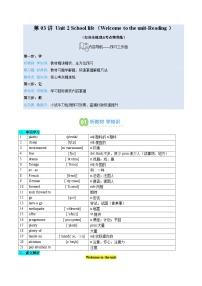
第03讲 Unit 2 School life(Welcome to the unit-Reading)-【暑假自学课】2025年新八年级英语暑假提升精品讲义(译林版2024)
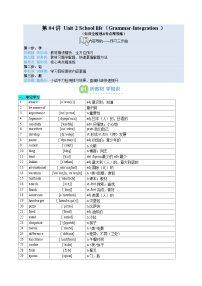
第04讲 Unit 2 School life(Grammar-Integration)-【暑假自学课】2025年新八年级英语暑假提升精品讲义(译林版2024)
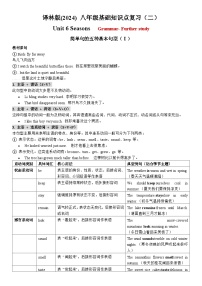
初中英语牛津译林版(2024)八年级上册(2024)Reading优秀学案设计
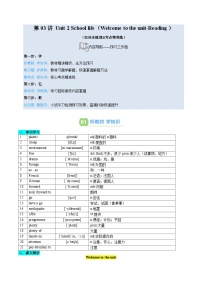
第03讲 Unit 2 School life(Welcome to the unit-Reading)-【暑假自学课】2025年新八年级英语暑假提升精品讲义(译林版2024)(含答案与解析)
 新教材
新教材
注册成功
资料篮

在线客服
添加在线客服
获取1对1服务
官方微信
关注“教习网”公众号
打开微信就能找资料
赛课定制
添加在线客服
获取1对1定制服务
职称咨询
添加在线客服
获取1V1专业指导服务

免费福利

.png)
.png)
.png)
