 免费领取教师福利



若您为此资料的原创作者,认为该资料内容侵犯了您的知识产权,请扫码添加我们的相关工作人员,我们尽可能的保护您的合法权益。


这是一份初中英语人教版(2024)八年级上册(2024)Unit 5 What a Delicious Meal! Section A课堂教学ppt课件
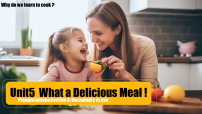
人教版英语八年级上册Unit 5 What a Delicious Meal!第五单元 多么美味的一餐!Section A How do we make food?我们如何制作食物?(1a-1d) 在本单元中,你将:1. talk about food and cooking.谈论食物和烹饪。2. give cooking instructions.给出烹饪说明。3.describe a process using adverbs of sequence.用顺序副词描述一个过程。4. use exclamatory sentences to express strong feelings.用感叹句表达强烈的感情。5.explore how food and cooking can bring people together.探索食物和烹饪如何使人们聚在一起。在本课中,您将:1. talk about food and cooking using related words and expressions.用相关的单词和短语谈论食物和烹饪2. understand the conversation about making mashed potatoes and get detailed information.理解关于制作土豆泥的对话并获得详细信息3. use adverbs of sequence to describe cooking steps.用顺序副词描述烹饪步骤。pepper /'pepə(r)/ n. 胡椒粉;菜椒cut up切碎;剁碎mix /mɪks/ v. (使)混合;融合;调配 n. 混合;混杂;混合料bake /beɪk/v. 烘焙oven /'ʌvn/ n. 烤箱;烤炉pour sth into sth将……倒入……flour /'flaʊə(r)/n. 面粉boil /bɔɪl/v. 煮沸;烧开 n. 沸腾;沸点butter /'bʌtə(r)/n. 黄油cheese/tʃi:z/n. 奶酪;干酪cut sth in/ into sth将······切成······tablespoon /'teɪblspu:n/n. 一汤匙(的量);餐匙;汤匙mash /mæʃ/ v. 捣烂;捣碎mashed /mæʃt/ potatoes土豆泥stir-fry /'stɜː fraɪ/v. 翻炒;炒;煸do with处理bowl /bəʊl/ n. 碗;钵;盆heat/hi:t/v. 加热;变热 n. 热;温度;炎热天气oil /ɔɪl/n. 食用油;石油;燃油 pan /pæn/n. 平底锅;烤盘 put sth back将……放回mix ... with ... (使) ······和······混合simple/'sɪmpl/adj. 简单的;朴素的 ingredient /ɪn'ɡri:diənt/ n. 材料;食材instruction/ɪn'strʌkʃn/n. (pl.) 用法说明;操作指南steamed /sti:md/ fish清蒸鱼hot and sour /saʊə(r)/ soup酸辣汤mess /mes/n. 脏乱;凌乱pretty /'prɪti/adj. 漂亮的;美丽的 adv. 相当;十分;非常Christmas /'krɪsməs/n. 圣诞节pancake /'pænkeɪk/ n. 烙饼;薄饼dream /dri:m/ n. 梦想;梦 v. (dreamt /dremt/ 或dreamed) 做梦;梦见;梦想university/,ju:nɪ'vɜ:səti/n. (综合性)大学;高等学府go boating去划船memory /'meməri/ n. 回忆;记忆visible /'vɪzəbl/adj. 看得见的;可见的along with sb / sth除……以外(还); 与……同样地pumpkin /'pʌmpkɪn/n. 南瓜pie/paɪ/n. 果馅饼;肉馅饼warm up (使)活跃起来;热身;预热cinnamon /'sɪnəmən/ n. 肉桂皮;桂皮香料fill … with … (使)充满;(使)填满sweetness /'swi:tnəs/ n. 甜;芬芳;愉悦college/'kɒlɪdʒ/n. 学院;大学host/həʊst/ n. 主人;东道主 v. 主办;主持(活动)hostess/'həʊstəs/n. 女主人;女房东recipe /'resəpi/n. 食谱;烹饪法cream /kri:m/ n. 奶油;护肤霜;奶油色crust /krʌst/n. 糕饼酥皮;面包皮mixture/'mɪkstʃə(r)/ n. 混合物;结合体least/li:st/adv. &pron. 最小;最少at least至少secret/'si:krət/n. 诀窍;秘密 adj. 秘密的;隐秘的according/ə'kɔ:dɪŋ/to根据;依照whenever/wen'evə(r)/adv. &conj. 每当;在任何……的时候item /'aɪtəm/n. 项目spaghetti /spə'ɡeti/ n. 意大利细面条spoon/spu:n/ n. (= spoonful) 一勺的量;勺slice /slaɪs/n. 薄片;片 v. 把······切成薄片;切;割couple/'kʌpl/n. 夫妻;情侣;两人island/'aɪlənd/n. 岛wife/waɪf/n. (pl. wives /waɪvz/) 妻子separateadj. /'seprət/ 单独的;分开的 v. /'sepəreɪt/ (使)分开;(使)分离born/bɔ:n/v. 出生;出世 adj. 天生(有某方面才能)的one by one逐个地;逐一地Thanksgiving /ˌθæŋks'ɡɪvɪŋ/ 感恩节Guoqiao Rice Noodles过桥米线1. Who are the people in the photo and what are they doing?2. How do you think they feel?3. In your family, who usually does the cooking? Do you help? They are mom and son and they are making noodles.They are really happy.My mom usually does the cooking in my family, and I often help her when I finish my homework.?BIG QuestionWhy do we learn to cook?为什么我们要学习做饭?1. Cooking helps us make healthy and delicious food, avoiding excessive junk food.做饭能让我们做出健康美味的食物,避免摄入过多垃圾食品。?BIG QuestionWhy do we learn to cook?为什么我们要学习做饭?2. It's a practical life skill that makes us more independent.这是一项实用的生活技能,能让我们变得更加独立。?BIG QuestionWhy do we learn to cook?为什么我们要学习做饭?3. We can cook for family and friends to show our love and strengthen relationships.我们可以为家人和朋友下厨,表达心意,增进彼此的感情。?BIG QuestionWhy do we learn to cook?为什么我们要学习做饭?4. Trying new recipes is fun and can reduce stress in daily life.尝试新食谱充满乐趣,还能缓解日常生活中的压力。Starting today, we will learn the unit that you are most interested in in this book-food, so in the first class of this unit. We will learn about some famous dishes in China.今天开始我们就要学习你们对本册书最感兴趣的的单元-食物,那么在学这个单元的第一节课时。我们将会了解一些中国的名菜。1. 锅包肉:Guobaorou is a classic Northeastern Chinese dish. It uses tender pork loin slices coated with starch, deep-fried until golden and crispy. Then it's tossed in a sweet and sour sauce made of sugar, vinegar and tomato sauce. It tastes crispy outside and tender inside, loved by many.锅包肉是经典东北菜。选用鲜嫩猪里脊肉切片,裹淀粉炸至金黄酥脆,再翻炒裹上由糖、醋、番茄酱调制的酸甜酱汁。外酥里嫩,深受大众喜爱。Starting today, we will learn the unit that you are most interested in in this book-food, so in the first class of this unit. We will learn about some famous dishes in China.今天开始我们就要学习你们对本册书最感兴趣的的单元-食物,那么在学这个单元的第一节课时。我们将会了解一些中国的名菜。2. 天津煎饼果子:Tianjin Jianbing Guizi is a famous street food. It's made by spreading batter on a griddle to form a thin crepe, adding an egg, then crisp fried dough sticks. It's seasoned with sauce and scallions. Portable and tasty, it's a popular breakfast choice.天津煎饼果子是知名街头小吃。将面糊摊在鏊子上制成薄饼,打上鸡蛋,放上酥脆馃子,刷酱撒葱调味。方便携带、美味可口,是颇受欢迎的早餐之选。Starting today, we will learn the unit that you are most interested in in this book-food, so in the first class of this unit. We will learn about some famous dishes in China.今天开始我们就要学习你们对本册书最感兴趣的的单元-食物,那么在学这个单元的第一节课时。我们将会了解一些中国的名菜。3. 北京烤鸭:Peking Duck is a world-famous Beijing specialty. The duck is air-dried and roasted until the skin turns golden and crispy. It's usually sliced and eaten with pancakes, scallions and sweet bean sauce. It's a must-try dish for visitors to Beijing.北京烤鸭是享誉世界的北京名菜。鸭子经风干后烤制,直至鸭皮金黄酥脆。通常切片后搭配薄饼、葱段和甜面酱食用,是来京游客必尝的美食。Match the instructions with the pictures.将说明与图片配对。1aListen to the conversation and tick the ingredients you hear.听对话,勾选你听到的成分。potatoes土豆tomatoes番茄milk牛奶butter黄油sugar糖salt盐pepper胡椒粉cheese奶酪Culture Tip文化提示Mashed potatoes are a popular dish in Western countries, especially in the US and the UK. They are often served as a side dish(配菜) with meals like roast chicken or steak. Many Western families make mashed potatoes during holidays like Thanksgiving.土豆泥在西方国家很受欢迎,尤其是在美国和英国。它们通常作为配菜(配菜)搭配烤鸡或牛排之类的餐点。许多西方家庭在感恩节这样的节日里会做土豆泥。Listen again and number the instructions.再听一遍,给指令编号。____ Wash the potatoes and cut them into pieces.洗净土豆,把它们切成小块。____ Add salt and pepper.加盐和胡椒粉。____ Get one tablespoon of butter and half a cup of milk.取一汤匙黄油和半杯牛奶。____ Mash the potatoes.把土豆捣成泥。____ Add the milk and the butter to the potatoes, and mix.把牛奶和黄油加到土豆泥里,并混合均匀。____ Put the potatoes in a pot and boil them until they are soft.把土豆放进锅里煮,直到它们变软。163452常用的顺序连接词开始或第一步First/Firstly, To begin with, Let’s start by ..., The first step is to ...中间步骤Second/Secondly, Third/Thirdly, Next, Then, After that, Later结束或最后一步Finally, Lastly, In the end, The last step is ...Expressions about Cooking关于烹饪的表达get some ... and wash themcut ... into piecesput ... in the pot and boil them until they are softone tablespoon of ... and half a cup of ...Let’s start mashing the ...add ... to ...The ... are done.取一些......洗净把......切块/片把......放入锅中煮至软烂一勺......半杯......把......碾成泥把......加入............做好了Talk about how to make mashed potatoes in your own words.用自己的话说说怎么做土豆泥。How do we make mashed potatoes?A:我们怎样制作土豆泥?First, wash the potatoes.B:首先,洗净土豆。What do we do after that?A:在那之后我们做什么?Then, ...B:然后……A:How do we make mashed potatoes?B:First, wash the potatoes.A:What do we do after that?B:Then, peel the potatoes and cut them into small pieces.A:What's next?B:Next, boil the potato pieces in water until they're soft (about 15 minutes).A:What do we do then?B:Then, drain the water and mash the potatoes with a fork or masher.A:Any last steps?B:Finally, add a little milk and butter, then stir well until smooth. Season with salt and pepper to taste.A:怎么做土豆泥呢?B:首先,把土豆洗干净。A:之后要做什么?B:然后,给土豆去皮,切成小块。A:接下来呢?B:接着,把土豆块放进水里煮软(大概15分钟)。A:然后要做什么?B:然后,把水沥干,用叉子或压泥器把土豆压成泥。A:最后一步呢?B:最后,加一点牛奶和黄油,搅拌到顺滑。再加盐和胡椒调味就可以了。cut up切碎;剁碎,为“动词+副词”型短语,其后接人称代词或反身代词作宾语时必须放在cut和up中间。I’m going to cut up the beef for dumplings. Could you help me cut it up?我打算把牛肉切碎包饺子。你能帮我把它切碎吗?1.Cut up the tomatoes.切碎西红柿。(P42 1a) mix(使)混合;融合。常用于短语mix sth. with/and sth. “使······与······混合”。If you mix blue and yellow, you get green.如果你将蓝色和黄色混合,你就会得到绿色。2.Mix the vegetables.把蔬菜混合。(P42 1a)mash /mæʃ/ v.捣烂;捣碎Mash the fruit up with a fork.用叉子将水果捣碎。pour sth. into sth.将······倒入······Clean the pot and pour some water into the pot.把锅洗干净,然后往锅里倒些水。3.Pour the milk into the flour.将牛奶倒入面粉中。(P42 1a)4. Mash the potatoes.将土豆捣碎。(P42 1c)在描述烹饪过程或其他一系列动作时,我们常常会使用副词来表示动作发生的先后顺序。这些副词能帮助我们清晰、有条理地表述做事的步骤。5.副词的顺序常见的表示顺序的副词有:first(首先)、next(接下来)、then(然后)、finally(最后)。必做作业:①完成练习册相应习题②抄写1a所学单词和短语;中英文各一遍③完成书上练习题。选做作业:①在家长面前读1b听力原文②根据1d, 选择你最喜欢的菜肴仿写1段对话;③提前读2a部分文章,尝试完成2b、2c部分习题人教版英语八年级上册Unit 5 What a Delicious Meal!第五单元 多么美味的一餐!Section A How do we make food?我们如何制作食物?(Pronunciation) 在本课中,您将:1. distinguish the sounds /əʊ/, /aʊ/, /ɪə/, /eə/, /ʊə/, /sk/, /st/,/sp/ and /str/.区分/əʊ/,/aʊ/,/ɪə/,/eə/,/ʊə/,/sk/,/st/,/sp/和/str/.2. read sentences with correct intonation and pauses.区分发音。用正确的语调和停顿读句子。pepper /'pepə(r)/ n. 胡椒粉;菜椒cut up切碎;剁碎mix /mɪks/ v. (使)混合;融合;调配 n. 混合;混杂;混合料bake /beɪk/v. 烘焙oven /'ʌvn/ n. 烤箱;烤炉pour sth into sth将……倒入……flour /'flaʊə(r)/n. 面粉boil /bɔɪl/v. 煮沸;烧开 n. 沸腾;沸点butter /'bʌtə(r)/n. 黄油cheese/tʃi:z/n. 奶酪;干酪cut sth in/ into sth将······切成······tablespoon /'teɪblspu:n/n. 一汤匙(的量);餐匙;汤匙mash /mæʃ/ v. 捣烂;捣碎mashed /mæʃt/ potatoes土豆泥stir-fry /'stɜː fraɪ/v. 翻炒;炒;煸do with处理bowl /bəʊl/ n. 碗;钵;盆heat/hi:t/v. 加热;变热 n. 热;温度;炎热天气oil /ɔɪl/n. 食用油;石油;燃油 pan /pæn/n. 平底锅;烤盘 put sth back将……放回mix ... with ... (使) ······和······混合simple/'sɪmpl/adj. 简单的;朴素的 ingredient /ɪn'ɡri:diənt/ n. 材料;食材instruction/ɪn'strʌkʃn/n. (pl.) 用法说明;操作指南steamed /sti:md/ fish清蒸鱼hot and sour /saʊə(r)/ soup酸辣汤mess /mes/n. 脏乱;凌乱pretty /'prɪti/adj. 漂亮的;美丽的 adv. 相当;十分;非常Christmas /'krɪsməs/n. 圣诞节pancake /'pænkeɪk/ n. 烙饼;薄饼dream /dri:m/ n. 梦想;梦 v. (dreamt /dremt/ 或dreamed) 做梦;梦见;梦想university/,ju:nɪ'vɜ:səti/n. (综合性)大学;高等学府go boating去划船memory /'meməri/ n. 回忆;记忆visible /'vɪzəbl/adj. 看得见的;可见的along with sb / sth除……以外(还); 与……同样地pumpkin /'pʌmpkɪn/n. 南瓜pie/paɪ/n. 果馅饼;肉馅饼warm up (使)活跃起来;热身;预热cinnamon /'sɪnəmən/ n. 肉桂皮;桂皮香料fill … with … (使)充满;(使)填满sweetness /'swi:tnəs/ n. 甜;芬芳;愉悦college/'kɒlɪdʒ/n. 学院;大学host/həʊst/ n. 主人;东道主 v. 主办;主持(活动)hostess/'həʊstəs/n. 女主人;女房东recipe /'resəpi/n. 食谱;烹饪法cream /kri:m/ n. 奶油;护肤霜;奶油色crust /krʌst/n. 糕饼酥皮;面包皮mixture/'mɪkstʃə(r)/ n. 混合物;结合体least/li:st/adv. &pron. 最小;最少at least至少secret/'si:krət/n. 诀窍;秘密 adj. 秘密的;隐秘的according/ə'kɔ:dɪŋ/to根据;依照whenever/wen'evə(r)/adv. &conj. 每当;在任何……的时候item /'aɪtəm/n. 项目spaghetti /spə'ɡeti/ n. 意大利细面条spoon/spu:n/ n. (= spoonful) 一勺的量;勺slice /slaɪs/n. 薄片;片 v. 把······切成薄片;切;割couple/'kʌpl/n. 夫妻;情侣;两人island/'aɪlənd/n. 岛wife/waɪf/n. (pl. wives /waɪvz/) 妻子separateadj. /'seprət/ 单独的;分开的 v. /'sepəreɪt/ (使)分开;(使)分离born/bɔ:n/v. 出生;出世 adj. 天生(有某方面才能)的one by one逐个地;逐一地Thanksgiving /ˌθæŋks'ɡɪvɪŋ/ 感恩节Guoqiao Rice Noodles过桥米线Listen and repeat. Add one more word to each group.听完后重复一遍。在每个词组中再添加一个词。 soapgocloudbrownfearbeardchairdarecurepourskatestonestudentsportsparkstrongstrawberryscheduleListen and repeat. Pay attention to the intonation and pauses.听完后复述一遍。要注意语调和停顿的位置。 要制作一份香蕉奶昔,你需要准备三根香蕉,一汤匙冰激凌和一杯牛奶。首先,剥香蕉皮。然后,切碎香蕉。在那之后,把香蕉和冰激凌放入搅拌机里。接着,把牛奶倒入搅拌机,并打开搅拌机。最后,把奶昔倒进玻璃杯中并饮用。英语有两种最基本的语调,即降调和升调。降调的基本意义是“肯定”和“完结”,通常用于陈述句、特殊疑问句、选择疑问句的后半部分、祈使句和感叹句等。升调的基本意义是“不确定”和“未完结”,可表示犹豫、怀疑、婉转、含蓄、试探等含义。升调通常用于一般疑问句、陈述句表示疑问的各类句子,以及表示意思未完的各种情况。升调可以用于说话者不能确定信息是否准确,需要对方核实的情况。语调(Intonation)A: I’m putting the mixture into the oven. What temperature and time should I set?B: 160 degrees, 50 minutes.A: 160 degrees? 50 minutes?B: Exactly.语调(Intonation)在列举事物时,前面的各件事物都用升调,最后一件事物用降调。例如:同一句话用不同语调表达时,意义也会有所不同。意群是句子内部意义相对完整的一组词。意群的界限是相对的。一个句子可以是一个大意群,也可分为若干个小意群,句子内的意群之间停顿时间较短,用一根竖直线(|)标出。句子和句子之间的停顿时间较长,用两根竖直线(||)标出。例如:Home is a place of love. || It always welcomes me | with open arms | —and perhaps | a plate of freshly-made biscuits.每个意群要一口气说完。在说每个意群时,要注意词与词之间的连读、不完全爆破和词的弱读等现象。Complete the passage with the words in the box.If you want to make a chocolate milk shake, you need some chocolate,one ________________ of ice cream, and a cup of milk. First,________________ the chocolate. Then, put the mashed chocolate in abowl. After that, put the chocolate and ice cream in the________________. Next, ________________ the milk into the blender and________________ it on. Finally, pour the milk shake into a glass anddrink it.人教版英语八年级上册Unit 5 What a Delicious Meal!第五单元 多么美味的一餐!Section A How do we make food?我们如何制作食物?(2a-2d) 在本单元中,你将:1. understand the conversation and get basic knowledge about a popular Chinese dish and its preparation. 理解这段对话,并掌握关于一道受欢迎的中国菜及其制作方法的基本知识。2. repeat the steps of cooking stir-fried eggs and tomatoes.复述炒鸡蛋配番茄这道菜的烹饪步骤。3. describe the cooking steps of a Chinese dish you can make.描述一道你自己能做的中国菜的烹饪流程。 pepper /'pepə(r)/ n. 胡椒粉;菜椒cut up切碎;剁碎mix /mɪks/ v. (使)混合;融合;调配 n. 混合;混杂;混合料bake /beɪk/v. 烘焙oven /'ʌvn/ n. 烤箱;烤炉pour sth into sth将……倒入……flour /'flaʊə(r)/n. 面粉boil /bɔɪl/v. 煮沸;烧开 n. 沸腾;沸点butter /'bʌtə(r)/n. 黄油cheese/tʃi:z/n. 奶酪;干酪cut sth in/ into sth将······切成······tablespoon /'teɪblspu:n/n. 一汤匙(的量);餐匙;汤匙mash /mæʃ/ v. 捣烂;捣碎mashed /mæʃt/ potatoes土豆泥stir-fry /'stɜː fraɪ/v. 翻炒;炒;煸do with处理bowl /bəʊl/ n. 碗;钵;盆heat/hi:t/v. 加热;变热 n. 热;温度;炎热天气oil /ɔɪl/n. 食用油;石油;燃油 pan /pæn/n. 平底锅;烤盘 put sth back将……放回mix ... with ... (使) ······和······混合simple/'sɪmpl/adj. 简单的;朴素的 ingredient /ɪn'ɡri:diənt/ n. 材料;食材instruction/ɪn'strʌkʃn/n. (pl.) 用法说明;操作指南steamed /sti:md/ fish清蒸鱼hot and sour /saʊə(r)/ soup酸辣汤mess /mes/n. 脏乱;凌乱pretty /'prɪti/adj. 漂亮的;美丽的 adv. 相当;十分;非常Christmas /'krɪsməs/n. 圣诞节pancake /'pænkeɪk/ n. 烙饼;薄饼dream /dri:m/ n. 梦想;梦 v. (dreamt /dremt/ 或dreamed) 做梦;梦见;梦想university/,ju:nɪ'vɜ:səti/n. (综合性)大学;高等学府go boating去划船memory /'meməri/ n. 回忆;记忆visible /'vɪzəbl/adj. 看得见的;可见的along with sb / sth除……以外(还); 与……同样地pumpkin /'pʌmpkɪn/n. 南瓜pie/paɪ/n. 果馅饼;肉馅饼warm up (使)活跃起来;热身;预热cinnamon /'sɪnəmən/ n. 肉桂皮;桂皮香料fill … with … (使)充满;(使)填满sweetness /'swi:tnəs/ n. 甜;芬芳;愉悦college/'kɒlɪdʒ/n. 学院;大学host/həʊst/ n. 主人;东道主 v. 主办;主持(活动)hostess/'həʊstəs/n. 女主人;女房东recipe /'resəpi/n. 食谱;烹饪法cream /kri:m/ n. 奶油;护肤霜;奶油色crust /krʌst/n. 糕饼酥皮;面包皮mixture/'mɪkstʃə(r)/ n. 混合物;结合体least/li:st/adv. &pron. 最小;最少at least至少secret/'si:krət/n. 诀窍;秘密 adj. 秘密的;隐秘的according/ə'kɔ:dɪŋ/to根据;依照whenever/wen'evə(r)/adv. &conj. 每当;在任何……的时候item /'aɪtəm/n. 项目spaghetti /spə'ɡeti/ n. 意大利细面条spoon/spu:n/ n. (= spoonful) 一勺的量;勺slice /slaɪs/n. 薄片;片 v. 把······切成薄片;切;割couple/'kʌpl/n. 夫妻;情侣;两人island/'aɪlənd/n. 岛wife/waɪf/n. (pl. wives /waɪvz/) 妻子separateadj. /'seprət/ 单独的;分开的 v. /'sepəreɪt/ (使)分开;(使)分离born/bɔ:n/v. 出生;出世 adj. 天生(有某方面才能)的one by one逐个地;逐一地Thanksgiving /ˌθæŋks'ɡɪvɪŋ/ 感恩节Guoqiao Rice Noodles过桥米线Do you know how many Chinese dishes use eggs as an ingredient?请问你知道鸡蛋是多少道中国菜的原料吗?Do you know how many Chinese dishes use eggs as an ingredient?请问你知道鸡蛋是多少道中国菜的原料吗?Today we will learn about one of these dishes – Stir-fried Tomatoes with Eggs. We will learn about its ingredients, preparation method, and the cultural context surrounding it. Everyone is welcome to join in and learn!今天我们将学习其中一道菜-番茄炒蛋。我们将学习他的原料、做法、文化等。欢迎大家来学习!Peter: Hey Teng Fei, can you teach me how to cook a popular Chinese dish?Teng Fei: Sure. How about stir-fried eggs and tomatoes?Peter: Great idea! How do we make it?Teng Fei: We need eggs, tomatoes, _______, and_______.彼得:嗨,滕飞,你能教我做一道受欢迎的中国菜吗?滕飞:当然可以。西红柿炒鸡蛋怎么样?彼得:好主意!我们怎么做呢?滕飞:我们需要鸡蛋、西红柿、 和 。Listen to the conversation and fill in the blanks.听这段对话,然后填入空缺处。 saltsugar盐糖Peter: OK. How many tomatoes and eggs do we need?Teng Fei: ______ tomatoes and ______ eggs.Peter: OK. What should we do with the tomatoes and eggs?Teng Fei: First, cut the tomatoes into small ______. Next, mix the eggs in a bowl.Peter: Like this?彼得:好的。我们需要多少个西红柿和鸡蛋?滕飞: 个西红柿和 个鸡蛋。彼得:好的。我们应该怎样处理西红柿和鸡蛋?滕飞:首先,把西红柿切成小 。接着,在碗里把鸡蛋打散。彼得:像这样?Listen to the conversation and fill in the blanks.听这段对话,然后填入空缺处。 Fourthreepieces四片三Teng Fei: Perfect. Then, heat some oil in a pan and add the _____to it. Stir-fry for one minute. Then take the eggs out of the pan.Peter: Got it.Teng Fei: Next, cook the tomatoes in the pan until they’re _____.Then, add some salt and sugar.Peter: What an amazing ______! What’s next?Teng Fei: Finally, put the eggs back into the pan and mix them with the tomatoes.Peter: Wow, it looks so good! How simple!滕飞:非常好。然后,在锅里烧一些油,把 放进去。翻炒1分钟。然后把鸡蛋从锅中盛出。彼得:明白了。滕飞:接着,在锅里炒西红柿,直到它们变 。然后,加些盐和糖。彼得:多令人惊叹的 啊!接下来呢?滕飞:最后,把鸡蛋放回锅中,把它们和西红柿混合均匀。彼得:哇,看起来太棒了!真简单啊!Listen to the conversation and fill in the blanks.听这段对话,然后填入空缺处。 eggssoftsmell变软鸡蛋味道Expressions about Learning Cooking关于学习烹饪的常用表达Can you teach me to cook ...?How about ...?How do we make it?How many ... do we need?What should we do with ...?What’s next?What an amazing smell!It looks so good! How simple!Expressions about Cookingmix the eggs in a bowl .heat some oil in a panstir-fry for ... minute(s)take the ... out of the pancook the ... in the pan until they’re softput ... back into the panHow about...?······怎么样?常用来提出建议或询问信息,about为介词,后面常跟名词、代词或动词-ing形式。I’m not going. How about you? 我不打算去。你呢?How about going for a meal? 去吃饭怎么样?1. How about stir-fried eggs and potatoes?西红柿炒鸡蛋怎么样? (P43 2a)do with 处理2. What should we do with the tomatoes and eggs?我们该怎么处理这些西红柿和鸡蛋? (P43 2a)I don’t know what to do with(=how to deal with) these emails.我不知道如何处理这些电子邮件。put sth.back将······放回If you use something, put it back!用过的东西要放回原处!拓展延伸:推迟;延迟We have to put the meeting back to next week.我们不得不把这次会议延期到下周。3. Finally, put the eggs back into the pan and mix them with the tomatoes.最后,把鸡蛋倒回锅里,与西红柿混合。(P43 2a)simple adj.简单的;朴素的(1)简单的The answer is really quite simple.实际上答案相当简单。(2)朴素的She always wears simple but elegant clothes.她总是穿着素雅的衣服。拓展延伸:simply adv.仅仅;只;简单地4. How simple!真简单! ( P43 2a)Failure is simply a stepping stone in developing new technology.失败只是开发新技术的垫脚石。Read the conversation and complete the recipe.阅读对话内容,然后完成这份食谱。three eggs, four tomatoes, salt and sugarcut the tomatoes into small piecesmix the eggsin a bowlheat some oil and add the eggs to itStir-frytake the eggs outRead the conversation and complete the recipe.阅读对话内容,然后完成这份食谱。cook the tomatoes in a pan until they’re softadd somesalt and sugarput the eggs back into the panmix them with the tomatoesListen to the conversation again. Then role-play it.再听一遍这段对话,然后进行角色扮演。 What dish can you make by yourself? Talk about how to cook it with a partner.你能自己做出哪道菜?然后和同伴讨论一下制作方法。 英文:A: Hey Lily, I plan to cook some Chinese food this weekend, but I don’t know which dishes to make. Can you give me some advice?中文:A:嘿,莉莉,我这周末打算做些中餐,但不知道做什么菜。你能给我点建议吗?英文:B: Of course! Black Pepper Beef Tenderloin (黑椒牛柳,也可表达为Black Pepper Beef Strips), Steamed Fish (清蒸鱼) and Hot and Sour Soup (酸辣汤) are all classic. They are not very difficult to cook. I can tell you their ingredients and cooking methods.中文:B:当然可以!黑椒牛柳、清蒸鱼和酸辣汤都是经典菜品,做起来不算太难。我可以告诉你它们的食材和做法。英文:A: Great! Let’s start with Black Pepper Beef Tenderloin. What ingredients do I need?中文:A:太好了!我们先从黑椒牛柳开始吧。我需要哪些食材?英文:B: The main ingredients are 250 grams of beef tenderloin, one green pepper, one red pepper, and some garlic and ginger. For the sauce, you need oyster sauce, soy sauce, black pepper powder, a little cornstarch and cooking oil.中文:B:主要食材有250克牛里脊、一个青椒、一个红椒,还有一些大蒜和生姜。调料需要蚝油、酱油、黑胡椒粉、少许玉米淀粉和食用油。英文:A: Got it. Can you tell me how to cook it step by step?中文:A:明白了。你能一步步告诉我怎么做吗?英文:B: First, cut the beef tenderloin into thin slices. Marinate it with one spoon of soy sauce, a little black pepper powder and some cornstarch for 15 minutes. Then cut the green and red peppers into strips, and chop the garlic and ginger into small pieces. Heat some oil in a pan, fry the garlic and ginger until they smell good. Add the marinated beef and fry quickly until it turns brown. Next, put in the pepper strips and fry for one minute. Finally, mix one spoon of oyster sauce with a little water and cornstarch. Pour it into the pan, stir well, and add more black pepper powder if you like. It will be ready in 5 minutes!中文:B:首先,把牛里脊切成薄片,用一勺酱油、少许黑胡椒粉和一些玉米淀粉腌制15分钟。然后把青红椒切成条,大蒜和生姜切碎。在锅里倒些油烧热,放入姜蒜炒出香味,加入腌制好的牛肉快速翻炒至变色。接着放入椒条炒一分钟。最后,把一勺蚝油和少许水、玉米淀粉混合均匀,倒入锅中搅拌好,喜欢的话可以再加点黑胡椒粉。五分钟就能做好啦!英文:A: That sounds easy. What about Steamed Fish? I like soft and fresh fish.中文:A:听起来很简单。那清蒸鱼呢?我喜欢鲜嫩的鱼。英文:B: Freshness is the most important for Steamed Fish. So choose a fresh sea bass or crucian carp, about 500 grams. Other ingredients are ginger slices, scallions, soy sauce, cooking wine and sesame oil.中文:B:清蒸鱼最关键的是新鲜。所以选一条新鲜的鲈鱼或鲫鱼,大概500克左右。其他食材有姜片、葱段、酱油、料酒和香油。英文:A: How to steam it well without overcooking?中文:A:怎么蒸才能蒸好,不蒸过头呢?英文:B: First, clean the fish. Make 2-3 cuts on both sides so that it can be cooked evenly. Rub a little cooking wine and salt on the fish. Put some ginger slices and scallion sections inside and on top of the fish. Let it marinate for 10 minutes. Then boil water in a steamer. Put the fish on a plate and steam it for 8-10 minutes. Don’t steam it too long, or it will become hard. Take it out, pour out the extra water, and remove the old ginger and scallions. Add some new shredded scallions. Pour hot soy sauce and a little sesame oil on it. That’s all. The fish will be soft and juicy.中文:B:首先把鱼处理干净,在鱼的两面各划2-3刀,这样能受热均匀、熟得更快。在鱼身上抹少许料酒和盐,在鱼肚子里和鱼身上放上姜片和葱段,腌制10分钟。然后在蒸锅里把水烧开,把鱼放在盘子里放进去蒸8-10分钟。别蒸太久,不然鱼肉会变柴。蒸好后取出来,倒掉盘子里多余的水,把用过的姜片和葱段拿掉,再放些新的葱丝,淋上热酱油和少许香油就完成了。这样做出来的鱼肉又嫩又多汁。英文:A: Perfect! Finally, tell me about Hot and Sour Soup. I want something warm and tasty.中文:A:太赞了!最后告诉我酸辣汤怎么做吧。我想来点暖和又好吃的。英文:B: Hot and Sour Soup tastes rich, and you can choose ingredients freely. You need tofu, wood ear mushrooms, bamboo shoots, eggs, shredded pork (you can add it or not), vinegar, chili oil, soy sauce, sesame oil, cornstarch and chicken broth.中文:B:酸辣汤的味道很浓郁,食材也可以灵活搭配。需要豆腐、黑木耳、竹笋、鸡蛋、肉丝(可加可不加)、醋、辣椒油、酱油、香油、玉米淀粉和鸡汤。英文:A: Tell me the cooking steps, please.中文:A:请告诉我做法步骤吧。英文:B: First, cut tofu, wood ear mushrooms and bamboo shoots into thin strips. Break an egg into a bowl and stir it well. Boil the chicken broth in a pot. Add tofu, wood ear mushrooms and bamboo shoots, and cook for 5 minutes. Then mix cornstarch with water to make a thin paste. Pour it into the pot and stir gently to make the soup thick. Slowly pour the beaten egg into the soup while stirring, so that it becomes egg drops. Next, add 2 spoons of vinegar, 1 spoon of chili oil, a little soy sauce and salt to taste. Finally, pour a little sesame oil and sprinkle some chopped scallions. The hot and sour taste is very nice.中文:B:首先,把豆腐、黑木耳和竹笋都切成细条。把一个鸡蛋打入碗中搅拌均匀。在锅里把鸡汤烧开,放入豆腐、黑木耳和竹笋,煮5分钟。然后把玉米淀粉和水混合成水淀粉,倒入锅中轻轻搅拌,让汤变浓稠。一边搅拌汤,一边慢慢倒入蛋液,做成蛋花。接着加入两勺醋、一勺辣椒油、少许酱油和适量盐调味。最后淋上一点香油,撒上切碎的葱花。酸辣的口感非常棒。英文:A: Thank you so much! These recipes are easy to understand. I will try to cook them this weekend.中文:A:太谢谢你了!这些做法都很好懂。我这周末就试着做一做。英文:B: You’re welcome! Remember to control the heat when frying the beef, and don’t steam the fish too long. Good luck!中文:B:不客气!炒牛肉的时候记得控制火候,鱼也别蒸太久哦。祝你成功!必做作业:①完成练习册相应习题②抄写2a对话;中英文各一遍③完成书上练习题。选做作业:①在家长面前读2a文章②根据2a, 尝试做一下番茄炒蛋;Complete the passage with the words in the box.Do you know how to make steamed fish? First, wash the fish, ginger (姜), and spring onions (葱). Then, cut the ginger and spring onions into ________________. Next, put the fish on a ________________ with the ginger inside and________________ it for fifteen minutes. After that, put the spring onions on the fish. Then, ________________ some oiland pour it onto the fish. Finally, ________________ some soy sauce (酱油) to the fish.人教版英语八年级上册Unit 5 What a Delicious Meal!第五单元 多么美味的一餐!Section A How do we make food?我们如何制作食物?(2a-2d) 在本单元中,你将:1. master the usage and structure of exclamatory sentences.掌握感叹句的用法及结构。2. distinguish the use of “what” and “how” in exclamatory sentences.区分“what”与“how”在感叹句中的不同用法。3. change declarative sentences to exclamatory sentences.将陈述句改为感叹句。4. use exclamatory sentences in daily communication. 在日常交流中使用感叹句。pepper /'pepə(r)/ n. 胡椒粉;菜椒cut up切碎;剁碎mix /mɪks/ v. (使)混合;融合;调配 n. 混合;混杂;混合料bake /beɪk/v. 烘焙oven /'ʌvn/ n. 烤箱;烤炉pour sth into sth将……倒入……flour /'flaʊə(r)/n. 面粉boil /bɔɪl/v. 煮沸;烧开 n. 沸腾;沸点butter /'bʌtə(r)/n. 黄油cheese/tʃi:z/n. 奶酪;干酪cut sth in/ into sth将······切成······tablespoon /'teɪblspu:n/n. 一汤匙(的量);餐匙;汤匙mash /mæʃ/ v. 捣烂;捣碎mashed /mæʃt/ potatoes土豆泥stir-fry /'stɜː fraɪ/v. 翻炒;炒;煸do with处理bowl /bəʊl/ n. 碗;钵;盆heat/hi:t/v. 加热;变热 n. 热;温度;炎热天气oil /ɔɪl/n. 食用油;石油;燃油 pan /pæn/n. 平底锅;烤盘 put sth back将……放回mix ... with ... (使) ······和······混合simple/'sɪmpl/adj. 简单的;朴素的 ingredient /ɪn'ɡri:diənt/ n. 材料;食材instruction/ɪn'strʌkʃn/n. (pl.) 用法说明;操作指南steamed /sti:md/ fish清蒸鱼hot and sour /saʊə(r)/ soup酸辣汤mess /mes/n. 脏乱;凌乱pretty /'prɪti/adj. 漂亮的;美丽的 adv. 相当;十分;非常Christmas /'krɪsməs/n. 圣诞节pancake /'pænkeɪk/ n. 烙饼;薄饼dream /dri:m/ n. 梦想;梦 v. (dreamt /dremt/ 或dreamed) 做梦;梦见;梦想university/,ju:nɪ'vɜ:səti/n. (综合性)大学;高等学府go boating去划船memory /'meməri/ n. 回忆;记忆visible /'vɪzəbl/adj. 看得见的;可见的along with sb / sth除……以外(还); 与……同样地pumpkin /'pʌmpkɪn/n. 南瓜pie/paɪ/n. 果馅饼;肉馅饼warm up (使)活跃起来;热身;预热cinnamon /'sɪnəmən/ n. 肉桂皮;桂皮香料fill … with … (使)充满;(使)填满sweetness /'swi:tnəs/ n. 甜;芬芳;愉悦college/'kɒlɪdʒ/n. 学院;大学host/həʊst/ n. 主人;东道主 v. 主办;主持(活动)hostess/'həʊstəs/n. 女主人;女房东recipe /'resəpi/n. 食谱;烹饪法cream /kri:m/ n. 奶油;护肤霜;奶油色crust /krʌst/n. 糕饼酥皮;面包皮mixture/'mɪkstʃə(r)/ n. 混合物;结合体least/li:st/adv. &pron. 最小;最少at least至少secret/'si:krət/n. 诀窍;秘密 adj. 秘密的;隐秘的according/ə'kɔ:dɪŋ/to根据;依照whenever/wen'evə(r)/adv. &conj. 每当;在任何……的时候item /'aɪtəm/n. 项目spaghetti /spə'ɡeti/ n. 意大利细面条spoon/spu:n/ n. (= spoonful) 一勺的量;勺slice /slaɪs/n. 薄片;片 v. 把······切成薄片;切;割couple/'kʌpl/n. 夫妻;情侣;两人island/'aɪlənd/n. 岛wife/waɪf/n. (pl. wives /waɪvz/) 妻子separateadj. /'seprət/ 单独的;分开的 v. /'sepəreɪt/ (使)分开;(使)分离born/bɔ:n/v. 出生;出世 adj. 天生(有某方面才能)的one by one逐个地;逐一地Thanksgiving /ˌθæŋks'ɡɪvɪŋ/ 感恩节Guoqiao Rice Noodles过桥米线What would you say when you taste something truly delicious? You can express it in Chinese.当你吃到一个非常好吃的吃的时,你会说些什么?你可以用中文表达。- 太赞了!In today’s lesson, we will learn how to express these phrases in English – namely, exclamations.今天这节课我们将学习如何用英语表达这些话-感叹句-太好吃了吧!- 这也太绝了!- 味道绝了/绝了!- 简直是人间美味!- 这个口感也太赞了,外酥里嫩的!- 咸淡刚好,越吃越香!- 鲜掉眉毛了!- 一口下去满是香味,太上头了!- 这是我吃过最好吃的!- 根本停不下来,还想再吃一碗!- 也太惊艳了,完全超出预期!- 好吃!- 绝了!Read the sentences and discuss how to make exclamatory sentences with what or how.阅读这些句子,并讨论如何使用“what”或“how”来构造感叹句。 1.感叹句用法:感叹句是用来表达强烈情感的句子,如惊讶、喜悦、赞美、厌恶等。what 引导的感叹句重点强调名词,通过用形容词修饰名词,突出所描述事物的特征,进而表达强烈情感。在描述食物时,“What a big pizza (it is)! ” 强调披萨之大;“What fresh vegetables (they are)! ” 突出蔬菜的新鲜。这种结构能生动展现对各类事物的感受。 1.感叹句how 引导的感叹句着重强调形容词或副词,通过对事物性质或动作状态的描述来传达情感。在烹饪场景中,“How well she cooks!” 强调她烹饪技术的高超;“How hot the soup is! ” 突出汤的温度,使情感表达更具感染力。2.what引导的感叹句①What+a/an+形容词+可数名词单数(+主语+谓语)!eg:What a lovely girl (she is)!她是一个多么可爱的女孩啊!②What+形容词+可数名词复数/不可数名词(+主语+谓语)!eg:What beautiful scarves they are!多么漂亮的围巾呀!2.what引导的感叹句③What+a/an+可数名词单数(+主语+谓语)!eg:What a mess!真是一团糟!④What(+形容词)+不可数名词(+主语+谓语)!eg:What luck! 真幸运!3.how引导的感叹句①How+形容词/副词(+主语+谓语)!eg:How lovely the baby is!多么可爱的婴儿啊! How fast he runs!他跑得多快啊!②How+主语+谓语!eg:How time flies!时光飞逝!3.陈述句转换为感叹句常用“断→找→去→添→改”五步法。①断:在陈述句中的谓语动词后将句子断开。例句1:The picture is | very beautiful.这幅画很漂亮。例句2:It’s | an interesting film.这是一部有趣的电影。②找:找出断线后的中心词是哪一类词。例句1断线后的中心词是形容词“beautiful”,例句2断线后的中心词是名词“film”。3.陈述句转换为感叹句常用“断→找→去→添→改”五步法。③去:中心词是形容词或副词时,要把修饰该形容词或副词的成分去掉。比如例句1中修饰中心词“beautiful”的是“very”,变感叹句时应去掉“very”。但是需要注意的是,中心词如果是名词,名词前的修饰成分是万万不能去掉的。比如例句2中修饰中心词“film”的是“an interesting”,这部分是不能去掉的。3.陈述句转换为感叹句常用“断→找→去→添→改”五步法。⑤改:将陈述句句首单词首字母由大写改为小写,将感叹词及其修饰的部分放在句首,感叹词首字母改为大写,同时句尾的句号要改为感叹号。据此,例句1变成了“How beautiful the picture is!”,例句2变成了“What an interesting film it is!”。④添:即添上感叹词。如果断线后的中心词是形容词或副词,就添how;如果断线后的中心词是名词,就添what。3.感叹句需要注意的几个问题①在口语中,表示强烈的语气时,常常省略感叹句中的主语和谓语,有时只用一个词或短语。What a fine day(it is)!多好的天气啊!How interesting(it is )!太有趣了!Wonderful!妙极了!Good job!做得好!②what引导的感叹句与how引导的感叹句之间的转化只适用于含有形容词的句子。3.感叹句需要注意的几个问题What an interesting book it is!=How interesting the book is!多么有趣的一本书啊!1. It’s a pretty hat. (what)2. The weather is terrible. (how)3. The Christmas tree looks fantastic. (how)What a pretty hat!How terrible the weather is!How fantastic the Christmas tree looks!Change the following sentences into exclamatory sentences.把以下句子改成感叹句。Change the following sentences into exclamatory sentences.把以下句子改成感叹句。6. The pancake tastes delicious. (how)4. It was an interesting film. (what)5. Emma sings very well. (how)What an interesting film it was!How well Emma sings!How delicious the pancake tastes!Complete the conversations using the correct exclamatory sentences.用正确的感叹句完成这些对话。 CComplete the conversations using the correct exclamatory sentences.用正确的感叹句完成这些对话。 EDFABmess n.脏乱;凌乱,通常用作单数make a mess搞得一团糟(表示动作)be in a mess杂乱不堪;陷入困境(表示状态)1. What a mess(it is)!真是一团糟! (P45 3a)My friend made a pretty card for me, and it’s pretty special.朋友给我做了张漂亮的卡片,特别有意义。(1)pretty 作形容词,意为“漂亮的;美丽的”。pretty 的比较级是prettier,最高级是prettiest。(2)pretty作副词,意为“相当;十分;非常”,常用来修饰形容词或副词,表示程度上的加强。2. It’s a pretty hat.这顶帽子真漂亮。(P45 3b)3. Sue got into her dream university. Sue考上了她梦寐以求的大学。(P45 3c)4. It feels like yesterday that she started high school.感觉她昨天才刚上高中似的。(P45 3c)I enjoy it so much, and it doesn’t feel like work.我非常喜欢它,感觉不像工作。长难句分析:这是一个主从复合句。主句为It feels like yesterday,其中It 作形式主语,指代后面的从句内容;从句为that 引导的主语从句。feel like 觉得好像Complete the passage with what, what an, what a or how.Lily's Happy Saturday When Lily woke up in the morning, she found things everywhere in the kitchen. Her brotherwas trying to make pancakes. “________________ mess!” She cried. Outside, the sun made the lake look pretty. “________________ beautiful it is!” she smiled. After having breakfast, Lily told her father about her dream: “I want to study art at a famous university.” Her dad said: “________________ interesting plan! But let’s go boating in the Forest Park today!” On the lake, Lily felt calm. “________________ fine weather! This is better than Christmas!” Her brother asked, “Better than pancakes?” “Yes!” she laughed. The shiny water matched her dream-bright and full of hope.Goodbye
这是一份初中英语人教版(2024)八年级上册(2024)Unit 5 What a Delicious Meal! Section A课堂教学ppt课件
这是一份人教版(2024)八年级上册(2024)Unit 5 What a Delicious Meal! Section A 2a-2d集体备课课件ppt,共18页。PPT课件主要包含了salt,pepper,Four,three,pieces,First,Next,Then,Finally ,静置1000分钟等内容,欢迎下载使用。
注册成功
资料篮

在线客服
添加在线客服
获取1对1服务
官方微信
关注“教习网”公众号
打开微信就能找资料
赛课定制
添加在线客服
获取1对1定制服务
职称咨询
添加在线客服
获取1V1专业指导服务

免费福利

.png)
.png)
.png)
