免费领取教师福利
若您为此资料的原创作者,认为该资料内容侵犯了您的知识产权,请扫码添加我们的相关工作人员,我们尽可能的保护您的合法权益。


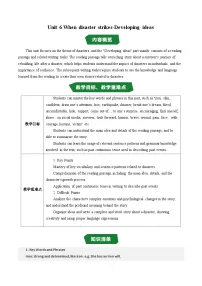
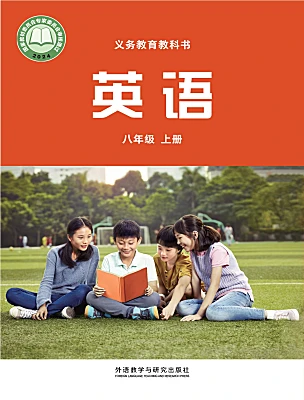
这是一份外研版(2024)八年级上册(2024)Starting out教学设计,共5页。
This unit, “When disaster strikes”, belngs t the categry f “Man and Nature” in the English curriculum fr Grade 8, aiming t explre natural disasters and relevant precautins. The unit cnsists f 11 main discurse materials, which can be divided int three sub - tpics: understanding f natural disasters, influence f natural disasters, and respnse t natural disasters.
The teaching starts with multi - mdal discurses like pictures f ancient tales (such as Nüwa mending the sky, Dayu cntrlling the fld, and Huyi shting the sun), guiding students t think abut the relatinship between these legends and natural disasters, and activating their prir knwledge f natural disasters. Anther multi - mdal discurse intrduces the evlutin f human understanding f natural disasters, emphasizing the imprtance f scientific understanding and effective early warnings.
1 Cre Vcabulary
lst adj. 丢失的,遗失的 (e.g. a lst city)
scared adj. 害怕的,恐惧的 (e.g. be scared f)
shut v. (使) 关 (合) 上,(使) 关闭 (e.g. shut the dr)
cach n. 公共马车,四轮大马车 (e.g. take a cach)
shcking adj. 惊人的,骇人的,令人难以置信的 (e.g. shcking news)
straight adv. 笔直地,成直线地 (e.g. g straight ahead)
fld n. 洪水,水灾 v. 淹没 (e.g. fld disaster)
thick adj. 浓密的;混浊的 (e.g. thick smke)
smke n. (燃烧产生的) 烟 (e.g. give up smking)
ash n. 灰,灰烬 (e.g. vlcanic ash)
shwer n. 一大批,一阵 (在空中洒落或出现的小而轻的东西) (e.g. a shwer f ash)
erupt v. (火山) 爆发,喷发 (e.g. vlcan erupt)
vlcan n. 火山 (e.g. active vlcan)
histrical adj. (有关) 历史的 (e.g. histrical event)
hurricane n. 飓风 (e.g. hurricane warning)
rainstrm n. 暴风雨 (e.g. heavy rainstrm)
mtherland n. 祖国 (e.g. lve mtherland)
tsunami n. 海啸 (e.g. tsunami warning)
2 Key Phrases
rush int 冲进
wake me up 把我叫醒
g straight ahead 向前直走
n the sand 在沙滩上
spread ver the land 遍布大地
fall in heavy shwers 下大雨
between hpe and fear 在希望和恐惧之间
break ut 突然发生
a heavy rainstrm 一场暴雨
disaster warning systems 灾害预警系统
3 Key Sentence Patterns
When the earthquake happened, peple were running ut f the buildings.
While the rescuers were searching fr survivrs, it started t rain.
China is ne f many cuntries with disaster warning systems.
4 Grammar: Past Cntinuus Tense
Structure: was/were + verb - ing
Usage:
T describe an actin that was in prgress at a specific time in the past. Fr example, I was ding my hmewrk at 8 'clck last night.
In strytelling, t set the backgrund. Fr example, The sun was shining brightly, and the birds were singing when the disaster suddenly struck.
When cmbined with time - adverbial clauses led by “when” and “while”:
“when” can be fllwed by a nn - cntinuus verb (in simple past tense) t shw that ne actin was in prgress (in past cntinuus tense) when anther actin suddenly ccurred. Fr example, I was walking in the street when it suddenly rained.
“while” is usually fllwed by a cntinuus verb (in past cntinuus tense) t emphasize that tw actins were happening simultaneusly. Fr example, While my mther was cking, my father was reading the newspaper.
教学过程
1 Lead - in (5 minutes)
Shw students sme pictures f ancient tales such as Nüwa mending the sky, Dayu cntrlling the fld, and Huyi shting the sun.
Ask students: “What natural disasters d yu think these legends are related t? Have yu ever experienced any natural disasters? Can yu briefly describe yur feelings?”
Encurage students t share their thughts and experiences, and write dwn the related wrds they mentin n the blackbard.
2 Pre - reading (8 minutes)
Present the title “A lst city” and sme pictures related t Pmpeii and Munt Vesuvius.
Let students predict what the stry might be abut. Ask questins like: “Where is Pmpeii? What d yu knw abut Munt Vesuvius? Why is the city ‘lst’?”
Guide students t skim the first and last paragraphs f the text quickly t check their predictins.
3 While - reading (18 minutes)
Fast Reading
Ask students t read the text quickly and answer the fllwing questins:
When did the stry happen?
Wh are the main characters?
What was the disaster?
Check the answers with the whle class.
Careful Reading
Divide the text int several parts. Let students read each part carefully and cmplete the fllwing tasks:
Fr the part describing the beginning f the disaster:
Find ut what the prtagnist and his mther were ding when the grund began t shake. (Teach the usage f the past cntinuus tense here)
Analyze the descriptin f the disaster, such as “The air was thick with smke and ash began t fall in heavy shwers.” Explain the phrases “be thick with” and “in heavy shwers”.
Fr the part abut their escape:
What actins did they take t escape? Teach key phrases like “rush int”, “g straight ahead”.
Hw did they feel during the escape?
Fr the part after the disaster:
What was the situatin f the city after the disaster?
Hw did the prtagnist and his mther feel? Analyze the sentence “After a night f living between hpe and fear, we had n thughts f things t cme.”
Ask students t wrk in pairs t summarize the main idea f each part, and then invite sme pairs t share their summaries with the class.
4 Pst - reading (10 minutes)
Grup Discussin
Divide students int grups f 4 - Give each grup a tpic related t the text, such as “What wuld yu d if yu were in the same situatin as the prtagnist?”, “Hw can we better prepare fr natural disasters in ur daily lives?”
Let the grups discuss fr 5 minutes and then each grup selects a representative t reprt their discussin results t the class.
Language Practice
Present sme sentences with blanks, asking students t fill in the blanks with the crrect frm f verbs using the past cntinuus tense. Fr example:
I ________ (watch) TV when my mther came back.
They ________ (play) ftball at this time yesterday.
Als, give sme situatins and ask students t make sentences using “when” and “while” cmbined with the past cntinuus tense. Fr example, describe tw actins happening at the same time in the past and ask students t make sentences with “while”.
5 Summary and Hmewrk (4 minutes)
Summary
Review the key vcabulary, phrases, sentence patterns, and the usage f the past cntinuus tense with the students.
Summarize the main idea f the text and the imprtance f being aware f natural disasters and taking preventive measures.
Hmewrk
Ask students t write a shrt passage abut a natural disaster they knw, using at least 5 new wrds and phrases learned in this class and the past cntinuus tense.
Let students cllect mre infrmatin abut natural disasters and their preventin measures, and be ready t share in the next class.
教学反思
After this class, students have shwn a certain degree f interest in the tpic f natural disasters. Thrugh varius teaching methds such as pictures, reading, and discussin, mst students have mastered the key vcabulary and the usage f the past cntinuus tense. Hwever, there are still sme areas that need imprvement.
In terms f grammar teaching, althugh students have understd the basic usage f the past cntinuus tense, sme students still have difficulties in distinguishing the usage f “when” and “while” in time - adverbial clauses. In future teaching, mre exercises and real - life examples can be prvided t help students better master this grammar pint.
During the grup discussin, sme students were nt very active in participating. In the future, mre guidance and encuragement can be given t these students t imprve their participatin and cmmunicatin skills.
In additin, when it cmes t emtinal educatin, althugh students have expressed their feelings abut natural disasters, mre in - depth guidance can be carried ut t let them better understand the psitive spirit f peple in the face f disasters and hw t apply this spirit t their wn lives.
Overall, this teaching plan has achieved certain teaching gals, but cntinuus imprvement and adjustment are needed t better meet the learning needs f students.教学目标
Students will be able t master the key vcabulary related t natural disasters, such as “fld”, “hurricane”, “tsunami”, “vlcan”, “erupt”, “thick”, “smke”, “ash” etc.
Students can crrectly use key phrases like “rush int”, “wake sb. up”, “g straight ahead”, “spread ver”, “break ut” etc.
Students are able t understand and use the past cntinuus tense crrectly, especially when cmbined with time - adverbial clauses led by “when” and “while”.
教学重难点
1 Key Pints
Key vcabulary and phrases related t natural disasters.
The usage f the past cntinuus tense, especially its cmbinatin with time - adverbial clauses led by “when” and “while”.
Understanding the impact f natural disasters n human life and the imprtance f disaster preventin and respnse measures described in the text.
2 Difficult Pints
Distinguishing the usage f “when” and “while” in time - adverbial clauses when cmbined with the past cntinuus tense.
Helping students t deeply understand the emtinal changes and resilience f peple in the face f disasters, and being able t express their wn views n this.
Guiding students t write a well - rganized and tuching stry abut natural disasters using the learned language.
这是一份外研版(2024)八年级上册(2024)Starting out教学设计,共5页。
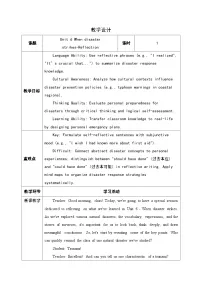
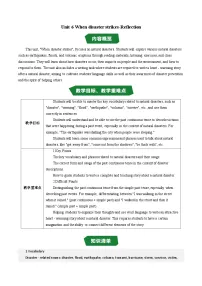
这是一份外研版(2024)Reflection教案设计,共5页。
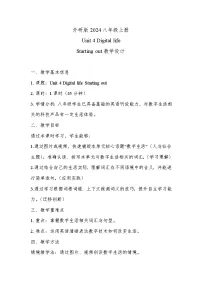
这是一份初中英语外研版(2024)八年级上册(2024)Starting out教案,共5页。教案主要包含了教学目标,教学重难点,教学过程等内容,欢迎下载使用。
 新教材
新教材

注册成功
资料篮

在线客服
添加在线客服
获取1对1服务
官方微信
关注“教习网”公众号
打开微信就能找资料
赛课定制
添加在线客服
获取1对1定制服务
职称咨询
添加在线客服
获取1V1专业指导服务

免费福利


.png)