 免费领取教师福利



若您为此资料的原创作者,认为该资料内容侵犯了您的知识产权,请扫码添加我们的相关工作人员,我们尽可能的保护您的合法权益。

这是一份初中人教版(2024)Unit 1 Hello! Section A授课课件ppt,共27页。
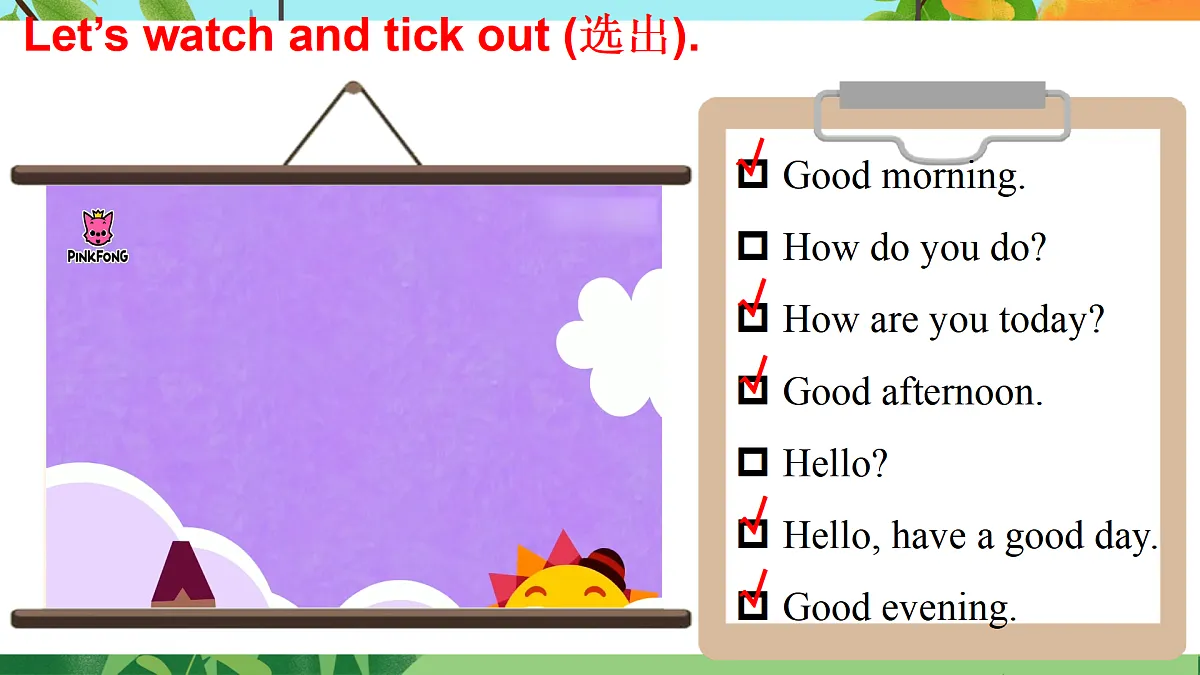
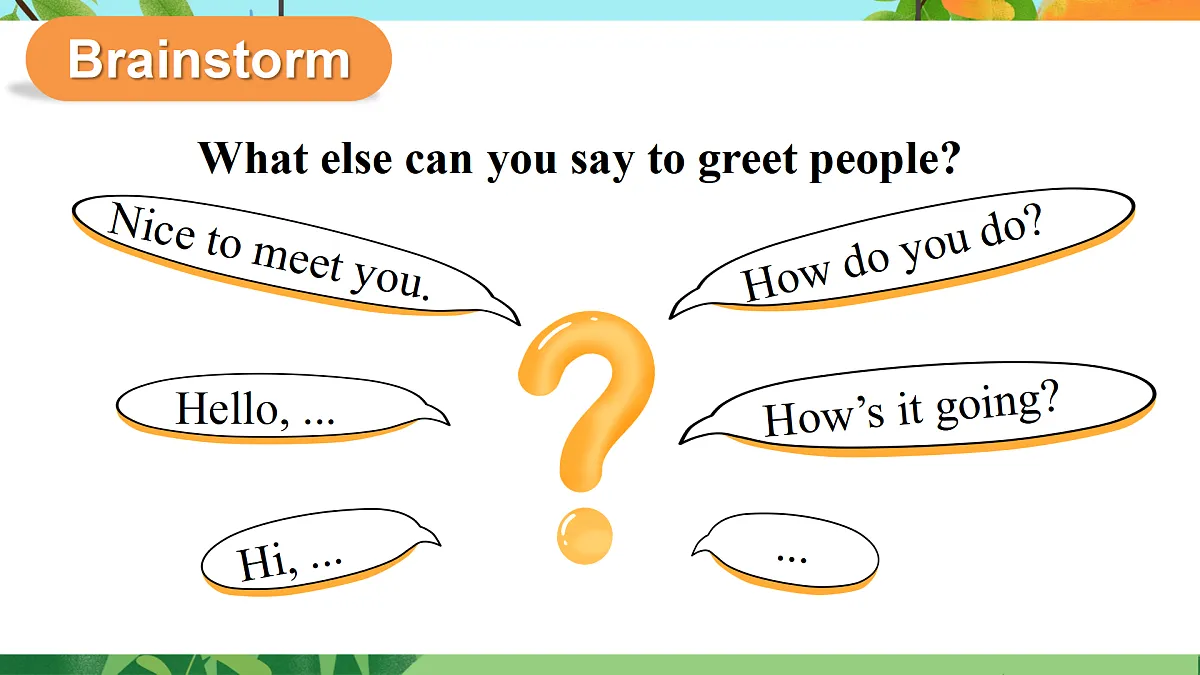
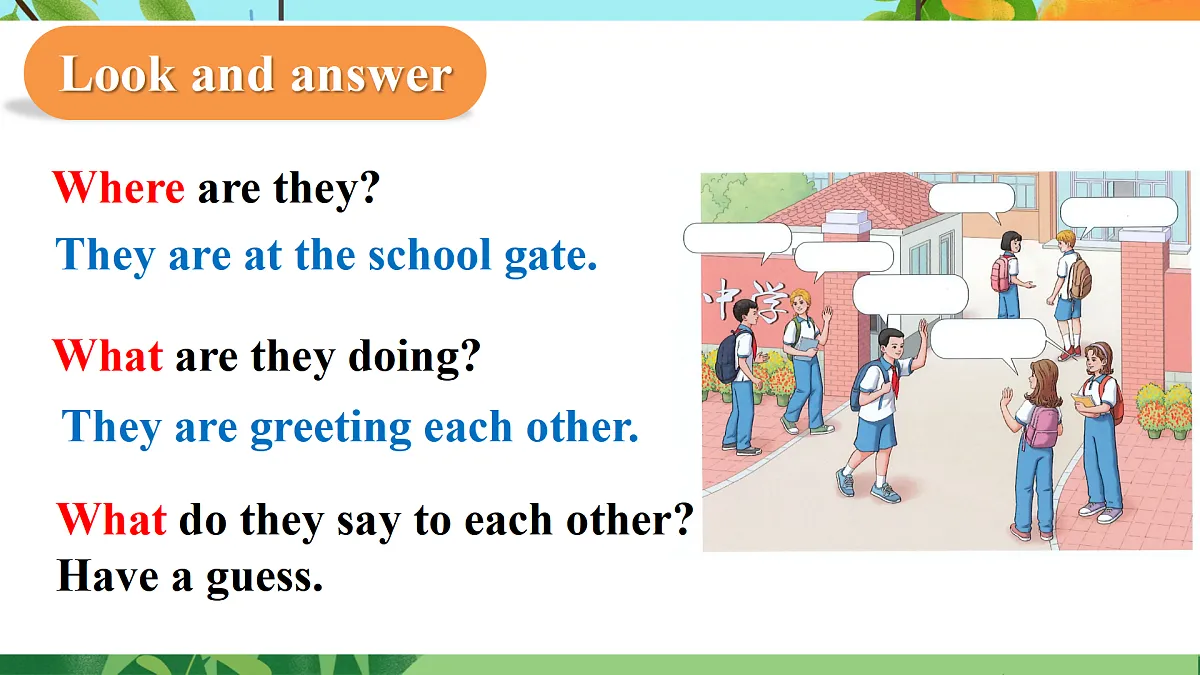
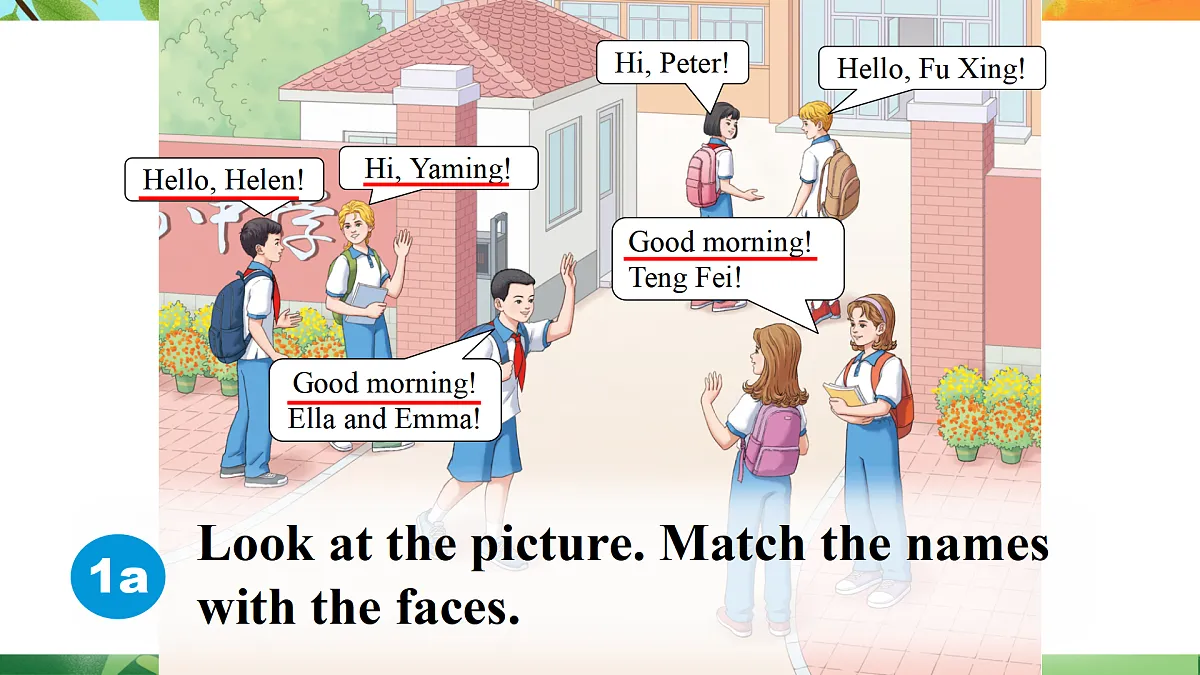
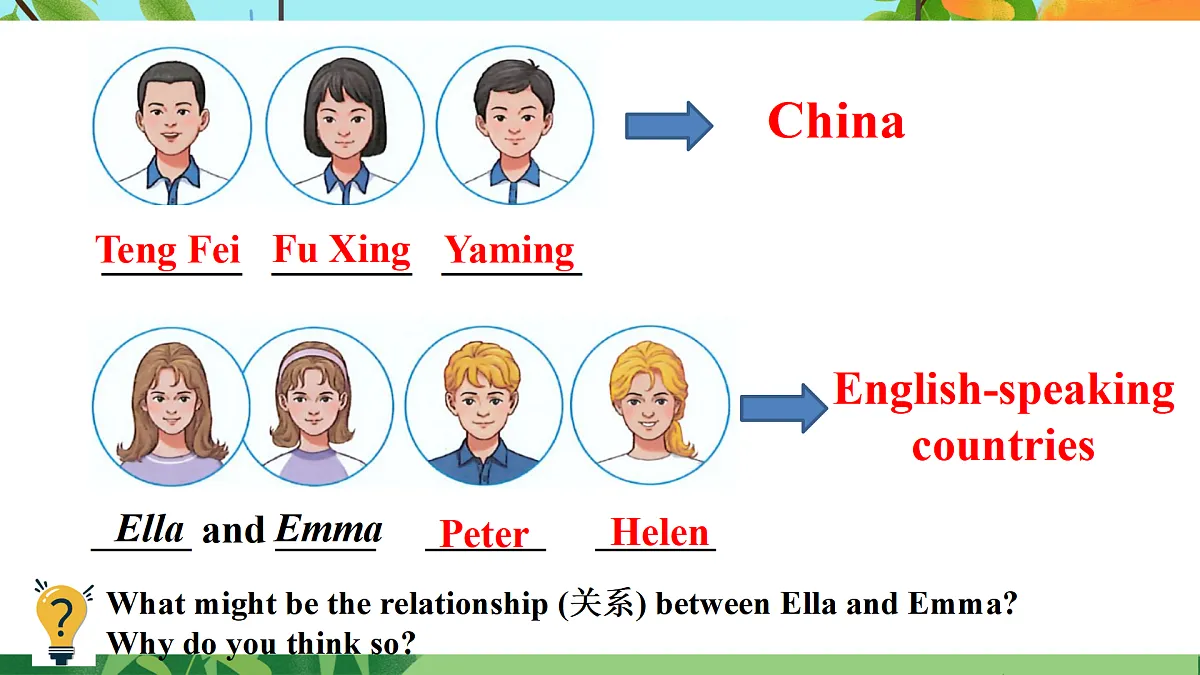
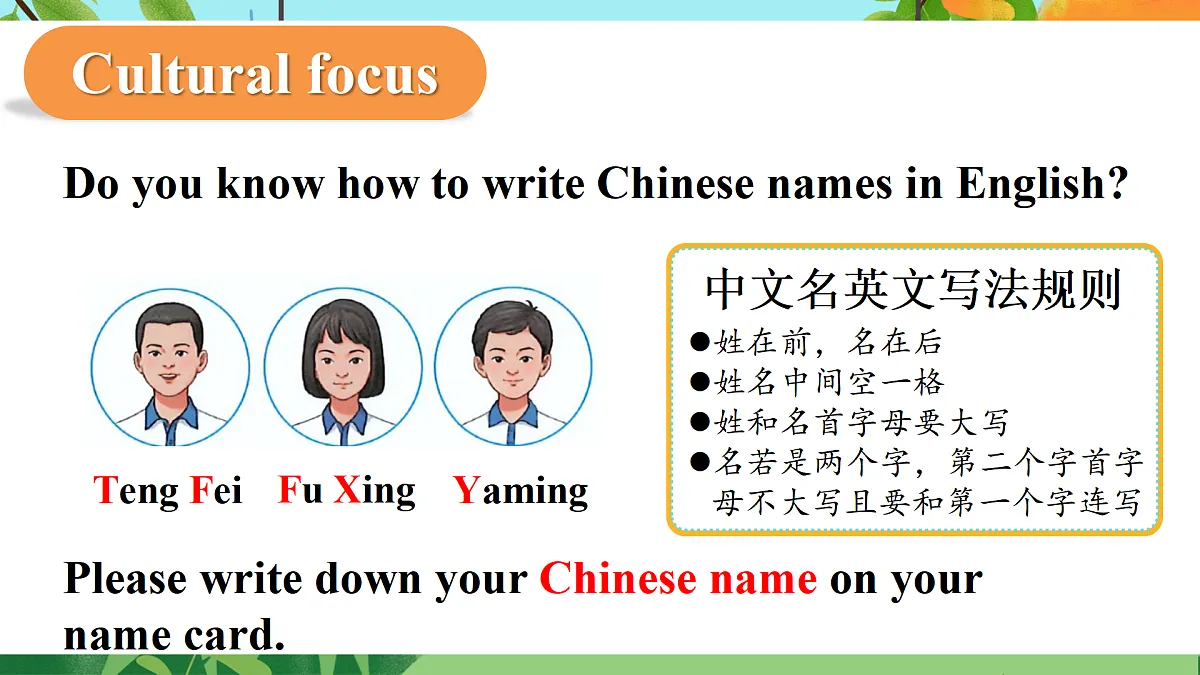
Starter Unit 1 Hello!第1课时 (1a-1b & 2c-2d)Section A How do you greet people?Let’s sing Good morning. How do you do? How are you today? Good afternoon. Hello? Hello, have a good day. Good evening.Let’s watch and tick out (选出).√√√√√Brainstorm What else can you say to greet people?Look and answerWhere are they?What are they doing?They are at the school gate.They are greeting each other.What do they say to each other? Have a guess.Hello, Helen!Hi, Yaming!Good morning!Ella and Emma!Good morning!Teng Fei!Hi, Peter!Hello, Fu Xing!_____ and _____ ______ _____________ _______ _______Ella EmmaFu XingHelenPeterTeng FeiYamingWhat might be the relationship (关系) between Ella and Emma? Why do you think so?ChinaEnglish-speaking countriesDo you know how to write Chinese names in English?Cultural focusFu XingTeng FeiYaming姓在前,名在后姓名中间空一格姓和名首字母要大写名若是两个字,第二个字首字母不大写且要和第一个字连写Please write down your Chinese name on your name card.—What’s your name?—My name is...—What’s your name?—I’m...Let’s know each other.Let’s greet each other.1.—Hello, Helen! —Hi, Yaming! Language pointshello和hi都是感叹词,是熟人之间在非正式场合下的问候语,可单独使用,也可加人名或称呼使用。hello和hi可互换,但hi比hello更随意、亲切。hello [感叹词] 你好;喂 hi [感叹词] 嗨;喂—Hi/Hello, Judy! Long time no see! —Hi/Hello, Jenny! Happy to see you. 2.Good morning, Ella and Emma! 人们上午见面时的问候语,应答时常用“Good morning!”。问候他人时,称呼语通常放在问候语之后,而且要用逗号隔开。Good morning! 早上好!—Good morning, Bob! 早上好,鲍勃!—Good morning, Mary! 早上好,玛丽!【拓展1】类似的问候语还有:黄昏至入睡前的问候语晚上分别时或睡觉前的道别用语【拓展2】 在英美等国家的非正式场合及日常口语中,熟人及朋友之间常用“Morning!” “Afternoon!”或“Evening!”进行问候。中午12点至黄昏之间问候语Let’s talkWhere are they?Who is she?What are they talking about?They are in the classroom.She is a teacher.Maybe they are greeting.1. Ms Gao: Good morning, class. Class:_________________ Ms Gao: Sit down, please.2. Ms Gao: Hello, Peter. Can you say hi to the class? Peter: ________ I’m Peter Brown. Ms Gao: Thank you, Peter. Now class, please say hi to each other.3. Emma: Good morning. My name is Emma. Fu Xing: Good morning, Emma. Emma: ___________. Fu Xing: Oh, I’m Fu Xing. Nice to meet you, Emma. Emma: ___________.Let’s predict (预测).所有人互相;彼此1. Ms Gao: Good morning, class. Class:_________________ Ms Gao: Sit down, please.2. Ms Gao: Hello, Peter. Can you say hi to the class? Peter: ________ I’m Peter Brown. Ms Gao: Thank you, Peter. Now class, please say hi to each other.3. Emma: Good morning. My name is Emma. Fu Xing: Good morning, Emma. Emma: ___________. Fu Xing: Oh, I’m Fu Xing. Nice to meet you, Emma. Emma: ___________.Let’s listen and check answers.CABDLet’s listen and imitate.Conversation 1Ms Gao: 'Goo(d) morning, class.Class: 'Goo(d) morning, Ms Gao.Ms Gao: 'Si(t) down, please.Conversation 2Ms Gao: Hello, 'Peter. Can you 'say hi to the class?Peter: Hi, everyone. I’m Peter Brown.Ms Gao: Thank you, Peter. Now class, please say hi to each otherConversation 3Emma: Good morning. My name is Emma.Fu Xing: Good morning, Emma.Emma: So what’s your name?Fu Xing: Oh, I’m Fu Xing. Nice to meet you, Emma.Emma: Nice to meet you too, Fu Xing!↘↗Read in groups and think1. Ms Gao: Good morning, class. Class: Good morning, Ms Gao. Ms Gao: Sit down, please.2. Ms Gao: Hello, Peter. Can you say hi to the class? Peter: Hi, everyone! I’m Peter Brown. Ms Gao: Thank you, Peter. Now class, please say hi to each other.3. Emma: Good morning. My name is Emma. Fu Xing: Good morning, Emma. Emma: So what’s your name? Fu Xing: Oh, I’m Fu Xing. Nice to meet you, Emma. Emma: Nice to meet you too, Fu Xing!Good morning, ...!Hi, ... / Hello, ...!Hi, ... Nice to meet you too!My name is ... / I’m ...Check your answersA: Good morning. My name is _____.B: ____________. A: So what’s your name?B: I’m _____.Nice to meet you.A: ______________. Language points1. Ms Gao: Sit down, please.【讲解1】 Ms 女士Ms女士Miss小姐;女士Mrs夫人;太太Mr先生用于女子的姓氏或姓名前,不指明婚否对未婚女子的礼貌称呼对已婚妇女的礼貌称呼用于男子的姓氏或姓名前Ms White怀特女士Miss Li李小姐Mrs Brown布朗夫人Mr Smith史密斯先生【讲解2】 sit down 坐下,这是一个祈使句。英语中用来表示请求、劝告、命令或建议等的句子叫祈使句。祈使句通常省略主语you,多以动词原形开头,否定形式是在动词原形前加 don’t。【讲解3】 please [感叹词] 请在祈使句中用作请求的客套话,表示说话者的客气和礼貌。please 可置于句首或句末,置于句末时,一般要加逗号与前面的内容隔开。2. Can you say hi to the class? Please say hi/hello to your parents for me.请代我向你的父母问好。say hi to sb. 和某人打招呼;向某人问好相当于say hello to sb.。类似的短语还有:3.—Nice to meet you, Emma. —Nice to meet you too, Fu Xing!初次见面或经人介绍与某人相识时的打招呼用语,其答语常为“Nice to meet you too.”。常见的打招呼用语还有:Nice to meet you. 很高兴见到你。HomeworkMust do (必做)1. Listen and imitate 2b. 2. Role-play 2b with your partner.Choose to do (选做)1. Find out more expressions about greeting.2. Make a new dialogue.
这是一份初中人教版(2024)Unit 1 Hello! Section A授课课件ppt,共27页。
这是一份初中英语人教版(2024)七年级上册(2024)Unit 1 Hello! Section B图片课件ppt,共25页。
注册成功
资料篮

在线客服
添加在线客服
获取1对1服务
官方微信
关注“教习网”公众号
打开微信就能找资料
赛课定制
添加在线客服
获取1对1定制服务
职称咨询
添加在线客服
获取1V1专业指导服务

免费福利

.png)
.png)
.png)
