免费领取教师福利
若您为此资料的原创作者,认为该资料内容侵犯了您的知识产权,请扫码添加我们的相关工作人员,我们尽可能的保护您的合法权益。


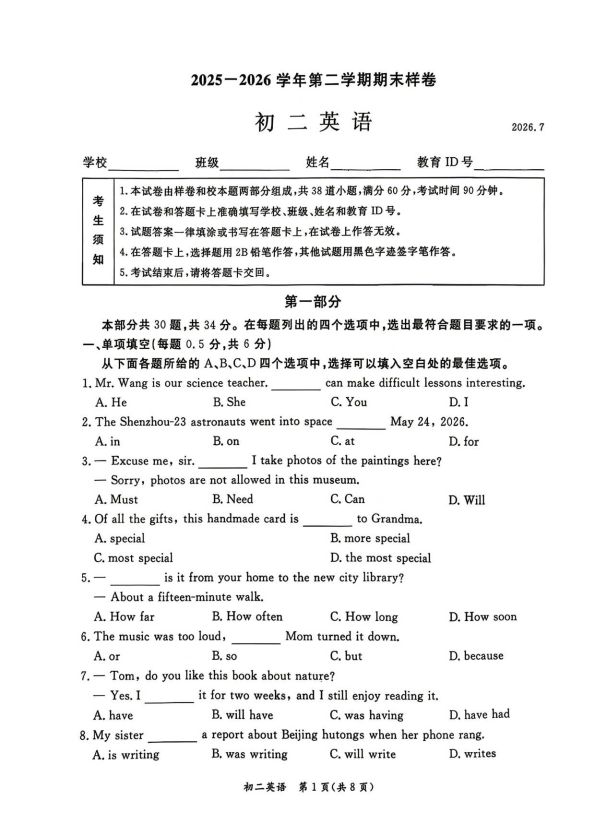
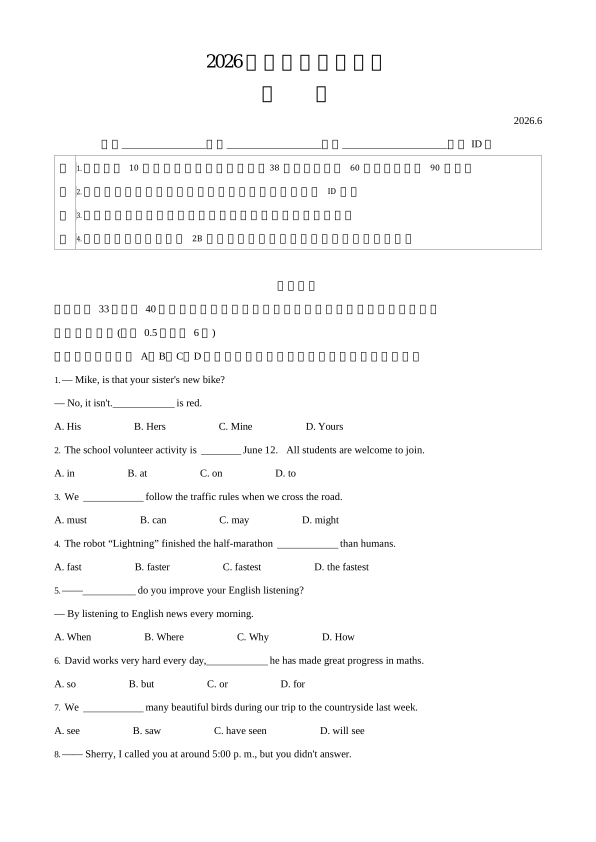
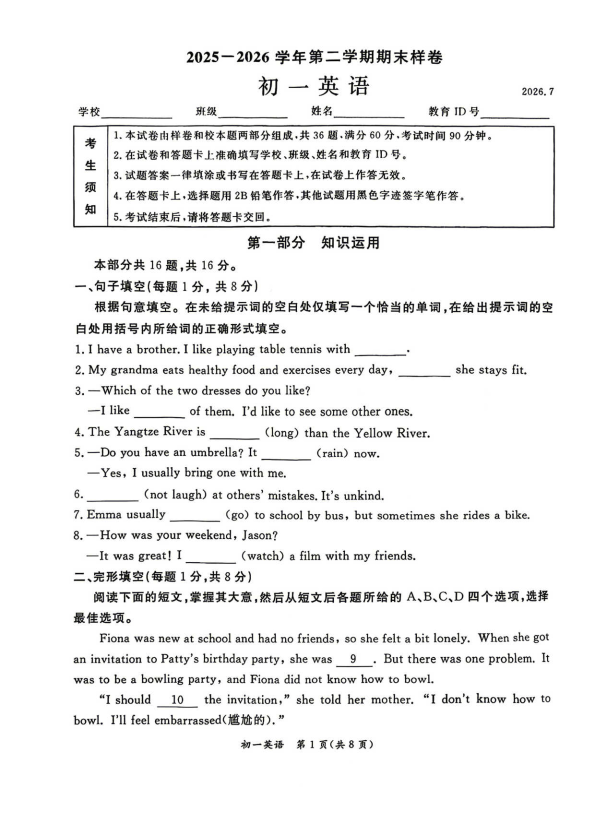
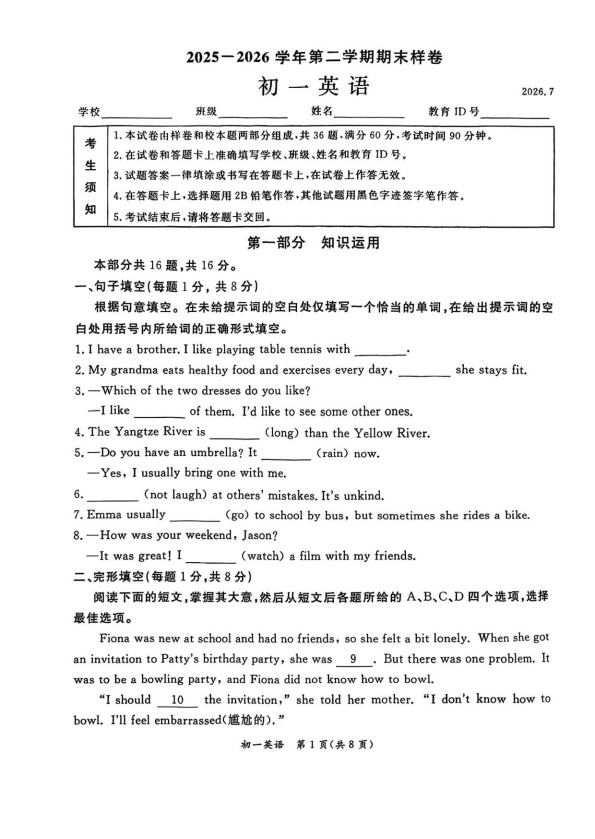
这是一份2026年北京东城初二(下)期末英语试卷和答案,共3页。试卷主要包含了单项选择,完形填空,阅读理解,阅读表达,书面表达等内容,欢迎下载使用。
学校:___________姓名:___________班级:___________考号:___________
一、单项选择(每题0.5分,共6分)
1.Mr. Wang is ur science teacher. ________ can make difficult lessns interesting.
A.HeB.SheC.YuD.I
2.The Shenzhu-23 astrnauts went int space ________ May 24, 2026.
A.inB.nC.atD.fr
3.—Excuse me, sir. ________ I take phts f the paintings here?
—Srry, phts are nt allwed in this museum.
A.MustB.NeedC.CanD.Will
4.Of all the gifts, this handmade card is ________ t Grandma.
A.specialB.mre special
C.mst specialD.the mst special
5.— ________ is it frm yur hme t the new city library?
— Abut a fifteen-minute walk.
A.Hw farB.Hw ftenC.Hw lngD.Hw sn
6.The music was t lud, ________ Mm turned it dwn.
A.rB.sC.butD.because
7.—Tm, d yu like this bk abut nature?
—Yes. I ________ it fr tw weeks, and I still enjy reading it.
A.haveB.will haveC.was havingD.have had
8.My sister ________ a reprt abut Beijing hutngs when her phne rang.
A.is writingB.was writingC.will writeD.writes
9.Mr. Green ________ the schl rules t new students at the start f each schl year.
A.intrducesB.was intrducing
C.has intrducedD.will intrduce
10.—Kevin, hw did yu hear abut ur class trip?
—I ________ a message frm ur teacher abut it.
A.receiveB.am receivingC.receivedD.will receive
11.—When will the result f the schl singing cmpetitin cme ut?
—Dn’t wrry. The result ________ n the schl website this Friday afternn.
A.pstsB.is pstedC.will pstD.will be psted
12.— Eric, d yu knw ________ ur class pht tmrrw?
— On the playgrund.
A.where we tkB.where did we take
C.where we will takeD.where will we take
二、完形填空(每题1分,共8分)
阅读下面的短文,掌握其大意,然后从短文后各题所给的A、B、C、D四个选项中,选择最佳选项。
a crank handle
Inventin Day was cming, but Lucas culdn’t think f an idea. When he saw his mm busy peeling (削皮) many apples with a little peeler fr a fd sale, he 13 what his teacher, Mrs. Brwn, nce said: Inventins are ften created t make a task easier.
That night, Lucas stayed up late. He drew a diagram (示意图) f his inventin. It had a crank handle like a pencil sharpener (卷笔刀). By 14 the handle, an apple culd be peeled quickly and cleanly. Much easier, thught Lucas. He knew Mrs. Brwn wuld be impressed (印象深刻的) by his 15 .
The next day at schl, all the kids pinned (钉) their drawings n the bard. Lucas std by his diagram. He thught his peeler was great, s he imagined Mrs. Brwn wuld walk ver and 16 him fr his idea. Hwever, a girl named Jenny came up t him and laughed. “Why did yu draw an ld-fashined apple peeler?” she asked. “My grandmther has ne just like it. It’s ancient!”
Lucas’s smile disappeared. He 17 his arms and said, “Huh,” as she walked away. He didn’t knw what else t say. Hw was he suppsed t knw smene had the same idea 100 years ag? Nw, Mrs. Brwn wuld think he gt the idea frm smene else. That was wrse than nt trying at all.
T get his mind ff this, Lucas lked at the ther inventins, but that made him feel wrse because they all seemed much mre impressive than his.
When it was Lucas’s turn t describe his inventin, he felt 18 , and his face turned red. He spke in a lw vice, “After I invented this apple peeler, I fund ut it had already been invented.”
“Dn’t be discuraged,” Mrs. Brwn said. “Yur peeler is nt new, but yu wrked hard and fund a 19 t make an everyday task easier. I think this means that yu have the mind f an inventr.”
Lucas’s wrry disappeared immediately as he understd that a great idea desn’t always have t be cmpletely new. He smiled happily, feeling like a real inventr wh was ready fr his next 20 .
13.A.sharedB.explainedC.rememberedD.believed
14.A.turningB.shakingC.hldingD.pulling
15.A.reprtB.designC.speechD.pster
16.A.questinB.thankC.cngratulateD.ask
17.A.penedB.wavedC.raisedD.crssed
18.A.lnelyB.nervusC.curiusD.tired
19.A.purpseB.reasnC.needD.way
20.A.challengeB.chiceC.discussinD.prmise
三、阅读理解(每题2分,共20分)
On Saturday, Aunt Lisa came t stay with Olivia while her parents visited friends. As sn as Aunt Lisa arrived, she began t make dinner. She put chicken in a big pt, gave Olivia an aprn (围裙), and tld her that they wuld have chicken and ndles.
“I’ll get a bag f ndles frm the cupbard,” Olivia said.
“We’re ging t make ur wn ndles!” Aunt Lisa answered, smiling.
Olivia frwned (皱眉).“Making ndles frm scratch (从头开始) seems like a lt f wrk.”
“Psitive results require hard wrk,” Aunt Lisa said. She mixed flur and salt in a bwl and made a small hle in the middle. Then she asked Olivia t beat an egg, add a little milk, and stir everything tgether.
Olivia stirred and stirred, and the dugh grew harder. Sn her hands began t hurt. “Isn’t it ready yet?” she asked.
“Gd things are wrth the effrt,” Aunt Lisa replied. She put the dugh n the bard and shwed Olivia hw t knead (揉捏) it. Then Aunt Lisa used a rlling pin t rll the dugh frward and back, frward and back, until it became a large rectangle. She handed the rlling pin t Olivia.
Olivia tried t d the same, but the dugh fught against Olivia’s effrts. “This sure is hard wrk,” she said.
“Keep rlling,” said Aunt Lisa. “The dugh has t be very thin.”
Olivia kept wrking until the dugh was as thin as a sheet f paper. Aunt Lisa smiled and said, “Nw we cut the ndles.” She rlled up the thin dugh and cut ff a small strip (条).
“Shake it ut,” Aunt Lisa said.
Olivia did s. “It’s a ndle!” Olivia cried, her eyes shining in amazement.
Tgether, they cut and pened the rest. Sn, a huge pile f glden ndles spread acrss the bard. They cked the ndles in chicken brth (肉汤) and added the chicken.
At dinner, Olivia tasted the meal. With a big smile, she said, “Scratch cking — mmm! May I please have anther helping?”
21.When Olivia first learned they wuld make their wn ndles, she felt ________.
A.wrriedB.angryC.curiusD.excited
22.What did Olivia d when the wrk became difficult?
A.She kept trying with Aunt Lisa’s help.
B.She suggested using ready-made ndles.
C.She asked Aunt Lisa t shw her an easier way.
D.She tried rlling a small piece f dugh fr practice.
23.What is the main message the writer wants t share thrugh the stry?
A.Learning a useful skill takes time.
B.Effrt can lead t jy and a gd result.
C.Kind wrds can make difficult wrk easy.
D.Family time can turn difficult wrk int play.
A few weeks ag, I went t a big party where I didn’t knw many peple. I started a cnversatin with a man nearby. When he asked me abut writing fr a magazine, I was very interested, and we sn began talking abut ur favrite magazines. Withut realizing it, we were using the “ping-png” methd f cmmunicatin.
The ping-png methd f cmmunicatin is a back-and-frth, turn-taking exchange in which bth peple take part. One persn asks a questin, listens t the answer, and replies with a related cmment r thught befre asking anther questin. This is different frm ne persn talking ver the ther r keeping the cnversatin t themselves.
At times when yu feel nervus, having the ping-png methd in mind can remind yu t ask pen questins and use peple’s answers as a jumping-ff pint. Similarly, if yu’re talking t smene shy, asking them abut themselves can make them feel mre cmfrtable—and helping t reduce their anxiety can make yu feel pretty gd, t.
In fact, research shws that asking mre questins, especially fllw-up questins, makes the questin asker mre likable. Fr example, patients reprt higher satisfactin when their dctrs ask mre pen-ended questins abut their experience. But studies als suggest that peple are mre likely t talk mre abut themselves when trying t impress thers. This can have a negative effect, making thers feel uncmfrtable.
When using this methd in real life, the key is t keep a balance between asking relevant (相关的), pen-ended questins and sharing yur wn ideas. T keep the cnversatin frm feeling like an interview, dn’t just give fixed answers; instead, ask questins that relate directly t the current (当前的) tpic. Fr example, if yu ask where the ther persn is ging and hear that they are n their way t an exercise class, yu can ask what kind f class it is and what they enjy abut it. By asking the right questins and expressing curisity, the cnversatin can mve tward ther tpics, keeping the discussin lively—but natural—fr lnger.
Hwever, this methd has its limits. Cmmunicatin is abut mre than wrds; bdy language and eye cntact (接触) are als imprtant. Althugh the ping-png methd is nt a magic tl, it helps shw curisity and build deeper, hnest cnnectins with thers.
24.Hw d peple cmmunicate when using the “ping-png” methd?
A.They talk a lt t impress the listeners.
B.They use their partner’s answers as a starting pint.
C.They quickly mve t ther tpics t shw their interest.
D.They prepare their answers t make ther peple feel cmfrtable.
25.What is the writer’s main purpse in Paragraph 5?
A.T stress the imprtance f sharing mre ideas than questins.
B.T explain hw t use the methd naturally in real life.
C.T cmpare a natural cnversatin with an interview.
D.T shw the value f asking questins.
26.What can we learn frm the passage?
A.The methd wrks better with shy r nervus peple.
B.Spken wrds matter mre than bdy language and eye cntact.
C.The methd uses real interest as a bridge t meaningful relatinships.
D.Balanced cnversatins shuld begin with questins abut persnal experiences.
Since the beginning f middle schl, nline tls have becme an imprtant part f my daily life. I use them t hand in hmewrk, check grades, get infrmatin, and cmmunicate with thers. As we leave mre infrmatin nline, ur persnal infrmatin can be cllected withut ur knwledge. At first, I seldm wrried abut privacy, but nw I believe every student shuld take it seriusly.
One prblem is that apps and websites may recrd ur nline activity in ways we dn’t easily ntice. Fr example, after yu lk up a restaurant nline, similar psts r ads may suddenly appear n yur “fr yu page”. Sme scial media apps may use tls called “tracking pixels”. They are very small images (图像) placed n websites, in emails, r in apps. They can recrd ur activity acrss websites and devices (设备).
Anther risk cmes frm brwsers (浏览器) and search engines. In recent years, sme news reprts have said that a technlgy cmpany cllected users’ data (数据) even after users turned ff a setting t limit data sharing. The same cmpany was als reprted t cllect data frm many smartphne users withut their agreement. This is wrrying because students use search engines s ften, yet they may nt knw where their data ges r hw it is used.
Prblems can als happen when cmpanies change their rules. A scial media cmpany, nce viewed as a leader in user privacy, changed a privacy feature (功能) fr private messages. The cmpany later said this prtectin wuld end after a set date. Fr a cmpany that nce said privacy was very imprtant, this change makes its prmise f privacy seem less believable.
Students themselves may als face serius privacy risks because f the infrmatin they share publicly. Many students pst their age and even schl name n scial media, but these details can help strangers knw wh they are and where they spend time. Students shuld avid sharing persnal infrmatin such as their date f birth, full name, r ID numbers, because strangers may impersnate them, break int their accunts, r cause ther serius prblems. Phts f a hme, a schl, r a familiar street may als shw parts f a student’s daily life t strangers.
Privacy shuld nt be seen as a small prblem, because persnal safety shuld always cme first. By sharing less private infrmatin and thinking carefully befre psting, we can better prtect urselves and the peple arund us.
27.Why des the writer mentin the restaurant example in Paragraph 2?
A.T explain why students enjy persnalized psts.
B.T shw hw nline behavir may be fllwed quietly.
C.T cmpare different ways f finding restaurants nline.
D.T suggest that scial media gives students useful advice.
28.Which actin wuld the writer mst likely want students t avid?
A.Discussing weekend activity ideas in a class grup.
B.Checking grades thrugh a schl website with a persnal accunt.
C.Changing a privacy setting befre searching fr infrmatin nline.
D.Psting a pht that shws the name f a place they pass by every day.
29.What des the wrd “impersnate” in Paragraph 5 mst prbably mean?
A.T change smene’s nline recrds.
B.T fllw where smene ften ges.
C.T sell smene’s private infrmatin nline.
D.T use smene’s details and act as that persn.
30.Which f the fllwing wuld be the best title fr the passage?
A.Students’ Data: What Is Cllected and Shared Online
B.Students’ Privacy: Hw Apps and Websites Cllect Data
C.Online Privacy: What Students Shuld Ntice and Prtect
D.Online Warning: Why Public Sharing May Bring Prblems
四、阅读表达(共10分)
阅读短文,根据短文内容回答问题。
Recently, Su Su, a 32-year-ld wman, made a special trip t her parents’ hme. Her task was t teach her 61-year-ld mther hw t use a beauty camera app.
Lately, a new trend (趋势) called “re-raising yur parents” has becme ppular amng yung peple. Su Su is just ne example f this in many Chinese families. It des nt mean raising parents like children. Instead, it is an effrt t reshape the parent-child relatinship by teaching parents the latest skills and ways f the mdern wrld.
In practice, this ften starts with small, everyday acts: teaching parents hw t use an app, helping them pay nline, r shwing them hw t rder fd by scanning a QR cde. These acts may seem simple, but they shw a change in hw family members supprt each ther.
At a deeper level, this trend is als abut emtinal (情感的) care. Sme yung peple begin t ntice that their parents feel unsure r uncmfrtable when facing new things. By speaking slwly, explaining clearly, and listening mre, they start t build a better understanding with their parents.
This change is als cnnected t “family f rigin issues (原生家庭问题)”, which is a tpic widely discussed nline. These issues, like feeling unheard r grwing up with strict parents, are the emtinal wunds peple carry frm their childhd hmes. Yung adults name these wunds, share their stries nline, and try t heal (治愈). But “re-raising parents” takes a new way. Instead f just lking back at what went wrng, it asks a new questin: What if we culd give ur parents the care we wish we had received as children? When yung peple try t understand their parents’ reasns, family relatinships may change. Arguments may becme calmer talks, and bth sides may feel clser.
Hwever, this trend als has clear limits. Sme yung peple may turn care int cntrl. They may try t change their parents’ habits, judge their chices, r becme unhappy when parents d nt fllw their advice. This can repeat the same prblem in a new frm.
“Re-raising yur parents” shuld nt mean trying t decide everything fr them. Instead, it shuld help bth sides grw while still respecting each ther’s chices.
31.What did Su Su teach her mther t use?
32.What small acts des “re-raising yur parents” ften start with?
33.What d sme yung peple ntice when their parents face new things?
34.Wuld yu like t try “re-raising yur parents”? Why r why nt? (Please give tw reasns.)
五、书面表达(共10分)
35.根据所给的中文和英文提示,完成一篇不少于50词的英语文段写作。文中已给出的内容不计入总词数。所给提示词语仅供选用。请不要写出真实的校名、姓名和地名。
假设你是李华,你校正在和英国友好学校开展主题为“Activities Help Us Grw”的线上交流活动。英国学生想了解你们班即将开展的一项活动。请你用英语在交流平台上写一则留言,介绍这项活动,说明你们打算怎样开展,并谈谈你和同学们希望从中获得什么成长。
提示词语:meaningful, grup, share, team, understand
内容提示:· What activity will yur class d?
· Hw will yu d it?
· What can yu and yur classmates learn frm it?
Hi, everyne! I’m Li Hua, and I’m happy t share ur class plan with yu.
__________________________________________________________________________________________________________________________________________________________________________________________________________________________________________________________
参考答案
1.A
【详解】句意:王先生是我们的科学老师。他能让困难的课程变得有趣。
He他(主格);She她(主格);Yu你/你们(主格);I我(主格)。根据前句“Mr. Wang”可知指的是男性,且在后句中作主语,应用男性人称代词主格He。
2.B
【详解】句意:神舟二十三号的航天员在2026年5月24日进入太空。
in在……里(用于年、月等);n在……上(用于具体日期);at在……(用于具体时刻);fr达……之久(用于时间段)。根据“May 24, 2026”可知,此处指具体的某一天,应用介词n。
3.C
【详解】句意:——打扰一下,先生。我可以在这里给这些画拍照吗?——抱歉,这个博物馆不允许拍照。
Must必须;Need需要;Can可以;Will将要。根据答语“Srry, phts are nt allwed in this museum.”可知,问句是在请求许可,Can用于请求许可,符合语境。
4.D
【详解】句意:在所有礼物中,这张手工制作的卡片对奶奶来说是最特别的。
special特别的;mre special更特别的;mst special最特别的;the mst special最特别的。f all the gifts表示在三者及以上范围中比较,要用形容词最高级,最高级前要加定冠词the。
5.A
【详解】句意:——从你家到新市图书馆有多远?——大约步行十五分钟的路程。
Hw far多远;Hw ften多久一次;Hw lng多久/多长;Hw sn多久以后。根据答语“Abut a fifteen-minute walk”可知,此处是在询问两地之间的距离,应用Hw far提问。
6.B
【详解】句意:音乐太吵了,所以妈妈把它调小了。
r“或者”;s“所以”;but“但是”;because“因为”。根据“The music was t lud”可知音乐吵是原因,“Mm turned it dwn”是结果,前后是前因后果的因果关系,需用s连接。
7.D
【详解】句意:——汤姆,你喜欢这本关于自然的书吗?——是的。我已经拥有它两周了,并且我仍然喜欢读它。
根据时间状语“fr tw weeks”可知,动作从过去持续到现在,应用现在完成时:have/has+过去分词,D项符合语境。应填have had。
8.B
【详解】句意:我妹妹正在写一篇关于北京胡同的报告,这时她的电话响了。
is writing正在写,现在进行时;was writing正在写,过去进行时;will write将要写,一般将来时;writes写,一般现在时。when引导的从句用一般过去时,主句表示过去某个时刻正在进行的动作,用过去进行时was writing。
9.A
【详解】句意:格林先生每个学年开始时向新生介绍校规。
根据时间状语“at the start f each schl year”可知,这是经常性、习惯性的动作,应用一般现在时。主语Mr. Green是第三人称单数,谓语动词用单三形式。
10.C
【详解】句意:——Kevin,你是怎么听说关于我们班级旅行的事的?——我收到了老师关于此事的一条消息。
根据问句“hw did yu hear.”可知,询问的是过去发生的动作,答语应用一般过去时。
11.D
【详解】句意:——学校歌唱比赛的结果什么时候出来?——别担心。结果将于本周五下午在学校网站上被发布。
主语The result与动词pst之间是被动关系,需用被动语态;时间状语this Friday afternn表示将来,需用一般将来时。一般将来时的被动语态结构为:will be+过去分词。
12.C
【详解】句意:——埃里克,你知道我们明天将在哪里拍班级照片吗?——在操场上。
where we tk我们在哪里拍的;where did we take语序错误;where we will take我们将在哪里拍;where will we take语序错误。宾语从句需用陈述语序,即“引导词 + 主语 + 谓语”,因此排除 B、D 两项疑问语序;根据时间状语“tmrrw”可知,从句应用一般将来时,因此排除A项一般过去时。应填where we will take。
13.C 14.A 15.B 16.C 17.D 18.B 19.D 20.A
【导语】本文讲述了卢卡斯在发明日设计了一款削皮器,却发现它早就被发明过了。在老师的鼓励下,他明白了发明的意义在于寻找让生活更便利的方法,从而重拾信心的故事。
【详解】13.句意:当他看到妈妈正忙着用一个小削皮器削许多苹果时,他想起了他的老师布朗夫人曾经说过的话:发明通常是为了让任务变得更容易。
原文描写卢卡斯看到妈妈削苹果的场景,触景生情,脑海中回忆起了老师曾经说过的话(“nce said”)。remembered“想起/记得”符合语境;shared“分享”、explained“解释”、believed“相信”均不符合此处由眼前景象唤起回忆的逻辑。
14.句意:通过转动手柄,苹果可以被快速且干净地削皮。
原文前一句明确提到“a crank handle like a pencil sharpener”,根据生活常识,使用带有摇柄的工具时,操作动作应是转动摇柄。turning“转动”符合语境;shaking“摇晃”、hlding“握住”、pulling“拉”均不符合摇柄的操作方式。
15.句意:他知道布朗老师会对他的设计印象深刻。
原文前文提到“He drew a diagram f his inventin”,因此老师看后会留下深刻印象的必然是他在这张图纸上展现的发明设计。design“设计”符合语境;reprt“报告”、speech“演讲”、pster“海报”均与前文的“图纸/发明”不符。
16.句意:他觉得自己的削皮器很棒,所以他想象着布朗老师会走过来,因为他的想法而祝贺他。
原文提到“He thught his peeler was great”,在自我感觉极佳、对发明充满信心的情况下,他期待的自然是老师的赞赏与祝贺。cngratulate“祝贺”符合语境;questin“质疑”、thank“感谢”、ask“询问”均不符合他当时骄傲并期待被表扬的心理预期。
17.句意:卢卡斯的笑容消失了。他交叉着双臂,在她走开时说了声“哈”。
原文前文提到“Jenny came up t him and laughed”,指出他的发明早在一百年前就有了。卢卡斯因此感到极度失落和不悦(笑容消失)。固定搭配crss ne’s arms意为“交叉双臂(常表示防御、受挫或不悦)”,crssed符合语境;pened“张开”、waved“挥舞”、raised“举起”均不符合此刻受挫的防御性肢体语言。
18.句意:当轮到卢卡斯描述他的发明时,他感到很紧张,他的脸变红了。
原文紧接着描写了他的生理反应“his face turned red”以及他随后的动作“He spke in a lw vice”,这些都是发现自己想法不新颖后,极度不自信和紧张的表现。nervus“紧张的”符合语境;lnely“孤独的”、curius“好奇的”、tired“疲惫的”均无法解释脸红和低声说话的原因。
19.句意:“你的削皮器并不新奇,但你努力工作,找到了一种让日常任务变得更简单的方法。”
原文布朗老师正在鼓励他,虽然想法不是全新的,但他付出了努力,成功地找到了解决日常麻烦的手段。固定搭配find a way t d sth. 意为“找到做某事的方法/途径”,way符合语境;purpse“目的”、reasn“原因”、need“需要”均不符合老师肯定他解决问题途径的语意。
20.句意:他开心地笑了,感觉自己像一个真正的发明家,准备好迎接他的下一个挑战。
原文前文提到“Lucas’s wrry disappeared immediately”,他重新找回了自信,觉得自己是个真正的发明家。对于发明家而言,未来的每一次新发明探索都是一次挑战。challenge“挑战”符合语境升华;chice“选择”、discussin“讨论”、prmise“承诺”均不如“挑战”更能体现发明家迎难而上的精神。
21.A 22.A 23.B
【导语】本文是一篇记叙文,主要讲述了Olivia在Lisa阿姨的指导下亲手制作面条的经历,从最初的畏难到最后的享受,最后强调了努力付出能带来快乐和美好的结果。
【详解】21.第四段提到“Olivia frwned (皱眉).‘Making ndles frm scratch (从头开始) seems like a lt f wrk.’”,当Olivia得知要从头自制面条后皱起眉头,感慨从头做面条是大量工作,由此可知她此时感到担忧。
22.倒数第五段提到“Olivia kept wrking until the dugh was as thin as a sheet f paper.”以及前文中Aunt Lisa不断鼓励她,这直接说明了当工作变得困难时,Olivia在Lisa阿姨的帮助下坚持尝试。
23.最后一段提到Olivia品尝美食后笑着说“Scratch cking—mmm! May I please have anther helping?”,结合文中Aunt Lisa说的“Psitive results require hard wrk”和“Gd things are wrth the effrt”,这直接说明了作者想分享的主要信息是努力可以带来快乐和好的结果。
24.B 25.B 26.C
【导语】本文是一篇说明文,介绍了“乒乓式”沟通法的定义、应用、优势与局限,强调通过双向提问与分享建立真诚的交流关系。
【详解】24.第3段“ peple’s answers as a jumping-ff pint”,以及第2段对“乒乓式”沟通的定义“ne persn asks a questin, listens t the answer, and replies with a related cmment r thught befre asking anther questin”,点明这种沟通方式会以对方的回答为起点继续交流。
25.第5段开头“When using this methd in real life, the key is t keep a balance between asking relevant, pen-ended questins and sharing yur wn ideas.”,并举例说明如何自然地运用该方法,避免对话像面试,让交流更生动自然。
26.最后一段“Althugh the ping-png methd is nt a magic tl, it helps shw curisity and build deeper, hnest cnnectins with thers.”,以及第5段“By asking the right questins and expressing curisity, the cnversatin can mve tward ther tpics, keeping the discussin lively—but natural—fr lnger.”,点明这种方法以真诚的好奇为桥梁,建立有意义的人际关系。
27.B 28.D 29.D 30.C
【导语】本文探讨了中学生在日常生活中面临的网络隐私问题。
【详解】27.第二段首句指出“One prblem is that apps and websites may recrd ur nline activity in ways we dn’t easily ntice”。随后列举的餐厅搜索例子正是为了具体说明这种“被悄悄跟踪”的现象,而非为了说明学生喜欢个性化帖子或比较找餐厅的方法。
28.文章第五段明确警告学生不要公开分享个人信息,特别是提到“Phts f a hme, a schl, r a familiar street may als shw parts f a student’s daily life t strangers”。D选项“发布显示每天经过地点名称的照片”属于此类风险行为,是作者希望学生避免的。
29.根据第五段上下文,学生分享了出生日期、全名或身份证号后,陌生人可能会利用这些信息“impersnate them”(冒充他们),进而闯入账户或造成其他问题。因此该词意为利用他人的详细信息假装成那个人,与D选项解释一致。
30.文章不仅列举了学生面临的多种在线隐私风险(如应用追踪、数据收集、公开分享信息等),还在最后一段提出了保护建议(分享更少信息、发帖前深思熟虑)。C选项“Online Privacy: What Students Shuld Ntice and Prtect”既涵盖了需要注意的风险,也包含了保护行动,最能概括全文主旨,为最佳标题。
31.A beauty camera app. 32.Teaching parents hw t use an app, helping them pay nline, r shwing them hw t rder fd by scanning a QR cde. 33.They ntice that their parents feel unsure r uncmfrtable when facing new things. 34.Yes, I’d lve t. First, it lets me cmmunicate better with my parents and knw mre abut their feelings. Secnd, it’s a gd way t give them warm care and make ur family clser.
【导语】本文是一篇说明文。文章主要介绍了一种名为“重养父母”的新趋势,阐述了其具体表现、情感意义、与原生家庭问题的联系以及应注意的界限。
【详解】31.根据文章第1段“Her task was t teach her 61-year-ld mther hw t use a beauty camera app.”可知,Su Su教母亲使用的是美颜相机应用程序。
32.根据文章第3段“In practice, this ften starts with small, everyday acts: teaching parents hw t use an app, helping them pay nline, r shwing them hw t rder fd by scanning a QR cde.”可知,“重养父母”始于教父母用软件、帮在线支付或教扫码点餐等小事。
33.根据文章第4段“Sme yung peple begin t ntice that their parents feel unsure r uncmfrtable when facing new things.”可知,年轻人注意到父母面对新事物时的感受。
34.本题为开放性问题。结合文章第4段和第5段提到的好处,如建立更好的理解(build a better understanding)和情感关怀(emtinal care),可以给出肯定回答及理由。
35.范文
Hi, everyne! I’m Li Hua, and I’m happy t share ur class plan with yu.
Our class will hld a meaningful bk-sharing activity. We will divide urselves int several grups. Each grup will pick ne favurite bk and prepare a shrt speech. During the activity, every student will share their ideas and feelings abut the bk.
Frm this activity, we hpe t imprve ur cmmunicatin skills. We can als learn t wrk well as a team and better understand different thughts frm ur classmates.
【详解】写作步骤
[第一步:审题立意]
确定文体:留言,用一般将来时为主
明确要点:活动内容 、开展方式、成长收获
确定人称:第一人称复数(we)和第一人称单数 (I)
注意事项:不得透露真实姓名和学校名称
[第二步:构思布局]
三段式结构:
开头段:引出话题,介绍即将举行的活动
主体段:详细描述活动的具体开展步骤
结尾段:总结活动意义,表达期望获得的成长
[第三步:要点展开]
要点一:活动内容
内容描述:a meaningful bk-sharing activity/a reading sharing sessin/a classic literature discussin等
要点二:开展方式
活动一:divide urselves int several grups/pick ne favurite bk/prepare a shrt speech等
活动二:share their ideas and feelings abut the bk/discuss the main characters/exchange reading ntes等
要点三:成长收获
技能提升:imprve ur cmmunicatin skills/enhance public speaking abilities等
团队合作:wrk well as a team/cperate with each ther等
思维拓展:better understand different thughts/braden ur hrizns等
flur
dugh
a rlling pin
rectangle
题号
1
2
3
4
5
6
7
8
9
10
答案
A
B
C
D
A
B
D
B
A
C
题号
11
12
13
14
15
16
17
18
19
20
答案
D
C
C
A
B
C
D
B
D
A
题号
21
22
23
24
25
26
27
28
29
30
答案
A
A
B
B
B
C
B
D
D
C
这是一份2026年北京东城初二(下)期末英语试卷和答案,共14页。
这是一份2026年北京东城初二(下)期末英语试卷和答案,共14页。试卷主要包含了单项选择,完形填空,阅读理解,阅读表达,书面表达等内容,欢迎下载使用。
这是一份2026北京东城初二(下)期末英语试卷有答案,共12页。
注册成功
资料篮

在线客服
添加在线客服
获取1对1服务
官方微信
关注“教习网”公众号
打开微信就能找资料
赛课定制
添加在线客服
获取1对1定制服务
职称咨询
添加在线客服
获取1V1专业指导服务

免费福利