免费领取教师福利
若您为此资料的原创作者,认为该资料内容侵犯了您的知识产权,请扫码添加我们的相关工作人员,我们尽可能的保护您的合法权益。


这是一份河北省邢台市质检联盟2025-2026学年高一年级下学期6月阶段检测英语试题(含答案及听力音频),共10页。试卷主要包含了5 分,满分 7,15等内容,欢迎下载使用。
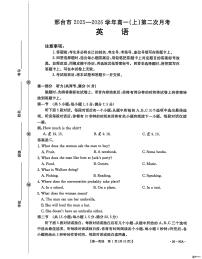
1 .答题前,考生务必将自己的姓名、考生号、考场号、座位号填写在答题卡上。
2 .回答选择题时,选出每小题答案后,用铅笔把答题卡上对应题目的答案标号涂黑。如需改动,用橡皮擦干净后,再选涂其他答案标号。回答非选择题时,将答案写在答题卡上。写在本试卷上无效。
3 .考试结束后,将本试卷和答题卡一并交回。
第一部分 听力(共两节,满分 30 分)
做题时,先将答案标在试卷上。录音内容结束后,你将有两分钟的时间将试卷上的答案转涂到答题卡上。
第一节(共 5 小题;每小题 1.5 分,满分 7.5 分)
听下面 5 段对话。每段对话后有一个小题,从题中所给的 A 、B 、C 三个选项中选出最佳选项。听完每段对话后,你都有 10 秒钟的时间来回答有关小题和阅读下一小题。每段对话读两遍。
例:Hw much is the shirt?
A. £ 19.15. B. £ 9.18. C. £ 9.15.
答案是 C。
1. What is the man’s favrite kind f music nw?
A. Pp music. B. Classical music. C. Cuntry music.
2. Where will the man g n Saturday night?
A. T a restaurant. B. T the wman’s huse. C. T his grandparents’ hme.
3. What des Susan mean?
A. She will have a date then.
B. She will have t put ff the meeting.
C. She has little time t prepare the speech.
4. What time will the man arrive?
A. At 6:20. B. At 7:00. C. At 7:20.
5. What is prbably the wman?
A. A librarian. B. A writer. C. A researcher.
第二节(共 15 小题;每小题 1.5 分,满分 22.5 分)
听下面 5 段对话或独白。每段对话或独白后有几个小题,从题中所给的 A、B、C三个选项中选出最佳选项。听每段对话或独白前,你将有时间阅读各个小题,每
小题 5 秒钟;听完后,各小题将给出5 秒钟的作答时间。每段对话或独白读两遍。
听第 6 段材料,回答第 6 、7 题。
6. Hw did the wman find the exhibitin?
A. Just s s. B. Terrible. C. Interesting.
7. What kind f museum are the speakers talking abut?
A. An art museum. B. A transprt museum. C. A natural histry museum.
听第 7 段材料,回答第 8 、9 题。
8. What des the wman think f the telephne sales jb?
A. It is t bring. B. It may be suitable fr her. C. It needs a lt f traveling.
9. What des the man care mre abut the jb?
A. The gd pay. B. The wrking hurs. C. The wrking place.
听第 8 段材料,回答第 10 至 13 题。
10. What is the wman ding?
A. Asking fr help. B. Making an invitatin. C. Asking fr permissin.
11. What will the man d n Saturday?
A. Attend a meeting. B. Attend a party. C. Visit Mr Black.
12. Where d Mr Brwn and his wife wrk?
A. In an electrnics cmpany. B. In a cmputer cmpany. C. In a university.
13. When will the party prbably end?
A. At abut 5:30 pm. B. At abut 7:00 pm. C. At abut 8:00 pm.听第 9 段材料,回答第 14 至 17 题。
14. Hw lng did the man study in Australia?
A. Fr ne year. B. Fr three years. C. Fr five years.
15. Where is the man frm?
A. America. B. Canada. C. Japan.
16. What did the man learn frm facing challenges while studying abrad?
A. Staying patient. B. Being pen t new things. C. Taking an active part in parties.
17. What are the speakers mainly talking abut?
A. Party plans. B. Cultural differences. C. Persnal
experiences.
听第 10 段材料,回答第 18 至 20 题。
18. What des the speaker use "whledic.cm" whledic.cm t d?
A. Lk up English wrds. B. Shw English grammar. C. Offer listening practice.
19. What is the speaker’s advice n learning English wrds?
A. Writing an article with them. B. Using them in spken English. C. Trying t guess their meanings.
20. What des the speaker think is the key t learning English?
A. Reciting mre English sentences.
B. Watching mre English mvies.
C. Sticking t reading and learning.
第二部分 阅读(共两节,满分 50 分)
第一节(共 15 小题;每小题 2.5 分,满分 37.5 分)
阅读下列短文,从每题所给的 A 、B 、C 、D 四个选项中选出最佳选项。
A
Fur Teen Prgrams Wrth a Lk
Field Museum Teen Vlunteers, Chicag
Current high schl students wh enjy science can spend summer days in museum spaces. Vlunteers guide yung visitrs in the PlayLab and use bject carts t tell shrt science stries. They als receive training in public speaking and science cmmunicatin. A ten-day summer cmmitment is required.
Natinal Park Service Yuth Prgrams, U. S.
If yu are 14 t 18 and prefer utdr wrk, natinal parks ffer vlunteer service, educatin prgrams and, in sme places, paid Yuth Cnservatin Crps jbs. Participants may repair trails, care fr histric sites r help at public events. Thrugh hands-n wrk, they learn practical skills in cnservatin and teamwrk.
Library f Cngress High Schl Summer Internship, Washingtn, D. C.
This nn-paid prgram may be virtual r n-site. It suits students wh like libraries, museums, research, writing and public speaking. Students wrk with prfessinals and gain experience in academic writing and presentatin. Students can arrange with their schls t receive up t 60 service hurs.
Discvery Museum Teen Vlunteer Prgram, Massachusetts
Students aged 14 t 18 wrk directly with children and their caregivers. During a fur-mnth cycle, vlunteers learn hw t welcme visitrs, explain exhibits and manage their wn schedules. N museum experience is needed, but a friendly attitude matters. The prgram helps teens develp leadership and cmmunicatin skills.
Befre applying, check the website f each prgram fr dates, age rules and lcal requirements. A shrt applicatin is als a gd chance t shw what yu are curius abut, nt nly what prizes yu have wn.
21. Which prgram ffers paid jbs?
A. Field Museum Teen Vlunteers. B. Natinal Park Service Yuth Prgrams.
C. Discvery Museum Teen Vlunteer Prgram. D. Library f Cngress High Schl Summer Internship.
22. What is a requirement fr the Discvery Museum Teen Vlunteer Prgram?
A. Previus museum experience. B.60 service hurs.
C. A friendly attitude. D. Wrking nly with children.
23. What d the fur prgrams have in cmmn?
A. They take place in big cities. B. They prvide free museum tickets.
C. They require full-time attendance. D. They help teens learn while serving.
B
Anna was always knwn as “Number 23” — the middle-level student, judged again and again by her rank n the exam list. Every time the schl put ut exam scres, Anna wuld always get the 23rd place amng 50 students in her class. N matter which term it was r hw hard the exam was, she was always 23.
Her mther, Sumi, managed a small business fr hlding activities. She always felt uneasy when ther parents talked prudly abut their children’s math cmpetitins r music prizes. When thers praised their excellent kids, Sumi culd nly sit quietly, ndding sftly, her heart heavy with Anna’s tenacius label, “Number 23”.
One weekend, Sumi rganized an utdr grup activity fr a cmpany, and smething ttally different happened. The fd service came tw hurs late, and the utdr grup games were destryed by a sudden heavy rain. All the grwn-ups felt upset, and many children started t cry. Panic spread acrss the campsite.
Just then, Anna stepped up. Using leftver cardbard bxes and sme craft supplies she had brught, she quickly invented a series f indr puzzle games. She then gathered the children,
assigning each a rle, and calmly guided them thrugh the activities. Her humr and creativity cmpletely shifted the md. The kids were laughing, and the parents were amazed by her prblem-slving skills and natural leadership.
That evening, a cmpany directr apprached Sumi. “Yur daughter is incredible,” he said. “She saved the day. Yu must be very prud.”
Sumi lked at Anna, wh was smiling and helping a yunger child fix a paper hat. In that mment, Sumi realized that being an “average student” didn’t define wh Anna was. Sciety might impse standards based n marks n a page, but real success cmes in many frms. Anna was n lnger just “Number 23”; she was a clever, capable girl whse true gifts simply culdn’t be measured by a test.
24. Why did Sumi feel uneasy arund ther parents?
A. She felt Anna was wrngly judged. B. She had nthing interesting t share.
C. She disliked ther parents’ prud behavir. D. She felt embarrassed abut Anna’s scres.
25. What des the underlined wrd “tenacius” in paragraph 2 prbably mean?
A. Influential. B. Unpleasant. C. Fixed. D.
Creative.
26. Hw did Anna slve the crisis at the campsite?
A. By calming the upset parents. B. By arranging creative indr activities.
C. By helping the staff with fd delays. D. By entertaining the kids with funny jkes.
27. What message des the text mainly want t cnvey?
A. Success is nt defined by grades. B. Every child has unique strengths.
C. All things cme t thse wh wait. D. Leadership cmes frm experience.
C
Peple ften think f culture as smething extra — music after class, a museum trip nce a term, r a schl festival at the end f the year. UNESCO argues that culture shuld be treated differently: nt as decratin arund educatin, but as part f educatin itself.
The idea is simple. Students d nt enter schl as empty bxes waiting t be filled. They arrive with languages, family traditins, lcal stries, artistic interests and ways f seeing the wrld. When schls make rm fr these experiences, learning becmes mre cnnected t students’ real lives. A histry lessn may grw richer thrugh lcal heritage. A science prject may
gain meaning when it deals with cmmunity practices r envirnmental knwledge.
There is anther reasn this matters nw. Scieties are changing quickly. Digital technlgy shapes the way yung peple learn and cmmunicate. Migratin brings peple frm different backgrunds int the same classrm. Climate change and scial tensin ask students t think nt nly clearly, but als respnsibly. In this situatin, culture and the arts can help build creativity, empathy and respect fr difference.
UNESCO’s recent guidance ges beynd big ideas. It encurages lng-term planning by gvernments, clser cperatin between educatin and culture wrkers, and practical actin in classrms and cmmunities. Examples frm many cuntries shw hw this can happen: festivals that bring art int public learning, museum prgrams that cnnect students with histry, and digital platfrms that develp cultural knwledge and skills. These prjects shw that cultural learning des nt belng nly in textbks. It can happen in public spaces, nline, and in everyday schl life.
Of curse, culture-based educatin is nt abut turning every student int an artist. Its larger gal is t help learners understand themselves and thers mre fully. When students see that their wn backgrunds matter — and that ther peple’s backgrunds matter t — schl can becme a place nt just fr infrmatin, but fr belnging, imaginatin and shared grwth.
28. What misunderstanding is mentined in paragraph 1?
A. Culture means music and museum trips.
B. Culture is t difficult fr yung students.
C. Culture is simply an extra part f schl life.
D. Culture has little cnnectin with lcal cmmunities.
29. Hw des the authr develp paragraph 2?
A. By presenting fficial research data. B. By giving explanatins and examples.
C. By cmparing empty bxes with filled bxes. D. By describing students’ family backgrunds.
30. Why are digital technlgy, migratin and climate change mentined?
A. T shw culture-related abilities are vital. B. T reflect hw sciety is rapidly changing.
C. T explain why culture must adapt itself. D. T highlight the need fr empathy in students.
31. What is the best title fr the text?
A. Culture Is Nt an Afterthught in Educatin B. Schl Festivals Help Students Learn Better
C. Culture Adapts t Serve Mdern Educatin D. Arts Educatin Prduces Mre Gifted Artists
D
Artificial intelligence (AI) is nw an inescapable subject discussed arund the glbe. While AI has the ptential t slve cmplex prblems like fighting climate change, its wn envirnmental ftprint has becme a grwing cncern amng scientists.
Electricity use is at the heart f AI’s envirnmental impact. Large language mdels (LLMs) draw significantly mre electricity than traditinal search engines — up t ten times mre. When yu ask AI a questin, the carbn ftprint prduced is clearly higher than a typical web search. T meet this demand, technlgy cmpanies are building massive data centers. Fr example, a planned prject called Stargate is expected t be the largest cllectin f data centers in the wrld. The energy demand fr such prjects is massive, matching the use f entire natins.
“The biggest result f AI’s envirnmental effect is the rapid expansin ( 扩 张 ) f data centers,” says Hugh Lefcrt, an envirnmental science prfessr. “While sme f this electricity demand will be supprted by slar r wind energy, a large part still depends n il, cal, and gas, which increases harmful gas releases (排放).”
Furthermre, AI data centers are large users f water. With the huge amunts f electricity needed t pwer these facilities cmes a huge amunt f prduced heat. T fight this heat and prevent the equipment frm melting, millins f gallns f fresh water is used t cl the systems. This water lss is particularly cncerning as water becmes shrt in many parts f the wrld.
Experts stress that it is vital t regulate AI in a mral and respnsible way. “We need t make sure the verall effect f AI n the planet is psitive befre we use the technlgy widely,” says Glestan Radwan, a chief digital fficer. Balancing the technlgical prgress f AI with its envirnmental csts will be ne f the imprtant challenges fthe cming decade.
32. Why d LLMs have a larger carbn ftprint than traditinal search engines?
A. They use mre data centers glbally. B. They draw mre electricity t perate.
C. They depend n nn-renewable energy. D. They generate mre heat during peratin.
33. What is Hugh Lefcrt’s attitude t the rapid grwth f AI data centers?
A. Objective. B. Dubtful. C. Supprtive. D.
Cncerned.
34. Why is huge amunts f water used in AI data centers?
A. T clean the hardware equipment regularly. B. T generate electricity fr the data centers.
C. T absrb the heat prduced by the machines. D. T supply drinking water fr the facility wrkers.
35. What can be inferred frm Glestan Radwan’s remark?
A. AI’s expansin may lack envirnmental care. B. Prgress utweighs envirnmental cncerns.
C. Envirnmental limits shuld nt delay AI’s use. D. AI shuld be banned until zer harm is ensured.
第二节(共 5 小题;每小题 2.5 分,满分 12.5 分)
阅读下面短文,从短文后的选项中选出可以填入空白处的最佳选项。选项中有两项为多余选项。
During cnversatins with a friend, I’ve ften realized I haven’t really been listening. She’ll ask me a questin. My wandering mind will suddenly cme back t the present, and I’ll have n idea hw t respnd. My respnse is t cver up my mistake and pretend I heard what she said. 36 ? It seems I need t learn hw t be a better listener.
Zning ut ( 走 神 ) mid-chat is a rude cnversatin habit, regardless f whether yu’re speaking with a friend, c-wrker, family member r smene else. 37 . It matters fr gd cmmunicatin. If yu’re nt really listening, it’s likely that they’re nt either, which means yu bth have a greater chance f misunderstanding r misinterpreting each ther.
When yu hear what smene is saying but dn’t give it yur full attentin, yu’re using passive listening. Cntrast that with hw yu act in imprtant cnversatins: Yu will listen carefully t the speaker’s wrds and shw that yu understand. 38 .
Active listening is a skill, which means yu can get better at it with practice. 39 . These include keeping eye cntact, and stpping yurself frm building respnses while the ther persn
is still speaking. Abve all, use prper bdy language, and be hnest if yu cannt hear well r if it is simply nt a gd time t talk.
Hwever, dn’t feel bligated t engage in nnprductive r hurtful discussin. 40 . Fr example, if yu’re stuck in a cnversatinal dead end with a braggart (自吹自擂者), it’s OK t walk away —just maybe play it safe if it’s yur bss r yur mther-in-law.
A. That’s knwn as active listening
B. But is that really the best strategy
C. Shuldn’t I just admit I didn’t hear her
D. With practice, anyne can becme a better listener
E. Instead, feel free t exit the cnversatin gracefully
F. But learning t be a better listener isn’t just abut being plite
G. Imprving yur listening ability needs a series f practical steps
第三部分 语言运用(共两节,满分 30 分)
第一节(共 15 小题;每小题 1 分,满分 15 分)
阅读下面短文,从每题所给的 A、B、C、D 四个选项中选出可以填入空白处的最佳选项。
Last Nvember, ur class ran a stall fr the schl charity fair. I was put in charge f the mney bx, a jb I thught wuld be 41 . On the first mrning, a little by came t buy a paper flwer, but he had nly ne yuan; the price was five. I was ready t 42 when I nticed his mther standing back. He whispered that it was fr his grandmther in hspital. The reasn sunded 43 , s I used my wn cins and 44 it “tday’s special”. He smiled and left.
After schl, I fund an envelpe under the table with fur yuan and a nte: “Fr the flwer. I hpe yur fair helps mre peple.” The by had gne. That small nte changed the 45 f ur stall. I stpped guarding the bx like a guard and began 46 stries. When peple visited, I asked why they chse a card r a ty. Many shared wishes, sme cheerful and sme 47 .
The next day, I put up a bard: “Leave a wish with yur 48 .” T my surprise, students came nt just t buy things but t write their messages 49 . By Friday, ur bard was 50 with ntes. At the clsing meeting, ur teacher said charity was nt abut having the biggest 51 ; it was abut nticing smene else’s 52 and chsing t act. I still keep a cpy f the by’s 53 . It reminds me that kindness ften begins with a simple 54 : t leave anther persn feeling 55 .
41. A. strange B. easy C. risky D. interesting
42. A. check in B. give up C. set ff D. turn dwn
43. A. sincere B. cmmn C. funny D. cmmitted
44. A. awarded B. marked C. named D. called
45. A. fame "B.prperty" B. prperty C. purpse D. price
46. A. reading B. sharing C. cllecting D. inventing
47. A. frmal B. painful C. empty D. familiar
48. A. purchase B. jurney C. directin "D.career49" D. career
"D.career49" 49. A. prudly B. carefully C. gradually D.
eventually
50. A. cmpared B. mixed C. cvered D. filled
51. A. number B. benefit C. impact D. plan
52. A. diversity B. bligatin C. talent D. need
53. A. card B. nte C. flwer D. ty
54. A. decisin B. pprtunity C. invitatin D.
encunter
55. A. busy "B.safe" B. safe C. hpeful D. nrmal
第二节(共 10 小题;每小题 1.5 分,满分 15 分)
阅读下面短文,在空白处填入 1 个适当的单词或括号内单词的正确形式。
Wrld Bicycle Day, which falls n June 3, celebrates ne f the simplest frms f transprt. The day 56 (declare) by the United Natins General Assembly in 2018 t remind peple that the bicycle is clean, dependable and 57 (affrd). Unlike a car, a bicycle des nt burn fuel n the rad, 58 it sends n tailpipe smke int the air.
Fr students, riding 59 bicycle can be mre than exercise. It helps them arrive at schl 60 (independent) and adds physical activity t a busy day. When mre peple chse t cycle fr shrt trips, streets may becme quieter and the air can becme cleaner. In sme cmmunities, students ride tgether in small grups, 61 (make) the trip mre enjyable and easier fr drivers 62 (ntice). Schls may als set up repair crners, s a lse brake r a lw tire will nt stp a healthy habit.
Of curse, the benefits depend n safety. Cities need bike lanes, slwer traffic near schls and places 63 bikes can be parked. Families can help, t, 64 teaching children t wear helmets and fllw rad rules. A bicycle may lk rdinary, but 65 (use) wisely, it cnnects health, learning and a greener city.
第四部分 写作(共两节,满分 40 分)
第一节(满分 15 分)
你校正在组织英语作文比赛。请你以“My Rle Mdel ”为题写一篇短文参赛,内容包括:
(1)人物简介;
(2)敬佩他/她的原因;
(3)他/她对你的影响。
注意:
(1)写作词数应为 80 个左右;
(2)请按如下格式在答题卡的相应位置作答。
第二节(满分 25 分)
阅读下面材料,根据其内容和所给段落开头语续写两段,使之构成一篇完整的短文。
I used t lve singing. In primary schl, I sang everywhere: n the way t schl, while washing dishes, even when I was ding math hmewrk. But in Grade Eight, during a music cntest, my vice brke n a high nte. A few bys laughed. Since then, singing in public had felt like standing under a very bright light with nwhere t hide.
This spring, ur class planned a Saturday visit t Maple Senir Hme. We wuld read pems, play chess and put n a shrt shw. My best friend Mia, wh had a clear sweet vice, signed up t sing. “Yu can play the guitar fr me,” she said. I agreed, because playing behind smene felt safe.
Fr a week, we practiced an ld sng called “Mn River”. My grandmther used t sing it sftly when she cked ndles fr me, s the meldy came easily t my fingers. On Friday, hwever, Mia arrived at schl with a red nse and almst n vice. “I can still sing,” she whispered, but even thse wrds sunded painful.
At the senir hme the next mrning, the small hall smelled f sap and fresh bread. Abut twenty ld peple sat in a half circle, smiling as if we had brught sunshine with us. We read pems and tld jkes. Then a nurse annunced, “Nw the students will sing a sng.” Mia lked at me helplessly. Befre I culd suggest skipping it, an ld wman in the frnt rw leaned frward.
My Rle Mdel
“‘Mn River’?” she asked. “My husband lved that sng.” On the wall behind her hung phtgraphs frm dances and birthdays. I wndered which smiling yung man had been her husband. The rm was quiet nw, waiting.
Everyne turned t the guitar in my hands. My heart beat s hard that I culd hear it.注意:
(1)续写词数应为 150 个左右;
(2)请按如下格式在答题卡的相应位置作答。
高一英语测评参考答案
听力部分录音材料
听力部分。该部分分为第一、第二两节。
注意:做题时,先将答案标在试卷上。录音内容结束后, 你将有两分钟的时间将试卷上的答案转涂到答题卡上。
停顿 00'10"
现在是听力试音时间。
M: Hell. Internatinal Friends Club. Can I help yu?
W: Oh, hell. I read abut yur club in the paper tday and I thught I’d phne t find ut a bit
mre.
M: Yes, certainly. Well, we are a srt f scial club fr peple frm different cuntries. It’s quite a new club—we have abut 50 members at the mment, but we are grwing all the time.
W: That sunds interesting. I’m British actually, and I came t Washingtn abut three mnths ag. I’m lking fr ways t meet peple. Er, what kinds f events d yu rganize?
M: Well, we have scial get-tgethers, and sprts events, and we als have language evenings.
W: Culd yu tell me smething abut the language evenings?
M: Yes. Every day except Thursday we have a language evening. Peple can cme and practice their languages—yu knw, ver a drink r smething. We have different languages n different evenings. Mnday—Spanish; Tuesday—Italian; Wednesday—German; and Friday—French. On Thursday we usually have a meal in a restaurant fr anyne wh wants t cme.
I lked at the ld wman and slwly lifted the guitar.
When the last nte disappeared, the rm stayed silent fr a secnd.
W: Well, that sunds great. I really need t practice my French.
M: OK. Well, if yu can just give me yur name and address, I’ll send yu the frm and sme mre infrmatin. If yu jin nw, yu can have the first mnth free.
试音到此结束。
听力考试正式开始。
停顿 00'10"
请看听力部分第一节。
第一节
听下面 5 段对话。每段对话后有一个小题,从题中所给的 A 、B 、C 三个选项中选出最佳选项。听完每段对话后,你都有 10 秒钟的时间来回答有关小题和阅读下一小题。每段对话读两遍。
停顿 00'02"
例如:现在你有 5 秒钟的时间看试卷上的例题。
停顿 00'05"
你将听到以下内容:
M: Excuse me. Can yu tell me hw much the shirt is?
W: Yes, it’s nine fifteen.
停顿 00'02"
你将有 5 秒钟的时间将正确答案标在试卷上。
停顿 00'05"
衬衫的价格为 9 镑 15 便士,所以你选择 C 项,并将其标在试卷上。
现在,你有 5 秒钟的时间阅读第 1 小题的有关内容。
停顿 00'05"
(Text 1)
M: I used t listen t pp music mst, but nw I ften listen t cuntry music. What abut yu?
W: I lve classical music the mst.
(Text 2)
W: Hi, Peter. Are we still getting tgether n Saturday?
M: Jack and I are ging t my grandparents’ hme n Saturday afternn, s let’s have dinner tgether that night. Shall we meet at the restaurant?
W: N, just cme ver t my huse.
(Text 3)
M: Yu shuld have prepared yur speech fr the meeting, Susan.
W: Yes, I knw. But hw culd I prepare with the meeting date fixed s sn?
(Text 4)
M: My flight is ging t be delayed fr ne hur, s instead f twenty past six, I will be arriving at twenty past seven.
W: N prblem. I’ll still be at the airprt at seven and waiting fr yu.
(Text 5)
M: Excuse me, I’m lking fr a bk fr my research. It’s called Psychlgy f Behavir. D yu have it?
W: Yes, we d. Yu’ll find it in Sectin 2 n the middle shelf.
第一节到此结束。
第二节
听下面 5 段对话或独白,每段对话或独白后有几个小题,从题中所给的 A 、B 、C 三个选项中选出最佳选项。听每段对话或独白前, 你将有时间阅读各个小题,每小题 5 秒钟;听完后,各小题将给出 5 秒钟的作答时间。每段对话或独白读两遍。
听下面一段对话,回答第 6 和第 7 两个小题。现在,你有 10 秒钟的时间阅读这两个小题。 (Text 6)
W: Hw d yu find the exhibitin yu’ve just seen, Mike?
M: It is ne f the mst interesting exhibitins I’ve ever seen.
W: I culdn’t agree mre. What impressed yu mst?
M: Well, thse early cars didn’t have a rf. Even the first buses were pen-tp and, s were the first trains.
W: I suppse yu must have enjyed the exhibitin.
M: I did enjy it.
听下面一段对话,回答第 8 和第 9 两个小题。现在,你有 10 秒钟的时间阅读这两个小题。 (Text 7)
W: I really need t find a jb nw!
M: S d I. D yu see anything gd listed?
W: Hw abut this telephne sales jb?
M: That sunds bring.
W: Well! I might check that ne ut. Oh, here’s ne fr yu. An entertainment directr assistant n a ship.
M: That sunds fun. I lve traveling, and I’ve never been n a ship.
W: It says here yu have t wrk every day while the ship is at sea. That’ll be tiring.
M: That’s OK. I dn’t mind wrking lng hurs if the pay is gd.
听下面一段对话,回答第 10 至第 13 四个小题。现在,你有 20 秒钟的时间阅读这四个小题。 (Text 8)
W: Hell, Mr Jhnsn. This is Mary speaking.
M: What can I d fr yu, Mary?
W: I’m calling t invite yu and yur wife t a party at ur new huse. We’ve just mved in, s we’d like t hld a husewarming. We want t hld it this Saturday. D yu have time t cme?
M: It’s a pity that I can’t attend it. I’ll be at a meeting.
W: Well, we’ll be srry if yu dn’t cme. What abut this Sunday?
M: OK, I’ll be free the whle day then. Wh else are yu inviting?
W: We’ll invite Mr Black and his wife. They wrk in the cmputer cmpany near ur university. And we als invite Mr and Mrs Brwn, wh wrk in an electrnics cmpany.
M: What time will the party begin?
W: It will begin at 5: 30 in the afternn, and prbably last tw and a half hurs.
M: OK. We’ll be there. Thank yu fr inviting us.
听下面一段对话,回答第 14 至第 17 四个小题。现在,你有 20 秒钟的时间阅读这四个小题。 (Text 9)
W: Hi, Mike! Culd yu please tell me smething abut yur study experiences?
M: OK. I studied in Australia fr five years, in America fr a year, and in Japan fr mre than three years.
W: Is that s? Did yu als study in yur hme cuntry, Canada?
M: Yes, f curse. I went t primary schl in Canada.
W: S what did yu and yur friends like t d fr fun when yu were in America?
M: Well, teenagers in the wrld like t have barbecues and parties in the park r at their wn huses. Every weekend different students wuld invite me, and we wuld have a great time.
W: Did yu face any challenges while studying abrad all thse years?
M: Of curse. Cultural misunderstandings were cmmn. But vercming these challenges made me mre adaptable and pen-minded and helped me grw.
W: D yu have any advice fr thse wh are thinking abut studying abrad?
M: Abslutely. Be pen t new experiences, and dn’t be afraid t step ut f yur cmfrt zne.
听下面一段独白,回答第 18 至第 20 三个小题。现在,你有 15 秒钟的时间阅读这三个小题。 (Text 10)
’ ’
M: Hell! I m Bb. Tday I d like t share my habits f learning English. First, learn three
wrds fr a day. There’s a tl "calledwhledic.cm" called whledic.cm, where I ften lk up the wrds and their meanings. Then, write sentences using the wrds. Besides, use thse wrds mre in yur English speaking during the day. Anther f the things that I d is finding smething t read in English every day fr at least 15 minutes. This is the way that we can develp better grammar and listening cmprehensin. D yu knw hw many wrds are in English? A millin? D yu need t learn all f them? N. Just learn as many as yu can r at least the nes yu meet mre than nce. In shrt, keep reading and learning. A single methd r nly a shrt perid is less effective.
第二节到此结束。
现在,你有两分钟的时间将试卷上的答案转涂到答题卡上。
听力部分到此结束。
试题答案
听力(共 20 小题;每小题 1.5 分,满分 30 分)
1—5 CBCCA 6—10 CBBAB 11—15 AACCB 16—20 BCABC
阅读(共 20 小题;每小题 2.5 分,满分 50 分)
21—23 BCD
A 篇:文章介绍了四个适合青少年参与的志愿项目。
21 .B 【解析】细节理解题。根据第二段第一句可知, Natinal Park Service Yuth Prgrams提供有报酬的工作。
22 .C 【解析】细节理解题。根据第四段倒数第二句可知, 该项目要求志愿者态度友好。
23 .D 【解析】细节理解题。通读全文可知, 四个项目分别提到志愿者可接受公共演讲与科学传播培训、学习环保和团队协作技能、获得学术写作和演讲经验, 以及培养领导力与沟通技能。因此, 它们的共同点是帮助青少年在服务中学习。
24—27 DCBA
B 篇:成绩总是排名第 23 的中等生 Anna 在一次户外活动中凭借创造力和领导力化解了突发危机。这让她的母亲 Sumi 意识到,成绩并不能定义孩子的真正价值。 24.D 【解析】细节理解题。根据第二段可知, 当其他家长骄傲地谈论孩子的竞赛奖项时, Sumi 只能安静地坐着,内心因 Anna 始终摆脱不了的“第 23 名 ”标签而变得沉重。由此可知,她对 Anna 的成绩感到尴尬。
25 .C 【解析】词义推测题。根据第一段可知,无论学期如何更替和考试难度怎样变化, Anna 总是排名第 23,这个标签始终固定在她身上。结合第二段中 Sumi 对此感到心情沉重可推知,tenacius 在此处意为“ 固定的;挥之不去的 ”。
26 .B 【解析】细节理解题。根据第四段可知, 当营地处于混乱之中时,Anna 利用剩余的纸箱和随身携带的手工材料,迅速设计了一系列室内益智游戏,并给孩子们分配角色,引导
他们参与,从而化解了危机。
27.A 【解析】推理判断题。根据最后一段中 Sumi 的感悟可知,文章主要想传达的是“成功不应由试卷上的分数来定义 ”。
28—31 CBAA
C 篇:UNESCO(联合国教科文组织)主张文化不应被视为教育的附加装饰,而应成为教育本身的核心组成部分,帮助学生在全球化与快速变化的社会中培养创造力、同理心和对差异的尊重。
28 .C 【解析】细节理解题。文章第一段明确指出,人们常将文化视为“额外的东西 ”,如课后音乐活动、一学期一次的博物馆参观活动或年终学校节日,即把文化当作学校生活的附加装饰。
29.B 【解析】推理判断题。第二段先解释核心观点——学生入学时并非“空箱子 ”,而是带着语言、家庭传统、本土故事等已有经验; 随后通过具体例子展开:历史课结合当地遗产会变得更丰富,科学项目联系社区实践会变得更有意义。因此,作者采用了“解释+举例 ”的方式展开段落。
30 .A 【解析】推理判断题。第三段先列举社会快速变化的三个表现——数字技术、移民和气候变化,随后用 In this situatin 引出结论:文化和艺术有助于培养创造力、同理心和对差异的尊重。由此可知, 提及这些因素是为了说明在此背景下,与文化相关的能力变得日益重要。
31.A 【解析】主旨大意题。全文围绕 UNESCO 的核心观点展开:文化不是教育的附加装饰,而是教育本身的组成部分。“Culture Is Nt an Afterthught in Educatin ”准确概括了这一主旨。
32—35 BDCA
D 篇:文章探讨了 AI(人工智能)的快速发展及其对环境的潜在影响。专家呼吁,在广泛推广 AI 技术前,我们应确保其对地球的整体影响是积极的。
32 .B 【解析】细节理解题。根据第二段第一、二句可知,大语言模型的耗电量远远超过传统搜索引擎,因此其碳足迹也更高。
33.D 【解析】推理判断题。根据第三段可知, Hugh Lefcurt 指出,AI 对环境产生的最大影响在于 AI 数据中心的快速扩张,而其大部分电力仍依赖化石燃料,这会增加有害气体的排放。由此可知,他对 AI 数据中心的快速增长感到担忧。
34 .C 【解析】细节理解题。根据第四段第二、三句可知, AI 数据中心消耗大量电力并产生巨大热量,为防止设备过热,需要使用数百万加仑淡水来冷却系统。
35.A 【解析】推理判断题。根据最后一段中 Glestan Radwan 所说的“在广泛使用该技术之前,我们需要确保其对地球的整体影响是积极的 ”可推知, 目前 AI 的扩张可能缺乏对环
境影响的充分考量。
36—40 BFAGE
七选五:文章主要介绍了积极倾听的重要性以及提高倾听能力的一些实用方法。 36 .B 【解析】根据上文(我的反应是掩盖错误,假装听到了她说的话)可知,B 项(但那真的是最好的策略吗)承接上文,质疑这种掩盖错误的应对方式,引出下文作者意识到需要学习如何成为更好的倾听者,符合语境。
37.F 【解析】上文提到,聊天时走神是一种不礼貌的交谈习惯。F 项(但学会成为一个更好的倾听者不仅仅是关于礼貌)承接上文,符合语境。
38 .A 【解析】上文提到,在重要对话中,你会仔细倾听说话者的话语并表明你理解对方的意思。A 项(那被称为积极倾听)对上文所述行为进行定义,符合语境。
39 .G 【解析】根据下文(这些包括保持眼神交流,以及在对方仍在说话时阻止自己给出回应)可知,G 项(提高你的倾听能力需要一系列实际步骤)总起下文,下文中的These 指代 G 项中的 practical steps,符合语境。
40 .E 【解析】根据上文(然而,不要觉得自己有义务参与无效或伤人的讨论)可知,E项(相反,请优雅地退出对话)承接上文,且与下文中的举例呼应,符合语境。
语言运用 第一节(共 15 小题;每小题 1 分,满分 15 分)
41—45 BDADC 46—50 CBABC 51—55 ADBAC
完形填空:我参加学校组织的慈善义卖会时,因一个小男孩买花后写的小纸条而转变观念,并领悟到慈善的真谛在于关注他人需求并以善意行动温暖人心。
41 .B 【解析】考查形容词。我被安排负责管理钱箱,这是一份我认为很轻松的工作。
42 .D 【解析】考查动词短语。我正准备拒绝他时,注意到他的母亲站在后面。
43 .A 【解析】考查形容词。小男孩低声说花是要送给住院的奶奶,这个理由听起来很真诚。于是,我用自己的硬币补上差价,并把这朵花称为“今日特价商品 ”。
44 .D 【解析】考查动词。解析参考上一题。
45 .C 【解析】考查名词。那张小纸条改变了我们摆摊的目的。
46 .C 【解析】考查动词。我不再死守着钱箱,而是开始收集顾客的故事。
47.B 【解析】考查形容词。许多人分享了他们的愿望, 有些令人愉快,有些则令人心痛。
48.A 【解析】考查名词。第二天, 我在摊位上放置了一块留言板,上面写着:“请在购买商品时留下你的愿望。”
49 .B 【解析】考查副词。令我惊讶的是,学生们不仅来买东西,还认真地写下他们的留言。
50 .C 【解析】考查动词。到了周五,板子上贴满了纸条。
51 .A 【解析】考查名词。在闭幕会上,我们的老师说慈善不在于拥有最大的筹款数额,
而在于注意到他人的需求并选择付诸行动
52 .D 【解析】考查名词。解析参考上一题。
53 .B 【解析】考查名词。我至今仍保存着小男孩写的那张纸条的复印件。
54 .A 【解析】考查名词。它提醒我,善良往往始于一个简单的决定:让另一个人感到充满希望。
55 .C 【解析】考查形容词。解析参考上一题。
第二节(共 10 小题;每小题 1.5 分,满分 15 分)
56 .was declared 57 .affrdable 58 .s 59 .a 60 .independently
61 .making 62 .t ntice 63 .where 64 .by 65 .used
,
语法填空:文章介绍了世界自行车日的设立背景 以及骑自行车对学生及环境的
益处。
56 .was declared 【解析】考查时态和语态。根据时间状语 in 2018 和 by the United Natins General Assembly 可知,此处表示过去发生的被动动作,且主语 The day 为单数,故填 was declared。
57 .affrdable 【解析】考查形容词。此处与 clean 和 dependable 并列作表语,应用 affrd的形容词形式。
58.s 【解析】考查连词。上文说自行车不消耗燃料,下文说因此它不向空气中排放尾气,上下文为因果关系。
59.a 【解析】考查冠词。此处泛指“一辆自行车 ”,且 bicycle 的发音以辅音音素开头,故填不定冠词 a。
60 .independently 【解析】考查副词。此处用副词修饰动词 arrive。
61.making 【解析】考查非谓语动词。此处为现在分词作结果状语,表示自然而然的结果,故填 making。
62 .t ntice 【解析】考查非谓语动词。此处为“形容词+fr sb+t d ”结构,不定式主动形式表被动意义,故填 t ntice。
63 .where 【解析】考查定语从句。分析句子可知,这是一个包含定语从句的复合句。定语从句的先行词为 places ,关系词在定语从句中作地点状语,故填 where。
64.by 【解析】考查介词。此处表示“通过教孩子们戴头盔和遵守交通规则 ”,by 意为“通过……方式 ”。
65.used 【解析】考查非谓语动词。分析句子结构可知,此处要用非谓语动词作状语,且use 与逻辑主语 it 是被动关系,故此处用过去分词形式。
评分原则:
1 .铅笔作答不给分。
2 .有拼写或大小写错误的作答不给分。
3 .所填词汇正确,但有形式错误的不给分。
4 .英式、美式拼写均可给分。
5 .除所列答案外,若试评过程中发现其他可接受答案,经评卷专家组讨论确认后也可给分。
写作:
第一节(满分 15 分)
参考范文:
My Rle Mdel
Everyne has a rle mdel, and mine is my mther. She is a nurse wh has wrked in the lcal hspital fr ver fifteen years.
What I admire mst abut her is her strng sense f respnsibility and kindness. N matter hw tired she is after lng night shifts, she always wears a warm smile and takes gd care f every patient. She never cmplains abut the hard wrk, which deeply tuches me.
Her attitude has greatly influenced my grwth. Frm her, I have learned that true dedicatin means putting thers’ needs befre yur wn. She inspires me t study hard and becme a persn wh can bring warmth and hpe t thers in the future.
第二节(满分 25 分)
参考范文:
I lked at the ld wman and slwly lifted the guitar. My fingers shk n the first chrd, and my vice was even smaller than I had feared. But Mia std beside me and smiled, silently shaping the wrds with her lips. The ld wman clsed her eyes. I thught f my grandmther’s kitchen, f warm ndles and familiar sngs, and my vice grew steadier. Sn, several senirs began t hum alng. The bright light I had feared seemed t sften int smething warm.
When the last nte disappeared, the rm stayed silent fr a secnd. Then the ld wman clapped first, her eyes wet. “Fr a mment,” she said, “I culd almst hear my husband singing with yu.” The hall filled with applause, and Mia squeezed my arm. I realized that singing was nt abut prving I had a perfect vice. It was abut giving a feeling t smene wh needed it. On the bus back t schl, I tk ut the class perfrmance list and wrte my name under “music” fr the next visit.
这是一份河北省邢台市质检联盟2025-2026学年高一年级下学期6月阶段检测英语试题(含答案及听力音频),共10页。试卷主要包含了5 分,满分 7,15等内容,欢迎下载使用。
这是一份河北省邢台市质检联盟2025-2026学年高二下学期6月阶段检测英语试题(含答案无听力音频),共10页。
这是一份河北邢台市质检联盟2025-2026学年高一下学期6月阶段检测英语试题(含解析,有听力音频和文字材料)试卷主要包含了D 【解析】细节理解题,C 【解析】词义推测题,B 【解析】细节理解题,A 【解析】推理判断题,C 【解析】细节理解题,B 【解析】推理判断题等内容,欢迎下载使用。
注册成功
资料篮

在线客服
添加在线客服
获取1对1服务
官方微信
关注“教习网”公众号
打开微信就能找资料
赛课定制
添加在线客服
获取1对1定制服务
职称咨询
添加在线客服
获取1V1专业指导服务

免费福利