 免费领取教师福利

若您为此资料的原创作者,认为该资料内容侵犯了您的知识产权,请扫码添加我们的相关工作人员,我们尽可能的保护您的合法权益。


这是一份2026年中考英语真题完全解读(天津卷)含答案,文件包含广西贺州市昭平县2025-2026学年八年级下学期7月期末语文试题pdf、广西贺州市昭平县2025-2026学年八年级下学期7月期末语文试题docx、广西贺州市昭平县2025-2026学年八年级下学期7月期末语文试题答案docx等3份试卷配套教学资源,其中试卷共25页, 欢迎下载使用。
试题分析
本卷为2026年天津市初中学业水平考试英语笔试部分,满分100分,考试时间90分钟。试卷整体难度适中,立足义务教育英语课程标准,覆盖语言知识、语言技能、学习策略、文化意识等维度。听力部分未出现在本笔试卷中,笔试部分由单项填空、完形填空、阅读理解、补全对话、完成句子、任务型阅读、综合填空和书面表达八大板块构成。
从知识覆盖看,语言知识类题目(单项填空、完成句子、综合填空)约占40%,侧重词汇、语法、功能意念等基础落实;语篇类题目(完形填空、阅读理解、任务型阅读)约占45%,强调在真实语境中获取信息、推断词义、理解主旨和作者态度;书面表达占15%,要求学生围绕天津地方文化进行书面交际。情境选择上贴近学生生活、社会热点与中华优秀传统文化,如草莓种植、企鹅机器人、冼星海与《黄河》、天津之眼与黄崖关长城等,体现语言学习的工具性与人文性统一。
能力要求呈现明显梯度:识记类(如冠词、介词、固定搭配)约占25%,理解类(如语篇大意、细节定位)约占40%,应用类(如完成句子、书面表达)约占35%。整套试卷区分度良好,基础题确保达标,语篇理解和书面表达体现选拔功能。
试题亮点
情境真实,贴近生活。从草莓种植指南到企鹅机器人观察帝企鹅,从家庭规则到城市漫步,试题情境多来自学生可感知的生活与科技前沿,激发学习兴趣。
语篇丰富,主题多元。A篇为应用说明文,B篇为记叙文,C篇为科普说明文,任务型阅读融合中国文化元素,综合填空解释科学现象,语篇类型覆盖广泛。
基础与能力并重。单项填空和完成句子稳扎稳打,考查核心语法与高频短语;阅读理解、完形填空、书面表达则强调语言运用与思维品质。
渗透文化意识。补全对话介绍人民音乐家冼星海,任务型阅读呈现中国青花瓷图案,书面表达推介天津景观与休闲活动,增强文化自信。
命题趋势
基础语法保持稳定考查,注重在语境中辨析词义、时态、语态和从句。真实情境与跨学科、跨文化内容将持续融入,语篇主题将更贴近科技发展、环境保护、传统文化和家乡建设。阅读理解对推理判断、词义猜测、主旨大意和作者态度的考查比重可能进一步提升。书面表达将继续强调交际功能、要点齐全、行文连贯,并鼓励学生结合本地文化进行个性化表达。
考点细目表
考点模块占比分析
语言知识(约40%):包括单项填空、完成句子、综合填空,重点覆盖冠词、代词、形容词与副词、动词时态与语态、非谓语动词、情态动词、宾语从句、连词及高频短语。该模块强调基础语法和词汇在语境中的准确运用。
语篇理解(约45%):包括完形填空、阅读理解、补全对话和任务型阅读,侧重主旨大意、细节定位、推理判断、词义猜测、逻辑衔接和文化理解。语篇类型涵盖说明文、记叙文、应用文和对话。
书面表达(约15%):以电子邮件形式介绍天津著名景观、休闲活动及个人看法,考查学生组织信息、运用语言进行真实交际的能力,同时渗透地方文化。
核心备考策略
1. 回归教材,夯实语言基础
(1)吃透核心语法体系,重点突破动词时态、语态、非谓语动词、宾语从句、定语从句和状语从句。
(2)熟练识记教材中的高频短语、固定搭配和情景交际用语,建立错题本进行分类整理。
(3)关注教材话题与语篇,尤其是与传统文化、科技发展、环境保护和地方文化相关的单元。
2. 专项突破,提升关键能力
(1)掌握阅读理解四大题型:细节理解、推理判断、词义猜测和主旨大意,学会回文定位与排除干扰。
(2)熟练处理完形填空、综合填空和任务型阅读,强化语篇意识,注重上下文逻辑与词汇复现。
3. 规范答题表达,建立英语思维习惯
(1)用英语习惯和固定搭配作答,避免中式英语和逐字翻译。
(2)书面表达要覆盖全部要点,分段清晰,适当使用连接词和复合句,注意词数控制。
避坑提醒
×孤立记单词,忽视搭配。中考越来越强调词汇在语境中的运用,死记硬背容易在完形和填空中失分。
×只读题目不读全文。阅读理解、完形填空都需要依托语篇整体意义,断章取义会导致推理错误。
×忽视题干中的关键限定词。如时间状语、连词、情态动词的语气等,往往是判断时态和语态的关键。
×书面表达要点遗漏或逻辑混乱。写作前应先列提纲,确保每个要点都有对应句子,并使用连接词串联。
×书写不规范。完成句子和书面表达中,大小写、拼写、标点错误会直接影响得分。
一、单项填空
题组1 冠词与名词(第1—2题)
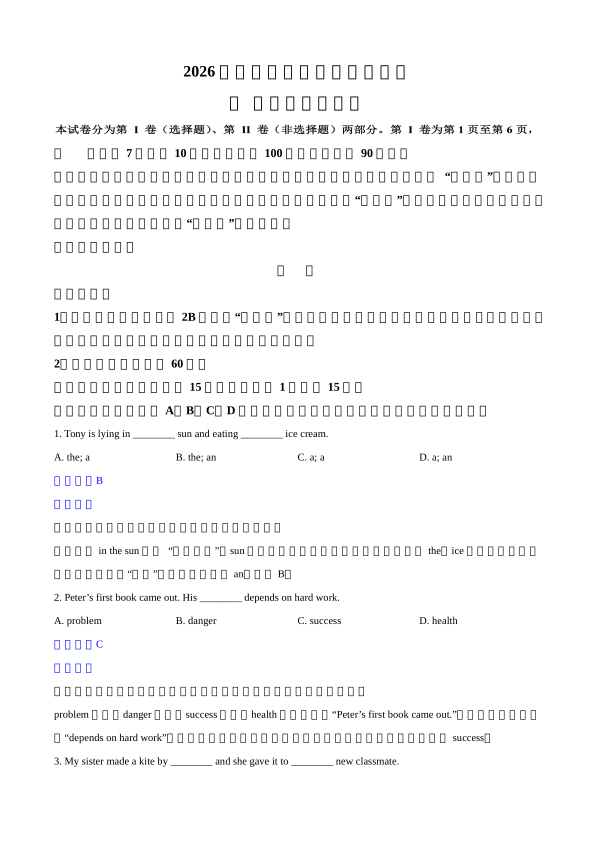
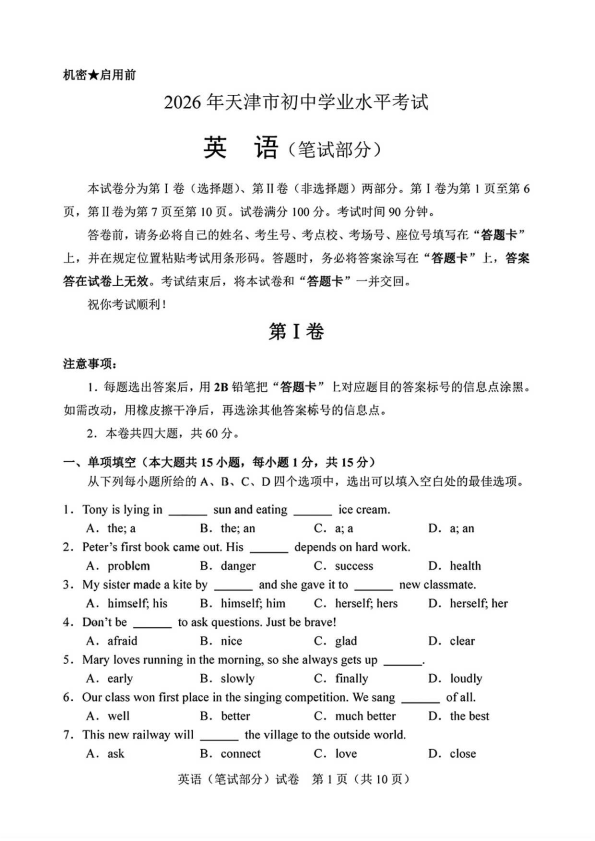
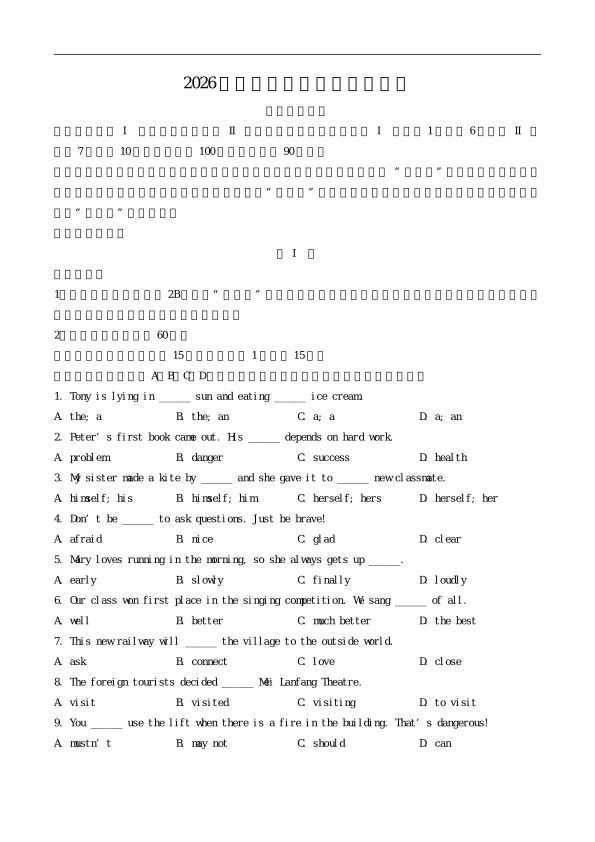
1. Tny is lying in ________ sun and eating ________ ice cream.
A. the; a B. the; an C. a; a D. a; an
2. Peter’s first bk came ut. His ________ depends n hard wrk.
A. prblem B. danger C. success D. health
命题透视
►核心考点:定冠词the的固定搭配;不定冠词a/an的用法;名词词义辨析。
►链接教材:人教版七年级上册Unit 5、Unit 6及八年级上册相关语法复习。
►命题分析:
(1)情境创设:第1题以日常生活画面创设语境;第2题以彼得出版第一本书创设成就情境。
(2)问题设计:第1题考查冠词与固定搭配in the sun及元音音素前用an;第2题考查名词在上下文中的语义匹配。
(3)考查目标:检测学生在真实语境中准确运用冠词和名词的能力,体现语言基础知识的重要性。
思路点拨
►第1题:抓固定搭配与语音。sun为独一无二事物,in the sun为固定短语;ice以元音音素/aɪ/开头,表泛指用an。结论:选B。
►第2题:抓上下文语义。前句说“第一本书出版了”,后句“取决于努力工作”,只有success与“成就”语境匹配。prblem、danger、health均与语境不符。结论:选C。
【答案】1. B 2. C
技巧点拨
冠词题常考三类:独一无二用the、固定搭配用the、元音音素前用an。名词辨析题要先把握上下文话题,再排除语义不符选项。
题组2 代词与形容词(第3—4题)
3. My sister made a kite by ________ and she gave it t ________ new classmate.
A. himself; his B. himself; him C. herself; hers D. herself; her
4. Dn’t be ________ t ask questins. Just be brave!
A. afraid B. nice C. glad D. clear
命题透视
►核心考点:反身代词与形容词性物主代词;形容词词义辨析。
►链接教材:人教版七年级下册Unit 1、Unit 2及八年级上册形容词与副词复习。
►命题分析:
(1)情境创设:第3题为手工制作与赠送礼物;第4题为课堂鼓励勇敢提问。
(2)问题设计:第3题同时考查反身代词by neself和形容词性物主代词修饰名词;第4题考查情感态度形容词。
(3)考查目标:检测代词形式变化和形容词在祈使句中的语义运用。
思路点拨
►第3题:抓主语一致与代词功能。主语My sister为女性,by neself用herself;第二空修饰名词classmate,需用形容词性物主代词her。结论:选D。
►第4题:抓后句提示。后句“Just be brave!”鼓励勇敢,说明前句是“不要害怕问问题”,be afraid t d sth.为固定搭配。结论:选A。
【答案】3. D 4. A
易错提醒
反身代词必须与句子主语在人称和数上保持一致;形容词性物主代词后必须接名词,名词性物主代词后不接名词。
题组3 副词与比较等级(第5—6题)
5. Mary lves running in the mrning, s she always gets up ________.
A. early B. slwly C. finally D. ludly
6. Our class wn first place in the singing cmpetitin. We sang ________ f all.
A. well B. better C. much better D. the best
命题透视
►核心考点:副词词义辨析;副词最高级。
►链接教材:人教版七年级下册Unit 2、八年级上册Unit 3副词与比较等级。
►命题分析:
(1)情境创设:第5题为晨跑与起床时间;第6题为歌唱比赛获奖。
(2)问题设计:第5题考查副词与语境匹配;第6题考查最高级标志f all。
(3)考查目标:检测副词词义理解和比较等级的形式变化。
思路点拨
►第5题:抓因果逻辑。喜欢晨跑,所以起床“早”,early符合语境。结论:选A。
►第6题:抓比较范围。f all表示三者及以上比较,应用最高级the best。well为原级,better为比较级,much better也是比较级。结论:选D。
【答案】5. A 6. D
技巧点拨
判断比较等级时,先找标志词:than用比较级,f all/in ur class等范围用最高级。副词辨析要结合动作本身和上下文逻辑。
题组4 动词与动词短语(第7—8、10题)
7. This new railway will ________ the village t the utside wrld.
A. ask B. cnnect C. lve D. clse
8. The freign turists decided ________ Mei Lanfang Theatre.
A. visit B. visited C. visiting D. t visit
10. Dr Bethune wrked fr 69 hurs withut resting r ________ himself.
A. taking part in B. getting ready fr C. taking care f D. keeping clear f
命题透视
►核心考点:动词词义辨析;非谓语动词decide t d;动词短语辨析。
►链接教材:人教版七年级下册Unit 1—3动词短语;八年级上册Unit 5 decide t d;八年级下册Unit 2动词辨析。
►命题分析:
(1)情境创设:铁路连接村庄、外国游客参观剧院、白求恩大夫连续工作。
(2)问题设计:第7题考查动词与介词t的搭配;第8题考查decide后接动词不定式;第10题考查动词短语与语境匹配。
(3)考查目标:检测动词及动词短语的语义和搭配能力,渗透文化意识。
思路点拨
►第7题:抓主语与固定搭配。railway与村庄之间是“连接”关系,符合句意。结论:选B。
►第8题:抓非谓语固定结构。decide后只能接动词不定式t d sth.。结论:选D。
►第10题:抓语境与短语含义。连续工作69小时,没有休息,也没有“照顾”自己,taking care f符合语境;taking part in参加、getting ready fr准备、keeping clear f避开均不符。结论:选C。
【答案】7. B 8. D 10. C
复习重点
动词短语要分类记忆:接t d的常见动词有decide, want, hpe, plan, agree等;接ding的常见动词有finish, enjy, practice, mind等。动词辨析要结合主语和宾语之间的逻辑关系。
题组5 情态动词、时态与语态(第9、11、13题)
9. Yu ________ use the lift when there is a fire in the building. That’s dangerus!
A. mustn’t B. may nt C. shuld D. can
11. The vlunteers ________ the sprts centre nw. Let’s jin them.
A. cleaned B. were cleaning C. are cleaning D. will clean
13. A reprt n space travel ________ next Sunday.
A. gave B. was given C. will give D. will be given
命题透视
►核心考点:情态动词mustn’t表禁止;现在进行时;一般将来时的被动语态。
►链接教材:人教版七年级下册Unit 4情态动词;八年级下册Unit 5、Unit 6时态与语态。
►命题分析:
(1)情境创设:火灾安全、志愿者当下活动、太空旅行报告下周发表。
(2)问题设计:第9题考查情态动词语气强弱;第11题考查nw提示的现在进行时;第13题考查时间状语与被动关系。
(3)考查目标:检测学生对情态动词、时态和语态的综合运用能力。
思路点拨
►第9题:抓安全警示语气。火灾时“禁止”使用电梯,mustn’t表示强烈禁止。may nt语气较弱,shuld和can与危险语境不符。结论:选A。
►第11题:抓时间状语nw。nw是现在进行时的标志,结构为be+ding;主语vlunteers为复数,be动词用are。结论:选C。
►第13题:抓时间与语态。next Sunday表示将来;reprt是give的承受者,需用被动语态,一般将来时被动结构为will be+过去分词。结论:选D。
【答案】9. A 11. C 13. D
答题模板
时态语态题三步走:第一步找时间状语判时态;第二步分析主语与谓语关系判主动/被动;第三步核对主谓一致和过去分词形式。
题组6 从句与交际用语(第12、14、15题)
12. Jhn feels awful. He shuld stay in bed ________ he feels better.
A. if B. until C. when D. because
14. —Daming, d yu knw ________?
—Because he can see the changes in ur hme twn.
A. why Grandpa lves city walks B. why des Grandpa lve city walks
C. when Grandpa takes a city walk D. when des Grandpa take a city walk
15. —I’m reading an interesting bk, Jurney t the West.
—What a great Chinese wrk! ________.
A. It’s a secret B. Enjy the bk C. Cme this way D. That’s a pity
命题透视
►核心考点:连词until引导时间状语从句;宾语从句的语序和连接词;情景交际用语。
►链接教材:人教版八年级上册Unit 9、Unit 10宾语从句;八年级下册Unit 4连词;七年级下册情景交际。
►命题分析:
(1)情境创设:卧床休息、城市漫步原因、谈论阅读名著。
(2)问题设计:第12题考查until的“直到……为止”;第14题考查宾语从句陈述语序和why引导;第15题考查交际用语的得体性。
(3)考查目标:检测复合句和日常交际用语的准确运用,渗透文化意识。
思路点拨
►第12题:抓动作持续性。stay in bed应持续到he feels better,until表示“直到……为止”。if表条件、when表同时、because表原因均不符。结论:选B。
►第14题:抓答语和语序。答语Because提示用why引导;宾语从句必须用陈述语序,排除B、D;C项when与原因答语不符。结论:选A。
►第15题:抓交际场景。对方说正在读《西游记》,回应应先赞美再表达祝愿,Enjy the bk符合语境。结论:选B。
【答案】12. B 14. A 15. B
技巧点拨
宾语从句两步判:一看连接词(看答语或句意),二看语序(必须用陈述语序)。情景交际题要关注上下文话题和礼貌原则。
二、完形填空
题组 William的求知与助人之路(第16—25题)
William was a clever by in a small village. His family grew fd n the farm and wrked very hard. Fr a lng time there was n rain, ____16____ fd wasn’t grwing. His parents culdn’t pay fr his ____17____. Hwever, it didn’t stp him frm learning at all.
As a yung by, he was crazy abut ____18____ and wanted t knw new things all the time. T help him with his study, the cmmunity gave him sme ____19____. And he als went t the library a lt. Frm bks, he learned ____20____ t repair clcks, bikes and ther things. Then he gt the idea f ____21____ peple in his village. He sn managed t cllect different kinds f tls and began t ____22____ things fr the villagers in his free time. He always tld peple that it was his wn way t repay (报答) the village. He was nly fifteen that year.
His stry spread ____23____. Mre and mre peple knew abut this ____24____ by and came t supprt (帮助) him. A few years later, he entered his dream cllege. During his cllege life, William ____25____ a Repair Club. Many students wrked tgether with him and their lve and kindness cntinued.
16. A. s B. r C. but D. after
17. A. game B. study C. time D. rm
18. A. cking B. skating C. playing D. reading
19. A. bks B. tys C. clthes D. bags
20. A. what B. when C. hw D. wh
21. A. missing B. leaving C. helping D. frgetting
22. A. catch B. repair C. write D. draw
23. A. nly B. badly C. hard D. fast
24. A. kind B. sick C. funny D. careless
25. A. picked up B. lked up C. set up D. gave up
命题透视
►核心考点:语篇理解、上下文逻辑、词汇辨析、动词短语。
►链接教材:人教版八年级下册Unit 2、Unit 7及九年级全一册语篇阅读。
►命题分析:
(1)情境创设:以非洲男孩William在干旱困境中坚持学习、通过修理技能回报村庄的真实励志故事为语篇情境。
(2)问题设计:10个空覆盖连词、名词、动词、动词短语、形容词和副词,主要依托上下文逻辑和词汇复现。
(3)考查目标:检测学生在语篇层面理解上下文、辨析词义、把握情感态度的能力,渗透坚持不懈和感恩回报的价值观。
思路点拨
►第16题:抓因果关系。前句“久未下雨”与后句“庄稼不长”为因果关系,用s。结论:选A。
►第17题:抓复现线索。下文“help him with his study”和“learning”提示此处指“学费”,用study。结论:选B。
►第18题:抓后文线索。下文“went t the library”“Frm bks”说明他痴迷阅读,用reading。结论:选D。
►第19题:抓后文线索。下文“Frm bks, he learned...”说明社区给了他bks。结论:选A。
►第20题:抓固定用法。learn hw t d sth.表示“学会如何做某事”。结论:选C。
►第21题:抓情感态度。下文“repay the village”和为村民修东西说明他想“帮助”村民,用helping。结论:选C。
►第22题:抓前文复现。上文“learned hw t repair clcks, bikes”提示此处为repair things。结论:选B。
►第23题:抓后文结果。下文“Mre and mre peple knew”说明故事传播得“快”,用fast。结论:选D。
►第24题:抓人物品质。免费为村民修理物品体现“善良”,用kind。结论:选A。
►第25题:抓动词短语。宾语为a Repair Club,set up表示“建立”,符合语境。pick up捡起、lk up查找、give up放弃均不符。结论:选C。
【答案】16. A 17. B 18. D 19. A 20. C 21. C 22. B 23. D 24. A 25. C
技巧点拨
完形填空“三读法”:第一遍速读抓主旨,第二遍结合上下文选答案,第三遍通读复核。重点关注逻辑关系词、词汇复现、情感态度和固定搭配。
三、阅读理解
A篇 草莓种植指南(第26—30题)
Strawberries taste sweet and delicius. Nt nly that, they are easy t grw, t.
Things yu will need: Gd strawberry plants; Sil; Water; A garden trwel.
Steps t plant strawberries: 1. Chse a place in yur garden that gets a lt f sunshine. 2. Make sure the sil is prepared well by watering it. 3. Dig a hle fr each plant 30 cm away frm anther, using a garden trwel. 4. Put each yung strawberry plant int the hle. 5. Put the sil back int the hle. 6. Water the sil well.
Tp tip: Always water the sil, nt the plant! Harvest strawberries frm June t August. Happy gardening!
26. What is the first step t plant strawberries?
A. T chse a place. B. T dig a hle. C. T find sme sil. D. T get sme water.
27. Hw far away shuld yu dig a hle frm anther?
A. 10 cm. B. 20 cm. C. 30 cm. D. 40 cm.
28. Which part shuld yu water?
A. The leaves. B. The sil. C. The flwers. D. The fruit.
29. When can yu harvest strawberries?
A. Frm March t May. B. Frm April t June. C. Frm May t July. D. Frm June t August.
30. In which bk can yu find the text?
A. A strybk. B. A gardening bk. C. A ckbk. D. A histry bk.
命题透视
►核心考点:应用说明文信息定位、细节理解、推理判断。
►链接教材:人教版八年级下册Unit 7、Unit 9说明文阅读策略。
►命题分析:
(1)情境创设:以草莓种植说明文为语篇,贴近劳动教育和实践活动。
(2)问题设计:四道细节题分别对应步骤、数据、注意事项和时间;第30题为推理判断,考查文本出处。
(3)考查目标:训练学生快速定位关键信息、理解说明文结构和判断文本类型的能力。
思路点拨
►第26题:抓步骤顺序。Steps第1条明确为“Chse a place”。结论:选A。
►第27题:抓数字信息。Steps第3条“30 cm away frm anther”。结论:选C。
►第28题:抓提示语。Tp tip“Always water the sil, nt the plant!”说明只浇土壤。结论:选B。
►第29题:抓时间信息。文末“Harvest strawberries frm June t August.”。结论:选D。
►第30题:抓文本特征。文章讲植物种植,结尾有“Happy gardening”,对应园艺书籍。结论:选B。
【答案】26. A 27. C 28. B 29. D 30. B
技巧点拨
应用说明文阅读策略:先读题干再回文定位,重点关注标题、步骤编号、数字、时间和特殊提示语。
B篇 母爱的故事(第31—35题)
My mther was strict with me when I was yung. She made lts f family rules t let me knw what t d and nt t d.
As I grew lder, I began t realise hw wise my mther was. She kept telling me different ways t slve my daily prblems. At the same time, she wuld always stand behind me in rder t ffer help t me when necessary. Fr me, a hme filled with lve was built by her. I culd grw up happily t explre (探索) the unknwn, learn frm mistakes and becme truly mature (成熟的).
When I failed my first jb interview, I made a phne call t my mther. She answered it and stayed silent t let me cry alud first. After I calmed dwn, she said, “Tm, I’m always with yu. Just face the prblem because it’s n use crying.” She was s encuraging (令人鼓舞的) that I became cnfident t be successful next time. At that mment, there was nly my dear mther and me. Frever.
My mther lets me knw what a mther is. A mther is the persn wh makes the wrld a better place t live in and spends her lifetime helping me grw up.
31. What did Tm’s mther make when he was yung?
A. Travel lists. B. Family rules. C. Mdel planes. D. Delicius cakes.
32. Why wuld Tm’s mther always stand behind him?
A. T give him help. B. T buy him gifts. C. T tell jkes. D. T watch matches.
33. What did Tm d when he failed his first jb interview?
A. He had a meal. B. He met his friends. C. He called his mther. D. He did sme shpping.
34. Which f the fllwing wrds best describes Tm’s mther?
① Strict. ② Hnest. ③ Wise. ④ Encuraging.
A. ①②③ B. ①②④ C. ①③④ D. ②③④
35. What culd be the best title f the passage?
A. Prmises: When t Be Mature B. Advice: Where a Family Lives
C. Difficulty: Hw t Grw Up D. Thanks: What a Mther Is
命题透视
►核心考点:记叙文细节理解、推理判断、人物评价、主旨大意。
►链接教材:人教版八年级下册Unit 4、Unit 7记叙文阅读。
►命题分析:
(1)情境创设:以作者Tm回忆母亲的教育与支持为线索,情感真挚,贴近学生家庭经验。
(2)问题设计:3道细节题、1道人物评价题、1道主旨大意题,层层深入。
(3)考查目标:检测学生把握记叙文时间线索、理解人物情感和概括主旨的能力。
思路点拨
►第31题:抓首段细节。第一段“She made lts f family rules...”直接给出答案。结论:选B。
►第32题:抓目的状语。第二段“ rder t ffer help t me when necessary.”说明母亲站在身后是为了提供帮助。结论:选A。
►第33题:抓关键事件。第三段“When I failed my first jb interview, I made a phne call t my mther.”。结论:选C。
►第34题:抓人物描述词。第一段strict、第二段wise、第三段encuraging;文中未出现hnest相关描述。结论:选C。
►第35题:抓主旨句。最后一段“My mther lets me knw what a mther is.”点明全文中心,D项最贴合。结论:选D。
【答案】31. B 32. A 33. C 34. C 35. D
技巧点拨
记叙文标题题常见方法:寻找首尾段的主题句,关注反复出现的情感词或核心人物。标题要概括全文,不能只涵盖某一段。
C篇 企鹅机器人研究帝企鹅(第36—40题)
Scientists are creating rbts that can be used in many different areas f life. Recently a new kind f rbt which lks like a penguin has been develped. The penguin rbt helps scientists get clser t emperr penguins (帝企鹅) t knw mre abut their behaviur (行为).
Emperr penguins are famus as shy animals. They usually feel nervus and run away when scientists g twards them. This will cause prblems t their hearts. T slve it, a team f scientists created a remte cntrl vehicle (遥控车). This vehicle allwed the scientists t study the penguins frm ver 200 metres away. It culd mve up t the penguins slwly and quietly withut making them run away. It was als used t help make the dcumentary (纪录片) March f the Penguins.
The scientists still wanted t watch emperr penguins much clser. After trying many times, they develped their latest rbt which was like a little grey penguin. It had fur black wheels, tw black arms and a black-and-white painted face. The wheels were prepared fr the rbt t walk n the thick snw easily. This new rbt didn’t scare (惊吓) the penguins. They even sang sngs t welcme the rbt and listened fr a respnse. But the penguins were very unhappy when there was n answer. The scientists didn’t prgramme (编写程序) the penguin rbt t make a sund. Next time they will have the rbt sing sngs.
Thanks t the rbts, scientists culd d much mre research n emperr penguins.
36. Why was the penguin rbt develped?
A. T knw abut scientists’ heart prblems.
B. T help scientists walk n the thick snw.
C. T learn abut emperr penguins’ behaviur.
D. T help emperr penguins lk fr mre fd.
37. Hw d emperr penguins feel when scientists g twards them?
A. Sad. B. Angry. C. Excited. D. Nervus.
38. What des the wrd “respnse” in Paragraph 3 mean?
A. Plan. B. Answer. C. Lessn. D. Reasn.
39. What will the penguin rbt d next time accrding t the passage?
A. Sing sngs. B. Swim in the sea. C. Take phts. D. Dance n the snw.
40. What is the passage mainly abut?
A. Penguins in the film. B. Penguins in the z.
C. Rbts fr daily husewrk. D. Rbts fr studying penguins.
命题透视
►核心考点:科普说明文细节理解、词义猜测、推理判断、主旨大意。
►链接教材:人教版九年级全一册Unit 6、Unit 13说明文阅读。
►命题分析:
(1)情境创设:以科学家研发企鹅机器人观察帝企鹅为科技前沿情境,兼具趣味性与科普性。
(2)问题设计:涵盖研发目的、动物反应、词义猜测、未来计划和主旨概括,设问层次清晰。
(3)考查目标:检测学生理解科技发展类说明文、根据上下文猜测词义和概括主旨的能力。
思路点拨
►第36题:抓首段目的句。“The penguin rbt helps scientists get clser t emperr penguins t knw mre abut their behaviur.”直接说明研发目的。结论:选C。
►第37题:抓第二段细节。“They usually feel nervus and run away when scientists g twards them.”。结论:选D。
►第38题:抓同义提示。下文“But the penguins were very unhappy when there was n answer.”中answer与respnse同义。结论:选B。
►第39题:抓未来计划句。第三段末“Next time they will have the rbt sing sngs.”。结论:选A。
►第40题:抓全文主线。文章围绕用于研究帝企鹅的机器人展开,D项概括全文。结论:选D。
【答案】36. C 37. D 38. B 39. A 40. D
技巧点拨
词义猜测题可利用“同义/反义提示”“因果解释”“举例说明”等线索。科普说明文主旨题要区分“说明对象”和“次要细节”。
四、补全对话
题组 谈论冼星海与中国音乐(第41—45题)
A: Hi, Lingling. Can yu hear the pian? It’s s beautiful!
B: Yeah! That’s the music by Xian Xinghai. ____41____
A: Yes, a little. He was brn in Maca, China.
B: I especially lve his sng The Yellw River.
A: ____42____
B: He wrte it in 1939.
A: His sngs are still ppular tday.
B: Exactly! ____43____ By the way, what kind f music d yu like?
A: ____44____ It is ften beautiful and slw.
B: S it is. And smetimes it sunds lively.
A: ____45____
B: Because it shws ur culture and histry.
命题透视
►核心考点:情景交际、上下文逻辑衔接、特殊疑问句与答语匹配。
►链接教材:人教版八年级下册Unit 8、Unit 9及九年级Unit 9情景交际。
►命题分析:
(1)情境创设:以谈论人民音乐家冼星海及其代表作《黄河》为话题,过渡到个人音乐喜好和中国传统音乐。
(2)问题设计:五处空缺分别考查一般疑问句、特殊疑问句、承接评价、回答喜好类型和why问句。
(3)考查目标:检测学生在真实对话中把握问答逻辑、衔接语篇和文化表达的能力。
思路点拨
►第41题:抓答语“Yes, a little.”。Yes回答一般疑问句,E项“D yu knw anything abut him?”符合。结论:选E。
►第42题:抓答语“He wrte it in 1939.”。答语为时间,问句用When,B项符合。结论:选B。
►第43题:抓前文“Exactly!”。B赞同A的评价,F项“S he’s called the ‘Peple’s Musician’.”承接自然。结论:选F。
►第44题:抓问句“what kind f music d yu like?”。D项“I like traditinal Chinese music.”直接回答。结论:选D。
►第45题:抓答语“Because...”。问句用Why,G项符合。结论:选G。
【答案】41. E 42. B 43. F 44. D 45. G
技巧点拨
补全对话解题步骤:第一步通读对话把握话题;第二步根据答语判断问句类型;第三步将选项代入检查上下文连贯;第四步复读验证。
五、完成句子
题组 核心短语与句式运用(第46—50题)
46. 我们会去为你加油。
We’ll be there t ________ yu ________.
47. 凯特是我最要好的朋友之一。
Kate is ________ ________ my best friends.
48. 这张生日贺卡是手工制作的。
The birthday card is made ________ ________.
49. 上周末迈克复习了笔记。
Mike ________ ________ his ntes last weekend.
50. 请把箱子抬起来,放到桌子上。
Please ________ ________ the bx and put it n the table.
命题透视
►核心考点:动词短语、固定句型、介词短语、时态。
►链接教材:人教版七年级至九年级高频短语总结。
►命题分析:
(1)情境创设:涵盖加油鼓励、人物介绍、手工制作、复习笔记和日常动作等生活情境。
(2)问题设计:每题两空,考查学生对固定短语和句型的准确拼写与形式变化。
(3)考查目标:检测学生在中英文转换中运用核心短语的能力,强调拼写和时态准确性。
思路点拨
►第46题:抓关键词“为……加油”。对应短语cheer sb. n;t为不定式符号,用动词原形cheer。答案:cheer; n。
►第47题:抓关键词“……之一”。对应句型ne f + 可数名词复数。答案:ne; f。
►第48题:抓关键词“手工”。对应短语by hand。答案:by; hand。
►第49题:抓关键词“复习”和时间状语“last weekend”。g ver表示复习,一般过去时用went。答案:went; ver。
►第50题:抓关键词“抬起来”。对应短语lift up;祈使句用动词原形。答案:lift; up。
【答案】46. cheer; n 47. ne; f 48. by; hand 49. went; ver 50. lift; up
复习重点
完成句子常考短语:cheer n, ne f, by hand, g ver, lift up, lk frward t, take part in, pay attentin t等。解题时先确定中文关键词,再写出对应英文短语,最后根据语法结构调整形式。
六、任务型阅读
题组 中国青花瓷茶杯引发的向往(第51—55题)
It was Sunday afternn and David was visiting Aunt Alice in an ld twn in England. In her huse, each rm was full f interesting things, such as African drums and Eurpean paintings. She cllected them when she travelled t many wnderful places years ag.
Suddenly a special tea cup caught David’s eye, n which there was a blue and white picture. “Ww! I’ve never seen such a lvely picture befre! Everything in it is s real! A river is passing thrugh a garden-like village. Children n the bridge are waving t the batman. Maybe they are in a hurry t take the bat hme. I believe they can even hear the birds singing in the sky!”
Aunt Alice sipped (抿) tea frm her china cup. “Amazing, isn’t it? This blue and white picture shws ancient life f sme places in China. I’m planning t g there and see mre Chinese art treasures.”
“Great! I can’t wait t g with yu. Let’s have a taste f Chinese tea and feel the beauty f China,” said David excitedly.
51. In Alice’s huse, each rm was ________ interesting things.
52. Suddenly a special ________ caught David’s eye.
53. On the bridge children are ________ the batman in the picture.
54. This amazing picture shws ________ f sme places in China.
55. Accrding t David’s wrds, he hpes t ________.
命题透视
►核心考点:细节理解、原文信息提取与转化、概括表达。
►链接教材:人教版九年级全一册Unit 5、Unit 6阅读策略。
►命题分析:
(1)情境创设:以英国男孩David在中国风青花瓷茶杯图案中感受到中国文化之美为背景。
(2)问题设计:前四题可直接在原文定位,第55题需要整合信息进行概括。
(3)考查目标:检测学生精读语篇、提取关键信息和用恰当语言完成句子的能力。
思路点拨
►第51题:抓第一段原句“each rm was full f interesting things”。答案:full f。
►第52题:抓第二段首句“Suddenly a special tea cup caught David’s eye”。答案:tea cup。
►第53题:抓第二段细节“Children n the bridge are waving t the batman.”。答案:waving t。
►第54题:抓第三段“This blue and white picture shws ancient life f sme places in China.”。答案:ancient life。
►第55题:抓最后一段David的话“Let’s have a taste f Chinese tea and feel the beauty f China”,整合为g with Aunt Alice t China t have a taste f Chinese tea and feel the beauty f China。
【答案】51. full f 52. tea cup 53. waving t 54. ancient life
55. g with Aunt Alice t China t have a taste f Chinese tea and feel the beauty f China
技巧点拨
任务型阅读填空题通常可以在原文找到直接依据,注意词形和语法一致性。概括题需整合原文信息,用简洁完整的句子表达。
七、综合填空
题组 人为什么变老会变矮(第56—65题)
Why D Older Peple Get Shrter?
Yu’re nw grwing taller each year. But did yu knw mst peple start t get s____56____ little by little after 30? When yu are 80, yu wuld be 5 ~ 6cm shrter.
Here cmes an interesting questin. W____57____ gets shrter s much in yur bdy? G n reading and yu can f____58____ ut the fact. It is yur back (脊柱) that keeps yu upright (直立的). There are 33 little bnes (骨头). Between mst f these bnes are sft discs (椎间盘).
The middle f these sft discs is like jelly (果冻), and are mainly made f water. As yu get lder, these discs lse water slwly. They b____59____ a little thinner. There are usually 23 discs, and they are as high as 1/4 f yur back. As a result, when e____60____ f them gets shrter a little bit, yu get shrter.
Older peple’s muscles (肌肉) a____61____ get smaller and weaker, their bnes get thinner and the spaces between the bnes get smaller. Tgether, this can change yur h____62____.
There’s anther f____63____ that yu may nt realise. Even when yu are y____64____, yu get shrter ver the day. Yu are actually tallest when yu w____65____ up in the mrning. Yu lse up t 2.5cm in less than 3 hurs after getting ut f bed.
S, if yu really want t be the tallest yu can be, try t measure (测量) hw tall yu are just after yu get ut f bed in the mrning.
命题透视
►核心考点:语篇理解、词汇运用、词形变化、科普说明文阅读。
►链接教材:人教版八年级下册Unit 7、九年级Unit 13健康与科学话题。
►命题分析:
(1)情境创设:以科普说明文解释“老年人为什么会变矮”这一科学现象,兼具知识性和趣味性。
(2)问题设计:10个空覆盖形容词比较级、疑问代词、动词、不定代词、副词、名词等,需结合上下文和首字母提示作答。
(3)考查目标:检测学生在语篇中运用词汇、理解科学说明和进行逻辑推理的能力。
思路点拨
►第56题:抓主题与首字母s。文章讲变矮,get后接形容词比较级,shrter符合。答案:shrter。
►第57题:抓下文回答“It is yur back”。问“身体什么变矮”,用What。答案:What。
►第58题:抓固定搭配与首字母f。find ut意为“查明、找出”。答案:find。
►第59题:抓前文“失去水分”与首字母b。椎间盘失水后“变得”更薄,becme符合。答案:becme。
►第60题:抓代词与首字母e。指代23个椎间盘中的每一个,用each。答案:each。
►第61题:抓并列补充关系与首字母a。前文讲椎间盘,此处补充肌肉“也”变小,als符合。答案:als。
►第62题:抓全文主题与首字母h。这些变化改变“身高”,height符合。答案:height。
►第63题:抓名词与首字母f。anther后接名词,表示“另一个事实”。答案:fact。
►第64题:抓形容词与首字母y。与“变老”相对,指“年轻时”,yung符合。答案:yung。
►第65题:抓固定搭配与首字母w。wake up意为“醒来”。答案:wake。
【答案】56. shrter 57. What 58. find 59. becme 60. each
61. als 62. height 63. fact 64. yung 65. wake
技巧点拨
综合填空解题策略:先通读全文把握主题,再根据上下文逻辑、首字母提示、语法结构确定词形,最后复读检查语义和拼写。
八、书面表达
题组 向英国笔友介绍天津(第66题)
假如你是天津中学生李华,你的英国笔友Kevin对天津的著名景观和休闲生活非常感兴趣。根据你搜集的以下信息,用英语给他回复一封邮件,介绍这两个景观及喜闻乐见的休闲活动,并表达你的想法。
要点:
(1)the Tianjin Eye / was cmpleted in 2008; takes yu 120 metres abve the Haihe River; see beautiful sights; ...
(2)the Huangyaguan Great Wall / has a histry f ver 1,400 years; climb the Great Wall; get clse t nature; ...
(3)ppular activities in Tianjin…
(4)what yu think f Tianjin…
要求:
(1)词数:80 ~ 100个。
(2)开头和结尾已给出,不计入总词数。
(3)要点齐全,行文连贯,可适当发挥。
Dear Kevin,
I’m glad t receive yur email and knw yu’re interested in famus places and ppular activities in Tianjin.
____________________________________________________________________________________________________________________________________________________________________________________________________________________________________________________________________________________
Waiting fr yur reply!
Yurs,
Li Hua
命题透视
►核心考点:电子邮件写作、要点覆盖、语言连贯、地方文化表达。
►链接教材:人教版九年级全一册Unit 10写作及Unit 14旅游与文化话题。
►命题分析:
(1)情境创设:以天津中学生向英国笔友介绍家乡景观与休闲生活为真实交际任务。
(2)问题设计:提供两大景点信息和两个开放要点,要求学生组织成一封完整的电子邮件。
(3)考查目标:检测学生综合运用语言进行跨文化交际、表达个人观点和介绍地方文化的能力。
思路点拨
第一步:审题。文体为电子邮件,时态以一般现在时为主,景点建造时间用一般过去时;人称以第一人称和第三人称为主;要点必须全部覆盖。
第二步:谋篇。采用三段式:开头已给出;主体段依次介绍天津之眼、黄崖关长城和天津休闲活动;结尾段表达看法并发出邀请。
第三步:表达。介绍景点可用which引导的定语从句,如“The first ne is the Tianjin Eye, which was cmpleted in 2008.”;表达观点可用“In my pinin...”。
参考答案
【参考范文】
Dear Kevin,
I’m glad t receive yur email and knw yu’re interested in famus places and ppular activities in Tianjin.
Here are tw famus places. The first ne is the Tianjin Eye, which was cmpleted in 2008. It takes yu 120 metres abve the Haihe River t see beautiful sights. The secnd ne is the Huangyaguan Great Wall. It has a histry f ver 1,400 years. Yu can climb the Great Wall and get clse t nature.
As fr ppular activities, peple in Tianjin enjy listening t crsstalk in their free time. It always makes peple laugh.
In my pinin, Tianjin is a beautiful and mdern city full f culture. Welcme t Tianjin!
Waiting fr yur reply!
Yurs,
Li Hua
答题模板
介绍地方景观邮件模板:
开头:I’m glad t receive yur email...
主体:Here are tw famus places. The first ne is... which... The secnd ne is... Yu can... As fr ppular activities, peple enjy...
结尾:In my pinin, ... is a city full f... Welcme t...题号
题型
分值
命题情境
涉及考点
考查核心素养
学业质量水平
1
单项填空
1
在阳光下吃冰淇淋
冠词
语言能力
水平二
2
单项填空
1
第一本书出版
名词词义辨析
语言能力
水平二
3
单项填空
1
做风筝送同学
代词
语言能力
水平二
4
单项填空
1
鼓励勇敢提问
形容词词义辨析
语言能力
水平二
5
单项填空
1
喜欢晨跑
副词词义辨析
语言能力
水平二
6
单项填空
1
歌唱比赛第一名
副词最高级
语言能力
水平二
7
单项填空
1
新铁路连接村庄
动词词义辨析
语言能力
水平二
8
单项填空
1
决定参观剧院
非谓语动词
语言能力
水平二
9
单项填空
1
火灾时禁止使用电梯
情态动词
语言能力/思维品质
水平二
10
单项填空
1
白求恩连续工作
动词短语
文化意识/语言能力
水平二
11
单项填空
1
志愿者正在打扫
动词时态
语言能力
水平二
12
单项填空
1
卧床休息直到好转
连词
语言能力
水平二
13
单项填空
1
太空旅行报告下周日发表
被动语态
语言能力
水平三
14
单项填空
1
爷爷为什么喜欢城市漫步
宾语从句
语言能力/思维品质
水平三
15
单项填空
1
谈论阅读《西游记》
情景交际
文化意识/语言能力
水平二
16-25
完形填空
10
William通过学习与修理回报村庄
语篇理解、词汇辨析
语言能力/思维品质
水平三
26-30
阅读理解A
10
草莓种植指南
应用文
信息获取
语言能力/学习能力
水平二
31-35
阅读理解B
10
母爱的故事
记叙文
理解与推理
语言能力/情感态度
水平三
36-40
阅读理解C
10
企鹅机器人研究帝企鹅
科普说明文
推理判断
语言能力/思维品质
水平三
41-45
补全对话
5
谈论冼星海与中国音乐
情景交际、逻辑衔接
语言能力/文化意识
水平二
46-50
完成句子
10
根据中文完成英文句子
短语与句式
语言能力
水平二
51-55
任务型阅读
5
中国青花瓷茶杯引发的向往
细节理解与概括
语言能力/文化意识
水平三
56-65
综合填空
10
人变老变矮的科学解释
语篇填空、词汇运用
语言能力/思维品质
水平三
66
书面表达
15
向英国笔友介绍天津
书面表达、跨文化交际
语言能力/文化意识
水平四
A. Yes, I’d lve t.
B. When did he write it?
C. Hw did he study music?
D. I like traditinal Chinese music.
E. D yu knw anything abut him?
F. S he’s called the “Peple’s Musician”.
G. Why is traditinal Chinese music s ppular?
这是一份2026年中考英语真题完全解读(天津卷)含答案,共23页。试卷主要包含了 回归教材,夯实语言基础, 专项突破,提升关键能力等内容,欢迎下载使用。
这是一份2026年天津市中考真题英语试题(含答案),共8页。
这是一份2026年天津市中考英语真题含答案,共54页。
注册成功
资料篮

在线客服
添加在线客服
获取1对1服务
官方微信
关注“教习网”公众号
打开微信就能找资料
赛课定制
添加在线客服
获取1对1定制服务
职称咨询
添加在线客服
获取1V1专业指导服务

免费福利

.png)
.png)
