 免费领取教师福利
若您为此资料的原创作者,认为该资料内容侵犯了您的知识产权,请扫码添加我们的相关工作人员,我们尽可能的保护您的合法权益。


这是一份2026年湖北省中考英语试题(附答案解析),共6页。试卷主要包含了完形填空,阅读理解,选词填空,任务型阅读,书面表达等内容,欢迎下载使用。
一、完形填空
阅读短文,从每小题所给的四个选项中,选出一个能填入空白处的最佳选项。
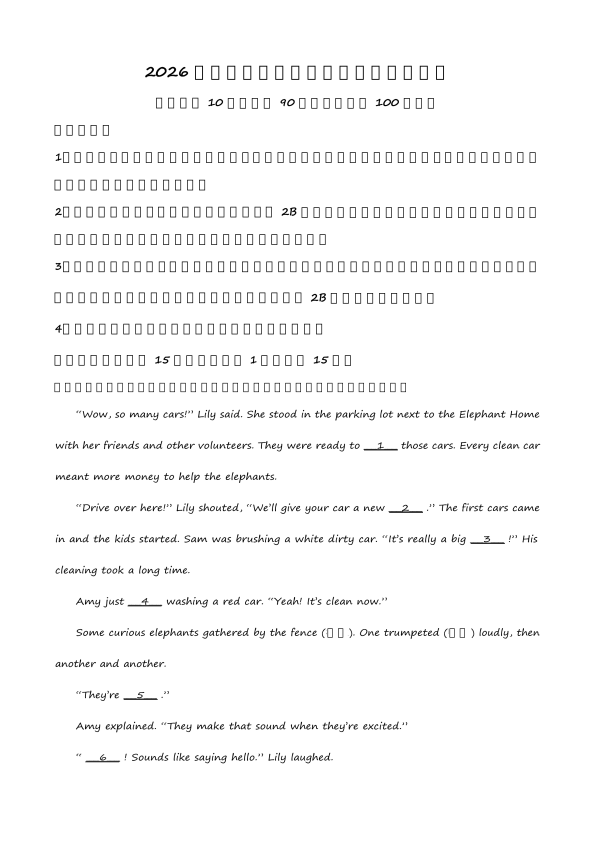
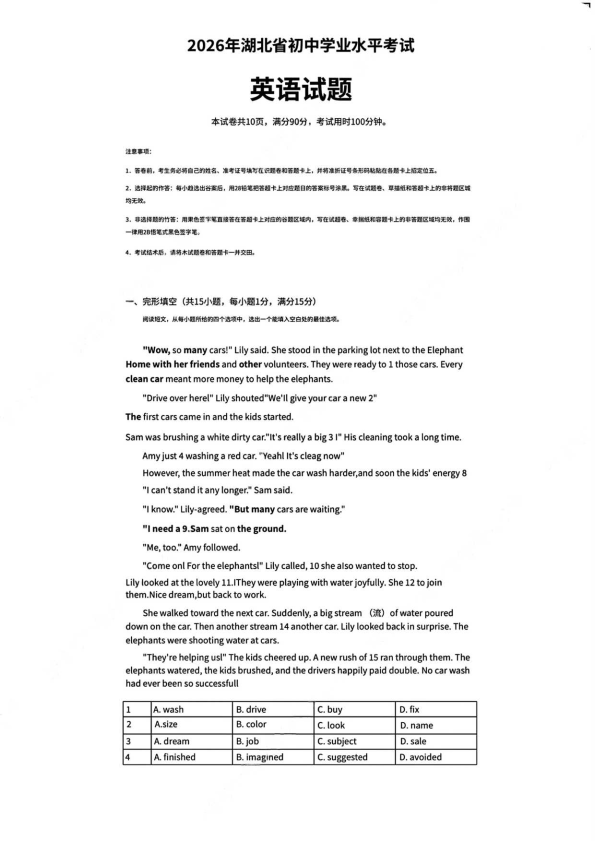
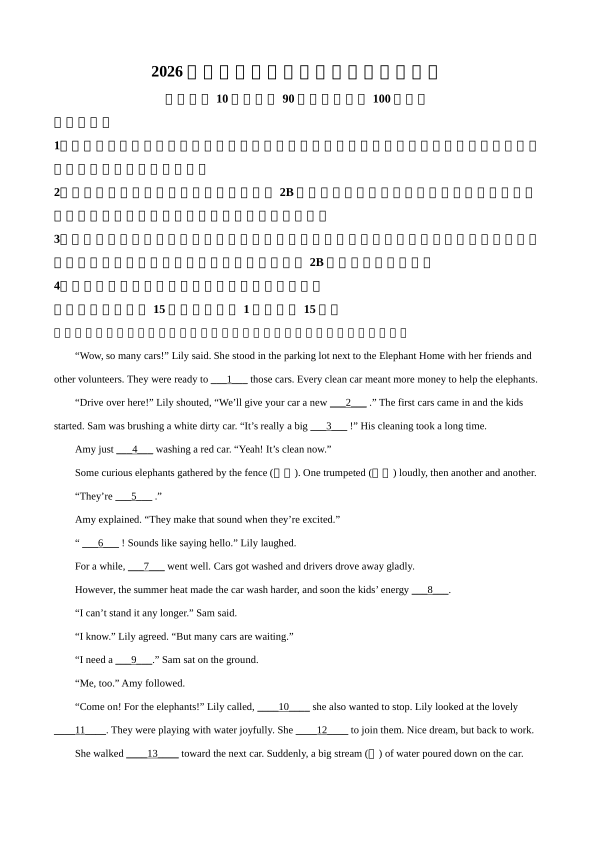
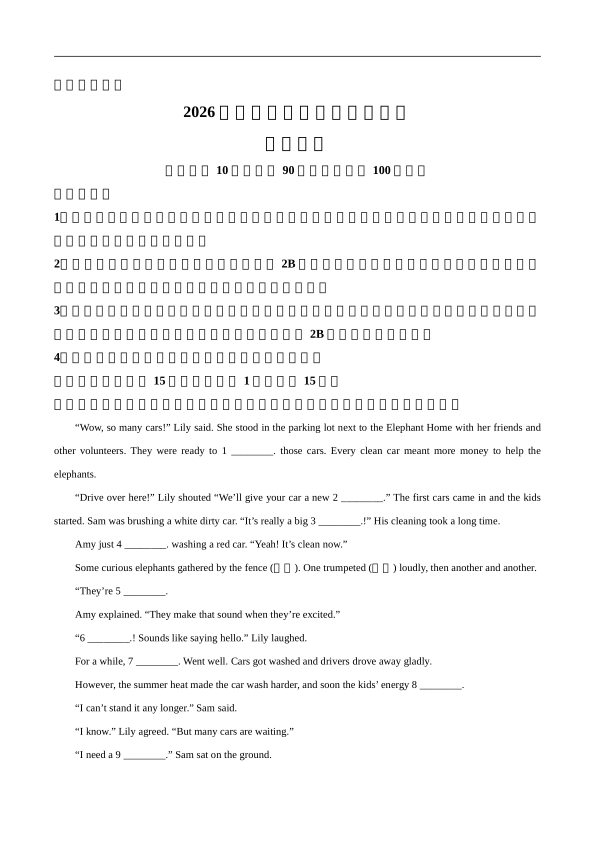
“Ww, s many cars!” Lily said. She std in the parking lt next t the Elephant Hme with her friends and ther vlunteers. They were ready t 1 thse cars. Every clean car meant mre mney t help the elephants.
“Drive ver here!” Lily shuted, “We’ll give yur car a new 2 .” The first cars came in and the kids started. Sam was brushing a white dirty car. “It’s really a big 3 !” His cleaning tk a lng time.
Amy just 4 washing a red car. “Yeah! It’s clean nw.”
Sme curius elephants gathered by the fence (栅栏). One trumpeted (吼叫) ludly, then anther and anther.
“They’re 5 .”
Amy explained. “They make that sund when they’re excited.”
“ 6 ! Sunds like saying hell.” Lily laughed.
Fr a while, 7 went well. Cars gt washed and drivers drve away gladly.
Hwever, the summer heat made the car wash harder, and sn the kids’ energy 8 .
“I can’t stand it any lnger.” Sam said.
“I knw.” Lily agreed. “But many cars are waiting.”
“I need a 9 .” Sam sat n the grund.
“Me, t.” Amy fllwed.
“Cme n! Fr the elephants!” Lily called, 10 she als wanted t stp. Lily lked at the lvely 11 . They were playing with water jyfully. She 12 t jin them. Nice dream, but back t wrk.
She walked 13 tward the next car. Suddenly, a big stream (流) f water pured dwn n the car. Then anther stream 14 anther car. Lily lked back in surprise. The elephants were shting water at cars.
“They’re helping us!” The kids cheered up. A new rush f 15 ran thrugh them. The elephants watered, the kids brushed, and the drivers happily paid duble. N car wash had ever been s successful!
1.A.washB.driveC.buyD.fix
2.A.sizeB.clrC.lkD.name
3.A.dreamB.jbC.subjectD.sale
4.A.finishedB.imaginedC.suggestedD.avided
5.A.hungryB.afraidC.lnelyD.happy
6.A.GreatB.GuessC.PleaseD.Srry
7.A.smethingB.everythingC.anythingD.nthing
8.A.gt upB.grew upC.came utD.ran ut
9.A.talkB.restC.rmD.game
10.A.becauseB.ifC.thughD.until
11.A.driversB.friendsC.elephantsD.vlunteers
12.A.wishedB.frgtC.beganD.prmised
13.A.secretlyB.nervuslyC.activelyD.slwly
14.A.shutB.hitC.hurtD.left
15.A.sundB.waterC.energyD.wind
二、阅读理解
16.Which animal lives in the sea but is brn in the river?
A.The Chinese sturgen.B.The milu deer.
C.The little egret.D.The Yangtze finless prpise.
17.Where can we find the milu deer?
A.In Wuhan.B.In Yichang.C.In Shishu.D.In Hnghu.
18.What des the little egret like t d?
A.Play under trees.B.Relax n trees.
C.Walk in shallw water.D.Jump ut f the water.
19.What d peple d fr the Yangtze finless prpise?
A.Prtect wetlands.B.Stp fishing.
C.Raise baby fish.D.Put it int the river.
20.On what kind f website can we read the passage?
A.Business.B.Health.C.Sprts.D.Nature.
Fr mst freign teenagers, learning Chinese pems culd be bring. But fr a grup f exchange students in China, it became an amazing trip. T help them learn mre, Chinese students in a middle schl started a club called “Petry Gathering”.
In this club, students explred the classic pems in active and creative ways. Chinese students prepared “fun cards”. On the cards were famus pems and theme (主题) paintings. Cards abut Li Bai’s mn, Du Fu’s muntains, and Wang Wei’s desert were ppular. They helped the exchange students knw hw ancient pets used Chinese t “paint” pictures.
Besides, they used simple instruments like drums t experience the rhythm (节奏) f the pems. “When I play the drums t a Tang pem, I can hear the music hidden in the lines,” said Alice, an exchange student. “It makes the pem easy t sing ut lud and interesting t share.” By putting pems, paintings and the rhythm tgether, students made the club a fun place where ancient pets met their teenager fans.
When Chinese students and exchange students studied tgether, they bth benefited greatly. “T help them better understand ur pems, I have t d sme clser reading. Each character means a lt in pems. Fr example, 水 (shui) shws beauty, sweetness, and a smth feeling,” said Li Ran. “When my new freign friend said he culd feel the imagery (意境) f the lines, I felt very prud f ur culture.” Li added.
In fact, learning pems can be fun fr everyne. These activities nt nly ffer students a chance t learn mre abut Chinese pems, but als bring peple f different languages and cultures tgether.
21.What d mst freign teenagers think f learning Chinese pems?
A.Exciting.B.Useful.C.Bring.D.Easy.
22.What des the underlined wrd “They” in Paragraph 2 refer t (指代)?
A.Cards.B.Paintings.C.Pems.D.Muntains.
23.What did playing the drums help the students d?
A.Sing mre pems.B.Feel the rhythm f pems.
C.Share classic music.D.Create lively nature scenes.
24.Why did the writer use the example f “水 (shui)”?
A.T describe different frms f water.
B.T tell the prnunciatin f the character.
C.T express Chinese peple’s lve fr water.
D.T shw the rich meanings f Chinese characters.
25.Which f the fllwing can be the best title fr the passage?
A.A Talk n Chinese CultureB.A Taste f Classic Lines
C.Pwer f Deep ThughtsD.Fun with Chinese Pems
In ancient China, letters were sent by pigens and packages (包裹) by hrses. Cmmn peple culd hardly affrd it. In 1896, China pened its very first pst ffice. That was the beginning f China’s wn pstal service. With a small stamp n the cver, peple in big cities culd send letters and packages. Bikes, ships and trains carried them acrss muntains and rivers in the cuntry, even abrad.
After the funding f the Peple’s Republic f China in 1949, the pstal service grew rapidly. Pst ffices were set up all arund the cuntry. Their services stretched t even the quietest, farthest villages. That made cmmunicatin much easier fr peple in every crner f the cuntry. Cllege students culd write t their parents in faraway hmetwns. Friends and relatives culd send packages n festivals t greet each ther.
Since the 1990s, a new branch (分支) f pstal service, the delivery (快递) industry, has als grwn rapidly. Take the year 2025 fr example. Every secnd, ver 6,000 packages were n the mve. Every day, mre than 500 millin packages were prcessed and put int trucks. In the whle year, ver 180 billin were sent acrss the cuntry. And the fastest delivery tk nly several hurs!
Nw, “speed” is n lnger the nly key wrd in this industry. Many delivery services have started t g green. Each year, mre than 800 millin bxes are reused r recycled. Besides, smart packing mdels are widely used. There’s n dubt that delivery services are smart in ur life and friendly t ur envirnment.
Frm pigens and hrses t delivery trucks, China’s pstal histry shws hw this ld great natin has develped and prgressed. Lking frward, will China’s pstal service fly t the mn and ther planets in uter space?
26.What happened in 1896 accrding t the passage?
A.Stamps were invented in China.
B.China’s first pst ffice was pened.
C.Peple stpped using pigens and hrses.
D.Ships and trains began t carry passengers.
27.What des the underlined phrase “stretched t” mean in Paragraph 2?
A.Reprted.B.Mved.C.Reached.D.Missed.
28.Which can best describe the delivery services accrding t paragraphs 3&4?
A.Faster Greener Smarter.B.Greener Smarter Cheaper.
C.Smarter Faster Safer.D.Safer Cheaper Greener.
29.What can we learn frm the last sentence f the passage?
A.The writer hpes t live n ther planets.
B.The writer shws interest in space histry.
C.The writer wants t check the delivery address.
D.The writer has cnfidence in China’s pstal service.
30.Hw des the writer rganize the passage?
A.In the rder f time.B.In the rder f space.
C.Frm pinins t facts.D.Frm reasns t results.
阅读短文,从文后所列选项中,选出最佳选项填入对应空白处,使短文通顺、连贯。(选项中有一项多余)
Flwers can make a clrful natural wrld. Spring is a perfect time t explre them. 31 . Knw the imprtance f flwers.
Mst flwering plants prduce xygen (O2) during the daytime. In spring, bees and butterflies fly amng flwers, carrying pllen (花粉) here and there. This allws plants t make seeds (种子) and fruits.
32 .
If yu take a walk in a small park, yu will see different clrs in flwers. Yu might als meet sme unknwn flwers. Then, use a flwer app. It can quickly tell yu their names and facts.
Visit a btanical garden (植物园).
A btanical garden is a place with special plants. 33 . Befre yu g, check t see if it ffers free passes. On yur visit, yu might see unusual flwers, and even enjy wnderful flwer shws.
Plant yur wn garden.
34 . Rses and sunflwers are gd chices. Making a tiny crner garden is nt that hard, but yu shuld first learn hw yu can care fr them. It’s amazing t watch them grw day by day.
Draw yur flwers.
Sme wrld-famus artists can always find inspiratin in flwers. 35 . Begin with flwers in simple shapes. First, lightly draw the center, then the ther parts. Take yur time, and yu will create a cute picture.
A.Make a plan t visit it.
B.Walk arund a pcket park.
C.Yu’d better water them every day.
D.G t a plant shp t buy yung plants.
E.Here are sme great ways t get started.
F.Yu can als try drawing flwers yu admire.
三、选词填空
阅读短文,从方框中选出恰当的单词并用其适当形式填空,使短文通顺、意义完整。每空仅填一词,每词仅用一次。
Tea has a lng histry in China. Chinese peple have been grwing, picking, making and enjying tea fr mre than 2,000 years. It is nt nly a 36 , but als part f Chinese culture.
Last mnth, we went n a schl trip t a tea garden. Mst f us had never picked tea leaves befre. 37 we were excited.
When we arrived, an ld 38 shwed us hw t d it. “Picking tea leaves requires patience and attentin,” he said. “Watch! Try t 39 the newbrn leaves.” The wrk was 40 fr us and it tk sme time t master the skill.
The best mment came when I 41 picked a handful f perfect leaves. Carefully, I brught them t my 42 and tk a deep breath. The green, natural smell was wnderful. It carried a quiet cnnectin between my hands and the earth. It’s a gift 43 nature thrugh human effrts.
We spent the whle afternn making the tea. At night, we sat tgether and tasted it. The beautiful leaves 44 int a warm, fresh smell. And the ht air f the tea was dancing befre my eyes like magic! It felt 45 than any tea I had ever bught. I came t knw that hard wrk really creates happiness. That day, the tea tasted different.
四、任务型阅读
阅读短文,用英文填空或回答问题。(注意每小题的词数要求)
Imagine yu have n phne, n map, and n ne t ask fr help. Hw wuld yu knw where t g? Fr thusands f years, humans have fund clever methds t take directins.
One simple way is t watch the sky. East is where the sun rises, and west is where it sets. That is the simplest sign. At night, ancient Chinese depended n the stars. The mst useful ne is the Nrth Star. It stays almst still in the nrthern sky. Travelers fllwed it alng their jurneys acrss the desert. Sailrs (水手) nce used it t guide their ships n the sea.
Nature ffers yu signs t read. Fr example, mss (苔藓) grws thicker n the wet dark nrth side f trees. That’s why in the frests f Nrth America, hunters can easily tell the nrth is n the mssy side.
Man-made marks are left t help. In the snwy Arctic, lcal peple built stne statues (雕塑)—shaped like a persn—as special signs. Travelers wh saw ne wuld knw the right way. Even tday, peple still build them as marks r wrks f art.
Tls give peple a hand. Abut 2,500 years ag, the Chinese made sinan. It was ften used t help peple build huses facing suth. During the Nrthern Sng Dynasty, the cmpass (指南针) was invented. Sailrs used it at sea t find their way and return hme safely. Later, the cmpass spread t Eurpe. It was imprved and used t explre unknwn ceans and find new lands.
Even lng befre mdern technlgies, peple all ver the wrld knew where they were ging. ▲
46.Cmplete the mind map accrding t the passage. (每空不超过6词)
Finding Yur Way
47.Please write a sentence t fill in t end the passage. (不超过25词)
五、书面表达
48.美好人生需要方向指引。成长路上,我们要学会发现自我优势,提炼方法,坚定前行。请你围绕下图提示的三个问题,结合自身实际,选取相关信息,以“I Can I Will”为题,写一篇英文演讲稿,参加学校的英语素养大赛。
题目:I Can I Will
写作要求:
1.根据提示适当发挥,结合自身实际;
2.文中不得出现真实姓名和校名;
3.词数80左右,已给出的开头和结尾不计入总词数。
I Can I Will
Dear teachers and classmates,
It’s my great hnr t make a speech here. _________________________________________________________________________________________________________________________________________________________________________________________________________________________________________________________________________________________________
That’s all. Thank yu!
Cme and Meet the Yangtze River Stars in Hubei!
The Chinese Sturgen
It is a big, lng fish with a sharp nse.
We can find it in Yichang. It lives in the sea but is brn in the Yangtze River. Peple raise baby sturgens and put them back int the river.
The Milu Deer
It has a face like a hrse, a tail like a dnkey, feet like a cw, and antlers like a deer. Chinese peple call it sibuxiang. We can find it in Shishu.
It likes t stay near water. It eats grass and lies dwn under trees.
Nw its number is grwing thanks t the wetland prtectin.
The Little Egret
It is all white with lng black legs and yellw feet. We can find it in the Hnghu Lake and ther wetlands in Hubei.
It stands n ne leg when it relaxes. It likes t walk slwly in shallw (浅的) water.
Cleaner wetlands give it mre fish t eat and safer places t live in.
The Yangtze Finless Prpise
It has a small rund head and a smiling muth. We can find it in Wuhan.
It lves t play in and jump ut f the water. It’s called “the giant panda f the water”.
T prvide better envirnment fr it, peple are nt allwed t fish fr ten years.
difficult; drink; farmer; finally; frm; get; nice; nse; s; turn
1.
Situatin: n a clear night
Sign: the Nrth Star
Guide: It stays almst still and pints nrth.
2. Read signs in nature
Situatin: .
Sign: mss n trees
Guide: It shws the nrth is n the mssy side.
3. Ntice special marks
Situatin: in the snwy Arctic
Sign: a stne statue
Guide: It .
4. Depend n tls
Situatin: at sea
Sign: .
Guide: It tells where the suth is.
1. What are yu gd at?
2. What’s yur secret?
3. What’s yur plan?
play sprts
practice mre
I’m ging t…
paint / sing
be a gd listener
I will, …
make friends
ask fr help
deal with prblems…
be cnfident…
《2026年湖北省中考英语试题》参考答案
1.A 2.C 3.B 4.A 5.D 6.A 7.B 8.D 9.B 10.C 11.C 12.A 13.D 14.B 15.C
【导语】本文讲述了Lily和朋友们在“大象之家”附近通过洗车为大象筹款的故事。过程中孩子们因酷热疲惫不堪,但大象用喷水的方式帮助他们,最终洗车活动大获成功。
【详解】1.句意:他们准备清洗那些汽车。
根据下文“Sam was brushing a white dirty car.”以及整个故事围绕洗车展开,可知他们在“清洗”汽车,应选用wash。drive“驾驶”,buy“买”,fix“修理”,均不符合语境。
2.句意:“开到这边来!”莉莉喊道,“我们会让你的车焕然一新。”
根据洗车语境,洗车改变的是外观,give a new lk意为“让你的车焕然一新”,lk符合洗车后外观改善的语境。size“尺寸”,clr“颜色”,name“名字”,均不符合语境。
3.句意:Sam边刷一辆白色脏车边说:“这真是个艰巨的任务。”
根据下文“His cleaning tk a lng time.”可知洗这辆车耗时很长,说明是项“艰巨的工作”,应选用jb。dream“梦”,subject“科目”,sale“销售”,均不符合语境。
4.句意:Amy刚刚洗完一辆红色的车。
根据下文“Yeah! It’s clean nw.”可知她“完成了”洗车,应选用finished。imagined“想象”,suggested“建议”,avided“避免”,均不符合语境。
5.句意:“它们很开心。”
根据下文“They make that sund when they’re excited.”可知大象很“开心”,应选用happy。hungry“饥饿的”,afraid“害怕的”,lnely“孤独的”,均不符合语境。
6.句意:Lily笑着说:“真棒!听起来像是在打招呼。”
根据上文大象兴奋地吼叫,以及Lily愉快地回应,应选用Great表示“真棒/太好了”。Guess“猜”,Please“请”,Srry“抱歉”,均不符合语境。
7.句意:过了一会儿,一切进展顺利。
根据下文“Cars gt washed and drivers drve away gladly.”可知“一切”都很顺利,应用everything。smething“某事”,anything“任何事”,nthing“什么都没有”,均不符合语境。
8.句意:然而,夏日的酷热让洗车变得更艰难,孩子们的精力很快就耗尽了。
根据“summer heat made the car wash harder”及下文抱怨可知精力不足,run ut表示“耗尽、用完”,符合精力耗尽的语境。gt up“起床”,grew up“长大”,came ut“出来”,均不符合语境。
9.句意:Sam坐在地上说:“我需要休息一下。”
根据上文孩子们因酷热和劳累而疲惫,可知需要“休息”,应选用rest。talk“谈话”,rm“房间”,game“游戏”,均不符合语境。
10.句意:Lily喊道:“加油!为了大象!”尽管她自己也想停下来。
前后为让步关系:她鼓励大家坚持,尽管她自己也想停下,应用thugh表示“尽管”。because“因为”,if“如果”,until“直到”,均不符合逻辑。
11.句意:Lily看着那些可爱的大象。
根据下文“They were playing with water jyfully.”以及大象喷水帮助洗车的情节,可知她看的是“大象”,应选用elephants。drivers“司机”,friends“朋友们”,vlunteers“志愿者们”,均不符合语境。
12.句意:她希望能加入它们。
根据下文“Nice dream, but back t wrk.”可知她“希望”能和大象一起玩,应选用wished。frgt“忘记”,began“开始”,prmised“承诺”,均不符合语境。
13.句意:她慢慢地走向下一辆车。
根据上文她疲惫、想休息但仍要坚持工作,可知她“慢慢地”走向下一辆车,应选用slwly。secretly“秘密地”,nervusly“紧张地”,actively“积极地”,均不符合语境。
14.句意:然后另一股水击中了另一辆车。
根据上文大象喷水到车上,以及“anther stream”作主语,动词应用“hit”表示“击中”,符合喷水动作。shut“关闭”,hurt“伤害”,left“离开”,均不符合语境。
15.句意:一股新的能量涌上他们的心头。
根据“cheered up”及之前精力耗尽可知重获能量,应选用energy表示“能量、活力”。sund“声音”,water“水”,wind“风”,均不符合语境。
16.A 17.C 18.C 19.B 20.D
【导语】本文主要介绍了湖北省四种代表性长江物种(中华鲟、麋鹿、白鹭、长江江豚)的外形特征、分布地点和生活习性。
【详解】16.由“The Chinese Sturgen”部分“It lives in the sea but is brn in the Yangtze River”可知,中华鲟生活在海里但在长江出生。
17.由“The Milu Deer”部分“We can find it in Shishu”可知,麋鹿在石首能找到。
18.由“The Little Egret”部分“It likes t walk slwly in shallw water”可知,白鹭喜欢在浅水中漫步。
19.由“The Yangtze Finless Prpise”部分“T prvide better envirnment fr it, peple are nt allwed t fish fr ten years”可知,人们为了保护长江江豚实行十年禁渔。
20.通读全文可知,文章主要介绍了湖北长江流域的四种动物(中华鲟、麋鹿、白鹭、江豚)及其生存环境和保护措施,属于自然生态类话题,因此最可能出现在自然(Nature)类网站上。
21.C 22.A 23.B 24.D 25.D
【导语】本文主要介绍了中国学生为帮助交换生学习中国古诗而成立的“诗会”俱乐部,通过趣味卡片、鼓点节奏等方式,让古诗学习变得有趣,并促进了中外学生之间的文化交流。
【详解】21.由第一段“Fr mst freign teenagers, learning Chinese pems culd be bring”可知,大多数外国青少年认为学习中国古诗是无聊的。
22.根据第二段内容,中国学生准备了“fun cards”(趣味卡片),随后提到“Cards abut... were ppular.”,紧接着说“They helped the exchange students...”。“They”指代的是帮助交换学生理解诗歌的“卡片”。
23.由第三段“they used simple instruments like drums t experience the rhythm f the pems”和Alice的话“When I play the drums t a Tang pem, I can hear the music hidden in the lines”可知,打鼓帮助学生们感受诗歌的节奏。
24.由第四段“Each character means a lt in pems. Fr example, 水 (shui) shws beauty, sweetness, and a smth feeling”可知,作者用“水”作为例子是为了展示中国汉字丰富的含义。
25.文章主要讲述了通过“诗歌聚会”俱乐部,利用卡片、打鼓等有趣的方式帮助交换学生学习中国诗歌,强调了学习过程的趣味性。最后一段也总结道“learning pems can be fun fr everyne”。因此“Fun with Chinese Pems”(中国诗歌之乐)最适合作为标题。
26.B 27.C 28.A 29.D 30.A
【导语】本文是一篇说明文。文章按时间顺序介绍了中国邮政及快递服务从古代到现代的发展历程及未来展望。
【详解】26.根据第一段“In 1896, China pened its very first pst ffice.”可知,1896年发生的是中国第一家邮局开业。
27.根据第二段“Pst ffices were set up all arund the cuntry. Their services stretched t even the quietest, farthest villages.”可知,此处指服务范围覆盖或到达了偏远村庄,“Reached”(到达)意思最接近。
28.根据第三段“And the fastest delivery tk nly several hurs!”可知,快递更快(Faster);根据第四段“Many delivery services have started t g green.”可知,更环保(Greener);根据第四段“smart packing mdels are widely used.”可知,更智能(Smarter)。
29.根据文章最后一句“Lking frward, will China’s pstal service fly t the mn and ther planets in uter space?”可知,这是一个基于发展现状提出的展望,暗示了作者对中国邮政服务未来发展的信心和期待。
30.通读全文可知,文章出现了“In ancient China”、“In 1896”、“After the 1949”、“Since the 1990s”、“Take the year 2025”、“Nw”等明显的时间标志词,说明文章是按时间顺序组织的。
31.E 32.B 33.A 34.D 35.F
【导语】本文是一篇说明文,主要介绍春天观赏、了解花卉的几种趣味方式,引导大家走进鲜花、感受花卉之美。
【详解】31.前文提出春天是探索鲜花的好时节,后文分段介绍多种了解鲜花的方法,选项E“Here are sme great ways t get started.”起到承上启下、总领下文的作用,符合语境。
32.后文讲述在小型公园散步、识别各色花朵、借助软件查花名,选项B“Walk arund a pcket park.”总起本段去公园赏花的内容,符合语境。
33.前文介绍植物园是培育特色植物的场所,后文讲出行前查看免费门票、园内可观赏稀有花卉,选项A“Make a plan t visit it.”衔接前后,引出参观植物园的准备工作,符合语境。
34.本段小标题为自己种花,后文推荐玫瑰、向日葵并讲解养护知识,选项D“G t a plant shp t buy yung plants.”说明种植的第一步是购买花苗,贴合段落主题,符合语境。
35.本段主题是画花,前文提到很多艺术家从鲜花中获取创作灵感,后文讲解画花的步骤,选项F“Yu can als try drawing flwers yu admire.”衔接上文,引出普通人也能画花的内容,符合语境。
36.
drink 37.
S 38.
farmer 39.
get 40.
difficult 41.
finally 42.
nse 43.
frm 44.
turned 45.
nicer
【导语】本文讲述了作者和同学们去茶园体验采茶、制茶和品茶的过程,从中体会到劳动的快乐。
【详解】36.句意:它不仅是一种饮品,也是中国文化的一部分。“nt nly a ____”中,表示“一种饮品”,需选drink“饮品”,为可数名词,a后需用单数形式。
37.句意:所以我们很兴奋。“____ we were excited”中,前后分句为因果关系,表示“所以”,需选s“所以”,位于句首首字母需大写,故填S。
38.句意:当我们到达时,一位老农民向我们展示了如何做。“an ld ____ shwed us”中,表示“一位老农民”,需选farmer“农民”,为可数名词,an后需用单数形式。
39.句意:试着采摘新长出的叶子。“Try t ____ the newbrn leaves”中,表示“采摘”,try t d“试着做某事”,t后接动词原形构成不定式,需选get“采摘”,为动词原形。
40.句意:这项工作对我们来说很困难。“The wrk was ____ fr us”中,表示“很困难”,was后需用形容词作表语,需选difficult“困难的”,为形容词。
41.句意:最好的时刻到来,当我终于采到了一把完美的叶子。“when I ____ picked a handful”中,表示“终于”,需用副词修饰动词picked,需选副词finally“最终,终于”。
42.句意:我把它们带到鼻子前,深吸一口气。“brught them t my ____”中,表示“带到鼻子前”,需选nse“鼻子”,为可数名词,my后需用单数形式。
43.句意:这是来自大自然的礼物。“a gift ____ nature”中,表示“来自大自然的礼物”,需选frm“来自”,为介词。
44.句意:美丽的叶子变成了温暖、清新的香气。“The beautiful leaves ____ int”中,表示“变成了”,描述过去发生的事情需用一般过去时,需选turn“转变”,其过去式为turned,turn int“变成”。
45.句意:它比我买过的任何茶都要好喝。“felt ____ than any tea”中,表示“更好的”,than是比较级的标志,需用形容词比较级,需选nice“好的”,其比较级为nicer。
46.
Watch the sky
in the frests f Nrth America
shws the right way
the cmpass 47.
Humans’ great wisdm allws us t find ur way thrugh natural signs and varius tls.
【导语】本文主要讲述了在现代技术出现之前,人类如何利用天空、自然迹象、特殊标记和工具这四种方法来辨别方向。
【详解】46.①由第二段“One simple way is t watch the sky”可知,第一种方法是在晴朗的夜晚观察天空。watch the sky表示“观察天空”,空处与“Read signs in nature”“ Ntice special marks”和“Depend n tls”并列,故填Watch the sky。
②由第三段“in the frests f Nrth America, hunters can easily tell the nrth is n the mssy side”可知,在北美洲的森林中可以通过苔藓辨别方向。故填in the frests f Nrth America“在北美洲的森林里”。
③由第四段“Travelers wh saw ne wuld knw the right way”可知,石像向旅行者指明正确方向。shw the right way表示“指明正确方向”,此处句子陈述客观事实,用一般现在时,主语It是第三人称单数,shw用单三形式。故填shws the right way。
④由第五段“During the Nrthern Sng Dynasty, the cmpass was invented. Sailrs used it at sea t find their way”可知,水手在海上使用指南针。故填the cmpass“指南针”。
47.根据全文内容及最后一段“Even lng befre mdern technlgies, peple all ver the wrld knew where they were ging.(即使在现代技术出现很久之前,世界各地的人们都知道他们要去哪里。)”可推知结尾总结句应概括全文内容,概括人类辨别方向的智慧和方法。
48.
例文
I Can I Will
Dear teachers and classmates,
It’s my great hnr t make a speech here. I believe I can achieve my gals, and I will wrk hard every day.
I am gd at sprts, especially basketball. I als enjy painting and singing. My secret is practicing mre and being a gd listener. I ask fr help frm teachers and stay cnfident when facing prblems.
My plan is t jin the schl art club. I will practice painting every weekend. I will als take part in mre sprts activities t stay healthy. I will keep learning and never give up.
That’s all. Thank yu!
【详解】写作步骤
[第一步:审题立意]
确定文体:应用文(演讲稿),用一般现在时和一般将来时
明确要点:擅长的方面(运动尤其是篮球、画画、唱歌)、成功的秘诀(多加练习、善于倾听、向老师求助、保持自信)、计划(加入美术社团、每周末练画、多参加体育活动、不断学习永不放弃)
确定人称:第一人称(I)
注意事项:需包含所有要点,开头结尾已给出,词数80左右,注意演讲稿的自信语气
[第二步:构思布局]
四段式结构:
开头段:已给出,并表达坚信能实现目标并每天努力
主体段:阐述擅长的方面及成功的秘诀
结尾段:阐述具体计划并表达决心
致谢段:致谢
[第三步:要点展开]
要点一:擅长的方面
擅长的方面:gd at sprts, especially basketball/enjy painting and singing/d well in playing basketball and drawing/am als gd at making friends and cmmunicating with thers等
要点二:成功的秘诀
秘诀:practicing mre and being a gd listener/keep practicing and learn frm thers/ask fr help when facing prblems/stay cnfident and never lse heart/break big gals int small steps/turn t teachers r friends fr useful advice等
要点三:计划
计划:jin the schl art club/practice painting every weekend/take part in mre sprts activities t stay healthy/learn mre abut art histry by reading bks/take nline curses t imprve drawing/jin a sprts team t train with ther players等
要点四:决心
决心:keep learning and never give up/stay patient and keep imprving/will nt stp until I reach my gal/keep a psitive attitude and keep trying even when things get hard等
题号
1
2
3
4
5
6
7
8
9
10
答案
A
C
B
A
D
A
B
D
B
C
题号
11
12
13
14
15
16
17
18
19
20
答案
C
A
D
B
C
A
C
C
B
D
题号
21
22
23
24
25
26
27
28
29
30
答案
C
A
B
D
D
B
C
A
D
A
题号
31
32
33
34
35
答案
E
B
A
D
F
这是一份2026年湖北省中考英语试题(附答案解析),共18页。试卷主要包含了完形填空,阅读理解,选词填空,任务型阅读,书面表达等内容,欢迎下载使用。
这是一份2026年湖北省中考英语试题(试卷+解析),文件包含2026年湖北省中考英语试题原卷版docx、2026年湖北省中考英语试题解析版修改版docx等2份试卷配套教学资源,其中试卷共27页, 欢迎下载使用。
这是一份湖北省2026年中考英语模拟试题(含解析),共19页。
注册成功
资料篮

在线客服
添加在线客服
获取1对1服务
官方微信
关注“教习网”公众号
打开微信就能找资料
赛课定制
添加在线客服
获取1对1定制服务
职称咨询
添加在线客服
获取1V1专业指导服务

免费福利

.png)
.png)
