免费领取教师福利
若您为此资料的原创作者,认为该资料内容侵犯了您的知识产权,请扫码添加我们的相关工作人员,我们尽可能的保护您的合法权益。


这是一份河南省华大新高考联考2026届高三下学期5月联考英语试卷(Word版附答案),共9页。试卷主要包含了5 分,满分 7, B等内容,欢迎下载使用。
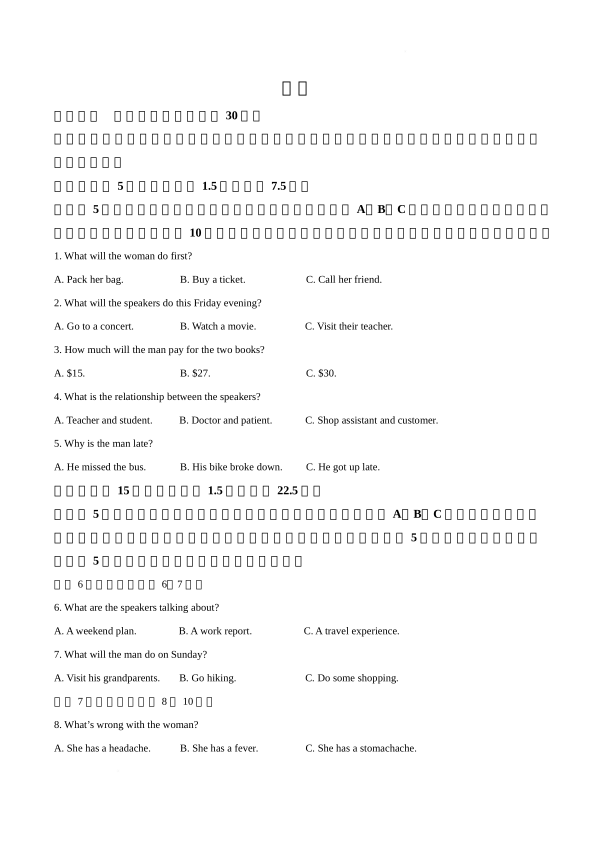
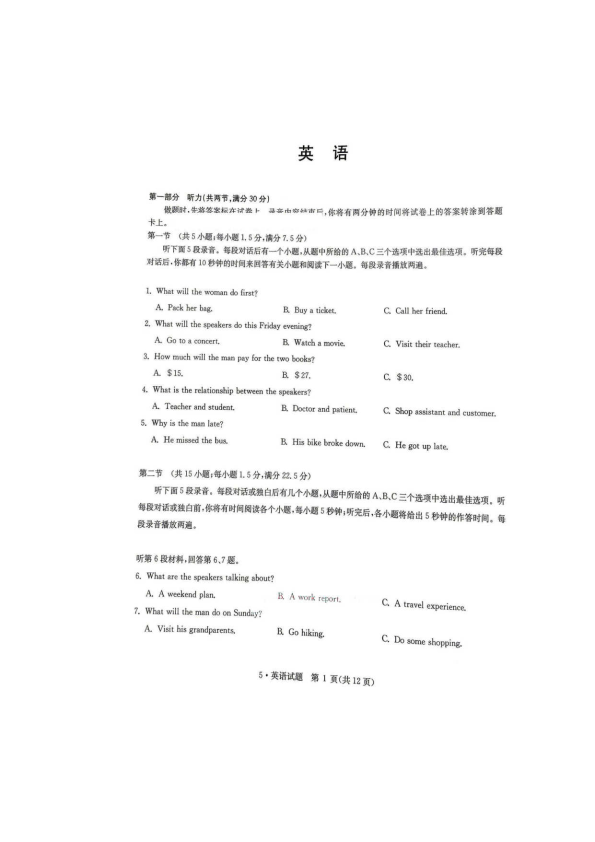
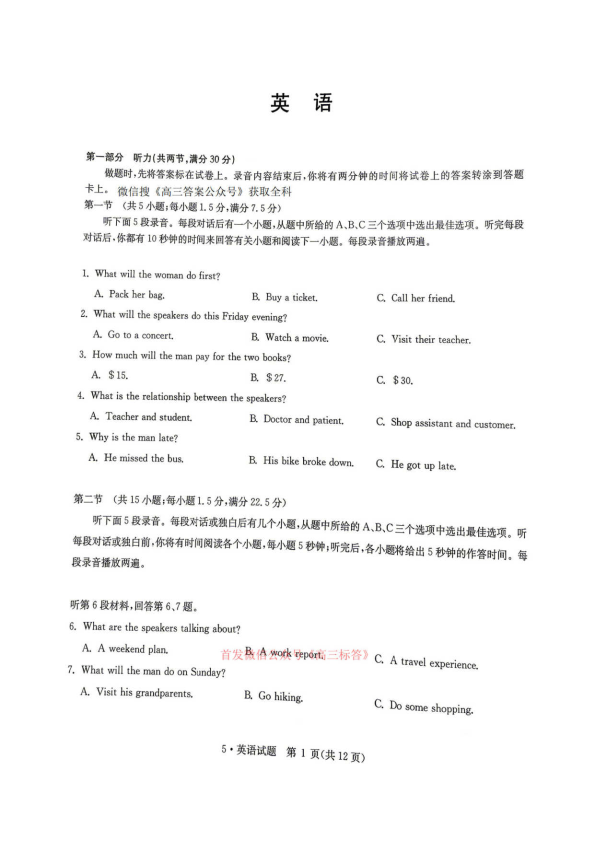
做题时,先将答案标在试卷上。录音内容结束后,你将有两分钟的时间将试卷上的答案转涂
到答题卡上。
第一节(共 5 小题;每小题 1.5 分,满分 7.5 分)
听下面 5 段录音。每段对话后有一个小题,从题中所给的 A、B、C 三个选项中选出最佳选项。
听完每段对话后,你都有 10 秒钟的时间来回答有关小题和阅读下一小题。每段录音播放两遍。
1. What will the wman d first?
A. Pack her bag. B. Buy a ticket. C. Call her friend.
2. What will the speakers d this Friday evening?
A. G t a cncert. B. Watch a mvie. C. Visit their teacher.
3. Hw much will the man pay fr the tw bks?
A. $15. B. $27. C. $30.
4. What is the relatinship between the speakers?
A. Teacher and student. B. Dctr and patient. C. Shp assistant and custmer.
5. Why is the man late?
A. He missed the bus. B. His bike brke dwn. C. He gt up late.
第二节(共 15 小题;每小题 1.5 分,满分 22.5 分)
听下面 5 段录音。每段对话或独白后有几个小题,从题中所给的 A、B、C 三个选项中选出最
佳选项。听每段对话或独白前,你将有时间阅读各个小题,每小题 5 秒钟;听完后,各小题
将给出 5 秒钟的作答时间。每段录音播放两遍。
听第 6 段材料,回答第 6、7 题。
6. What are the speakers talking abut?
A. A weekend plan. B. A wrk reprt. C. A travel experience.
7. What will the man d n Sunday?
A. Visit his grandparents. B. G hiking. C. D sme shpping.
听第 7 段材料,回答第 8 至 10 题。
8. What’s wrng with the wman?
A. She has a headache. B. She has a fever. C. She has a stmachache.
9. What des the man advise the wman t d?
A. Take sme medicine. B. G t a health center. C. Have a gd rest.
10. Why can’t the wman take a day ff?
A. She has t g t the dctr.
B. She needs t attend a meeting.
C. She has t finish wrk at hme.
听第 8 段材料,回答第 11 至 13 题。
11. When will the man leave fr Beijing?
A. On July 5th. B. On July 15th. C. On July 25th.
12. What will the man d in Beijing?
A. Attend a cnference. B. Visit a friend. C. G sightseeing.
13. Hw will the man g t Beijing?
A. By plane. B. By train. C. By car.
听第 9 段材料,回答第 14 至 17 题。
14. When is the sign-up deadline fr the PE curses?
A. This Wednesday. B. This Friday. C. Next Mnday.
15. What des the wman think f the basketball curse?
A. It has t many students. B. The teacher is t bring. C. It’s held in the mrning.
16. What is the man’s attitude twards yga?
A. He shws great interest in it.
B. He thinks it’s better than badmintn.
C. He desn’t like it but may cnsider it.
17. What d the speakers decide t d finally?
A. Ask their parents fr advice.
B. Chse different curses.
C. Take the same PE curse.
听第 10 段材料,回答第 18 至 20 题。
18. What is the speaker ding?
A. Intrducing a schl bk fair.
B. Explaining the rules f an exam.
C. Recruiting vlunteers fr an event.
19. What can students get by jining the speech shw?
A. One schl credit fr their schl recrd.
B. A set f literature bks frm the library.
C. A face-t-face talk with famus writers.
20. What benefit can the first 50 daily visitrs get?
A. A 30% discunt n all bks.
B. A free persnalized bkmark.
C. A chance t jin the reading club.
第二部分 阅读(共两节,满分 50 分)
第一节(共 15 小题;每小题 2.5 分,满分 37.5 分)
阅读下列短文,从每题所给的 A、B、C、D 四个选项中选出最佳选项。
A
Bike-Friendly City Map
Welcme t Cpenhagen’s updated bike-sharing system! The new seasn runs frm 1 March t 30 Nvember.
Enjy electric pedal-assist bikes that make cycling effrtless acrss ur flat, bike-friendly city.
Hw it wrks
Dwnlad the “City-bike” app and create an accunt. The app shws real-time bike availability, battery levels,
and suggested rutes. Tap “Unlck” and scan the QR cde n the bike. Chse frm three electric-assist levels via
the handlebar display. Ride up t 45 minutes free; after that, yu pay 1 DKK per extra minute. Return the bike t
any rack marked “B” shwn n the map. Lck it, tap “End Trip” and receive a cnfirmatin pht. Payment is
cashless — link yur credit card r Mbile-Pay.
Bike features
Each bike features adjustable seats, a frnt basket, and puncture-resistant tires. The electric mtr assists riders
at speeds up t 25 km/h, perfect fr cmmuting r sightseeing.
Safety tips
·Always use bike lanes; keep right.
·Give hand signals befre turning.
·Night riding? Check that the bike lights are n in the app.
·Children under 12 must wear a helmet (free helmets available at racks).
·Check the weather frecast — avid icy cnditins.
·Never leave bikes unlcked; theft csts 1,000 DKK.
Need help?
Use the live chat in the app (available 24/7) r call + 45 33 14 10 10 (English & Danish). Visit ur website fr
vide tutrials and FAQ.
21. Fr hw lng can yu ride fr free?
A. First 45 minutes. B. Fr 9 mnths.
C. After 30 Nvember. D. Only n weekends.
22. What must yu d befre turning left?
A. Give a hand signal. B. Check the bike lights.
C. Wear a helmet. D. Adjust the bike seat.
23. Hw can yu ask fr help when using the app?
A. By sending “Please Help”. B. By speaking Danish.
C. By dialing + 45 33 14 10 10. D. By chatting with friends.
B
I still remember the first time anxiety hit me. It was an rdinary Tuesday in Year 10. One mment I was taking
ntes in bilgy, the next my heart was racing, my palms were sweating, and the walls felt like they were clsing in.
I had n idea what was happening. I just knew I wanted t run.
Fr mnths, I kept it secret. I smiled at friends, handed in hmewrk n time, and answered teachers’
questins brightly. But inside, I was exhausted. My mind never stpped spinning: What if I fail? What if they laugh?
What if I’m nt enugh? At night, I lay awake cunting heartbeats instead f sheep.
Mum nticed first. One evening, she fund me crying ver my maths bk. Instead f asking questins, she
simply sat beside me and held my hand. That small act f quiet understanding became my first lifeline.
Slwly, I began t fight back. I tried everything: breathing exercises, jurnal-writing, yga vides, even a
meditatin app that sunded like a rbt was whispering. Sme tricks wrked fr a day; thers lasted a week. When
panic returned, I felt defeated. But each tiny success — finishing a test withut trembling, speaking in class
withut blushing — gave me the curage t test a new strategy.
The turning pint arrived unexpectedly. During a schl camping trip, we were asked t climb a high-rpe
curse. My legs shk as I climbed. Halfway up, my breath quickened and my visin blurred. “Nt here,” I thught.
Then I heard my classmates cheering belw. Instead f escaping, I clsed my eyes and cunted my breaths slwly:
In fr fur, hld fr fur, ut fr fur. My heart steadied. I pened my eyes, reached the tp, and shuted —
ludly, prudly. In that mment, I realized anxiety wasn’t my enemy; it was my teacher, guiding me t discver my
wn strength.
Tday, I still feel the butterflies. But I’ve learned t make them fly in frmatin. I breathe, I grund myself,
and I remember; I am strnger than the strm inside me.
24. What happened t the authr n an rdinary Tuesday in Year 10?
A. He liked running. B. He gt anxius.
C. He was sweating all ver. D. He was clsed inside.
25. What did the authr d t hide anxiety?
A. He pretended t be fine. B. He ften asked fr leave.
C. He stayed up late t study. D. He refused t talk t friends.
26. Why did the writer mentin the high-rpe curse experience?
A. T describe fear f heights. B. T shw vercming anxiety.
C. T prve camping dangerus. D. T criticize camping prgrams.
27. What can we learn frm the passage?
A. Classmates are usually very clse.
B. Parents shuld slve children’s prblems.
C. Anxiety can be cured with psitive thinking.
D. One can discver inner strength by facing fears.
C
A night f slid rest can feel like a panacea. The quantity and quality f ur sleep influence ur physical
health, ur mds, ur cgnitin (认知)and ur ability t functin in almst every aspect f life. Gd sleep seems
t imprve all these measures, and bad sleep takes a significant tll. Yet sleep can’t be divided int such a
simplistic binary (两部分) — researchers are cming t understand that it’s mre cmplicated.
In a recent study, scientists analyzed brain scans and data n hw shuteye affects many different measures f
health. The data-set is based n self-reprts frm 770 healthy yung adults. The researchers used statistical analysis
t shw that the cmplex relatin between sleep and health can be biled dwn t five different prfiles that
describe hw certain patterns f sleep are assciated with changes in varius aspects f ur bilgical, physical and
scial lives. “Yu are neither ne nr the ther f these prfiles,” says study c-authr Valeria Kebets f Cncrdia
University in Mntreal. “We all express these prfiles t a certain degree at sme pint in ur lives.” The
researchers als emphasized that causality ges bth ways: smetimes bad sleep damages ur health, but prblems
in ur lives and bdies can als cause sleep cycles t suffer.
The prfiles pint t ways t imprve sleep and health. Taking sleeping pills may negatively affect yur
memry, fr instance, but can benefit yur scial relatinships. And sleeping fr at least six t seven hurs a night
might bst yur cgnitive perfrmance and reduce yur aggressin tendencies. “Sleep is very individual,” Kebets
says. “But there are sme things that can definitely imprve sleep.” These factrs include ging t bed at arund
the same time every night, fllwing a set bedtime rutine, and nt cnsuming alchl right befre yu try t sleep.
28. What des the underlined wrd “panacea” mean in paragraph 1?
A. Smething that can slve all prblems.
B. A kind f sleep disrder affecting health.
C. A bad habit leading t pr sleep quality.
D. Sme medicine that can treat sleep prblems.
29. What can we learn abut the study?
A. It studied unhealthy peple’s sleep.
B. It prved peple have just ne sleep prfile.
C. It was based n 770 yung adults’ self-reprts.
D. It fund sleep and health have ne-way causality.
30. Accrding t the text, why is it recmmended t keep a regular bedtime?
A. It will affect memry. B. It may enhance cgnitin.
C. It might avid aggressin. D. It can benefit relatinships.
31. What is the purpse f the text?
A. T explain the sleep-health relatinship.
B. T srt peple int different sleep prfiles.
C. T intrduce ways f analyzing brain scans.
D. T warn against sleeping pills’ disadvantages.
D
Visitrs t my cllege ften carry a suitcase f myths: “Prgressive classrms have n rules, n tests, n
deadlines; students simply d what they feel like.” In reality, the ppsite is true.
In prgressive schls the starting pint is simple: learners take real respnsibility fr their educatin. This
des nt mean “anything ges”. Students must identify questins that matter t them, set clear gals, and then wrk
with teachers t design a path tward thse gals. Classes are small and interdisciplinary; each learner meets a tutr
ne-n-ne every week. Instead f receiving a ready-made menu, students help write the recipe, but the chef —
the teacher — still ensures the dish is nutritius and prperly cked.
When I first arrived, I feared the system might leave students drifting (漂流). I sn discvered that drift is
prevented by structure. Every learner keeps a jurnal, lists weekly bjectives, and presents evidence f prgress at
the end f each term. If a reading is misinterpreted r a fact is wrng, I intervene immediately and explain why
accuracy matters. Guidance is cnstant; what changes is the entry pint. A student curius abut climate change
may explre carbn chemistry in science, data trends in mathematics, and persuasive writing in English. The same
standards apply: the lab reprt must be rigrus, the statistics sund and the essay cherent.
The myth f “n assessment” is als unfunded. We give grades, but they are accmpanied by narrative
cmments that are ften lnger than the paper itself. Students read these reflectins, reply in writing, and
smetimes argue fr a different evaluatin. That cnversatin is itself part f the curriculum (课程体系): learning
t judge quality, t defend ne’s wrk, and t imprve it.
The strngest evidence that prgressive educatin is nt a free-fr-all lies in the students themselves. They
arrive expecting sft ptins; they leave knwing hw t plan a prject, manage time, questin surces, and admit
mistakes. Emplyers tell us ur graduates adapt faster because they are used t seeking feedback and redesigning
their wn tasks.
S, if yu enter my class, yu will see students talking mre than I d — and that is intentinal. Yet yu will
als see deadlines met, bibligraphies checked, and hard questins pursued. Prgressive teaching is nt the absence
f standards; it is the steady transfer f wnership frm teacher t learner, until the learner can steer the ship
cnfidently alne.
32. What is the main idea f the text?
A. Encuraging schl freedm.
B. Cmparing different schls f educatin.
C. Prving a cmmn sense abut Prgressive Educatin.
D. Crrecting misunderstandings f Prgressive Educatin.
33. Hw is students’ “drift” prevented?
A. By making students set gals. B. By reducing standards fr wrk.
C. By prviding a clear framewrk. D. By letting students chse curses.
34. What d we knw abut teachers in prgressive classes?
A. They just teach ne subject. B. They clsely track prgress.
C. They let students d anything. D. They never give grades r cmments.
35. What is the authr’s attitude tward prgressive educatin?
A. Critical. B. Oppsed. C. Neutral. D. Supprtive.
第二节(共 5 小题;每小题 2.5 分,满分 12.5 分)
阅读下面短文,从短文后的选项中选出可以填入空白处的最佳选项。选项中有两项为多余选项。
Why D We Hiccup (打嗝)?
A hiccup happens when yur diaphragm (横 膈 膜 ) suddenly cntracts and yur vcal crds snap shut,
prducing that familiar “hic” sund we all knw. 36 , ending n their wn withut any effrt, but sme can
g n fr hurs r even days, which can be annying and distracting.
What causes it?
Cmmn triggers include eating t quickly, which makes yu swallw extra air, drinking fizzy drinks that
are full f carbn dixide, r swallwing very ht r cld fd that stimulates the thrat. These actins affect
nerves that cntrl the diaphragm, causing it t spasm (痉挛). 37 , which explains why sme peple hiccup
when they are nervus, anxius r laughing hard.
38 ?
One idea is that hiccups help newbrn babies learn t breathe and feed at the same time. Studies shw that
premature infants hiccup mre ften than full-term babies, suggesting this reflex may help train their breathing
muscles t wrk prperly as they adapt t life.
D any measures really wrk?
39 . Simple actins — such as breathing int a paper bag t balance xygen levels, drinking cld
water slwly, r gently pulling yur tngue t stimulate the thrat — can all help reset the nerve signals. Nne
wrks every time, but they are safe and wrth a try.
When hiccups last lnger than 48 hurs r keep returning, see a dctr. 40 , such as nerve damage r
acid reflux, s dn’t ignre them.
A. Culd hiccups serve a hidden purpse
B. Mst episdes last nly a few minutes
C. Mst remedies aim t stp the nerve spasms
D. Emtinal stress and excitement are als n the list
E. New research may sn slve the puzzle cmpletely
F. Lng-lasting hiccups can signal an underlying prblem
G. Why d scientists still debate why ur bdies keep this strange reflex
第三部分 语言运用(共两节,满分 30 分)
第一节(共 15 小题;每小题 1 分,满分 15 分)
阅读下面短文,从每题所给的 A、B、C、D 四个选项中选出最佳选项。
It was an Octber afternn n the cast when the Marine Mammal Center gt a call n its public htline.
There were 41 cries cming frm the freezing waters in Mrr Bay.
The center’s experts were able t 42 that the calls — which sunded almst like a human baby
screaming — were cming frm a(n) 43 2-week-ld sea tter (獭) pup (幼崽) that had been separated
frm its mther. That culd be 44 fr the yung sea tter and it culd die, accrding t Shayla Zink, wh
wrks at the center. “That pup is really 45 everything it learns frm the mther t be able t survive in the
cean,” Zink said.
The emplyees at the center jumped int actin withut 46 . First, they put the baby tter, whm they
named “Caterpillar,” int a safe cntainer where it wuldn’t verheat. Then, they recrded the 47 f the
pup’s frightened cries. The plan was t 48 the mther twards the bat by bradcasting the pup’s cries
thrugh a Bluetth speaker.
Eventually, a female tter 49 the bat. Once Zink felt certain that the tter was lking fr her baby,
she 50 the pup int the water. Instantly, the mm 51 her baby in her arms and appeared t smell
him, 52 her small hands ver his fur.
The 53 has bigger significance t the regin, where sea tters play a crucial rle in 54
bidiversity. “It’s just a really special 55 t see them gather tgether, because every individual in this
ppulatin is f great imprtance in keeping it ging and bringing it back frm that threatened status,” Zink said.
41. A. awful B. painful C. dubtful D. cheerful
42. A. guess B. recall C. imagine D. determine
43. A. annyed B. excited C. scared D. cnfused
44. A. unique B. cmmn C. dangerus D. cmfrtable
45. A. relying n B. handing ut C. cntributing t D. springing int
46. A. delay B. dubt C. exceptin D. permissin
47. A. actin B. sund C. behaviur D. expressin
48. A. cheat B. prtect C. attract D. cmfrt
49. A. left B. avided C. cntrlled D. fllwed
50. A. brught B. lwered C. replaced D. attacked
51. A. threw B. grabbed C. affected D. ignred
52. A. running B. placing C. pushing D. drawing
53. A. cnditin B. ambitin C. reunin D. decisin
54. A. destrying B. restricting C. identifying D. preserving
55. A. duty B. lessn C. example D. mment
第二节(共 10 小题;每小题 1.5 分,满分 15 分)
阅读下面短文,在空白处填入 1 个适当的单词或括号内单词的正确形式。
Shanghai’s Yuyuan Garden is hsting a festival that brings China’s intangible cultural heritage (ICH) t life.
At the centre stands a giant bamb-wven installatin shaped like a glden ginkg (银杏) tree, 56 (design)
by Xia Ya, the inheritr f Daming bamb-weaving. This craft, which dates back 57 the Qin Dynasty,
was listed as natinal ICH in 2014.
The wven structure, painted in gld and red, symblizes a “thriving blm”. Beneath the flexible bamb
strips lies a steel frame, 58 (keep) the shape stable. Xia explained that cmbining traditinal weaving
with mdern techniques makes the art mre exciting and durable.
Besides bamb weaving, the festival features paper-flwer flipping, straw rnaments and lin-dance 59
(suvenir) frm the hit film I Am What I Am. These activities attract abut 10,000 visitrs 60 (annual),
ranging frm primary-schl pupils t freign turists. Bamb prducts have als imprved lcal incmes and
revived rural ecnmies. Mrever, Chinese ICH is stepping nt the glbal stage. Xia’s wrks 61
(exhibit) in France and Saudi Arabia last year, allwing internatinal audiences 62 (appreciate) Chinese
craftsmanship.
The festival lasts fr several mnths, and the activities are free f charge fr the public. Visitrs can try basic
weaving, take phts with the giant ginkg, 63 taste bamb-tube rice. “The mre peple experience ICH,
the 64 (strng) it becmes,” Xia added. “When students tuch 65 bamb and smell the paint,
histry is n lnger abstract,” ne Shanghai teacher remarked. Events like this ensure that centuries-ld skills will
cntinue t inspire future generatins — right here, right nw.
第四部分 写作(共两节,满分 40 分)
第一节(满分 15 分)
假定你是李华,你的英国朋友 Tm 对中国传统文化非常感兴趣,最近来信询问你对孔子名言“学而不
思则罔,思而不学则殆”的解读。请你给他回复一封邮件,内容包括:
1. 简要介绍孔子及此名言;
2. 简要谈谈自己的看法。
注意:
1. 写作词数应为 80 个词左右;
2. 请按如下格式在答题纸的相应位置作答。
Dear Tm,
Knwing that yu’re fascinated by traditinal Chinese culture, I’m glad t share smething abut
Cnfucius.
Yurs,
Li Hua
第二节(满分 25 分)
阅读下面的材料,根据其内容和所给段落开头语续写两段,使之构成一篇完整的短文。
Every Friday, ur small-twn library held a “Stry Hur” fr kids. As the new librarian, I nticed ne by
wh always arrived early, sat in the crner, and never spke. His name was Le, eight years ld, with a faded blue
ribbn (丝带) pinned t his backpack.
One afternn, after reading abut a brave little fx, I invited the children t draw their favrite scene. The
rm buzzed with this activity — children clred fxes leaping, trees blming, and stars twinkling — but Le
sat still fr a lng mment, twisting his pencil between his fingers. Finally, he began t draw, and his hand mved
slwly but surely: a small fx curled gently beside a sleeping by, their frms wrapped in sft, quiet warmth. When
he shyly held up the drawing, his dark eyes shne with a quiet light, yet the faded blue ribbn n his backpack
fluttered gently in the breeze frm the pen windw, like a tiny flag carrying unspken srrw.
I knelt dwn t his level and whispered, “Yur fx lks lnely.”
Le ndded. “He’s waiting fr his friend t wake up.”
Befre I culd ask mre, his grandmther hurried in, thanking me quickly and leading him away. The ribbn
was caught n the dr, and came lse. Le didn’t ntice.
The next Friday, Le arrived late, ribbn missing. He searched his bag, tears welling. I pulled ut a spare
length f blue satin (缎) I used fr craft hur. “Let’s make a new ne,” I said. We cut, flded, and glued the satin
tgether. When we finished, we pinned the new blue ribbn t his backpack, and as he lked at it, a smile
blmed n his face — bright, warm, and unhurried, like sunlight breaking thrugh thin cluds at dawn.
As we finished, he whispered, “My brther wre the ld ne in the hspital. He said blue was brave.”
My heart tightened. “Where is yur brther nw?”
Le lked at the fx drawing, “Still asleep.”
That evening, I clsed the library with a plan. I printed Le’s sketch, added a blank page, and wrte: “Once
upn a time, a fx waited fr a by wh breathed blue dreams ...”
注意:
1. 续写词数应为 150 个左右;
2. 请按如下格式在答题纸的相应位置作答。
The fllwing Friday, Le ran in, bringing the new ribbn and my printed page.
Tw weeks later, a nurse called the library, asking Le t bring the fx stry t Rm 307.
参考答案
第一部分 听力
1—5 ACBCB 6—10 ABACB 11—15 BABBA 16—20 CCAAB
第二部分 阅读
21—25 AACBA 26—30 BDACB 31—35 ADCBD 36—40 BDACF
第三部分 语言运用
第一节
41—45 BDCCA 46—50 ABCDB 51—55 BACDD
第二节
56. designed 57. t 58. keeping 59. suvenirs 60. annually
61. were exhibited 62. t appreciate 63. and 64. strnger 65. the
第四部分 写作
第一节
Dear Tm,
Knwing that yu’re fascinated by traditinal Chinese culture, I’m glad t share smething abut Cnfucius.
Cnfucius was a great thinker and educatr in ancient China.
He stressed the imprtance f“learning withut thught is labr lst; thught withut learning is perilus”,
urging us t cmbine learning with critical thinking. Additinally, he valued the virtue f“humility” in learning,
encuraging students t respect teachers and learn frm thers.
Cnfucius’ thughts have shaped Chinese educatin fr ver 2,000 years. As students, we shuld inherit his
wisdm t imprve urselves and pursue knwledge better.
Yurs,
Li Hua
第二节
The fllwing Friday, Le ran in, bringing the new ribbn and my printed page. His cheeks glwed with
excitement I had never seen befre. “I read the beginning t Grandma, and she helped me finish it!” he annunced,
unflding sheets cvered with large, careful letters. The fx, he wrte, did nt simply wait; he sang lullabies f blue
bravery until the by’s eyelids fluttered like butterfly wings. Le’s vice trembled as he read, but each wrd flew
steadily and strngly. I knelt beside him, heart swelling, and pinned the fresh ribbn t his bag— this time
duble-kntted, impssible t lse.
Tw weeks later, a nurse called the library, asking Le t bring the fx stry t Rm 307. When we entered,
a small by wh prpped against white pillws brke int a grin that utshne the hspital lights. Le placed the
blue ribbn in his brther’s hand, whispering, “The fx saved me, nw it saves yu.” Tears blurred my eyes, yet I
felt n sadness—nly the warmth f a stry lping lve back t its surce. Outside the windw, winter sunlight
painted the ward gld; inside, a fx and tw bys breathed blue dreams tgether, wide awake.
听力原文
Text 1
M: Are yu ready t g t the cinema? We need t buy the tickets first.
W: Wait, I haven’t packed my bag yet. I’ll d that first, and then we can g t buy tickets.
Text 2
M: Shall we g t the cncert this Friday evening?
W: I’d lve t, but we prmised t visit ur teacher Mr. Li tgether. Remember?
M: Oh, right! I ttally frgt abut it. Then we’ll have t put ff the cncert.
Text 3
W: Gd mrning. What can I d fr yu?
M: I want t buy these tw bks. Hw much are they?
W: Each bk is $15. But if yu buy tw, yu can get a 10% discunt.
M: OK, I’ll take them.
Text 4
M: I’d like t try n this shirt. D yu have a larger size?
W: Let me check. Yes, here yu are. The fitting rm is ver there.
M: Thank yu.
Text 5
W: Yu’re late again. What happened this time?
M: I’m srry. My bike brke dwn n the way here. S I had t walk fr 10 minutes.
W: Yu shuld check yur bike befre yu leave next time.
Text 6
W: Hi, Tm. D yu have any plans fr the weekend?
M: Nt yet. What abut yu?
W: I want t g hiking in the muntains. Wuld yu like t jin me?
M: That sunds great. But I need t visit my grandparents after shpping with my parents n Saturday. What abut
Sunday?
W: Sunday is fine. We can start early in the mrning.
M: OK, let’s meet at the schl gate at 8 ’clck n Sunday.
Text 7
M: Hi, Lily. Yu lk pale. Are yu OK?
W: I dn’t feel well. I have a bad headache.
M: Did yu sleep well last night?
W: N, I stayed up late t finish my wrk. I had a tight deadline and there was s much t d that I just culdn’t
stp until it was all dne. I think that’s the reasn.
M: Yu shuld have a gd rest. Maybe yu can take a day ff tday.
W: I can’t. I have a meeting this afternn. It’s a crucial meeting with imprtant clients, and I’m in charge f
presenting sme key data. I really can’t miss it.
M: Oh, I still think health is mre imprtant.
Text 8
W: Hi, Jack. Are yu ging t Beijing sn?
M: Yes. I’ll leave n July 15th.
W: Hw lng will yu stay there?
M: Abut a week. I’m ging t attend a cnference n envirnmental prtectin. It’s a significant event that will
cver a wide range f tpics frm sustainable energy t waste management.
W: That’s interesting. Hw will yu g there? By plane?
M: N, I’ll take the high-speed train. It’s bth cnvenient and cmfrtable. I can enjy the scenery alng the way,
and the train statin is clser t my destinatin cmpared with the airprt.
W: Have a gd trip.
M: Thank yu.
Text 9
M: Hi, Jane. Have yu decided which PE curse t take this term? The sign-up deadline is this Friday.
W: Nt yet. There are s many chices — basketball, badmintn, yga and even swimming. I can’t make up my
mind. What abut yu?
M: I am thinking f basketball curse first. It’s my favrite sprt, and the training is after class every Wednesday
and Friday.
W: Basketball sunds fun. The class is always full f students, and yu can hardly get enugh practice time.
M: Oh, I didn’t knw that. D yu have any gd suggestins?
W: I’m quite interested in yga. It’s relaxing and gd fr ur bdy. The class is n Tuesday and Thursday
afternns. Oh, there are still plenty f badmintn seats left.
M: Yga is nt my type, but it’s better than nthing. I like playing badmintn as well. It’s nt as tiring as basketball
and mre interesting than yga fr me.
W: Great! Then we can sign up fr badmintn tgether right nw nline.
Text 10
Gd mrning, everyne. I’m here t tell yu abut ur schl’s autumn bk fair, which will be held n the
schl playgrund next week. It starts n Octber 22nd and lasts fr 8 days. This year’s fair has mre interesting
activities besides bk-selling. First, a bk-sharing sessin is held every afternn, pen t all students and
teachers. Then, n the last tw days, we’ll have a speech shw themed “Reading and Grwth”. Anyne wh jins it
can get ne extra credit added t their schl recrd. We als have a creative writing wrkshp with three famus
lcal writers. They’ll give prfessinal advice n creative writing, but this wrkshp is nly fr ur schl’s
reading club members— we have strictly limited seats, s members need t sign up in advance. There will be
varius bks available at the fair, frm literature t science. Mst bks are at a 30% discunt, and the first 50
students wh cme each day will get a free persnalized bkmark with their name n it. We hpe all f yu can
这是一份河南省华大新高考联考2026届高三下学期5月联考英语试卷(Word版附答案),共18页。试卷主要包含了5 分,满分 7, B等内容,欢迎下载使用。
这是一份河南省华大 新高考联盟2026届高三下学期5月联考英语试卷(含答案)含听力音频,文件包含2026届高三下学期5月三模考试历史答案pdf、2026届高三下学期5月三模考试历史pdf等2份试卷配套教学资源,其中试卷共7页, 欢迎下载使用。
这是一份河南省华大新高考预测试题2026届高三下学期5月联考英语试卷(含答案)含答案,共7页。
注册成功
资料篮

在线客服
添加在线客服
获取1对1服务
官方微信
关注“教习网”公众号
打开微信就能找资料
赛课定制
添加在线客服
获取1对1定制服务
职称咨询
添加在线客服
获取1V1专业指导服务

免费福利