 免费领取教师福利
若您为此资料的原创作者,认为该资料内容侵犯了您的知识产权,请扫码添加我们的相关工作人员,我们尽可能的保护您的合法权益。


这是一份清单01 书面表达写作技巧&万能套用句式(抢分清单)2026年中考英语终极冲刺讲练测,共7页。试卷主要包含了 审体裁,审体裁后要明确什么?, 审时态, 谋篇布局, 比较法, 插入个人观点等内容,欢迎下载使用。
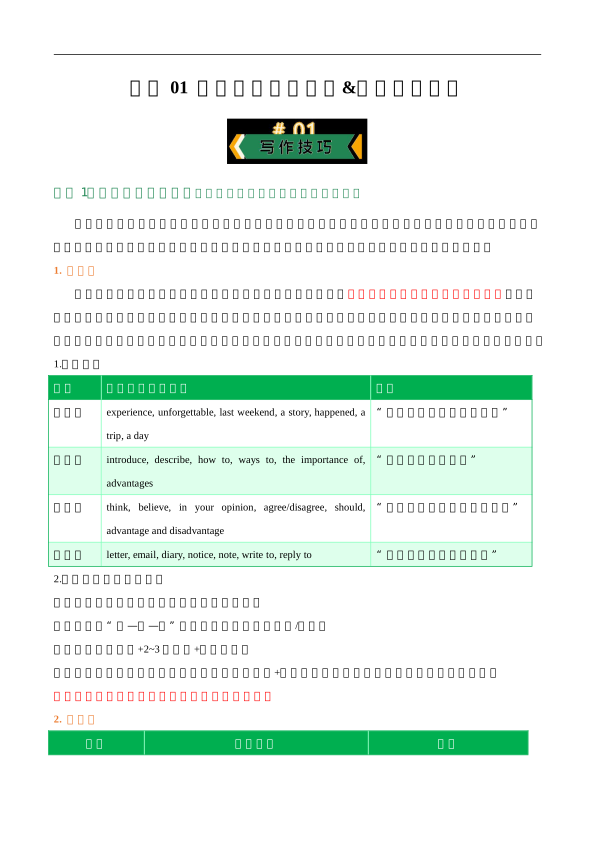
技巧1:审题谋篇四步法(审题材、审格式、审人称、审时态)
近几年,中考书面表达往往提供特定的写作情景,让考生在对应的语境中完成写作,因此审题尤为重要。同学们在看到题目后,先不要急于下笔,要根据所给题目、写作提示、写作要求等审清楚。
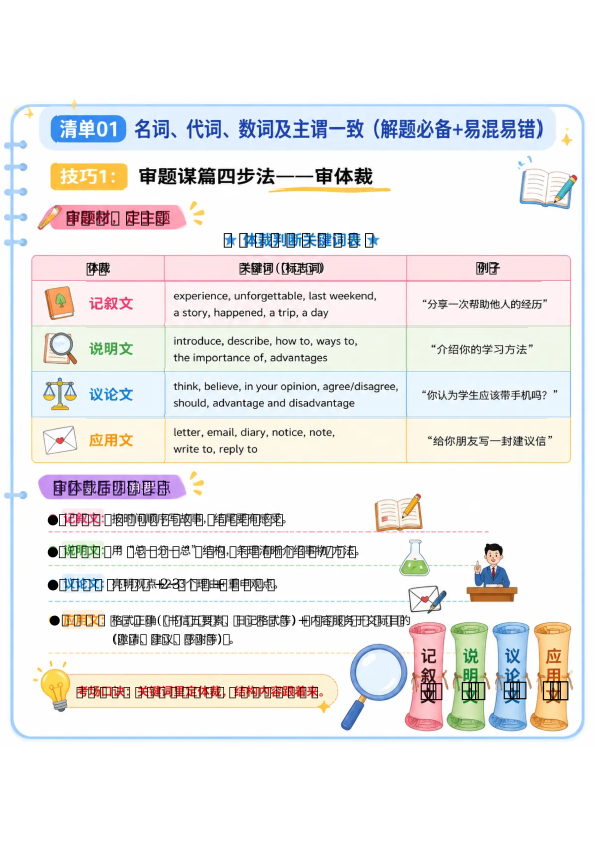
1. 审体裁
审题材,定主题。写作前,首先要弄清楚要写题材是什么(记叙文、说明文、议论文、应用文),然后再考虑语言、语气的使用。应用文的题材通常包括书信、通知、日记、报道、演讲稿等。无论是哪种题材,其风格和格式都是统一的固定的。所以在写之前,确定好题材,定好写作格式,才能更好地构思布局。
1.定主题:
2.审体裁后要明确什么?
记叙文:按时间顺序写故事,结尾要有感受。
说明文:用“总—分—总”结构,条理清晰介绍事物/方法。
议论文:亮明观点+2~3个理由+重申观点。
应用文:格式正确(书信五要素、日记格式等)+内容服务于交际目的(邀请、建议、感谢等)。
考场口诀:关键词里定体裁,结构内容跟着来。
审人称
考场口诀:你是I,他是he,对方始终是yu;通篇人称不改换。
3. 审时态
1.审时态的三步法
找时间词:题目中是否有明确的时间状语?
“上周六” → 一般过去时
“每天” → 一般现在时
“下周五” → 一般将来时
2.无时间词则根据内容判断:
介绍自己的爱好、介绍一个地方、提出建议 → 一般现在时
讲述一次难忘的经历 → 一般过去时
写假期计划、未来的梦想 → 一般将来时
3.检查是否需要时态混合:
合理混合:I was afraid f English befre, but nw I like it very much.(过去+现在)
错误混合:Yesterday I g t the z.(应改为 went)
考场口诀:看到yesterday用过去,ften always用现在,tmrrw将来时,时态统一别乱来。
4. 谋篇布局
谋篇布局:搭建“清晰的文章骨架”
审完体裁、人称、时态后,就要开始谋篇布局——也就是规划文章每段写什么、用什么连接词、如何开头和结尾。规划文章的结构,一般包括开头、主体和结尾。应用文的开头要引出话题或表明写作目的;主体详细阐述要点;结尾进行总结或提出希望、请求等。例如,写邀请信时,开头说明邀请的原因,主体介绍活动的时间、地点、内容等,结尾表达期待对方的回复或到来。
1. 通用结构:三段式
2.不同体裁的布局差异
记叙文:
开头:时间、人物、地点、起因
正文:按顺序写经过(First… Then… Finally…)
结尾:结果 + 感受(I felt prud / I learned that…)
说明文:
开头:总说介绍对象
正文:分2~3个方面,用 First, Secnd, What's mre 连接
结尾:(可选)总结或表达喜爱
议论文:
开头:亮明观点(In my pinin, …)
正文:理由1 + 例子/解释;理由2 + 例子/解释
结尾:重申观点(换种说法)
应用文:
书信开头:称呼 + 写信目的(I'm writing t invite yu t…)
中间:根据目的写具体内容(邀请信写时间、地点、活动;建议信写2~3条建议)
书信结尾:期待回复 + 结束语 + 签名
考场口诀:三段结构最稳当,开头结尾短而精,中间分条写具体,连接词儿把路引。
技巧2:如何引出话题
引出话题就是开头的第一、二句话。它决定了阅卷老师的第一印象,也直接关系到文章是否“切题”。一个好的开头要满足:快速入题、自然流畅、吸引注意。
1.对立法:先引出其他人的不同看法,然后提出自己的看法或者偏向于某一看法,适用于有争议性的主题。
(1)When asked abut..., the mst f peple say that … But I think / view a bit differently.
当被问及...的话题,大多数人认为,但是我却持有一点反对意见。
When it cmes t ..., sme peple believe that… Others argue that the ppsite is true. There is prbably sme truth in bth arguments / statements, but I tend t the frmer / latter.
一提到...一些人相信...然后另一部分人却不这么认为。这两种观点都有相对正确的地方,但我更倾向于前者(后者) 。
(3)Nw, it is cmmnly / generally / widely believed that... They believe that ... But I wnder / dubt whether... 现在,普遍的观点认为...他们坚信...但我对此却表示怀疑...
2.现象法:引出要剖析的现象或者问题,然后评论。
(1)Recently the rise in the prblem f ... has cause wrldwide cncern.
近来有个现象(问题)不断发生...并且已经受到公众广泛关注。
(2)Recently the issue f the prblem f ... has been brught int int public attentin.
最近关于...的现象(问题)已经进入了公众的视线。
3.观点法:开门见山,直截了当地提出自己对要讨论的问题的看法。
(1)Nw peple in grwing numbers are beginning t realize that... 现在越来越多的人已经开始意识到...
(2)Nw there is a grwing awareness f the necessity t... 越来越多人已经意识到...的必要性
(3) Nw peple becme aware f the imprtance f ... 现在人们已经不断地密切关注...的重要性
(4)Perhaps it is time t have a fresh lk at the idea that... 是时候应该用一种新的观点(态度)来看待...了
4. 引用法:先引出名人名言或者有代表性的看法,来引出文章要展开论述的观点!
(1) "Knwledge is pwer." This is the remark made by Bacn. This remark has been shared by mre and mre peple.
“知识就是力量。”这是培根的名言,正被越来越多的人分享。
(2)"Educatin is nt cmplete with graduatin." This is the pinin f a great American philspher. Nw mre and mre peple share his pinin.
“教育不应该随着毕业而结束。”这是一个著名的美国哲学家的观点,现在越来越多人分享着他的名言。
(3) "..." We ften hear wrds like this. 我们经常听到这句名言...
5. 比较法:通过对过去、现在两种不同的倾向、观点的比较,引出文章要讨论的观点。
(1) Fr years, been viewed as ... But peple are taking a fresh lk nw. With the grwing ..., peple ...多年来,普遍认为的观点是...但是现在人们正用一种新的眼光看。随着...的增长,人们还会...
(2)Peple used t think that ... (In the past, ...) But peple nw share this new idea. 过去人们认为...,但是现在人们有了新的观点。
一、记叙文:如何引出“一件事”
记叙文要求讲述一个过去的故事。开头要交代时间、人物、地点、起因中的关键要素,让读者立刻知道你在说什么事。
常用引出方法
二、说明文:如何引出“介绍对象或方法”
说明文目的是介绍人或物、说明方法。开头要直接点出你要介绍什么,然后概括其特点。
常用引出方法
三、议论文:如何引出“观点和讨论”
议论文需要先引出话题,然后亮明自己的观点。常见的引出方式有:陈述现象、引用观点、提出问题。
常用引出方法
四、应用文:如何引出“写信/邮件的目的”
应用文(主要是书信、邮件)的开头有固定套路:先寒暄(可选),然后立即说出写信目的。
书信/邮件开头公式
需要避免的“糟糕开头”
一、开头句
1. 记叙文(讲一件事)
Last Sunday, I went t the ld peple’s hme with my classmates.
上周日,我和同学们去了养老院。
I will never frget the day when I helped a lst child.
我永远不会忘记我帮助一个迷路孩子的那一天。
An unfrgettable experience happened when I was in Grade 7.
七年级时发生了一次难忘的经历。
It was a rainy day, and I was walking hme alne.那是一个下雨天,我一个人步行回家。
2. 说明文(介绍人或物 / 说明方法)
Let me intrduce my best friend, Li Ming.让我介绍一下我最好的朋友,李明。
Tday I wuld like t share sme ways t imprve English.今天我想分享一些提高英语的方法。
Reading is very imprtant in ur life.阅读在我们生活中非常重要。
D yu knw hw t stay healthy? Let me tell yu.你知道如何保持健康吗?让我来告诉你。
3. 议论文(提出观点 / 现象)
In my pinin, students shuld d husewrk.在我看来,学生应该做家务。
Sme peple think mbile phnes are bad fr study, while thers believe they are helpful. In my pinin, we shuld use them wisely.有些人认为手机对学习有害,而另一些人认为它们有帮助。在我看来,我们应该明智地使用它们。
Nwadays, mre and mre students feel stressed abut exams.如今,越来越多的学生对考试感到压力。
D yu think it is gd t take after-schl classes? I dn’t think s.你认为上补习班好吗?我不这么认为。
4. 应用文(书信/邮件开头)
邀请:
I’m writing t invite yu t my birthday party.我写信是想邀请你参加我的生日聚会。
建议:
I’m srry t hear that yu have truble with English. Here are sme suggestins.听说你在英语方面有困难,我很难过。这里有一些建议。
感谢:
Thank yu s much fr yur help.非常感谢你的帮助。
道歉:
I’m writing t say srry fr being late.我为迟到写信道歉。
求助:
Culd yu please help me with my math?你能帮我学数学吗?
回复:
Thanks fr yur letter. Yu asked me abut my hbbies. Here is my answer.
谢谢你的来信。你问到了我的爱好。以下是我的回答
二、中间句
1. 列举要点
First f all, yu shuld listen t the teacher carefully. Secndly, take ntes in class. Finally, review them after schl.
首先,你应该认真听老师讲课。其次,在课堂上做笔记。最后,放学后复习。
T begin with, ding sprts keeps us healthy. What’s mre, it helps us relax. Last but nt least, we can make friends thrugh sprts.
首先,做运动使我们健康。更重要的是,它能帮助我们放松。最后但同样重要的是,我们可以通过运动交朋友。
On ne hand, studying hard is imprtant. On the ther hand, we als need enugh rest.
一方面,努力学习很重要。另一方面,我们也需要足够的休息。
2. 举例说明
Fr example, yu can g running r play basketball.例如,你可以去跑步或打篮球。
I like fruits, such as apples and bananas.我喜欢水果,比如苹果和香蕉。
Take my classmate Li Hua fr example. He gt gd grades by reading every day.以我的同学李华为例。他通过每天阅读取得了好成绩。
3. 给出建议
Yu shuld talk t yur parents abut yur prblems.你应该和你的父母谈谈你的问题。
It is a gd idea t make a study plan.制定学习计划是个好主意。
Why nt jin a club t meet new friends?为什么不加入一个俱乐部去结交新朋友呢?
I suggest that yu take a shrt break every hur.我建议你每小时休息一小会儿。
4. 表达原因或结果
I like reading. The reasn is that it pens my mind.我喜欢阅读。原因是它能开阔我的思维。
I get up early s that I can have time t read English.我早起,以便有时间读英语。
Because I was ill, I didn’t g t schl yesterday.因为我病了,昨天没去上学。
5. 表示转折或对比
I wanted t help, hwever, I was t nervus t speak.我想帮忙,然而我紧张得说不出话。
Althugh it was difficult, I didn’t give up.虽然很难,但我没有放弃。
Instead f watching TV, yu shuld d yur hmewrk first.你应该先做作业,而不是看电视。
6. 插入个人观点
I believe that everyne can learn English well with hard wrk.我相信通过努力每个人都能学好英语。
As far as I’m cncerned, friendship is mre imprtant than grades.就我而言,友谊比分数更重要。
结尾句
1. 记叙文结尾(感受 / 收获)
I felt prud because I culd help thers.我感到自豪,因为我能帮助别人。
What a meaningful experience!多么有意义的经历啊!
I learned that we shuld always be kind t thers.我明白了我们应该永远善待他人。
This experience taught me t face difficulties bravely.这次经历教会我勇敢面对困难。
2. 说明文结尾(总结 / 祝愿)
All in all, English is a useful and interesting subject.总而言之,英语是一门有用且有趣的学科。
That’s why I like reading s much.那就是我如此喜欢阅读的原因。
I hpe my advice is helpful t yu.我希望我的建议对你有帮助。
3. 议论文结尾(重申观点 / 呼吁)
In cnclusin, I strngly believe that students shuld exercise every day.总之,我坚信学生应该每天锻炼。
Therefre, it is necessary t reduce hmewrk lad.因此,减少作业负担是有必要的。
Let’s prtect the envirnment tgether!让我们一起保护环境!
4. 应用文结尾(书信/邮件常用)
一般书信
I’m lking frward t yur reply.期待你的回信。
邀请信
I hpe yu can cme. I’m lking frward t seeing yu.我希望你能来。期待见到你。
建议信
I hpe these suggestins can help yu. Wish yu gd luck.我希望这些建议能帮到你。祝你好运。
感谢信
Thank yu again fr yur help. I will never frget yur kindness.再次感谢你的帮助。我永远不会忘记你的善意。
5. 万能结尾句(几乎全适用)
In a wrd, we shuld try ur best t achieve ur gals.总之,我们应该尽最大努力实现目标。
I believe that tmrrw will be better.我相信明天会更好。
If we wrk tgether, we will make a difference.如果我们一起努力,我们会有所作为。
四、巧用连接词过渡
1) 次序关系:
first, first f all, t begin with, t start with, secnd, next, then, afterwards, finally, eventually, lastly, at last, last but nt least
2) 因果关系:
because, since, as, fr, due t, in view f, fr this reasn, fr the reasn that..., as a result, s, therefre, thus, hence, s that
3) 转折关系:
but, hwever, thugh, even thugh
4) 并列关系:
and, als, t, as well as, either, r,
5) 递进关系:
mrever, in this way, nt als..., , in additin (t), besides, n the ne hand..., n the ther hand..., in rder tt, meanwhile
6) 比较关系:
like, likewise, similarly, cmpared with, cmpared t, apart frm, rather than
7) 对照关系:
rather, , althugh, thugh, but, hwever,n the cntrary, different frm this
8) 举例关系:
like, such as, fr example, in particular, including, as fr, as t, accrding t
9) 强调关系:
in fact, especially, particularly, bviusly, what is mre imprtant, certainly, f curse, withut a dubt
10) 条件关系:
if, unless, lest, prvided that, if it is the case, in this sense, nce,if pssible, if necessary, if s
11) 归纳总结:
therefre, in shrt, in brief, in ther wrds, n the whle, in sum, t sum up, in cnclusin, in summary, t cnclude, the cnclusin can be drawn that..., fr this reasn
五、高分句型
1.It's imprtant (necessary) fr sb.+t d sth.做某事对某人来说……
2.It's n use/n gd ding sth .做某事没有用处/没有好处。
3.There is n need t d sth.没必要做某事。
4.There is n pint in ding sth.做某事毫无意义
5.What abut + ding sth? Hw abut + ding sth? ……怎么样?
6.The reasn why + (表示结果句子) is that + (表示原因句子) ……的原因是……
7.That is why + (表示结果句子) 那就是……的原因。
8.That is because + (表示原因句子) 那是因为……
9.It is said/reprted that + (事件陈述句子) 据说/据报道……
10.There is n dubt that + (事件陈述句子) 毫无疑问……
11.It ges withut saying that + (事件陈述句子) 不言而喻/毫无疑问……
12.As is knwn t all, + (事件陈述句子) 众所周知,……
13.It is generally/publicly knwn/cnsidered that… 众所周知……
14.As we all knw, + (事件陈述句子) 据我们所知,……
15.It's time t d sth./It's time fr sth.是该做某事的时候了。
16.It's better/best t d sth.最好做某事。
17.It takes sb.sme time t d sth.某人花多少时间做某事。
mny.某物花了某人多少钱。
sme time/mney(in)ding sth.某人花多少时间/金钱。
sme mney fr sth.某人为某物付了多少钱。
21.Amng varius kinds f …, + (陈述句子)
= Of all the …, + (陈述句子) 在各种……之中,……
22.In my pinin, + (观点陈述句子)
= As far as I am cncerned, + (观点陈述句子) 就我的看法……;我认为……
With the increase/grwth f the ppulatin, + (问题陈述句子) 随着人口的增加……
With the develpment f science and technlgy, + (问题陈述句子) 随着科技的进步……
六、常用100句谚语
1.Pride ges befre a fall.骄兵必败
2.Failure is the mther f success.失败是成功之母
3.Actins/facts speaks luder than wrds.事实胜于雄辩
4.Well begun is half dne.好的开端是成功的一半
5.A gd beginning is a gd ending.善始善终
6.A gd is the best f friends.好书如挚友
7.Ask much, knw much.问得多,懂得多
8.A man becmes learned by asking questins.好问使人博学
9.All rads lead t Rme.条条大路通罗马
10.Knwledge is pwer ,time is mney.知识就是力量,时间就是金钱.
11.Better early than late, better late than never.早做胜于晚做,晚做胜于不做
12.Busiest man find mst time.最忙者时间最多
13.Easier said than dne.说起容易做起难.
14.Ding than saying.空谈不如实干.
15.Great hpes make great man.伟大的理想造就伟大的人.
※16. He laughs best wh laughs last.笑到最后笑得最好.
17.Gd helps thse wh help themselves.天助自助者
18.Hnesty is the best plicy.诚实为上.
19.It's never t late t learn.活到老学到老
20.It's n use crying ver spilled milk.不要为打翻的牛奶而哭泣
21.Lies have shrt legs.谎言站不住脚.
※22.Lk befre yu leap.三思而后行
23.Mre haste, less speed.欲速侧不达
※24.Never put ff till tmrrw what yu can d tday.今日事今日毕
25.Never d things by halves.凡事不能半途而废
26.N pains ,n gains.不劳无获
27.N man is brn wise/learned.人非生而知之者
28.Nthing venture, des nt make a summer.一燕不成夏
29. Nthing is difficult t the man wh will try.世上无难事,只怕有心人
30.Where there is a will ,there is a way.有志者事竟成
31.Rme was nt built in a day一罗马日建成./ 冰冻三尺非一日之寒
32.Seeing is believing.耳听为虚,眼见为实
33.Speech is silver ,silence is gld.雄辩是银,沉默是金。
34.Wrk while yu wrk, play while yu play.干像干,玩像玩.
35.All wrk and n play makes Jack a dull by.只干不玩聪明的孩子也变傻.
36.The mre ne learns , the mre he sees his ignrance.知识越多越觉得自己无知。
37.Time and tide wait fr n man.时光不等人。
38.Time lst cannt be wn again./Nbdy can call back yesterday.光阴一去不复返
39.Tw heads are better than ne.两人的智慧胜一人/三个臭皮匠合成一个诸葛亮
40.A life withut a friend is a life withut a sun. 人生没有朋友,犹如生活没有阳光
41.A friend is a secnd self.朋友是第二个自我
42.A gd medicine tastes bitter.良药苦口利于病,忠言逆耳利于行
43.A thusand mile trip begins with ne step.千里之行始于足下
44.A tree is knwn by its fruit .观其行而知其人
45.Actins speak luder than wrds.事实胜于雄辩
46.All are nt friends that speak us fair.说好话的不一定是朋友
47.All things are difficult befre they are easy.万事开头难
48.An apple a day keeps the dctr away.一天一苹果医生远离我
49.An hur in the mrning is wrth tw in the evening.一天之计在于晨
50.A bad wrkman always blames his tls.劣工咎器
51.Art is lng ,life is shrt.生有涯而知无涯
52.Beauty is truth, truth is beauty.美即是真真即是美
53.Better ask twice than lse yur way nce.问路两次胜过迷路一次
54.Bks and friends shuld be few but gd.册有图藏书,皆宜少而精
55.busiest men find the mst time.最忙的人时间最多
56.Care and diligence bring luck细心勤奋带来好运
57.Diligence is the mther f gd luck.幸运出自勤奋
58. Diligence is the mther f success 成功来自勤奋
59.D nthing by halves不要半途而废
60.Ding is better than saying空言无补
61.Discntent is the first step in prgress.不满足是进取的第一步
62. 有志者,事竟成。 Nthing is impssible t a willing heart./Where there is a will there is a way.
63. 千里之行,始于足下。 The lngest jurney begins with the first step.
64. 积少成多。Every little helps.
65. 伟业非一日之功/冰冻三尺非一日之寒。Rme was nt built in a day.
66. 一寸光阴一寸金,寸今难买寸光阴。 Lst years are wrse than lst dllars.
67. 自助者天助。 Gd helps thse wh help themselves.
68. 好的开端是成功的一半。Well begun is half dne.
69. 酒好不怕巷子深。Gd wine needs n bush.
70. 成功源于勤奋。Industry is the parent f success.
71. 英雄所见略同。Great minds think alike.
72. 熟能生巧。Practice makes perfect.
73. 集思广益。Tw heads are better than ne.
74. 必须相信自己,这是成功的秘诀。Yu have t believe in yurself. That's the secret f success.
75. 良药苦口。A gd medicine tastes bitter.
76. 知识就是力量。Knwledge is pwer.
77. 金钱不是万能的。Mney is nt everything.
78. 时不我待。Time and tide wait n man.
79. 世上无难事,只要肯登攀。Nthing is impssible t a willing heart.
80. 众人拾柴火焰高。Many hands make light wrk.
81. 没有付出,就没有收获。N pain, n gain.
82. 不进则退。Nt t advance is t g back.
83. 勇者无惧。N way is impssible t curage.
84. 眼见为实。Seeing is believing.
85. 一年之计在于春,一天之计在于晨。
Make yur whle year's plan in the spring and the whle day's plan in the mrning.
86. 早睡早起身体好。Early t bed, early t rise makes a man healthy, wealthy and wise.
87. 好处着想,坏处准备。Hpe fr the best, prepare fr the wrst.
88. 伟大的思想造就伟大的人。Great hpe makes great man.
89. 入乡随俗。When in Rme, d as the Rmans d.
90. 知识是珍宝,而实践是获取它的钥匙。Knwledge is a measure, but practice is the key t it.
91. 光阴一去不复返。Lst time is never fund again.
92. 塞翁失马,焉知非福。Behind bad luck cmes gd luck.
93. 我为人人,人人为我。All fr ne, ne fr all.
94. 谁笑到最后,谁笑得最美。He laughs best wh laughs last.
95. 走自己的路,让别人说去吧。Fllw yur wn curse, and let peple talk.
96. 三思而后行。Think twice befre acting.
97. 万事开头难。All thing are difficult befre they are easy.
98. 开卷有益。Reading is always prfitable.
99. 事实胜于雄辩。Actins speak luder that wrds.
100. 天生我才必有用。 Every man has his price.
体裁
关键词(标志词)
例子
记叙文
experience, unfrgettable, last weekend, a stry, happened, a trip, a day
“分享一次帮助他人的经历”
说明文
intrduce, describe, hw t, ways t, the imprtance f, advantages
“介绍你的学习方法”
议论文
think, believe, in yur pinin, agree/disagree, shuld, advantage and disadvantage
“你认为学生应该带手机吗?”
应用文
letter, email, diary, ntice, nte, write t, reply t
“给你朋友写一封建议信”
人称
使用场景
例句
第一人称 (I/we)
写自己的经历、观点、信件(你是写信人)
I went t the park with my parents.
第二人称 (yu)
写信给对方、提建议、发出邀请
Yu shuld take a break.
第三人称 (he/she/it/they)
介绍他人、描述客观事物
My sister is friendly. She ften helps thers.
时态
用法
标志词
一般现在时
经常性动作、事实、现状、喜好、建议
every day, always, ften, usually, smetimes, never
一般过去时
过去发生的具体事件、一次经历
yesterday, last week, in 2021, tw days ag, just nw
一般将来时
未来的计划、打算、预测
tmrrw, next week, in the future, sn, this weekend
开头
开门见山:交代背景、引出话题或表明写作目的
中间
核心内容:用2~3个要点展开,每个要点配支撑句
结尾
总结感受、提出希望或呼应开头
功能
连接词
并列/递进
and, als, besides, what's mre, in additin
顺序
first, secnd, then, next, finally, at last
转折
but, hwever, n the ther hand
因果
s, therefre, as a result
举例
fr example, such as, like
总结
in a wrd, all in all, in shrt
方法
公式
示例
直接交代时间事件
Last + 时间 + I + 过去动作
Last Sunday, I went t the ld peple's hme with my classmates.
用“一次经历”引出
An unfrgettable experience happened when…
An unfrgettable experience happened when I was in Grade 8.
设问式开头
Have yu ever + 过去分词 …?
Have yu ever helped a stranger? Let me tell yu my stry.
背景铺垫式
一句话描述常态,然后转折
I used t be afraid f speaking English. But ne day, everything changed.
方法
公式
示例
直接介绍
Let me intrduce / tell yu abut…
Let me intrduce my best friend, Li Ming.
用重要性引出
… is very imprtant / interesting. Here are sme reasns / ways.
Reading is very imprtant in ur life. Here are sme tips t imprve yur reading.
设问引出
D yu knw hw t …? / What is yur favrite …?
D yu knw hw t learn English well? Let me share my ways.
从普遍现象引出
Many peple / students … Tday I'd like t talk abut…
Many students feel stressed befre exams. Tday I'd like t talk abut hw t relax.
方法
公式
示例
陈述现象式
Nwadays / Recently, mre and mre peple …
Nwadays, mre and mre students wn mbile phnes. Is it gd r bad?
提出争议式
Sme peple think … while thers believe …
Sme peple think students shuld wear schl unifrms every day, while thers disagree. In my pinin, …
直接亮观点式
In my pinin, … / I believe that …
In my pinin, ding husewrk is necessary fr students.
设问式
D yu think …? / What's yur pinin n …?
D yu think it's a gd idea t take after-schl classes? I dn't think s.
写信目的
引出话题的句型
邀请信
I'm writing t invite yu t …
Wuld yu like t cme t …?
建议信
I'm srry t hear that yu have truble … Here are sme suggestins.
I've learned that yu … Dn't wrry. Let me give yu sme advice.
感谢信
I'm writing t thank yu fr …
Thank yu s much fr …
道歉信
I'm writing t say srry fr …
I'm srry that I …
求助信
I'm writing t ask fr yur help.
Culd yu please help me …?
回复邮件
Thanks fr yur letter. Yu asked me abut … Here is my answer.
错误类型
错误示例
问题所在
废话太多
Hell, everyne. Tday I want t tell yu smething. Yu knw, in ur daily life, many things happen…
说了三句还没进入主题
盲目背模板
As the prverb ges, “Time is mney.” (题目要求写如何帮助同学)
引言与话题无关
抄袭题目
直接把题目抄一遍作为开头
显得没有自己的表达
人称混乱
We think yu shuld… (开头就出现人称矛盾)
读者不知道“我们”是谁
这是一份清单01 书面表达写作技巧&万能套用句式(抢分清单)2026年中考英语终极冲刺讲练测,共7页。试卷主要包含了 审体裁,审体裁后要明确什么?, 审时态, 谋篇布局, 比较法, 插入个人观点等内容,欢迎下载使用。
这是一份清单01 书面表达写作技巧&万能套用句式(抢分清单)2026年中考英语终极冲刺讲练测,共7页。试卷主要包含了 审体裁,审体裁后要明确什么?, 审时态, 谋篇布局, 比较法, 插入个人观点等内容,欢迎下载使用。
这是一份清单01 书面表达写作技巧&万能套用句式(抢分清单)2026年中考英语终极冲刺讲练测,共16页。试卷主要包含了 审体裁,审体裁后要明确什么?, 审时态, 谋篇布局, 比较法, 插入个人观点等内容,欢迎下载使用。
注册成功
资料篮

在线客服
添加在线客服
获取1对1服务
官方微信
关注“教习网”公众号
打开微信就能找资料
赛课定制
添加在线客服
获取1对1定制服务
职称咨询
添加在线客服
获取1V1专业指导服务

免费福利

.png)
.png)
.png)
