 免费领取教师福利


若您为此资料的原创作者,认为该资料内容侵犯了您的知识产权,请扫码添加我们的相关工作人员,我们尽可能的保护您的合法权益。


这是一份清单05 中考易混单词辨析和高频词汇思维导图精讲(抢分知识清单)2026年中考英语终极冲刺讲练测+解析版,共7页。
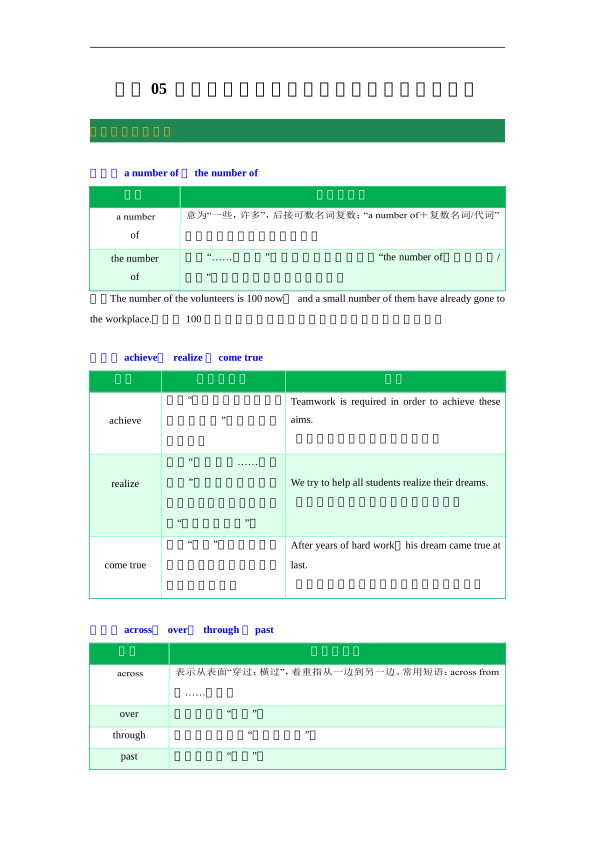
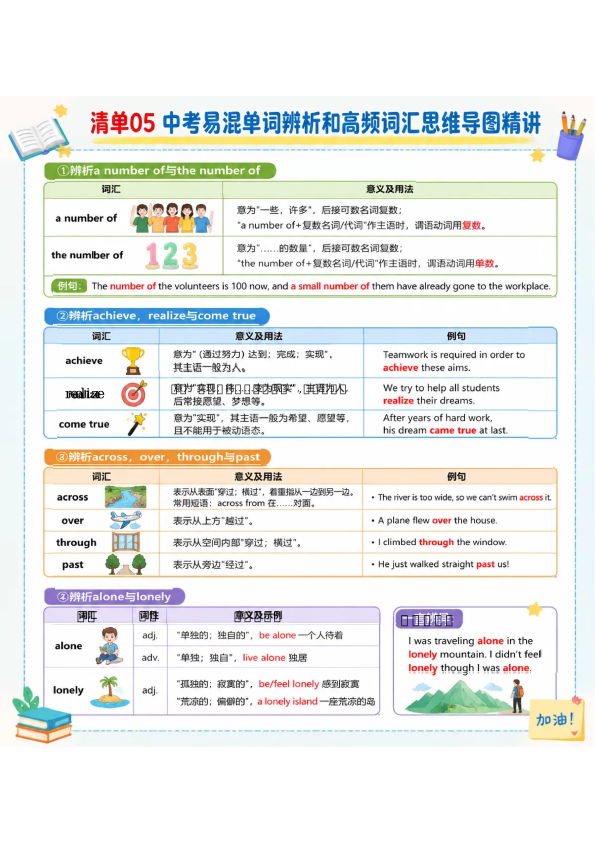
①辨析a number f与the number f
如:The number f the vlunteers is 100 nw, and a small number f them have already gne t the wrkplace.现在有100名志愿者,其中一小部分志愿者已经去了工作场所。
②辨析achieve, realize与cme true
③辨析acrss, ver, thrugh与past
如:
①The river is t wide, s we can’t swim acrss it.这条河太宽了,我们游不过去。
②A plane flew ver the huse. 一架飞机从房子上空飞过。
③I climbed thrugh the windw. 我从窗口爬了出来。
④He just walked straight past us!他与我们擦肩而过!
④辨析alne与lnely
【一言辨异】I was traveling alne in the lnely muntain.I didn’t feel lnely thugh I was alne.我独自走在荒凉的山中。虽孤身一人,但我并不感到寂寞。
⑤辨析anther, ther, the ther, thers与the thers
⑥辨析between与amng
如:
①The paper had fallen dwn between the desk and the wall.
那张纸掉在了桌子和墙壁之间的缝隙里。
②They walked amng the crwds. 他们走在人群中。
⑦辨析brrw,lend与keep
⑧辨析buy, sell与sale
如:
①Mney can’t buy yu happiness. 金钱不能为你买到幸福。
②We sell a lt f these t peple like yu. 我们把许多这种东西卖给您这样的人。
③Tickets are n sale this week. 本周票降价出售。
⑨辨析与
⑩辨析deal with与d with
⑪辨析discver, invent与create
如:
①Only later did she discver a talent fr writing.她后来才发现自己的写作天分。
②Wh invented the telephne? 谁发明了电话机?
③Scientists disagree abut hw the universe was created.
科学家对宇宙是怎样形成的意见不一。
⑫辨析divide与separate
如:
①A year is divided int fur seasns. 一年分为四个季节。
②The tw cities are separated by a river. 这两座城市被一条河隔开了。
⑬辨析either, als, t与as well
这四个词(组)都有“也”的含义,但用法各不相同。
如:
①She hasn’t phned and she hasn’t written either. 她没来过电话,也没有写过信。
②The sfa can als be used as a bed. 这沙发还可当床用。
③She has a pet dg, t. 她也有一只宠物狗。
④Are they cming as well?他们也来吗?
⑭辨析except, besides, but与except fr
如:
①I like all sprts except ftball. 除足球外,我喜欢所有的运动。
②We have lts f things in cmmn besides music. 除了音乐,我们还有很多共同点。
③There is nthing we can d but wait. 除了等待,我们别无他法。
④Except fr traffic nise the night passed peacefully. 除了交通噪音,那夜安宁地过去了。
⑮辨析expect, hpe, wish与lk frward t
⑯辨析, be filled with与be full f
⑰辨析find, find ut, lk fr与lk up
词汇
意义及用法
a number
f
意为“一些,许多”,后接可数名词复数;“a number f+复数名词/代词”作主语时,谓语动词用复数。
the number
f
意为“……的数量”,后接可数名词复数;“the number f+复数名词/代词”作主语时,谓语动词用单数。
词汇
意义及用法
例句
achieve
意为“(通过努力)达到;完成;实现”,其主语一般为人。
Teamwrk is required in rder t achieve these aims.
要达到这些目标需要齐心协力。
realize
意为“实现;将……变为现实”,主语为人,后常接愿望、梦想等。也可表示“理解;意识到”。
We try t help all students realize their dreams.
我们试图帮助所有的学生实现梦想。
cme true
意为“实现”,其主语一般为希望、愿望等,且不能用于被动语态。
After years f hard wrk, his dream came true at last.
多年的努力之后,他的梦想最终实现了。
词汇
意义及用法
acrss
表示从表面“穿过;横过”,着重指从一边到另一边。常用短语:acrss frm 在……对面。
ver
表示从上方“越过”。
thrugh
表示从空间内部“穿过;横过”。
past
表示从旁边“经过”。
词汇
词性
意义及示例
alne
adj.
“单独的;独自的”,be alne 一个人待着
adv.
“单独;独自”, live alne独居
lnely
adj.
“孤独的;寂寞的”,be/feel lnely 感到寂寞
“荒凉的;偏僻的”,
a lnely island 一座荒凉的岛
词汇
意义及用法
anther
泛指“三者或三者以上中的另一个”。
ther
“另外的;其他的”。常与可数名词复数或不可数名词连用。each ther=ne anther,意为“彼此;互相”。
the ther
指两者中的“另一个”。常构成“ne..., the ther...”结构。
thers
泛指别的人或物;常构成“sme..., thers...”结构表示对比,意为“一些……,另一些……”。
the thers
特指其余的人或物(指其余全部)。
词汇
意义及用法
注意
between
表示“两者之间”,可以和and搭配。表示“在……和……之间”。
在强调三者或三者以上的每两者之间的作用、区别、联系时,用between而不用amng。
amng
表示“在三者或三者以上的人或物中”。
词汇
意义及用法
brrw
意为“借;借入”,常用于brrw sth. frm sb./sp.结构中,表示向某人/从某处借某物。
lend
意为“借出”,常用于lend sb. sth.或lend sth. t sb.结构中,表示把某物借给某人。
keep
意为“保留”,是延续性动词,表示“借一段时间”,常用于“keep sth. fr+一段时间”结构中。
词汇
意义及用法
buy
动词,意为“买”。buy sb. sth.或buy sth. fr sb.,“给某人买某物”;buy sth. frm sp. “从某处买某物”
sell
动词,意为“卖;出售”。sell sb. sth.或sell sth. t sb.,“把某物卖给某人”;sth. sell(s) well,“某物畅销”;sell ut 卖完;售完
sale
名词,意为“出售,销售”。n sale“出售,廉价出售”;fr sale“供出售,待售”
词组
意义及用法
cmpare...
with...
意为“把……和……作比较”,常表示同类相比、比较。
cmpare...
t...
意为“把……比作……”,常表示异类相比、比喻。另外,还可表示“把……与……比较”,此时可与互换。
词组
意义及用法
deal with
“处理;应对”,常与hw连用
d with
“处理;处置”,常与what连用
词汇
意义及用法
discver
意为“发现”,指发现本来已经存在,但人们还不知道的事物、真理或情况。
invent
意为“发明”,指通过研究和实验制作的具有全新功能的器物等。
create
意为“创作;创造”,指创造出原本不存在的东西,如艺术、理论、美食等。
词汇
意义及用法
divide
v.分开;分散。通过切、割等方法把一个整体分为几个部分;常与int连用。
separate
adj.单独的;分开的 v.分开;分离。把原来连在一起或靠近的人或物分离开来,常与frm连用。
词(组)
用法
either
位于否定句句末。
als
位于实义动词前,be动词、情态动词或助动词后。不用于句末。
t
一般位于肯定句句末。另外,其用于形容词或副词前,表示“太……”。
as well
位于肯定句句末,其前不用逗号隔开。
词汇
意义
用法
except
除……之外,
把……排除在外
强调被排除的部分不包括在内,except后的词是被排除的部分。
besides
除……之外(还有……)
强调被排除的部分也包括在内,besides后的词是包括在内的部分。
but
除……之外
but后的词是仅有或存在的内容,常与nbdy, nne, nthing, all, everything等词连用,有时可与except互换。
except fr
除……之外
主要用来谈论不同种类的东西,指对某种基本情况进行具体细节方面的修正。
词(组)
常见搭配
expect
①expect (sb.) t d sth. 期望(某人)做某事
②expect+that从句 期望……
hpe
①hpe t d sth. 希望做某事
②hpe+that从句 希望……
wish
①wish (sb.) t d sth. 希望(某人)做某事
②wish+从句(通常用虚拟语气) 希望……(一般表示难以实现的愿望)
③wish sb. sth. 祝愿某人……
lk frward t
lk frward t (ding) sth. 期待(做)某事
辨析
用法
动词短语,意为“用……把……填满”,强调动作,主语通常为人。
be filled with
的被动语态,也可作形容词短语,意为“充满”。
be full f
形容词短语,意为“充满”,侧重于状态。
词(组)
意义及用法
find
“找到,发现”,强调找的结果。
find ut
“查明”,强调经过一番努力查明情况或弄清事实真相。
lk fr
“寻找”,侧重寻找的过程,强调动作。
lk up
“查阅”,指在词典等资料中查找;还可译为“向上看”。
⑱辨析get, arrive与reach
如:
①I like t get t airprts in gd time. 我喜欢提前到机场。
②They didn’t reach the brder until after dark. 他们天黑以后才到达边境。
③She’ll arrive in New Yrk at nn. 她将在正午抵达纽约。
⑲辨析happen与take place
【注意】
①二者均有“发生”之意,都是不及物动词(词组),不能用于被动语态。
②二者表示的都是“瞬间”的意思,不能与表示时间段的状语连用。
⑳辨析have been t, have gne t与have been in
易错提醒:当have been t和have gne t后接某些地点副词,如here, there, hme等时,介词t应省略。
㉑辨析hear, listen与sund
㉒辨析hw lng, hw ften, hw sn与hw far
㉓辨析in frnt f与in the frnt f
㉔辨析include与including
㉕辨析instead与instead f
㉖辨析lie与lay
如:
①The cat was lying fast asleep by the fire. 猫卧在炉火旁睡得很熟。
②Dn’t lie t me! 别对我撒谎!
③The hens are nt laying well. 母鸡现在下蛋不多。
④She laid the bk dwn n the table. 她把书放在桌上。
㉗辨析jin, attend与take part in
㉘辨析lively, living, live与alive
【拓展】alive 还可译为“有生气的,有活力的”。
如:She seemed mre alive and lked frward t getting up in the mrning.
她似乎更有活力,并且期待着一早就起来。
㉙辨析pay, spend, take与cst
写作提分点拨:pay ff意为“成功;奏效;达到目的”,可用于表示辛苦的付出终有回报。
如:Our hard wrk paid ff. 我们的努力得到了回报。
㉚辨析please, pleased, pleasure与pleasant
如:
①The gd news pleased the whle family.这个好消息使全家人都很高兴。
②We’re nly t pleased t help. 我们非常愿意帮忙。
③It’s a pleasure t talk with yu. 很高兴和你谈话。
④The climate here is pleasant. 这里的气候很宜人。
㉛辨析prvide, give与ffer
注意:ffer还可译为“提供(东西或机会);供应”。
如:The Internet ffers special ways f cmmunicatin in ur daily life.
互联网为我们的日常生活提供了特殊的交流方式。
ffer作动词时,还可用于ffer t d sth.结构,表示“主动提议做某事”;作名词时,意为“主动提议;报价;减价;特价”
㉜辨析questin与prblem
㉝辨析raise与rise
㉞辨析receive与accept
【注意】表示“接见;接待”时,要用receive,而不用accept。
㉟辨析reply与answer
㊱辨析sleep, sleepy与asleep
如:
①Rs fell int a deep sleep. 罗斯睡着了,睡得很沉。
②He began t feel sleepy. 他开始觉得困了。
③He fell asleep n the sfa. 他在沙发上睡着了。
㊲辨析take, bring, carry与get
㊳辨析tell, say, speak与talk
㊴辨析t much, much t与t many
㊵辨析used t d sth., be/get used t (ding) sth.与be used t d sth.
㊶辨析vice, nise与sund
如:
①I culd hear vices in the next rm. 我能听到隔壁说话的声音。
②I was wken by the nise f a car starting up. 我被汽车的启动声吵醒了。
㊷辨析watch, lk, see与read
㊸辨析wear, dress, put n与 (be) in
㊹辨析win与beat
[注意]win与beat的反义词为lse,常用搭配为lse(sth.) t sb.
【拓展】beat作动词讲,还可译为“(使)规律作响;作节奏运动;快速搅拌;敲打”。
㊺a little/little/a few/few
㊻dead,die,death与dying
㊼turn n,turn ff,turn dwn与turn up
四者均为动词短语,当其后的宾语为名词时,名词放在介词前后均可;当其后的宾语为代词时,代词必须放在turn与介词的中间。其具体用法如下:
高频词汇思维导图精讲
词汇
词性
用法
get
不及物动词
get t + 地点
get + 副词(here/there/hme/...)
arrive
不及物动词
arrive in + 大地点(如city)
arrive at + 小地点(如village)
reach
及物动词
reach +地点
reach+副词(here/there/hme/...)
词(组)
用法
happen
意为“发生;碰巧”,一般用于偶然或者突发的事件
sth. happen(s) t sb.某人发生某事
sb. happen(s) t d sth.某人碰巧做某事
take place
意为“发生;出现;举行”,一般指有计划的安排
词汇
意义及用法
have been t
“曾经去过某地”,现在已经回来。常与just, ever, never连用,后可接表次数的副词。
have gne t
“到某地去了”,指谈论的对象现在不在说话现场,一般不用第一、二人称作主语。
have been in
“在某地待了多久”,常与表示时间的结构连用(since 1998/fr five weeks/...)。
词汇
词性及意义
用法/搭配
hear
既可作及物动词,又可作不及物动词,意为“听见”,强调听的结果
①hear sb. ding sth.
听到某人正在做某事
②hear sb. d sth.
听到某人做某事(全过程)
③hear f/abut 听说
④hear frm sb. 收到某人的来信
listen
不及物动词,意为“听”,强调听的动作
listen t听(音乐、广播等)
sund
感官动词,意为“听起来”,表示状态
①sund+adj. 听起来……
②sund like+n. 听起来像……
词组
用法
hw lng
表示“多长时间”,对时间段进行提问,答语通常是“fr+时间段”或“since+过去的具体时间点/时间段+ag/一般过去时态的从句”。另外,hw lng也可以对长度提问,表示“多长”。
hw ften
表示“多久一次”,对频率提问。
hw sn
表示“还要多久”,答语通常是“in+时间段”。
hw far
表示“多远”,对距离提问。
短语
意义及用法
例句
in frnt
f
指在某一物体外部的前面。
There is a tall tree in frnt f the classrm.
教室前面有一棵大树。
in the
frnt f
指在某一物体内部的前面。
The teacher is standing in the frnt f the classrm.
老师正站在教室的前面。
词汇
意义及用法
include
及物动词,意为“包含;包括”,在句中作谓语,后接名词,强调被包含者是整体的一部分。
including
介词,意为“包括……在内”,后跟名词、代词、动名词等,多用于举例,含有补充说明之意。
词汇
意义及用法
instead
副词,意为“代替;反而”,用于句首或句尾,表示前面的事没做,而做了后面的事。
instead f
介词短语,意为“代替;而不是”,后接名词、代词或动名词等。
原形
词性
意义
过去
式
过去
分词
现在
分词
lie
v.
躺;位于;平放
lay
lain
lying
v.
撒谎
lied
lied
lying
n.
谎言
/
/
/
lay
v.
下蛋;放置
laid
laid
laying
词汇
意义及用法
常见搭配
jin
“参加;加入”,侧重指加入某个党派、团体、组织等,并成为其中一员。也可接人作宾语。
jin the army/party(党派)/team/club...
jin sb. in (ding) sth.
attend
“出席”,指出席会议等,自己不一定起积极作用。
attend schl/a meeting...
take
part in
“参与”,表示参加会议或活动,且在其中发挥一定作用。
take part in a discussin/an activity/a fight/a celebratin...
词汇
意义及用法
lively
adj.“精力充沛的;生机勃勃的;活跃热情的;鲜艳的”,可修饰人或物。
living
adj. “活的,现存的”,强调“尚在人间”,修饰人或物。
n.“生计;生活”,make a living 谋生。
live
adj.“活的”,只修饰物。
adj.“现场直播的;实况转播的”。
v.“居住;生活;生存”。
adv.“在现场直播;在现场表演”。
alive
adj.“活着;在世”, 强调生与死的界限,作表语、后置定语,可修饰人或物。
词汇
常用句型
pay
sb. pay(s) sme mney fr sth.
spend
sb. spend(s) sme mney n sth./ding sth.
sb. spend(s) sme time n sth./(in) ding sth.
take
It takes (sb.) sme time t d sth./sth. takes sme time
cst
sth. cst(s) sb. sme mney
词汇
意义及用法
please
动词,意为“使愉快,使满意”。另外,也可作感叹词,意为“请”。
pleased
形容词,意为“高兴的”,作表语,常修饰人。常用结构:be pleased with对……感到满意;be pleased t d sth.乐于做某事。
pleasure
名词,作“高兴,快乐,愉快,满意”讲时,为不可数名词;作“乐事,快事”讲时,为可数名词。It’s a pleasure./My pleasure. 不客气。(帮忙之后表示不客气)
With pleasure. 很乐意。(帮忙之前表示乐意效劳)
pleasant
形容词,意为“令人愉快的;友好的,和善的”,作定语或表语。
词汇
意义
常用结构
prvide
“提供;供应”
prvide sb. with sth.=prvide sth. fr sb.
give
“给予”
give sb. sth.=give sth. t sb.
ffer
“主动提出;自愿给予”
ffer sb. sth.=ffer sth. t sb.
词汇
意义及用法
questin
①指说话人需要寻找答案的问题,常与ask, answer连用;
②It’s a questin f sth. 这是与……有关的事;
③可作动词,意为“表示疑问;怀疑”。
prblem
①指说话人认为难以解决的问题,常与slve,think abut,wrk ut,deal with连用;
②(考试、教科书中)遇到的难题。如:a math prblem 一道数学难题;
③常用短语:n prblem 没问题;不客气;没关系。
词汇
意义及用法
举例
raise
(及物动词)
提升;举起;提起
raise ne’s hand举手
筹集(资金);召集(人员)
raise mney筹钱
增加
raise living csts
提高生活成本
养育,抚养
raise pets养宠物
rise
(不及物动
词)
上升;升起。后不能接宾语,强调“某人/某物自己站/升起来”
The sun rises in the east. 太阳从东方升起。
增长。后不接宾语
The price rises.
价格上涨。
词汇
意义及用法
receive
“(客观上)收到,接到”,不表示接收人主观上是否愿意接受。常和frm连用。
accept
“(主观上)接受”,多指想法、表扬、批评等。反义词为refuse, 常用refuse t d sth.
词汇
作动词
作名词
reply
①两词均意为“答复,回答”;
②answer直接接宾语,reply接宾语须用reply t;
③answer还可表示接电话或应门,如answer the dr/phne;reply无此意义。
均与介词t搭配,如the answer t...意为“……的答案”;the reply t...意为“……的答复”。
answer
词汇
意义及用法
sleep
作动词时,强调睡觉这个动作;作名词时,意为“睡眠”。
sleepy
形容词,意为“困倦的,昏昏欲睡的”。
asleep
形容词,意为“睡着的”,只能作表语,反义词为awake。
词汇
意义及用法
例句
take
(→)
“带走,拿走”,把某物或某人从说话处带到别处。
Shall I take a gift t my hst family?
我要不要给主人家带件礼物呢?
bring
(←)
“带来,拿来”,把某物或某人从别处带到说话处。
Next time I’ll bring a bk.
下次我会带本书来。
carry
(↑)
“携带,扛,搬运”,不强调方向,但有负重感。
Let me carry yur case fr yu.
我来帮你提箱子吧。
get
(⇌)
“去取来,去拿来”,强调往返的动作。
She has gne t get sme milk.
她去取了一些牛奶。
词汇
意义及用法
常见搭配
tell
“告诉;讲述;辨别;命令”,强调讲给别人听。可接双宾语。
tell sb.(nt) t d sth.
告诉某人(不要)做某事
tell sb.(abut) sth.
告诉某人(关于)某事
tell stries讲故事
tell A frm B 区分A和B
say
“说”,侧重内容。
say thanks/srry/gdbye t sb.
向某人说谢谢/对不起/再见
speak
“说(话)”,强调说的语言或能力。
speak English/Chinese说英语/汉语
speak t sb.同某人说话
talk
“说话;交谈”,强调与人交流。
talk还可作名词,意为“演讲;演说”。
talk t/with sb.和某人交谈
talk abut sth.谈论某事
give a talk 作演讲
词汇
意义及用法
例句
t much
意为“太多”
①修饰或代替不可数名词
②修饰动词作状语
①They watch t much TV.
他们看电视看得太多了。
②She laughs t much. 她笑得太多了。
much t
意为“太……”,修饰形容词或副词
The clthes she wears are much t yung fr her. 她穿的衣服显得过于年轻了。
t many
意为“太多”,修饰或代替可数名词复数
Yu made t many mistakes.
你犯的错误太多了。
结构
意义及用法
例句
used t d sth.
意为“过去常常做某事”,只用于过去时。说明现在不做了。
I used t get up late in the mrning, but nw I’m used t getting up early.
我过去早上常常起得很晚,但我现在习惯早起。
be/get used t (ding) sth.
意为“习惯于(做)某事”,其中t是介词。
be used t d sth.
意为“被用来做某事”。
A knife is used t cut things. 刀是用来切东西的。
词汇
意义及用法
vice
指说话、唱歌的声音,意为“嗓音”。
in a lw/lud vice小声/大声地。
nise
可作可数或不可数名词,意为“噪声,吵闹声”,常指让人不舒服的声音或嘈杂声。make a nise制造噪声。
sund
泛指耳朵能听到的任何声音。
词汇
意义及用法
常见搭配
watch
“注视;观看”,后多接电视、比赛、实验、表演等
watch TV/a game/
match/mvie
lk
“看”,强调动作;单独使用“Lk!”表示提醒。后接宾语时用“lk at+宾语”
lk at the
blackbard
see
“看见”,强调结果;也可译为“理解;明白”
see sb. d/ding sth.
see a film
see a dctr
read
“读;阅读”,后多接报纸、杂志、书等
read a newspaper/
magazine/bk
词(组)
用法
wear
强调状态,后接衣服、鞋帽、饰物等。
dress
强调动作,dress sb.给某人穿衣服,dress up 乔装打扮,get dressed穿上衣服。
put n
强调动作,后接衣服、鞋帽、饰物等。宾语是代词时置于put和n之间。
(be) in
强调状态,后接表示衣物或饰物颜色的名词。
词汇
含义及用法
示例
win
(wn,
wn)
①“赢”,后接表示比赛(game)、奖品(prize)、战争(war)或荣誉等作宾语。
②“获胜”,后不接宾语。
①After beating all the ther cmpetitrs, Lisa wn the singing cmpetitin.
②The rain beat against the windws heavily.
beat
(beat,
beaten)
①“打败”,后接对手(人或团队)作宾语。
②“击打”,指连续击打。
a little
(1) “有一些”,表示肯定含义,a little + 不可数名词。
如:They have a little ink,dn’t they?他们有一点墨水,是吗?
(2) “稍微;有点”, a little + adj.
如:After a lng walk, I was a little tired. 走了很长的路之后,我有点累。
(3) “一个小的”,带有感情色彩, a little + 可数名词单数。
如:There is a little sheep n the hill. 山上有一只小羊。
little
“很少,几乎没有”,表示否定含义,little + 不可数名词。
如:They have little ink, d they?他们几乎没有墨水,是吗?
a few
“有一些”,表示肯定含义,a few + 可数名词复数。
如:She has a few Chinese friends, desn’t she?她有几位中国朋友,是吗?
few
“很少,几乎没有”,表示否定含义,few + 可数名词复数。
如:She has few Chinese friends, des she?她几乎没有中国朋友,是吗?
dead
形容词,与be动词连用,常用来作定语、表语或补语,表示死的状态。
He has been dead fr 10 years. 他死了十年了。
die
非延续性动词,表示动作,常用作谓语,表示“死亡,死”。
die ut “消失;灭绝”
His grandpa died tw years ag. 他的祖父两年前去世了。
death
名词,表示“死亡,离世”,用来作主语、宾语等。
Dn’t wrk yurself t death. 工作不要太拼命。
dying
die的现在分词形式,也可作形容词,不表示“已死”,而表示“垂死的,将死的”之意。
I think the little bird is dying. 我认为这只小鸟要死了。
turn n
“打开(自来水、煤气等)”或“开(电灯、电视等)电源”
Wuld yu mind turning n the electric fan?你介意打开电风扇吗?
turn ff
“关掉,切断”
Tm, turn ff the tap!There is water all ver the flr. Tm,关上水龙头!满地都是水。
turn dwn
“调小,关小音量”
D yu mind if I turn dwn the music?你介意我把音乐调小声些吗?
“拒绝”
There’s n reasn t turn dwn this suggestin. 没有理由拒绝这个建议。
turn up
“调大,使音量变大”
There are s many peple here. Let’s turn up the music. 这里有如此多的人。让我们把音乐声音调大些吧。
“突然出现”
She turned up at my huse late ne night. 一天深夜她突然来到我家。
1.excuse
如:
That’s my excuse, anyway! 不管怎样,那是我的理由!
Excuse me, bags aren’t permitted inside the supermarket. 抱歉,超市里不允许带袋子。
Excuse me. May I see Mrs. Smith?不好意思,我可以见史密斯夫人吗?
Excuse me. I’d like t check ut, please. 对不起,我要退房,谢谢。
2.try
(1)try作动词时,其常见用法如下:
常见搭配: try n 试穿
try ut 参加……选拔;试用
如:We try t make ur cmmunity a better place. 我们尽力让我们的小区变得更好。
(2)try作名词时,表示“尝试”,常见搭配: have a try。
如: Dn’t be shy. Yu can have a try. 别害羞。你可以试一试。
3.help
help作动词时,其常见用法如下:
如:
He always helps his mther with the husewrk. 他总是帮着妈妈做一些家务。
Cking helps us (t) shw ur lve fr family members. 做饭有助于我们向家人展示我们的爱。
Help yurself t sme tea, Linda. 随便喝点茶吧,Linda。
I can’t help laughing when I watch them. 当看着他们的时候,我忍不住笑起来!
She always helps me ut whenever I am in truble. 每当我有困难时,她总是帮我克服。
(2)help作名词时,其常见用法如下:
如:
With the help f her gd friend, Tina gt gd grades in the last test.
在好朋友的帮助下,Tina在上次考试中取得了好成绩。
If yu can’t find the way, yu can ask the pliceman fr help. 如果你找不到路,你可以向警察求助。
helpful为help的形容词形式,意为“有帮助的;有益的”。
helpless为help的形容词形式,意为“无助的;无依靠的”。
4.play
play作动词时,其常见用法如下:
如:
如:I used t play basketball. 我过去常打篮球。
My grandpa likes playing chess. 我爷爷喜欢下国际象棋。
Mike plays the drums s wnderfully! Mike打鼓打得如此精彩!
Tm likes playing very lud music. Tm喜欢播放声音非常大的音乐。
Tmmy usually plays with Sam after schl. Tmmy放学后常与Sam一起玩。
A grup f kids are playing with a ball in the street. 一群孩子正在街上玩球。
Dad, we’ll play against a strng team tmrrw. 爸爸,我们明天将和一个强队比赛。
They play a part in saving the earth. 他们在拯救地球中发挥了作用。
play作名词时,其常见用法如下:
如:
The writer is ging t adapt his play fr televisin. 作者打算把他的剧本改编为电视剧。
She realized the imprtance f learning thrugh play. 她意识到了寓教于乐的重要性。
5.take
take作动词,其常见用法有:
take短语
take dwn拆除;写下 take after (外貌或行为等)像长辈
take away拿走;带走 take ff脱下;起飞
take… ut把……带出去/拿出去 take up开始(从事);占用
take part in参加 take phts拍照
take ne’s temperature量体温 take place发生
take care小心 take it easy 别急;沉住气
take care f 照顾;照料;保管 take pride in以……为骄傲;为……感到自豪
take the place f sb. = take sb.’s place 代替某人
6.rder
(1)rder 作名词时,其常见用法如下:
如:The teacher fund it hard t keep her class in rder. 这个老师发现很难维持课堂秩序。
He gave rders fr the wrk t be started. 他下令开始工作。
May I take yur rder nw?您现在点菜吗?
(2)rder 作动词时,其常见用法如下:
如:
They rdered him t leave the rm. 他们命令他离开房间。
I rdered sme pasta and a mixed salad. 我点了意大利面和一份什锦沙拉。
in rder t d sth. “为了做某事”,在句中引导目的状语。
如:She arrived early in rder t get a gd seat. 她早早到场,以便找个好位置。
7.need
(1)need作实义动词时,其常见用法如下:
如:I need a sweater fr schl. 我需要一件毛衣上学穿。
I need t d sme shpping n my way hme frm wrk. 我下班回家的路上需要买些东西。
This rm needs cleaning. = This rm needs t be cleaned. 这个房间需要打扫。
(2)need 作情态动词时,意为“需要”, 没有人称和数的变化,其后接动词原形,变否定句时,在need后加nt;变一般疑问句时,把need提到句首。
如:Yu needn’t finish that wrk tday. 你不必今天非得做完那项工作。
—Need we cme?我们需要来吗?
—Yes, yu must./N, yu needn’t. 是的,你们必须来。/不,你们不必来。
(3)need作名词时,其常见用法如下:
如:
He usually helps peple wh are in need. 他总是帮助那些需要帮助的人。
There is n need t stay up late fr the test. Listening t the teacher carefully in class is mre imprtant. 考试前没有必要熬夜。上课时认真听老师讲课更重要。
8.交通方式的表达
在“in a/ne’s + 交通工具”和“n a/ne’s + 交通工具”这两个词组中,交通工具car 和taxi前只能用in, bike前只能用n, 其余的交通工具前用in 和n均可。
9.turn的用法
10.plan
如:
A meeting has been planned fr early next year. 会议计划明年年初召开。
It is imprtant fr us t plan fr the future. 对于我们来说,为未来制订计划是很重要的。
The city gvernment is planning t build a factry t deal with the industry waste. 市政府正在计划建立一个工厂来处理工业废料。
Have yu made any plans fr the summer vacatin?你为这个暑假制订一些计划了吗?
We’re making a plan t travel t France in the spring — are yu interested? 我们打算春天去法国旅游。你有意去吗?
11.frget
(1)frget t d sth.意为“忘记去做某事(事情还没做)”。如:
Dn’t frget t bring yur bks. 不要忘记带你的书来。
(2)frget ding sth.意为“忘记做过某事(事情做了却忘记了)”。如:
I frget telling him abut it. 我忘记告诉过他这件事情了。
与frget用法相似的还有remember:
remember t d sth. 记得去做某事(未做)
remember ding sth. 记得做过某事(已做)
I remembered seeing the mvie. 我记得看过这个电影。
12.remember
如:
She remembered t send the email befre leaving. 她记得在离开前发送电子邮件。
He remembered meeting her at the party. 他记得在聚会上见过她。
13.interested与interesting
如:
She bught an interesting bk yesterday. 昨天,她买了一本有趣的书。
She is very interested in traveling. 她对旅游很感兴趣。
14.health
短语:
be in gd/pr/bad health 身体好/不好/很差
be gd fr health/be bad fr health 对健康有益/有害
keep healthy/stay in shape 保持健康
如:
He’s always enjyed gd health. 他一直都很健康。
Eating mre vegetables is gd fr ur health. 多吃蔬菜对我们的健康有好处。
It’s imprtant t get enugh sleep t keep healthy. 获得足够的睡眠对保持健康很重要。
15.prefer
如:
Which subject d yu prefer, English r math? 英语和数学,你更喜欢哪一科?
I prefer t read alud in the mrning. 我更喜欢在清晨朗读。
My yunger brther preferred playing the pian t playing ftball. 我弟弟喜欢弹钢琴不喜欢踢足球。
He prefers apples t pears. 他喜欢苹果不喜欢梨。
She prefers t stay at hme rather than g with us. 她宁愿待在家里,也不愿和我们一起去。
16.angry
如:
—Did she give them back t yu?她把它们还给你了吗?
—Yes, but I’m still angry with her. 是的,但是我仍然生她的气。
17.stand
含有stand的常用短语
18.mind
如: —Wuld yu mind pening the windw? 你介意开窗吗?—Of curse nt. 当然不介意了。
19.suggest
如:
I suggested putting ff the sprts meeting. 我建议将运动会延期。
I suggested a plan t my teacher last night. 昨晚我向老师提议了一个计划。
We suggested that he (shuld) g and make an aplgy t his teacher. 我们建议他去向老师道歉。
20.enugh
如: They have enugh time t d it. 他们有足够的时间做这件事。
My brther is ld enugh t g t schl. 我的弟弟足够大,可以上学了。
21.wrry
如:
We have less t wrry abut nw. 现在我们要担忧的事少一些了。
Dn’t wrry. Yur speech was fine. 别担心。你的讲话挺好的。
22.serius
如:
Yu’re jking. Are yu serius?你在开玩笑吧。你是认真的吗?
Smking can seriusly damage yur health. 吸烟会严重损害你的健康。
23.pssible
如:
I really can’t pssibly answer that! 我真地根本不可能回答那个问题。
We try t help whenever pssible. 只要有可能我们都尽量帮忙。
24.care
如:
I want t make friends with peple wh truly care abut me. 我想与真正关心我的人做朋友。
My grandparents need t be cared fr. 我的祖父母需要被照顾。
He cared fr her mre than she realized. 她不知道他有多么在乎她。
He is t yung t take care f himself. 他太年幼了,不能照顾自己。
Take care nt t crack the glass. 小心别把玻璃弄裂了。
① careful 为形容词,“细心的;仔细的;认真的”。
② carefully为副词,“细心地;仔细地;认真地”。
③ careless为形容词, “粗心的;不小心的;不仔细的”。
如: Please be careful with my glasses. 请当心别打碎我的眼镜。
Think carefully befre yu act. 三思而后行。
Dn’t be s careless abut spelling. 别那么粗心大意地犯拼写错误。
25.wnder
26.agree
如:
I agree with yu abut his new bk. 我同意你对他那本新书的意见。
We agree t leave early. 我们同意早点出发。
They have agreed n the date fr the meeting. 他们已经就会议日期达成了一致。
I agree that he shuld be invited. 我同意邀请他。
—I think ne shuld wrk hard t achieve success. 我认为一个人应该努力工作以获取成功。
—I culdn’t agree mre. 我非常赞同。
agree反义词为disagree“不同意;不赞同”;名词形式为agreement“同意”,固定搭配: in agreement “同意;赞同”。
27.prtect
如: It’s imprtant t prtect yur skin frm the sun. 保护皮肤不受太阳的伤害是很重要的。
28.invite
如:
He invited my family yesterday. 昨天他邀请了我全家。
Her family invited me t stay with them fr a few weeks. 她家里人邀请我同他们一起住几个星期。
Wh have yu invited t yur huse fr yur birthday party? 你邀请了谁到家里来参加你的生日聚会?
① invite的名词形式是invitatin “邀请;请柬”。
如: Thanks fr the invitatin t yur birthday party. 谢谢你邀请我参加你的生日聚会。
② 和invitatin搭配的动词有:
make an invitatin 做出邀请
receive an invitatin 收到邀请
refuse an invitatin = turn dwn an invitatin 拒绝邀请
accept an invitatin 接受邀请
29.fail
如:
He tried t persuade her but failed. 他试图说服她,但失败了。
Ann failed t finish her hmewrk tday. Ann今天没能完成她的家庭作业。
Yu may fail in an exam if yu are lazy fr mst f the year. 你如果一年的大部分时间都很懒惰,就可能考试不及格。
When he lst his jb, he felt that he failed his family. 当失去工作后,他感到辜负了家人的期望。
30.prud
如:
He is prud f his success. 他为他的成功感到骄傲。
As Chinese, we take pride in ur cuntry. 作为中国人,我们为我们的祖国骄傲。
All the Chinese are prud t see the Chinese flag that is flying high. 所有中国人看到高高飞扬的国旗都感到自豪。
I am s prud that my sn has been chsen fr the natinal team. 我太自豪了,我儿子入选国家队了。
31.advantage
如:
His height gives him a clear advantage. 他的身高使他具有明显的优势。
Being tall gave Tny a distinct advantage. 托尼个子高是个明显的优势。
What’s the main disadvantage?主要的不利条件是什么?
32.wrth
如:
I think this matter is wrth ur attentin. 我觉得这件事值得我们注意。
The film is wrth seeing. 这部电影值得看。
These bks might be wrth 80 r 90 punds r mre t a cllectr. 这些书对收藏家而言可能值八九十英镑或者更多。
33.affrd
如: I can’t affrd (t buy) a new cat. 我没钱买新外套。
We have lst three games in a rw, and we can’t affrd t lse anther ne.
我们已经连输三场比赛了,可不能再输一场了。(承担不起再输一场的后果)
His visit affrds us great pleasure. = His visit affrds great pleasure t us.
他的来访给我们带来极大的欢乐。
34.luck
如:I hpe this gift will bring yu gd luck. 我希望这个礼物会给你带来好运。
If yu believe in yurself and with a tiny pinch f gd luck, all yur dreams can cme true.
如果你相信自己,然后再加上一点点好运,那你所有的梦想就都能实现。
35.manage
如:
I can’t manage all this wrk n my wn. 我一人无法完成全部工作。
We managed t finish the task n time. 我们设法按时完成了任务。
When yu have a jb as well as children t lk after, yu have t learn hw t manage yur time. 当你既要工作又要照顾孩子时,你就必须学会分配时间。
manage t d sth.表示“设法做成某事”,强调成功做成某事。
try t d sth.表示“努力做某事”,强调努力做某事,但是不一定成功。
36.value
如:
Many huses increase in value. 很多房子增值了。
This gift is f great value t me. 这件礼物对我来说有重大意义。
Different generatins have different values. 不同时代的人有不同的价值观。
I really value him as a friend. 我真的把他视为好朋友。
The painting is valued at ver a millin dllars. 这幅画的估价超过一百万美元。
37.make
如:
She made her wn wedding dress. 她的婚纱是自己做的。
Let’s make it half past tw. 让我们把时间约定在2:30吧。
Our teacher makes us feel mre cnfident. 老师使我们感到更自信。
We must make the rivers clean. 我们必须净化河水。
We made him captain f ur ftball team. 我们选他作我们足球队的队长。
I explained again t make myself understd. 为了使别人听懂,我又解释了一遍。
The highspeed train makes it easier fr me t g hme. 高铁使得回家对我而言变得更容易。
常用搭配
make mistakes = make a mistake 犯错误
make a difference t… 对……产生影响
make up ne’s mind t d sth. 下定决心做某事
make a face = make faces 做鬼脸
make a decisin = make decisins 做决定
make prgress 取得进步
make a phne call 打电话
make ne’s bed 铺床
make a living 谋生
make a nise 发出噪声
make a prmise 作出承诺
make sure 确保
make friends (with sb.) (与某人)交朋友
38.avid
如: Everyne seemed t be aviding him. 似乎所有人都在躲着他。
They all avided mentining that name. 他们都避免提及那个名字。
My father usually ges t wrk early t avid heavy traffic. 为避免交通堵塞,我爸爸总是早早地就去上班了。
It is imprtant t take measures t avid the risk f fire. 采取措施避免火灾风险很重要。
39.pride
作名词,意为“骄傲,自豪”,其形容词形式为prud。
常用短语有:
the pride f… ……的骄傲
take pride in… 为……感到自豪
a sense f pride 自豪感
如:M Yan is the pride f all the Chinese fr winning the Nbel Prize. 莫言获得了诺贝尔奖,他是全中国人的骄傲。
She felt a great sense f pride as she watched him accept the award. 看着他接过那个奖,她感到非常自豪。
40.weigh
如:
Tm weighs abut 60 kils. = The weight f Tm is abut 60 kils. Tm的体重约为60千克。
I put n sme weight during the Spring Festival. 春节期间我长胖了些。
—Hw heavy is this case? = Hw much des this case weigh? = What’s the weight f this case? 这个箱子有多重?
—It’s 10 kils. 重10千克。
41.dubt
如:
The future f the stadium is in dubt because f the lack f mney. 由于缺少资金,该体育馆的未来还不确定。
Withut dubt, this is the best result. 毋庸置疑,这是最好的结果。
There is n dubt that health is better than wealth. 毫无疑问,健康胜过财富。
I dubt if/whether he will cme. 我不确定他是否会来。
42.warn
如:
T keep children away frm danger, we warn parents nt t leave children alne at hme. 为了让孩子们远离危险,我们告诫家长不要将孩子单独留在家里。
I have warned yu f the danger. 我提醒过你有危险。
The guidebk warns us against ging ut alne at night.
导游手册告诫我们夜间不要独自外出。
She was warned that if she did it again she wuld lse her jb.
她被警告说她如果再这样做就会丢掉工作。
43.intrduce
如: She intrduced me t sme f her students. 她将我介绍给了她的一些学生。
—Kay, this is Steve. Kay,这是Steve。
—Yes, I knw. We’ve already intrduced urselves. 是的,我知道。我们已经做过自我介绍了。
44.wuld rather
“乘坐(交通工具)”
My father usually takes a bus t wrk. 我爸爸通常乘公共汽车去上班。
“携带;拿走;取走”
I ften take a pen with me. 我经常随身带一支钢笔。
Culd yu take my schlbag t the classrm, please?你可以把我的书包拿到教室里吗?
“吃,喝,服用”
Take this medicine three times a day. 一天服用三次药。
“买下”
I’ll take the black jacket. 我要买那件黑色的夹克衫。
“接受,采纳”
I’ll take yur suggestins. 我将采纳你的建议。
“花费时间”,常用句型为It takes sb. sme time t d sth.
It takes her twenty minutes t walk t schl. 她要花二十分钟步行去上学。
“做……事情”,常和名词连用
take a walk散步; take a rest = take a break休息;take a risk = take risks冒险; take phts = take a pht拍照; take ntes记笔记
作动词,意为“转向,转身”。
Turn right at the traffic lights. 在红绿灯处向右拐。
作系动词,意为“变得;达到”。
Leaves turn brwn in autumn. 树叶在秋天变黄。
She turned 18 last year. 她去年满18岁了。
作名词,意为“轮流”。
it’s ne’s turn t d sth.“轮到……做某事”, take turns ding sth./t d sth. “轮流做某事”
It’s yur turn t d the dishes. 轮到你洗碗了。
We take turns cleaning the classrm. 我们轮流打扫教室。
动词
“站”。stand up “站起来;起立”。
Becker std up and shk hands with Ben. Becker站起来和Ben握手。
“忍受”,后接名词、代词或动名词作宾语,常用于否定句。
I can’t stand that naughty by. 我无法忍受那个淘气的男孩。
He can’t stand sitting and ding nthing. 他受不了整天坐着无所事事。
“(建筑物、家具等)位于”。
The huse stands alne n tp f a small hill. 那所房子孤零零地坐落在一座小山顶上。
“经受;经得起”。
His petry will stand the test f time ( = stay ppular). 他的诗歌将经得起时间的考验。
名词
“立场;观点;维护;抵抗;货摊”。
He was criticized fr his tugh stand n immigratin. 他因在移民问题上立场强硬而受到批评。
He ran a newspaper stand utside the American Express ffice. 他曾在美国运通办公楼外经营一个报摊。
stand by
袖手旁观
stand by sb.
支持某人
stand fr
代表;象征
stand n ne’s wn feet
独立自主
can’t stand sb./sth./ding sth.
受不了某人/某事;受不了做某事
stand ut
突出;显眼
作动词,意为“琢磨;想知道”。
wnder + 疑问词 + t d
He wnders what t d next. 他想知道下一步做什么。
wnder + whether/ if引导的宾语从句
I wnder if yu can help me. 不知您是否能帮我的忙。
wnder + 疑问词引导的宾语从句
I wnder wh she is. 我在想她到底是谁。
作名词,意为“奇迹;惊叹;奇怪”。
常用于句型“(It’s) n wnder that…”,意为“难怪……,怪不
得……”。
the Seven Wnders f the Wrld 世界七大奇观
N wnder yu’re tired,yu’ve been walking fr hurs. 难怪你累了呢,你一直走了好几个小时。
wuld rather “宁可,宁愿;更愿意”,可略写为’d rather,没有人称和数的变化。
①wuld rather (nt) d sth.“宁愿(不)做某事”
如: She wuld rather stay at hme in such bad weather. 天气这么糟糕,她宁愿待在家里。
He wuld rather nt listen t jazz. 他不愿意听爵士乐。
②wuld rather d A than d B “宁愿做A而不愿做B” = prefer t d A rather than d B
如:I wuld rather watch TV at hme than g t the mvies. =
I prefer t watch TV at hme rather than g t the mvies. 我宁愿在家看电视也不愿去看电影。
这是一份清单05 中考易混单词辨析和高频词汇思维导图精讲(抢分知识清单)2026年中考英语终极冲刺讲练测+解析版,共7页。
这是一份清单05 中考易混单词辨析和高频词汇思维导图精讲(抢分知识清单)2026年中考英语终极冲刺讲练测+解析版,共7页。
这是一份清单05 中考易混单词辨析和高频词汇思维导图精讲(抢分清单)2026年中考英语终极冲刺讲练测试+答案,共5页。
注册成功
资料篮

在线客服
添加在线客服
获取1对1服务
官方微信
关注“教习网”公众号
打开微信就能找资料
赛课定制
添加在线客服
获取1对1定制服务
职称咨询
添加在线客服
获取1V1专业指导服务

免费福利

.png)
.png)
.png)
