免费领取教师福利
若您为此资料的原创作者,认为该资料内容侵犯了您的知识产权,请扫码添加我们的相关工作人员,我们尽可能的保护您的合法权益。


这是一份2026年1月8日浙江高考英语试题阅读理解与七选五解析,共12页。试卷主要包含了试题,七选五解析等内容,欢迎下载使用。
一、试题
2026年1月普通高等学校招生全国统一考试英语
第二部分 阅读(共两节, 满分50分)
第一节(共15小题;每小题2.5分, 满分37.5分)
阅读下列短文,从每题所给的A、B、C、D四个选项中选出最佳选项。
A
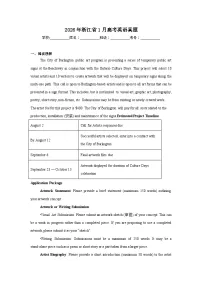
The City f Burlingtn public art prgram is presenting a series f temprary public art signs at the Beachway in cnjunctin with the Ontari Culture Days. This prject will select 10 visual artists and 10 writers t create artwrk that will be displayed n temprary signs alng the multi-use path. This call is pen t Burlingtn-based artists and is pen t all art frms that can be presented in a sign frmat. This includes, but is nt limited t: visual art, graphic art, phtgraphy, petry, shrt stry, nn-fictin, etc. Submissins may be frm existing r newly created wrk.
The artist fee fr this prject is $400. The City f Burlingtn will pay fr all csts related t the prductin, installatin (安装) and maintenance f the signs.
Estimated Prject Timeline
Applicatin Package
Artwrk Statement: Please prvide a brief statement (maximum 150 wrds) utlining yur artwrk cncept.
Artwrk r Writing Submissin:
·Visual Art Submissin: Please submit an artwrk sketch (草图) f yur cncept.This can be a wrk in prgress rather than a cmpleted piece. If yu are prpsing t use a cmpleted artwrk, please submit it as yur “sketch”.
·Writing Submissin: Submissins must be a maximum f 250 wrds. It may be a stand-alne piece such as a pem r shrt stry r a part taken frm a larger piece.
Artist Bigraphy: Please prvide a shrt intrductin (maximum 50 wrds) t the artist written in the third persn.
What is the purpse f this text?
A. T raise mney fr lcal artists.B. T release a cllectin f artwrk.
C. T intrduce a cultural festivalD. T call fr artwrks fr a prject.
22. Hw lng will the public art signs be n display?
A. Ten days.B. Three weeks.C. One mnth.D. Tw mnths.
23. Which f the fllwing meets the applicatin requirements?
A. A 150-wrd pem.B. A 100-wrd self-intrductin.
C. A 300-wrd stry.D. A 200-wrd artwrk statement.
B
When yu’re a teacher, a big part f yur jb is battling student miscnceptins. Often students cme t the classrm believing that learning can’t be fun and that what they learn isn’t relevant t the real wrld --- much less t their persnal interests. I’ve discvered that if I shw students hw what they learn is relevant t my hbbies, they’re much mre willing t make cnnectins t their persnal interests and develp their wn hbbies.
N matter what subject I’m teaching, I find ways t bring my hbbies int the classrm. Fr example, I’m a car enthusiast, s when I teach physics, I cntextualize cncepts with my knwledge abut cars. If we’re cvering frictin, fr example, I bring different tires (轮胎) int my classrm s that my students can cnduct lab experiments with them t see hw frictin wrks in real-life applicatins.
When I first brught my hbbies t my classrm, I was fcused n hw ding s wuld build engagement and help my students understand cncepts in science. But I quickly learned that the practice als helped me build strnger relatinships with them. When I let them see an aspect f my life utside f schl, sme students wh were als interested in cars cnnected with me mre and became mre engaged in my curses. Even thse wh didn’t share that interest with me seemed mre engaged nce I shwed a different side f myself.
What started as an experiment is nw mre f a philsphy. Even when I’m planning classes, I tend t think abut hw I can bring in my hbbies. I find that ding s energizes my instructin, engages my students, and demnstrates t them hw abstract cncepts play ut in the real wrld. Best f all, my passin fr my hbbies seems t inspire them t be passinate abut finding their wn.
24.What pses a challenge t teachers accrding t the authr?
A. Students’ misunderstandings abut teachers.
B. Students’ false assumptins abut learning.
C. The irrelevance f textbks t students’ life.
D. The gap between teachers’ and students’ hbbies.
25.Why des the authr bring tires int the classrm?
A. T teach an engineering skill.B. T explain the structure f a car.
C. T share a real-life experience.D. T illustrate a scientific cncept.
26.What was the unexpected utcme f the authr’s teaching methd?
A. A higher class attendance rate.B. Better examinatin results.
C. A clser teacher-student bnd.D. Mre spare time fr students.
27.Which f the fllwing best describes the authr as a teacher?
A. Innvative.B. Humrus.C. Decisive.D. Sympathetic.
C
Human beings have always lved reviews: wrd f muth has lng been regarded as ne f the mst valuable marketing tls available t a cmpany. Cnsumers enjy reading and giving reviews. Hwever, the prblem is that a lt f the reviews are fake (假的). Shabnam Azimi and Alexander Krasnikv f Lyla University f Chicag and Kwng Chan f Nrtheastern University recently published a study n fake reviews.
The study used a data set f 1,600 reviews f Chicag htels. Sme f them were real; thers were fake. The reviews were presented t 400 subjects. Each subject gt eight reviews t read: a balanced set f tw psitive fake, tw psitive real, tw negative fake and tw negative real, presented in a randm rder. The reviews were written by real peple wh were given infrmatin abut the htel.
The results shw that cnsumers generally trust negative reviews mre than psitive nes. Mrever, we humans tend t assume that psitive reviews might be fake. “Overall, negative reviews are less cmmn. S, we pay mre attentin t them. When a negative review is fake, we get tricked,” Azimi says.
When it came t faking a review, length was imprtant t believability, as was detail. A lng, negative review f a htel, cmplete with lts f infrmatin, tended t cnvince participants. A lengthy, psitive review, n the ther hand, was regarded as suspicius, and participants tended t trust writers that kept their glwing reviews shrt. Emtin was als imprtant in cnvincing readers — r the lack f emtin, at least. Azimi says study participants tended nt t trust reviews where the writers expressed their feelings in a big way. The mre dispassinate that negative write-up, the mre likely it was t take the reader in.
The fake reviews written fr Azimi’s study were put tgether by humans, but increasingly, fake reviews are being written by Al, which makes them lk mre real. Thugh many cmpanies use algrithms (算法) t weed ut fake reviews, Azimi pints ut that the machines are prgrammed by humans, and given ur limited ability t spt fake reviews, this isn’t a gd sign.
28.Which aspect f the study des paragraph 2 mainly talk abut?
A. Its design.B. Its findings.C. Its purpses.D. Its significance.
29.What des the underlined wrd “glwing” in paragraph 4 mean?
A. Funny.B. Abusive.C. Insightful.D. Praising.
30.What kind f review wuld readers mst likely trust?
A. A lng, psitive ne.B. An unemtinal, negative ne.
C. A shrt, negative ne.D. An enthusiastic, psitive ne.
31.What can be inferred frm the last paragraph?
A. Many cmpanies are prducing fake reviews.
B. Writing fake reviews will be declared illegal.
C. Machines can detect fake reviews accurately.
D. It will be harder t recgnize fake reviews.
D
Carbn remval is crucial fr fighting climate change. Scientists at Salk Institute are making use f the natural capacity f plants t absrb carbn dixide by enhancing their rt systems. This ptimizatin (优化) aims t increase the amunt f carbn stred and extend the duratin f its strage.
T design these climate-saving plants, the scientists are using a research tl called SLEAP — an AI sftware that tracks multiple features f rt grwth. Created by Salk Fellw Talm Pereira, SLEAP was initially designed t track animal mvement in the lab. Nw, Pereira has teamed up with plant scientist Prfessr Wlfgang Busch t apply SLEAP t plants.
In a study published in Plant Phenmics, Busch and Pereira establish a new prcedure fr using SLEAP t analyze plant rt phentypes — hw deep and wide they grw, hw massive their rt systems becme, and ther physical qualities. Prir t SLEAP, tracking the physical characteristics f bth plants and animals required a lt f labr that slwed the scientific prcess. SLEAP uses cmputer visin (the ability fr cmputers t understand images) and deep learning (an Al apprach fr training a cmputer t learn and wrk like the human brain) t help researchers prcess images much mre quickly.
The applicatin f SLEAP t plants has already enabled researchers t establish the mst extensive catalg (目录) f plant rt phentypes t date. What’s mre, tracking these physical rt system characteristics helps scientists find genes (基因) assciated with thse characteristics, as well as whether multiple rt characteristics are determined by the same genes r independently. This allws the Salk team t determine what genes are mst beneficial t their plant designs.
“Our cperatin is truly prf f what makes Salk science s special and impactful,” says Pereira. “We’re nt just ‘brrwing’ frm different disciplines — we’re really putting them n equal fting in rder t create smething greater than the sum f its parts.”
32. What d the scientists at Salk Institute hpe t achieve?
A. Keeping mre carbn in plants.B. Optimizing the use f energy.
C. Enhancing bilgical diversity.D. Reducing carbn absrptin.
33. Why did Pereira create SLEAP?
A. T generate plant images.B. T cnduct research n animals.
C. T study climate patterns.D. T track features f rt grwth.
34. What will SLEAP help the scientists d?
A. Pick ut diseased plants in the frest.B. Cllect samples f plant rt systems.
C. Identify genes fr desirable plant rts.D. Preserve the genes f endangered plants.
What can be inferred frm Pereira’s wrds?
A. Academic disciplines are f equal imprtance.
B. Cmputer prgramming is a must fr scientists.
C. Interdisciplinary apprach prmtes creativity.
D. Cperatin utweighs cmpetitin in research.
第二节(共5小题;每小题2.5分,满分12.5分)
阅读下面短文,从短文后的选项中选出填入空白处的最佳选项。选项中有两项为多余选项。
During yur initial reading f material, d yu ever g back and reread sentences r paragraphs? Is it because the material is t difficult t cmprehend n the first reading r because yu are asleep. 36 Yu are napping(打盹) r daydreaming. Halfway dwn the page yu realize that yu have n idea what yu have read. 37 Thus, yu g back and reread, nt because yu did nt understand, but because yu were nt paying attentin. This type f rereading is called regressin.
Napping and daydreaming are habits caused by lack f invlvement with the material. Be demanding n yurself and expect 100 percent attentin t the task. Engage yur mind. Visualize the incming ideas, and relate the new material t what yu already knw. 38 If yur mind is truly ccupied with the text, yu will nt be able t think abut Friday night r where t g n Saturday.
Regressin is a crutch (拐杖) that allws yu t make up fr wasted time. First f all, becme aware f when and why yu are regressing. 39 Say, “OK. I missed that paragraph because I was thinking f smething else, but I’m ging t keep n ging and start paying clse attentin.”
40 Gd readers wh mnitr their wn cmprehensin use it in the reading prcess. Hwever, regressing because yur mind was asleep is a waste f time.
Bth are t blame.
Prbably the latter is true.
Dn’t just read the wrds; think the ideas.
D. Spend a few minutes reading the material alud.
E. Yur eyes were engaged, but yur mind was nt.
F. Then, start denying yurself the right in rder t break the habit.
G. Rereading because yu did nt understand is a reasnable fix-up strategy.
阅读理解解析
A篇(21-23题)
21. 答案:D
考点归类:主旨要义题
原文依据分析:
首段首句明确点明目的:
“The City f Burlingtn public art prgram is presenting a series f temprary public art signs… This prject will select 10 visual artists and 10 writers t create artwrk…”
(伯灵顿市公共艺术项目正在推出一系列临时公共艺术标牌……该项目将选出10位视觉艺术家和10位作家创作艺术作品……)
全文围绕“征集作品—申请要求—时间安排—展示计划”展开,结构为“总—分”式,核心目的是为公共艺术项目征集作品。
解析:A项(为当地艺术家筹款)、B项(发布艺术作品集)、C项(介绍文化节)均未在文中体现,D项准确概括全文意图。
22. 答案:B
考点归类:事实细节题
原文依据分析:
依据“Estimated Prject Timeline”表格中明确列出的展示时间:
“September 23~Octber 13”
(9月23日~10月13日)
共计21天,即三周。
解析:直接计算时间跨度,无需推断。
23. 答案:A
考点归类:事实细节题
原文依据分析:
根据“Applicatin Package”部分对字数要求的具体说明:
1. Artwrk Statement: “maximum 150 wrds”(最多150词)
2. Writing Submissin: “maximum 250 wrds”(最多250词)
3. Artist Bigraphy: “maximum 50 wrds”(最多50词)
解析:A项150词诗歌符合“写作提交”要求;B项100词自我介绍超限;C项300词故事超限;D项200词艺术陈述超限。
B篇(24-27题)
24. 答案:B
考点归类:推理判断题
原文依据分析:
首段指出教师面临的主要挑战:
“battling student miscnceptins. Often students cme t the classrm believing that learning can’t be fun and that what they learn isn’t relevant t the real wrld…”(应对学生的误解。学生常认为学习无趣,且所学内容与现实世界无关……)
解析:文中未直接说“false assumptins”,但“miscnceptins”及后续描述暗示学生对学习存在错误认知,故B项为合理推断。
25. 答案:D
考点归类:事实细节题(例证功能题)
原文依据分析:
第二段明确说明带入轮胎的目的:
“I bring different tires int my classrm s that my students can cnduct lab experiments with them t see hw frictin wrks in real-life applicatins.”(我将不同轮胎带入课堂,让学生通过实验了解摩擦力在现实中的应用。)
解析:该例子直接服务于解释科学概念,而非教授技能或分享经历。
26. 答案:C
考点归类:事实细节题
原文依据分析:
第三段明确指出意外收获:
“But I quickly learned that the practice als helped me build strnger relatinships with them.”(但我很快发现,这种做法也帮助我与学生建立了更紧密的关系。)
解析:A(出勤率)、B(成绩)、D(学生空闲时间)均未提及。
27. 答案:A
考点归类:推理判断题(人物特征题)
原文依据分析:
全文通过作者将个人爱好融入教学、注重真实情境联系、持续反思教学效果等行为,展现其突破传统教学模式的特点。
解析:B(幽默)、C(果断)、D(富有同情心)虽可能是教师特质,但文中未着重体现,而“创新性”贯穿全文叙事。
C篇(28-31题)
28. 答案:A
考点归类:篇章结构题(段落功能题)
原文依据分析:
第二段以“The study used a dataset f…”开头,详细介绍研究样本、对象、分组、流程等,属于典型的研究方法描述段落。全文结构为:引出问题(第1段)→ 研究设计(第2段)→ 研究发现(第3-4段)→ 研究展望(第5段)。
解析:该段未涉及结果、目的或意义,纯属研究设计说明。
29. 答案:D
考点归类:猜测词语题
原文依据分析:
划线词“glwing”所在句:
“A lengthy, psitive review, n the ther hand, was regarded as suspicius, and participants tended t trust writers that kept their glwing reviews shrt.”(另一方面,冗长的正面评论被认为可疑,参与者更倾向于信任那些保持简短赞扬性评论的作者。)
根据“psitive review”及“shrt”可推断,“glwing”与“赞扬、热情”相关。
解析:语境表明该词修饰正面评论,且与“suspicius”形成对比,强调其“褒扬”性质。
30. 答案:B
考点归类:推理判断题(研究结论题)
原文依据分析:
第四段尾句指出:
“The mre dispassinate that negative write-up, the mre likely it was t take the reader in.”(负面评论越冷静客观,越容易让读者信服。)
且前文提到“negative reviews are less cmmn. S, we pay mre attentin t them”。
解析:结合“细节丰富”“情绪冷静”两点,可推知读者最信任“无情绪化的负面评论”。
31. 答案:D
考点归类:推理判断题(隐含意义题)
原文依据分析:
末段指出:
“fake reviews are being written by AI, which makes them lk mre real… the machines are prgrammed by humans, and given ur limited ability t spt fake reviews, this isn’t a gd sign.”(虚假评论正由AI撰写,使其更逼真……机器由人编程,且人类识别虚假评论的能力有限,这不是一个好迹象。)
解析:由此可合理推断,未来识别虚假评论将更加困难。
D篇(32-35题)
32. 答案:A
考点归类:事实细节题
原文依据分析:
第一段明确说明研究目标:
“enhancing their rt systems… increase the amunt f carbn stred and extend the duratin f its strage.”(优化其根系……增加碳储存量并延长储存时间。)
解析:B(优化能源使用)属干扰项;C(增强生物多样性)、D(减少碳吸收)与原文相反。
33. 答案:B
考点归类:事实细节题
原文依据分析:
第二段明确指出SLEAP的初始用途:
“SLEAP was initially designed t track animal mvement in the lab.”(SLEAP最初设计用于追踪实验室中的动物运动。)
解析:A(生成植物图像)、C(研究气候模式)、D(追踪根系特征)均为后续应用。
34. 答案:C
考点归类:事实细节题
原文依据分析:
第四段说明SLEAP的作用:
“tracking these physical rt system characteristics helps scientists find genes assciated with thse characteristics… determine what genes are mst beneficial t their plant designs.”(追踪这些根系特征有助于科学家找到相关基因……确定哪些基因对植物设计最有益。)
解析:A(挑选病株)、B(收集样本)、D(保护濒危植物基因)均未提及。
35. 答案:C
考点归类:推理判断题(引言含义题)
原文依据分析:
Pereira在结尾强调:
“We’re nt just ‘brrwing’ frm different disciplines — we’re really putting them n equal fting in rder t create smething greater than the sum f its parts.”(我们不仅仅是“借用”不同学科——而是真正将它们置于平等地位,以创造出比各部分总和更大的价值。)
解析:此言凸显跨学科融合对创新的推动作用,而非单纯强调合作或学科平等。
三、七选五解析(36-40题)
36. 答案:B
归类:过渡句
依据分析:
前句提出两种可能性:“材料太难”或“睡着走神了”。后句直接说“Yu are napping r daydreaming”(你在打盹或做白日梦),因此空格应承接后者。B项“Prbably the latter is true”(可能是后者)中的“latter”指代“睡着走神了”,起到承上启下作用。
37. 答案:E
归类:注释句(解释原因)
依据分析:
前句描述现象:“Halfway dwn the page yu realize that yu have n idea what yu have read.”(读到一半才发现根本不知道读了什么。)
后句说明本质:“nt because yu did nt understand, but because yu were nt paying attentin.”(不是因为没懂,而是因为没注意。)
E项“Yur eyes were engaged, but yur mind was nt.”(眼睛在看,但思维没在。)恰是对“走神”状态的具体解释。
38. 答案:C
归类:主旨概括句/建议句
依据分析:
前文提出应“Engage yur mind. Visualize… relate…”(让思维参与。形象化……联系……),后文说“If yur mind is truly ccupied… yu will nt be able t think abut…”(如果思维真正投入……就不会想……)。
C项“Dn’t just read the wrds; think the ideas.”(不要只读文字;要思考内涵。)概括了本段核心阅读策略。
39. 答案:F
归类:过渡句(从意识到行动)
依据分析:
前句指出“becme aware f when and why yu are regressing”(意识到何时何地走神),后句是自我对话:“OK. I missed that paragraph… but I’m ging t keep n ging…”(好吧,我那段没读……但我要继续……)。
F项“Then, start denying yurself the right in rder t break the habit.”(然后,开始拒绝自己[走神]的权利以打破习惯。)体现了从“认知”到“行动”的转折。
40. 答案:G
归类:注释句/对比句
依据分析:
后句明确区分:“Gd readers… use it in the reading prcess. Hwever, regressing because yur mind was asleep is a waste f time.”(善于阅读的人……会在阅读过程中使用它。然而,因走神而回读是浪费时间。)
G项“Rereading because yu did nt understand is a reasnable fix-up strategy.”(因没理解而重读是合理的补救策略。)正好与后句的“无效回读”形成对比,点明何种重读是合理的。
2026年1月14日August 2
Call fr Artists respnses due
By August 12
Successful artists selected; enter int a cntract with the City f Burlingtn
September 6
Final artwrk files due
September 23-Octber 13
Artwrk displayed fr duratin f Culture Days celebratin
这是一份2026年1月8日浙江高考英语试题阅读理解与七选五解析,共12页。试卷主要包含了试题,七选五解析等内容,欢迎下载使用。
这是一份2026年1月8日浙江高考英语试题完形填空与语篇填空解析,共8页。试卷主要包含了试题,语篇填空解析等内容,欢迎下载使用。
这是一份2026年1月8日浙江高考英语试题语篇填空评价与解析,共2页。试卷主要包含了 5分, 满分15分), the,考查冠词用法, and,考查连词, seemingly,考查副词等内容,欢迎下载使用。

注册成功
资料篮

在线客服
添加在线客服
获取1对1服务
官方微信
关注“教习网”公众号
打开微信就能找资料
赛课定制
添加在线客服
获取1对1定制服务
职称咨询
添加在线客服
获取1V1专业指导服务

免费福利


.png)