免费领取教师福利
若您为此资料的原创作者,认为该资料内容侵犯了您的知识产权,请扫码添加我们的相关工作人员,我们尽可能的保护您的合法权益。

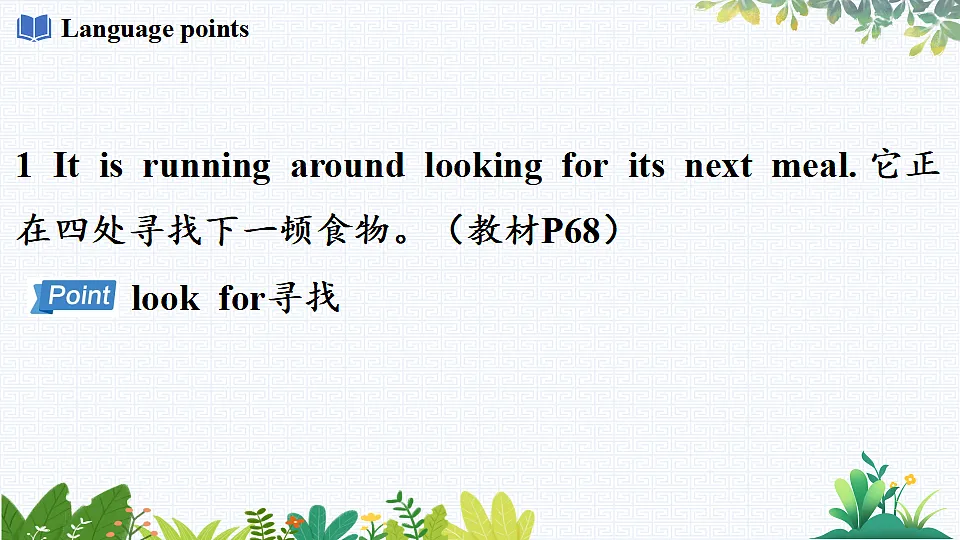
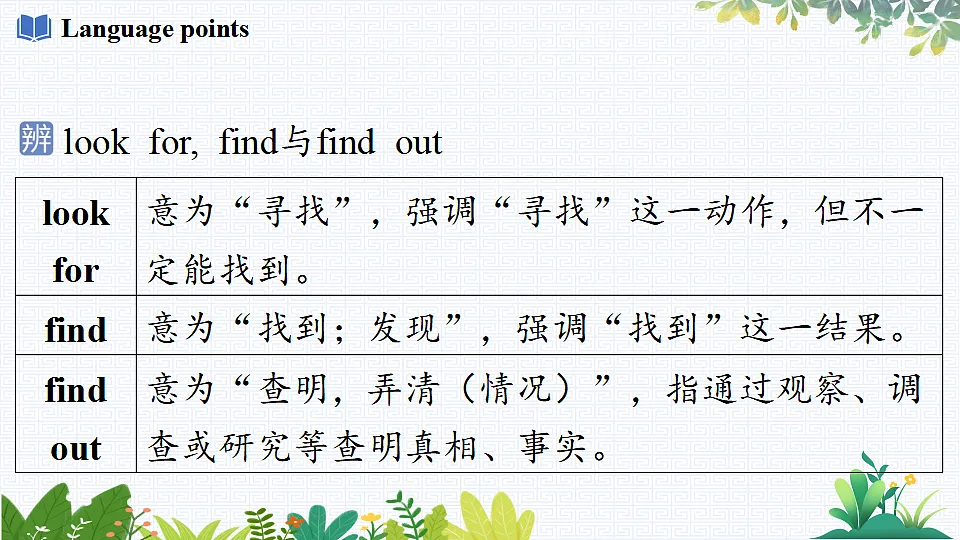
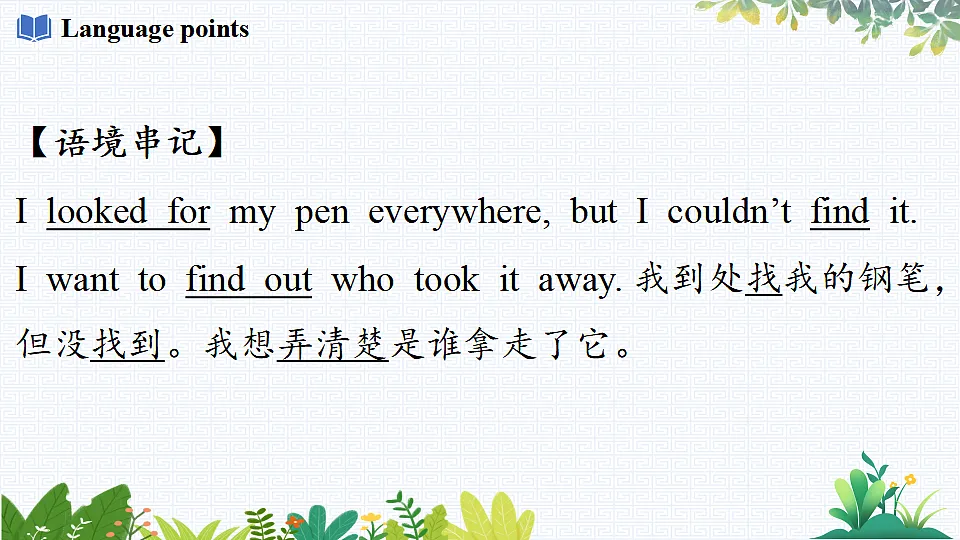
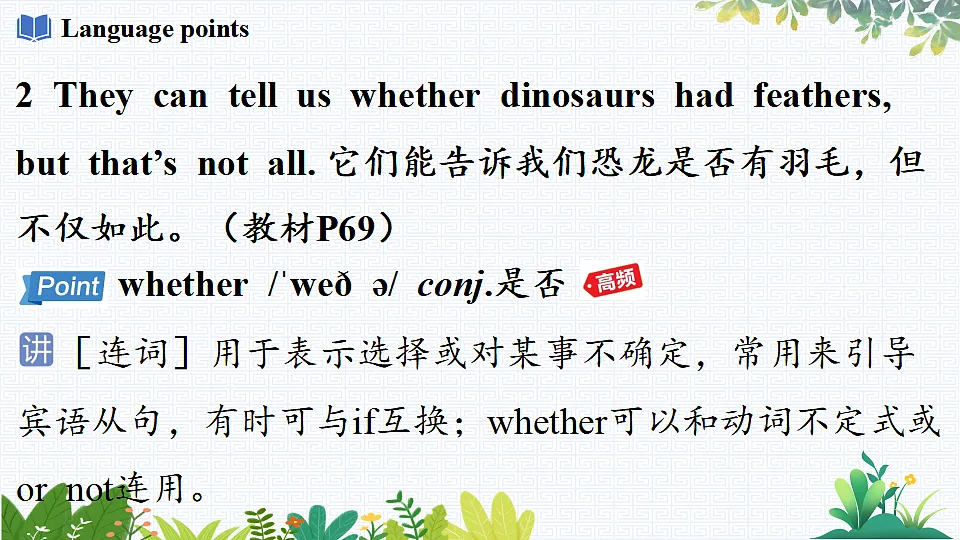
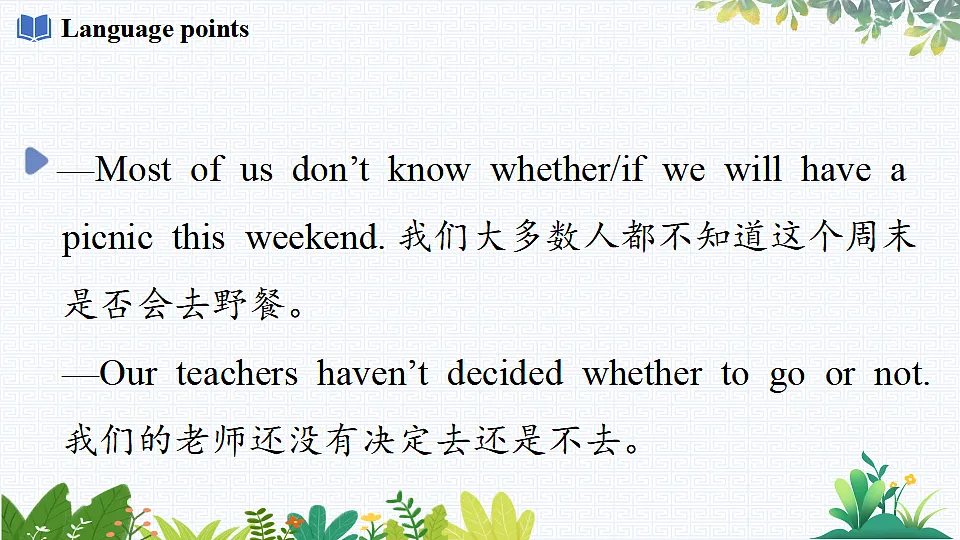
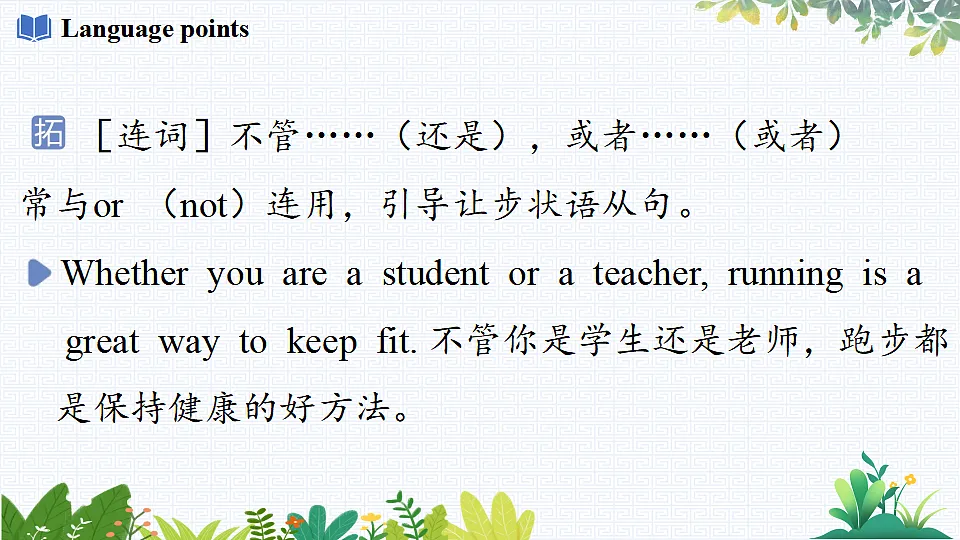
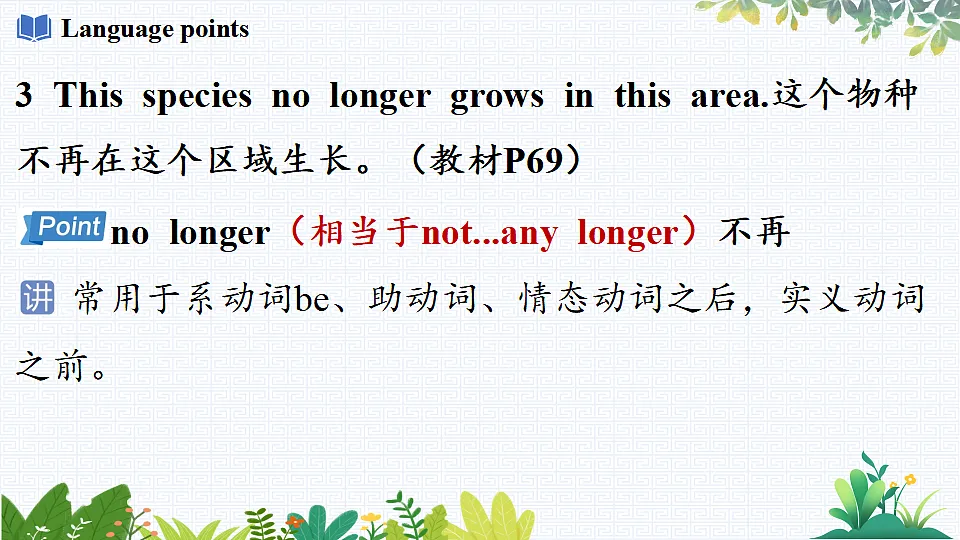
1 It is running around looking for its next meal. 它正在四处寻找下一顿食物。(教材P68) look for寻找 look for, find与find out#1【语境串记】I looked for my pen everywhere, but I couldn’t find it. I want to find out who took it away. 我到处找我的钢笔,但没找到。我想弄清楚是谁拿走了它。#1.2.12 They can tell us whether dinosaurs had feathers, but that’s not all. 它们能告诉我们恐龙是否有羽毛,但不仅如此。(教材P69) whether /ˈweð ə/ conj.是否 [连词]用于表示选择或对某事不确定,常用来引导宾语从句,有时可与if互换;whether可以和动词不定式或or not连用。#1 —Most of us don’t know whether/if we will have a picnic this weekend. 我们大多数人都不知道这个周末 是否会去野餐。 —Our teachers haven’t decided whether to go or not. 我们的老师还没有决定去还是不去。#1.2 [连词]不管……(还是),或者……(或者)常与or (not)连用,引导让步状语从句。 Whether you are a student or a teacher, running is a great way to keep fit. 不管你是学生还是老师,跑步都 是保持健康的好方法。#2.1.13 This species no longer grows in this area.这个物种不再在这个区域生长。(教材P69) no longer(相当于not...any longer)不再 常用于系动词be、助动词、情态动词之后,实义动词之前。 Thanks to the government and workers’ efforts, pandas are no longer endangered now.多亏政府和工作 人员的努力,大熊猫现在不再处于濒危状态。 The doctor told her she could no longer play basketball. = The doctor told her she couldn’t play basketball any longer. 医生告诉她她再也无法打篮球了。4 Thanks to amber, more than 300 unknown species have been discovered. 多亏了琥珀,人们已经发现了三百多种未知物种。(教材P69) unknown /ˌʌnˈnəʊn/ adj.不知道的,未知的 [形容词]由“否定前缀un-+ known(adj.已知的)”构成。be unknown to 不为……所知 For some unknown reason, Mark moved to Greece. 不知何故,马克移居希腊了。 The author of the book is almost unknown to young people. 这本书的作者年轻人几乎都不知道。#1.1.2 [形容词]不知名的,不出名的 This film was directed by an unknown director. 这部电 影由一位不知名的导演执导。 英语中常见的否定前缀有:(1)un-表示“不,非”,如:unable 未能;unhappy 不高兴的;unusual不寻常的。#2.1(2)in-(il-,im-,ir-)表示“不,无,非”,如:inactive不活跃的;incorrect不正确的;impolite不礼貌的;impatient不耐烦的。(3)dis-表示“相反;不”,如:disagree不同意;dishonest不诚实的;dislike不喜欢。#2.35 Scientists used to believe that ants came from the northern half of the earth. 科学家们过去认为,蚂蚁来自地球的北半球。(教材P69) used to 过去经常(做) 表示过去一度存在或经常发生,但现在已经不存在的动作或状态,其后接动词原形,且不与具体的过去时间状语连用。used to的否定形式是didn’t use to或used not to (usedn’t to)。 We used to talk about everything. 我们曾经无话不谈。 He didn’t use to wear glasses. = He usedn’t to wear glasses. 他过去不戴眼镜。#1.2 The knife is used to cut fruit. = The knife is used for cutting fruit. 这把刀是用来切水果的。#2.2 People should get used to travelling by public transportation. 人们应该习惯于乘坐公共交通工具出行。典例 用括号中所给词的适当形式填空。My grandfather used to ______ (watch) TV at home after dinner, but now he is used to ______ (go) out for a walk.watchgoing[解析] 句意:我爷爷过去常常晚饭后在家看电视,但现在他习惯出去散步。第一空处为used to do sth.结构,表示“过去常常做某事”;第二空处为be used to doing sth.结构,表示“习惯于做某事”。故第一空填watch,第二空填going。 由“north(n.北;北方)+-ern”构成。表示方位的名词在词尾加-ern可构成形容词,常见的还有:east+-ern→eastern(东部的)west+-ern→western(西部的)south+-ern→southern(南部的) northern /ˈnɔ:ð ən/ adj.北部的 Shanxi, a province that lies in the northern part of China, is a land rich in history, culture, and beautiful views. 山西省位于中国北部,是一片历史悠久、文化 底蕴深厚且风景秀美的土地。6 The discovery of this African species has changed old beliefs about the history of ants. 这一非洲物种的发现改变了人们对蚂蚁历史的旧有观念。(教材P69) The African elephant is the largest land animal on Earth. 非洲象是地球上最大的陆生动物。 African /ˈæfrɪkən/ adj.非洲的,非洲人的 (1)African[可数名词]非洲人其复数形式是Africans。 Those Africans will come to China next year. 那些非 洲人明年会来中国。(2)Africa[名词]非洲 I used to teach English as a volunteer in Africa. 我曾 经作为志愿者在非洲教英语。【语境串记】Do you know the pyramids in Africa? If you go to see them, you may meet many Africans. They will show you some African dances. 你知道非洲的金字塔吗?如果你去参观金字塔,你可能会遇到很多非洲人。他们会向你展示一些非洲舞蹈。 There is a general belief that things will soon get better. 大家普遍认为情况很快就会好转。 (1)[不可数名词]信心;信任 When you get something wrong, it can shake your belief in yourself. 如果有什么事情没做好,就会动摇 你对自己的信心。 belief /bɪˈli:f/ n.观点(2)[可数名词]信仰 The people still follow their traditional beliefs. 那些人 仍然遵循传统的信仰。(3)与belief相关的词:7 However, it’s still not fully understood. 然而,人们仍然没有完全了解它。(教材P69) fully /ˈfʊli/ adv.完全地;充分地;彻底地 同义词为completely。 She wasn’t fully awake when the alarm went off. 闹钟响的时候,她还没有完全睡醒。 Younger plants are often cheaper than fully grown ones. 幼苗通常比完全长成的植株便宜。8 Then we can use this key to unlock more secrets of nature. 这样我们才能用这把钥匙揭开更多大自然的奥秘。(教材P69) unlock /ʌnˈlɒk/ v.解锁 [及物动词]由“否定前缀un-+ lock(v.锁上;被锁住)”构成。unlock the secrets of sth.揭开某事的秘密 She inserted the key and twisted it gently to unlock the front door. 她插入钥匙并轻轻转动,打开了前门。 The divers hoped to unlock some of the secrets of the seabed. 潜水员希望揭开海底的一些秘密。#1.3 unlocked[形容词]未锁的 Don’t leave your desk unlocked. 不要忘记锁好办公桌。#2.19 They use different methods to achieve their goals.他们采用不同的方法来实现自己的目标。(教材P70) [可数名词]the method of/for (doing) sth.(做)某事的方法#1 method /ˈmeθəd/ n.方法,办法 Computers have had a great influence on learning methods since they were introduced into schools. 自从计算机被引入学校以来,它们对学习方法产生了 很大的影响。 Expressive writing is a method of helping people get out of worries by writing them down on paper. 表达性 写作是一种通过将烦恼写在纸上,帮助人们摆脱忧虑的 方法。10 These goals include making the text alive, making their arguments strong, getting readers’ attention, etc.这些目标包括让文章生动起来、增强论点说服力、吸引读者注意力等等。(教材P70) come alive 热闹起来;生动起来 bring sth. alive 使……有趣;使……生动 Grandma’s stories about her childhood always made the past feel alive. 奶奶讲的童年故事总能让过去变得 鲜活。 alive /əˈlaɪv/ adj.变得兴味盎然,生动起来 The town starts to come alive after dark. 这个小镇天 黑以后开始热闹起来。 The pictures bring the book alive. 这些图片使这本书 生动起来。 [形容词]活着的 Love your parents well while they are alive. Don’t wait until it is too late. 在父母健在时好好爱他们。不 要等到为时已晚。 [可数名词]argument for/against 赞成/反对……的论据 Do you have any evidence to support your argument? 你有证据支持你的论点吗? There are strong arguments against smoking. 反对吸烟 的理由非常充分。#1.2 argument /ˈɑ:ɡjəmənt/ n.论点,论据 [名词]争论,争吵have an argument (with sb.) (与某人)争论 I had a big argument with my friend this morning. 今天早上我和朋友大吵了一架。#2.211 MESSAGE BOARD 留言板(教材P71) I’ve put a list of names up on the board. 我在布告牌 上贴出了一份名单。 board /bɔ:d/ n.布告牌,公告牌 (1)[动词]登上(公共汽车、飞机、火车等) The couple boarded the train for Shanghai. 这对夫妇登 上了开往上海的火车。(2)常见的含board的复合名词有:12 In 2006, scientists agreed that a true planet... 2006年,科学家们一致认为一颗真正的行星……(教材P71) Many people say that the things they read on the internet may not be true. 很多人说他们在网上读到的 东西可能不是真的。 It is true that money can’t buy you happiness. 金钱不 能买来幸福,这是事实。 true /tru:/ adj.符合事实的,真的,真实的 (1)[形容词]真正的 He who does not reach the Great Wall is not a true man. 不到长城非好汉。(2) 典例 用所给词的适当形式填空。Please tell me the ______ (true). Don’t lie to me again.truth13 can clear things in its way 能够清除其轨道上的其他物体(教材P71) clear up 清理;使整洁 It’s your turn to clear the table. 该轮到你收拾餐桌了。 I want you to clear all this mess up. 我希望你把这些 乱七八糟的东西收拾干净。 clear /klɪə/ v.清除;清理 clear作形容词的常见含义:
注册成功
资料篮

在线客服
添加在线客服
获取1对1服务
官方微信
关注“教习网”公众号
打开微信就能找资料
赛课定制
添加在线客服
获取1对1定制服务
职称咨询
添加在线客服
获取1V1专业指导服务

免费福利


.png)