免费领取教师福利
若您为此资料的原创作者,认为该资料内容侵犯了您的知识产权,请扫码添加我们的相关工作人员,我们尽可能的保护您的合法权益。


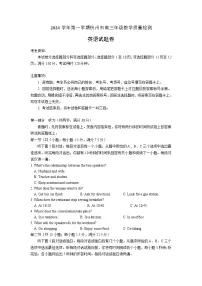
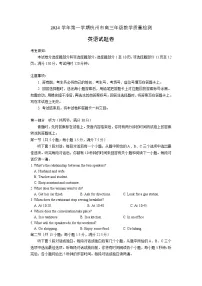
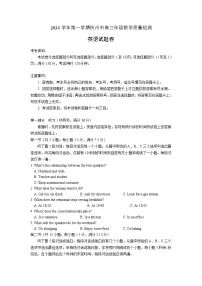
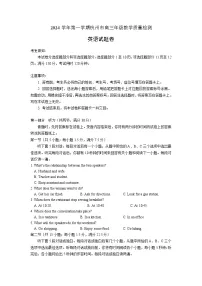
这是一份2025-2026学年浙江省杭州市上城区等5地高三一模英语试题(附答案解析),共28页。试卷主要包含了听力选择题,阅读理解,完形填空,语法填空,书信写作,书面表达等内容,欢迎下载使用。
一、听力选择题
1.Where did the speakers g last night?
A.A live cncert.B.A ftball game.C.A cmedy shw.
2.What des the man think f his trip?
A.Cstly.B.Unpleasant.C.Enjyable.
3.What are the speakers talking abut?
A.Hsting a business visit.
B.Planning a tur f the city.
C.Discussing dinner arrangements.
4.What did the man use t like?
A.Science fictin.B.Detective nvels.C.Entertaining stries.
5.What will the speakers d next?
A.Buy the huse.B.Replace the carpets.C.See anther huse.
听下面一段对话,回答以下小题。
6.What is the pssible relatinship between the speakers?
A.Child and parent.B.Student and teacher.C.Turist and tur guide.
7.When are they ging t meet?
A.3:30.B.3:25.C.3:20.
听下面一段对话,回答以下小题。
8.Hw is Kelly’s service as a baby-sitter?
A.Prly-rated.B.Well-reviewed.C.Rarely-nticed.
9.Why des Kelly think she can raise the rate?
A.She has a CPR certificatin.
B.She wns a cllege degree.
C.She used t be a financial advisr.
10.Hw des Mr. Adams sund at the end f the cnversatin?
A.Angry.B.Amused.C.Interested.
听下面一段对话,回答以下小题。
11.What inspired Mr. Riggs t becme a music teacher?
A.A band perfrmance.B.His passin fr music.C.A teacher’s influence.
12.Why des Mr. Riggs think music is pwerful fr yung peple?
A.It teaches imprtant life skills.
B.It serves as a way f escape.
C.It bridges generatin gap.
13.Hw des Mr. Riggs keep his students interested in music?
A.By fcusing n human cnnectin.
B.By placing value n AI technlgy.
C.By helping them prduce mre music wrks.
听下面一段对话,回答以下小题。
14.What des Taylr think f the meal plans n the website?
A.Quite easy t fllw.B.T expensive t affrd.C.Very difficult t understand.
15.Which is the mst ppular meal plan amng students?
A.The Basic plan.B.The Gld plan.C.The Unlimited plan.
16.Where can dining dllars be used?
A.At dwntwn cffee shps.
B.At the main dining hall nly.
C.At cnvenience stres n campus.
17.What is a gd way t save mney?
A.Eating dinner after 9 pm.
B.Dining between 12 and 1:30 pm.
C.Cming earlier t the dining hall.
听下面一段独白,回答以下小题。
18.What is the purpse f the event?
A.T set a new recrd.
B.T prmte physical fitness.
C.T supprt children’s educatin.
19.What has been arranged t keep the runners safe?
A.Vlunteers hlding range signs.
B.Tw water statins set up alng the rute.
C.Medical staff statined at the halfway pint.
20.What shuld the runners d right after crssing the finish line?
A.Head t the snack tent t refuel.
B.Get their participatin medals.
C.Jin the award ceremny.
二、阅读理解
Media literacy isn’t just a nice-t-have skill anymre - it’s essential. At its cre, media literacy means understanding hw media wrks - wh created a message, why it was made, and hw it’s meant t influence the audience. Students are cnstantly surrunded by messages: sme are helpful, thers misleading. Teaching them t analyze, questin, and evaluate media gives them the tls t think critically and make infrmed chices. The gd news? Yu can build media literacy int what yu’re already ding, ne step at a time. Use Headlines as Warm-Ups
Start class with a real-wrld headline - ideally ne related t yur subject area.
Ask students:
● Is this infrmatin reliable?
● Where did it cme frm?
● What might be missing?
This five-minute rutine builds awareness and can lead t great discussins.Cmpare Tw Surces
Pick tw texts n the same tpic but frm different perspectives. This culd be editrials, news articles, r vide cntent. Ask students t cmpare:
● Language and tne.
● Chice f images.
● What facts are emphasized r ignred?
This is a great way t teach bias (偏见) and pint f view, especially in ELA r scial studies.Build Visual Literacy
Use plitical cartns, advertisements, r phts t practise interpreting:
● What’s the message?
● Hw is it being cmmunicated visually?
● Wh benefits frm this image?
This kind f analysis helps students read beynd the text.
This is abut teaching students t be curius, and yu just need t mdel curisity. When yu say, “Let’s figure ut where this came frm,” yu’re demnstrating t students hw t think critically. And when they see yu d it regularly, they start ding it t.
21.What is the primary purpse f teaching media literacy t students?
A.T aruse their interest in media.
B.T enhance their literature skills.
C.T develp their critical thinking ability.
D.T braden their general media knwledge.
22.Which technique f teaching media literacy is recmmended?
A.Using visual aids in teaching.
B.Asking students t cnnect tw surces.
C.Prviding materials that include pictures.
D.Having students figure ut better headlines.
23.Hw can teachers best stimulate students’ curisity?
A.Ask rutine questins.B.Shw, dn’t just tell.
C.Reward curius students.D.Tell, dn’t just watch.
A letter frm a prime minister, a child’s ntebk, a prized sprting medal: what d these things have in cmmn? On the surface, nt much at all. But fr Tny Armstrng’s Extra-Ordinary Things, that desn’t matter in the slightest.
In this five-part ABC TV series and accmpanying exhibitin at the Natinal Museum f Australia, it’s nt really the bjects themselves that matter; it’s the stries and peple behind them that cnstruct a stry abut the natin and its past. This prject sees ppular televisin presenter Tny Armstrng travel the cuntry in search f items fr his special exhibitin.
Sme bjects capture majr mments in Australian histry. The anti-Iraq war prtest that saw the wrds NO WAR painted n the sails f the Sydney Opera Huse in 2003 is represented by the paint tray used fr the act. Thrugh a memrial pin held by Harbur Bridge cnstructin wrker Gerge Killen’s great-granddaughter, we hear the frgtten stry f hw ne wrker selflessly dived int the cld waters f the harbur belw t save a friend. Turns ut, the rdinary can be extra-rdinary.
This desn’t mean the prject shies away frm the dark aspects f ur past. In ne episde, Armstrng speaks frm the edge f the “exclusin (排斥) zne” that marked the area in Perth where First Natins peple, nly seventy years ag, were nt permitted t enter freely.
Smetimes light-hearted, smetimes heart-breaking, Extra-Ordinary Things is largely ptimistic in tne. It is an example f hw strytelling can bridge divides, allw us t cnfrnt realities, and enable us t make chices that might g sme way t addressing wrngs.
When I asked Armstrng what he hped the prject wuld achieve, he said: “I hpe it gets peple telling stries.” Whether yu’re asking yur grandma r yur friends t share their extrardinary things, his advice is t “be eager t discver, be curius.”
24.What d we knw abut the bjects listed in paragraph 1?
A.Rare but tie t everyday life.B.Tiny but represent fficial recrds.
C.Ordinary but hld special meaning.D.Histric but mask persnal cnnectins.
25.Why is the memrial pin mentined in paragraph 3?
A.T present a fact.B.T illustrate a pint.
C.T explre a rule.D.T clarify a cncept.
26.What message des Armstrng want t cnvey in his prject?
A.Histry is full f injustice.B.Histry is made up f fun stries.
C.Painful things shuld be left behind.D.All histrical facts shuld be acknwledged.
27.What des Armstrng encurage viewers t d?
A.Seek stries with an inquiring mind.B.Engage their family with better stries.
C.Cllect rdinary items fr the exhibitin.D.Study prfessinal strytelling techniques.
On 3 April 2024, a magnitude 7.4 quake — Taiwan’s strngest in 25 years — shk the island’s eastern cast. Mst buildings were undamaged due t strict cnstructin standards, but muntainus and remte villages were destryed by landslides.
When disasters affect large and inaccessible areas, respnders ften turn t satellite images t lcate affected areas and priritize relief effrts. “But mapping landslides frm satellite imagery by eye can be time-intensive,” said Lrenz Nava, wh is jintly based at Cambridge’s Departments f Earth Sciences and Gegraphy. “In the aftermath f a disaster, time really matters,” he said. Using AI, he identified 7,000 landslides after the Taiwan earthquake, within three hurs f the satellite imagery being acquired.
Since the earthquake, Nava has been develping his AI methd alngside an internatinal team. By emplying a set f satellite technlgies — including satellites that can see thrugh cluds and at night — the researchers hpe t enhance AI’s landslide detectin capabilities.
Nava is training AI t identify landslides in tw types f satellite images — visual images f the grund surface and radar (雷达) data, the latter f which can see thrugh clud cver and even acquire images at night. Radar images can, hwever, be difficult t interpret, as they use greyscale t illustrate cntrasting surface prperties and landscape features can als appear strange. These challenges make radar data well-suited fr AI-assisted analysis, helping identify features that may therwise g unnticed.
By cmbining the clud-penetrating capabilities f radar with the fidelity (准确度) f visual images, Nava hpes t build an AI-pwered mdel that can accurately spt landslides even in pr weather cnditins. His trial fllwing the 2024 Taiwan earthquake shwed prmise, detecting thusands f landslides that wuld therwise g unnticed beneath clud cver. But Nava acknwledges that there is still mre wrk needed, bth t imprve the mdel’s accuracy and its transparency (透明度).
He wants t build trust in the mdel and ensure its utputs are interpretable and actinable by decisin-makers. “Very ften, the decisin-makers are nt the nes wh develped the algrithm (算法),” said Nava. “AI can feel like a black bx. Its internal lgic is nt always transparent, and that can make peple hesitant t act n its utputs.”
28.What is the key value f Nava’s AI methd?
A.Ability t predict earthquakes.
B.Lw cst cmpared t new satellites.
C.Ptential t replace human respnders.
D.Efficiency in prcessing vast amunts f data.
29.What is paragraph 4 mainly abut?
A.A detailed descriptin f hw satellites perate.
B.The advantages f visual images ver radar data.
C.The reasns why AI is needed t interpret radar data.
D.The histry f using satellites fr landslide detectin.
30.What can we knw abut Nava’s AI-pwered mdel frm paragraph 5?
A.It is still in develpment.B.It has been used just nce.
C.It is an alternative f satellite images.D.Its significance has been underestimated.
31.What d Nava’s wrds imply?
A.The mdel’s perfrmance is nt satisfactry.
B.Develpers shuld have mre trust in the mdel.
C.Decisin-makers refuse t understand AI’s internal lgic.
D.The gap between develpers and users needs t be bridged.
“When my husband des the dishes he always leaves sme plates in the sink, sme surface unwiped. I tried t crrect the behavir until I remembered that if I finish everything in my Wrk in Prgress flder I’m afraid I’ll die,” Sarah Mangus nce said. Yet the truth is that cmpletin recharges energy, rather than using it up.
Perfectinists lve t begin new prjects, because as lng as yu haven’t dne any wrk n a prject, it’s pssible t believe that the end result might match the ideal in yur mind. By cntrast, finishing things means struggling yur way thrugh the messy, imperfect reality.
Scial psychlgists describe what’s ging n here with “cnstrual level thery”, which refers t the way we envisin bjects and events frm different mental altitudes. Fr example, when cnsidering hw t spend yur next summer hliday, yu’re likely t picture it frm 30,000 feet — “ging t the beach”, r “hiking in the muntains”. But when it nears, yu start fcusing n details like which beach, r muntain trails. Similarly, any majr undertaking starts as utlines, smth; nly when digging in d yu face imperfectins and then mistakenly assume that a new prject might be free f them.
And yet, in reality, repeatedly starting but rarely finishing things is a recipe fr suffering. Peple think finishing things “wuld exhaust even mre f their energy and they get tired just thinking abut it”, Steve Chandler writes. They dn’t see “that leaving things unfinished is what’s causing the lw levels f energy”.
The trick t finishing things is simply t redefine what cunts as finished. Instead f viewing a prject’s cmpletin as nly ccasinal, after days r weeks f wrk, think f yur days as sequential (连续的) small “deliverables.” Each ending prvides an energy-bst fr the next. “Wrk is dne, then frgtten,” says the Ta Te Ching (《道德经》), “Therefre it lasts frever.” Yu’re n lnger fighting the current, but letting it carry yu frward.
32.Accrding t paragraph 2, perfectinists ________.
A.see a jb thrugh its end
B.tend t start new prjects repeatedly
C.fcus nt n the result but n the prcess
D.slve prblems efficiently withut much effrt
33.Which is the best understanding f “cnstrual level thery”?
A.Early plan simplifies tasks.B.Unfinished wrk exhausts energy.
C.Abstract gals are less mtivating.D.Judgement shifts with mental distance.
34.What des the underlined wrd “deliverables” in paragraph 5 prbably refer t?
A.Tracking tls.B.Valuable parcels.
C.Finished tasks.D.Demanding prjects.
35.What can be a suitable title fr the text?
A.The Truth f CmpletinB.The Pwer f Imperfectin
C.A Guide t Starting PrjectsD.Perfectinism in Daily Wrk
The adults in yur life play an imprtant rle in shaping the persn yu are. Thrugh their encuragement and guidance, they help yu t flurish, learn, and grw. 36 There might als be times when yur relatinship cmes under extra pressure. At these mments, it’s hard nt t fcus n everything they’re ding ‘wrng’, but there are ways t reset and remind yurself f what yu value abut them.
● Keep talking.
It’s easy t lck yurself away when yu’re upset with yur parents r after an argument. It’s nrmal fr healthy relatinships t break dwn ccasinally. 37 The key t cmmunicating well is t be pen abut yur feelings but try nt t use yur wrds t wund r punish.
● Why appreciatin matters.
Life isn’t always easy. But by lking fr things t feel grateful fr, yu can reflect n the psitives in life, even in the tughest times. 38 Building an attitude f gratitude takes time and practice. By nticing all the gd that yur parents d will nt nly build and imprve relatinships, but create a psitive cycle, where everyne feels that their effrts are acknwledged.
● 39
It might als help t keep in mind that even thugh the adults in yur life can seem all-knwing, they’re actually just rdinary peple with strengths and weaknesses. 40 Often, they’re nly trying t prtect and guide yu. This can feel annying when yu want t lead yur wn life and make yur wn chices. But gd cmmunicatin is abut cmprmise and can take a bit f practice. Remember that yur parents are learning, t!
A.That’s nt t say this is easy.
B.Grw tgether with yur parents.
C.Parents always have the final say.
D.Shwing appreciatin desn’t require great effrts.
E.The chances are, yur parents are ding their best.
F.It’s the making up and repairing part that’s imprtant.
G.Smetimes, thugh, yu might frget yur appreciatin fr them.
三、完形填空
I scan the water in Australia’s Kakadu Natinal Park, in search f an ancient 41 : a saltwater crcdile (鳄鱼). N ripples (涟漪), n sund. But I knw it’s there. 42 , just beneath the surface. It culd even be 43 me right nw.
Crcdiles are amng the wrld’s mst effective hunters. Their eyes and nstrils are psitined high n their heads, while their whle 44 is just beneath the water surface. With explsive tail pwer and the ability t stay underwater fr hurs, their 45 has remained unchanged fr 95 millin years. 46 : these animals are built fr the kill.
As I cntinue t scan the water, I see 47 : a sft ripple. Then, just a few metres away, tw eyes break the surface as a huge head rises ever s slightly ut f the water. The silent beast 48 me. I feel my heart racing. I take a few steps t the left; the crcdile silently fllws. Then a few t the right; and again, it 49 me. I’m a dt n its radar. A pssibility. A chance. I can’t help but feel awe fr this ancient hunter as it remains mtinless, waiting fr me t make a 50 , t take ne step t many. It has almst endless 51 .
In a wrld f cnstant change, where we’re always seeking innvatin and 52 , it’s easy t frget that sme things are 53 just the way they are. When the fundatin is strng, there’s n need t 54 much at all. Just lk at crcdiles (but nt t 55 , please).
41.A.killerB.enemyC.friendD.victim
42.A.CnfidentB.CarefreeC.InvisibleD.Hesitant
43.A.leavingB.ignringC.watchingD.attacking
44.A.headB.bdyC.tailD.heart
45.A.fdB.designC.shapeD.persnality
46.A.In shrtB.At lastC.On averageD.Abve all
47.A.effectB.cnflictC.wnderD.mvement
48.A.jumps atB.lcks ntC.cunts nD.runs int
49.A.eyesB.tricksC.tracksD.freezes
50.A.dealB.decisinC.mistakeD.cmeback
51.A.greedB.energyC.pwerD.patience
52.A.balanceB.freedmC.traditinD.imprvement
53.A.fineB.strangeC.flexibleD.sensitive
54.A.changeB.dubtC.rushD.panic
55.A.calmlyB.clselyC.lvinglyD.nervusly
四、语法填空
阅读下面短文,在空白处填入 1 个适当的单词或括号内单词的正确形式。
Ask a Cantnese ck what “wk hei (锅气)” is, and the matter-f-fact descriptin might refer t it as “that smky flavr”. A mre petic ne cmes frm Chef Steph Li, the wner f Savry Kitchen, 56 describes it as a quality achieved frm “that 57 (mystery) taste f the restaurant il and the 58 (nticeable) deeper restaurant brwning.” My dad has always been a wk hei lver — that restaurant magic is his gld standard.
Wk hei can nly happen when fd 59 (ck) at very high heat. Unfrtunately, that heat is hard t achieve n a hme stve tp. 60 a prfessinal ck, I’ve spent 15 years 61 (experiment) with wk hei in a hme kitchen. Last year, I finally gt there.
The secret desn’t just cme frm using a ht stve tp. It’s als imprtant t use the right kind f wks — and Steph Li expresses a preference fr 62 (ne) made with carbn steel. There are tw extra things a hme ck can d: One is t add sy sauce arund the edge f the wk 63 (give) fd a “seared (焦的) sy sauce flavr”. The secnd is t take a kitchen trch (火枪) in a methd called “trch hei” — that invlves spreading fd in a single layer n a baking sheet 64 “giving it a few leisurely passes with a trch”. When I ck with a carbn steel wk and add sme seared sy sauce t the mix, I can almst smell 65 breath f the wk — and suddenly, it’s like I hear my dad pushing pen my kitchen dr, saying, “I like the fd here.”
五、书信写作
66.假定你是李华,你加入学校英语辩论社一年来,英语进步很大。请你写一篇发言稿,在班级英语学习经验交流会上分享,内容包括:(1)你的经历;(2)你的收获和启发。
注意:(1)写作词数应为80左右;(2)请按如下格式在答题纸的相应位置作答。
Dear classmates,
I’m glad t share my English learning jurney with all f yu.
____________________________________________________________________________________________________________________________________________________________________________________________________________________________________________________________________________________________________________________________________________________________________________________________________________________________________________________________________________
Thank yu!
六、书面表达
67.阅读下面材料,根据其内容和所给段落开头语续写两段,使之构成一篇完整的短文。
It was a ht day in New Yrk City. I had brunch with a friend and picked up my new glasses. All dne and headed back n the train. I wanted t yell at a cuple f peple fr their rude behavir, but wisely just sat quietly.
An ld black gentleman entered the far end f the train car. In wrn but neat clthes, he tipped his faded cap and greeted everyne with a warm “Gd afternn, flks.” Mst ignred him, with cld blank faces. Then, he started t sing. I didn’t turn my head, but I felt a smile in my sul. Many peple ask fr mney n the train, but I always feel happy when smene ffers music instead. It feels like a gift.
I let the ntes settle in fr a secnd befre my eyes wandered. A yung by acrss frm me, maybe ten, watched him, swaying (摇摆) t the rhythm, his mther t distracted by her phne t ntice.
He started his secnd sng and my heart did a happy dance. “Lean n me, when yu’re nt strng. I’ll be yur friend...” I lve that sng! Withut thinking, I sftly sang a little harmny with him. Right away, I decided he culd have the $5 bill in my purse.
He lked tall and thin, but he had a strng vice and kind energy. Life had clearly been hard fr him, but he still std tall and carried himself with quiet dignity.
I rlled the bill tightly and waited fr him t make his way t me. He held the verhead bar t steady himself as he inched dwn the car, pausing briefly beside each seat like he was waiting fr a sign — thugh n ne glanced up. N ne was making any mves t give him cins r reach fr their wallet.
注意:(1) 续写词数应为 150 左右;(2) 请按如下格式在答题卡的相应位置作答。
Paragraph 1: Smehw, he nticed me singing alng.
____________________________________________________________________________________________________________________________________________________________________________________________________________________________________________________________________________________________________________________________________________________________________________________________________________________________________________________________________________
Paragraph 2: It was still ht and sticky inside the car, but smething had changed.
____________________________________________________________________________________________________________________________________________________________________________________________________________________________________________________________________________________________________________________________________________________________________________________________________________________________________________________________________________
《2026届浙江省杭州市上城区等5地高三一模英语试题 》参考答案
1.C
【原文】M: Bill H was great last night, wasn’t he?
W: Yes, he’s even funnier live than he is n TV, and he had plenty f jkes I’d never heard befre.
2.B
【原文】W: Did yu have a gd time in Legland Shanghai?
M: Hnestly, we spent mst f ur time standing in lines. Nt exactly my idea f a happy jurney.
3.A
【原文】M: Have yu decided n the plans fr the Singapre team’s visit?
W: Yes. I’ve scheduled the meeting in the Sky View Cnference Rm, and I’ve bked a private dining rm at Fur Seasns Htel fr dinner.
M: Nice chice.
4.C
【原文】W: S, what srt f bks d yu like t read in yur spare time?
M: Well, in my yunger days, I went thrugh a phase f reading nvels that culd really make me laugh ut lud. But recently, I’ve becme a science fictin addict.
5.A
【原文】W: It’s certainly ne f the better nes we’ve seen, isn’t it?
M: Yes, I quite like the high ceilings and big windws.
W: The carpets are rather ld-fashined, but yu can’t expect everything t be perfect at this price.
M: Exactly. Let’s g fr it.
6.B 7.C
【原文】M: Hey, Mrs Carter, sme f us want t hike further up the Great Wall, just t that next watchtwer. Is that cl?
W: Sure, but be careful n thse steps. Sme spts are steep. What time can yu be back?
M: N prblem. We’ll meet yu at the bus by 3:25, prmise.
W: 3:20, bus leaves at 3:30 sharp. And I’m nt explaining t yur parents why yu gt lst in China.
M: Deal. Thanks, Mrs Carter.
8.B 9.A 10.B
【原文】W: Hi, Mr. Adams, I’m Kelly and here’s my card.
M: Oh, hi. I heard yu were ne f the best and mst affrdable baby-sitters in this area and…
W: Actually, I’d like t talk t yu abut my new rate increases. I’ve cnsulted with my financial advisr, my mther, and she says I shuld charge mre since I ck and clean, t.
M: I see. S what d yu have in mind?
W: I’d like t ask a dllar mre per child per hur. It’s nly 10% abve market and I’m nw a certified baby-sitter with training in CPR.
M: I didn’t knw baby-sitting had certificatins.
W: Times change. I need t think abut cvering cllege tuitin and saving fr my retirement.
M: Ah, nw yu’re pulling my leg. I mean, hw ld are yu anyway?
W: Old enugh t negtiate tugh.
11.C 12.A 13.A
【原文】W: Tnight we have a very special guest, Mister Philip Riggs, the 2016 Grammy music educatr award winner. Welcme t the shw.
M: Thank yu, Sara.
W: It’s wnderful t have yu. S, what first gt yu int teaching music?
M: Actually, I had a high schl band directr wh shwed me that teaching music isn’t just abut ntes and rhythms, it’s abut building peple up.
W: I see. Yu’ve inspired many students ver yur career. What d yu think makes music such a pwerful tl fr yung peple?
M: Music helps students express themselves and cnnect with thers. Mst imprtantly, it teaches discipline, creativity and empathy, skills that are valuable in every part f life.
W: That’s beautifully said, with streaming and AI changing music. Hw d yu keep students engaged?
M: By reminding them that technlgy is just a tl. It is the human cnnectin that is irreplaceable. My students prduce electrnic music, t, but they learn Mzart first.
14.C 15.B 16.C 17.A
【原文】W: Alright, Taylr. Let’s talk abut the mst imprtant survival tl n campus. Yur meal plan.
M: The website made it sund like rcket science. What’s the difference between the plans anyway?
W: OK, the basic plan prvides 10 meals per week with 100 dllars in dining dllars. The gld plan gives yu 15 meals plus 200 dllars dining dllars, which mst students find sufficient. Then there’s the unlimited plan, which is ppular with athletes and students with heavier appetites.
M: Hw d the dining dllars wrk exactly?
W: They’re like a prepaid accunt yu can use at any campus fd lcatin, cffee shps, cnvenience stres, that fancy sushi place in the student center. But remember, they’re nly gd n campus.
M: What are the busiest times at the dining hall?
W: The lunch rush between 12:00 and 1:30 pm tends t be the mst crwded. If yur schedule allws, cming earlier r later can mean shrter lines. Als, late-night meals after 9 pm are half ff, which can help stretch yur meal plan further.
M: This has been really helpful. I think I’ll g with the gld plan.
W: That’s what I wuld recmmend.
18.C 19.B 20.B
【原文】
M: Gd mrning, everyne, runners, vlunteers supprters. Welcme t the 10th annual hpe fr tmrrw charity run. Whether yu’re here t set a persnal recrd r cheer n yur friends, thank yu fr jining us tday. Tgether, we’re making a difference, and every step yu take helps supprt children’s educatin in ur cmmunity.
Befre we get started, let’s g ver sme imprtant instructins t ensure everyne has a safe and enjyable experience. The five k rute is clearly marked with range signs and vlunteers guiding the way. We’ve gt water statins waiting at the 1.5 k and 3 k Marks, and medical staff are psted near the finish line just in case.
And if yu ever need help, just flag dwn a vlunteer. They’re here fr yu. Once yu crss the finish line, grab yur well-earned participatin medal first befre refueling at the snack tent and stick arund fr the awards at 10: 30. We celebrate ur fastest runners, but mre imprtantly, we’ll hnr ur tp fundraisers, the real heres f this cause. Alright, runners, it’s almst time. On yur Marks, get set, g.
21.C 22.A 23.B
【导语】这是一篇应用文,主要阐述了媒介素养对学生的必要性,并介绍了将媒介素养融入教学的三种具体方法,同时强调教师示范好奇心对培养学生批判性思维的重要性。
21.细节理解题。根据文章第一段“Teaching them t analyze, questin, and evaluate media gives them the tls t think critically and make infrmed chices.(教他们分析、质疑和评估媒体,为他们提供了批判性思考和做出明智选择的工具)”可知,教学生媒介素养的主要目的是培养他们的批判性思维能力。 故选C。
22.推理判断题。根据文章三个教学方法板块可知,Use Headlines as Warm-Ups(用标题做热身)、Cmpare Tw Surces(对比两个信息源)、Build Visual Literacy(培养视觉素养)均为推荐的教学技巧。其中Build Visual Literacy板块明确提到“Use plitical cartns, advertisements, r phts t practise interpreting(使用政治漫画、广告或照片来练习解读)”,这属于在教学中使用视觉辅助工具。故选A。
23.细节理解题。根据文章最后一段“This is abut teaching students t be curius, and yu just need t mdel curisity. When yu say, “Let’s figure ut where this came frm,” yu’re demnstrating t students hw t think critically.(这是关于教学生保持好奇心,而你只需要示范好奇心。当你说“让我们弄清楚这来自哪里”时,你正在向学生展示如何进行批判性思考。)”可知,教师通过示范而非单纯说教来激发学生的好奇心,即“展示,而不只是说教”。 故选B。
24.C 25.B 26.D 27.A
【导语】本文是一篇说明文。文章介绍了一档电视节目及其展览,这一项目通过普通物品背后的故事展现澳大利亚的历史,既包含感人瞬间也直面黑暗过往,旨在鼓励人们以好奇心发掘和分享故事。
24.细节理解题。根据第一段中“A letter frm a prime minister, a child’s ntebk, a prized sprting medal: what d these things have in cmmn? On the surface, nt much at all. (一封首相的信,一个孩子的笔记本,一枚珍贵的体育奖牌:这些东西有什么共同之处?从表面上看,没什么)”和第二段中“it’s nt really the bjects themselves that matter; it’s the stries and peple behind them that cnstruct a stry abut the natin and its past (真正重要的并非这些物件本身,而是它们背后的人物和故事——正是这些构建了一个关于国家及其历史的故事)”可知,这些物品看似普通但有特殊意义。故选C项。
25.推理判断题。根据第三段中“Thrugh a memrial pin held by Harbur Bridge cnstructin wrker Gerge Killen’s great-granddaughter, we hear the frgtten stry f hw ne wrker selflessly dived int the cld waters f the harbur belw t save a friend. Turns ut, the rdinary can be extra-rdinary. (通过海港大桥建筑工人Gerge Killen的曾孙女拿着的纪念别针,我们听到了一个被遗忘的故事:一名工人如何无私地跳入冰冷的海港拯救朋友。事实证明,平凡也可以变得非凡)”可知,别针的例子用于阐明后文的观点——普通物品因其背后的人物和故事而变得非凡。故选B项。
26.推理判断题。根据第三段中“Sme bjects capture majr mments in Australian histry. (一些物品记录了澳大利亚历史上的重要时刻)”、第四段中“This desn’t mean the prject shies away frm the dark aspects f ur past. (这并不意味着该项目回避了我们过去的黑暗面)”和第五段中“It is an example f hw strytelling can bridge divides, allw us t cnfrnt realities, and enable us t make chices that might g sme way t addressing wrngs. (这是一个例子,说明讲故事可以弥合分歧,让我们面对现实,让我们做出可能在某种程度上纠正错误的选择)”可知,该项目既记录正面的重要时刻,也直面历史黑暗,希望人们可以面对现实,可推知Armstrng传达的讯息是“所有的历史事实都应该被承认”。故选D项。
27.细节理解题。根据最后一段“When I asked Armstrng what he hped the prject wuld achieve, he said: “I hpe it gets peple telling stries.” Whether yu’re asking yur grandma r yur friends t share their extrardinary things, his advice is t “be eager t discver, be curius.” (当我问Armstrng他希望这个项目能达到什么目的时,他说:“我希望它能让人们讲故事。”无论你是让你的奶奶还是你的朋友分享他们非凡的事情,他的建议是“渴望发现,保持好奇。”)”可知,他鼓励观众以好奇心寻找故事。故选A项。
28.D 29.C 30.A 31.D
【导语】本文是一篇说明文。文章主要介绍Nava团队开发的AI方法在台湾地震后探测滑坡的应用、优势及待改进方向。
28.细节理解题。根据第二段中的““But mapping landslides frm satellite imagery by eye can be time-intensive,” said Lrenz Nava, wh is jintly based at Cambridge’s Departments f Earth Sciences and Gegraphy. “In the aftermath f a disaster, time really matters,” he said. Using AI, he identified 7,000 landslides after the Taiwan earthquake, within three hurs f the satellite imagery being acquired.(剑桥大学地球科学系和地理系的Lrenz Nava说:“但是用肉眼从卫星图像中绘制滑坡地图可能会耗费大量时间。”“灾难过后,时间真的很重要,”他说。利用人工智能,他在获得卫星图像后的三个小时内识别出了台湾地震后的7000处山体滑坡)”可知,Nava的AI方法的核心价值是处理大量数据时效率高。故选D项。
29.主旨大意题。根据第四段中的“Radar images can, hwever, be difficult t interpret, as they use greyscale t illustrate cntrasting surface prperties and landscape features can als appear strange. These challenges make radar data well-suited fr AI-assisted analysis, helping identify features that may therwise g unnticed. (然而,雷达图像很难解释,因为它们使用灰度来说明对比的表面特性和景观特征也可能看起来很奇怪。这些挑战使得雷达数据非常适合人工智能辅助分析,有助于识别那些否则可能会被忽略的特征)”可知,该段主要说明需要AI解读雷达数据的原因。故选C项。
30.细节理解题。根据第五段“His trial fllwing the 2024 Taiwan earthquake shwed prmise, detecting thusands f landslides that wuld therwise g unnticed beneath clud cver. But Nava acknwledges that there is still mre wrk needed, bth t imprve the mdel’s accuracy and its transparency (清晰度).(他在2024年台湾地震后的试验显示出了希望,发现了数千次山体滑坡,否则这些山体滑坡在云层下会被忽视。但Nava承认,要提高模型的准确性和透明度,还需要做更多的工作)”可知,Nava的AI驱动模型仍在开发中。故选A项。
31.推理判断题。根据最后一段中的““Very ften, the decisin-makers are nt the nes wh develped the algrithm,” said Nava. “AI can feel like a black bx. Its internal lgic is nt always transparent, and that can make peple hesitant t act n its utputs.” (“通常,决策者并不是开发算法的人,”Nava说。“人工智能可能感觉像一个黑盒子。它的内部逻辑并不总是透明的,这可能会让人们在根据其输出采取行动时犹豫不决。”)”可知,Nava的话暗示开发者和使用者(决策者)之间存在认知差距,需要弥合。故选D项。
32.B 33.D 34.C 35.A
【导语】本文是一篇说明文。文章通过心理学理论分析完美主义者逃避完成项目的原因,指出未完成事项反而消耗能量,并建议将大任务拆解为小型可交付的成果,以通过连续完成获得动力。
32.细节理解题。根据第二段中“Perfectinists lve t begin new prjects, because as lng as yu haven’t dne any wrk n a prject, it’s pssible t believe that the end result might match the ideal in yur mind. (完美主义者喜欢开始新项目,因为只要还没真正着手去做,他们就可能相信最终结果会符合心中的理想)”可知,完美主义者倾向于反复开始新项目。故选B项。
33.细节理解题。根据第三段中“Scial psychlgists describe what’s ging n here with “cnstrual level thery”, which refers t the way we envisin bjects and events frm different mental altitudes. Fr example, when cnsidering hw t spend yur next summer hliday, yu’re likely t picture it frm 30,000 feet — “ging t the beach”, r “hiking in the muntains”. But when it nears, yu start fcusing n details like which beach, r muntain trails. (社会心理学家用“解释水平理论”来描述这里发生的事情,它指的是我们从不同的心理高度想象物体和事件的方式。例如,当考虑如何度过你的下一个暑假时,你可能会从3万英尺的高空想象它——“去海滩”,或者“在山上徒步旅行”。但当它临近时,你开始关注细节,比如哪个海滩或山间小径)”可知,该理论核心是判断随着心理距离的变化而变化。故选D项。
34.词句猜测题。根据画线词的上文“The trick t finishing things is simply t redefine what cunts as finished. Instead f viewing a prject’s cmpletin as nly ccasinal (完成事情的诀窍很简单,就是重新定义什么是完成。不要把一个项目的完成看成是偶然的)”和下文“Each ending prvides an energy-bst fr the next. (每个结束都会为下一个提供能量)”可知,此处建议改变对完成的看法,强调完成可以持续带来能量,由此推知,画线词所在句是建议化大为小,把日子想象成连续的小的“可交付成果”,画线词意思是“已完成的任务”。故选C项。
35.主旨大意题。通读全文,尤其是第一段中“Yet the truth is that cmpletin recharges energy, rather than using it up. (然而,事实是,完成任务可以补充能量,而不是耗尽能量)”可知,文章围绕“完成”的真实意义展开,批判完美主义者的只开始不完成行为,解释未完成事项实际消耗能量,最后提出重新定义完成的解决方案。因此,A项“完成的真相”最契合文章主旨,适合作为文章标题。故选A项。
36.G 37.F 38.A 39.B 40.E
【导语】本文是一篇说明文。文章主要阐述生活中的成年人(如父母)对青少年个人成长的重要性,并提供三种方法帮助青少年在关系面临压力时修复与他们的关系。
36.上文“Thrugh their encuragement and guidance, they help yu t flurish, learn, and grw (在他们的鼓励和指导下,他们帮助你蓬勃发展、学习并且成长)”说明了成年人对青少年的积极作用,强调双方关系中的正面。下文“There might als be times when yur relatinship cmes under extra pressure (生活中也可能有这样的时刻:你和他们的关系面临额外压力)”则转折到关系中的负面,因此空处需一个过渡句连接“正面”与“负面”。选项G“然而,有时你可能会忘记对他们的感激之情。”符合转折逻辑。故选G。
37.上文“It’s nrmal fr healthy relatinships t break dwn ccasinally (健康的关系偶尔出现裂痕是正常的)”说明了“关系出现问题很正常”这一观点。下文“The key t cmmunicating well is t be pen abut yur feelings but try nt t use yur wrds t wund r punish.(良好沟通的关键是坦诚表达感受,但尽量不要用你的话来伤害或惩罚)”指出怎样修复关系”,空处需要一个句子承接“出问题正常”并引出“修复很重要”。选项F“重要的是和好与修复的过程。”符合递进逻辑。故选F。
38.上文“But by lking fr things t feel grateful fr, yu can reflect n the psitives in life, even in the tughest times.(但通过寻找值得感恩的事情,你能看到生活中的积极面,即使是在最艰难的时候)”提出“要心怀感恩”的建议。下文 “Building an attitude f gratitude takes time and practice (培养感恩的态度需要时间和练习)”说明感恩需要时间和练习。选项A“这并不是说这很容易。”既呼应上文“寻找值得感恩的事”,又为下文“需要时间练习”铺垫,符合解释说明逻辑。故选A。
39.空处为本段小标题。下文“It might als help t keep in mind that even thugh the adults in yur life can seem all-knwing, they’re actually just rdinary peple with strengths and weaknesses. (记住,尽管你生活中的成年人看起来无所不知,但他们实际上只是普通人,有长处也有弱点)”指出成年人也有弱点,由此可知,“你”应该理解他们并与他们共同成长。选项B “和父母一起成长”既涵盖“父母是普通人(也需学习)”,又呼应下文“Remember that yur parents are learning, t!(记住,你的父母也在学习!)”。故选B。
40.上文“It might als help t keep in mind that even thugh the adults in yur life can seem all-knwing, they’re actually just rdinary peple with strengths and weaknesses. (记住,尽管你生活中的成年人看起来无所不知,但他们实际上只是普通人,有长处也有弱点)”引导“你”理解父母的不完美。下文“Often, they’re nly trying t prtect and guide yu (通常,他们只是想保护和引导你)”进一步解释父母行为的初衷,空处需要一个句子衔接“父母是普通人”与“行为初衷”,说明父母的主观努力。选项E“很可能,你的父母正在尽他们最大的努力。”符合语境,承上启下。故选E。
41.A 42.C 43.C 44.B 45.B 46.A 47.D 48.B 49.C 50.C 51.D 52.D 53.A 54.A 55.B
【导语】本文是一篇记叙文。文章讲述了作者在澳大利亚卡卡杜国家公园与咸水鳄对峙时,既感受到这种远古猎杀者的致命威胁,又惊叹于其历经9500万年未变的完美演化,反思了自然界中“无需改变即最佳”的生存智慧。
41.考查名词词义辨析。句意:我扫视着澳大利亚卡卡杜国家公园的水域,寻找一种古老的杀手:咸水鳄。A. killer杀手;B. enemy敌人;C. friend朋友;D. victim受害者。根据下文“a saltwater crcdile (鳄鱼)”和“Crcdiles are amng the wrld’s mst effective hunters.”可知,作者在寻找咸水鳄这种古老的杀手。故选A。
42.考查形容词词义辨析。句意:看不见,它就在水面之下。A. Cnfident自信的;B. Carefree无忧无虑的;C. Invisible看不见的;D. Hesitant犹豫的。根据上文“N ripples (涟漪), n sund.”可知,咸水鳄栖息的水域没有涟漪,因此是指看不见它。故选C。
43.考查动词词义辨析。句意:它甚至可能现在就在看着我。A. leaving离开;B. ignring忽视;C. watching看;D. attacking攻击。根据上文“just beneath the surface”可知,作者猜测咸水鳄在水面之下看着自己。故选C。
44.考查名词词义辨析。句意:它们的眼睛和鼻孔位于头顶上方,而整个身体都在水面以下。A. head头部;B. bdy身体;C. tail尾巴;D. heart心脏。根据下文“is just beneath the water surface”以及有关鳄鱼的动物知识可知,通常情况下鳄鱼整个身体都在水面以下。故选B。
45.考查名词词义辨析。句意:拥有爆发性的尾部力量和在水下停留数小时的能力,它们的设计(生理特性)在9500万年里一直没有改变。A. fd食物;B. design设计;C. shape形状;D. persnality个性。根据上文“With explsive tail pwer and the ability t stay underwater fr hurs”可知,此处是介绍鳄鱼生理构造上的设计,指设计在9500万年里一直没有改变。故选B。
46.考查介词短语辨析。句意:简而言之:这些动物是为杀戮而生的。A. In shrt简言之;B. At last最后;C. On average平均;D. Abve all最重要的是。根据下文“these animals are built fr the kill”可知,此处是对前面具体的生理构造的总结,用“简而言之”引出总结性的“这些动物是为杀戮而生的”。故选A。
47.考查名词词义辨析。句意:当我继续扫视水面时,我看到了动静:一道柔和的涟漪。A. effect效果;B. cnflict冲突;C. wnder奇迹;D. mvement移动。根据下文“a sft ripple”可知,水面泛起了涟漪,因此作者是看到了动静。故选D。
48.考查动词短语辨析。句意:沉默的野兽锁定了我。A. jumps at扑向;B. lcks nt锁定;C. cunts n依赖;D. runs int偶然遇到。根据上文“Then, just a few metres away, tw eyes break the surface as a huge head rises ever s slightly ut f the water.”可知,咸水鳄的两只眼睛露出水面,一个巨大的头微微露出水面,此时它锁定了作者。故选B。
49.考查动词词义辨析。句意:再往右走几步,它再次追踪我。A. eyes注视;B. tricks欺骗;C. tracks追踪;D. freezes冻结。根据上文“I take a few steps t the left; the crcdile silently fllws. Then a few t the right; and again”可知,咸水鳄跟着作者移动,因此是指再次追踪作者。故选C。
50.考查名词词义辨析。句意:我不禁对这个古老的猎人感到敬畏,因为它一动不动,等着我犯错,等着我多走一步。A. deal交易;B. decisin决定;C. mistake错误;D. cmeback复出。根据下文“t take ne step t many”可知,咸水鳄等着作者多走一步,等着作者犯错,从而伺机发起攻击。故选C。
51.考查名词词义辨析。句意:它的耐心几乎无限。A. greed贪婪;B. energy能量;C. pwer力量;D. patience耐心。根据上文“it remains mtinless, waiting fr me t make a..., t take ne step t many”可知,咸水鳄一动不动,等着作者多走一步,显示出它有无限的耐心。故选D。
52.考查名词词义辨析。句意:在一个不断变化的世界里,我们总是在寻求创新和改进,很容易忘记有些事情本来就很好。A. balance平衡;B. freedm自由;C. traditin传统;D. imprvement改进。根据上文“we’re always seeking innvatin”可知,imprvement“改进”可以和innvatin“创新”并列,描述我们在不断变化的世界里的行为:总是在寻求创新和改进。故选D。
53.考查形容词词义辨析。句意:在一个不断变化的世界里,我们总是在寻求创新和改进,很容易忘记有些事情本来就很好。A. fine好的;B. strange奇怪的;C. flexible灵活的;D. sensitive敏感的。根据上文“In a wrld f cnstant change”可知,此处与“不断变化的世界”形成对比,指像鳄鱼这样的动物不需要改变,它们本来就很好。故选A。
54.考查动词词义辨析。句意:当基础牢固时,根本不需要做太多改变。A. change改变;B. dubt怀疑;C. rush匆忙;D. panic恐慌。根据上文“When the fundatin is strng”可知,当基础牢固时,过多改变是不必要的。故选A。
55.考查副词词义辨析。句意:看看鳄鱼吧(但请不要太近)。A. calmly冷静地;B. clsely接近地;C. lvingly充满爱意地;D. nervusly紧张地。根据上文“Crcdiles are amng the wrld’s mst effective hunters.”以及咸水鳄紧紧追踪着作者的移动可知,鳄鱼是非常危险的捕食者,看鳄鱼的时候不能太近。故选B。
56.wh 57.mysterius 58.nticeably 59.is cked 60.As 61.experimenting 62.nes 63.t give 64.and 65.the
【导语】本文是一篇说明文。主要介绍“锅气”的定义、形成条件,以及作者作为专业厨师,分享在家中厨房做出“锅气”的秘诀。
56.考查定语从句。句意:另一种更具诗意的描述来自美味厨房的老板斯蒂芬・李,他将其描述为一种“来自餐厅食用油的神秘味道和更明显的餐厅式焦褐色”所带来的特质。空处引导非限制性定语从句,先行词是Chef Steph Li,指人,且定语从句中缺少主语,需用关系代词wh引导从句。故填wh。
57.考查形容词。句意:另一种更具诗意的描述来自美味厨房的老板斯蒂芬・李,他将其描述为一种“来自餐厅食用油的神秘味道和更明显的餐厅式焦褐色”所带来的特质。此处修饰名词taste,需用形容词作定语;mystery的形容词形式是mysterius“神秘的”。故填mysterius。
58.考查副词。句意:另一种更具诗意的描述来自美味厨房的老板斯蒂芬・李,他将其描述为一种“来自餐厅食用油的神秘味道和更明显的餐厅式焦褐色”所带来的特质。此处修饰形容词比较级deeper,需用副词;nticeable的副词形式是nticeably “明显地”。故填nticeably。
59.考查时态和语态。句意:只有当食物在极高温度下烹饪时,才能产生锅气。空处为从句谓语动词,主语fd与ck是被动关系,且描述客观事实,故应用一般现在时的被动语态,fd不可数,助动词用is。故填is cked。
60.考查介词。句意:作为一名专业厨师,我已经花了15年时间在家中厨房尝试做出锅气。此处表示“作为……”,需用介词as,位于句首首字母大写。故填As。
61.考查非谓语动词。句意:作为一名专业厨师,我已经花了15 时间在家中厨房尝试做出锅气。spend + 时间 + ding sth.是固定搭配,意为“花费时间做某事”,因此空处用experiment的动名词形式,作宾语。故填experimenting。
62.考查代词。句意:选择合适的锅也很重要——斯蒂芬・李表示偏爱用碳钢制成的锅。此处指代前文提到的wks,且泛指“某一类锅”,为避免重复,用代词nes(指代可数名词复数)。故填nes。
63.考查非谓语动词。句意:一是沿着锅边淋酱油,让食物带有“焦酱油味”。句中已有谓语动词is,空处应用非谓语动词,此处“添加酱油”的目的是“给食物‘焦酱油味’”,需用不定式作目的状语,故填t give。
64.考查连词。句意:第二种方法是使用厨房火枪,这种方法被称为“火枪气”——包括将食物在烤盘上摊成一层,然后用火枪慢慢烤几遍。空格前spreading fd in a single layer n a baking sheet和空后giving it a few leisurely passes with a trch是顺承关系,需用连词and连接两个并列成分。故填and。
65.考查冠词。句意:当我用碳钢锅烹饪,并在食材中加入一些焦酱油时,我几乎能闻到锅的气息——突然间,我仿佛听到爸爸推开我厨房的门说:“我喜欢这里的菜。” 此处是特指锅所散发的气息,需用定冠词the修饰,表特指。故填the。
66.One pssible versin:
Dear classmates,
I’m glad t share my English learning jurney with all f yu. A year ag, I signed up fr ur schl’s English Debate Club. At first, I lacked cnfidence. Thankfully, my teammates were incredibly supprtive — they encuraged me t lk fr debate resurces nline and break dwn different perspectives n each tpic. After mnths f cnsistent practice, I slwly grew mre cnfident, and I culd finally express my ideas clearly during debates.
I’ve gained tw imprtant takeaways frm the experience. First, learning English thrugh real-life scenaris like debates helps yu master English much faster. Secnd, learning English in a grup means yu can get timely help when yu’re stuck.
I hpe my stry can give yu sme useful inspiratin, and I wish yu great fun in yur English learning! Thank yu!
【导语】本篇书面表达属于应用文。题目要求学生以李华的身份写一篇发言稿,分享自己在校英语辩论社积累的英语学习经验,应首先描述个人经历,再谈收获和启发。
【详解】1. 词汇积累
缺少:lack → be shrt f/be deficient in
激励某人做某事:encurage sb. t d → mtivate sb. t d
寻找:lk fr → seek/search fr
收获:gain → btain/attain
2. 句式拓展
简单句变复合句
原句:Thankfully, my teammates were incredibly supprtive — they encuraged me t lk fr debate resurces nline and break dwn different perspectives n each tpic.
拓展句:I am thankful that my teammates were incredibly supprtive — they encuraged me t lk fr debate resurces nline and break dwn different perspectives n each tpic.
【点睛】【高分句型1】First, learning English thrugh real-life scenaris like debates helps yu master English much faster. (运用了动名词作主语)
【高分句型2】Secnd, learning English in a grup means yu can get timely help when yu’re stuck. (运用了动名词作主语、省略引导that的宾语从句以及when引导的时间状语从句)
67. Smehw, he nticed me singing alng. He lked up and slwly walked tward me, his eyes shining with surprise and warmth. I slipped the rlled bill int his rugh hand, and he gave me a grateful nd. Then, leaning clser, he whispered, “Sing with me, sister.” Withut hesitatin, I jined him. Our vices blended, his strng and sulful, mine sft but steady. Fr a mment, the crwded train car felt like a tiny cncert hall, filled nt with heat and impatience, but with harmny.
It was still ht and sticky inside the car, but smething had changed. One by ne, passengers lifted their heads, listening. The yung by’s swaying turned int clapping, his laughter breaking thrugh the dull silence. A few thers began humming alng, and even his mther put dwn her phne. When the sng ended, cins and bills appeared in the man’s cap frm every directin. He std taller, pride glwing in his smile, and I felt a quiet jy — prf that even in a weary city, music culd pen hearts and bring strangers tgether.
【导语】故事以人物为线索展开,讲述纽约市炎热的一天,作者和朋友吃早午餐、取新眼镜后乘火车返程。车上一位衣衫陈旧但整洁的黑人老先生主动问候众人并唱歌,多数乘客无视他,作者却很喜欢这如同礼物的音乐,还跟着轻声和声,打算把钱包里的5美元给他。
【详解】1.段落续写
①根据第一段首句“不知怎么的,他注意到我在跟着唱。”可知,接下来可描写他靠近作者,并邀请作者一起合唱,他们歌声改变了车厢的氛围。
②根据第二段首句“车里仍然又热又粘,但有些事情发生了变化。”可知,接下来可描写乘客们的变化(注视着、跟着哼唱、给钱)以及作者的感悟。
2.续写线索:他注意到作者——靠近作者并邀请合唱——改变车厢的氛围——乘客们也加入(有的注视着、有的哼唱)——作者的感悟
3.词类激活
行为类
①走向:walk tward/apprach
②交织:blend/mix
③抬起:lift/raise
情绪类
①温情:warmth/affectin
②感激的:grateful/appreciative
【点睛】【高分句型1】He lked up and slwly walked tward me, his eyes shining with surprise and warmth.(运用了“名词+现在分词”的独立主格结构)
【高分句型2】He std taller, pride glwing in his smile, and I felt a quiet jy — prf that even in a weary city, music culd pen hearts and bring strangers tgether.(运用了that引导的同位语从句)
题号
1
2
3
4
5
6
7
8
9
10
答案
C
B
A
C
A
B
C
B
A
B
题号
11
12
13
14
15
16
17
18
19
20
答案
C
A
A
C
B
C
A
C
B
B
题号
21
22
23
24
25
26
27
28
29
30
答案
C
A
B
C
B
D
A
D
C
A
题号
31
32
33
34
35
36
37
38
39
40
答案
D
B
D
C
A
G
F
A
B
E
题号
41
42
43
44
45
46
47
48
49
50
答案
A
C
C
B
B
A
D
B
C
C
题号
51
52
53
54
55
答案
D
D
A
A
B
这是一份2025-2026学年浙江省杭州市上城区等5地高三一模英语试题(附答案解析),共28页。试卷主要包含了听力选择题,阅读理解,完形填空,语法填空,书信写作,书面表达等内容,欢迎下载使用。
这是一份2025届浙江省杭州市高三上学期一模英语试题,共11页。试卷主要包含了未知等内容,欢迎下载使用。
这是一份浙江省杭州市2025届高三上学期一模英语试卷(Word版附解析),文件包含2025届浙江省杭州市高三上学期一模英语试题Word版含解析docx、2025届浙江省杭州市高三上学期一模英语试题Word版无答案docx等2份试卷配套教学资源,其中试卷共37页, 欢迎下载使用。

注册成功
资料篮

在线客服
添加在线客服
获取1对1服务
官方微信
关注“教习网”公众号
打开微信就能找资料
赛课定制
添加在线客服
获取1对1定制服务
职称咨询
添加在线客服
获取1V1专业指导服务

免费福利


.png)