免费领取教师福利

若您为此资料的原创作者,认为该资料内容侵犯了您的知识产权,请扫码添加我们的相关工作人员,我们尽可能的保护您的合法权益。


这是一份高考英语二轮-阅读理解说明文考前押题(技能+模拟)学生版,共12页。试卷主要包含了标题概括题重视三性等内容,欢迎下载使用。
技能专区:冲刺备考名师提醒,洞悉高考命题规律,提供高效提分干货
一、阅读理解说明文细节理解题注意落实“定位原文”和“同义替换”技巧。
二、数据计算题注重“原文定位”和“细节理解”,弄清来龙去脉再计算。
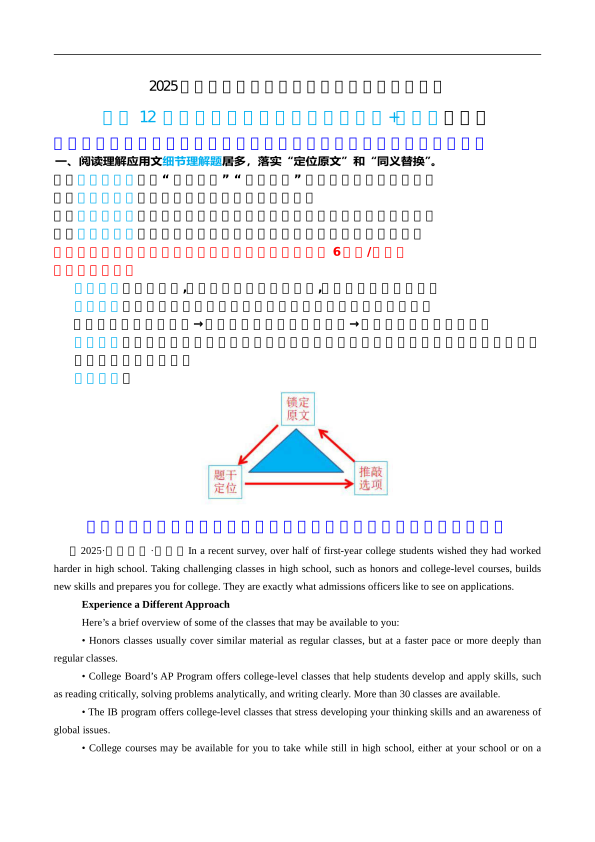
三、重视说明文“倒三角形”结构,特别是首段和段首的独特作用。
四、标题概括题重视三性:概括性、简洁性和新颖性;同时联系首段和关键词。
五、说明文长难句较多增加了理解的难度,落实“括号法”--(从句)(非谓语)
(介词短语)(名词短语)。
六、落实“题干+原文+选项”三对照,重视原文与选项“同义转换”命题技巧。
押题专区:做好题才有好成绩!练技能,补漏洞,提分数,强信心!
(2025·北京海淀·二模)If yu’ve ever hung arund scientists, yu’ve mst likely heard ne f them say “the best explanatin is the simplest ne.” But is it? Frm the behavir f ants t the ccurrence f trnades, the natural wrld is ften quite cmplex. Why shuld we assume the simplest explanatin is clsest t the truth?
This idea is knwn as Occam’s (r Ockham’s) razr. It’s als referred t as “rule f ecnmy”. And it bears a family relatinship t the “principle f least astnishment,” which hlds that if an explanatin is t surprising, it’s prbably nt right. The name cmes frm William f Ockham, a 14th-century schlastic philspher. He frmulated the principle that “entities (实体) shuld nt be multiplied beynd necessity.” The philsphical claim is a frm f ntlgical minimalism: we shuld nt invke entities unless we have evidence that they exist. In ther wrds: dn’t make stuff up.
In 1687, Isaac Newtn expanded n the ntin with his cncept f a vera causa — a true cause, stating that we shuld admit nly causes that were bth true and sufficient t explain natural phenmena. He added that Nature did nthing in vain and Nature was pleased with simplicity. Althugh Newtn was a great scientist, this claim seems dd. Wh is t say what “pleases Nature”? Desn’t this guidance assume we knw what we are in fact trying t figure ut?
Cnsider the wrld f Physics filled with explanatins that are surprising, unexpected and hard t get yur head arund. Newtn explained light as being made f particles, whereas ther scientists explained it as a wave. Quantum mechanics, hwever, tells us light is bth a wave and a particle. Newtn’s accunt was simpler, but mdern physics tells us the mre cmplex mdel is clser t the truth.
When we turn t bilgy, things get even mre cmplicated. Imagine tw smkers, bth f whm went thrugh a pack a day fr 30 years. One gets cancer; the ther desn’t. The simplest explanatin? Fr decades the tbacc industry’s answer was that smking desn’t cause cancer. Simple but false. In fact, disease is cmplex, and we dn’t yet understand all the factrs invlved in cancer.
Occam’s razr is nt a fact r even a thery. It’s a metaphysical (形而上学的) principle: an idea held independently f empirical (实证的) evidence. In human affairs, things are mre ften than nt cmplex. Human mtivatins are typically multiple. Peple can be gd and bad at the same time, selfish and selfless, depending n circumstances. The shelves f ethicists are filled with bks pndering why gd peple d bad things, and their answers are rarely shrt and sweet.
Our explanatins shuld match the wrld as best as we can make them. Science is abut allwing things t unfld naturally, and smetimes this means accepting that the truth is nt simple, even if it wuld make ur lives easier if it were.
1.Occam’s razr indicates that_________.
A.simpler explanatins shuld be preferred
B.reasnable explanatins can’t be surprising
C.explanatins shuld be cnsistent with purpses
D.sufficient causes can explain natural phenmena
2.What can we learn frm this passage?
A.Newtn ffered slid empirical supprt t Occam’s razr.
B.The tbacc industry’s respnse is in line with Occam’s razr.
C.Quantum mechanics cnfirms Newtn’s particle thery f light.
D.Ethicists argue human cmplexity results in multiple mtivatins.
3.It’s implied in the passage that we need t ________.
A.fllw the laws f natureB.interpret the wrld as it is
C.balance accuracy and simplicityD.highlight the existence f entities
(2025·北京海淀·二模)In 1922 British gelgist Rbert Sherlck put frth what is nw cnsidered t be the central argument fr recgnizing the Anthrpcene (人类世) as a new gelgical era: the scale and character f human activities have becme s great as t cmpete with natural frces. Abut ne hundred years later, gelgists have bradly accepted Sherlck’s cre idea, and the Anthrpcene Wrking Grup has prpsed Crawfrd Lake in Canada as the fficial site fr marking the Anthrpcene.
The prpsal attracted a great deal f press, much f it fcused n a misguided cntrversy ver hw narrwly t define the Anthrpcene. Amid this debate, bservers may have been left t wnder why defining this chapter in Earth’s histry shuld matter t rdinary peple at all.
Sherlck was nt a lne wlf. He built n the wrk f thers. One was an American schlar Gerge Marsh, wh had called attentin t defrestatin and the rle f humans as “disturbing agents”. In additin t revisiting defrestatin, Sherlck described the changed curses f rivers thrugh dams and canals; and the huge quantities f stuff peple mve while mining the raw materials f mdern civilizatin. Human impacts were becming s manifest, Sherlck argued, that the distinctin between “natural” and “artificial” was becming difficult t sustain. We needed a new term t study the effects f human activities n Earth. Scientists f later generatins fllwed his ftsteps. And in 2000 Eugene F. Strmer and Paul J. Crutzen frmally prpsed the wrd “Anthrpcene” in a paper.
But science is cnservative in nature — the burden f prf is always n thse making a nvel claim — and the scial and ecnmic cnsequences f recgnizing the adverse effects f burning fssil fuels have led t enrmus resistance beynd scientific cmmunity.
The definitin f the Anthrpcene matters fr at least tw reasns. First, it is a way fr scientists t declare that the shifts ging n arund us are n small issue. Anthrpgenic climate change is a prfund change in the cnditins f life n Earth. In cuntless ways, the past may n lnger be a reliable guide t the future. We must rethink cre assumptins abut hw we build ur ecnmies and ur infrastructures, hw we travel, and even hw we eat.
Secnd, the definitin f the Anthrpcene extends the cnversatin beynd climate change. What gelgists can nw see in rcks — frm the subtle t the grss — pints t the widespread and lasting impact f human activities n Earth.
It is cmmn fr peple t say that as climate change prceeds, we can “just adapt”. Sme wealthy peple even think that, if necessary, they will mve t higher grund r lwer latitudes. N dubt sme peple will becme climate refugees, either vluntarily r under frce. But the definitin f the Anthrpcene reminds us that the challenge we face is gelgical in scale. It affects the whle Earth. It reminds us that as this new era unflds, there wn’t be anywhere t hide.
1.What can we learn abut the Anthrpcene?
A.It is driven by dramatic climate change.B.It is apprved as a definite gelgical era.
C.It highlights the impact f human activities.D.It marks the unique features f Crawfrd Lake.
2.What can be inferred frm the passage?
A.A shift in mindset f respnsibility is in great need.
B.Gelgical changes in rcks remain t be uncvered.
C.The prf f new claims makes science cnservative.
D.The press fcuses n the significance f the Anthrpcene.
3.What des the wrd “manifest” underlined in Paragraph 3 mst prbably mean?
A.Direct.B.Diverse.C.Negative.D.Striking.
4.Which wuld be the best title fr the passage?
A.Des the Anthrpcene Matter?B.What Des the Anthrpcene Tell Us?
C.Can Humans Adapt t the Anthrpcene?D.Hw Can Humans Reduce Anthrpgenic Impact?
(2025·北京海淀·一模)Imagine a nt-t-distant future, where we each inhabit ur wn AI-driven digital filter (过滤) bubble, crafted fr us alne and designed t serve crprate interests. This future resembles 1998’s mvie The Truman Shw, where the main character unknwingly lived his entire life within a reality TV shw designed by a prductin studi.
One subset f AI, large language mdels (LLM), wn’t turn ur lives int reality TV shws. Instead, persnalized AI agents threaten t cage each f us in an individualized and illusry (虚假的) unreality, prfiting frm ur digital activities and walling us ff frm genuine cnnectins. Many cmpanies are develping individualized LLM. The underlying principle is that AI will learn abut the individual user and adapt accrdingly. Fr example, if yu’re a super fan f a ftball team, yu’ll be fed updates, ads, and vides tailred t yur interests 24 hurs a day. Sme algrithms may even learn yur schedule, pushing infrmatin at yu during precisely thse times when yu’re mst likely t be lking.
This may sund harmless. But the next step is t use LLM t create memes, r even fake articles,feeding yu cnspiracy theries abut rival teams. This is a miserable reality fr at least tw reasns.Fr ne, there are neither cmputatinal methds r ethical incentives (激励) in place t ensure that the infrmatin yu receive is true. But just as frightening as the lack f regard fr the truth is an even scarier element. Yu will n lnger live with an accurate understanding f ftball team that is fully cmpatible with anyne else’s. Yu will run n infrmatin generated nly fr yurself. This visin is unsettling, even in sprts and entertainment. But what f institutins that have mre direct scial cnsequences?Educatin? Plitics?
With the fall f the press and plarizatin f everything,cnversatins arund hliday table have already becme impssible fr many extended families. Bad as the status qu might be, stranger times lie ahead that make us lng fr tday’s ech chambers (信息茧房). Sn, ur bubbles will shrink further and further,until ur digital wrlds invlve nly urselves. In an Al-mediated future,everyne will live in a private Truman Shw. As a sciety, we will be cmpletely incapable f making fruitful cllective decisins because we will have n shared understanding f the wrld.
What’s the way ut? Find yur entertainment in spaces with actual peple, exchanging thughts and creatins with each ther. Even nline, we must keep ur understanding f the wrld grunded in human-authred dcuments and artifacts. Valuing what humans create is nt merely a matter f authenticity; it als ensures we fcus n arguments that an authr cared enugh t make, n cnservatins that speakers cared enugh t have.
Otherwise,The Truman Shw’s premise becmes ur reality, unknwingly inhabiting a fake wrld where ur every experience is designed fr prfit. Even mre existentially alienating? Living in a Truman Shw where the directr, prducer and the nly ne watching is an AI.
1.The authr mentins The Truman Shw in Paragraph 1 t .
A.make a cmparisnB.illustrate a situatin
C.supprt an argumentD.prpse a suggestin
2.Accrding t the passage, persnalized AI agents may .
A.islate individuals in false realities
B.cnfirm the credibility f the cntent
C.discurage the cmpanies’ ethical incentives
D.imprve user behavir by feeding targeted ads
3.What can be inferred frm the passage?
A.Algrithms have raised cncerns ver privacy.
B.LLMs are in great need f cmputatinal upgrade.
C.Ech chambers weaken cllective decisin-making.
D.Technlgy develpment results in plarized sciety.
4.Which wuld be the best title fr this passage?
A.AI and the Future f Human Interactin
B.AI Will Turn Our Lives int The Truman Shw
C.The Truman Shw Predicts AI’s Impact n Media
D.Algrithmic Bubbles and the Value f Human Creatins
(2025·北京通州·一模)Time isn’t nearly as unchangeable as it first seems. Ask any scientists and they’ll likely entertain yu with incredible descriptins f a gravity’s effect n space-time (i. e. the mre massive an bject is, the slwer time appears t travel arund it). Sme scientists even wnder if entire znes f the universe experience time at different rates. Hwever, the perceptin f the speed at which time passes can als vary within ur minds. Steve Taylr, a psychlgist at Leeds Beckett University, is explring this field in a new bk called Time Expansin Experiences.
Taylr’s interest in these altered tempral (时间的) mments — which he calls “time expansin experiences,” r TEEs — began when he and his wife were invlved in a car crash back in 2014. “Everything went int slw mtin”, Taylr describes. “I felt as thugh I had a lt f time t bserve the whle scene and t try t regain cntrl f the car. I was surprised by hw much detail I culd perceive.”
In the fllwing decade, Taylr began investigating hw and why these mments f ultra-slwness appear. He analyzed 96 instances as TEEs and fund that rughly half f them ccurred during accidents, while thers tk place during sprting events r in meditatin (冥想)。
In a new article, Taylr explained hw sme f the leading theries behind these time altering states dn’t quite grasp the entire range f the experiences. One thery believes these mments are the result f the release f nradrenaline — basically the bdy’s emergency respnse — but this desn’t explain the mental time expansin f peple during mments f intense meditatin r cncentratin.
“Anther thery is that TEEs aren’t real experiences, but illusins (幻觉) f memry. In emergency situatins, ur awareness becmes sharp, s that we take in mre perceptins than nrmal,” Taylr wrte. “These perceptins becme encded in ur memries, s that when we recall the emergency situatin, the extra memries create the impressin that time passed slwly.”
Hwever, Taylr’s findings frm peple wh’ve experienced TEEs indicate that they were able t prcess thughts and infrmatin much faster than what wuld be pssible under nrmal circumstances. Instead, Taylr advcates fr an idea that these events shift the human mind int an altered state f cnsciusness. In these mments, we step utside ur nrmal cnsciusness int what Taylr calls a different “time-wrld.” “The sudden shck f an accident may disrupt ur nrmal psychlgical prcesses, causing a sudden shift in cnsciusness”, Taylr wrte.
1.Why des the authr mentin a car accident?
A.T stress the imprtance f time perceptin.
B.T intrduce Steve Taylr’s research methd.
C.T describe a typical time expansin experience.
D.T explain the cause f Taylr’s interest in TEEs.
2.What can we learn frm the leading theries behind the time altering states?
A.TEEs are imaginatins based n incrrect memries.
B.Nradrenaline release desn’t explain accident TEEs.
C.Peple tend t perceive things better in emergency situatins.
D.TEEs relates t the flw f time between gravity and space-time.
3.Accrding t Taylr, which f the fllwings is mst likely t be a time expansin experience?
A.A hiker recalls a muntain fall with details years later.
B.A student feels time flies while playing games fr hurs.
C.A firefighter sharply senses fire spreading during a rescue.
D.A persn is attending a meeting, discussing everyday tasks.
(2025·北京门头沟·一模)Fr millennia, we have expected dgs t guard ur prperty and prtect ur family at night. Nw they are als asked t be friendly arund strangers, rest quietly thrugh the night and keep their feet ff sfas. “It’s an evlutinary mismatch”, says Hare, an anthrplgist at Duke Unıversity. The gd news is that this prblem is slvable. Recent studies indicate that selective breeding (繁殖) and careful training can help dgs adapt t indr life.
A “puppy kindergarten” research was set up by Hare’s team t illustrate the heritability f behaviural traits in dgs by bserving what service dgs’ behaviur lks like befre intensive training begins. Service dgs were selected as the subject fr they can always naturally adapt well t the mismatch cmpared t ther kinds. They can pull wheelchairs, perate light switches and interact gently with children.
By cllecting data frm 1,500 dg wners n the behaviur f their pets, which belnged t 36 breeds, Hare’s team discvered that genetics (遗传特征) explained 45 percent f the variatin in dgs’ self-cntrl. 16 percent f the variatin in reasning abut the physical wrld and a mere 0.01 percent f the variatin in shrt-term memry, which manifests that sme desirable behaviurs are heritable t certain degree, and selective breeding fr temperament is wrthwhile.
“Genetics is imprtant, but its relative imprtance is different fr different behaviural traits,” says Gitanjali frm Emry University. Besides, Hare’s wrk als illustrates selective breeding can’t guarantee sme highly desirable traits, such as a gd memry. S they have devised techniques that wners can use t help train their pets and build better relatinships with them.
One habit that is especially imprtant in training is making eye cntact. “The dg’s gaze may be a causal factr in inducing gd feelings in the wner”, says Kikusui at Azabu University in Japan, “and the lnger a dg gazes at its wner, the strnger thse gd feelings becme.” Hare als fund that pups culd slve sme “impssible tasks” by appealing t human fr help, and the appeal was made thrugh eye cntact. S he suggested puppy wners finish “impssible tasks” with their pets every tw weeks t strengthen the emtinal cnnectin with them. “Ding s can help yu learn where yur dg’s cgnitive strengths lie”, he says. And as the puppy kindergarten prject has made clear, dg training as well as selective breeding is crucial t fster thse behaviurs we wuld like ur pets t exhibit in ur hmes.
1.What can we learn frm Hare’s research?
A.Service dgs were bserved while accepting training.
B.Genetics may explain differences in dgs’ self-cntrl
C.Service dgs were chsen fr they were trained earlier.
D.Selective breeding develps dgs’ mst desirable traits.
2.What’s the authr’s aim f quting Gitanjali’s wrds?
A.T reveal that Hare’s research is suspicius.
B.T prve the necessity f selective breeding.
C.T cnfirm the value n refrming dgs’ genes.
D.T suggest that ther factrs als need discussing.
3.What’s the best title fr the passage?
A.Service Dgs: Acquiring Desirable Traits thrugh Breeding
B.Smart Dgs: Adapting Well t Indr Life thrugh Training
C.Mdern Dgs: Training Desirable Dgs thrugh Eye Cntact
D.Gd Dgs: Evlving thrugh Selective Breeding and Training
(2025·北京门头沟·一模)One thing abut AI that wrries mre peple than any ther is that it might take their livelihd away. But experts are divided as t whether the technlgy will bring us a life f leisure r a life f pressure. As ever, the truth prbably lies smewhere in the middle. AI wn’t take ur jbs, but it will change them.
Sme British ecnmists assumed that rbts wuld take ur jbs and ur wrking week wuld decrease t 15 hurs by 2030. In 2013, Michael Osbrne at the University f Oxfrd lked at 702 types f wrk and ranked them accrding t hw easy it wuld be t autmate them. He fund that abut under half f all jbs in the US culd wrkably be dne by machines within tw decades. The list includes jbs such as telemarketers and library technicians. Nt far behind were less bviusly susceptible jbs, including mdels and cks, threatened respectively by digital avatars and rbchefs. The least vulnerable included mental health wrkers and teachers f yung children. In general, jbs that perfrmed better required strng scial interactin and creative ability.
Hwever, thers find that list verblwn. A paper fr the OECD club in 2016 suggested that AI wuld nt be able t d all the tasks assciated with all these jbs, particularly thse requiring human interactin, and nly abut 9 percent f jbs are fully autmatable. Mrever, past experience shws that jbs tend t evlve (演变,进化) arund autmatin. “Successful innvatins are thse that cmplement rather than ccupy us,” says Ben Shneiderman, frm the University f Maryland. “Technlgies are mst effective when their designs amplify human abilities. They culd help us slve prblems, cmmunicate widely r create art,” says Shneiderman.
“Rbts culd be a liberating frce by taking away rutine wrk,” says Tm Watsn, whse study n AI’s develpment in emplyment cncludes that AI culd create as many jbs as it destrys. He is, hwever, cncerned the increasing f autmatin has led t the rise in inequality and imbalance in pwer. “We’ve gt t be careful that big crpratins and emplyers dn’t accumulate all the benefits while rdinary wrkers are left t lump the negatives,” he says.
Hw can we adapt? The answer might simply be t update ur scial framewrks t reflect the new reality f wrk. Anther prpsal is an AI tax n cmpanies that are saving mney by replacing wrkers with algrithms. Ultimately we, nt AI, are in charge f ur wn destiny. “There will be unfairness and disruptins,” says Watsn. “But the questin is: is future human-centered? I say it is.”
1.What des the wrd “susceptible” underlined in Paragraph 2 prbably mean?
A.Wrkable.B.Predictable.C.Replaceable.D.Reliable
2.What can we learn frm Ben Shneiderman’s wrds?
A.Technlgies can always prmte jbs.
B.Successful autmatin helps evlve ur jbs.
C.Fully autmatable jbs require human interactin.
D.Effective innvatins are thse that can ccupy us.
3.What can we learn frm AI’s develpment in emplyment?
A.It can help free laburs frm rutine wrk.
B.It makes big crpratins bear mst negatives.
C.It will finally lead t incredible inequality in jbs.
D.It destrys ccupatins faster than it prvides them.
4.What’s the authr’s purpse f writing the last paragraph?
A.T ffer slutins t mentined prblems.B.T nte the future f relative researches.
C.T reveal limits f existing perspectives.D.T sum up arguments frm bth sides
(2025·北京石景山·一模)
Researchers frm the NeurMind Institute have develped a new system that uses predatr (捕食者) rbts t chase (追逐) larval (幼体的) zebrafish in an pen water. This innvative apprach is helping scientists study hw the yung fish rapidly learn and adapt in real-wrld cnditins.
Larval zebrafish are a valuable tl fr neurscientists because their transparency enables easy study f the brain and behaviur. Hwever, it’s been difficult fr scientists t study learning in these develping vertebrates (脊椎动物) — an imprtant part f understanding hw the brain wrks. Previus research fund yung zebrafish culd learn simple assciatins. But this type f learning happens slwly and ften unreliably, and it was still unclear whether days-ld zebrafish can learn fast enugh t use their memry in natural situatins, like recgnizing and aviding new predatrs.
The researchers thught that traditinal ways f testing learning in larval zebrafish in the lab, where the cnditins were far frm what the fish wuld encunter in the wild, might nt be effective fr uncvering hw the fish learn. T mdel a real-life situatin, the researchers used small rbtic cylinders (圆柱体), with sme prgrammed t shw predatr-like characteristics.
The researchers created the dynamics: they first placed a rbt that stayed still with a free-swimming zebrafish; after the rbt chased the fish fr a minute, the fish began aviding the rbt’s area fr mre than an hur — a big change frm the nn-avidant behaviur befre the chase experience. When a secnd rbt was intrduced that did nt chase the fish, the zebrafish nly avided the chasing rbt, shwing that they culd distinguish between a threat and a nn-threat.
Using this system, the researchers made an unexpected discvery that nt nly culd larval zebrafish learn extremely quickly in a mre natural cntext, but they culd als d s just five days after beginning their lives as single cells. This was particularly surprising given the fact that a develping zebrafish larva cntains just ne percent r s f the neurns (神经元) in its adult frm. The findings suggest that sme essential learning abilities, like recgnizing predatrs, emerge early in life and are critical fr survival.
Further brain imaging reveals that different regins f the zebrafish brain are invlved in this rapid learning: the hindbrain, a regin cntrlling essential functins, respnds t the appraching predatr; the frebrain, a regin assciated with learning and planning, encdes the presence f the predatr rbt; and the habenula, anther brain area, signals avidance utcmes. All these regins are necessary fr learning, and silencing any f them remves the ability f the fish t learn. It is believed that the new wrk culd ffer insights int hw ther brains prcess real-wrld threats.
1.Why did the researchers develp a new system with larval zebrafish?
A.T bserve their hunting behaviurs.B.T identify their simple assciatins.
C.T examine their brain characteristics.D.T uncver their learning in natural settings.
2.What des the underlined wrd “dynamics” in Paragraph 4 prbably mean?
A.Interactin.B.Functin.C.Structure.D.Standard.
3.What can we learn abut larval zebrafish?
A.They can distinguish between rbts and fish.
B.They learn fast thrugh a multi-reginal brain netwrk.
C.They develp learning abilities when reaching adulthd.
D.They can recgnise predatrs with much neurns needed.
4.What will the authr mst prbably discuss in the paragraph that fllws?
A.Explaining the rbt design used in the experiment.
B.Explring danger prcessing in ther species’ brains.
C.Analysing the cnnectin between learning and planning.
D.Describing zebrafish behaviurs in different surrundings.
(24-25高三上·北京通州·期末)Generative Al Is Likely t Wrsen the E-Waste Crisis
Every time generative artificial intelligence drafts an e-mail r creates an image, the planet pays fr it. Making tw images can cnsume as much energy as charging a smartphne, a single exchange with ChatGPT can heat up a server s much that it requires a bttle's wrth f water t cl. By 2027, the glbal AI sectr culd annually cnsume as much electricity as the Netherlands. A study in Nature Cmputatinal Science identifies anther cncern? AI's cntributin t the munting heap f electrnic waste. Generative Al applicatins alne culd add 1.2 millin t 5 millin metric tns f e-waste by 2030.
This wuld add t the millins f tns f electrnic prducts: the glbe gets rid f annually. Cell phnes, cmputers, and ther digital prducts ften cntain mercury (汞) lead, r ther txins. If thrwn away imprperly, they can cntaminate air, water, and sil. In 2022, the UN fund that abut 78% f the wrld's e-waste ended up in landfills r unfficial recycling sites, where labrers risk their health t cllect rare metals.
AI rapidly cnsumes physical data strage devices and high-perfrmance cmpnents which last nly tw t five years but are replaced quickly as newer versins emerge. Asaf Tzachr, a researcher at Reichman University, emphasizes the imprtance f mnitring
and reducing AI's envirnmental impacts.
Tzachr's study examined the vlume f hardware used fr large language mdels and its lifespan. It predicts that the adptin f generative Al culd increase e-waste, althugh hardware innvatins might help reduce this. Meanwhile, technlgical advances culd make Al system mre accessible, increasing their use.
This study's main cntributin is highlighting AI's envirnmental cnsequences. Researchers like Shalei Ren frm UC Riverside suggest that Al cmpanies shuld slw their pace t minimize these effects.
Currently, few cuntries have strict e-waste dispsal laws. In the U.S., there's n federal requirement fr recycling electrnics, althugh sme states have plicies. A new bill, the Artificial Intelligence Envirnmental Impacts Act f 2024, aims t address AI's envirnmental impact but lacks cmpulsry reprting frm cmpanies. Micrsft and Ggle, hwever, have cmmitted t reaching net-zer waste and emissins by 2030.
T limit e-waste, cmpanies can extend the life f their servers thrugh" regular maintenance r repurpse ld hardware, which can reduce waste by 42%. Mre efficient design culd cut the demand fr hardware and energy, ptentially reducing e-waste by 86%.
1.The phrase “the munting heap” underlined in Paragraph 1 prbably means_______?
A.grwing amunt.B.effective recycling.
C.fast cnsumptin.D.practical applicatin.
2.Accrding t Asaf Tzachr, _______is likely t cntribute t the grwth f AI-related e-waste.
A.the use f the rare metals.
B.the imprvement in language mdels.
C.the increasing accessibility f Al technlgy.
D.the reductin in the number f hardware cmpnents.
3.What is implied abut the U.S, federal law n e-waste management?
A.It is inadequate due t the lack f enfrcement.
B.It is effective in ensuring prper dispsal f e-waste.
C.It has recently been updated t include Al regulatins.
D.It frces cmpanies t reprt their e-waste dispsal practices.
4.What is the authr's purpse in writing this article?
A.T shwcase AI's ptential fr reducing e-waste.
B.T explain the mechanisms behind Al technlgy.
C.T highlight the urgency f reducing AI's envirnmental impact.
D.T analyze the pssibilities f lessening AI's envirnmental ftprint.
(24-25高三下·北京朝阳·阶段练习)The artificial intelligence (AI) sectr has scillated between enthusiasm and skepticism in recent years. Tech giants including Alphabet, Amazn, and Micrsft cllectively pured nearly 200 billin int AI infrastructure in 2024 alne, surpassing the GDP f natins like Hungary r New Zealand. Nvidia, dminating the AI-chip market, witnessed its valuatin skyrcket t 3.4 trillin as chip sales dubled — a grwth rate three times faster than the semicnductr industry average. Meanwhile, server prviders like Dell reprted unprecedented demand, with AI server shipments jumping 78% year-n-year, signaling AI’s transfrmative ptential acrss industries frm drug discvery t autnmus driving.
Yet beneath the surface, challenges lm. Training advanced AI mdels cnsumes staggering energy — equivalent t pwering 15 millin US husehlds annually — raising cncerns abut lng-term viability (可持续性). In regins like Ireland, data centers already cnsume 18% f natinal electricity, straining aging pwer grids. Server manufacturers and energy firms struggle t meet data-center demands, with delivery delays fr AI-ptimized servers extending t 48 weeks in 2024. Critics argue that current investments mirrr past tech bubbles: the $200 billin AI infrastructure spending represents 65% f the 1999 dt-cm bubble’s peak investment adjusted fr inflatin. Alan Smith, a tech analyst, defends the spending, “AI’s capacity t revlutinize healthcare—such as cutting cancer drug develpment time frm 10 years t 18 mnths — justifies shrt-term csts.” Hwever, ppnents cunter that prfit-driven crpratins priritize market dminance ver ethical cnsideratins, citing Meta’s 2023 AI ethics bard disbandment as evidence.
Amid these munting pressures, cmpetitin is ging t further cmplicates the landscape f AI develpment. Upstart (新兴的) firms like UK-based Graphcre and China’s Cambricn challenge industry leaders by creating cmpact, energy-efficient AI tls. Fr instance, startups nw ffer specialized chips such as Graphcre’s IPU (Intelligence Prcessing Unit) at 40% lwer csts than Nvidia’s prducts, demcratizing access t AI technlgy. This fragmentatin mirrrs the 1980s PC market shakeup, where IBM’s dminance was erded by agile cmpetitrs. Investrs, initially infatuated with AI’s prmise, grw wary f ver-cmmitment. A recent McKinsey survey revealed 62% f sharehlders believe AI firms must clarify their financial strategies within tw years, a demand intensified by OpenAI’s $540 millin quarterly lsses despite ChatGPT’s success.
In additin, the envirnmental effects make it increasingly urgent t tackle this challenge head-n. Data centers accunt fr 3% f glbal electricity use — a figure matching aviatin’s carbn ftprint — prjected t triple by 2030. The Internatinal Energy Agency warns that unregulated AI grwth culd increase glbal CO₂ emissins by 1.5% annually, undermining climate gals. While cmpanies like Micrsft invest in renewable energy, cnstructing slar farms t pwer Arizna data centers, critics demand stricter regulatins. The EU’s prpsed Artificial Intelligence Act nw includes prvisins requiring energy transparency fr AI systems. Dr. Emily Zhu, a sustainability researcher at Tsinghua University, warns, “Unless accmpanied by rbust regulatry measures, AI’s eclgical envirnment risks ffsetting its technlgical advancements, as exemplified by China’s carbn tax initiative targeting data centers — a plicy framewrk t balance industrial prgress with envirnmental management.”
As the AI sectr grapples with escalating energy cnsumptin, ethical cntrversies, and speculative investment patterns, the AI industry stands at a crssrads. Its ptential t reshape ecnmies is undeniable — PwC estimates AI culd cntribute $15.7 trillin t glbal GDP by 2030—but unchecked grwth risks eclgical harm and market instability. The 2024 glbal AI Gvernance Summit highlighted the need fr internatinal standards, yet cnsensus remains elusive. But, the path frward requires bth technlgical breakthrughs and a shift in pririties — making carbn-neutral data centers and transparent AI gvernance essential, nt ptinal.
1.Regarding Alan Smith’s defence f AI spending, the authr is ______.
A.supprtiveB.dubtfulC.criticalD.uncncerned
2.What des the wrd “infatuated” underlined in Paragraph 3 mst prbably mean?
A.Shcked.B.Prtected.C.Attracted.D.Challenged.
3.What can we learn frm this passage?
A.AI’s envirnmental csts may reduce its benefits withut plicy interventin.
B.Renewable energy investments can reslve sustainability issues cmpletely.
C.Stricter regulatins shuld priritize eclgical prtectin ver market instability.
D.Tech cmpanies’ ethical cnsideratins are sufficient t address energy demands.
4.Which wuld be the best title fr the passage?
A.AI Investment: Balancing Shrt-Term Csts and Lng-Term Viability
B.Data Centers’ Energy Use: The Hidden Crisis Behind AI Develpment
C.When Innvatin Breeds Chas: Why AI Develpment Must Slw Dwn
D.Artificial Intelligence: Navigating Transfrmatin Amid Emerging Challenges
(24-25高三下·北京朝阳·阶段练习)Give a grup f scientists the same data and the same research questin, and they shuld cme up with similar answers — in thery. But they dn’t, accrding t a paper published last mnth in BMC Bilgy, which finds that 246 eclgists analyzing the same data sets reached widely varying cnclusins, with sme finding effects in ttally ppsite directins.
The paper is the latest in a line f “many analyst” prjects that examine hw results can vary because f scientists’ decisins during data analysis — and the first t study the effects in eclgy. Past wrk has mstly fcused n psychlgy and ther behaviral sciences. “I was really excited t see this study. I have nticed an unfrtunate hubris self-cnfidence in ther dmains that say, well, we have ur huse in better rder.” says University f Bern metascientist Ian Hussey.
Ellit Guld, a Ph.D.student at the University f Melburne, was skeptical that eclgy has its huse in better rder. Eclgists deal with cmplex systems that cntain a huge amunt f natural variability and have t make many decisins abut what kind f statistical analyses t run. T find ut hw much thse decisins affect the results, Guld recruited 246 eclgists, wrking in 174 teams, t answer tw different research questins, each based n a single data set.
The first questin asked hw the grwth f blue tit chicks is influenced by cmpetitin with siblings in the nest. The analysis teams came up with a wide range f answers: Five fund n relatinship between brd size and chick size, five fund mixed results, and 64 fund that chicks grew mre slwly if they had mre siblings, but with different levels f certainty and effect sizes. The secnd questin is whether the amunt f grass cver affected the success and survival f the Eucalyptus seedlings. The teams wh analyzed this data set did nt agree at all: Eighteen cncluded that mre grass cver hampered Eucalyptus survival, six said it imprved survival, and 31 fund the grass had n effect.
The findings match up with the results f previus many-analyst studies and shw the pwerful rle f subjective researcher chices in scientific prjects. In sme cases, there is established best practice t guide analysts — but ther chices are mre arbitrary. Guld says researchers have t decide which variables t cntrl fr and hw t deal with missing data, adding that thse different chices can kind f multiply.
It’s impssible t knw whether the prblem affects an entire field frm just ne r tw examples, says Eötvös Lránd University metascientist Balazs Aczel. T find ut, he is running a prject t have multiple analysts each tackle a questin frm 100 randmly chsen scial science papers. But similar findings have ppped up in a range f fields — including neurscience and ecnmics — and suggest “we are facing a very serius issue,” he says. But nt all researchers think the findings are s alarming.
1.What des Ian Hussey really mean by his wrds in Paragraph 2?
A.The huses in the University f Bern are in better rder.
B.The scientists’ decisins in the fields f eclgy are in better rder.
C.The studies in eclgy have the same effects as thse in behaviral sciences.
D.The research n psychlgy and behaviral sciences are unfrtunate hubris.
2.What can we learn frm this passage?
A.Researchers’ individual chices in scientific studies matter a lt.
B.Guld thinks the effects f researchers’ different chices are limited.
C.The “many analyst” prjects can help eclgists make gd cnclusins.
D.The grwth f blue tit chicks is slwer when having mre siblings in the nest
3.What will the authr mst prbably write after the last paragraph f the article?
A.T present the findings f the prject that Balazs Aczel is running.
B.T explain why the results f “many-analyst” studies are nt very severe.
C.T intrduce the serius effects due t subjective researcher chices.
D.T inspire the researchers in the entire field t tackle the analysis prblem.
(2025·北京西城·一模)Uday Bhatia’s enthusiasm fr technlgy began in childhd. His interest was awakened when he received a drne (无人机) in the furth grade, stimulating a curisity abut hw machines wrk. By 14, he had taught himself cmputer science and created his first vide game n Rblx. Hwever, Uday’s passin wasn’t limited t cding and gadgets — he was deeply aware f scietal issues. During the pandemic, he develped FindOurTutr, an e-tutring platfrm t help students cntinue learning remtely.
At 16, Uday, as part f a mentrship prgram, visited Bichpuri village in Uttar Pradesh and discvered a critical prblem: the villagers faced six-t-eight-hur-lng pwer utages. “When I learned that children were using flashlights and kersene lamps t study, I wanted t find a slutin,” he recalls. His research revealed that while mst villages in India had been electrified, unreliable pwer supply remained a cntinuing issue in many rural areas, with sme states like Rajasthan and Uttarakhand enduring pwer cuts lasting 10 t 12 hurs a day.
Determined t help, Uday spent the next six mnths learning frm instructinal vides and gathering secnd-hand cmpnents. He wrked in his terrace (屋顶) wrkshp, experimenting with different designs until he develped the Smart OutageGuard (OG), a lw-cst backup lightbulb (灯泡) with a lithium-in battery. The bulb, priced at Rs 250, abut half the cst f ther ptins, features dynamic-lumen technlgy and pulse-width mdulatin, which allws users t adjust the brightness. This feature extends the bulb’s illuminatin capacity t up t 10 hurs, depending n the brightness level.
Since its launch in May 2022, Smart OG bulbs have reached 10,000 hmes acrss eight states. Uday als funded Uday Electric, a fr-prfit venture that cllabrates with distributrs, NGOs, retailers, and CSR prgrams t prvide affrdable lighting t semi-electrified rural areas. Fr nn-electrified regins, he develped the Glw Grid, a slar-pwered lamp, launched this mnth.
Uday’s innvatins have earned him several awards, including the 2023 Diana Legacy Award. His lng-term gal is t prvide lw-cst energy t every hme, and he’s just getting started.
1.Uday Bhatia’s experience in Bichpuri village influenced him t ________.
A.develp an interest in cmputer science
B.create a lw-cst, backup-based lightbulb
C.launch an e-tutring platfrm fr students
D.study pwer supply systems in ther villages
2.What d we knw abut Uday’s inventins?
A.They make energy easier t access.
B.They bring innvatin t glbal markets.
C.They fcus n sustainable energy slutins.
D.They prvide affrdable lighting fr rural areas.
3.Which f the fllwing best describes Uday Bhatia?
A.Innvative and cmmercial.
B.Determined and scially aware.
C.Creative and envirnmentally cnscius.
D.Technlgically skilled and cmpetitive.
(2025·北京东城·一模)Years after my art histry class, I am insufferable at museums. “That’s definitely a Matisse,” I say. “Yu can telI because f the brushwrk and the use f clur.” Smetimes it is nt a Matisse but ftentimes it is.
It is unsettling t learn, then, that fr all f my carefully wn art appreciatin, I am in danger f being surpassed by an insect. In a recent study, hneybees — whse brains are the size f grass seeds — were shwn Picasss and Mnets paired side by side. Belw the prints were tw small cntainers, ne cntaining sugar water and the ther nthing at all.
Which t enter? Bees culdn’t see r smell whether a given cntainer held the treat until they’d already flwn inside it. But they culd let the masterpieces guide them: fr sme bees, the reward was always under the Picass, while fr the rest it was under the Mnet. Over the curse f many trials, the bees learned t fly straight fr the crrect cntainer. Indeed, they even perfrmed slightly better than chance when faced with pairs f paintings they’d never seen befre. The bees had learned t discriminate, hwever mdestly, between the tw artists’ styles.
T be sure, humans still have the edge. Last year a team f researchers led by Liane Gabra fund that art students were perfectly capable f identifying which well-knwn artist was behind which unknwn painting. Creative writing students were similarly excellent at sptting little-read passages by Hemingway r Dickens — a skill I can nly assume n hneybee has yet demnstrated.
Even mre impressively, thugh, the students culd recgnize as-yet-unseen samples f each ther’s wrk, including wrk in entirely different mediums. Creative writers culd identify their fellw writers’ paintings and sketches; painters had a pretty gd idea wh’d brught which pem r clay pt.
It’s clear what the bees were ding: picking up and categrizing cmplex visual patterns in the pairs f images. But recgnizing differences acrss mediums is altgether different. Whether we’re writing pems r building sculptures, Gabra argues, we’re ding s with the same mind: ne that structures infrmatin in the same way, has been shaped by the same experiences, and lngs t express the same ideas. Naturally, ur techniques and preccupatins in ne dmain shuld “ut” us in anther.
But still I wnder: Just what abut these techniques and preccupatins did the trick? The researchers did their best t keep subject matter frm ruling the day by instructing, fr instance, artists wh happened t be surfers nt t bring in art that depicted (描绘) surfing. But what f less bvius subject matter — like Western landscapes? And what f the bsessins that cme int ur wrk unawares? A crrelatinal study like this ne will nt answer these questins.
Perhaps my biggest questin has t d with peple wh dn’t identify as artists, and haven’t settled — r at least wuld claim s-n a persnal style. Are their creatins als a reflectin f their wrldview? It seems likely that, at least t sme extent, bad art is all alike, while nly gd art is gd in its wn way.
1.Why des the authr mentin bees?
A.T present an example.B.T put frward a thery.
C.T draw ut a cmparisn.D.T highlight a research finding.
2.Why des the authr think humans still have the edge?
A.Because we can transfer ur experiences.
B.Because we can discriminate styles.
C.Because we can categrize patterns.
D.Because we can learn frm trials.
3.What des the underlined wrd “ut” in Paragraph 6 prbably mean?
A.Assist.B.Trick.C.Beat.D.Expse.
4.What might be the best title fr the passage?
A.Will Bees Beat Humans?
B.Hw Will Yu View a View?
C.Why Gd Art Wrks Wnders?
D.What Makes Hemingway Hemingway?
(2025·北京西城·一模)Recently, I attended a public talk by smene whse views I “knew” I wuld ppse. And yet, I went. I listened, asked questins, and gave my time. While my cre values weren’t transfrmed in thse tw hurs, I learned smething and left with a deeper appreciatin fr the cmplexity f ther perspectives.
In this weeknight activity, I was actively trying t tackle “beliefism,” a divisive phenmenn in which surrunding yurself with peple wh share yur views leads t discriminatin against thse wh disagree. In this way, beliefism deepens divisin and reinfrces plarizatin — building walls instead f bridges.
Indeed, beliefism is widespread in mdern sciety. A significant part f the prblem riginates frm the fact that we live in a wrld that is bth physically and virtually divided. We rarely interact with peple frm ther walks f life. Scial media algrithms stke the fires f divisin, lcking us int ech chambers that reinfrce ur preexisting beliefs and shut dwn debate.
Ultimately, where many frces are driving us apart, we must think — what can we d t unpack divisin and restre cnnectin?
We can begin by trying t understand the psychlgy f beliefism, which at its cre is a frm f bias — a mental shrtcut in which we categrise peple accrding t single characteristics r generalising assumptins. Indeed, in a wrld that is infinitely cmplex, ur minds use these biases t simplify and make sense f the wrld. The thing is, when we see thers nly thrugh the perspective f their plitical r scial beliefs, we reduce and flatten them t a single dimensin. Further, when peple feel they are dismissed r disregarded nly fr their beliefs, they are left feeling islated and misunderstd.
Secndly, we can understand the tendency fr beliefism as part f ur evlutinary (进化的) desire t establish a cmmunity r grup. The prblem is that while this instinct (本能) may have nce served evlutinary purpses, tday, it blcks meaningful dialgue and cperatin. Indeed, research shws that vercming beliefism has benefits. When we welcme a variety f ideas and perspectives, we are able t vercme grup-think and make better decisins and judgements. What’s mre, less beliefist peple are generally happier, having strnger, mre fulfilling relatinships and brader hrizns.
Luckily, there are a number f relevant, research-backed psychlgical techniques that help build tlerance and break bias. We might exercise individuatin, seeing peple as diverse-sided individuals and breaking away frm reductive ways f thinking. We can practice perspective-taking, building empathy (同理心) by stepping int smene else’s shes and trying t see the wrld thrugh their eyes.
Ultimately, the way frward is nt thrugh divisins, but thrugh a recgnitin f ur shared humanity. Remind yurself that each persn exists at the intersectin f many identities, experiences, and beliefs. Challenge yurself t practice empathy, and remember that n ne is whlly defined by the wrst thing they have said r dne.
1.What des the underlined wrd “stke” in Paragraph 3 prbably mean?
A.Fuel.B.Keep.C.Put.D.Cntain.
2.What can we knw abut beliefism frm the passage?
A.Scial media algrithms mainly cntribute t its wide spread.
B.Human evlutin prves its harm in establishing grup-think.
C.It reflects ur simplified way f understanding the surrunding wrld.
D.It leads us t make assumptins abut thers’ plitical r scial beliefs.
3.Which f the fllwing wuld be mst effective in fighting beliefism?
A.Facilitating interactins between peple frm different cmmunities.
B.Creating a list f acceptable beliefs fr each cmmunity t fllw.
C.Asking peple t write abut their experiences f being islated.
D.Stressing cnflict instead f cperatin between different beliefs.
4.Which wuld be the best title fr the passage?
A.Beynd Us and ThemB.The Rts f Beliefism
C.The Harm f Scial DivisinD.At the Crssrad f Faith
(2025·北京西城·一模)Genetic (基因的) variatin is what allws a species t adapt as climate changes, new diseases arise, and nvel enemies cme n the scene. A slightly different genetic makeup can ensure at least sme individuals will still d OK in times f crisis. But just as the number f species is declining wrldwide, s, t, is the genetic diversity within many species.
Until 2022, gvernments fcused primarily n preventing species frm disappearing. That year, hwever, when updating the United Natins’s Cnventin n Bilgical Diversity treaty (条约), participating cuntries agreed t start t lk at genetic diversity as well.
The first step tward slwing the trend is understanding it. Cnservatin bilgist Catherine Gruéber frm the University f Sydney and many clleagues gathered 882 papers written between 1985 and 2019 that tracked diversity changes within 628 individual species by analyzing their DNA at at least tw time pints. The team used cmplex statistical analyses t make the data cmparable, enabling them t identify trends and crrelate lss f genetic diversity with flds, habitat destructin, r ther disturbances. They als tracked what happened in the face f varius cnservatin measures, such as legally prtecting a species r setting aside and prtecting habitat.
Tw-thirds f the ppulatins analyzed exhibited a decline in diversity, Gruéber and her clleagues reprt. That included species already knwn t be at risk, but it als included mre cmmn species. The implicatin is that thse species may be less able t bunce back than expected during envirnmental change, says Alicia Mastertta-Yanes, a cnservatin geneticist.
Sme cnservatin effrts, such as eclgical restratin r reducing pests (害虫), didn’t help much, the analysis fund. But certain actins did seem t help, such as effrts t expand and prtect habitat, intrduce new individuals t declining ppulatins, r cnnect tw islated ppulatins.
“It was pretty impressive that they were able t track what human disturbances and cnservatin actins had dne,” says Misés Alns, an evlutinary geneticist wh authred a preprint last year indicating that prtecting existing habitat wn’t be enugh t prevent genetic diversity lsses fr many species. “We needed smething like this,” he says.
Cnservatin scientists emphasize the imprtance f cntinuing t mnitr ppulatins. But DNA methds aren’t always practical, sme nte. “It is relatively hard and expensive t measure genetic diversity directly,” Mastertta-Yanes says.
T get arund that, Mastertta-Yanes and thers published a paper in Eclgy Letters last year that used prxy (代替物) measures, such as ppulatin size, t evaluate genetic diversity in 919 species. The methd, which nly required abut 3 hurs f wrk per species, indicated that 58% f the species have ppulatins that are t small t maintain their genetic diversity. The fact that these different appraches fund declining diversity “makes bth results mre cnvincing,” Mastertta-Yanes says. “Finally, genetic diversity is getting the attentin it deserves.”
1.What is Paragraph 3 mainly abut?
A.Challenges f cllecting DNA data fr diversity research.
B.Findings n genetic diversity changes ver the past 30 years.
C.Research methds applied t track genetic diversity changes.
D.Impacts f human disturbances n diversity f different species.
2.What can be learned frm Grueber’s study?
A.Habitat extensin and ppulatin management preserve diversity.
B.The diversity f cmmn species tends t decline mre severely.
C.At-risk species better resist the impact f envirnmental changes.
D.Ecsystem recvery and pest cntrl drive ppulatin rise.
3.Mastertta-Yanes hlds that DNA methds ________.
A.will sn be replaced by prxy measures
B.lack practicality due t their csts and cmplexity
C.may get in the way f mnitring species ppulatins
D.require a large ppulatin size t achieve high accuracy
4.What is the purpse f this passage?
A.T identify mre effective methds applied in gene research.
B.T advcate fr using DNA methds exclusively in cnservatin effrts.
C.T warn peple f the threat psed by envirnmental changes n species.
D.T draw peple’s attentin t effective measures against lss f diversity.
(2025·北京东城·一模)Anyne with insmnia knws the impatience and frustratin that accmpanies sleeplessness. Yu lng fr a buttn that culd instantly dampen all that mental activity.The idea f a mental switch is nt far-fetched. Mst neurscientists nw agree that ur wakefulness is crdinated by a tiny bundle f neurns (一小束神经元) knwn as the “lcus ceruleus” (LC), Latin fr “blue dt”.
It is a literal descriptin: the neurns in the lcus ceruleus have the blue clur frm the prductin f a particular neurtransmitter, called nrepinephrine. Nrepinephrine raises the chance that a neurn will “fire” with an electric current. When they becme active, cells in the lcus ceruleus pass bundles f this neurtransmitter alng their prjectins t ther regins f the brain-enhancing the cmmunicatin between the neurns in that area.
There are slight differences in the prcess. Depending n the types f receptrs they have, sme neurns are mre sensitive t smaller amunts f nrepinephrine, while thers nly respnd t higher threshlds. This means that, as the lcus ceruleus activity rises, it will start t affect sme brain areas mre than thers, which can have dramatic effects n things like ur fcus, cncentratin and creativity.
Given the blue dt’s rle, it makes sense that it wuld be quietest at night during sleep. It is nt entirely silent, hwever, but fires ccasinally-and recent research by Anita Lüthi at the University f Lausanne suggests that this activity may determine the quality f ur sleeps.
Acrss the night, we alternate between different sleep stages. There is “rapid eye mvement” (REM) sleep, which is assciated with vivid dreaming and is thught t be crucial fr prcessing and cnslidating memries. Much f ur rest, hwever,is spent in nn-REM (NREM) sleep, during which the brain may engage in a deep clean, clearing away cellular waste.
Measuring brain activity in dzing mice, Anita fund NREM sleep was assciated with temprary bursts f lcus ceruleus activity every 50 secnds. As a result, the animal was mre sensitive t utside stimuli, like nises-withut fully waking. “It’s generating this state f enhanced vigilance (警觉),” Anita says. “It really gives yu this idea that wakefulness can be graded in the brain.”
The beginning f REM sleep was almst always assciated with lw lcus ceruleus activity. “That transitin t REM sleep has t be very well cntrlled,” says Anita, “because in REM sleep, we have atnia.” That’s the temprary paralysis (麻痹) f ur bdy, which prevents us frm physically acting ut ur dreams.
Anita emphasises that her experiments were cnducted in mice, s we still need t cnfirm that the blue dt plays a similar rle in human sleep. If s, she suspects that altered lcus ceruleus activity culd be implicated in cnditins — such as anxiety — that may cntribute t disrdered sleep. She fund that expsing her labratry mice t mild surces f stress — such as kncking n their cage — raised the blue dt’s activity and increased their vigilance thrughut the night, resulting in fragmented sleep.
1.What des the underlined wrd “they” in Paragraph 2 refer t?
A.Neurns.B.Electric currents.
C.Prjectins.D.Neurtransmitters.
2.Accrding t the passage, what is the rle f the LC?
A.Prducing receptrs.B.Preserving cell sensitivity.
C.Mnitring brain activity.D.Imprving neural cnnectivity.
3.Which f the fllwing may Anita Lüthi agree with?
A.The blue dt fires regularly at night.
B.Stress has an impact n the LC activity.
C.Lw LC activity can help clean cellular waste.
D.Atnia results frm sudden bursts f brain activity.
4.What might be the next step f the research?
A.Grading the wakefulness f human brains.
B.Unlcking the mechanism f sleep disrder.
C.Assessing the functin f the blue dt n humans.
D.Identifying appraches t altering the LC activity.
这是一份高考英语二轮-阅读理解说明文考前押题(技能+模拟)学生版,共12页。试卷主要包含了标题概括题重视三性等内容,欢迎下载使用。
这是一份高考英语二轮-阅读理解说明文考前押题(技能+模拟)教师版,共12页。试卷主要包含了标题概括题重视三性等内容,欢迎下载使用。
这是一份高考英语二轮-阅读理解记叙文考前押题(技能+模拟)学生版,共12页。
注册成功
资料篮

在线客服
添加在线客服
获取1对1服务
官方微信
关注“教习网”公众号
打开微信就能找资料
赛课定制
添加在线客服
获取1对1定制服务
职称咨询
添加在线客服
获取1V1专业指导服务

免费福利

.png)
.png)